
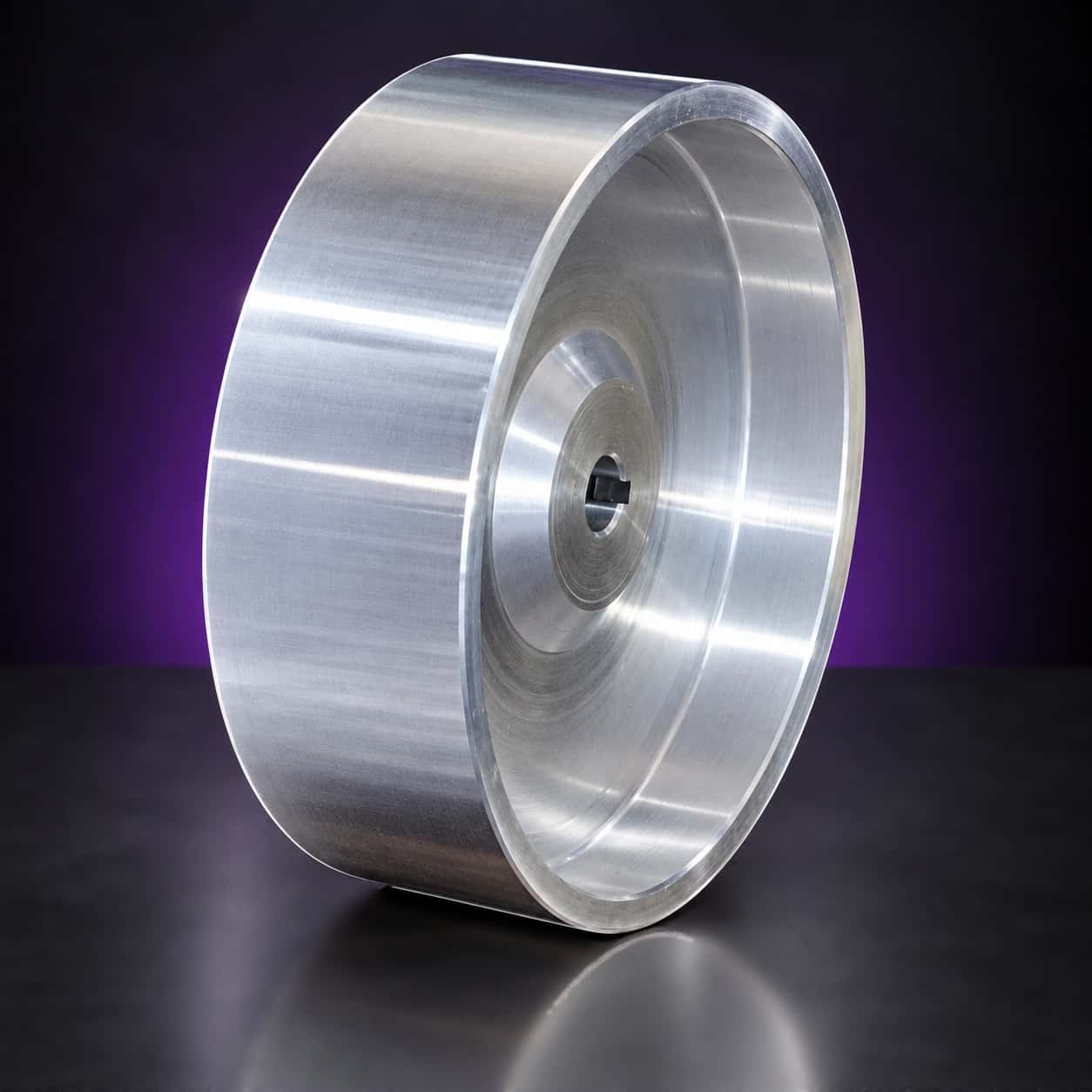
Reference chart
Belt Speed by Task Chart (SFPM)
Set your VFD by the job: working SFPM ranges for hogging, bevel grinding, hardened steel, handles and leather, with percentages for a direct-drive 2x72 setup.
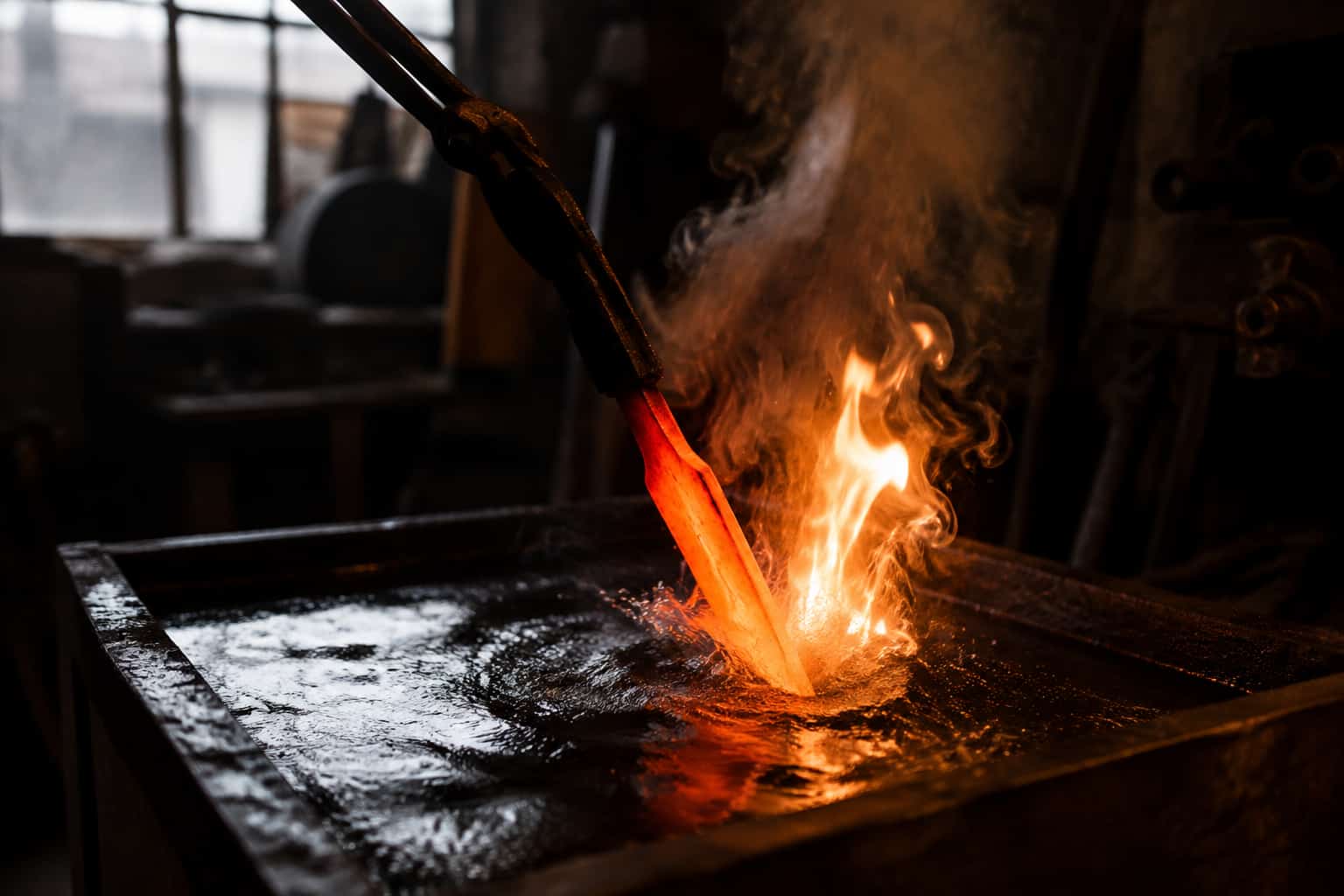
Reference chart
A chart that matches quench media, from fast Parks 50 oil to aluminum plates and still air, to the steels each suits, plus the mismatches that soften blades.
The chart
Quench speed is a matching problem: the oil must cool the steel through its hardening window faster than pearlite forms, and no faster. Too slow means soft blades; too fast means cracks and warp. This chart pairs the common media with the steels they suit — the full chemistry is in Quench Oils Explained.
| Medium | Speed class | Right for | Wrong for |
|---|---|---|---|
| Brine / water | Violent | Traditional W-steel work in thick sections, by experienced hands accepting losses | Nearly everything else – cracking is a feature of the physics |
| Fast commercial oil (Parks 50 class, ~7-9 s) | Fast | Shallow-hardening steels: 1095, W1, W2, 26C3, 1075 | Deep-hardening steels that only collect its warp risk (O1, 5160) |
| Medium commercial oil (Parks AAA / 11-s class) | Medium | Deep-hardening carbon and low-alloy: O1, 5160, 80CrV2, 52100, 1084 | Shallow-hardening steels that come out soft-spotted |
| Canola at ~120°F | Medium-ish | The honest budget stand-in for the 1084/80CrV2 class | 1095-class steels wanting true fast oil; anything where consistency is the product |
| Motor/mineral/veg misc. | Slow, inconsistent | Nothing you care about | Blades – the classic soft-knife origin story |
| Aluminum plates + compressed air | Steel-specific | Air-hardening and stainless: AEB-L, MagnaCut, M390, A2 – see Plate Quenching | Plain carbon steels that need real quench speed |
| Still air | Slowest | Air-hardening steels in thick sections; normalizing descents | Every oil-hardening blade steel |
Soft blade from slow oil: 1095 in canola files soft at the edge — the steel out-ran the oil; move to the fast class or the 1084 class. Cracked blade from fast oil: O1 or 5160 in Parks 50 collected warp and crack risk for zero hardness gain — deep-hardening steels want the 11-second class. When in doubt, the steel’s own database page names its oil.
Browse more tools in the Calculators section.
More shop math
Eight tools, all free, all running in the page.
Set your VFD by the job: working SFPM ranges for hogging, bevel grinding, hardened steel, handles and leather, with percentages for a direct-drive 2x72 setup.
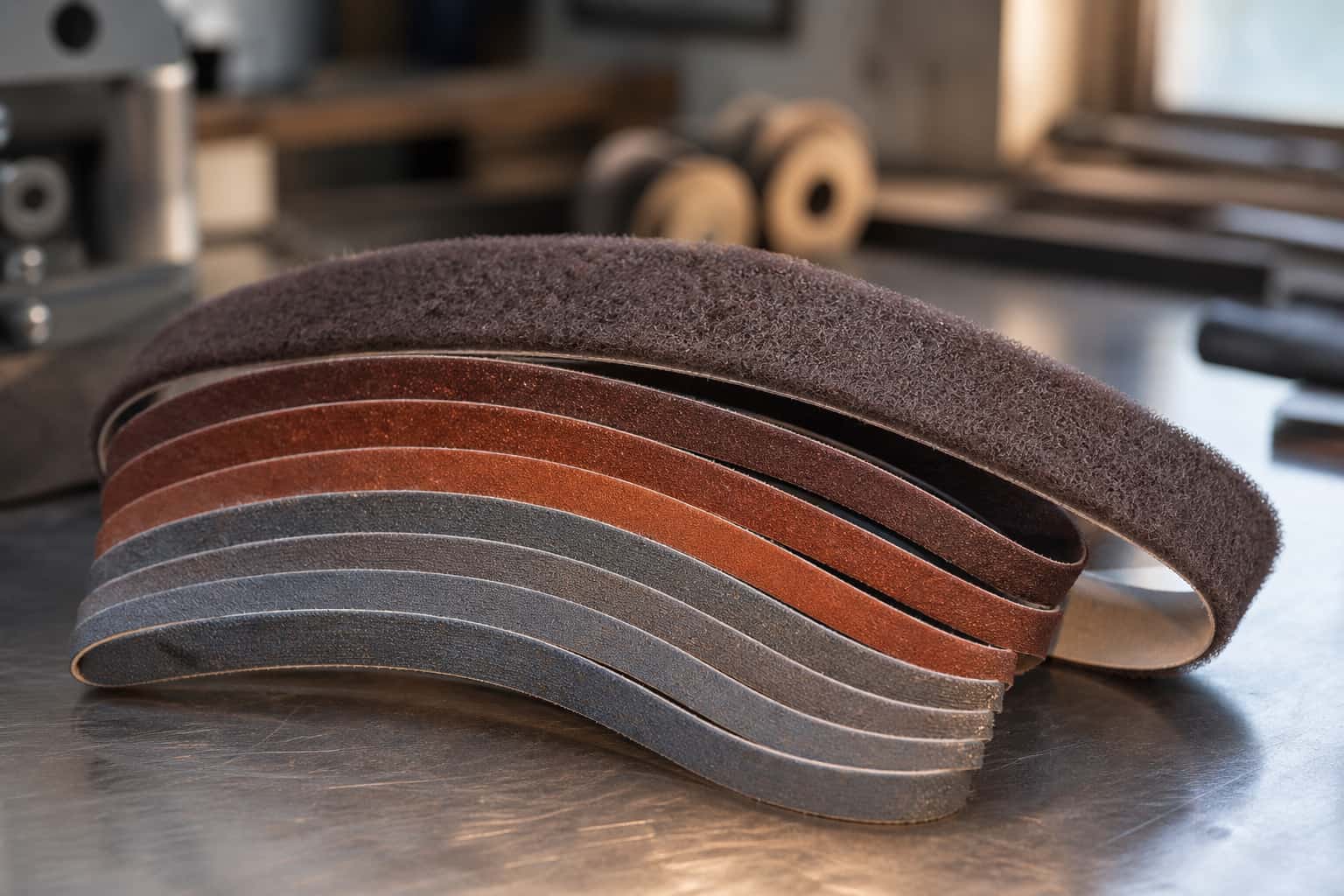
Find your 2x72's surface speed in SFPM from drive wheel diameter and motor RPM, with optional VFD frequency, and see how hard a belt cuts and how hot it runs.
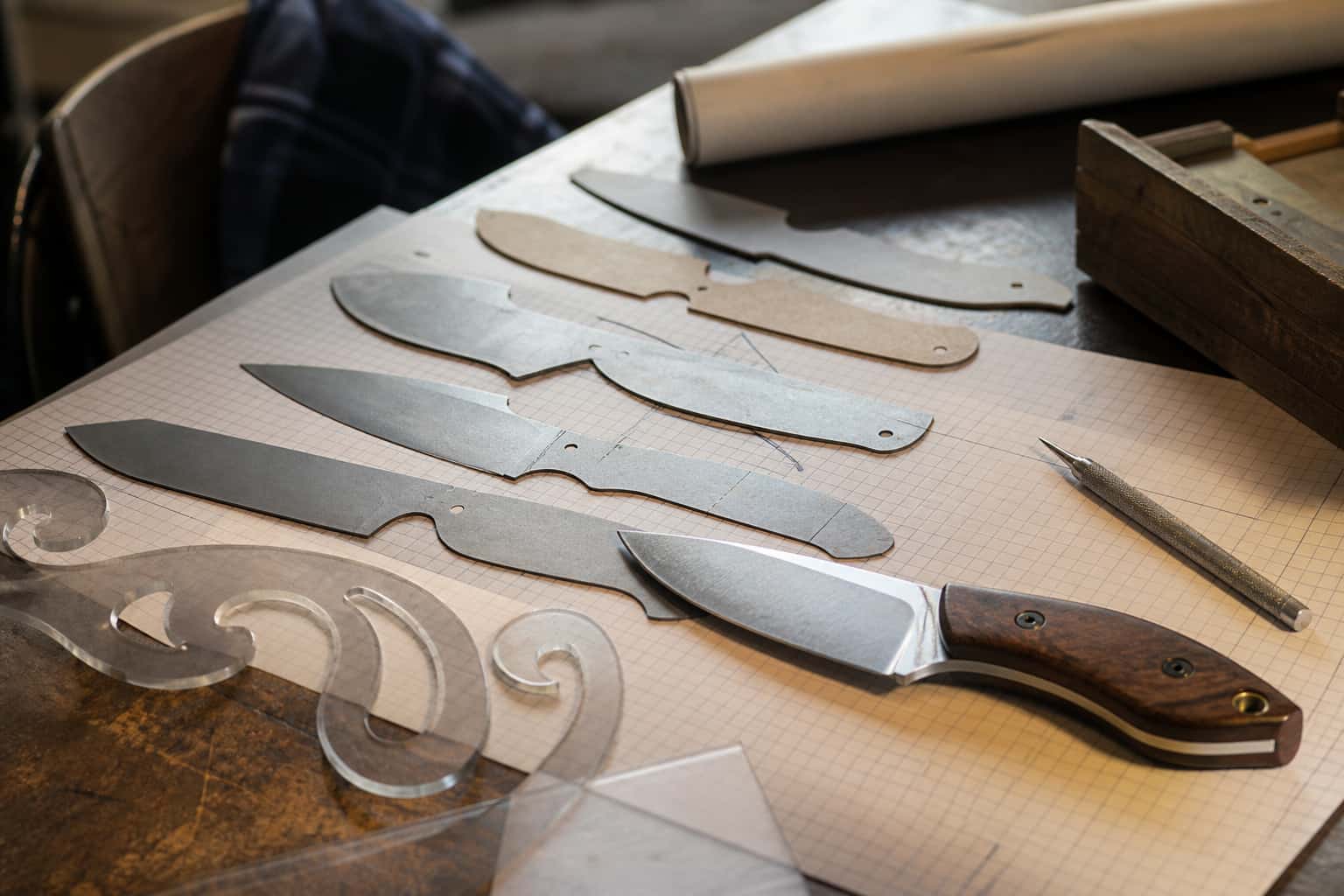
Turn stock thickness, edge thickness and bevel angle into the scribe height for a flat grind, with notes on reading the answer and using it at the machine.
Same bench
Speed, angle and pressure only mean something on a grinder that holds its setting. I machine the parts, hand-assemble, track and test Torus grinders in Sterling, Illinois.
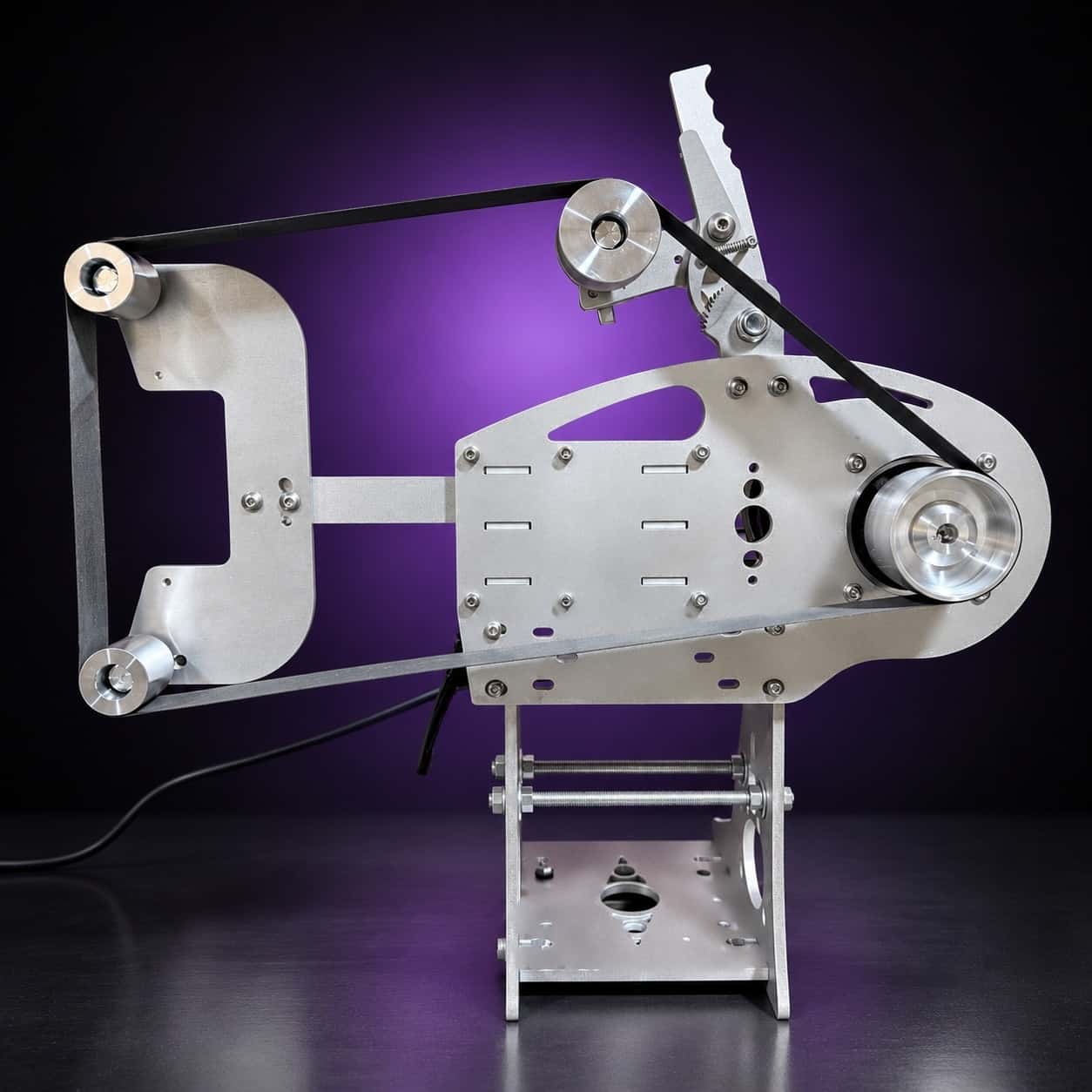
Current dual-axis platform with a fiber-laser-cut 6061 chassis and single-knob tracking.
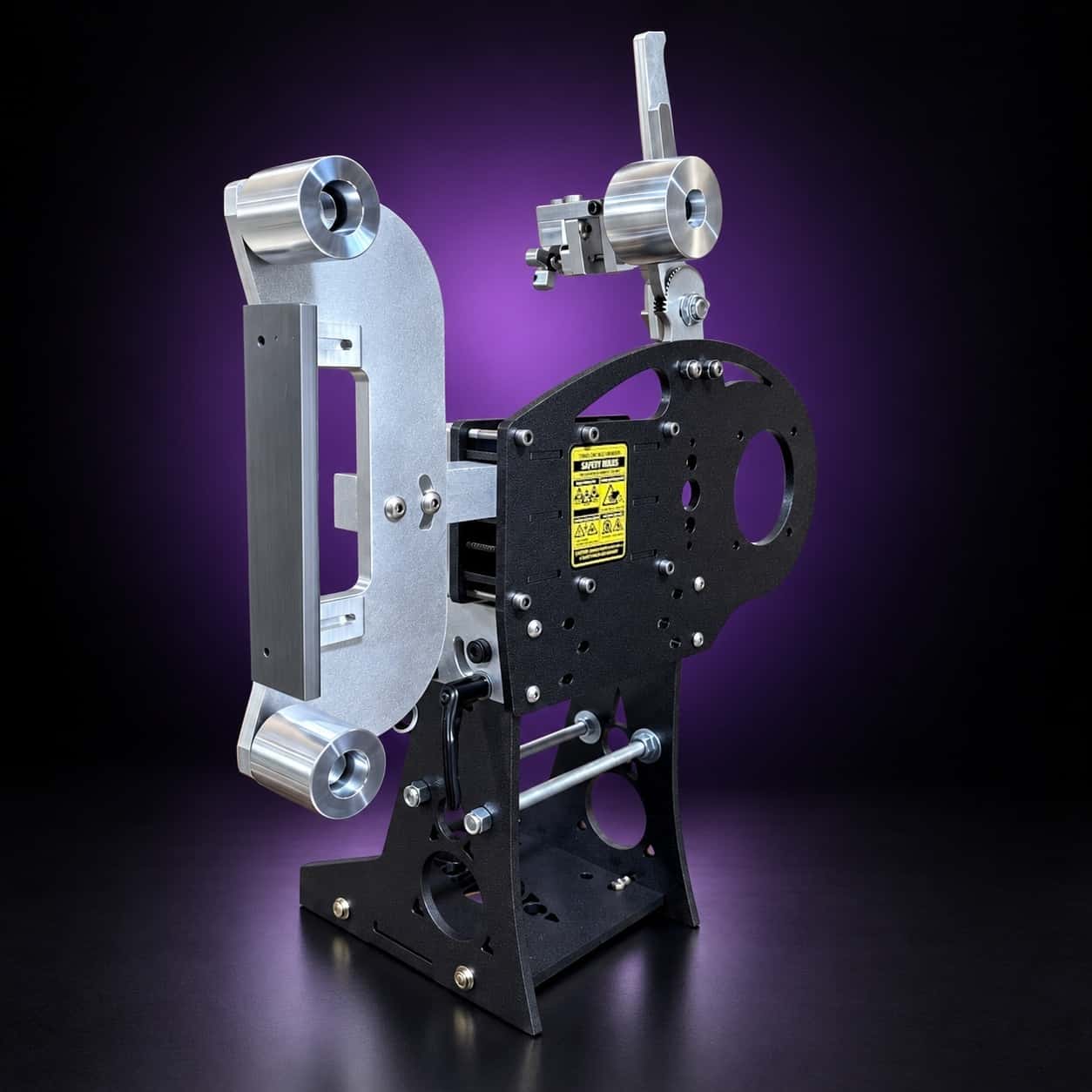
Current dual-axis platform with a steel chassis, more mass and less vibration.
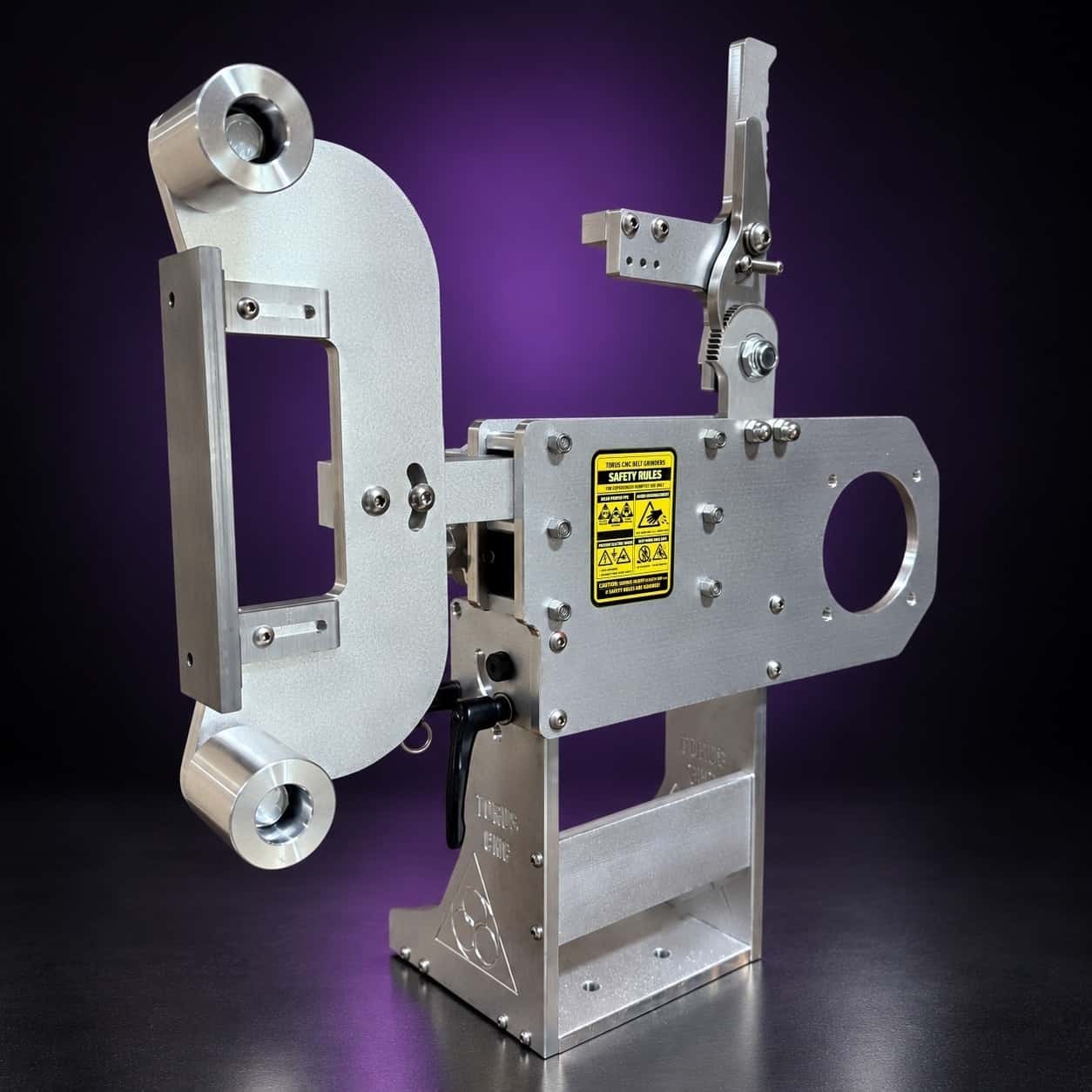
Prior-design aluminum chassis, 90-degree tilt and 1.5-inch tooling arms.
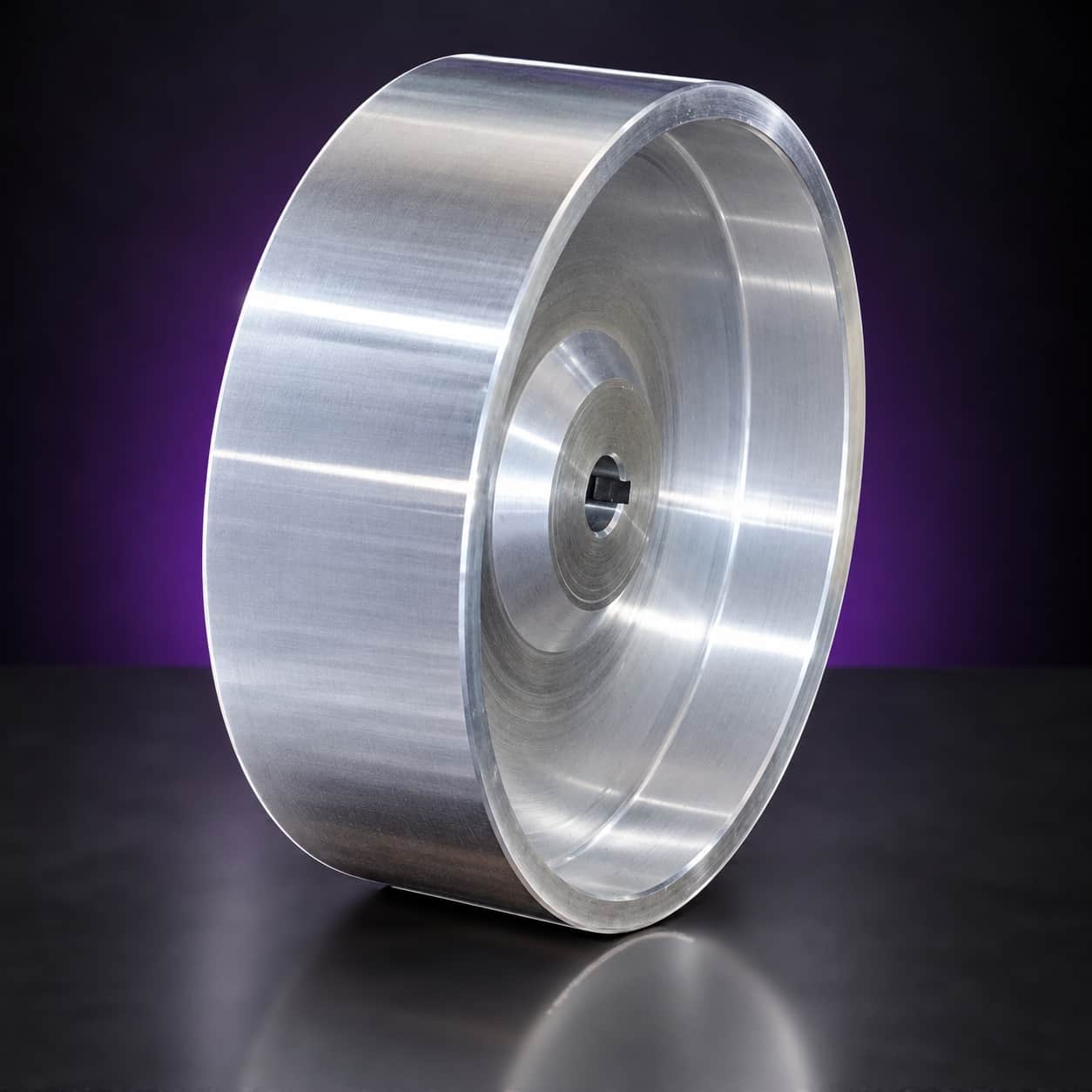
One-man shop
Send me your wheel size, motor and VFD details so I can compare them with the belt-speed calculation.