

Abrasives
Grinding and Sharpening O1: Belt Recommendations & Technique
O1 is one of the easiest steels in the shop to work, and one of the easiest to ruin with heat. It arrives as precision ground flat stock — genuinely flat…

Knife steel
The classic oil-hardening tool steel and the original precision ground flat stock: fine-grained, keen-edged and forgiving to grind, with genuinely good edge retention for a low-alloy steel — bought at the price of moderate toughness and full carbon-steel rust care.
Also known as
At a glance
The four meters are relative to the rest of the database. Composition is the published nominal analysis, not a mill certificate for your bar.
Working properties
commonly sold as precision ground flat stock (PGFS).
Kitchen knives, EDC and gentleman's folders, hunting and skinning blades, straight razors, woodworking tools and plane irons — anywhere a fine, keen, long-lasting slicing edge matters more than impact resistance. Also a superb first stock-removal steel for anyone with a kiln, since it arrives flat and true.
At the bench
Open the property you are worried about. Every note is written for the blade in your hand, not for a spec sheet.
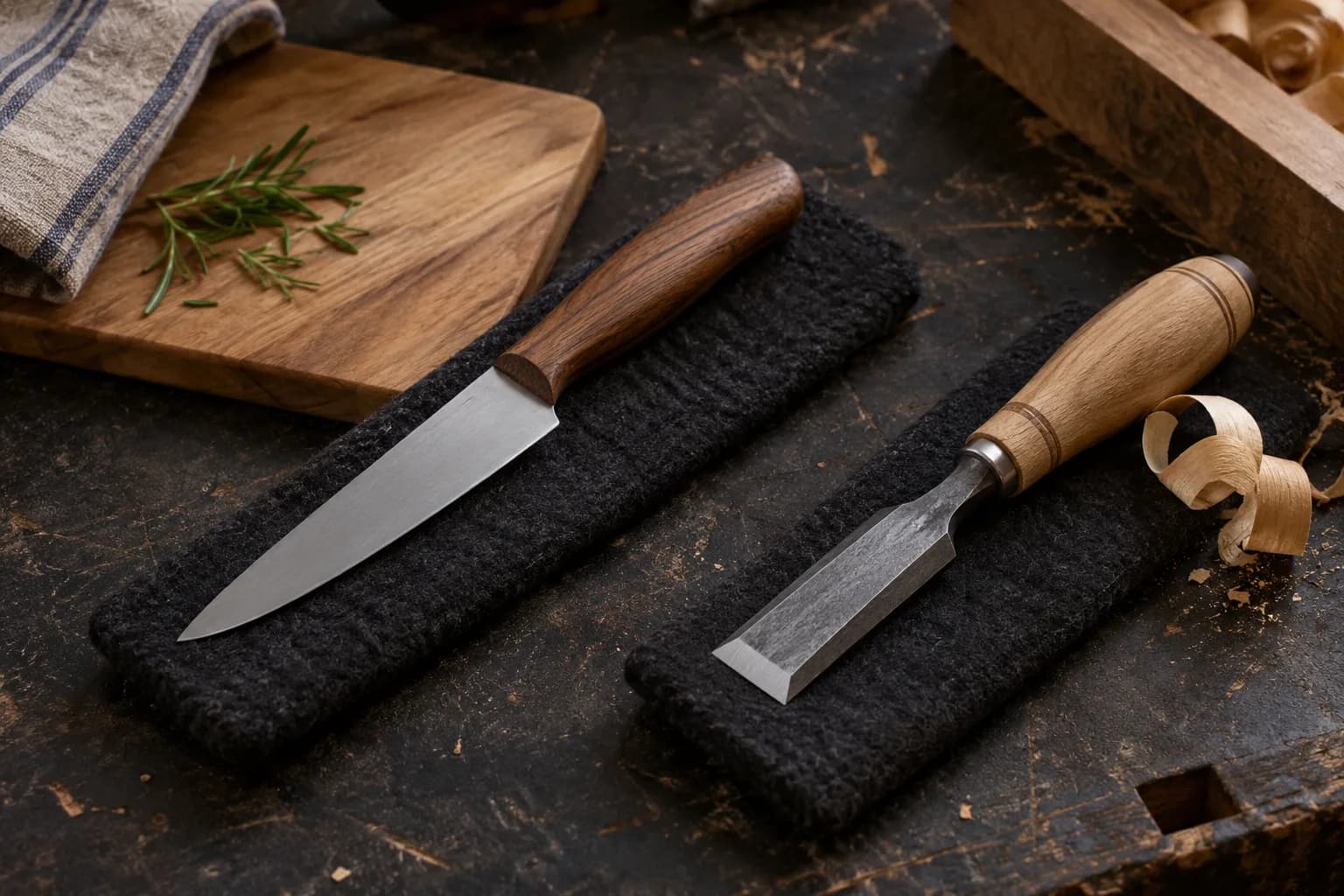
The full reference
O1 is the steel that taught a generation of knifemakers to heat treat. It is sold as precision ground flat stock — arriving flat, square and ready to profile — it hardens in ordinary oil at temperatures a modest kiln reaches easily, and it rewards a careful thermal cycle with a fine, keen edge at 59–61 HRC. What it does not offer is toughness. O1 is a slicer’s steel, not a chopper’s, and the makers who are happiest with it know that going in. Get the austenitizing temperature right and it is one of the most satisfying steels in a small shop.
For kitchen knives, EDC slicers, hunters and woodworking tools, yes — very good. Its fine carbide structure takes a keen edge and holds it noticeably better than a simple carbon steel like 1084. Its weakness is impact toughness: at 60 HRC it is well behind 5160, 80CrV2 or A2. Do not build a chopper out of it.
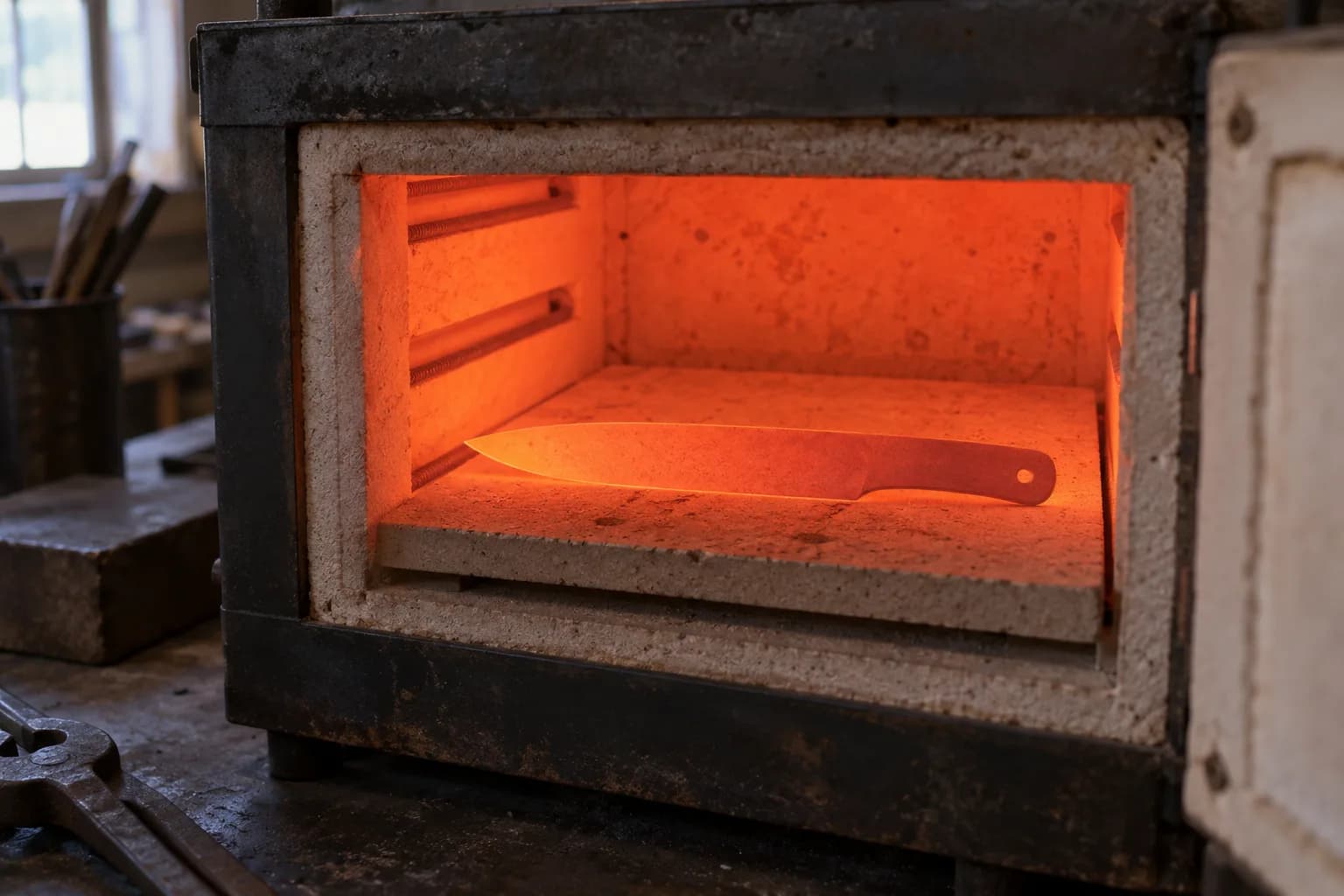
1475°F with a 10–15 minute soak. This is the detail most O1 tutorials get wrong. Larrin Thomas’s testing at Knife Steel Nerds found that pushing the austenitizing temperature up to 1550°F measurably reduces toughness without buying any useful hardness in return — the higher soak coarsens grain and retains more austenite for nothing. Hotter is not harder here. Stay at 1475°F.
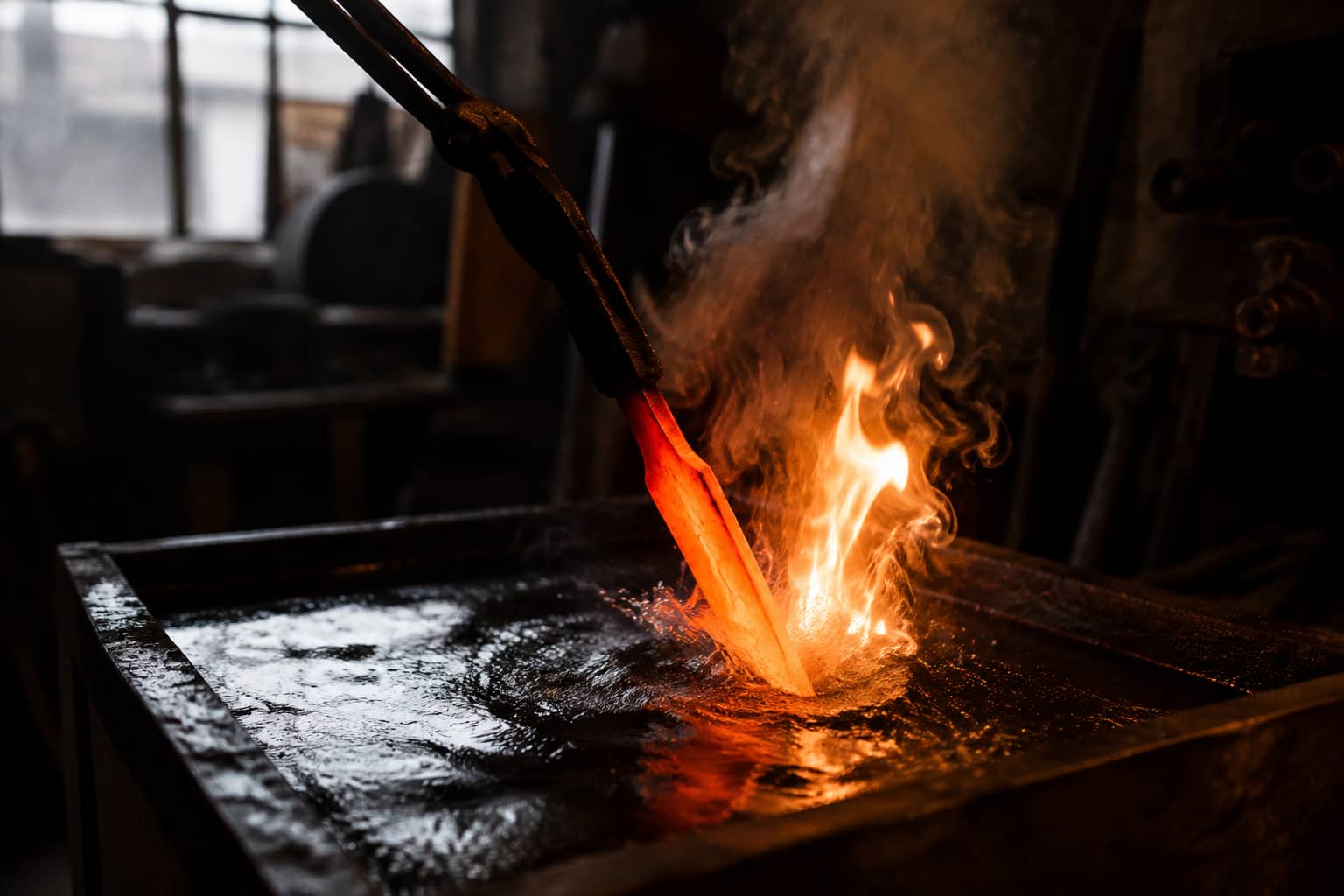
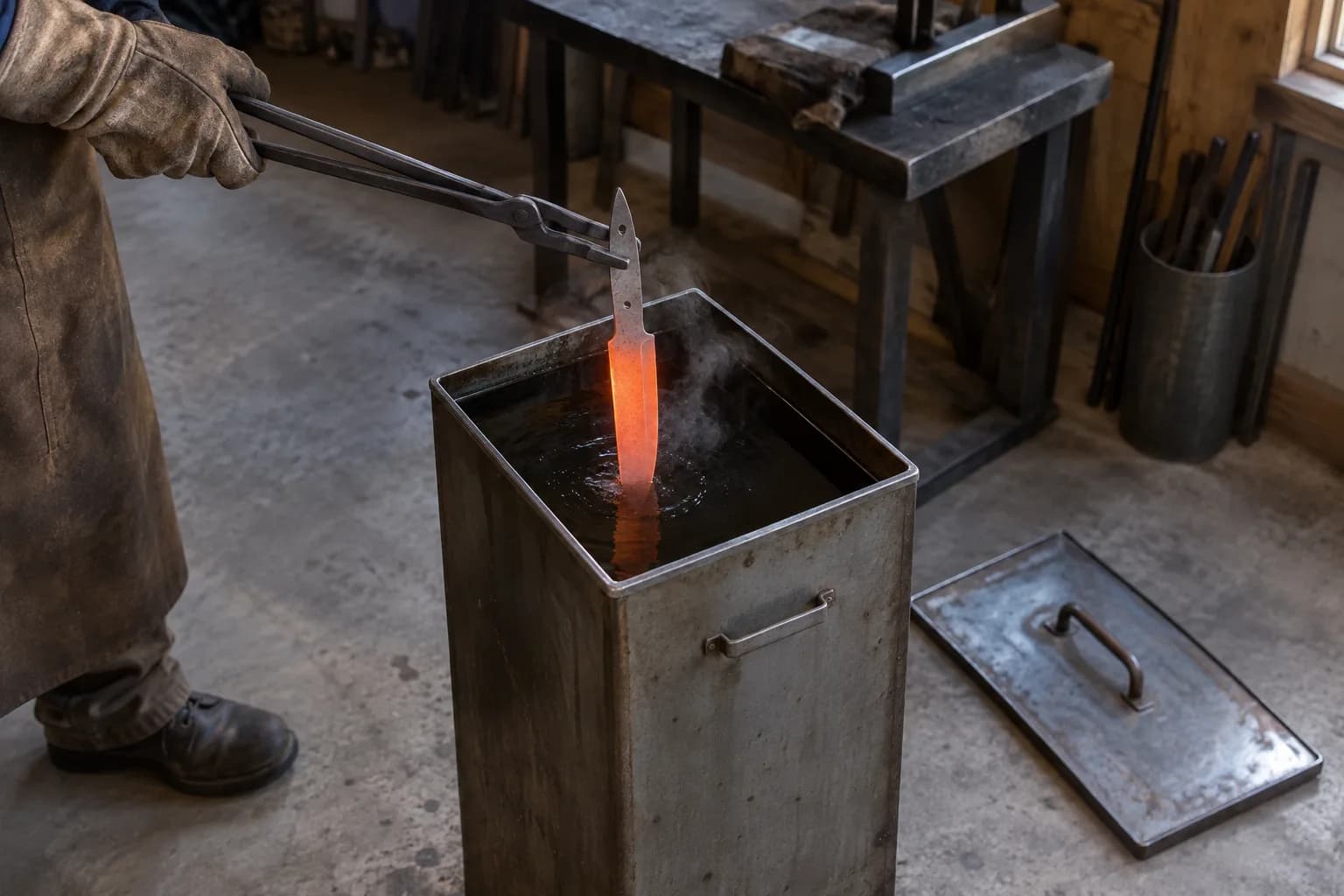
A medium-speed oil — Parks AAA or another oil in the 11-second class. O1 is deep hardening thanks to its manganese, chromium and tungsten, so it does not need a fast oil to make full hardness, and using one (Parks 50) mostly buys extra cracking and warping risk. Canola works in a pinch at temperature. Full breakdown in Knife Quench Oils Explained.
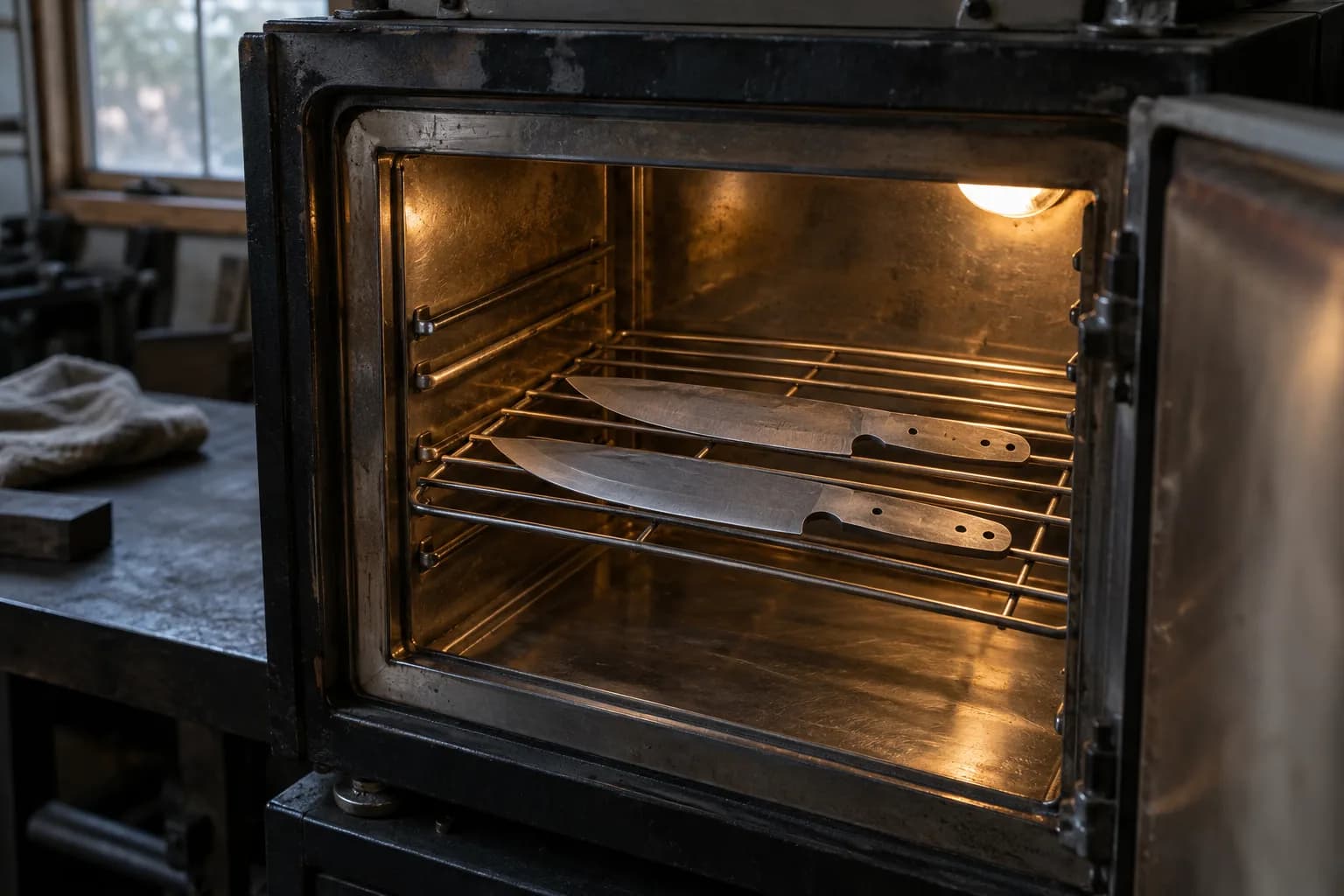
Temper twice for two hours at 350–450°F. Around 400°F lands near 59–61 HRC, which is the sweet spot for most knives; 350°F holds 61–62 for thin kitchen work; 450°F drops toward 57–58 if you want a little more forgiveness in a larger blade. See Why Hardness Matters for the tradeoff behind that choice.
No. The roughly 0.5% chromium in O1 is there for hardenability, not rust resistance — you need about 13% before a steel is stainless. O1 will flash rust on a fresh grind and spot overnight in a humid shop. Oil it, dry it after use, and consider a forced patina as a working finish.
1084 if you are heat treating in a forge with a magnet, O1 if you have a kiln or a controlled oven. 1084 forgives temperature error; O1 wants a real soak at a real number. The payoff for that extra control is a finer, longer-lasting edge — see our O1 vs 1084 comparison.
Head to head
Every matchup O1 appears in, dimension by dimension.
Keep reading
O1 is one of the easiest steels in the shop to work, and one of the easiest to ruin with heat. It arrives as precision ground flat stock — genuinely flat…

Every knife steel is iron plus a specific recipe of other elements, and each of those elements pulls the steel’s behavior in a particular direction…

Two steels with similar hardness numbers can feel completely different under a sharpening stone, one glides along smoothly, another feels like it’s…
Same bench
Whatever the steel, the grind is only as flat as the platen behind it. I machine the parts, hand-assemble and test Torus grinders in Sterling, Illinois.

Current dual-axis platform with a fiber-laser-cut 6061 chassis and single-knob tracking.

Current dual-axis platform with a steel chassis, more mass and less vibration.

Prior-design aluminum chassis, 90-degree tilt and 1.5-inch tooling arms.

One-man shop
Tell me what the blade is for and how you heat treat. I will tell you whether this is the steel I would use, and what I would use instead.