

Abrasives
Grinding and Sharpening A2: Belt Recommendations & Technique
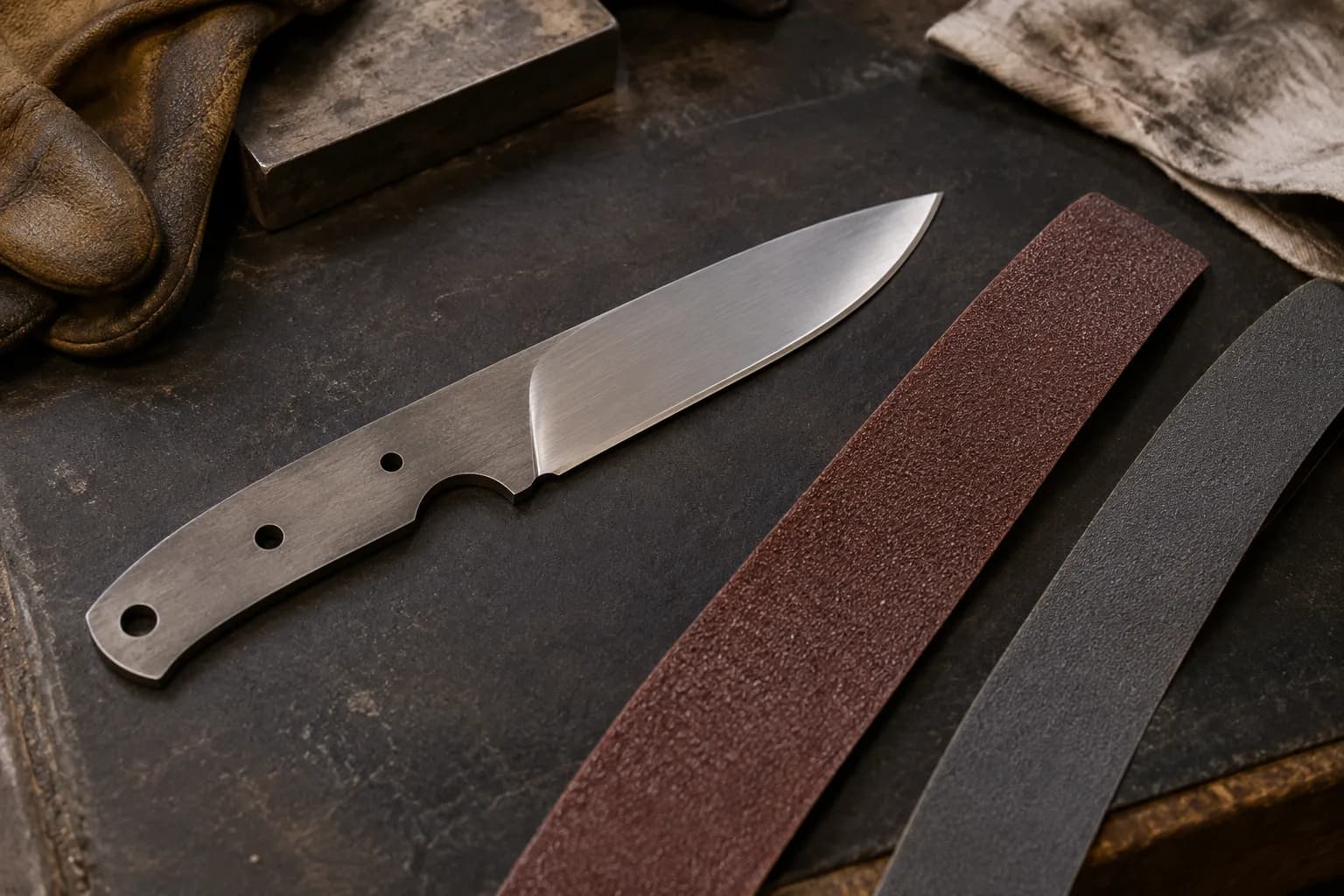
Good news first: A2 is one of the friendliest tool steels you will ever put on a 2×72. Its restrained carbide structure — the same trait that makes it…

Knife steel
Air-hardening tool steel with a toughness-first reputation: Bark River’s longtime hard-use steel and the classic plane-iron alloy, tougher than D2 and easy to grind, with moderate wear resistance and carbon-steel rust care.
Also known as
At a glance
The four meters are relative to the rest of the database. Composition is the published nominal analysis, not a mill certificate for your bar.
Working properties
Hard-use outdoor knives: camp blades, choppers, survival and bushcraft knives where edge stability under abuse beats maximum wear resistance. Also excellent in tough-duty kitchen knives (with rust care), and the classic steel for woodworking plane irons and chisels. A strong first tool steel for stock-removal makers with kiln access.
At the bench
Open the property you are worried about. Every note is written for the blade in your hand, not for a spec sheet.
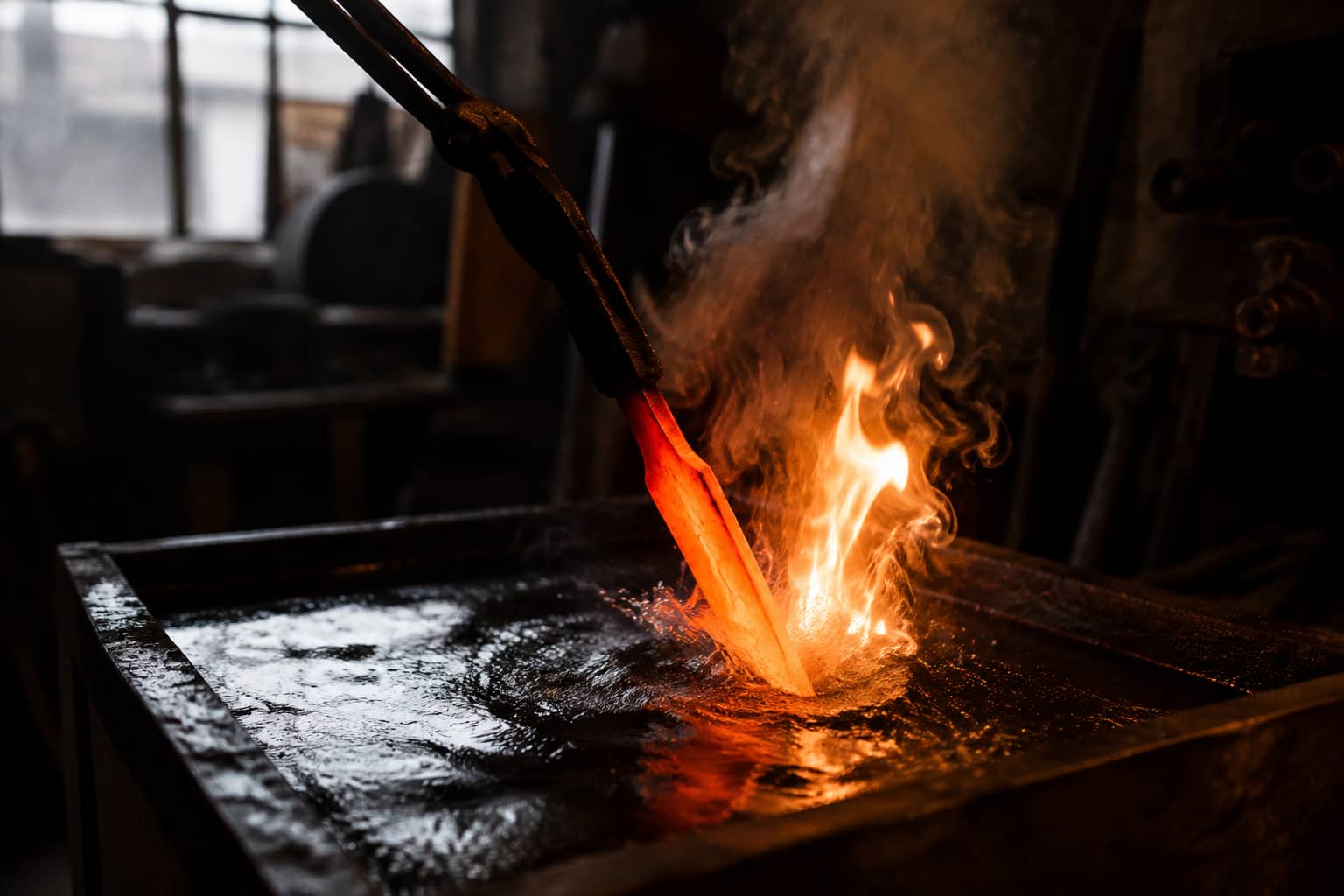
The full reference
A2 is the tool steel that refuses to go out of style: an air-hardening workhorse that has spent decades as the steel behind Bark River’s hard-use knives and Lie-Nielsen’s plane irons. Its pitch is simple — noticeably tougher than D2, far easier to grind and finish than the PM steels, and capable of a keen, fine edge — in exchange for moderate wear resistance and carbon-steel-style rust care. For makers, it has one more quiet gift: it hardens in air, which makes it one of the friendliest tool steels to heat treat flat.
No. A2 carries about 5% chromium — enough to slow rust slightly and support air hardening, nowhere near the ~13%+ that stainless requires. Treat it like carbon steel: keep it oiled, expect a patina, and consider a forced patina for protection.
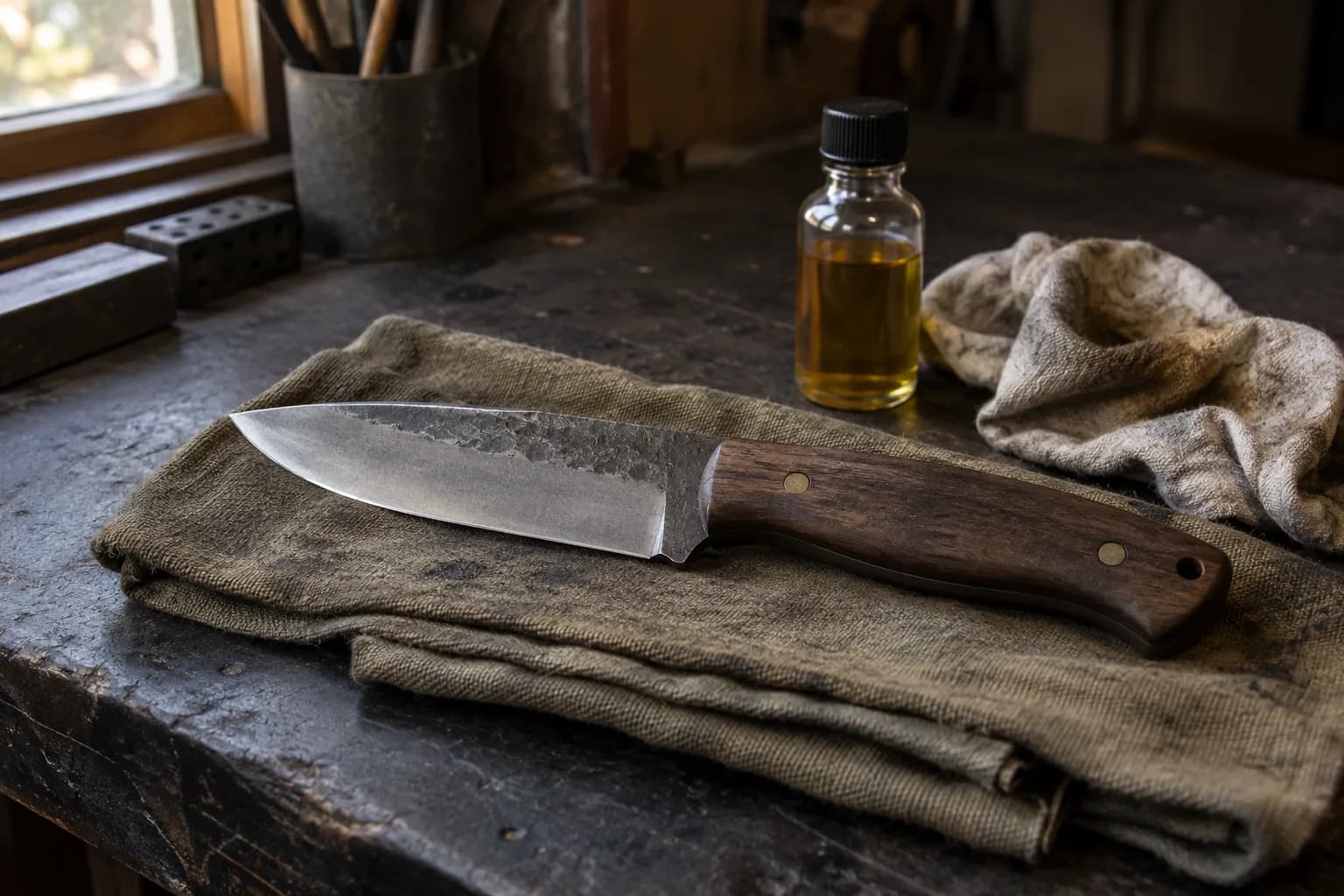
58–62 HRC is the working range. Austenitize at 1750–1800°F with a 30–45 minute soak, quench in air or between aluminum plates, and double temper — around 400°F lands near 60–62 HRC, 450–500°F trades a point of hardness for extra toughness. Lie-Nielsen runs its cryo-treated A2 irons at 60–62.
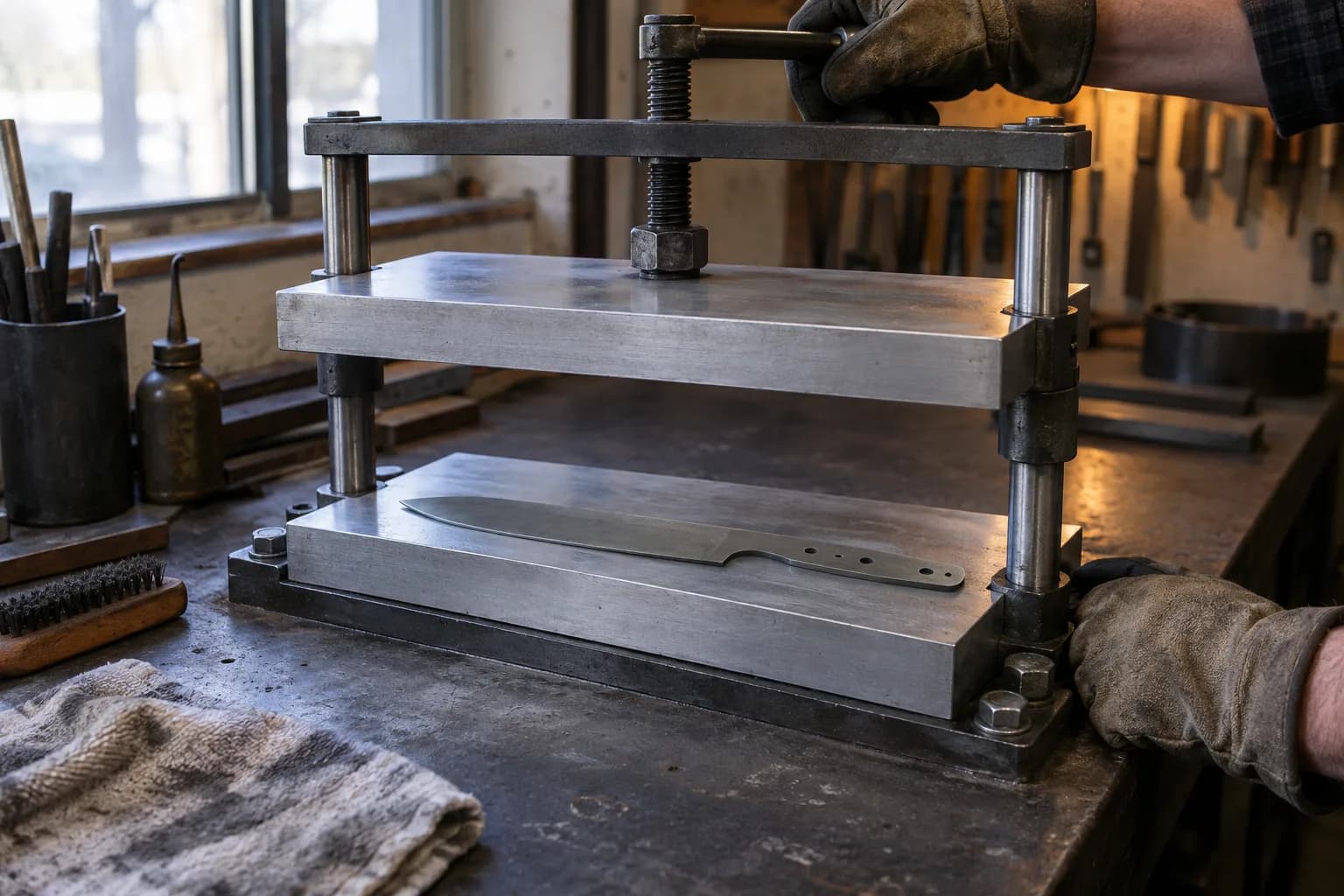
Genuinely, yes — especially hard-use blades. Its toughness-to-hardness balance made it Bark River’s signature steel for years of choppers and survival knives, and it takes a finer edge than its coarser tool-steel cousins. The tradeoffs: it needs rust care, and steels like CPM 3V now beat it on paper (at a price).
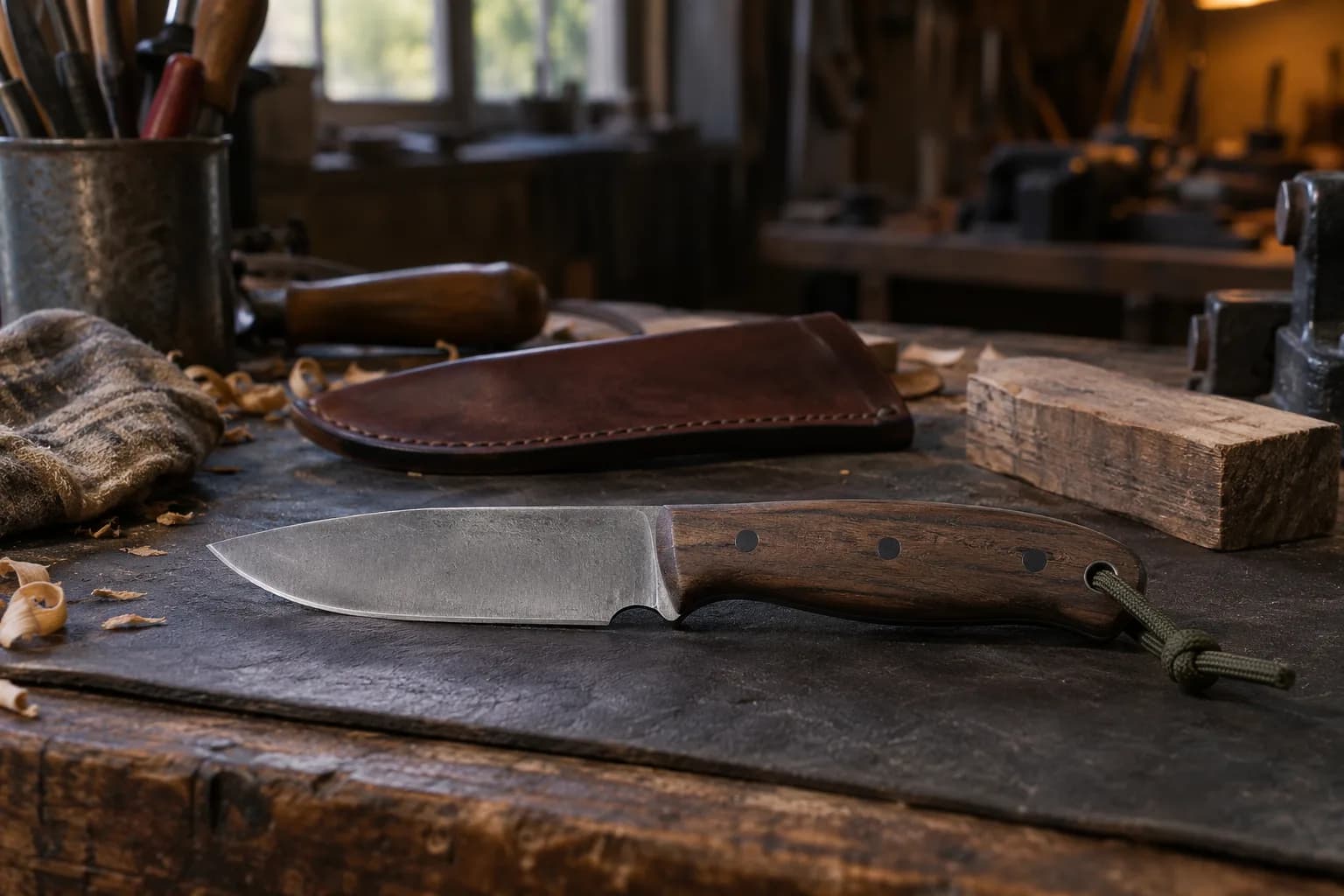
A2 for toughness, ease of grinding, and a cleaner fine edge; D2 for wear resistance and slightly better stain resistance. Full breakdown in our A2 vs D2 comparison.
Head to head
Every matchup A2 appears in, dimension by dimension.
Keep reading
Good news first: A2 is one of the friendliest tool steels you will ever put on a 2×72. Its restrained carbide structure — the same trait that makes it…

Every knife steel is iron plus a specific recipe of other elements, and each of those elements pulls the steel’s behavior in a particular direction…

Two steels with similar hardness numbers can feel completely different under a sharpening stone, one glides along smoothly, another feels like it’s…
Same bench
Whatever the steel, the grind is only as flat as the platen behind it. I machine the parts, hand-assemble and test Torus grinders in Sterling, Illinois.

Current dual-axis platform with a fiber-laser-cut 6061 chassis and single-knob tracking.

Current dual-axis platform with a steel chassis, more mass and less vibration.

Prior-design aluminum chassis, 90-degree tilt and 1.5-inch tooling arms.

One-man shop
Tell me what the blade is for and how you heat treat. I will tell you whether this is the steel I would use, and what I would use instead.