
Reference chart
Belt Speed by Task Chart (SFPM)
Set your VFD by the job: working SFPM ranges for hogging, bevel grinding, hardened steel, handles and leather, with percentages for a direct-drive 2x72 setup.
ForgeBrain
Belt speed, grind height, honing angle, steel weight and the charts behind them. Run the numbers before the work reaches the grinder.
5 live tools · 3 reference charts · nothing to install
Shop math
Every one runs in the page. The numbers you type stay in your browser, and the arithmetic is the same arithmetic printed underneath each tool.
Set your VFD by the job: working SFPM ranges for hogging, bevel grinding, hardened steel, handles and leather, with percentages for a direct-drive 2x72 setup.

Find your 2x72's surface speed in SFPM from drive wheel diameter and motor RPM, with optional VFD frequency, and see how hard a belt cuts and how hot it runs.

Turn stock thickness, edge thickness and bevel angle into the scribe height for a flat grind, with notes on reading the answer and using it at the machine.
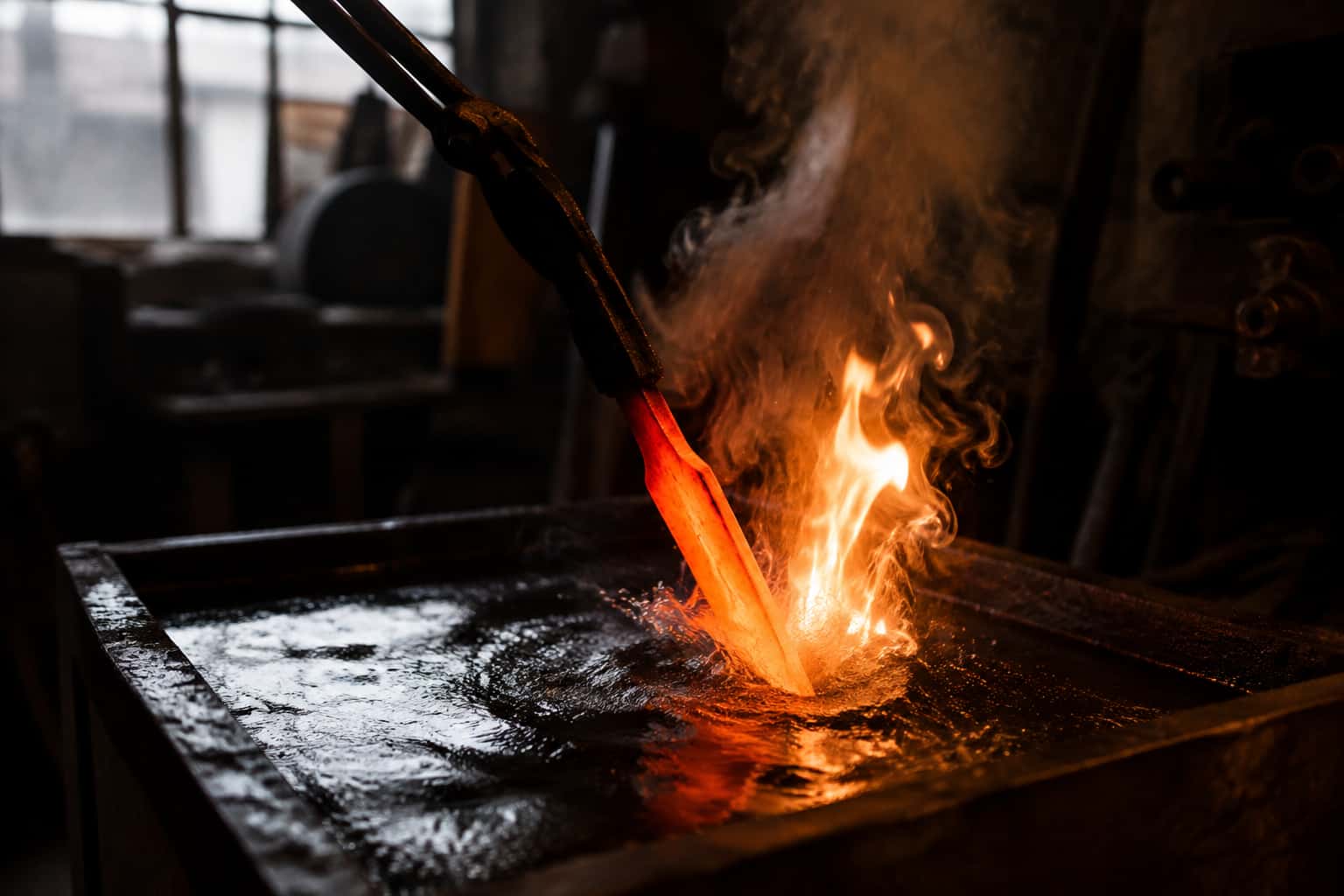
A chart that matches quench media, from fast Parks 50 oil to aluminum plates and still air, to the steels each suits, plus the mismatches that soften blades.
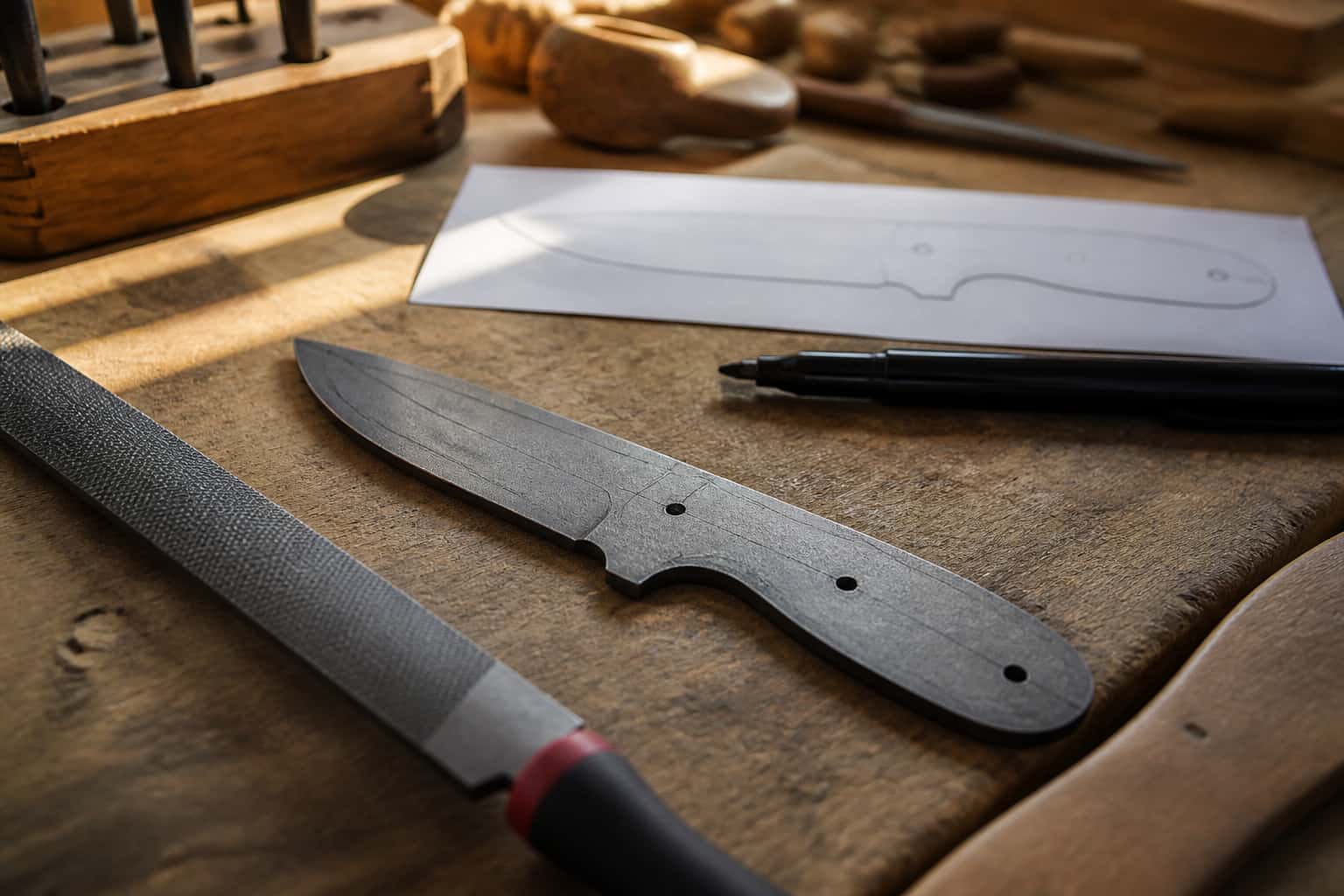
Enter spine thickness and blade width to find the honing angle built into a straight razor, per side and inclusive, with guidance against the classic targets.
Answer four questions - use, rust care, heat treat setup, sharpening gear - and get your three best-fit knife steels from the 33-steel database.

Enter length, width and thickness to get a steel bar's weight in pounds and ounces at 0.284 lb per cubic inch. Useful for blanks, bar orders and sword math.
The oxide temper colors of carbon steel from pale straw to blue, with temperatures, what each means for a blade, and grinder-burn diagnosis.
Why they exist
Each tool handles a calculation that comes up at the grinder or heat-treat bench.
Keep reading
Where each of these numbers comes from, and what to do when the answer surprises you.
Belts are the single biggest recurring cost in this hobby, and buying the wrong ones wastes money twice: once on belts that wear out fast, and again on…
Every Torus ships as a complete assembled chassis with the motor sold separately — which hands you the one decision that shapes the machine’s personality…
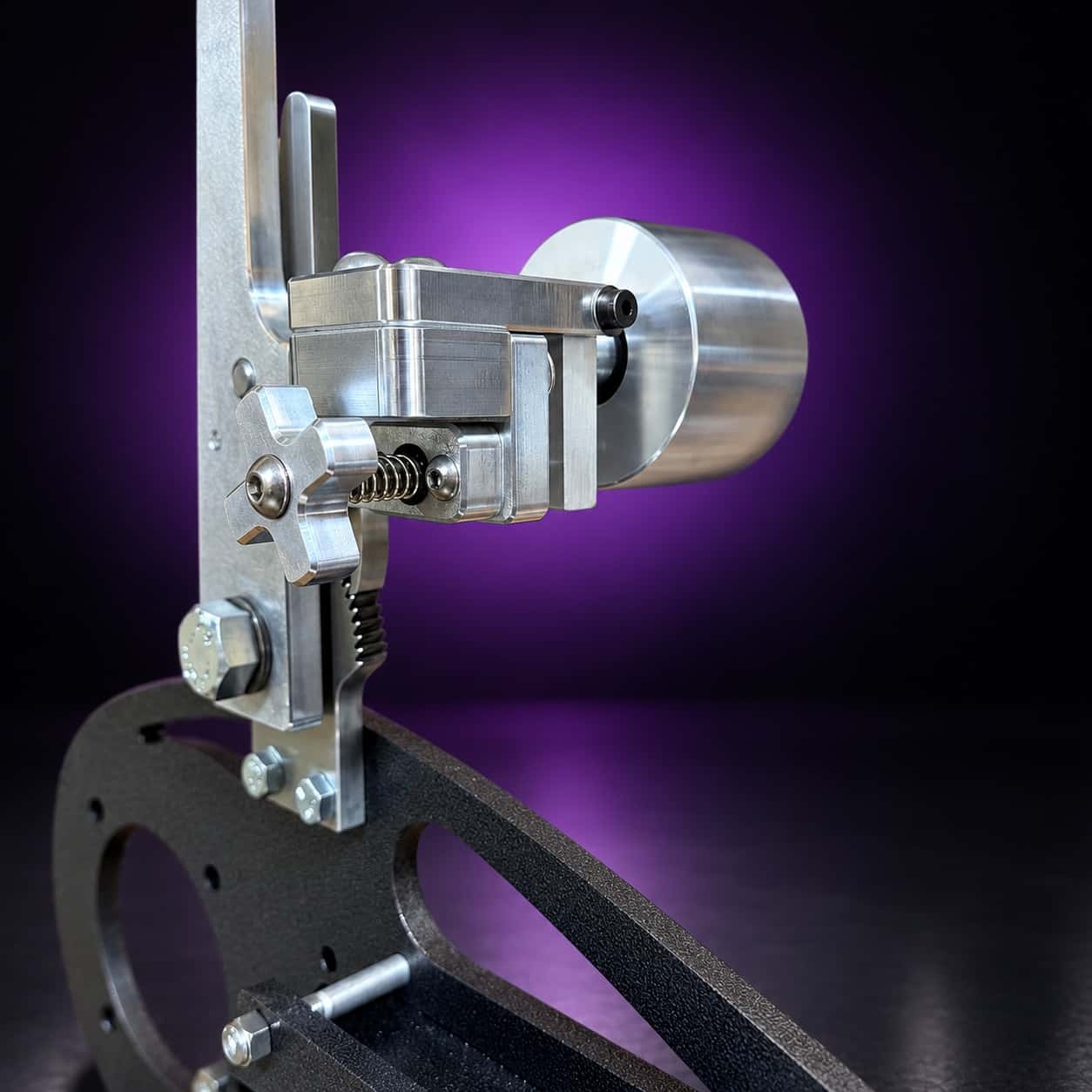
A 2×72 out of the box is a platform; the attachments are the machine. Every serious grinder task — flat bevels, hollow grinds, fullers, handle curves…
Same bench
These tools assume a grinder that holds its setting. I machine the parts, hand-assemble, track and test Torus grinders in Sterling, Illinois.

Current dual-axis platform with a fiber-laser-cut 6061 chassis and single-knob tracking.

Current dual-axis platform with a steel chassis, more mass and less vibration.

Prior-design aluminum chassis, 90-degree tilt and 1.5-inch tooling arms.
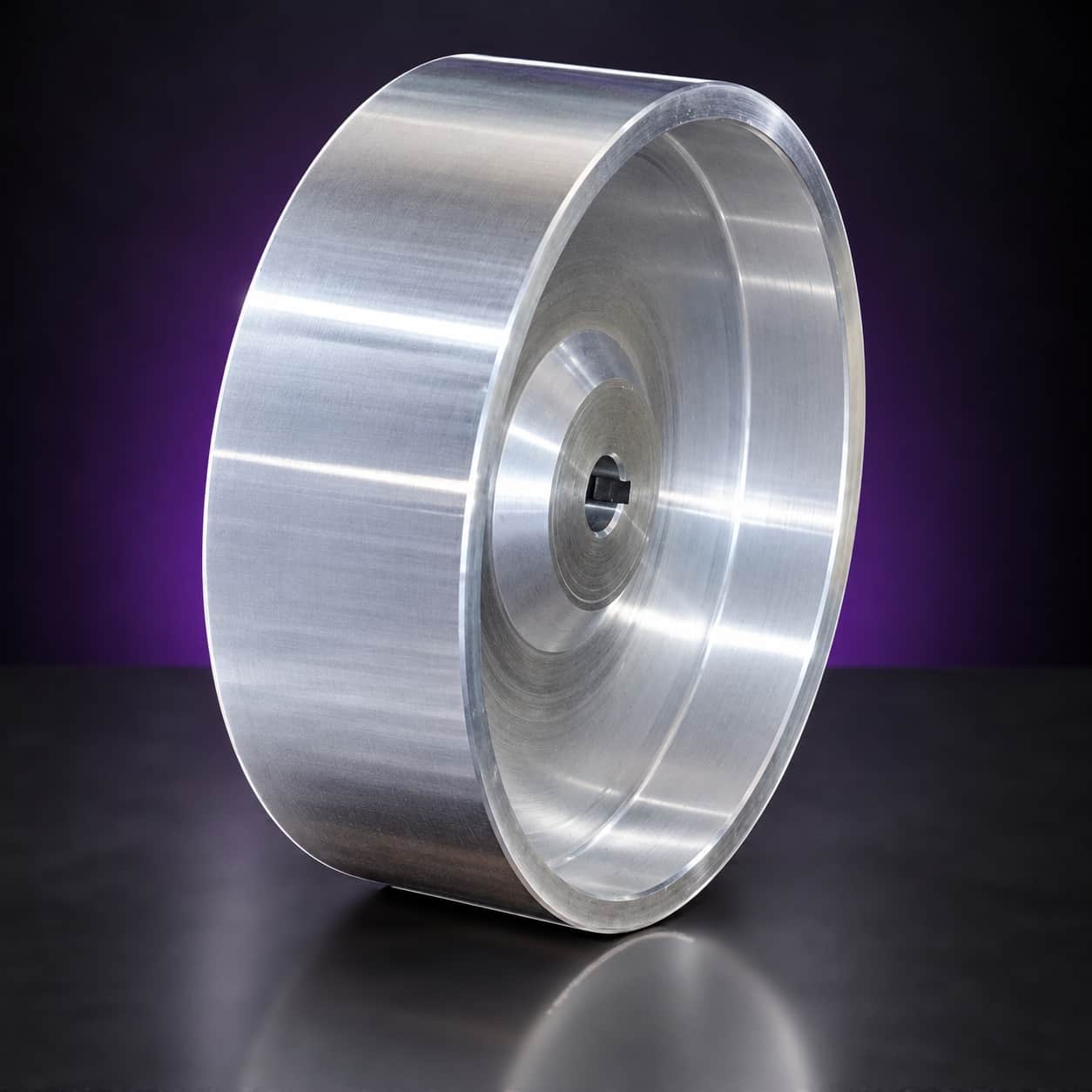
One-man shop
Send me the calculation you keep doing on the back of a belt sleeve so I can evaluate it for ForgeBrain.