

Abrasives
Grinding & Sharpening W1
W1 is the least demanding steel in the abrasives rack — it anneals dead soft, grinds like the simple steel it is, and sharpens on anything. Its shop…

Knife steel
The original water-hardening tool steel: ~1% clean simple carbon, shallowest hardening in common use, sold everywhere as cheap drill rod. Forge-friendly, file-friendly, one of the best hamon steels, 60-64 HRC working range - and it demands a committed fast quench and honest rust care. W2 without the vanadium.
Also known as
At a glance
The four meters are relative to the rest of the database. Composition is the published nominal analysis, not a mill certificate for your bar.
Working properties
water-hardening drill rod; 'silver steel' (UK, near equivalent).
no deliberate Cr/W/V
First knives from known steel, hamon projects on a budget, straight razors, kitchen and woodworking edges, integral and round-stock builds from drill rod, traditional and historical reproductions.
At the bench
Open the property you are worried about. Every note is written for the blade in your hand, not for a spec sheet.
The full reference
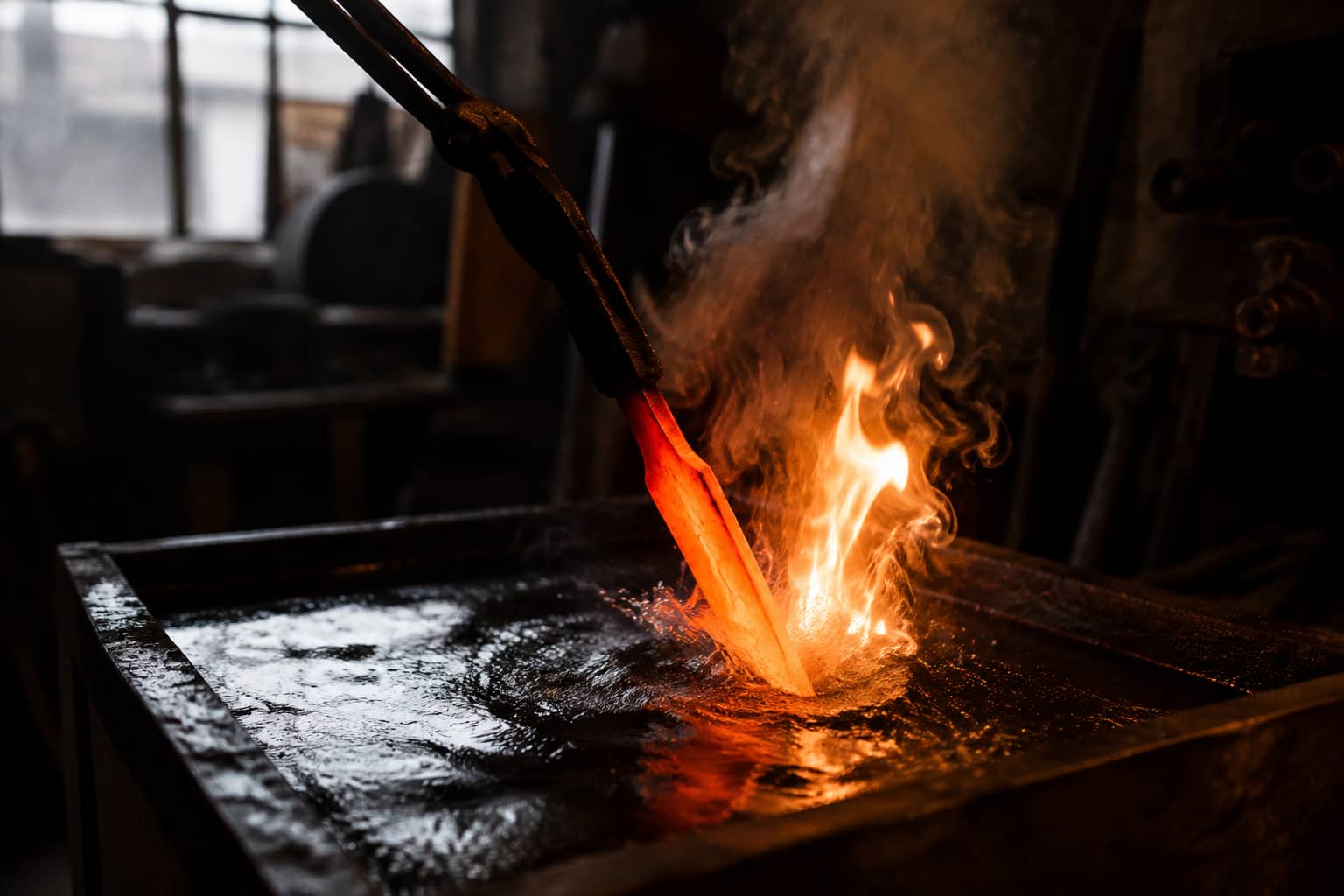
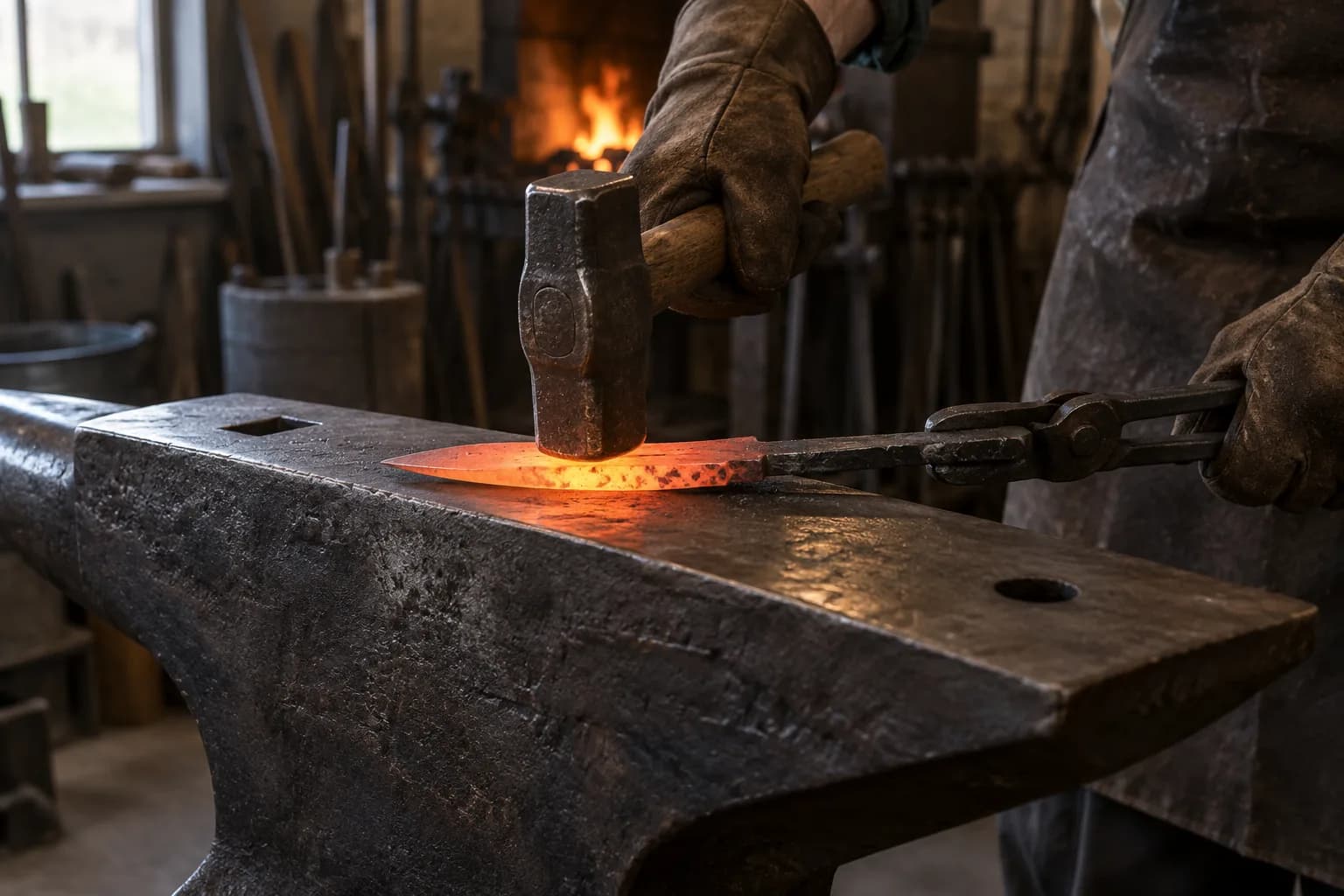
W1 is where American tool steel began: the plain water-hardening steel that made the files, chisels, drills and knives of the industrial age. It is essentially very clean simple carbon steel — about 1% carbon and almost nothing else — which makes it the shallowest-hardening, most traditional blade steel commonly sold today, and one of the cheapest and easiest to find: every industrial supplier stocks it as drill rod and flat stock. For makers it is a time machine with modern quality control: forge-friendly, file-friendly, hamon-happy, and demanding exactly one thing — a committed quench.
The W series (“water hardening”) is the oldest tool-steel family, and W1 is its plain-carbon member — nominally 0.7–1.5% carbon with typical knife stock near 1.0%, plus traces of manganese and silicon. No chromium, no tungsten (that is W2’s vanadium cousin territory), nothing to deepen hardening. It is sold everywhere as drill rod, which makes it one of the most accessible known-chemistry steels a beginner can buy — a genuine advantage over mystery scrap.
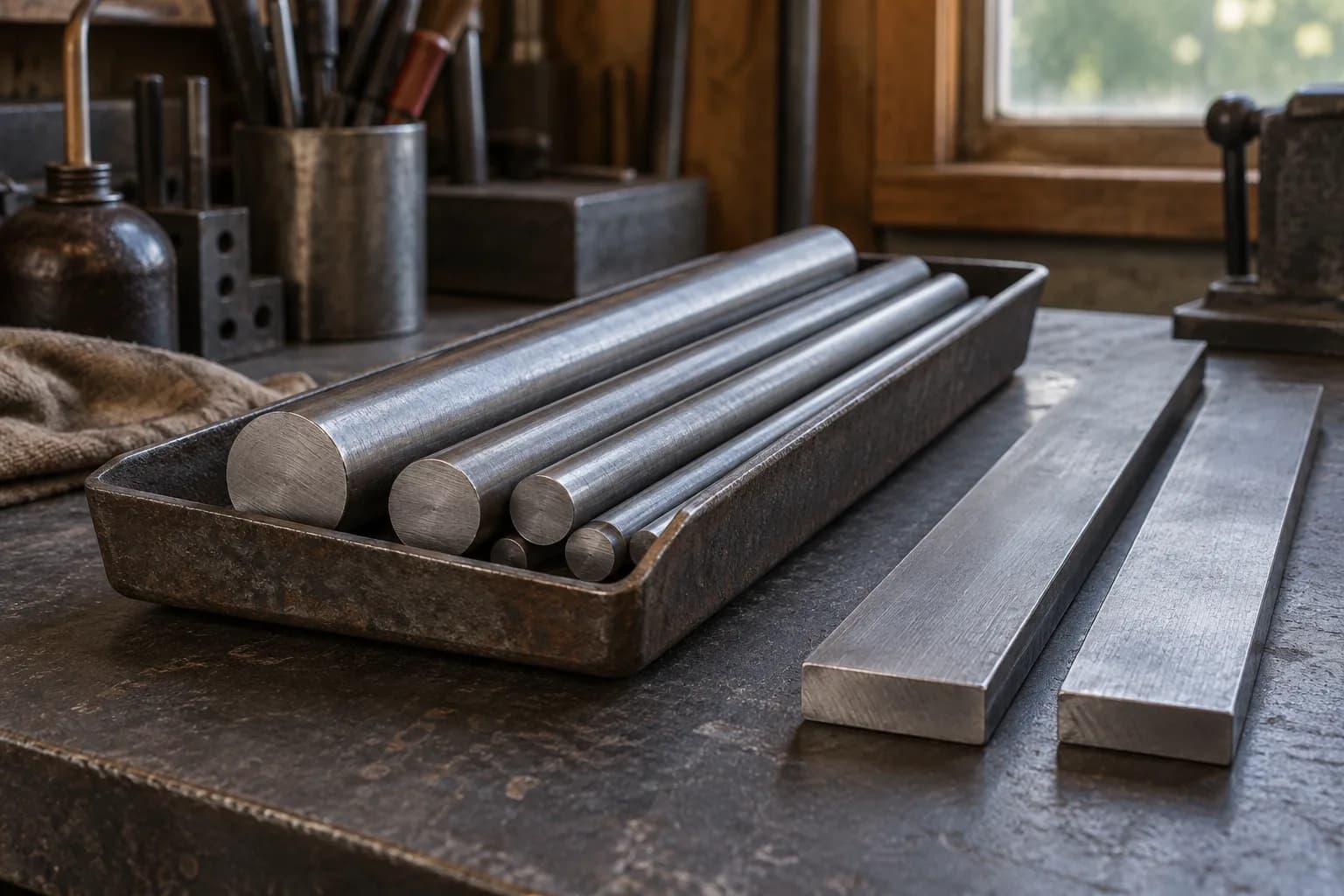
Thin blades: no — fast oil (Parks 50 class) hardens knife cross-sections and spares you the drama; this is the standard modern practice. Thick sections: the name means it — W1’s shallow hardenability needs water or brine to reach full hardness past roughly quarter-inch thickness, with the crack risk that implies. Interrupted quenches (water in, oil out) are traditional and effective and still an expert’s game. Start with fast oil and thin stock; details in Quench Oils Explained.
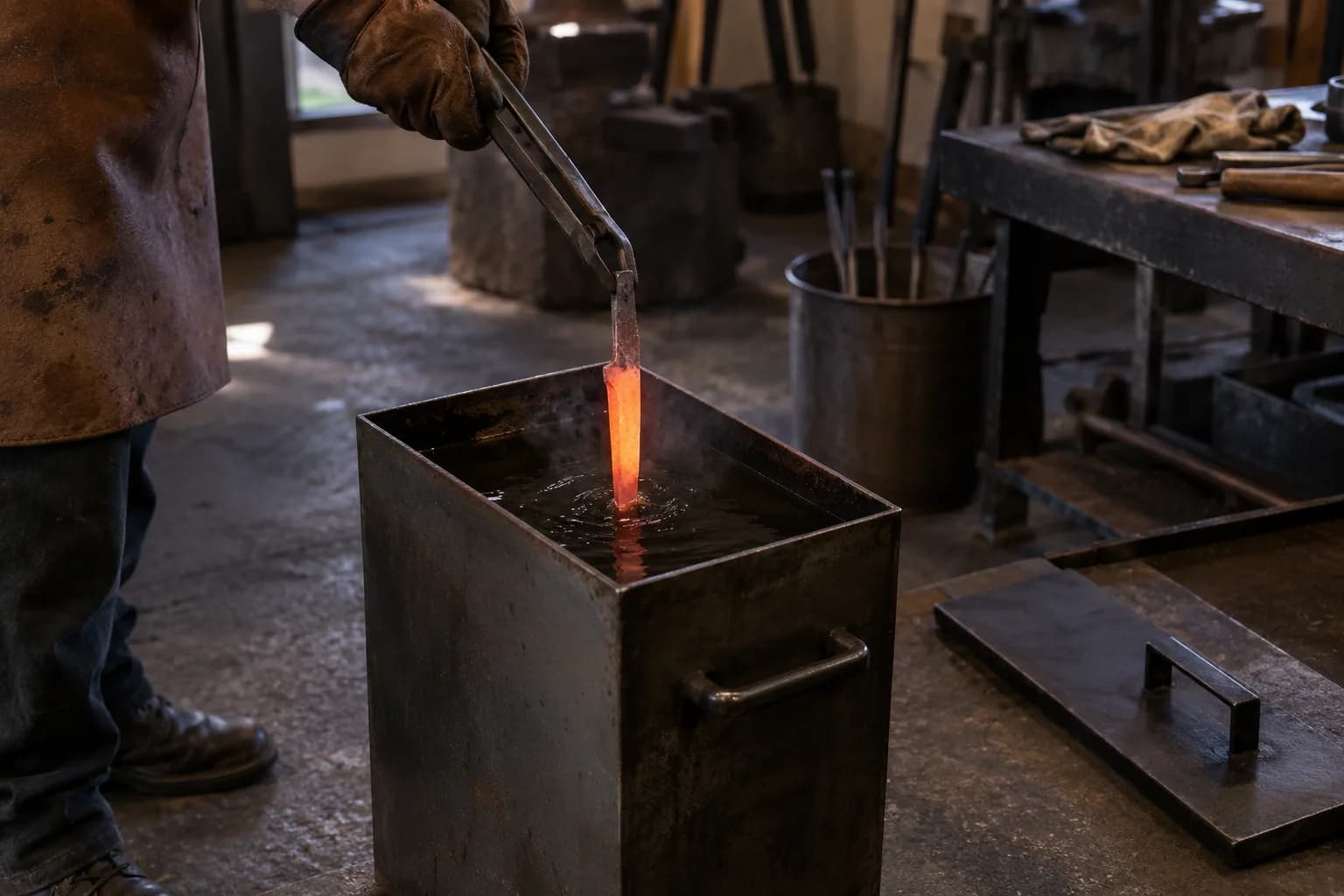
One of the best. Shallow hardening is the entire mechanism of clay-quench differential hardening, and W1’s purity draws crisp bright transition lines — it is W2 without the vanadium: slightly less refined activity, noticeably lower price, same tradition. The method lives in our differential heat treat guide; the sibling rivalry lives in W1 vs W2.
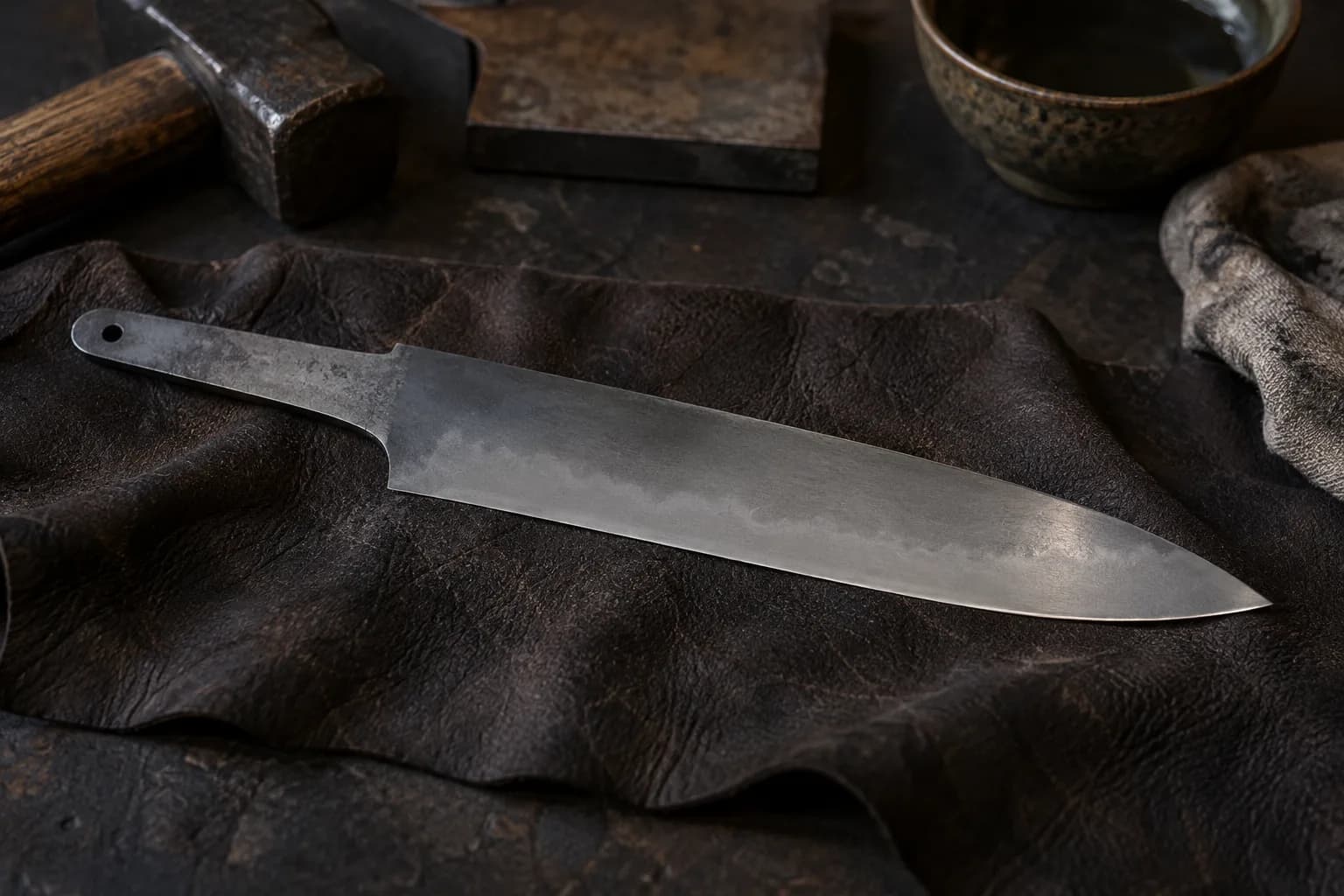
Fully quenched it hits the mid-60s before temper; working knives land 60–64 depending on job — razors and fine slicers high, hunters and camp blades lower. Austenitize 1450–1475°F, short soak, fast quench, temper immediately (W-steels crack while you hesitate) twice at 300–425°F. Forge heat treat with a magnet and care genuinely works — this steel predates pyrometers by a century.
Close cousins — W1 is typically cleaner and slightly shallower-hardening than 1095, with drill-rod availability 1095 cannot match in round stock. Edge character and care requirements are near-identical. If you are choosing between them for a hamon project, W-series purity earns the nod; for general carbon blades, buy whichever is cheaper in the size you need.
Beginners wanting known steel at scrap prices, traditionalists, hamon makers on a budget, and anyone forging integral or round-stock projects (that drill rod again). The contract is the usual carbon one: it rusts enthusiastically — oil it or patina it — and it rewards the maker who commits to the quench.
Head to head
Every matchup W1 appears in, dimension by dimension.
Keep reading
W1 is the least demanding steel in the abrasives rack — it anneals dead soft, grinds like the simple steel it is, and sharpens on anything. Its shop…

Every knife steel is iron plus a specific recipe of other elements, and each of those elements pulls the steel’s behavior in a particular direction…

Two steels with similar hardness numbers can feel completely different under a sharpening stone, one glides along smoothly, another feels like it’s…
Same bench
Whatever the steel, the grind is only as flat as the platen behind it. I machine the parts, hand-assemble and test Torus grinders in Sterling, Illinois.

Current dual-axis platform with a fiber-laser-cut 6061 chassis and single-knob tracking.

Current dual-axis platform with a steel chassis, more mass and less vibration.

Prior-design aluminum chassis, 90-degree tilt and 1.5-inch tooling arms.

One-man shop
Tell me what the blade is for and how you heat treat. I will tell you whether this is the steel I would use, and what I would use instead.