

Abrasives
Grinding & Sharpening 26C3
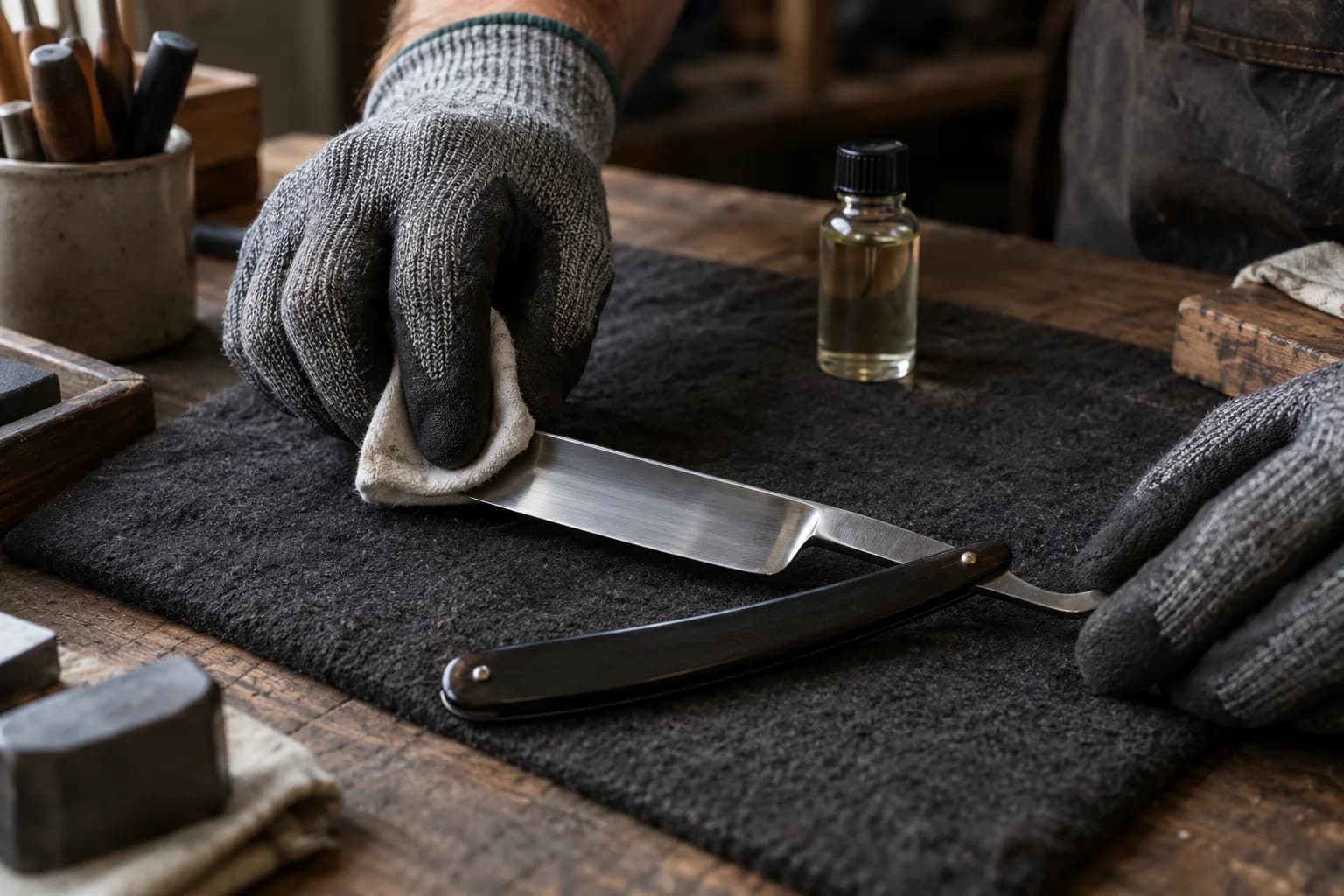
26C3 is bought for one reason — the finest edge simple steel takes — so its shop story is less about surviving the grind (easy) and more about not…

Knife steel
Uddeholm's 'Spicy White': ~1.25% carbon, ultra-clean and nearly alloy-free - the Western take on Japanese White steel. Scary-keen fine edges at 62-66 HRC, superb razors and kitchen knives, gorgeous hamon capability. Wants a fast oil quench, modest wear resistance, zero rust resistance - the classic fine-carbon contract.
Also known as
At a glance
The four meters are relative to the rest of the database. Composition is the published nominal analysis, not a mill certificate for your bar.
Working properties
closest kin: Hitachi Shirogami White #1 (similar chemistry, slightly less hardenable).
ultra-low impurities (P, S)
Straight razors, Japanese-style kitchen knives (wa-gyuto, petty, nakiri), fine EDC slicers, hamon showpieces, woodworking edges - anywhere pure keenness is the product and the owner accepts carbon-steel care.
At the bench
Open the property you are worried about. Every note is written for the blade in your hand, not for a spec sheet.
The full reference
26C3 is the West’s answer to the legendary Japanese White steels — an ultra-clean, ultra-simple high-carbon steel from Uddeholm that the knife community nicknamed “Spicy White.” At roughly 1.25% carbon with almost nothing else in the mix, it is engineered for one pursuit: the finest, keenest edge simple steel can take. Razor makers built its reputation; kitchen-knife makers and hamon chasers keep it growing. It asks for a fast quench and honest rust care, and it pays in edges that feel sharpened rather than manufactured.
Uddeholm’s ~1.25% carbon, ultra-low-alloy steel — extremely clean, with just enough manganese and chromium to harden more reliably than Hitachi White #1, whose composition it closely resembles. The nickname (credited to steel figures in the maker community) captures it: White-steel purity with a pinch more hardenability. It comes from the razor-steel tradition, and it still makes superb ones — see our straight razor geometry guide.
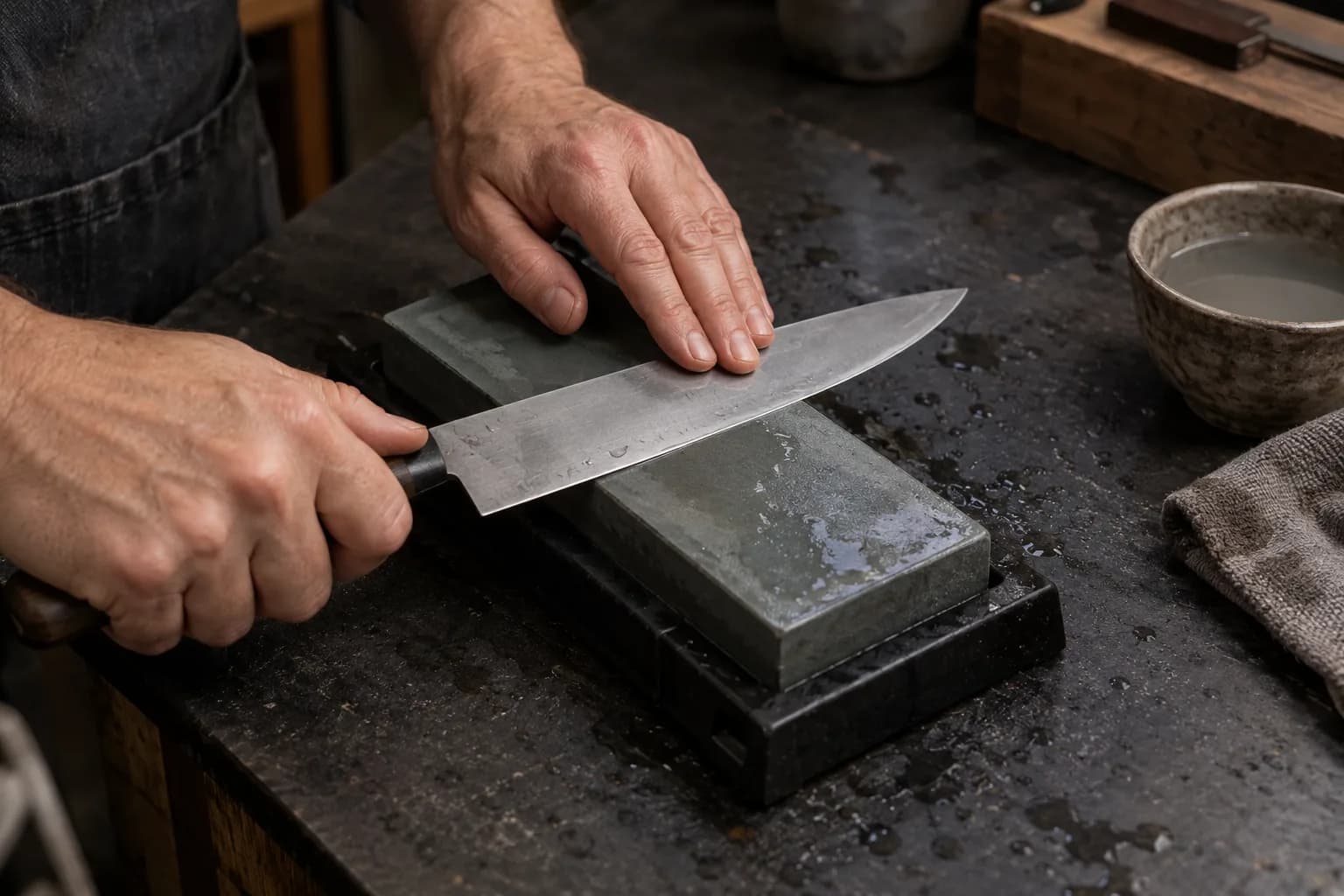
The point of the steel. Minimal alloy means almost pure fine iron carbide in a clean matrix — edges get scary-keen on ordinary stones, respond beautifully to strops, and reach the high hardness (64-66 HRC is attainable) where thin kitchen edges stay stable. Wear resistance is modest: this is an edge you touch up often and enjoy every time, the White-steel personality exactly. Compare the philosophy against 1095 in our 26C3 vs 1095 comparison.
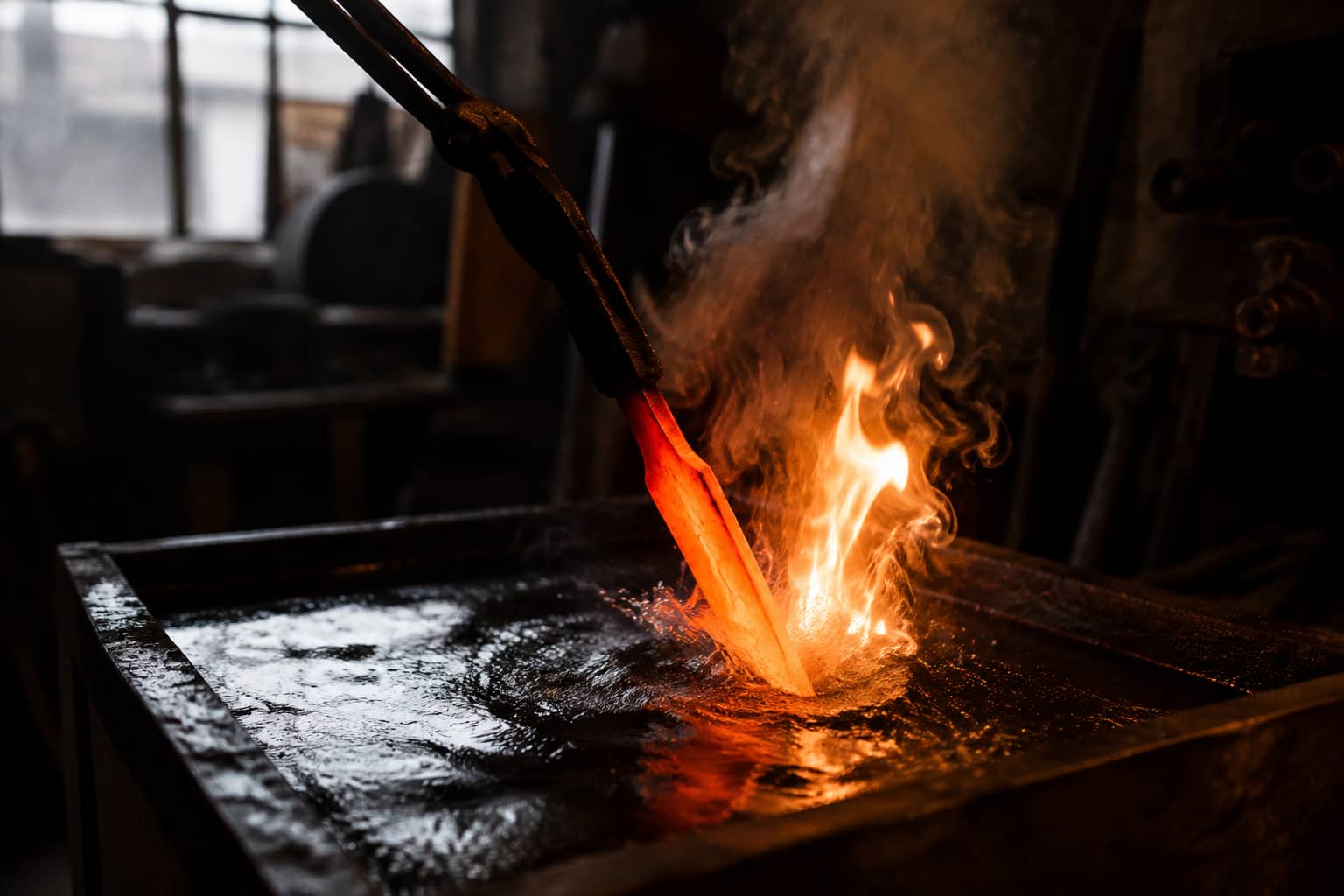
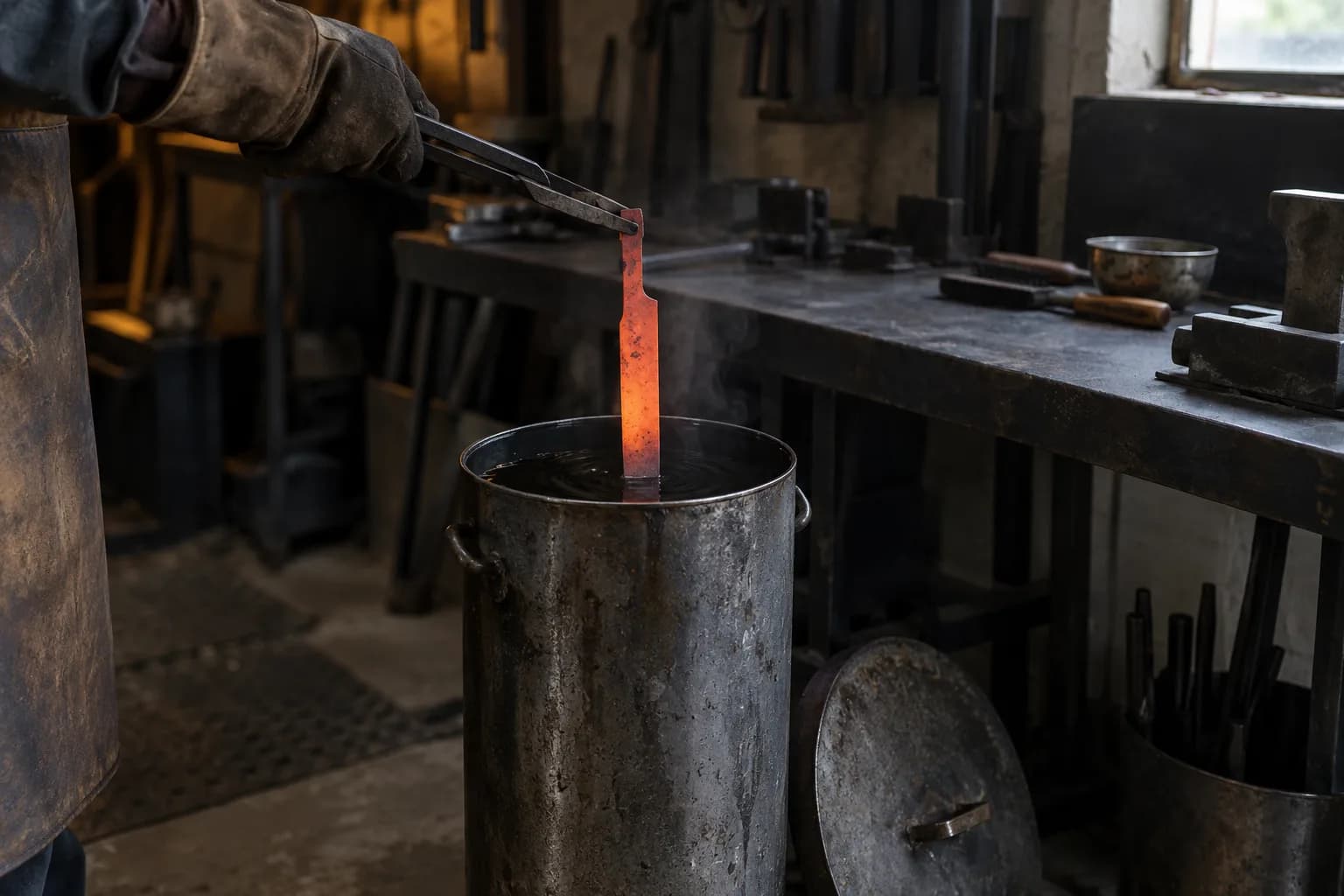
Like a White steel with training wheels. Austenitize around 1450–1475°F with a short soak, quench in FAST oil — Parks 50 class; it is shallow-hardening and ordinary medium oils can leave soft spots, though it is more forgiving than true W-series steels — and temper 300–400°F to target. It hardens in a forge with care, loves a proper kiln, and rewards tight thermal cycling with visibly finer grain. Decarb runs shallow but real; leave grinding allowance.
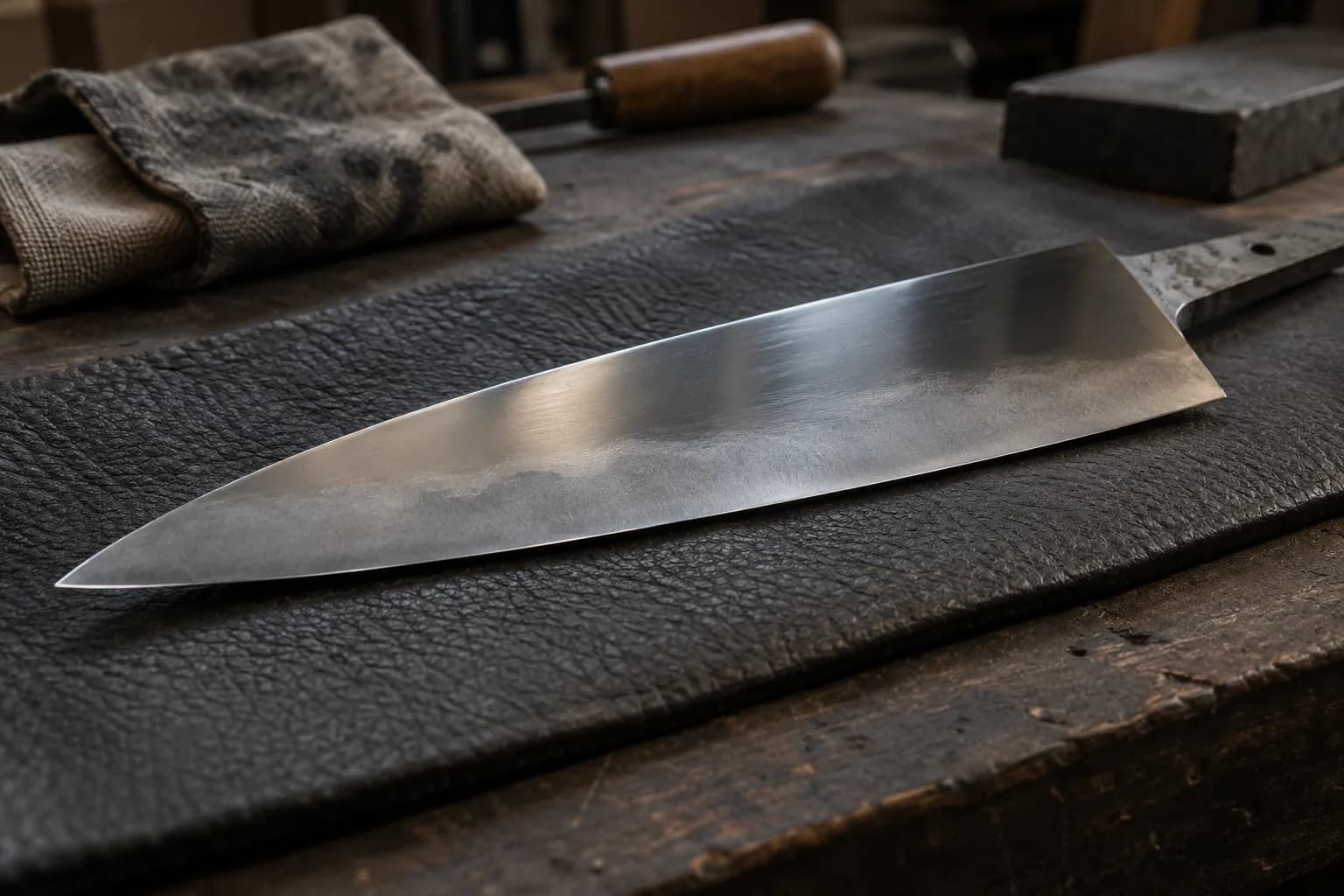
Yes — beautifully. Shallow hardenability is exactly what clay-quench differential hardening wants, and 26C3 has become a favorite hamon steel alongside W2: crisp transition lines with fine misty activity, on a steel cleaner than the traditional options. Method in our differential heat treat guide. W2 keeps the edge in vividness for showpiece hamon; 26C3 counters with edge quality.
Reasonable for its carbon class when hardness is chosen sanely — at 62-64 it serves kitchen and EDC slicers well; at razor hardness it is a razor, not a camp knife. It is not a chopper steel and never claimed to be: that job belongs to 5160 and 8670.
Razor makers, kitchen-knife makers chasing the Japanese-white edge feel without importing it, hamon artists, and anyone selling “sharpest knife you have ever owned” as the product. Owners get the carbon-steel contract: keep it dry, oil it, or force a patina and stop worrying.
Head to head
Every matchup 26C3 appears in, dimension by dimension.
Keep reading
26C3 is bought for one reason — the finest edge simple steel takes — so its shop story is less about surviving the grind (easy) and more about not…

Every knife steel is iron plus a specific recipe of other elements, and each of those elements pulls the steel’s behavior in a particular direction…

Two steels with similar hardness numbers can feel completely different under a sharpening stone, one glides along smoothly, another feels like it’s…
Same bench
Whatever the steel, the grind is only as flat as the platen behind it. I machine the parts, hand-assemble and test Torus grinders in Sterling, Illinois.

Current dual-axis platform with a fiber-laser-cut 6061 chassis and single-knob tracking.

Current dual-axis platform with a steel chassis, more mass and less vibration.

Prior-design aluminum chassis, 90-degree tilt and 1.5-inch tooling arms.

One-man shop
Tell me what the blade is for and how you heat treat. I will tell you whether this is the steel I would use, and what I would use instead.