
Reference chart
Belt Speed by Task Chart (SFPM)
Set your VFD by the job: working SFPM ranges for hogging, bevel grinding, hardened steel, handles and leather, with percentages for a direct-drive 2x72 setup.
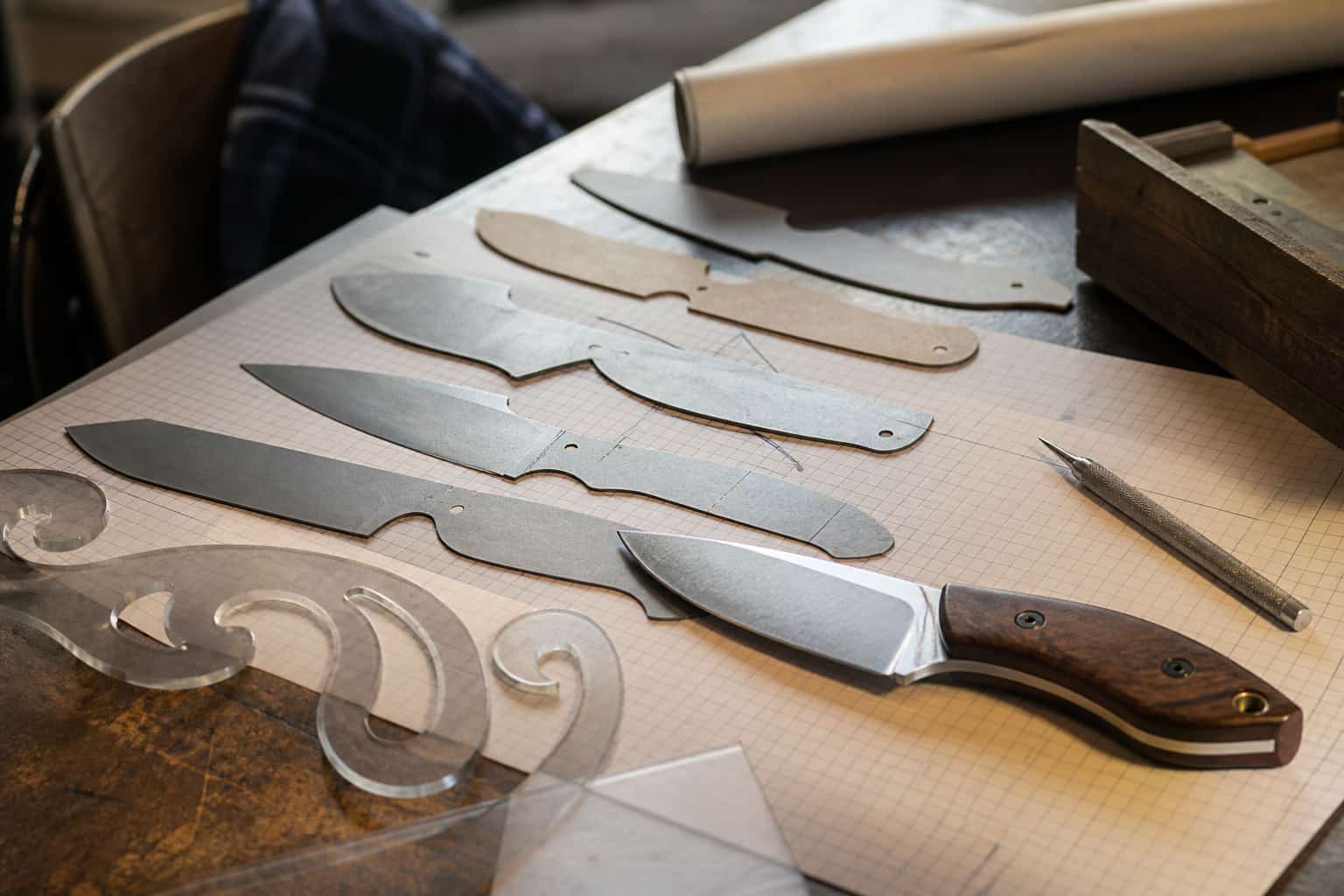
Live tool
Turn stock thickness, edge thickness and bevel angle into the scribe height for a flat grind, with notes on reading the answer and using it at the machine.
Run it
Every flat grind starts with the same question: at this angle, on this stock, how far up the blade does the bevel reach? This calculator does the trigonometry — enter your stock, your pre-sharpening edge thickness, and your target angle, and read the scribe height.
Your numbers
The arithmetic
Grind height = (stock thickness − edge thickness) ÷ 2 ÷ tan(angle per side). The ÷2 is because each bevel removes half the stock’s thickness; the tangent converts your angle into rise-over-run up the blade.
If the result is taller than your blade, that combination cannot exist as a full-height grind — raise the angle, use thinner stock, or accept a sabre grind that stops partway. If it is much shorter than the blade, you are building a sabre or scandi by definition. Primary-grind angles for full-flat kitchen and EDC work commonly land in the 3-6° per side range on 1/8″ stock — see the bevel angle chart for EDGE angles, which are a separate, later decision at the sharpening stage.
Scribe the height on the blade, set your work table or jig to the calculated angle, and grind to the line — the speed chart covers the rest. Check with calipers as the edge approaches target thickness; the math assumes flat, and hands drift.
Browse more tools in the Calculators section.
More shop math
Eight tools, all free, all running in the page.
Set your VFD by the job: working SFPM ranges for hogging, bevel grinding, hardened steel, handles and leather, with percentages for a direct-drive 2x72 setup.
Find your 2x72's surface speed in SFPM from drive wheel diameter and motor RPM, with optional VFD frequency, and see how hard a belt cuts and how hot it runs.
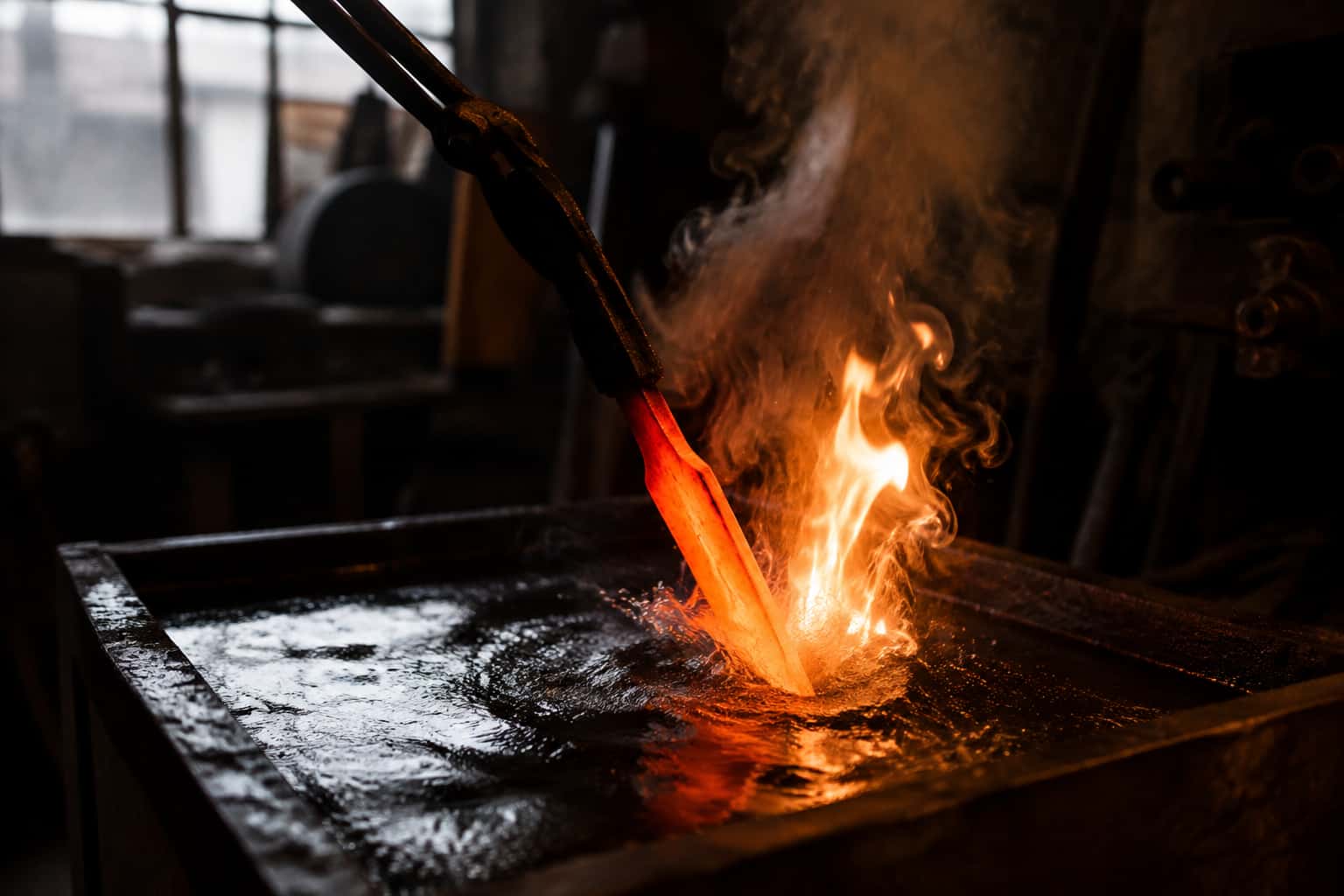
A chart that matches quench media, from fast Parks 50 oil to aluminum plates and still air, to the steels each suits, plus the mismatches that soften blades.
Same bench
Speed, angle and pressure only mean something on a grinder that holds its setting. I machine the parts, hand-assemble, track and test Torus grinders in Sterling, Illinois.
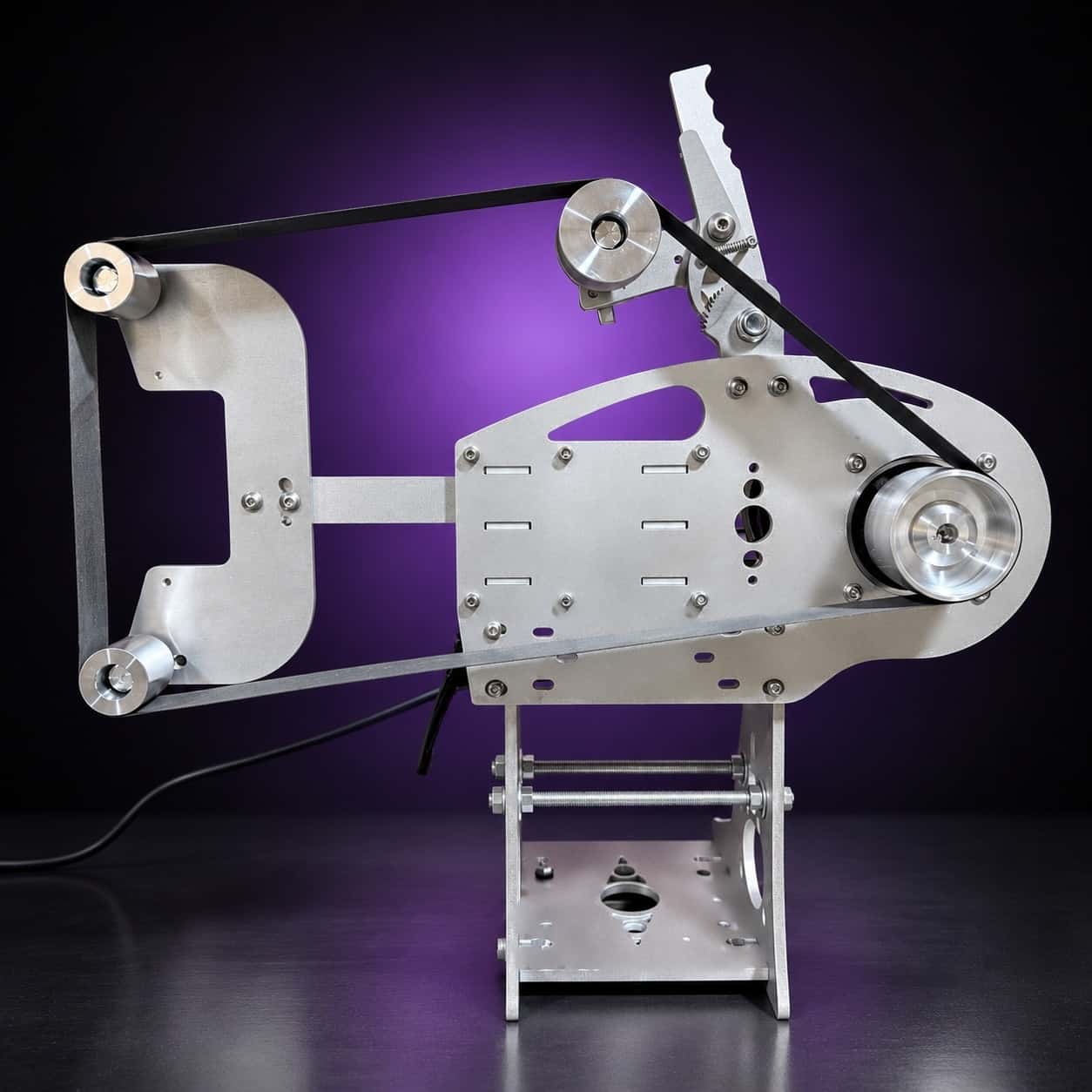
Current dual-axis platform with a fiber-laser-cut 6061 chassis and single-knob tracking.
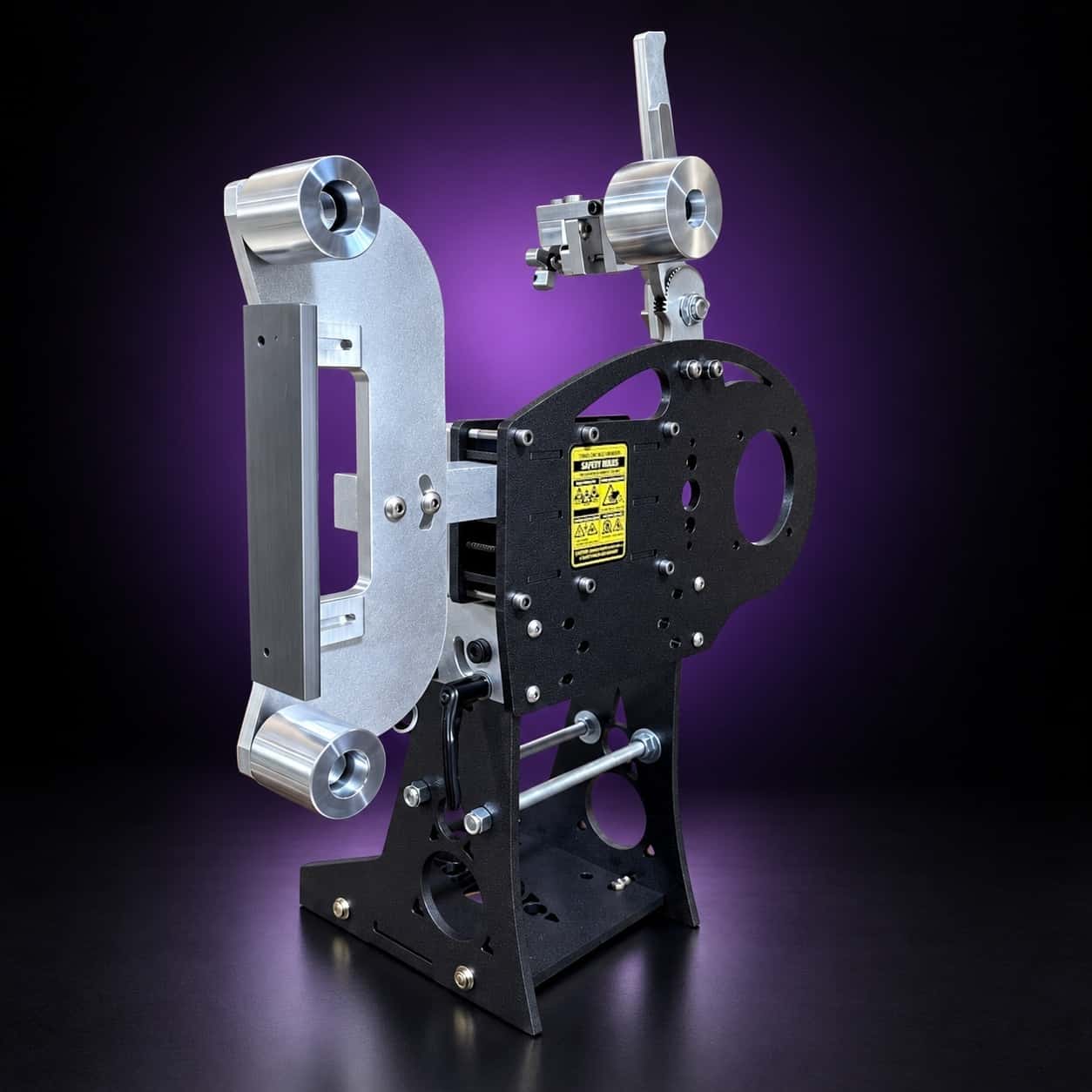
Current dual-axis platform with a steel chassis, more mass and less vibration.
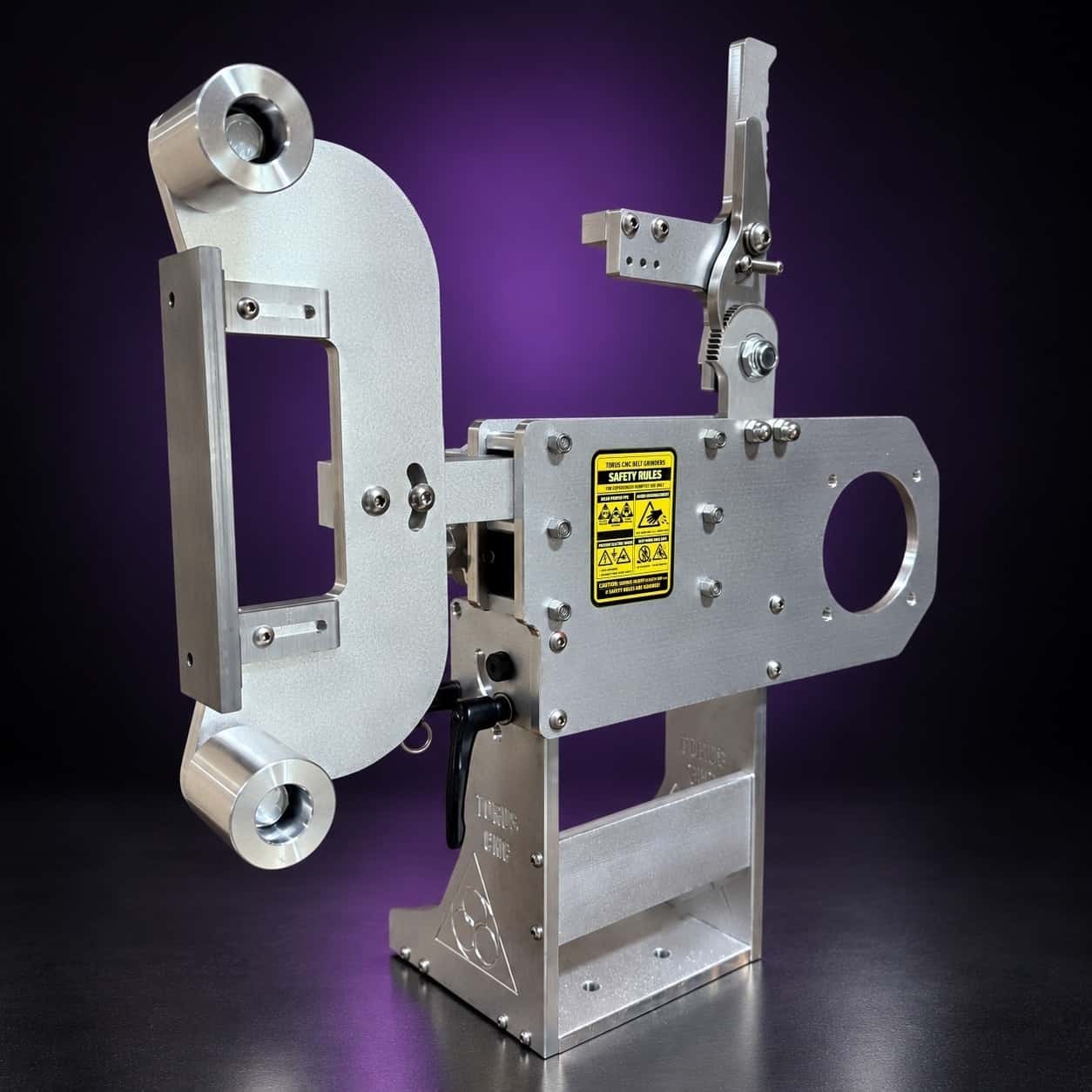
Prior-design aluminum chassis, 90-degree tilt and 1.5-inch tooling arms.
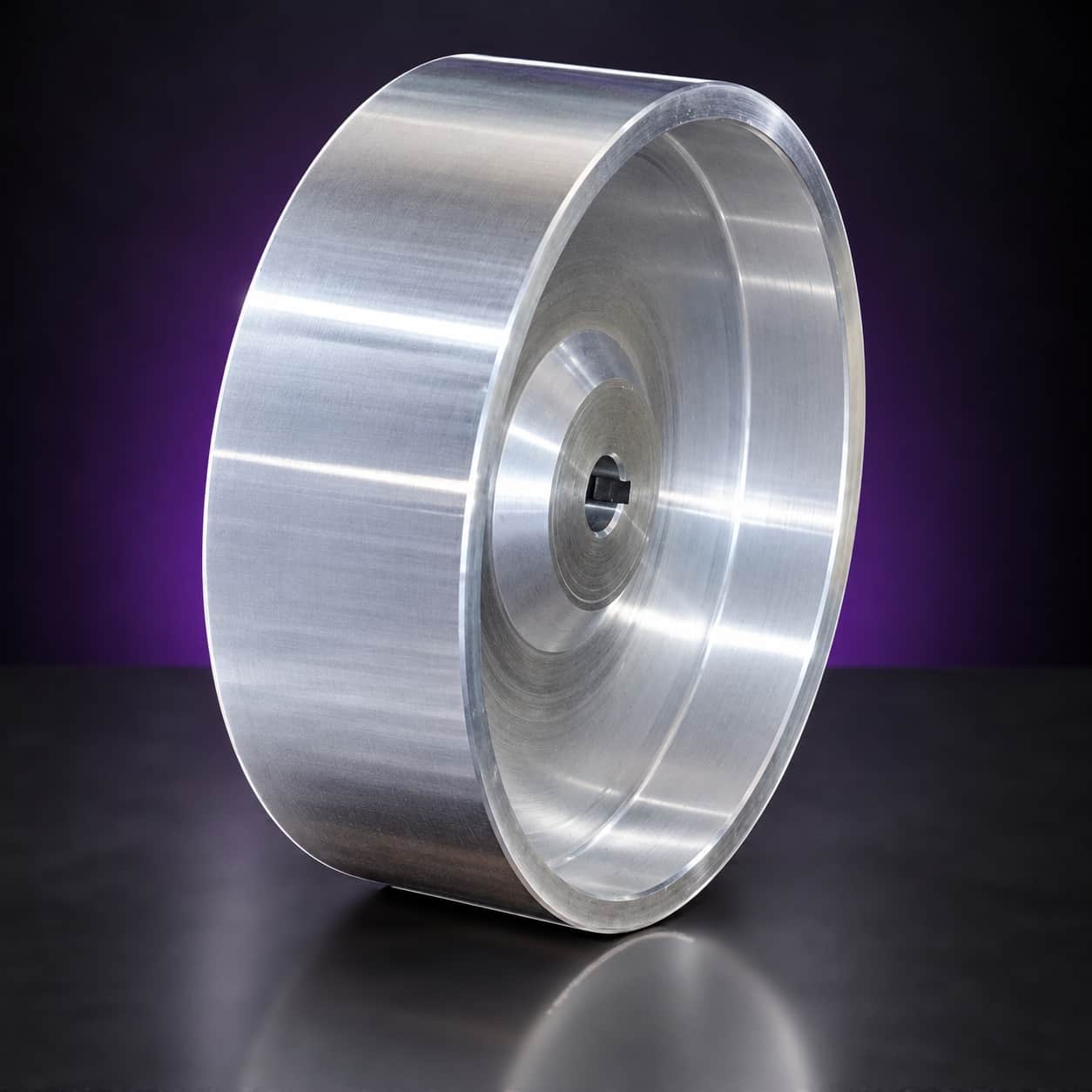
One-man shop
Send me your wheel size, motor and VFD details so I can compare them with the belt-speed calculation.