
Reference chart
Belt Speed by Task Chart (SFPM)
Set your VFD by the job: working SFPM ranges for hogging, bevel grinding, hardened steel, handles and leather, with percentages for a direct-drive 2x72 setup.
Live tool
Find your 2x72's surface speed in SFPM from drive wheel diameter and motor RPM, with optional VFD frequency, and see how hard a belt cuts and how hot it runs.
Run it
This calculator estimates the surface speed of your 2×72 belt grinder in SFPM (surface feet per minute) from your drive wheel diameter and motor speed. Belt speed matters because it directly affects how aggressively a belt cuts, how much heat it generates, and how long it lasts. Running too fast can burn a blade’s temper; running too slow wastes time and glazes belts prematurely.
Your numbers
The arithmetic
Belt speed (SFPM) = (pi x drive wheel diameter in inches x effective RPM) / 12. If you enter a VFD frequency, the calculator scales your motor’s nameplate RPM proportionally. For example, a 1750 RPM motor run at 30 Hz on a VFD spins at roughly 875 RPM, half its nameplate speed at 60 Hz.
A 3 inch drive wheel spun by a 1750 RPM motor at full 60 Hz produces roughly 1,374 SFPM, a common general-purpose grinding speed. Dropping the VFD to 30 Hz cuts that to roughly 687 SFPM, better suited to slow, controlled grinding on hardened steel or thin stock.
This calculator assumes the drive wheel is coupled directly to the motor shaft at a 1:1 ratio. If your grinder uses a step pulley, gearbox, or belt-drive reduction between the motor and drive wheel, adjust the result by your actual pulley or gear ratio.
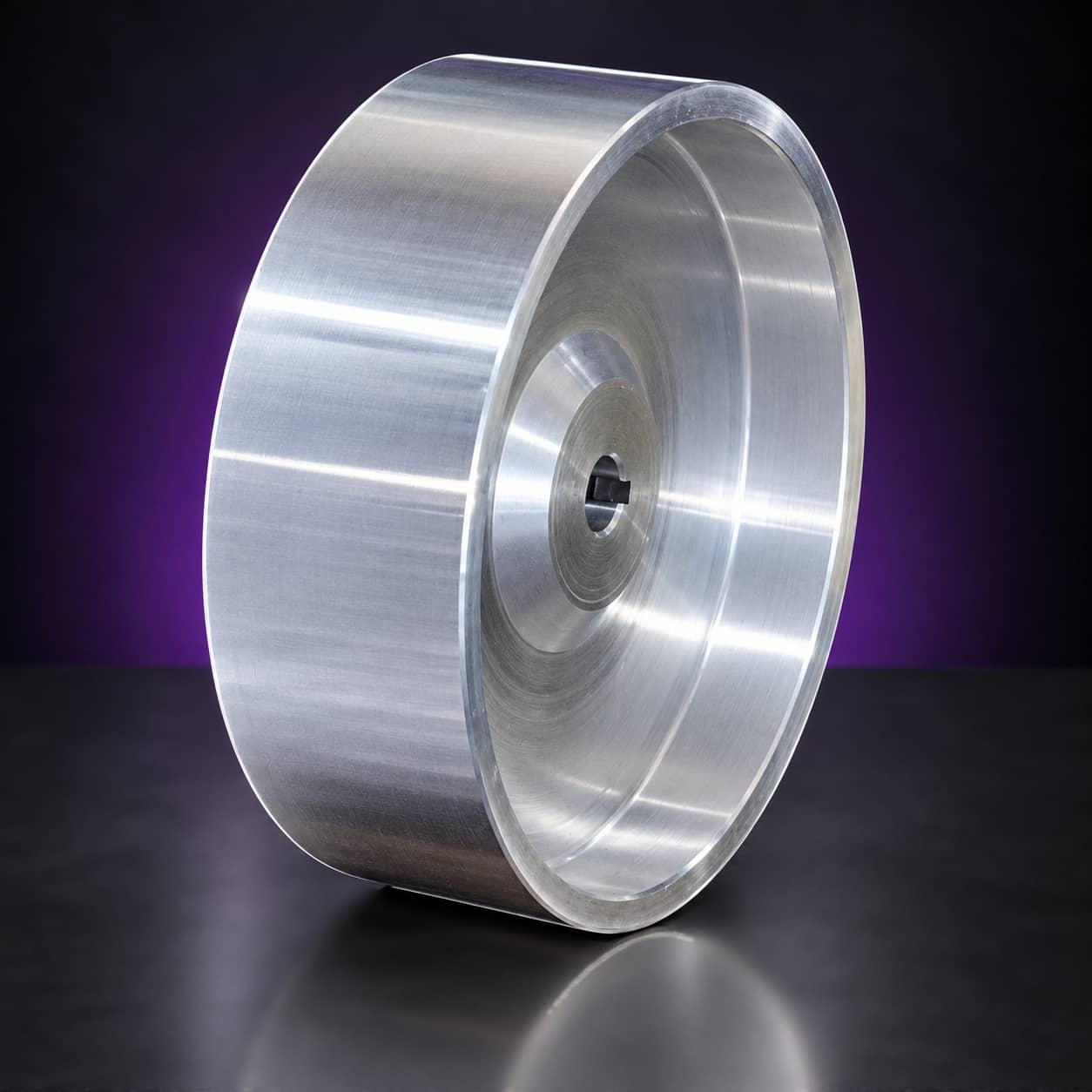
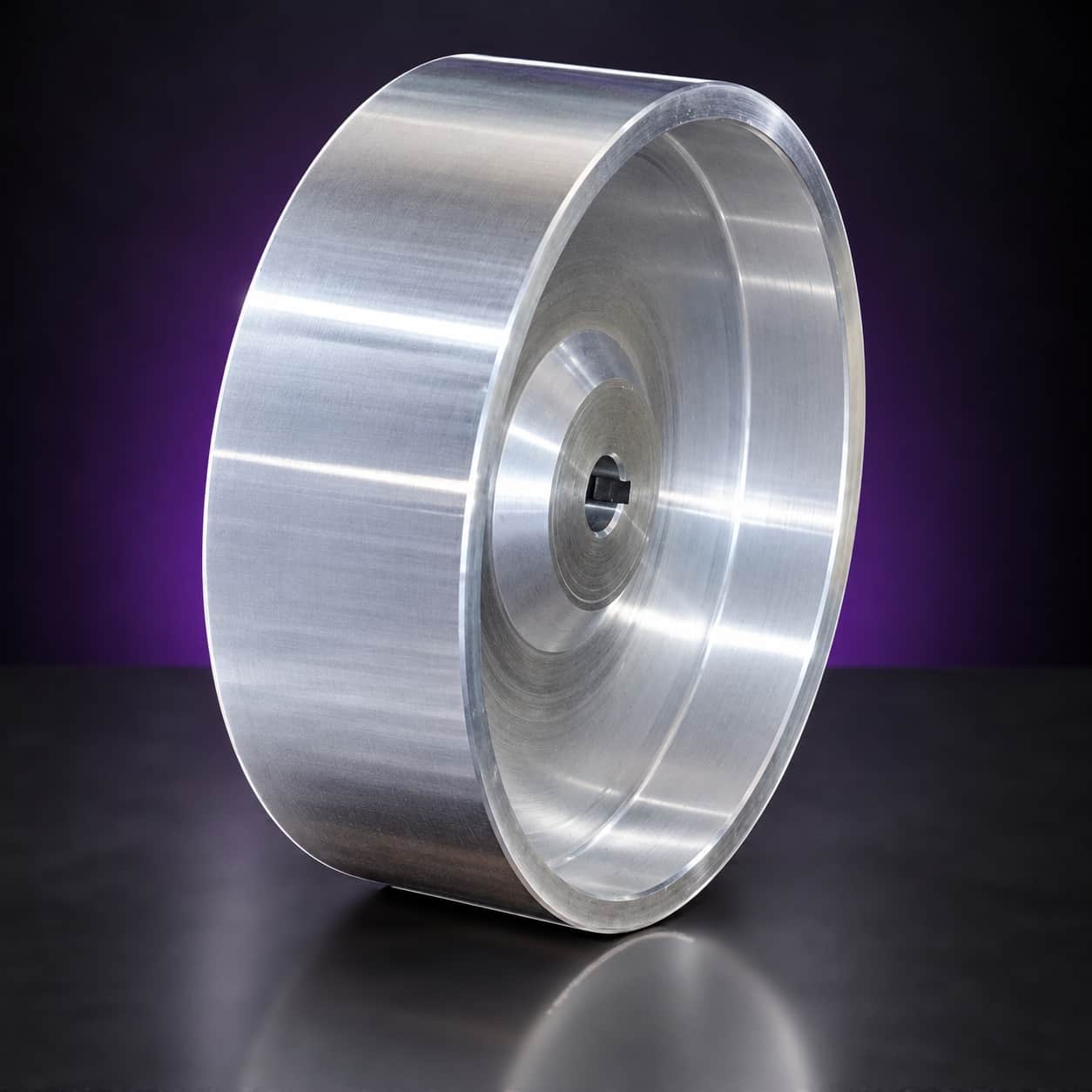
Running a VFD on your grinder? Shop our Variable-Speed Motor & VFD Combo, built specifically for 2×72 belt grinders. Need a different drive wheel size to hit a target speed? Shop Aluminum Drive Wheels in 4-inch and 7-inch sizes.
Browse more tools in the Calculators section.
Motor bogging down or stalling under grinding pressure? Check our troubleshooting guide for likely causes and fixes.
More shop math
Eight tools, all free, all running in the page.
Set your VFD by the job: working SFPM ranges for hogging, bevel grinding, hardened steel, handles and leather, with percentages for a direct-drive 2x72 setup.

Turn stock thickness, edge thickness and bevel angle into the scribe height for a flat grind, with notes on reading the answer and using it at the machine.
A chart that matches quench media, from fast Parks 50 oil to aluminum plates and still air, to the steels each suits, plus the mismatches that soften blades.
Same bench
Speed, angle and pressure only mean something on a grinder that holds its setting. I machine the parts, hand-assemble, track and test Torus grinders in Sterling, Illinois.

Current dual-axis platform with a fiber-laser-cut 6061 chassis and single-knob tracking.

Current dual-axis platform with a steel chassis, more mass and less vibration.

Prior-design aluminum chassis, 90-degree tilt and 1.5-inch tooling arms.
One-man shop
Send me your wheel size, motor and VFD details so I can compare them with the belt-speed calculation.