

Abrasives
Grinding and Sharpening W2: Belt Recommendations & Technique
W2 grinds like the friendly high-carbon steel it is — the complications arrive only when a hamon is involved, which for W2 is most of the time. Then the…

Knife steel
The hamon steel: 1095's chemistry plus a pinch of vanadium for fine grain, in a deliberately shallow-hardening package. Clay the spine, quench fast, and W2 draws the most vivid temper line of any commonly available steel — with a keen high-carbon edge and a soft spring of a spine.
Also known as
At a glance
The four meters are relative to the rest of the database. Composition is the published nominal analysis, not a mill certificate for your bar.
Working properties
W2 water-hardening tool steel; knife-market bars often sold by carbon point (e.g. W2 with ~1.00% carbon).
only trace chromium — the low Mn/Cr is what makes it shallow hardening
Hamon blades above all — wakizashi and tanto styles, bowies, camp knives with differential hardening. Also excellent kitchen knives and straight razors when through-hardened thin. Skip it for stainless-adjacent duty or for buyers who will not oil a blade.
At the bench
Open the property you are worried about. Every note is written for the blade in your hand, not for a spec sheet.
The full reference
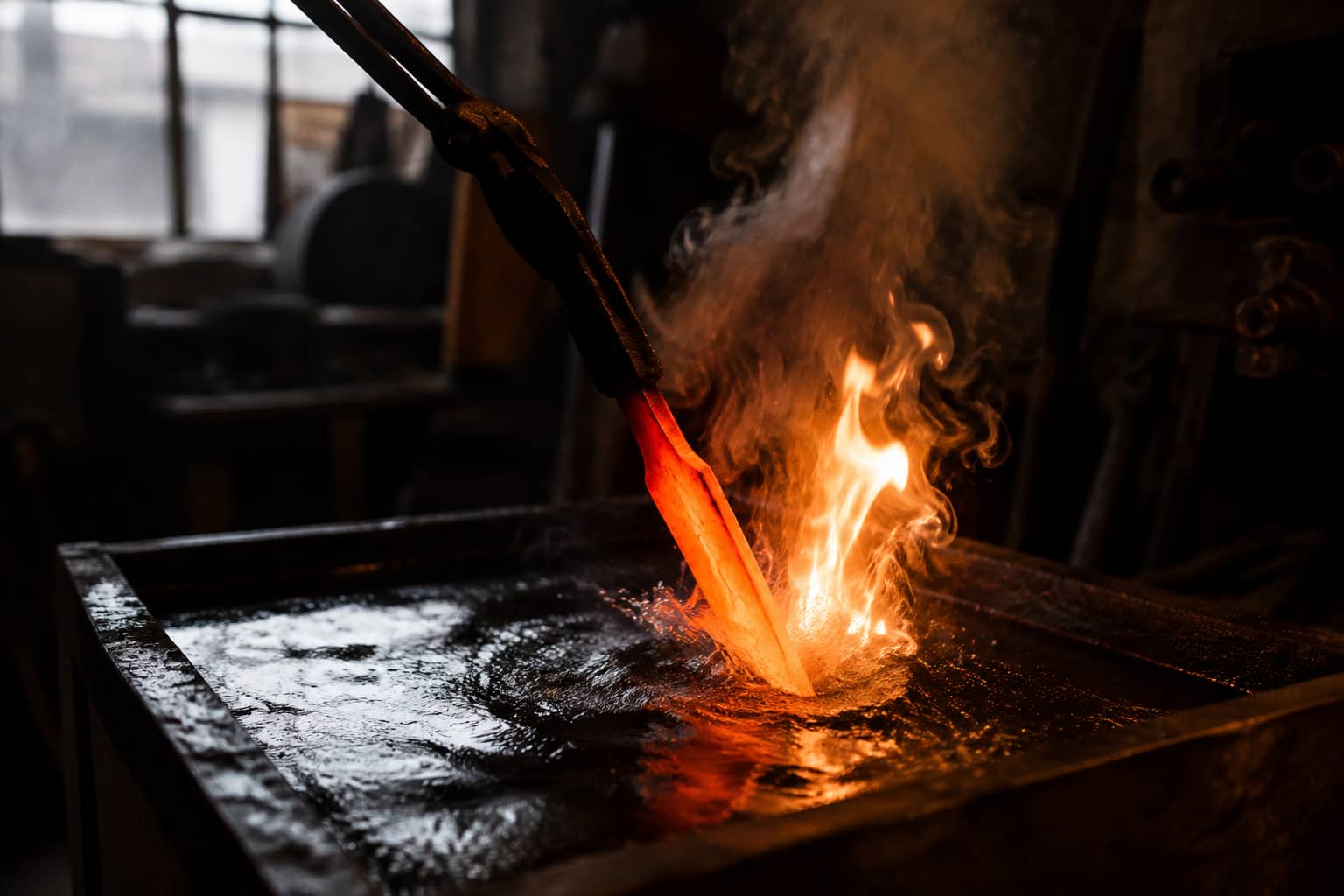
W2 is the steel makers reach for when they want the quench to show. It is essentially 1095 with a small vanadium addition that pins the grain fine, and — more importantly — it is genuinely shallow hardening. That low hardenability is a defect in an industrial tool steel and a gift in a knife shop: put clay on the spine, quench fast, and the edge hardens while the back stays soft. The line between those two worlds is the hamon, and no common steel draws it more vividly than W2.
Yes — for the right knife. Fine grain and high carbon give it a keen edge in the same class as 1095, and differential hardening gives a W2 blade a soft, springy spine that shrugs off impacts a through-hardened blade would resent. As a fully hardened steel it is a slicer, not a chopper; as a clay-quenched blade it is both at once.
Shallow hardenability. W2 carries almost no manganese or chromium, so only steel that cools very fast becomes martensite. Clay the spine and it simply cannot make the cooling rate — the edge hardens, the spine stays pearlite, and the transition etches as a hamon. The vanadium also keeps grain fine at forging heats, which is why W2 hamons show crisp, dramatic activity where a deeper-hardening steel would give you a blurry line or none at all. The metallurgy is covered in our differential heat treat and hamon guide.
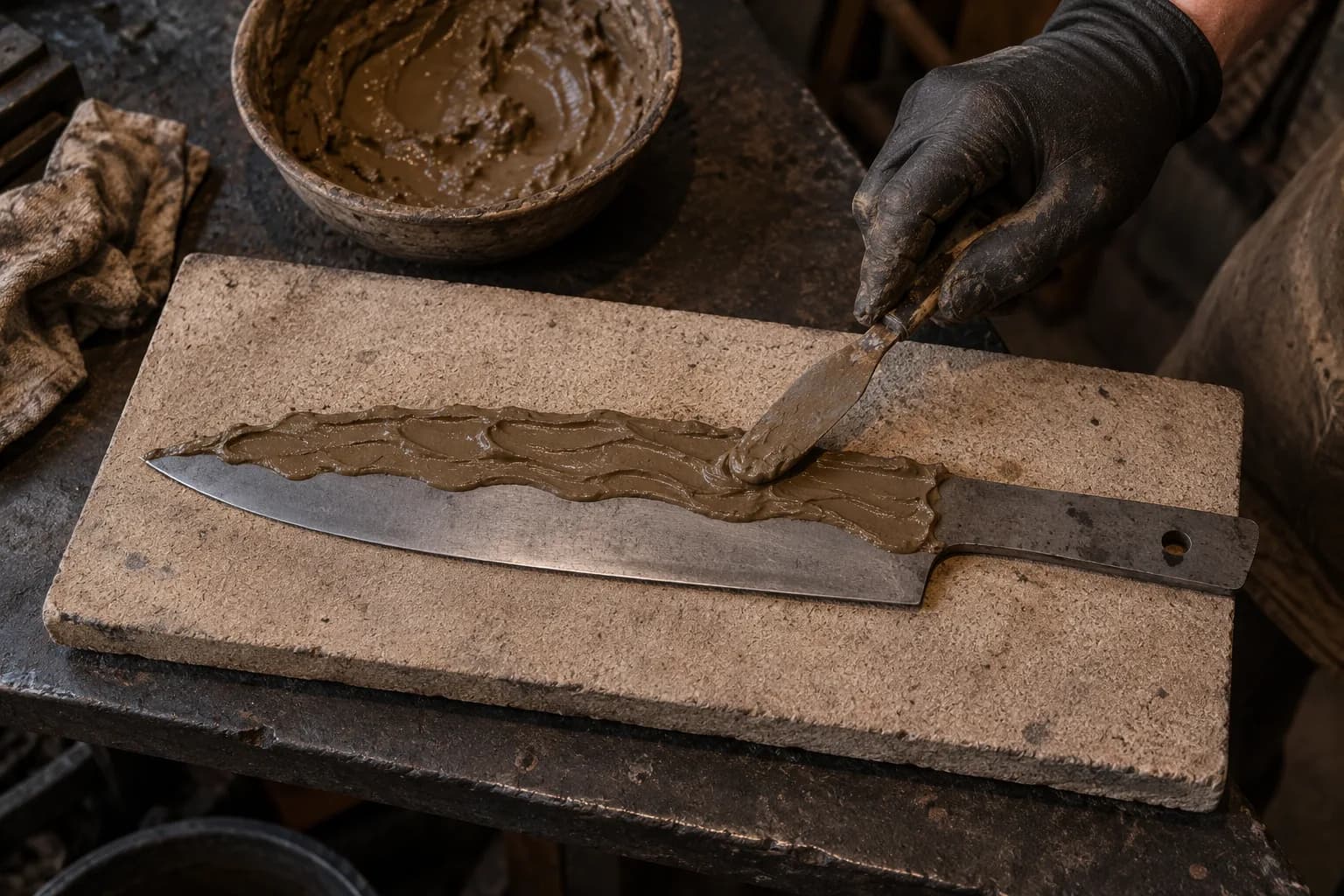
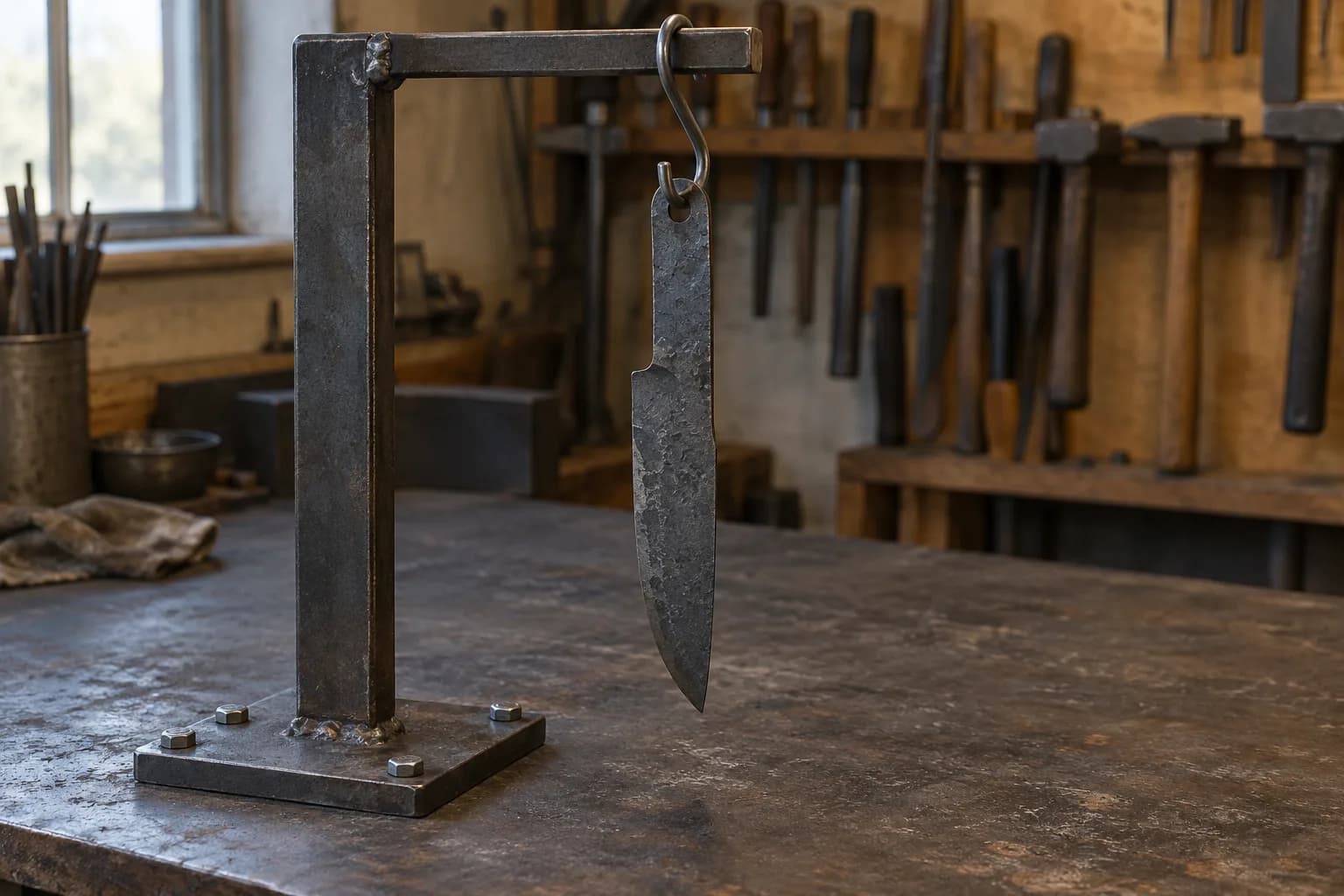
Normalize and cycle down first — 1600°F, then descending cycles toward 1450°F — especially after forging; see normalizing and thermal cycling. Austenitize at 1425–1475°F (1450°F is a good number) with only a short soak, then quench in a genuinely fast oil. W2’s window is narrow: too cool and it will not harden, too hot and the whole blade hardens through and your hamon disappears.
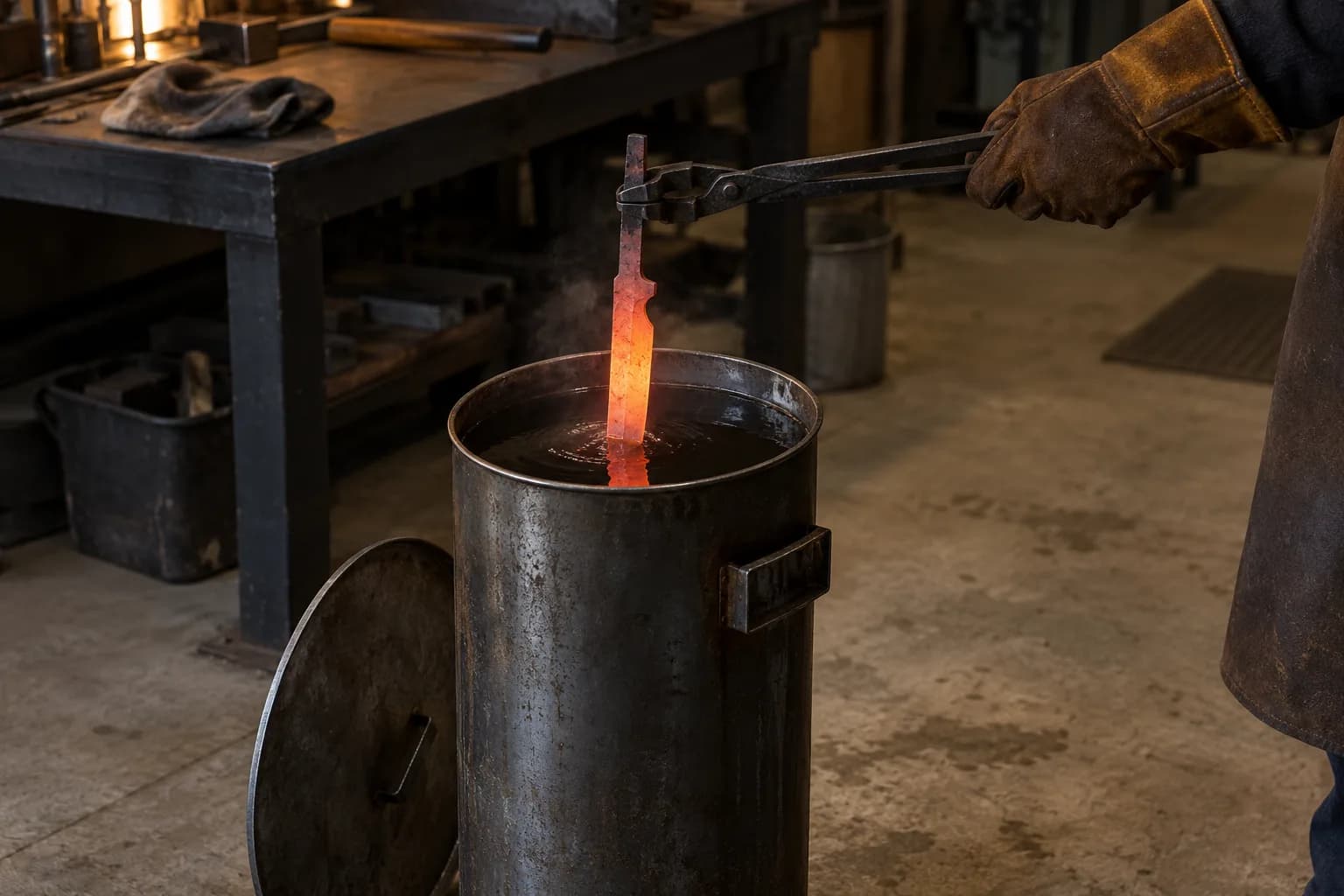
Parks 50 or another fast 7–9 second oil. Shallow-hardening steels need speed — a medium oil that treats O1 kindly will leave W2 soft. Water and brine are traditional and make the most dramatic hamons, but they crack blades without warning; fast oil is the sane default. Details in Knife Quench Oils Explained.
As-quenched W2 can exceed 65 HRC at the edge. Temper twice at 350–400°F for roughly 60–62 HRC on kitchen and EDC blades; hamon-heavy blades meant for harder use are often drawn to 450°F and 58–59 at the edge — with the spine soft either way.
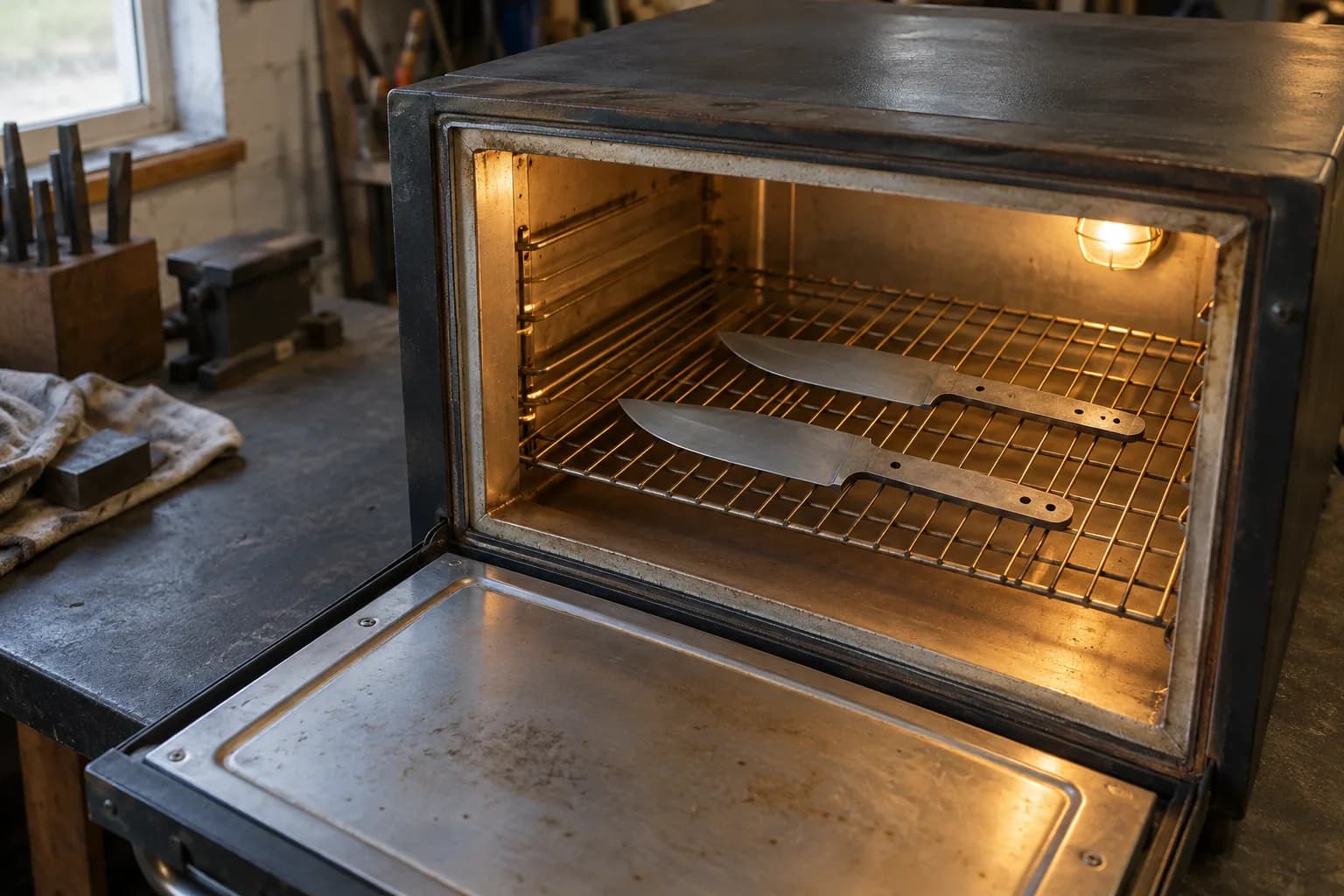
W2, if you can get it. 1095 will make a hamon, but its slightly higher hardenability blurs the line, and its coarser grain mutes the activity W2 is famous for. The full breakdown is in our W2 vs 1095 comparison.
Head to head
Every matchup W2 appears in, dimension by dimension.
Keep reading
W2 grinds like the friendly high-carbon steel it is — the complications arrive only when a hamon is involved, which for W2 is most of the time. Then the…

Every knife steel is iron plus a specific recipe of other elements, and each of those elements pulls the steel’s behavior in a particular direction…

Two steels with similar hardness numbers can feel completely different under a sharpening stone, one glides along smoothly, another feels like it’s…
Same bench
Whatever the steel, the grind is only as flat as the platen behind it. I machine the parts, hand-assemble and test Torus grinders in Sterling, Illinois.

Current dual-axis platform with a fiber-laser-cut 6061 chassis and single-knob tracking.

Current dual-axis platform with a steel chassis, more mass and less vibration.

Prior-design aluminum chassis, 90-degree tilt and 1.5-inch tooling arms.

One-man shop
Tell me what the blade is for and how you heat treat. I will tell you whether this is the steel I would use, and what I would use instead.