
Abrasives
Grinding and Sharpening 1095: Belt Recommendations & Technique
1095 grinds and forges as easily as any simple carbon steel, requiring no special abrasives or equipment. The one thing to watch is its narrower quench…
Knife steel
A classic simple high-carbon steel known for taking a very keen edge and reaching high hardness, but shallow-hardening and less forgiving to heat treat consistently than steels like 1084.
Also known as
At a glance
The four meters are relative to the rest of the database. Composition is the published nominal analysis, not a mill certificate for your bar.
Working properties
Popular for traditional and budget fixed blades, kitchen knives, and differentially heat-treated blades (including forge-hardened and clay-tempered styles) where a very keen, hard edge is the priority.
At the bench
Open the property you are worried about. Every note is written for the blade in your hand, not for a spec sheet.
The full reference
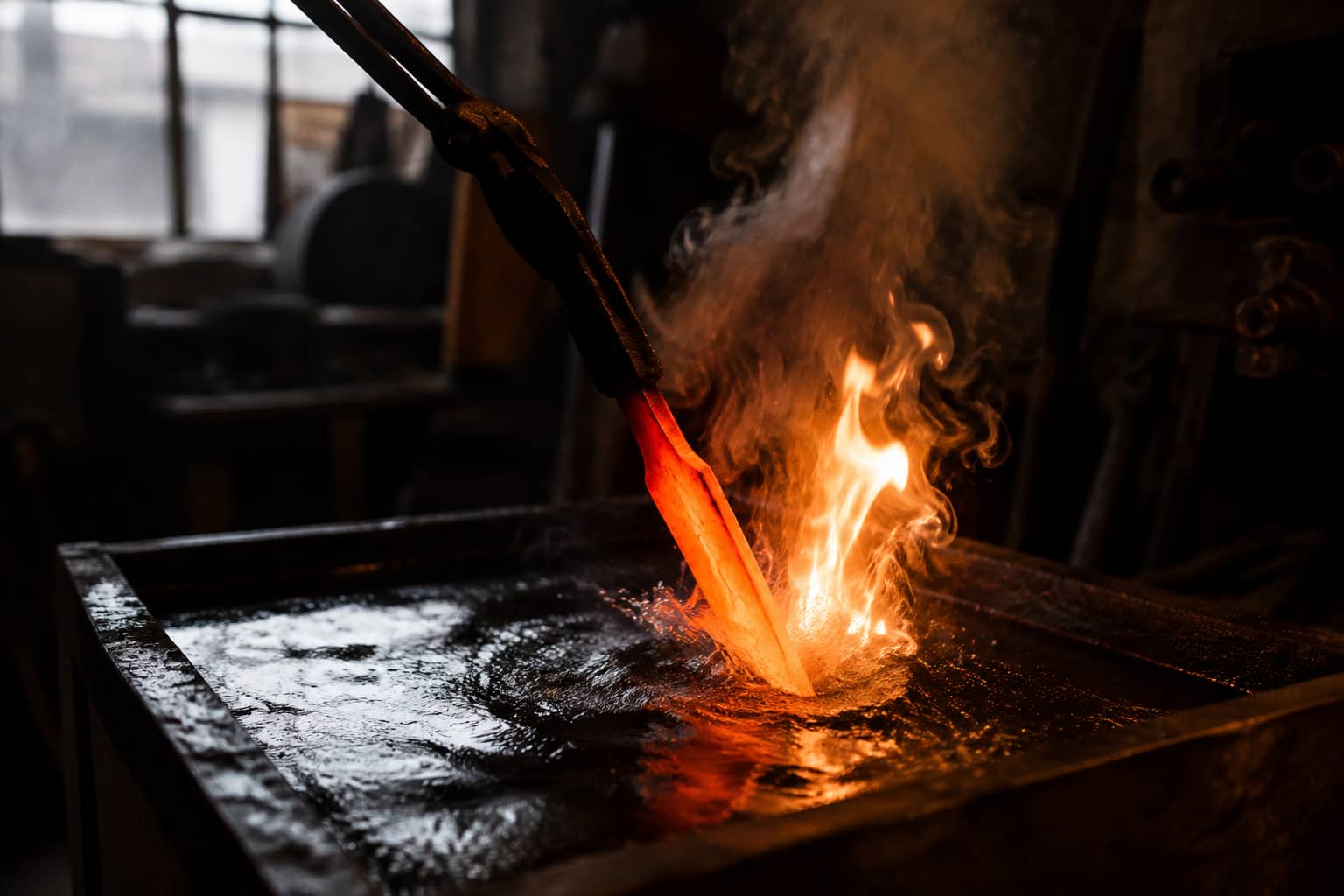
1095 is one of the most recognizable simple high-carbon steels in knifemaking, prized for taking an extremely keen edge and reaching high hardness. Its low manganese content makes it shallow-hardening, which means it needs a genuinely fast quench to reach full hardness, and it has a reputation for being less forgiving in a home shop than steels like 1084 that have more manganese to boost hardenability.
No, it is a plain carbon steel with no chromium and needs regular oiling and drying to prevent rust.
Yes, more so than 1084. Its low manganese content means it needs a fast quench, often brine or a fast oil, to reach full hardness, with a higher risk of warping or cracking than more forgiving steels.
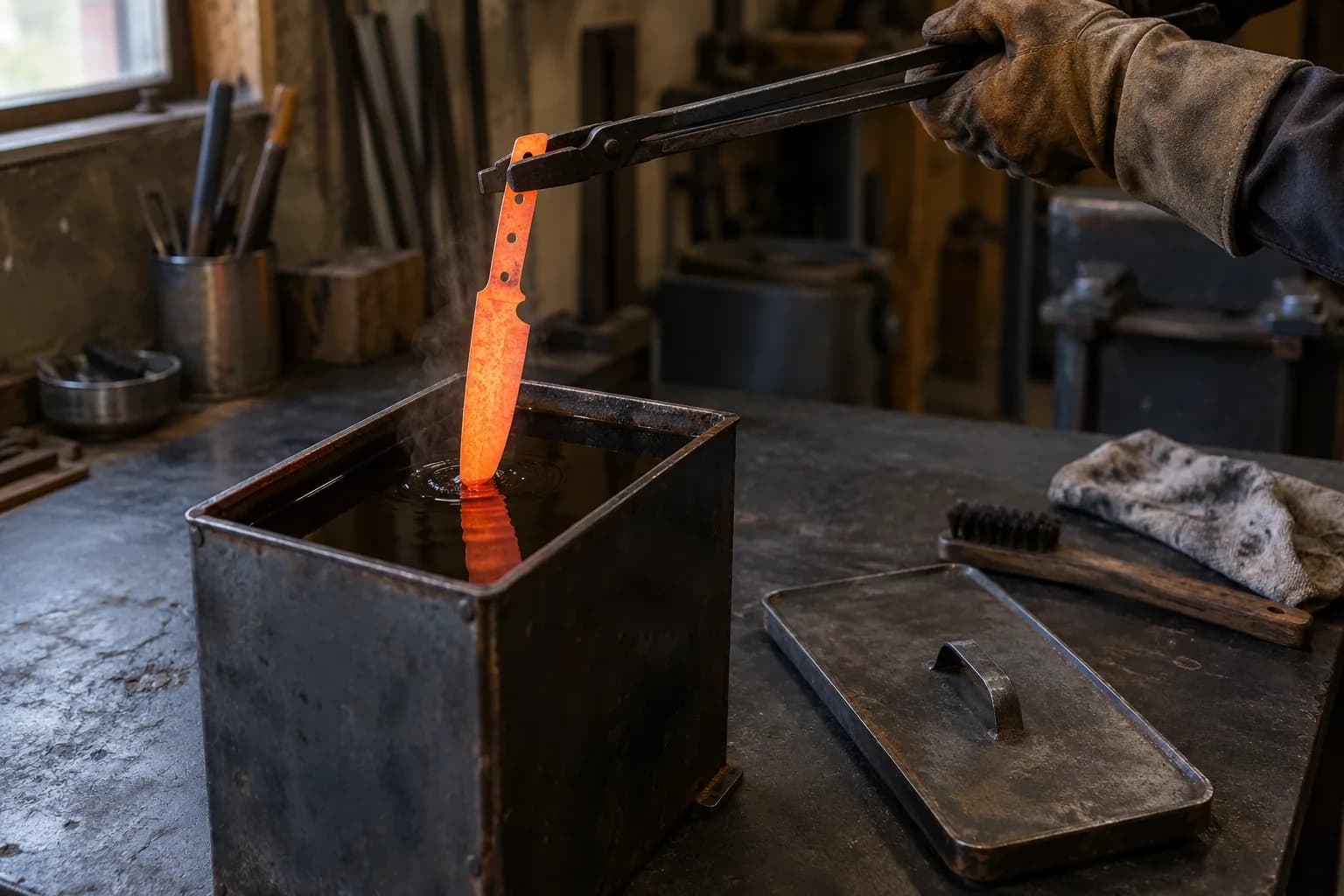
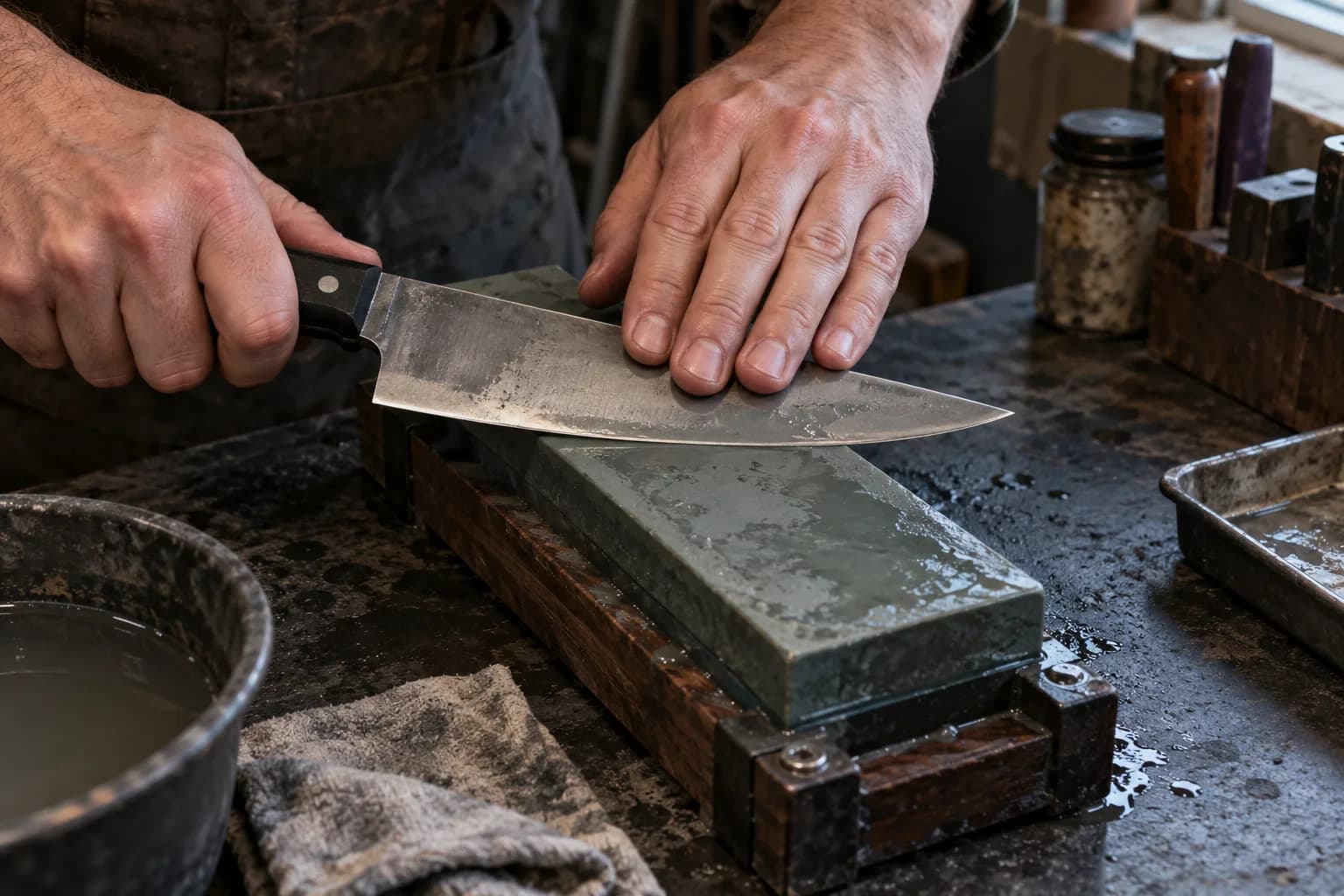
No, it is easy to work with standard belts and stones. The difficulty with 1095 is in heat treating, not grinding. See the full grinding and sharpening guide.
1084 is more forgiving to heat treat thanks to its higher manganese content, while 52100 offers meaningfully better toughness and edge retention. See the full breakdowns: 1084 vs 1095 and 52100 vs 1095.
Head to head
Every matchup 1095 appears in, dimension by dimension.
Keep reading
1095 grinds and forges as easily as any simple carbon steel, requiring no special abrasives or equipment. The one thing to watch is its narrower quench…
Survival steel selection is a toughness-first decision with a field-maintenance veto: the blade must survive impact and prying, and it must be sharpenable…
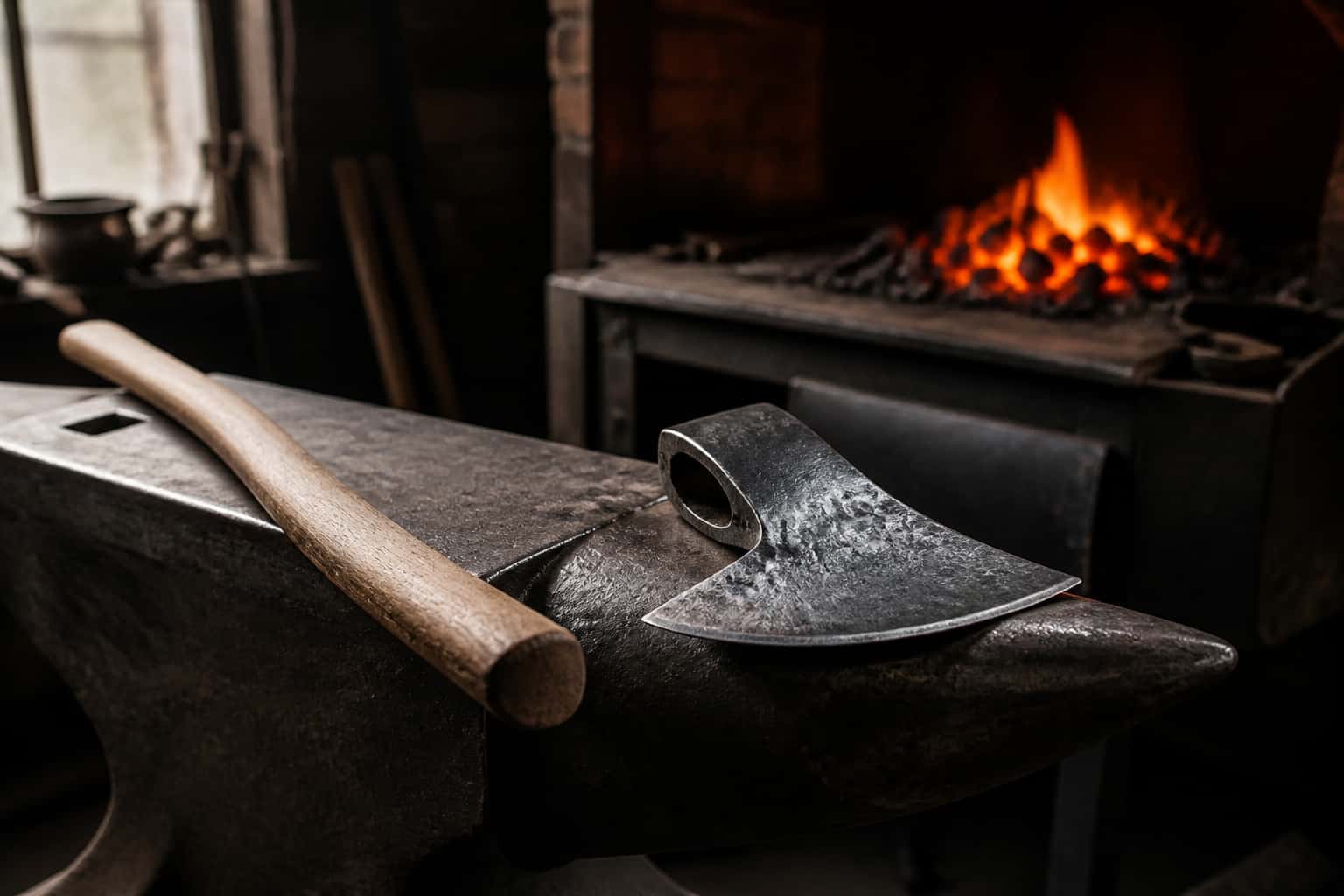
Every knife steel is iron plus a specific recipe of other elements, and each of those elements pulls the steel’s behavior in a particular direction…
Same bench
Whatever the steel, the grind is only as flat as the platen behind it. I machine the parts, hand-assemble and test Torus grinders in Sterling, Illinois.
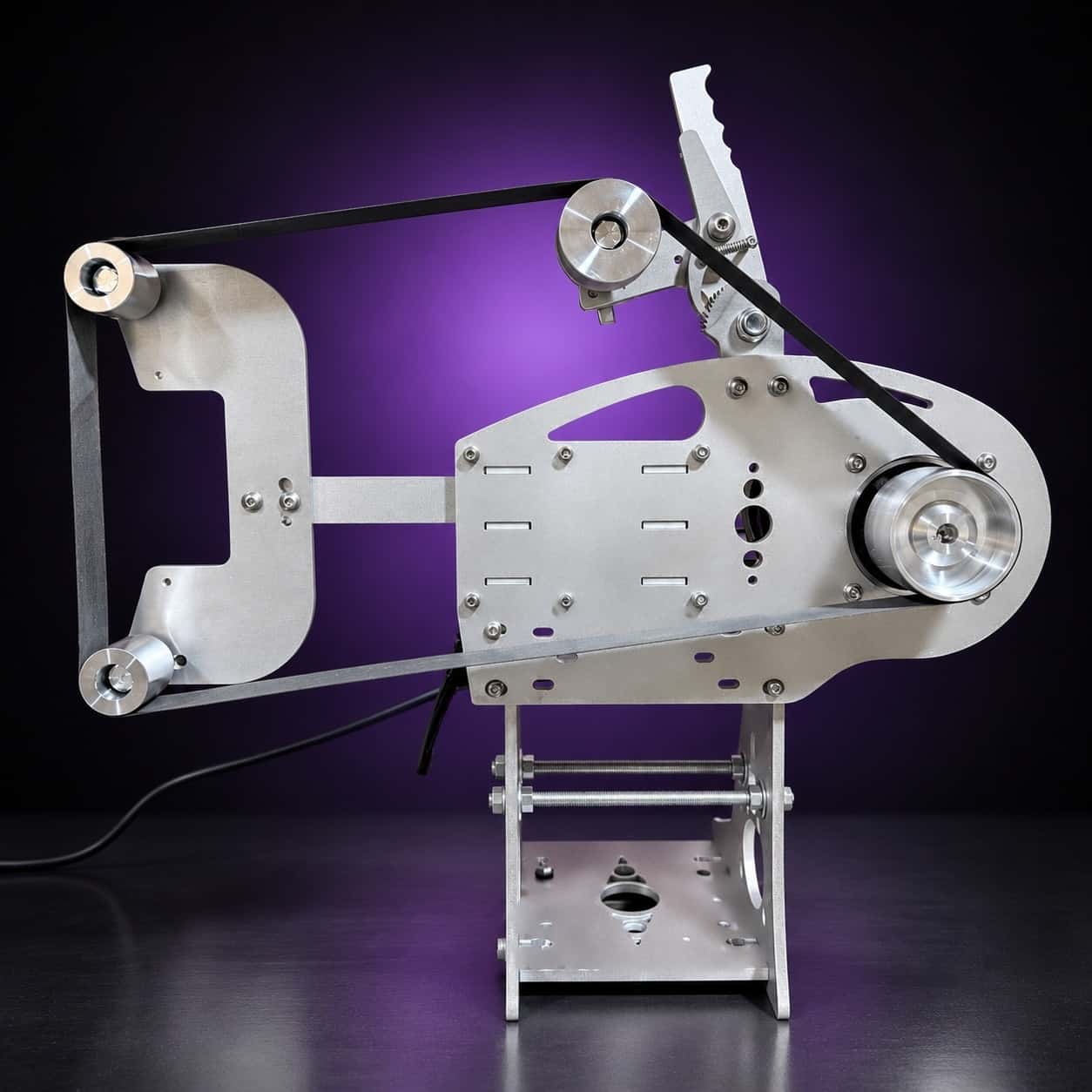
Current dual-axis platform with a fiber-laser-cut 6061 chassis and single-knob tracking.
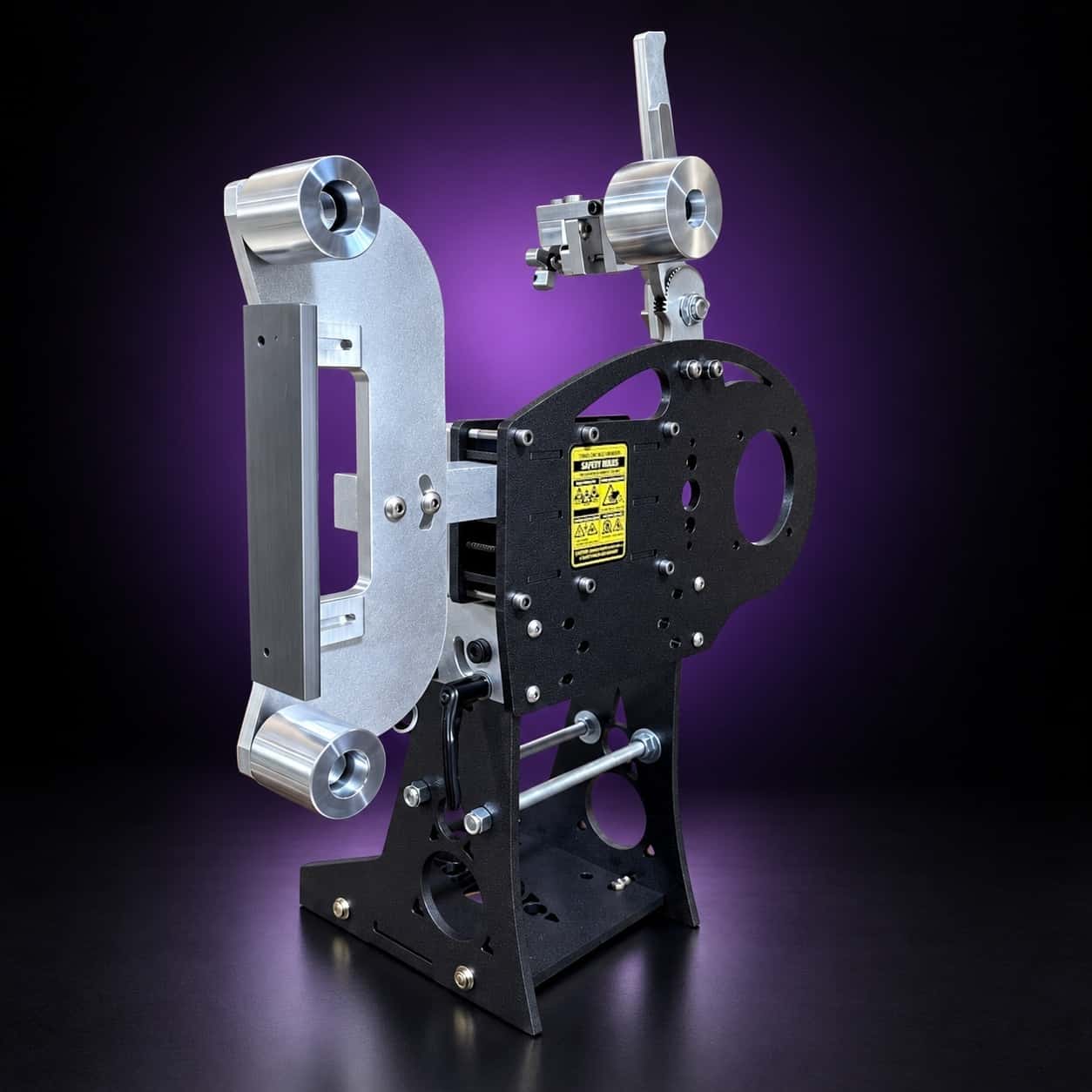
Current dual-axis platform with a steel chassis, more mass and less vibration.
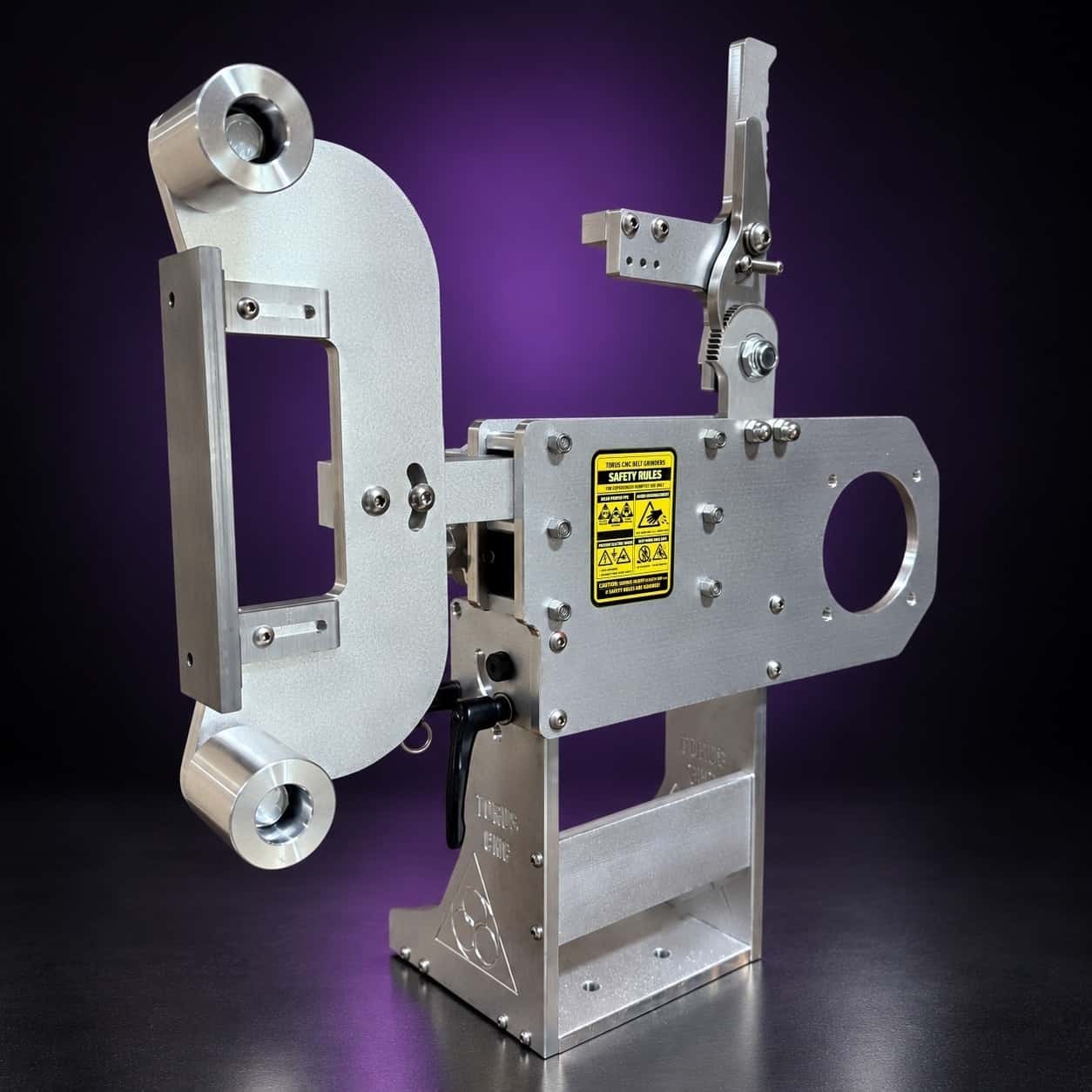
Prior-design aluminum chassis, 90-degree tilt and 1.5-inch tooling arms.
One-man shop
Tell me what the blade is for and how you heat treat. I will tell you whether this is the steel I would use, and what I would use instead.