
Heat Treat
Heat Treating Knife Steel: Complete Guide
Heat treating is what turns a piece of flat bar stock into a functional knife blade. Done correctly, it transforms the steel’s internal crystal structure…
Heat Treat
Match quench oil to steel: Parks 50 for shallow-hardening steels, a medium oil for O1, 5160 and 52100, warm canola on a budget, and a safe quench tank setup.
4 min readWritten by Rich LinvilleFree to read
Every new maker eventually stands in front of a hot blade holding the same question: what do I actually quench this in? The forum answers range from “canola from the grocery store” to “only Parks 50” to grandpa’s “used motor oil” — and they can’t all be right. Here’s what quenching actually does, what independent testing shows about the common oils, and a straightforward way to choose.
Hardening is a race. At the hardening temperature your steel’s structure (austenite) wants to transform into soft pearlite as it cools; cool it fast enough and it transforms into hard martensite instead — the whole point of heat treating (full theory in the metallurgy behind heat treat). How fast is “fast enough” depends entirely on the alloy. Shallow-hardening steels like 1095 and W2 give you about one second to get through the danger zone. Deeper-hardening steels like O1, 52100, and 5160 give you several seconds. Air-hardening steels (most stainless) barely need a liquid at all.
That’s why “which oil?” has no single answer — the oil’s speed has to match the steel’s window.
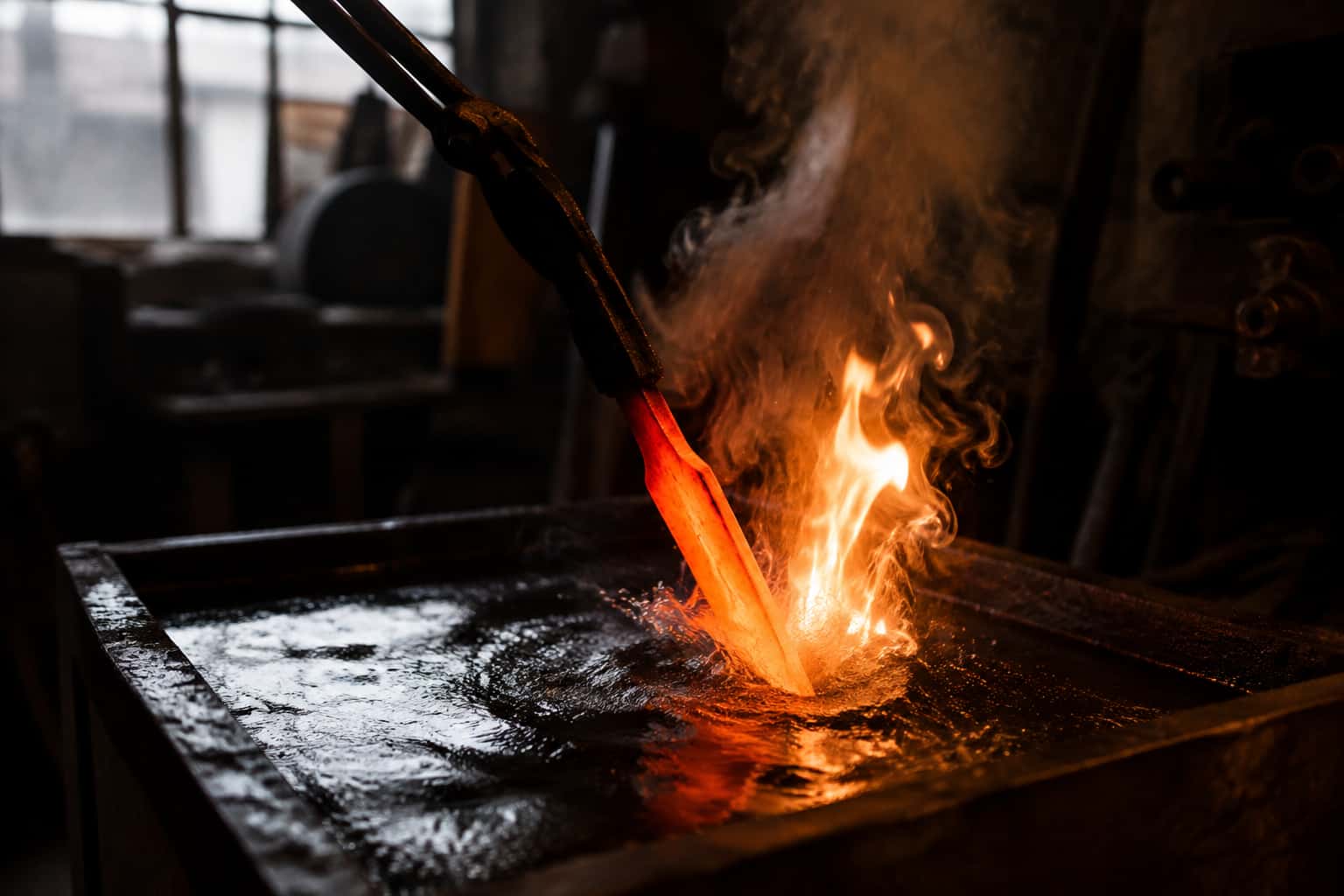
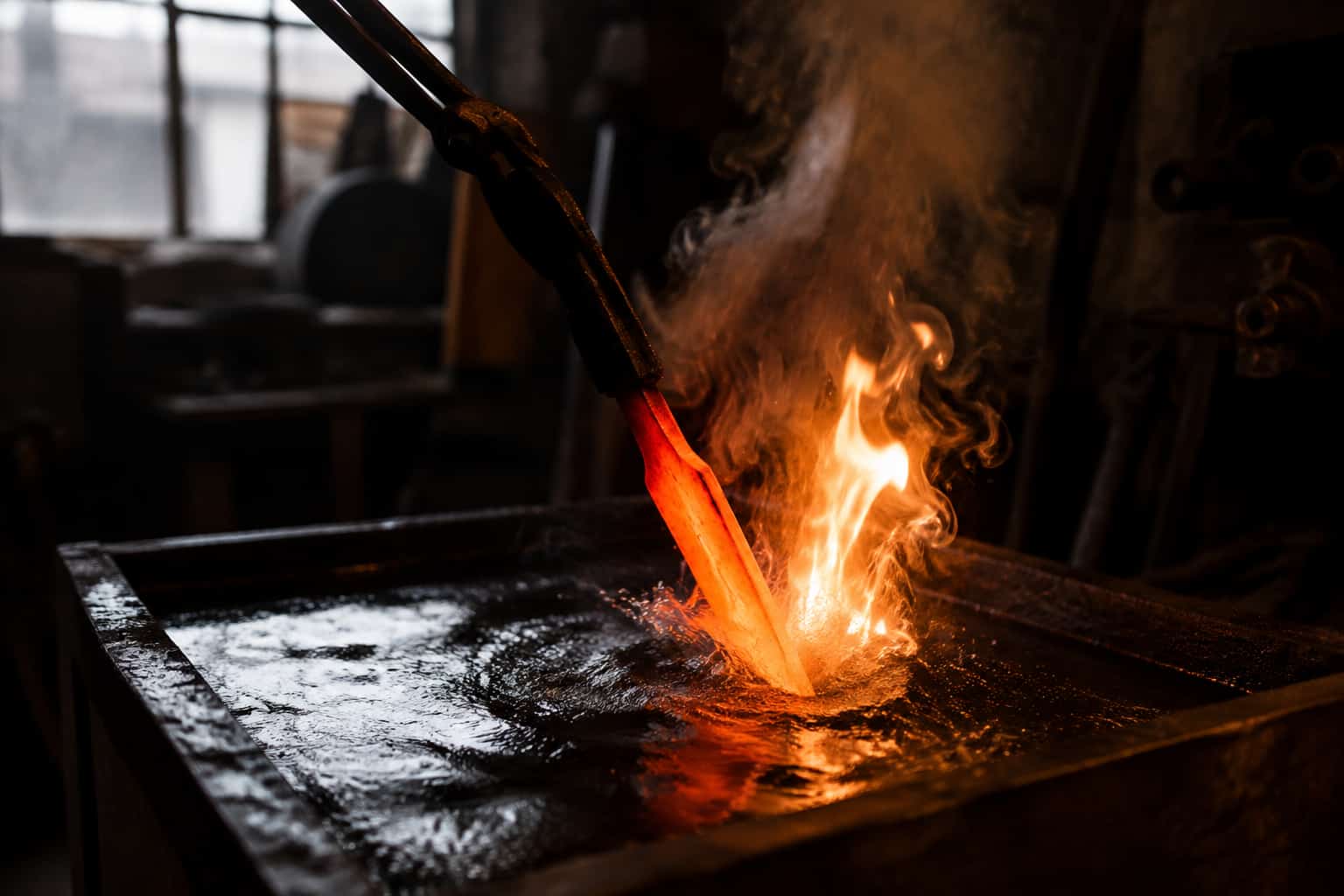
Parks 50 (originally a Parks Metallurgical product, today sold to individual makers through suppliers like Maxim Oil, USA Knifemaker, Jantz, and Pop’s Knife Supply) is a purpose-made fast quench oil, and it’s the community standard for shallow-hardening steels: 1095, W2, 26C3, and friends. In metallurgist Larrin Thomas’s controlled quench-oil testing at Knife Steel Nerds, Parks 50 fully hardened 1095 and W2 where slower oils failed. Use it at room temperature to slightly warm (80–100°F). If you’re serious about simple carbon steels, a gallon or two is one of the best upgrades you can make, and it lasts for years of hobby use.
Canola is cheap, available in any grocery store, non-toxic, and genuinely usable — warmed to about 120–130°F so it flows fast (cold oil quenches unevenly). Plenty of good first knives have come out of a pot of warm canola, and for forgiving steels like 1084 it’s a reasonable starting point.
But be honest about its limits: in the same Knife Steel Nerds testing, canola failed to reach full hardness on several steels — including 1095 and even 1084 under the test conditions — compared to a true fast oil. Blades still harden, just not to the steel’s potential, and canola degrades with every use (it’s a cooking oil, not an engineered quenchant — it oxidizes, thickens, and gets slower over time). Translation: canola for your first blades in forgiving steel, Parks 50 when you want the steel’s full performance.
O1, 5160, 80CrV2, and 52100 don’t need — and don’t want — a maximum-speed quench. Purpose-made medium oils (Parks AAA, Houghton K-class, and the 10–12 second oils sold by knife suppliers) harden these steels fully with less distortion and crack risk than a fast oil. If your steel’s data sheet says “medium oil,” believe it.
High-carbide stainless and PM steels — MagnaCut, the CPM family — harden between aluminum plates with compressed air, after a precise furnace soak in foil. That’s kiln-and-fixture territory: see the oven buyer’s guide or send them out. Low-carbide stainless is the exception: AEB-L, 14C28N and Nitro-V harden from a forge at about 1925 to 1975°F with a short soak, quenched in fast oil or between plates.
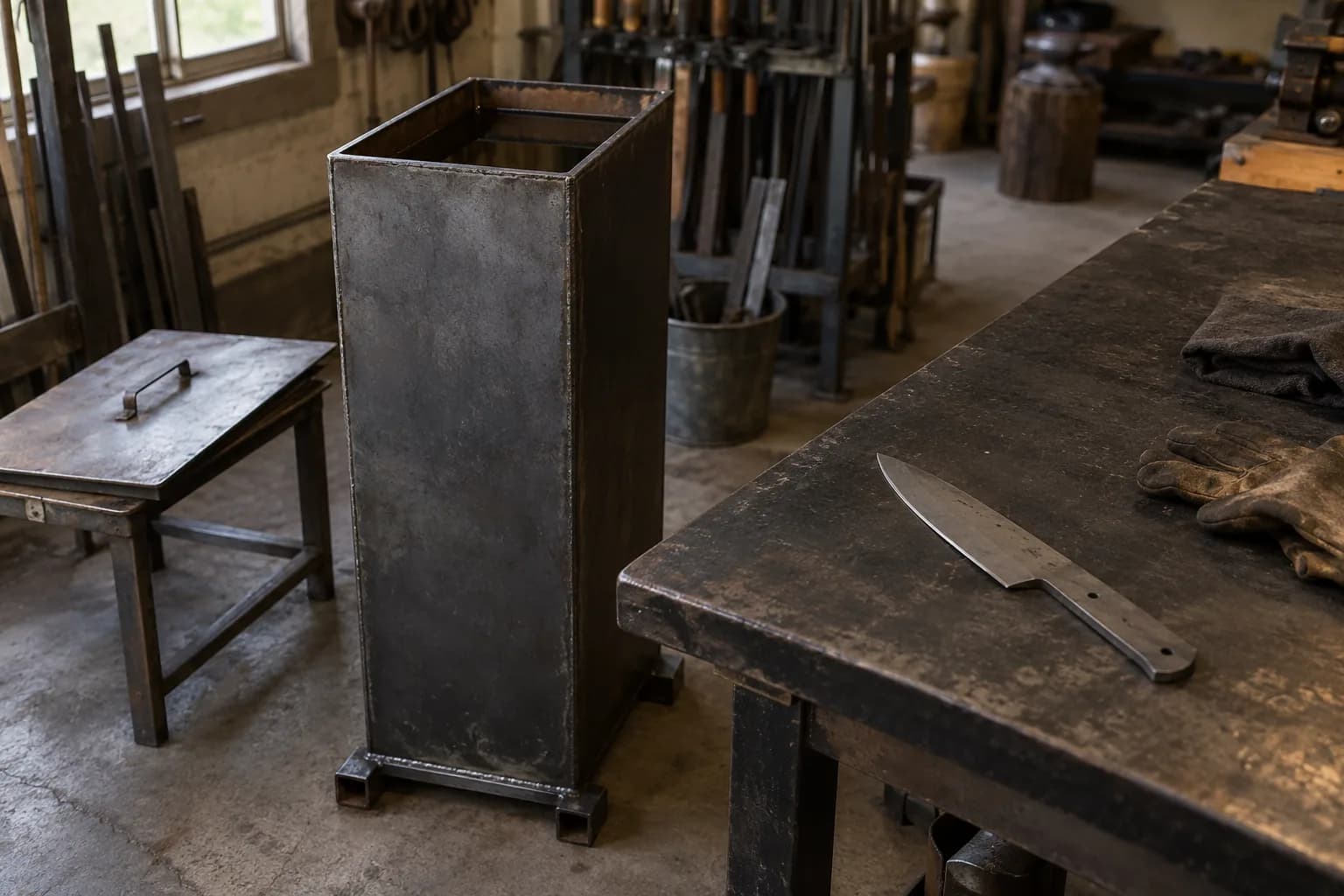
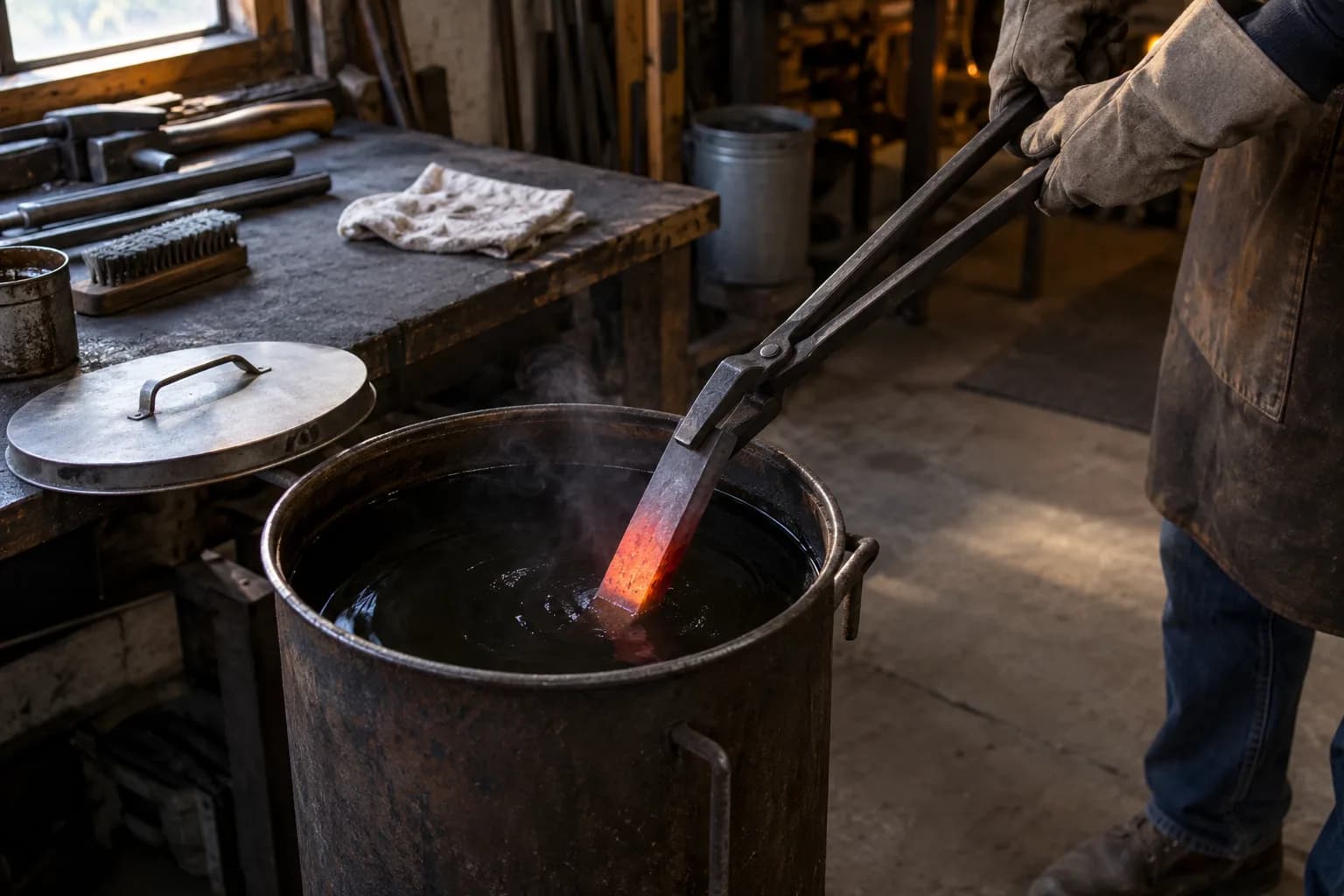
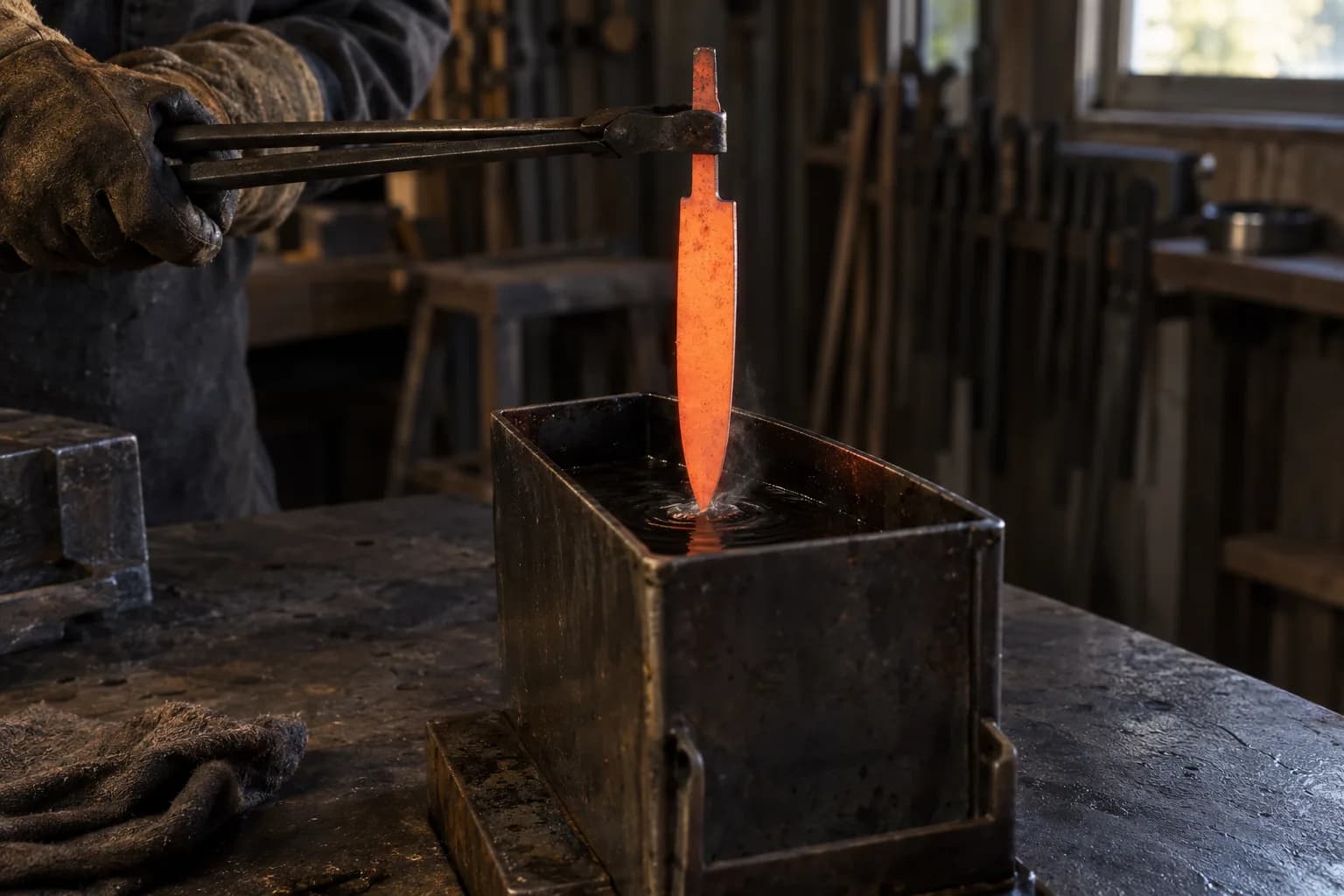
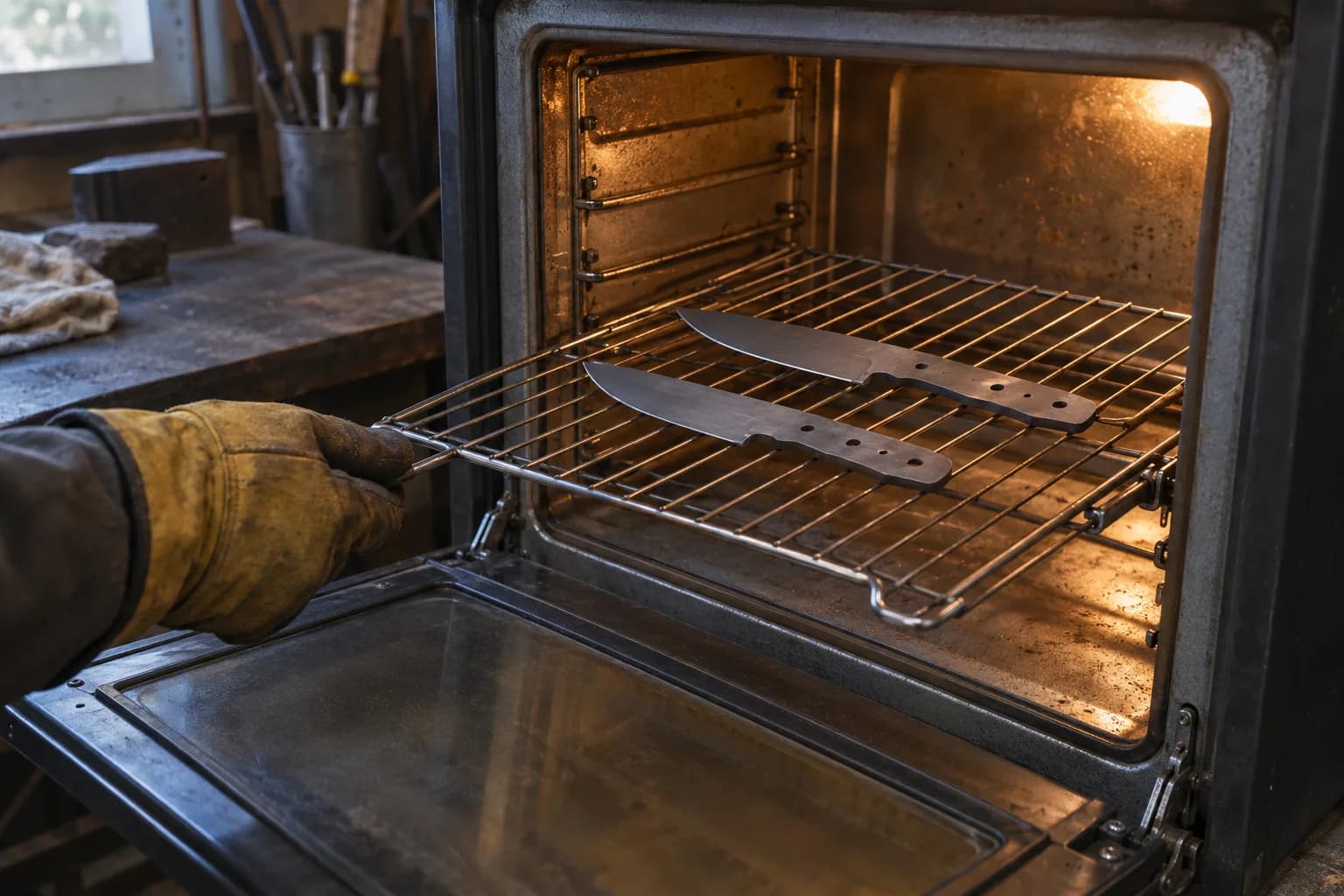
Match the oil to the steel: fast purpose-made oil (Parks 50) for shallow-hardening carbon steels, medium oil for O1/5160/52100-class, plates for stainless — and warm canola as the honest budget stand-in for forgiving steels while you’re learning. Never motor oil. Your quench is half your heat treat; a proper oil is the cheapest performance upgrade in knifemaking.
Keep reading
Three more from the same bench.
Heat treating is what turns a piece of flat bar stock into a functional knife blade. Done correctly, it transforms the steel’s internal crystal structure…

The Heat Treating Guide covers the practical steps: normalize, austenitize, quench, temper. This guide covers what’s actually happening inside the steel…
“Do I need a $1,000+ kiln to heat treat a knife?” No — and pretending otherwise keeps a lot of people from ever making their first blade. Makers hardened…
Same bench
I machine the parts, hand-assemble, track and test Torus grinders in Sterling, Illinois. Most orders ship in seven to ten business days from time of order.
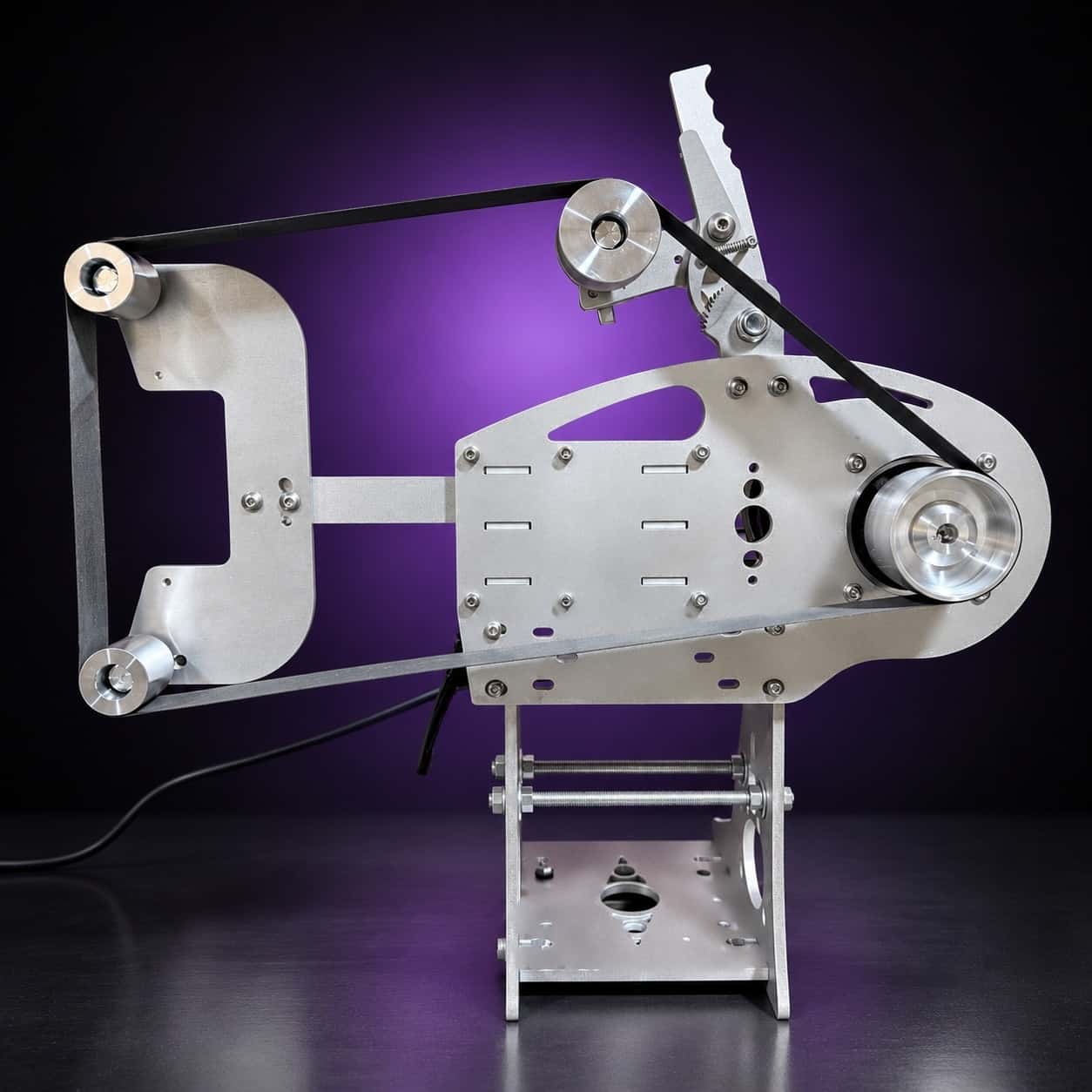
Current dual-axis platform with a fiber-laser-cut 6061 chassis and single-knob tracking.
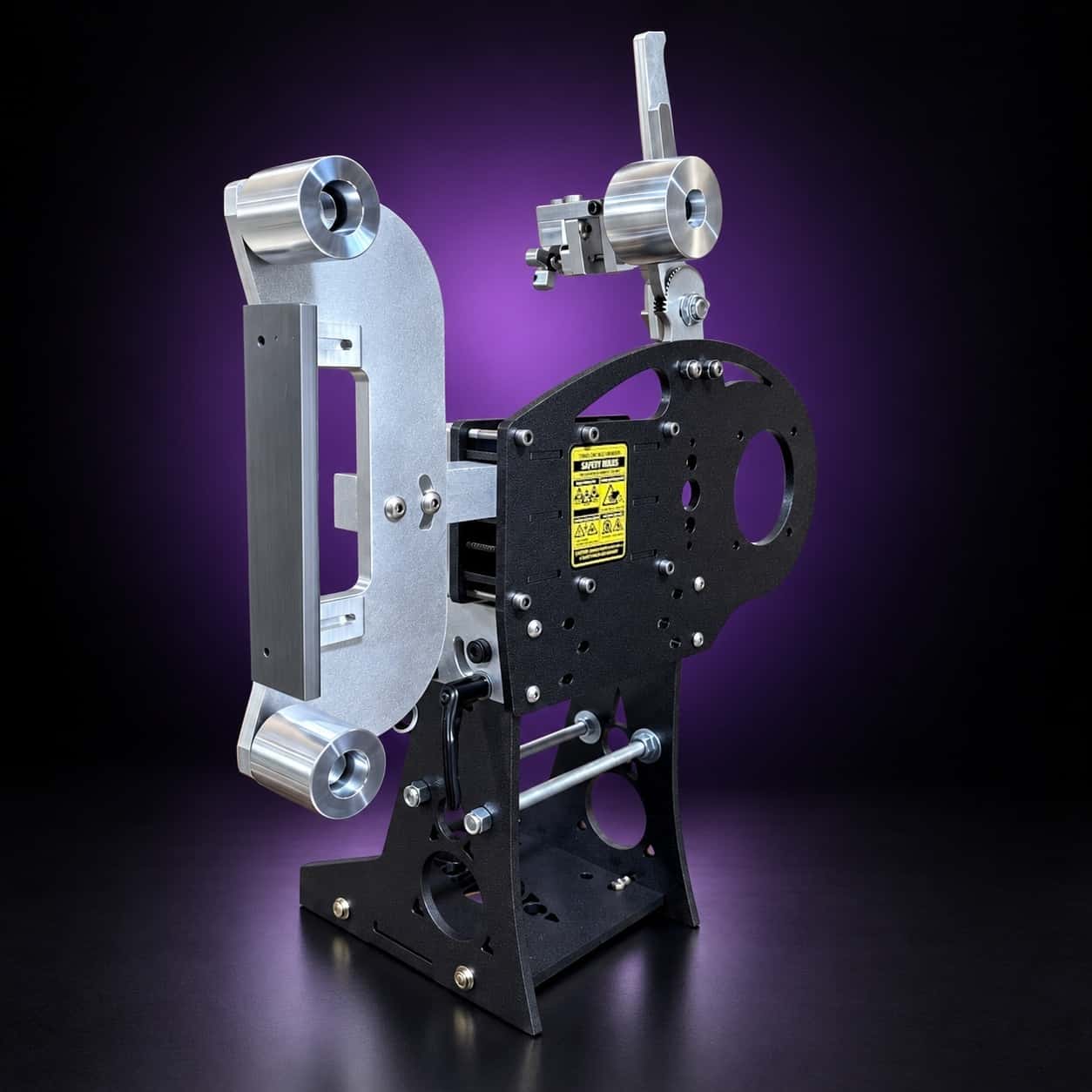
Current dual-axis platform with a steel chassis, more mass and less vibration.
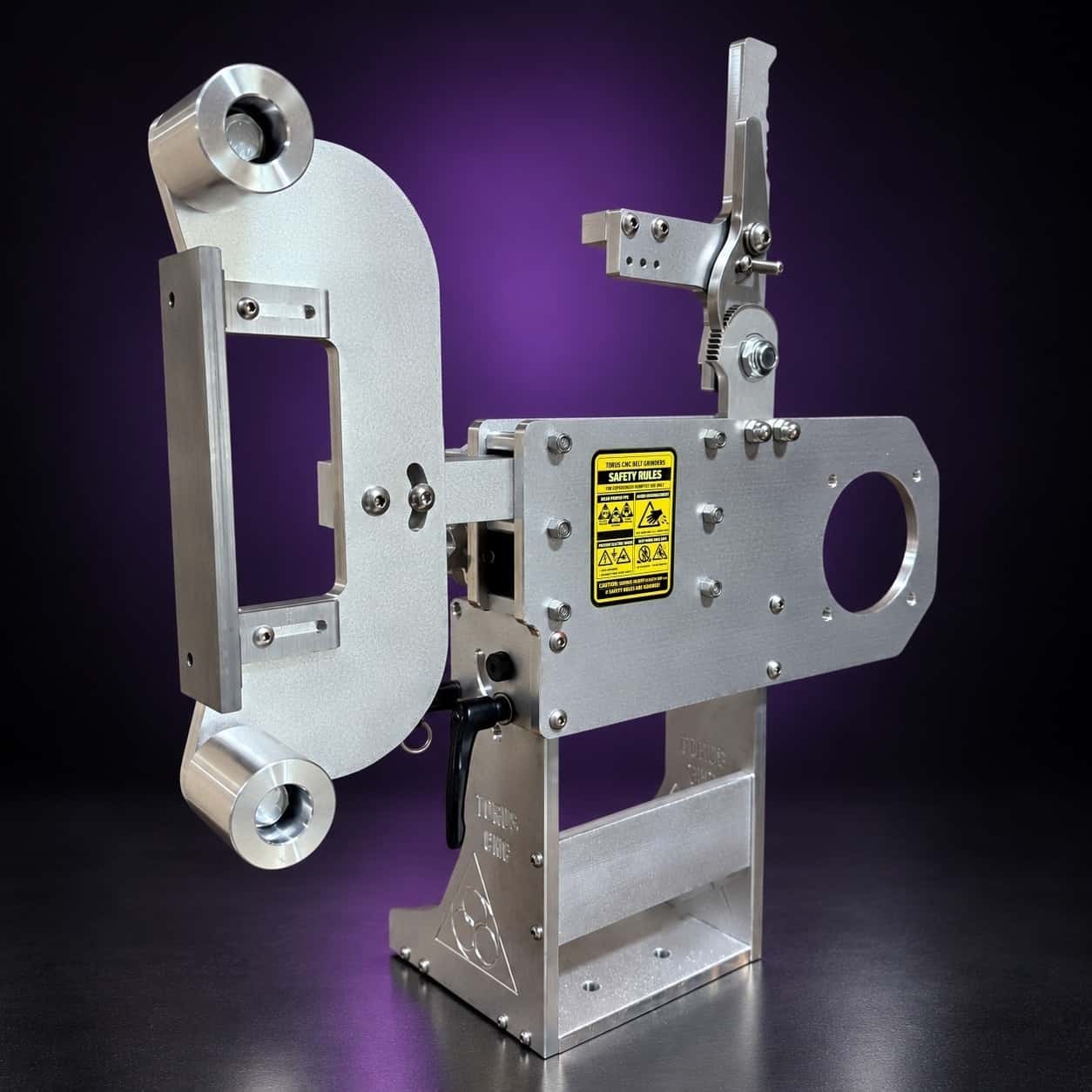
Prior-design aluminum chassis, 90-degree tilt and 1.5-inch tooling arms.
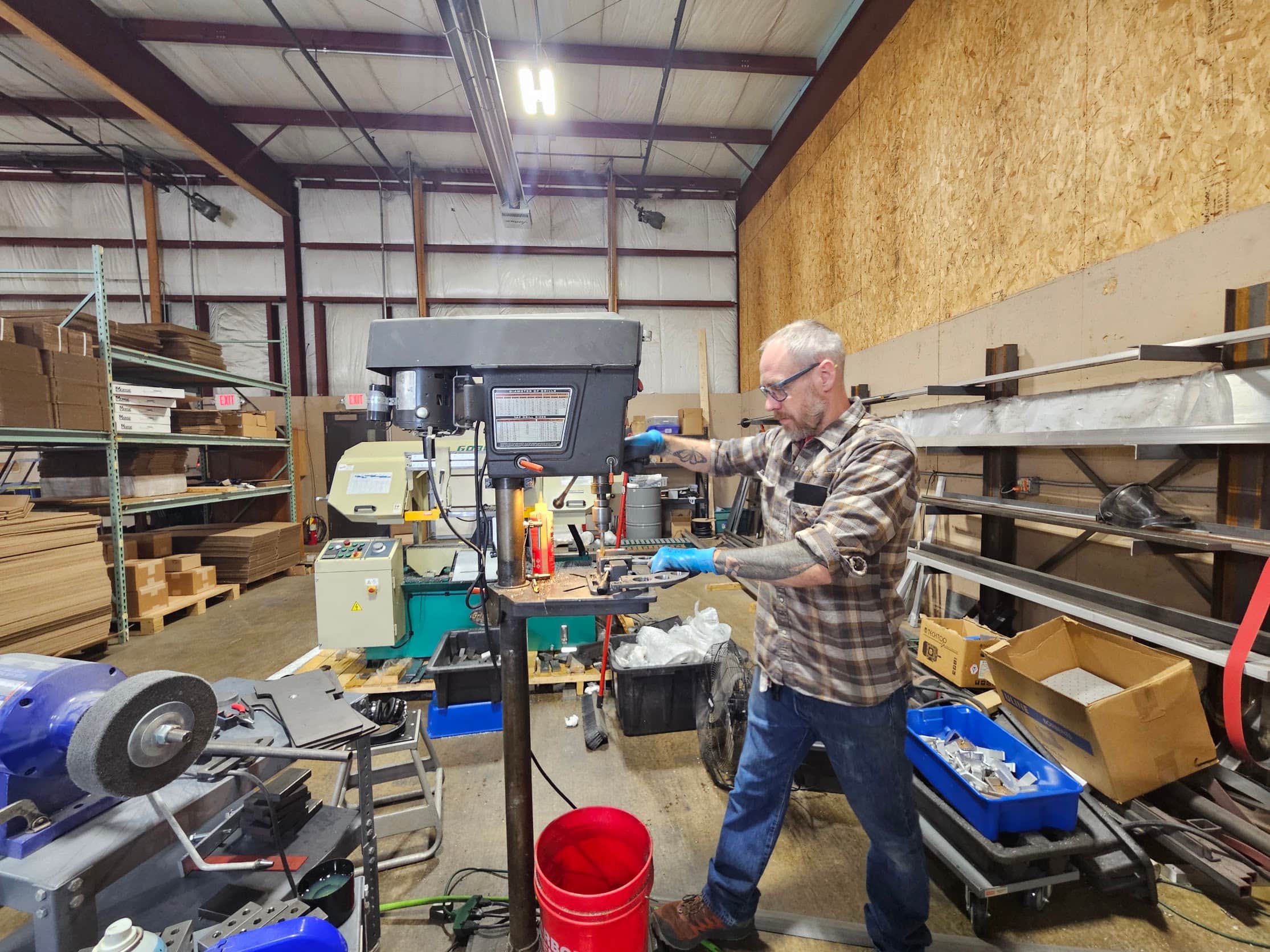
One-man shop
I answer my own email. Tell me the steel, the machine and what it is doing, and I will tell you what I would try next.