

Abrasives
Grinding & Sharpening M390
M390 earns its benchmark status at the cutting board and collects the bill in the shop: its vanadium and chromium carbides resist your abrasives exactly…

Knife steel
Bohler's benchmark powder-metallurgy super stainless: ~1.9% carbon and 4% vanadium for elite edge retention, 20% chromium for true stainless service, at the cost of toughness, sharpening effort and price. Near-identical to CPM 20CV and CTS 204P. Stock removal only, 60-62 HRC with proper soak, plate quench and cold treatment.
Also known as
At a glance
The four meters are relative to the rest of the database. Composition is the published nominal analysis, not a mill certificate for your bar.
Working properties
near-identical: CPM 20CV (Crucible).
Premium EDC folders and slicers, gentleman's knives, kitchen knives for low-maintenance owners, any blade where edge retention plus stainless service is the whole brief and impact loads are not.
At the bench
Open the property you are worried about. Every note is written for the blade in your hand, not for a spec sheet.
The full reference
M390 is the steel that made “super steel” a category. Bohler’s third-generation powder-metallurgy stainless pairs elite edge retention with genuine corrosion resistance, and for over a decade it has been the benchmark every new premium stainless gets measured against. It is also — with its near-identical siblings CPM 20CV and CTS 204P — one of the most widely used premium steels in production knives, which makes it the super stainless a custom maker’s customers have already heard of. The cost is the usual one at this end of the chart: money, belts, and patience at the sharpening bench.
For folders, EDC blades and any knife where edge retention and rust resistance top the list, it is one of the best available. Roughly 1.9% carbon and 4% vanadium build a dense population of hard carbides that out-cut nearly everything this side of S90V, while 20% chromium keeps it comfortably stainless. The honest costs: modest toughness (thin edges on hard use can chip), real sharpening effort, and premium bar prices.
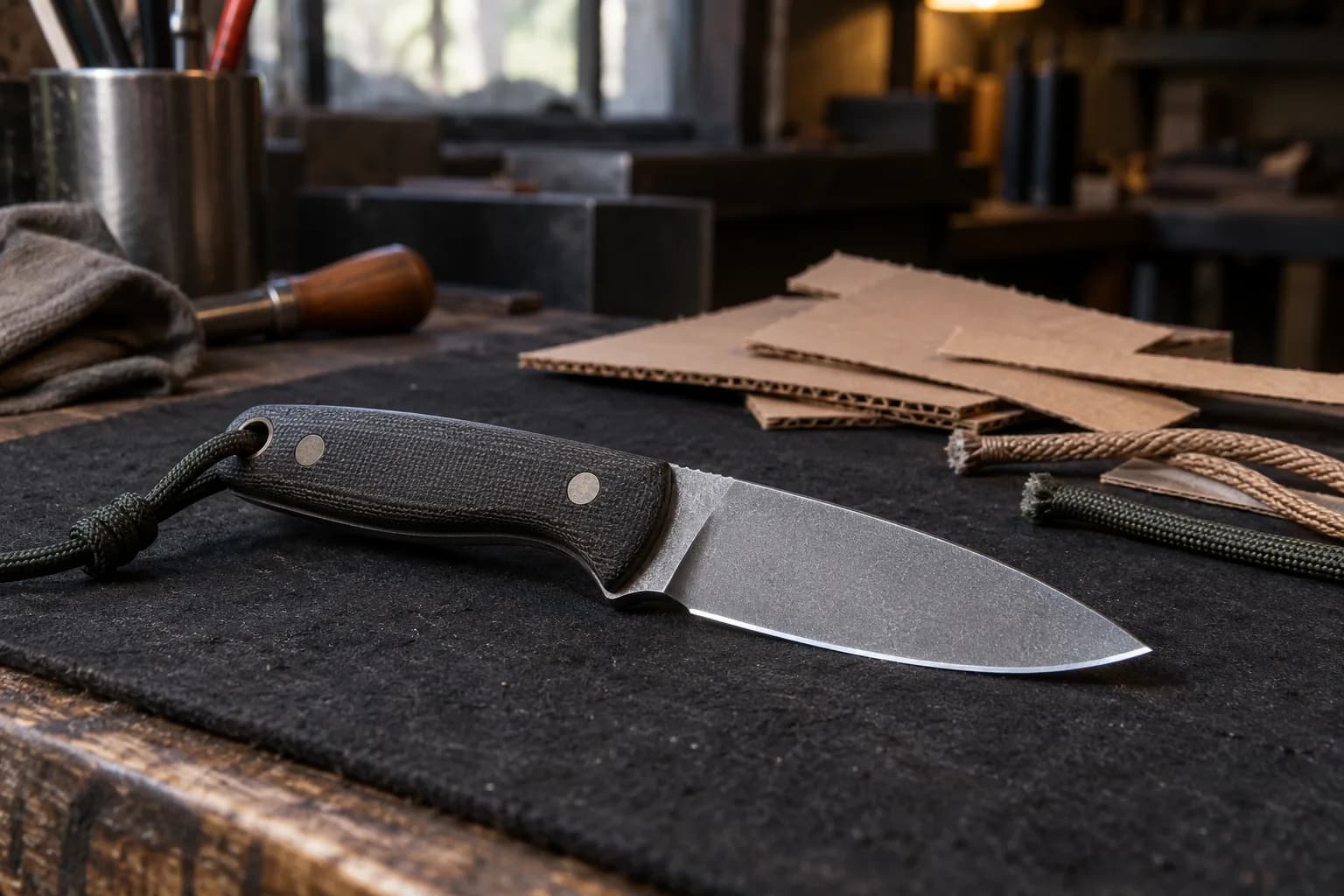
Functionally yes. Bohler’s M390, Crucible’s CPM 20CV and Carpenter’s CTS 204P are near-identical compositions produced by different mills — the differences (a fraction of silicon, mill-to-mill powder practice) are smaller than the differences between two heat treats of the same bar. Pick by availability and price, not mystique. Full head-to-head in our M390 vs CPM 20CV comparison.
60–62 HRC for most knives: Bohler’s tempering charts (a 2100°F austenitize, small test pieces, read by eye) show about 62 HRC at a low 210–300°F temper without a subzero step and about 63–64 with one, and Larrin Thomas’s 2140°F, plate quench, cryo, 365°F test cycle read about 62 Rc. The 390–570°F tempers Bohler recommends for the best corrosion resistance give lower hardness, roughly 57–59 HRC without subzero and about 61 with it, so a knife tempered there lands softer, which leaves edge retention on the table. Bohler’s data sheet and brochure give a 2010–2155°F austenitize with a quick quench and recommend a subzero step for the best wear resistance — kiln-and-protocol territory, not forge territory. Aluminum plates and dry ice earn their keep here; see Plate Quenching Explained.
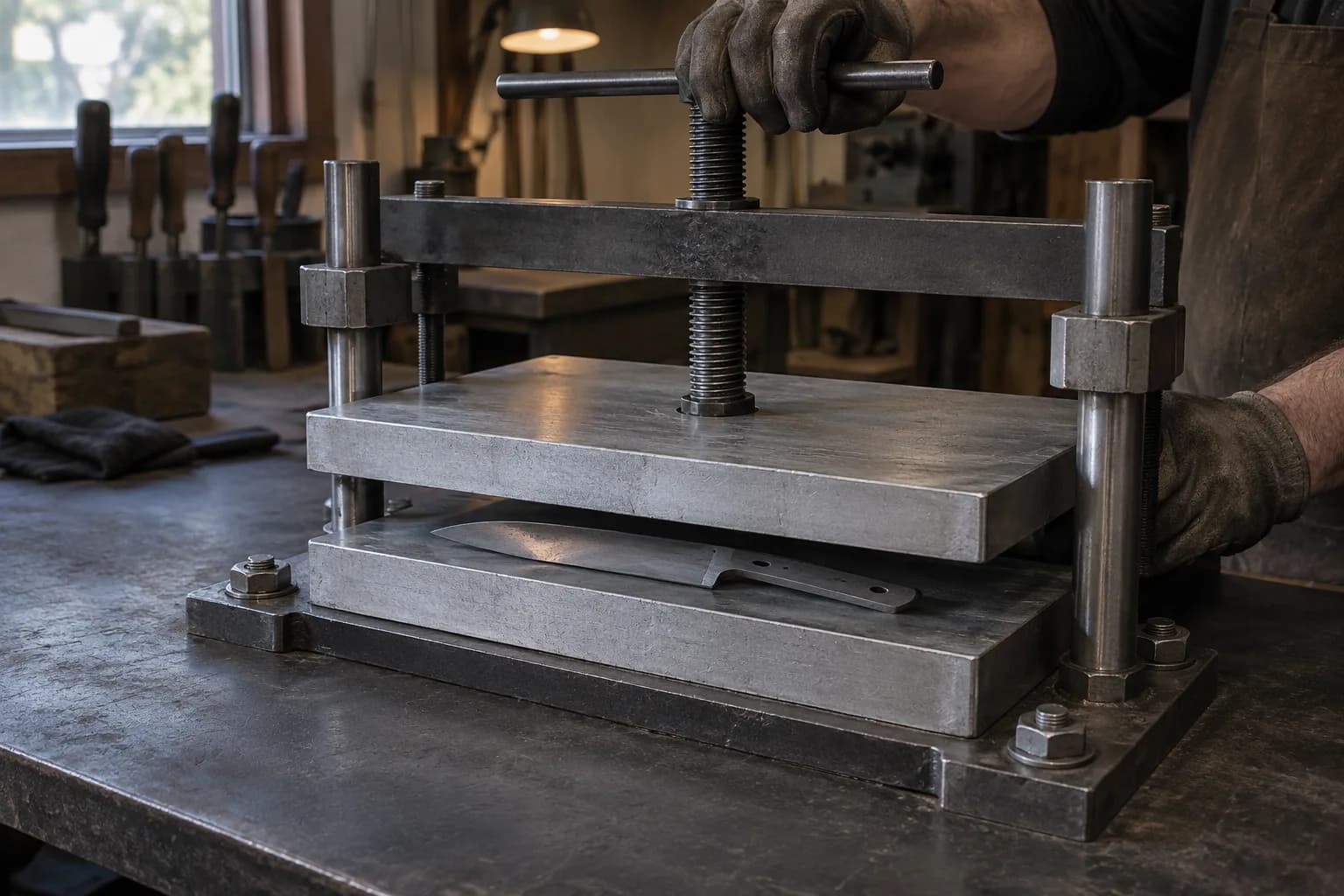
Practically, no — it is a stock-removal steel. The chromium carbide volume that makes it perform makes it hostile under the hammer, and its heat-treat window demands furnace precision. Buy it as bar stock, grind it, send it out or kiln it. Forgers wanting M390-class performance should read about ApexUltra — the steel designed to bring modern carbide engineering to the forge.
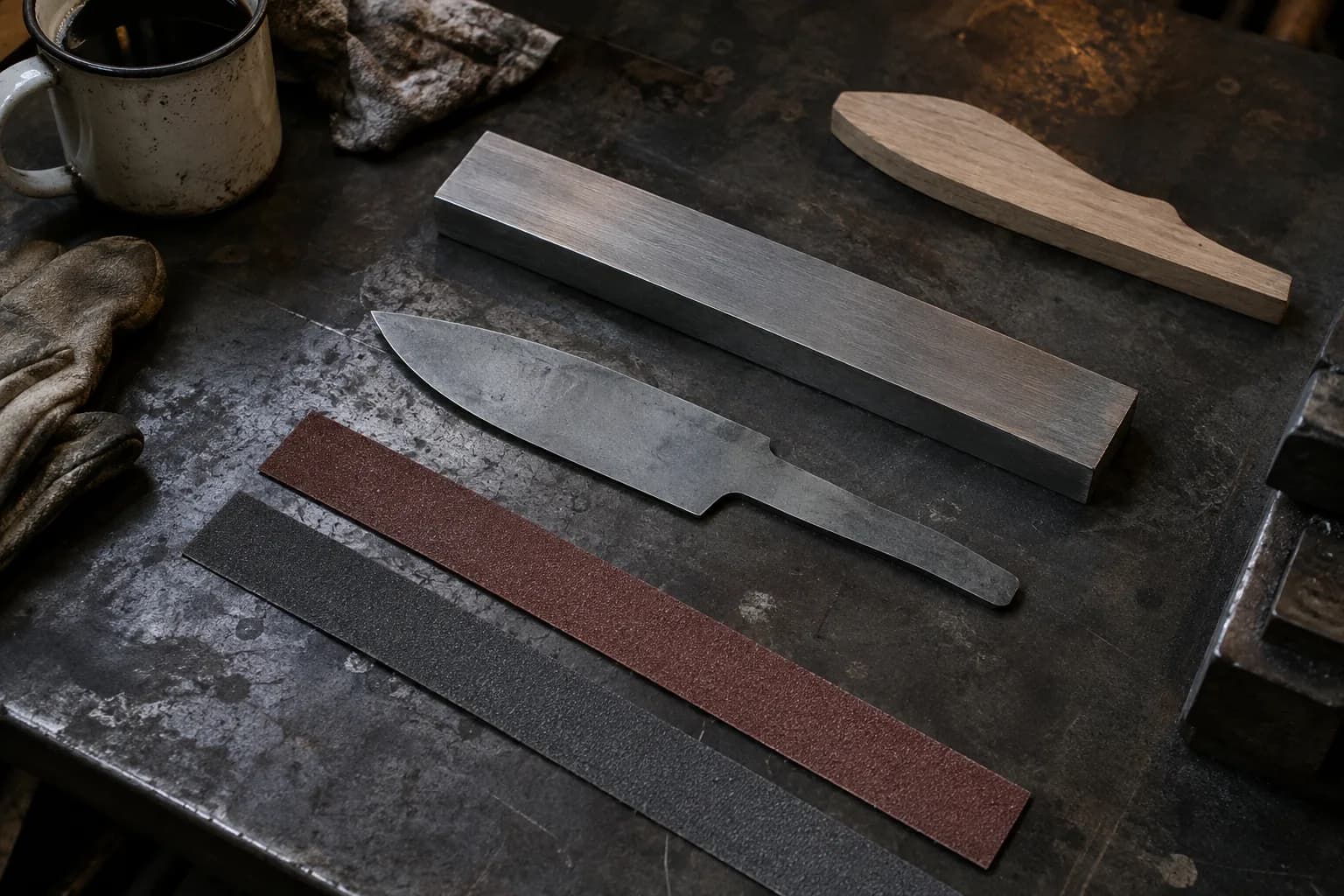
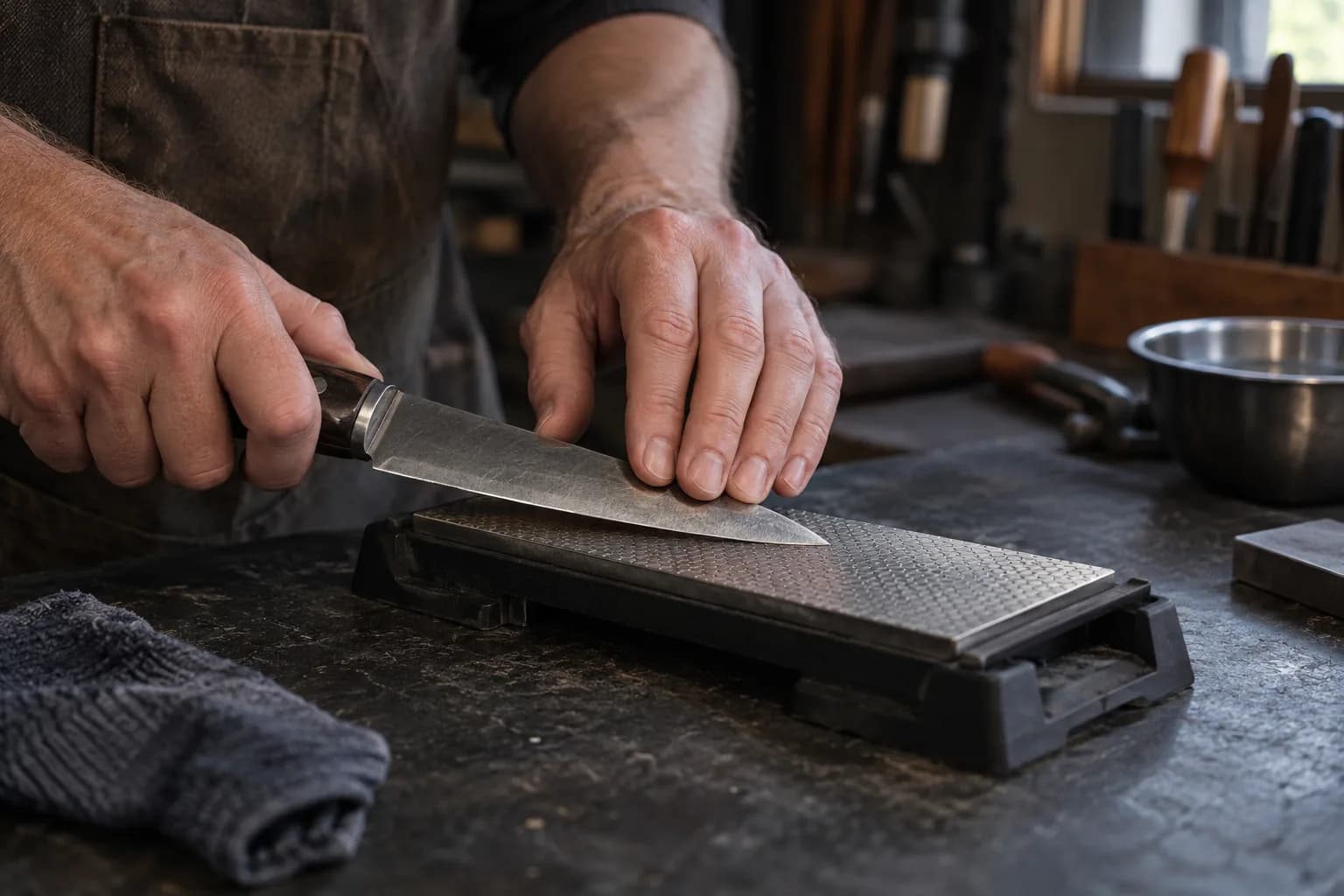
Harder than anything mainstream, easier than S90V. Vanadium carbides are harder than aluminum-oxide abrasives, so diamond or CBN stones make the job honest — conventional stones burnish more than they cut once you pass the medium grits. Owners without diamond plates will feel the difference at maintenance time; our M390 grinding guide covers belts and stones that actually work.
The modern question. MagnaCut trades a slice of M390’s edge retention for meaningfully better toughness and slightly better corrosion resistance (Larrin Thomas rates MagnaCut 9.5 and M390 9); M390 keeps the wear-resistance crown of the two. Hard-use fixed blades lean MagnaCut; pure EDC slicers and folders split on preference. See MagnaCut vs CPM 20CV — the comparison applies to M390 nearly verbatim.
Head to head
Every matchup M390 appears in, dimension by dimension.
Keep reading
M390 earns its benchmark status at the cutting board and collects the bill in the shop: its vanadium and chromium carbides resist your abrasives exactly…

Every knife steel is iron plus a specific recipe of other elements, and each of those elements pulls the steel’s behavior in a particular direction…

Two steels with similar hardness numbers can feel completely different under a sharpening stone, one glides along smoothly, another feels like it’s…
Same bench
Whatever the steel, the grind is only as flat as the platen behind it. I machine the parts, hand-assemble and test Torus grinders in Sterling, Illinois.

Current dual-axis platform with a fiber-laser-cut 6061 chassis and single-knob tracking.

Current dual-axis platform with a steel chassis, more mass and less vibration.

Prior-design aluminum chassis, 90-degree tilt and 1.5-inch tooling arms.

One-man shop
Tell me what the blade is for and how you heat treat. I will tell you whether this is the steel I would use, and what I would use instead.