
Blade Design
Blade Grind Types Explained: Flat, Hollow, Saber & Convex
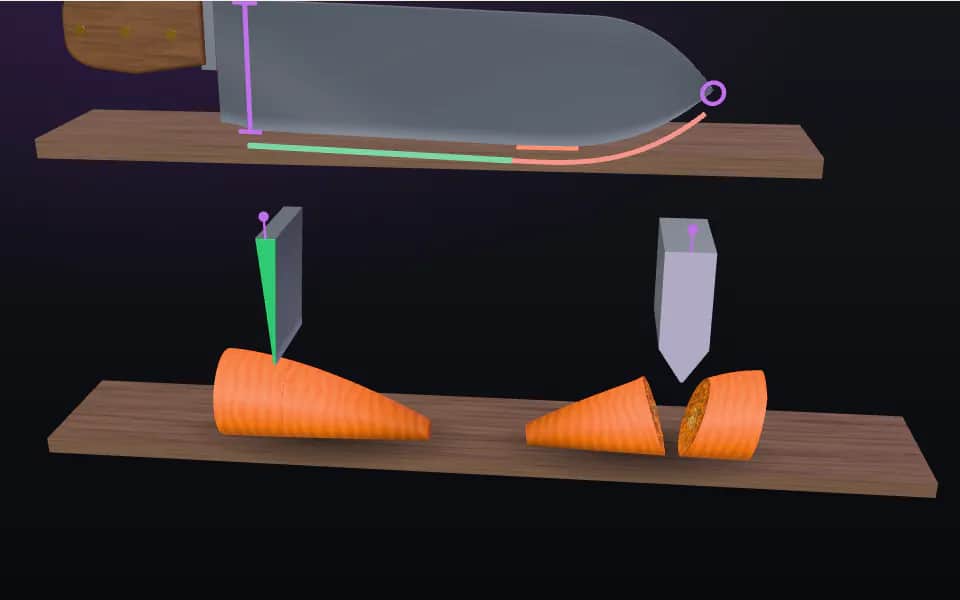
The grind is the cross-sectional shape of a blade, how the flat stock gets thinned down from spine to edge, and it affects cutting performance, edge…
Blade Design
Edge angles per side for every knife type, from razors at 7-8 degrees to machetes at 24-30, with the grind, edge thickness and reasoning behind each number.
2 min readWritten by Rich LinvilleFree to read
Every knife argument eventually lands on angles. Here is the chart we wish someone had handed us — edge angle per side, the grind that usually carries it, and why — followed by the reasoning. Angles are per side (degrees per side, dps) throughout; double them for the inclusive angle.
| Knife | Edge angle (per side) | Typical grind | Why |
|---|---|---|---|
| Straight razor | 7–8° | Hollow | Pure keenness; the spine sets the angle |
| Fillet knife | 12–15° | Full flat, thin | Effortless slicing in soft flesh |
| Japanese kitchen | 10–15° | Full flat / wide bevel | Fall-through-food cutting at higher hardness |
| Western kitchen | 15–20° | Full flat | Board contact and rougher use than Japanese practice |
| EDC / pocket knife | 15–20° | Flat or hollow | Cardboard, plastic, unknown abuse |
| Hunting / skinning | 20–22° | Flat or shallow hollow | Hide, sinew and the occasional bone touch |
| Bushcraft (scandi) | 11–12.5°, no secondary | Scandi | Wood carving control; the bevel is the edge |
| Bushcraft (hard use) | 15° | Scandi or full flat | Batoning insurance at a keenness cost |
| Camp knife / chopper | 22–25° | Convex or sabre | Impact stability with usable bite |
| Machete | 24–30° | Flat sabre, convexed edge | Survives contact with everything |
The pattern behind every row: lower angles cut better, higher angles survive better, and the steel decides how low you can afford to go. A tough fine-grained steel at sensible hardness holds 15 dps where a brittle one chips; that interplay is covered in Why Hardness Matters. Edge angle also is not the whole story — thickness behind the edge often matters more, as our kitchen geometry guide argues in detail.
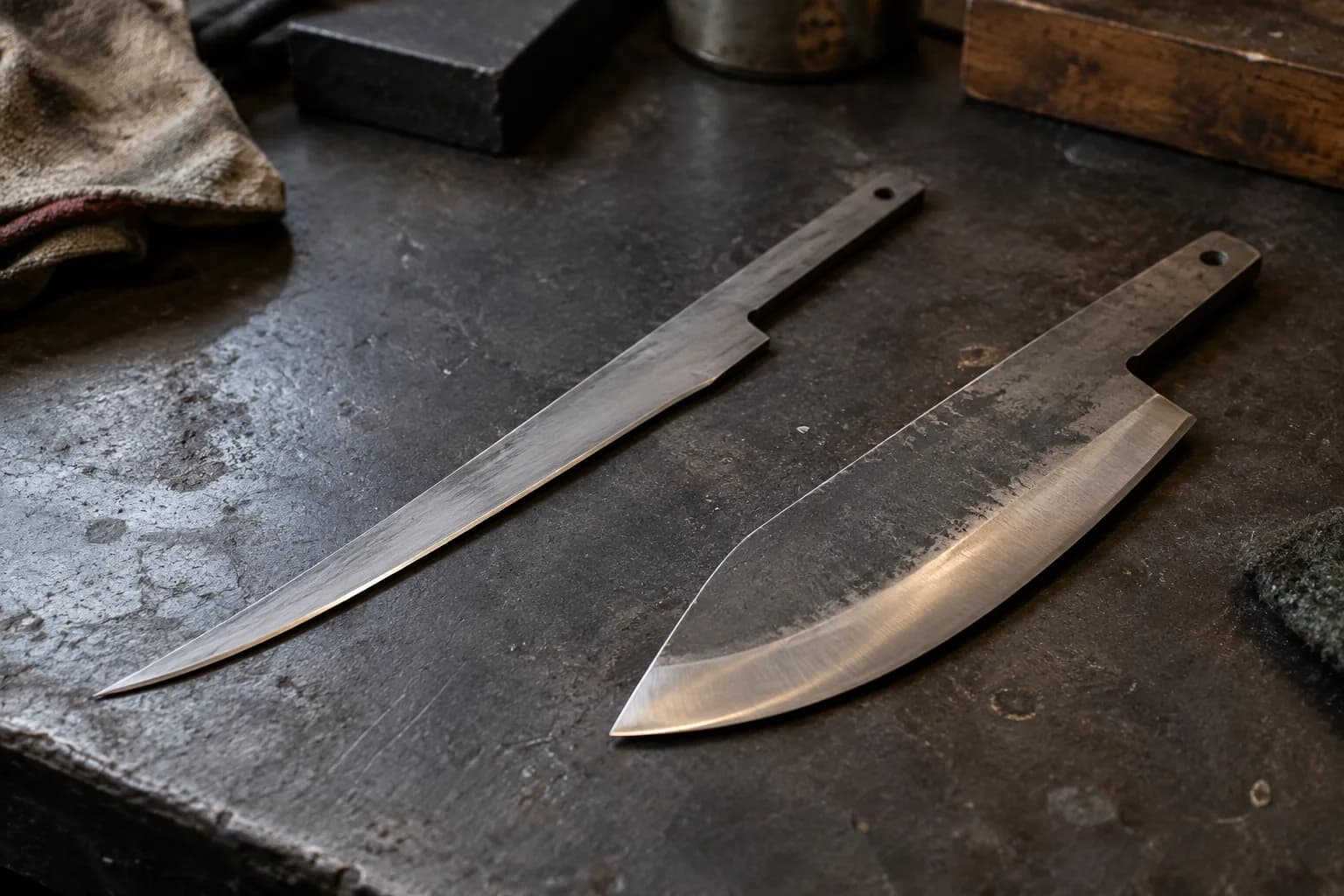
The primary grind (full flat, hollow, sabre, convex, scandi) sets how the blade thins from spine to edge; the edge bevel sets the final cutting angle. The chart’s grind column is convention, not law — but conventions earned their place: a hollow-ground machete or a 25-dps fillet knife both fail their jobs quickly.
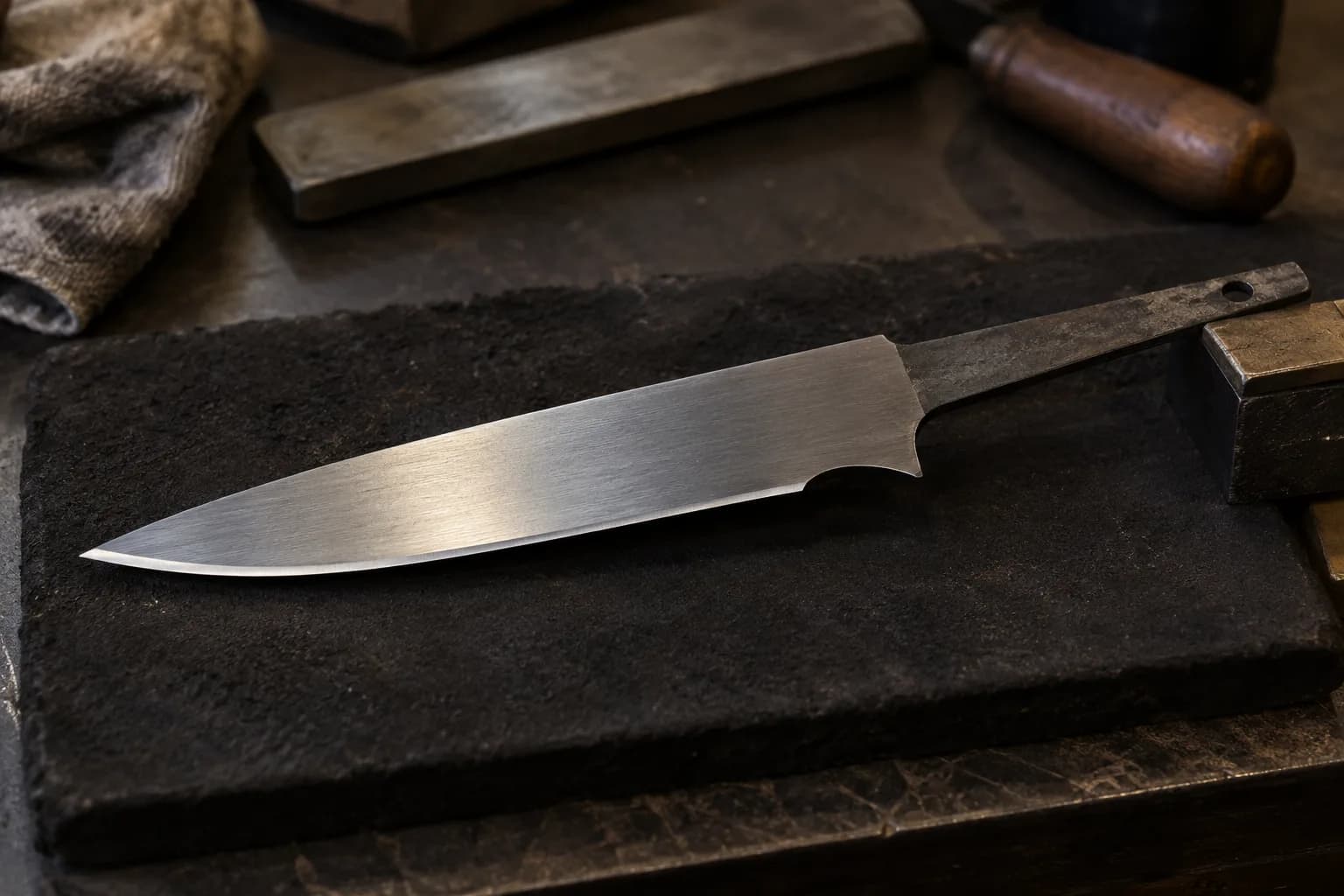
Each row of that chart has its own guide with the reasoning, stock thickness, steel pairings and grinding notes: bushcraft, kitchen, EDC folders, hunting and skinning, fillet, choppers and machetes, tactical and utility, and straight razors — plus microbevels, the cheat code that lets one blade play two rows.
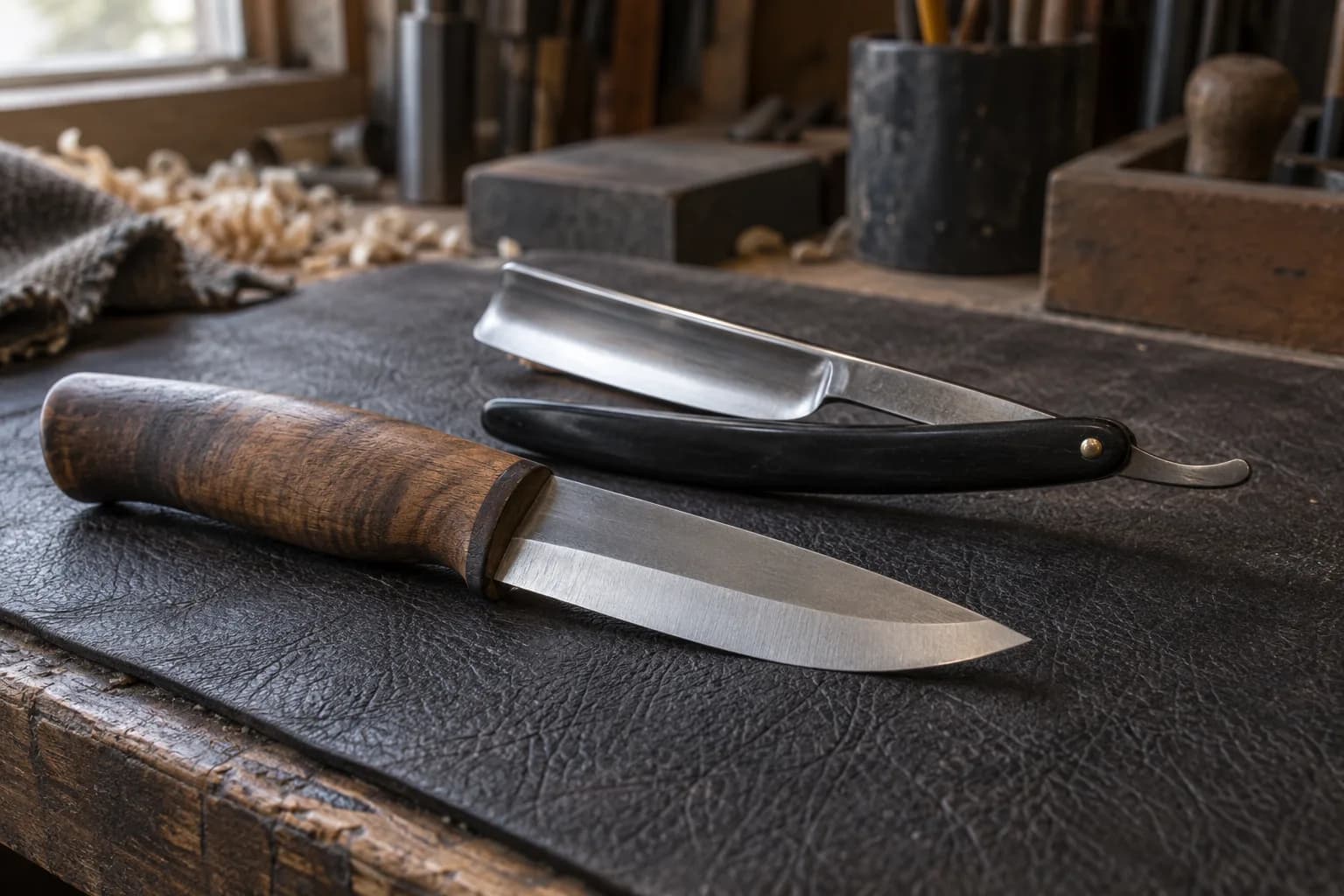
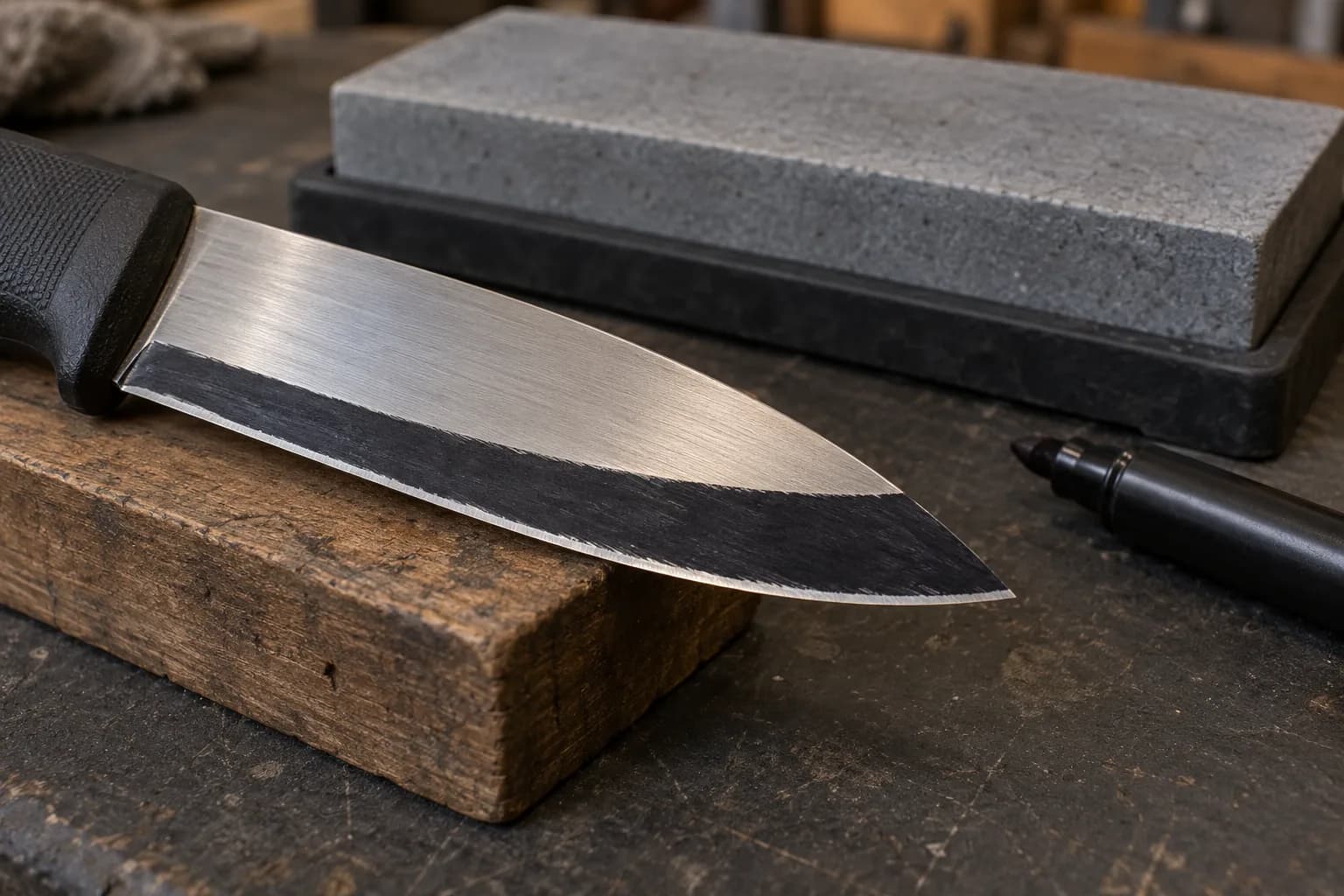
An angle cube on the platen tells you what you set; a marker test on the stones tells you what you made. The two disagree more often than pride admits. Set the grinder, verify at the stones, and record what worked — repeatability is the whole game, on the belt as in sharpening.
Keep reading
Three more from the same bench.
The grind is the cross-sectional shape of a blade, how the flat stock gets thinned down from spine to edge, and it affects cutting performance, edge…
Kitchen knives are where blade geometry stops being theory and starts being dinner. A camp knife forgives a thick grind; a chef’s knife wedges apart a…
Sharpening is where knifemaking gets humbled: you can grind a flawless blade and still hand someone a knife that won’t slice paper. The good news …
Same bench
I machine the parts, hand-assemble, track and test Torus grinders in Sterling, Illinois. Most orders ship in seven to ten business days from time of order.
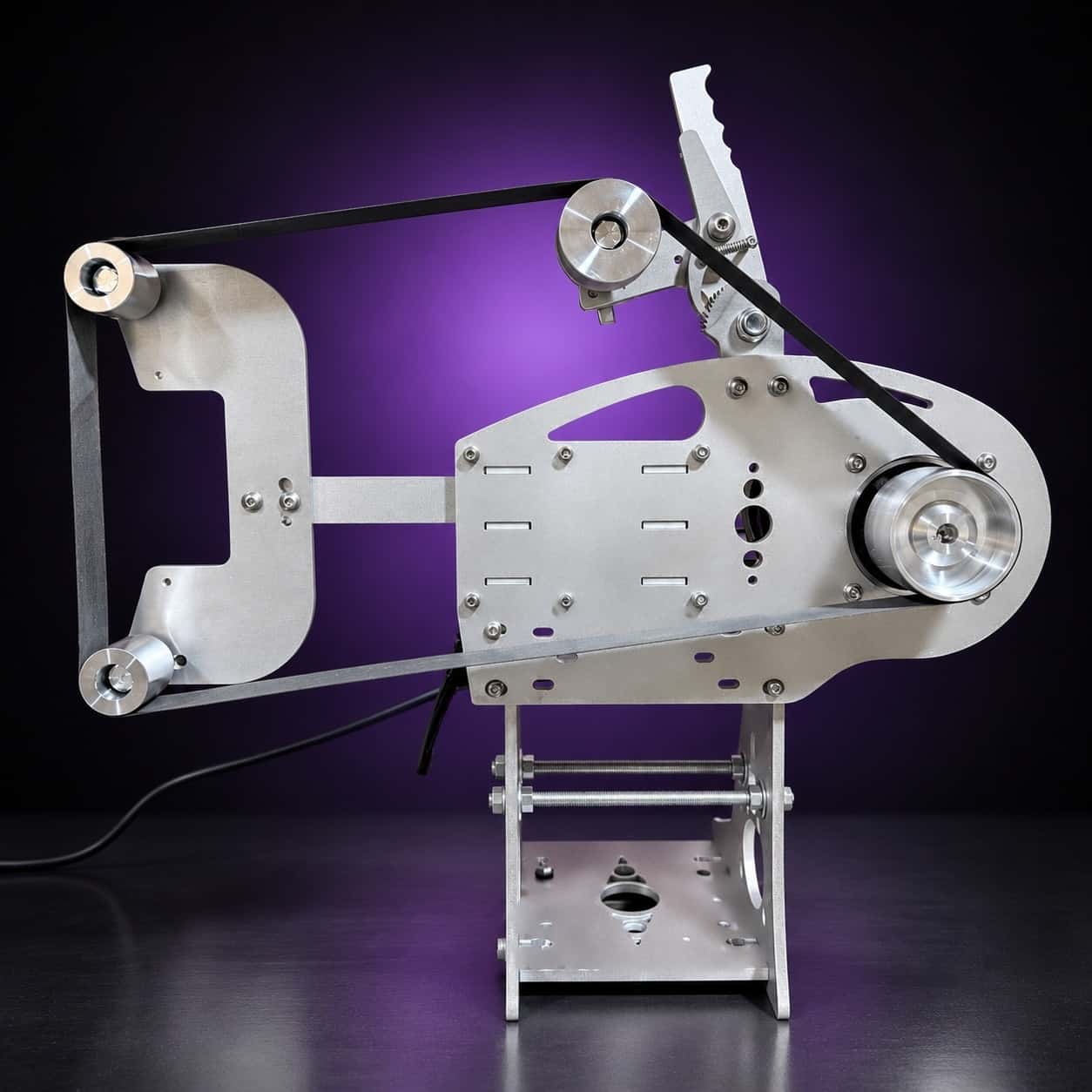
Current dual-axis platform with a fiber-laser-cut 6061 chassis and single-knob tracking.
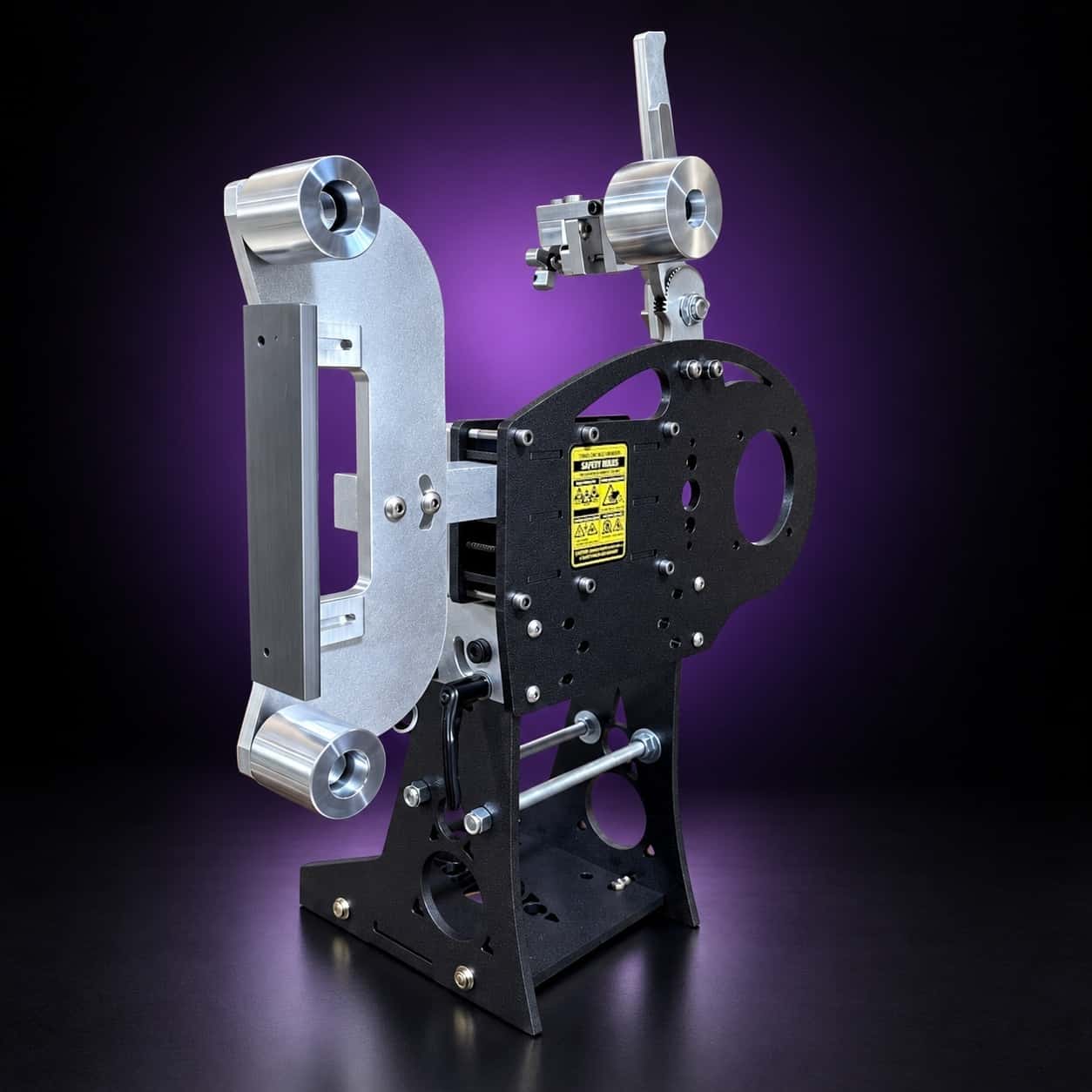
Current dual-axis platform with a steel chassis, more mass and less vibration.
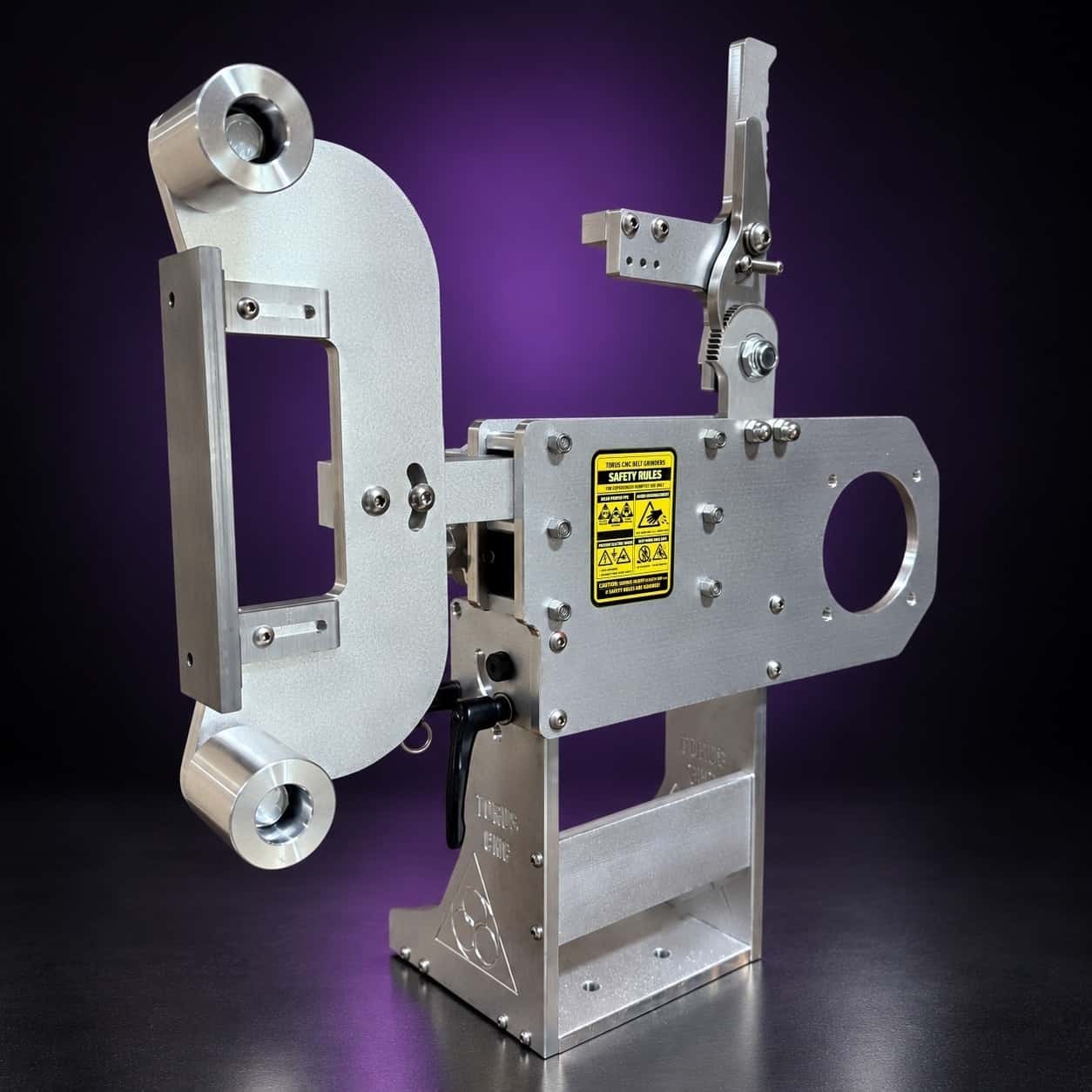
Prior-design aluminum chassis, 90-degree tilt and 1.5-inch tooling arms.
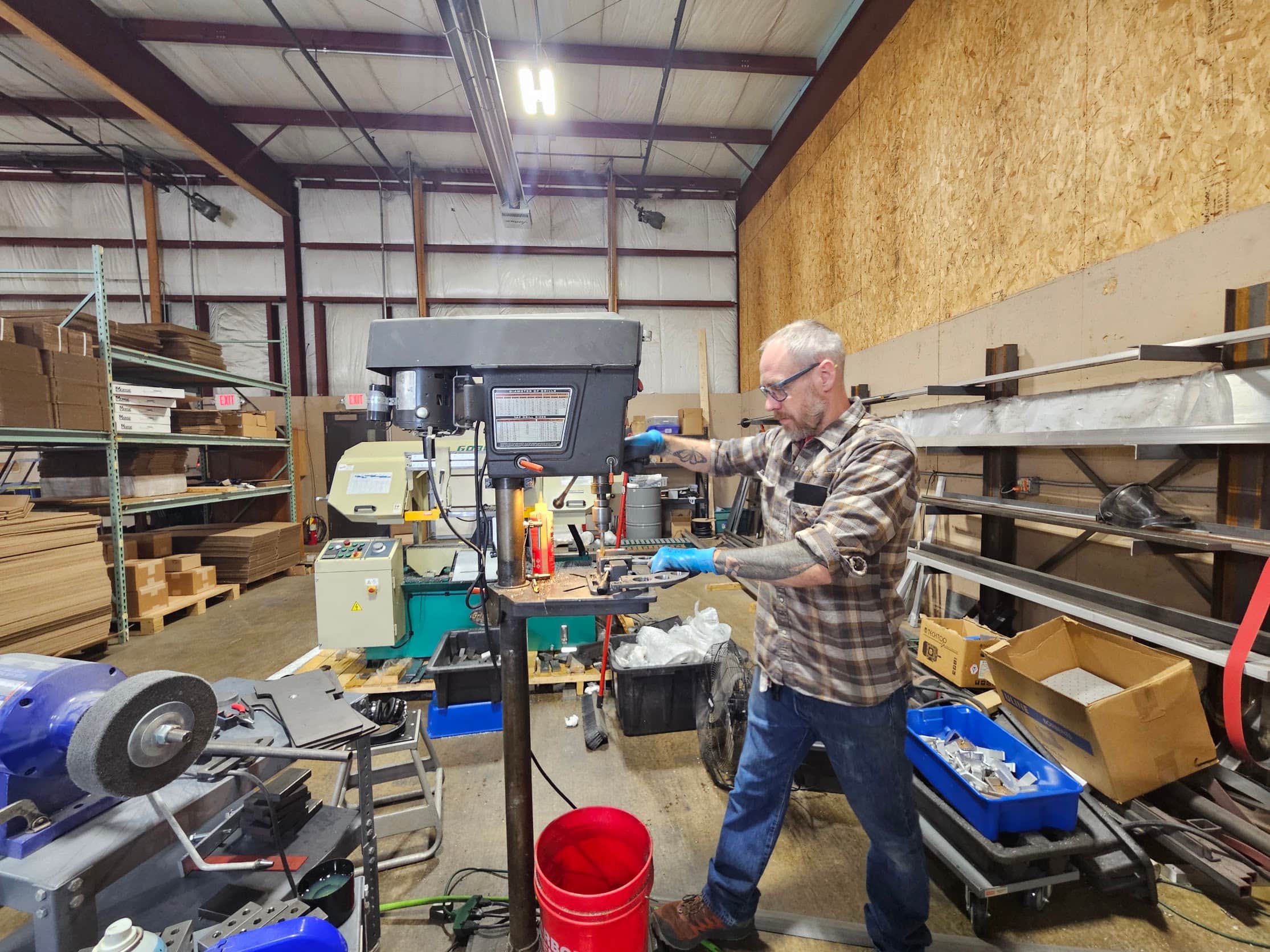
One-man shop
I answer my own email. Tell me the steel, the machine and what it is doing, and I will tell you what I would try next.