
Blade Design
Bevel Angles by Knife Type: The Working Chart
Every knife argument eventually lands on angles. Here is the chart we wish someone had handed us — edge angle per side, the grind that usually carries it…
Blade Design
Pocket knives live at 15-20 degrees per side: hollow versus flat grinds, 0.015-0.025 inch behind the edge, tips that survive and a microbevel for insurance.
2 min readWritten by Rich LinvilleFree to read
An EDC blade leads the hardest life in the knife world: cardboard by the mile, plastic strapping, food at lunch, a staple it never saw coming — owned by someone who sharpens twice a year. Its geometry is a compromise engineered for abuse by neglect, and the conventions here are conventions because they survive.
Twenty degrees per side is the factory default of the entire folder industry, and it earned the job: keen enough to slice, obtuse enough to shrug off staples and pry-ish moments. Makers using good steel — MagnaCut, S35VN, or 14C28N run hard — can drop to 15–17 dps and hand the owner noticeably better cutting with no complaints. Below 15, warranty life gets interesting.
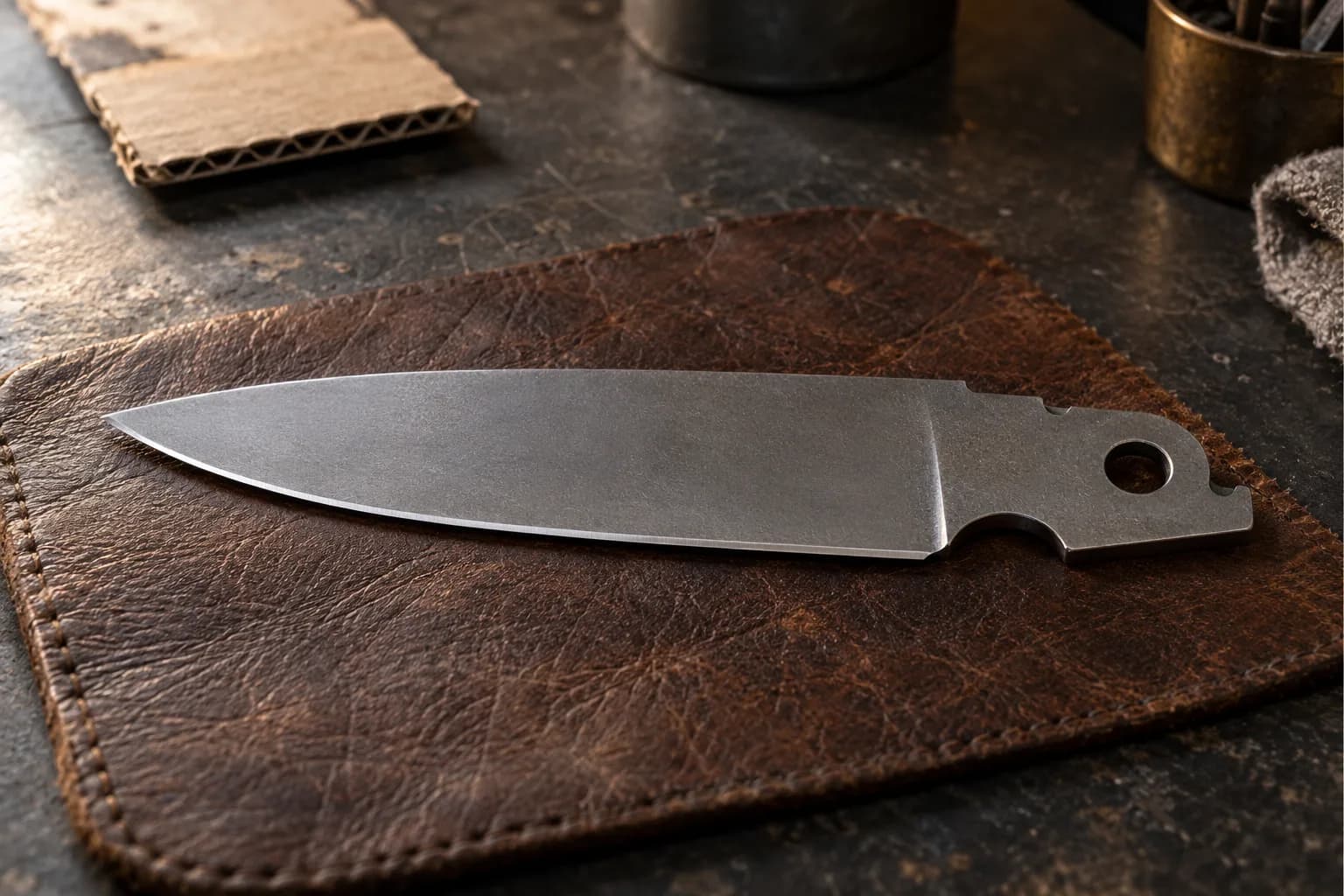
Both rule segments of the market. Full flat gives the cleanest push cuts and easy thin-behind-the-edge grinding on a 2×72 platen. Hollow (ground on the wheel) keeps the blade slicey through many sharpenings because the concave cheeks stay thin as the edge retreats — the reason it owns hard-use folder brands. Sabre grinds add mid-blade stiffness for pointy tactical patterns. See Blade Grind Types for grinding each.
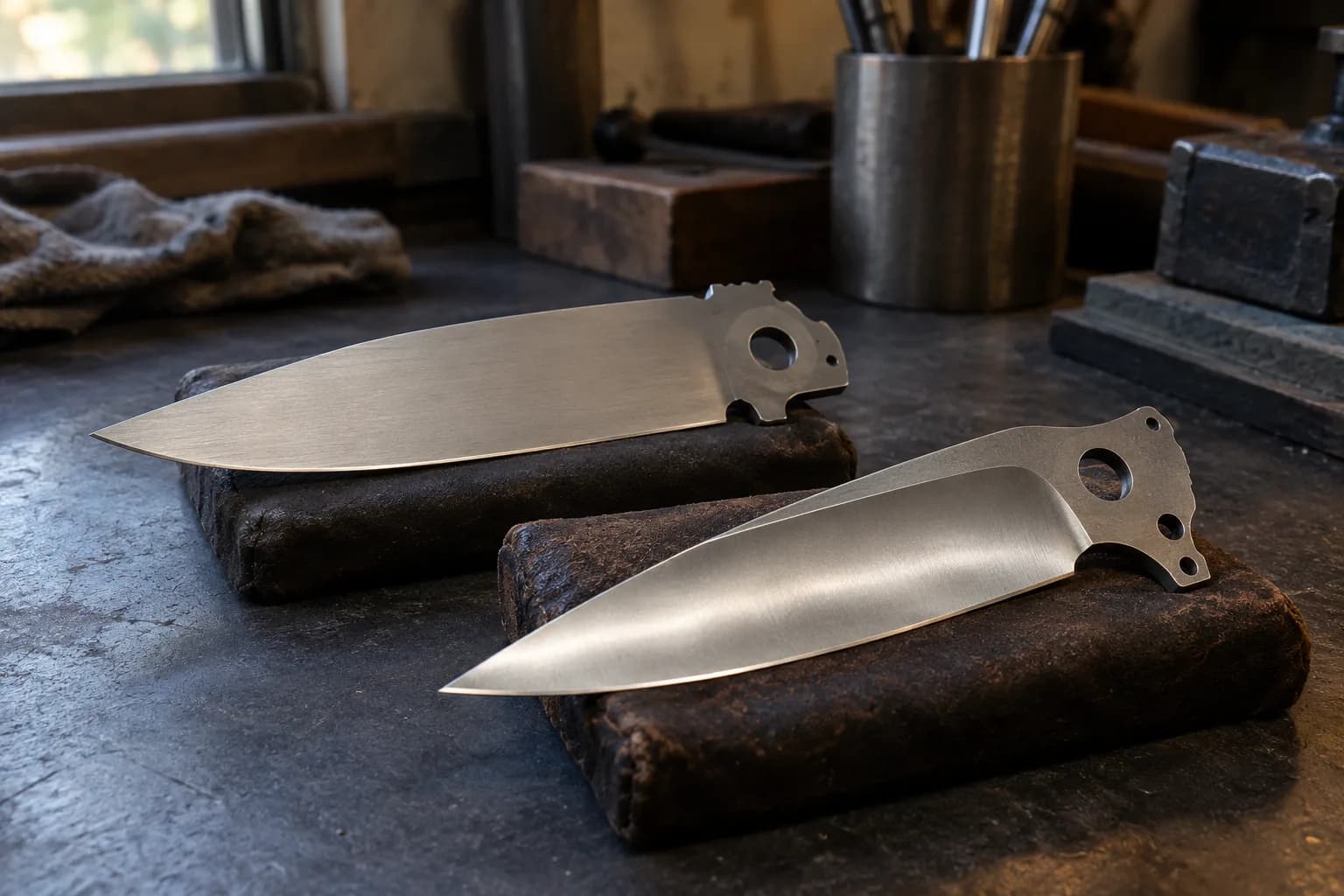
EDC behind-edge thickness: 0.015–0.025 inch measured a quarter inch up. Under 0.015 cuts beautifully and chips at staples; over 0.025 wedges in cardboard and feels dull sharp. This one caliper measurement predicts an EDC blade’s personality better than the edge angle does.
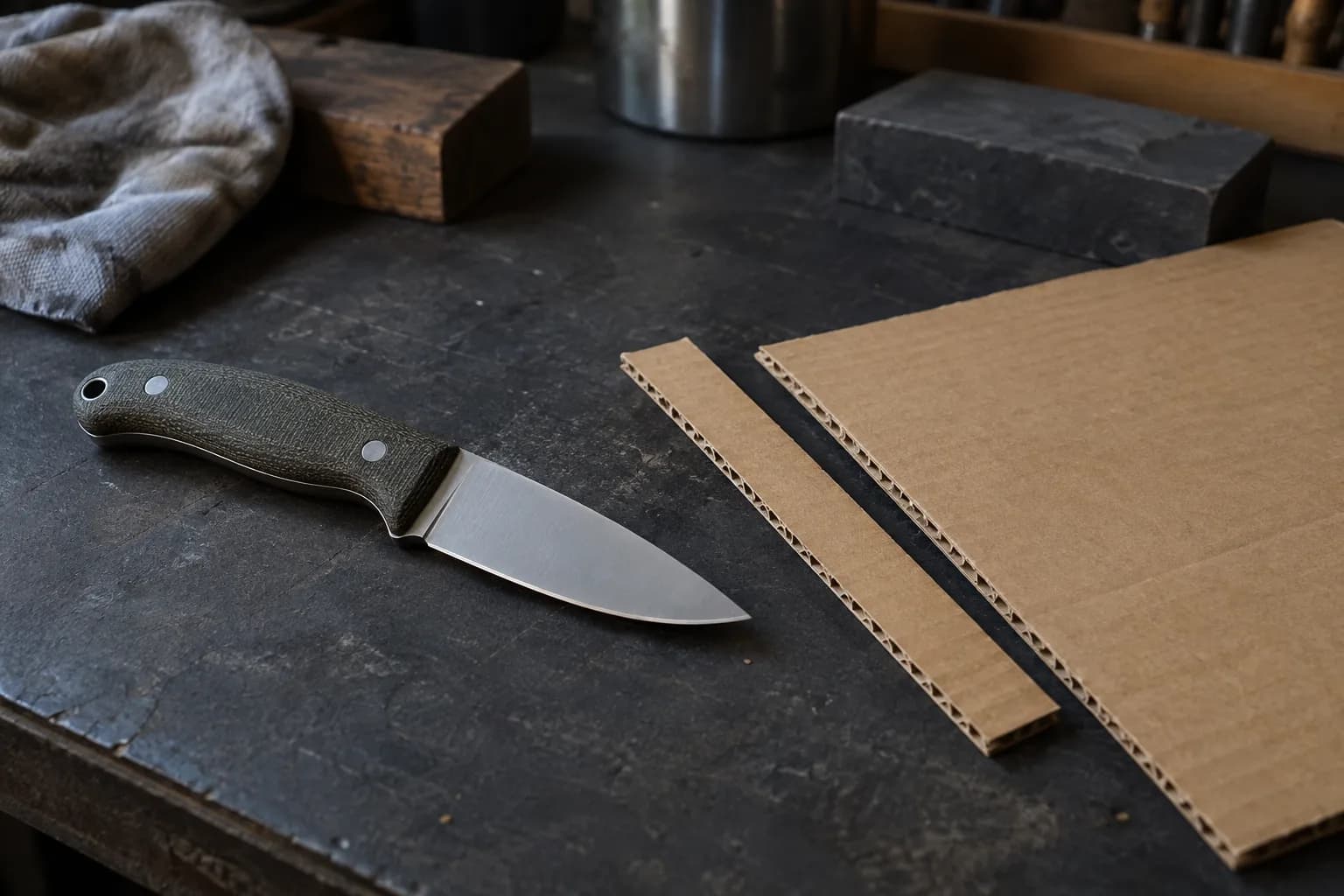
Drop points dominate EDC for a reason: the lowered, supported tip drills and resists snapping. Wharncliffes and sheepsfoot patterns trade the belly for box-cutter control and a tip that opens clamshell packaging without stabbing the contents. Fine trailing points and needle clip points belong on hunting blades, not in pockets full of keys.
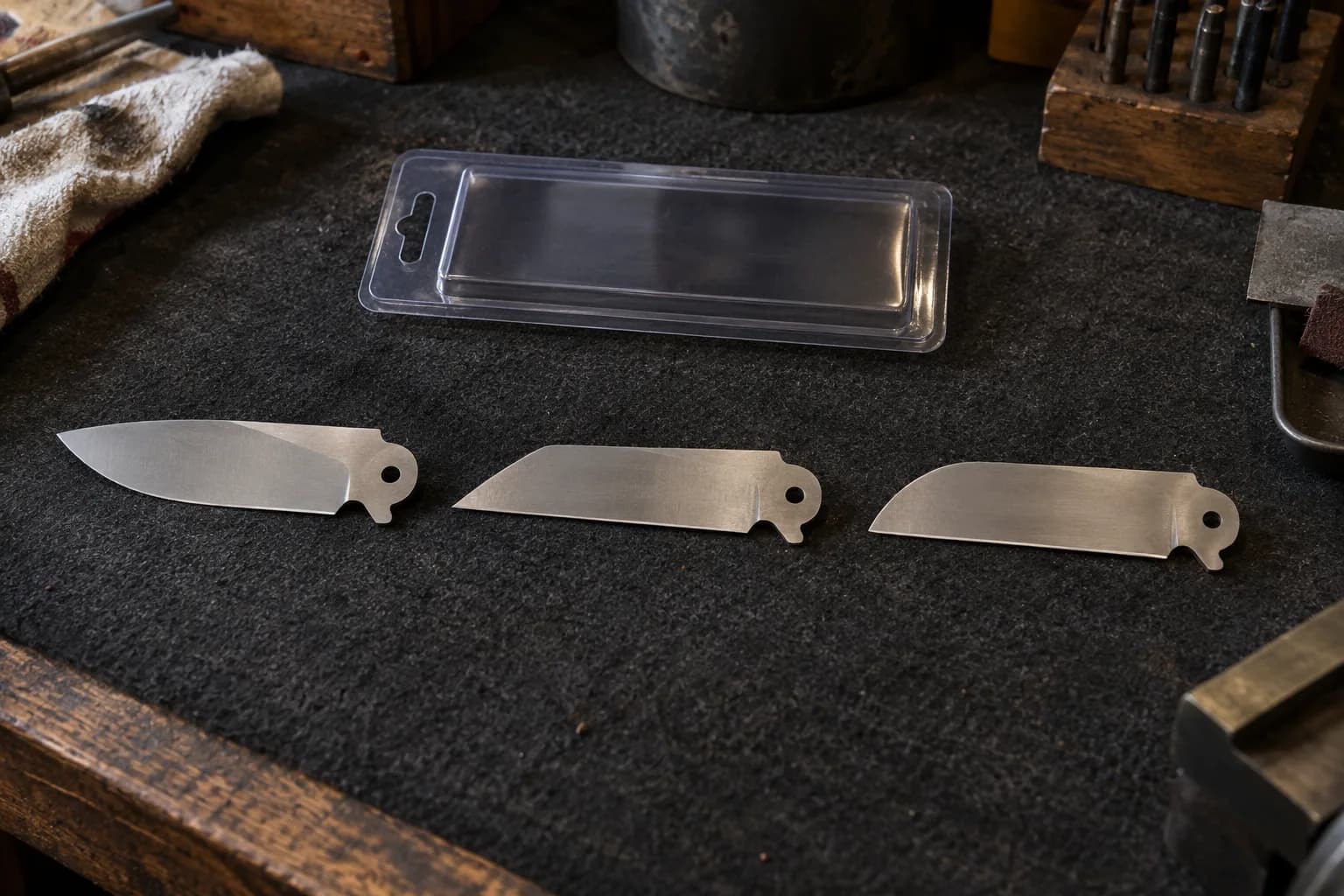
Design the edge for its maintenance schedule. An owner with stones deserves 15 dps; an owner with a pull-through sharpener (be honest, many are) is better served at 20 dps with a microbevel that any abuse re-forms instead of chips. A microbevel is the maker’s insurance policy on every EDC edge — cheap to apply, invisible to the owner, and it turns edge failure into edge wear.
Keep reading
Three more from the same bench.
Every knife argument eventually lands on angles. Here is the chart we wish someone had handed us — edge angle per side, the grind that usually carries it…
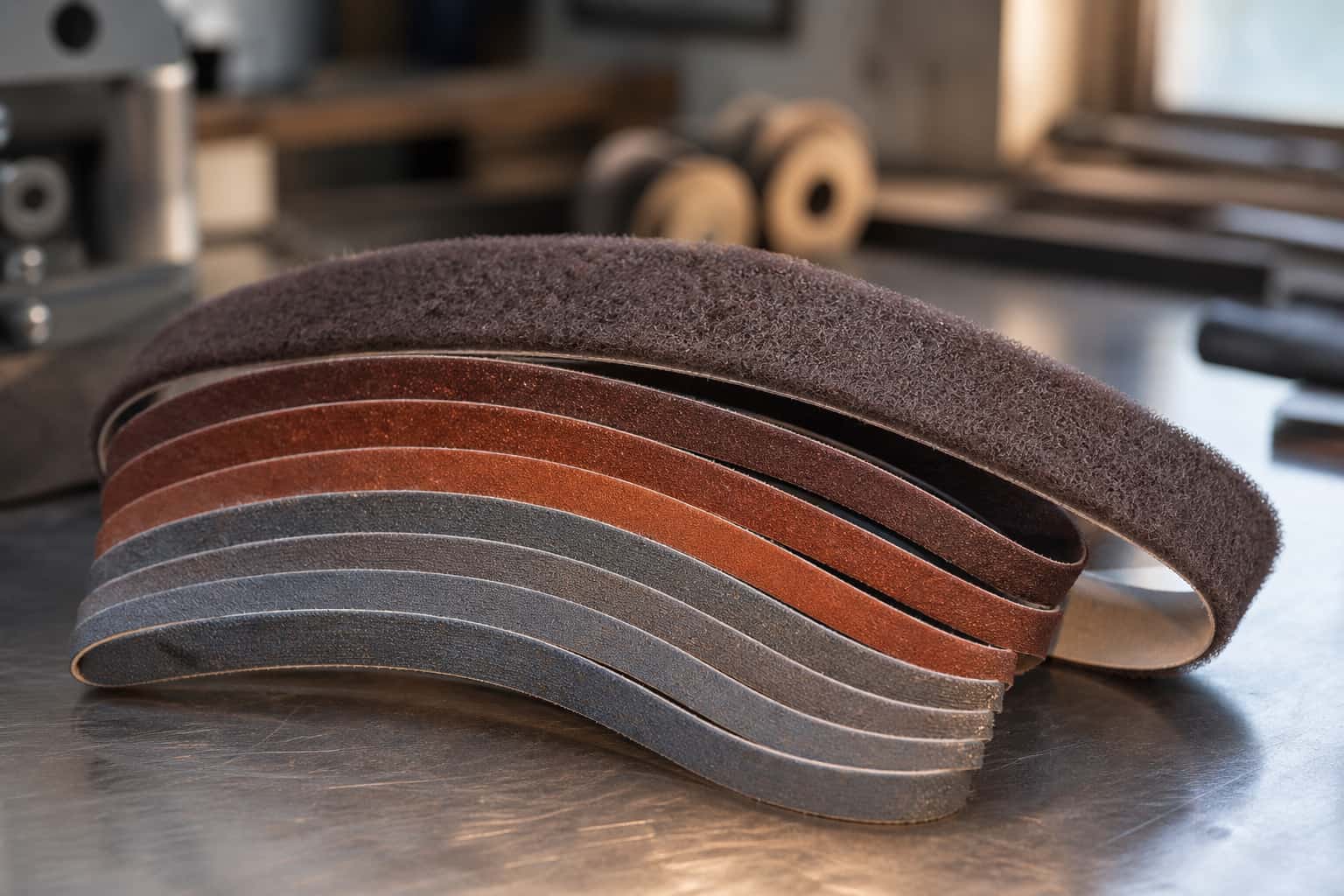
The grind is the cross-sectional shape of a blade, how the flat stock gets thinned down from spine to edge, and it affects cutting performance, edge…
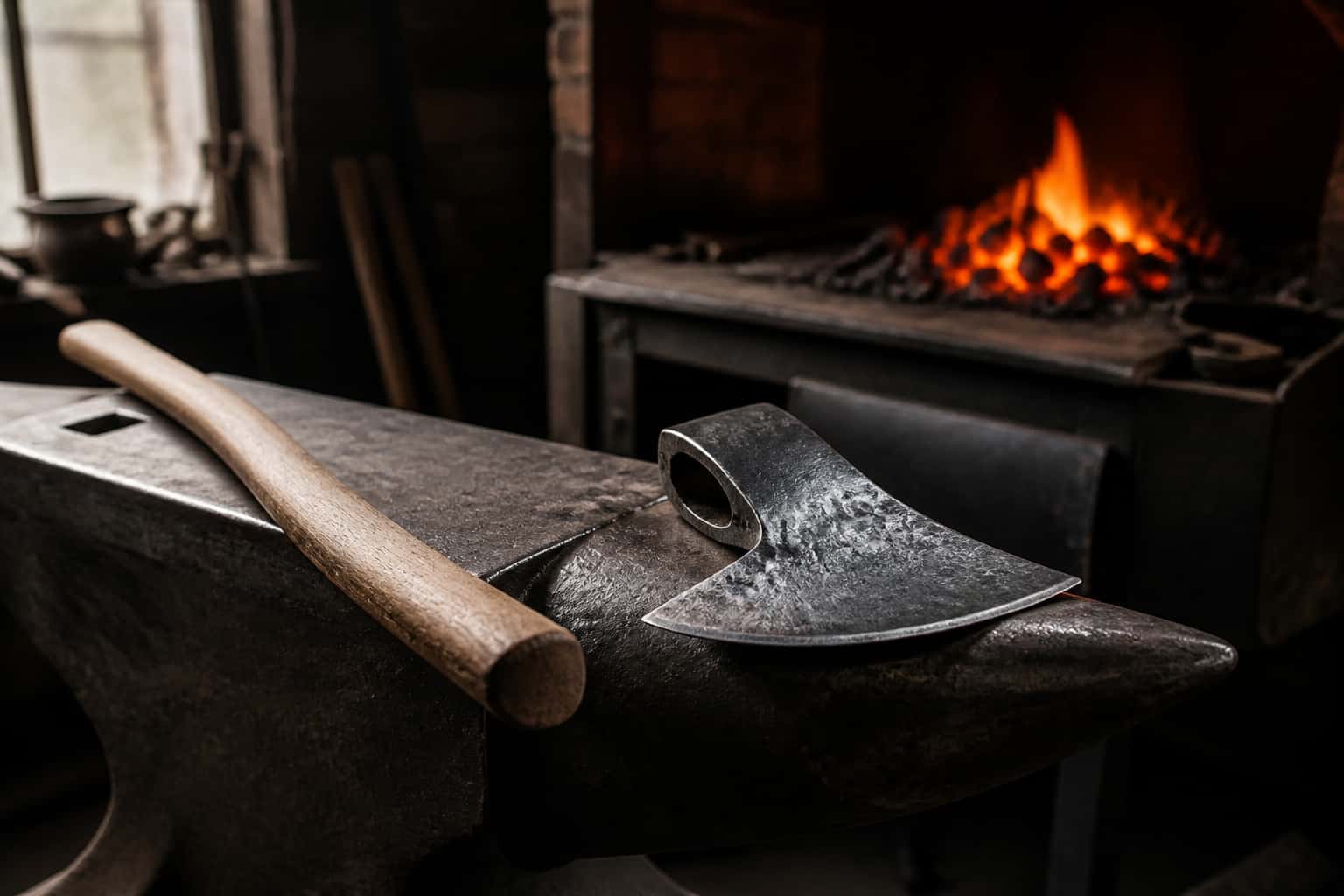
Kitchen knives run the lowest working angles of any knife you will build, because their whole job is falling through food and their whole hazard list is a…
Same bench
I machine the parts, hand-assemble, track and test Torus grinders in Sterling, Illinois. Most orders ship in seven to ten business days from time of order.
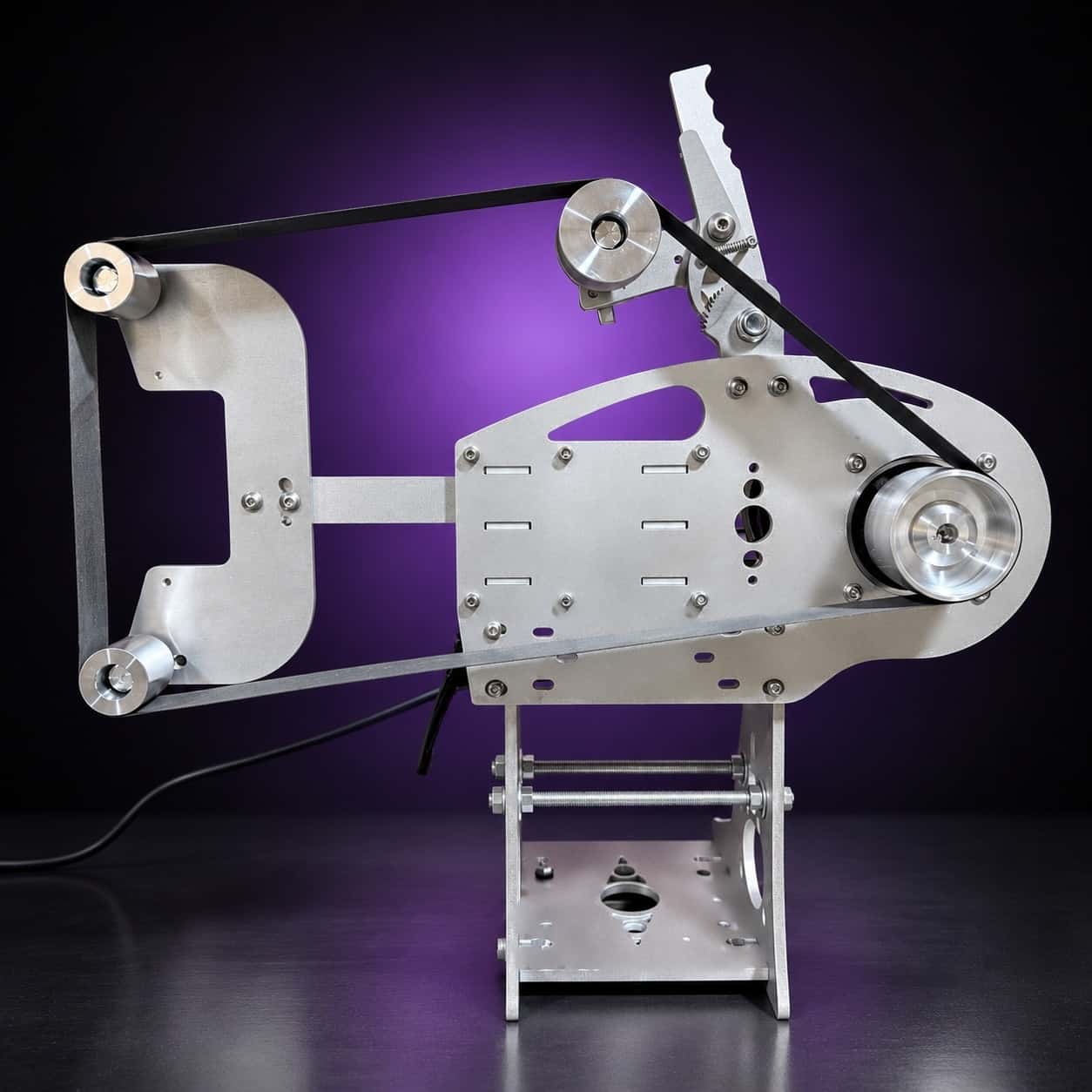
Current dual-axis platform with a fiber-laser-cut 6061 chassis and single-knob tracking.
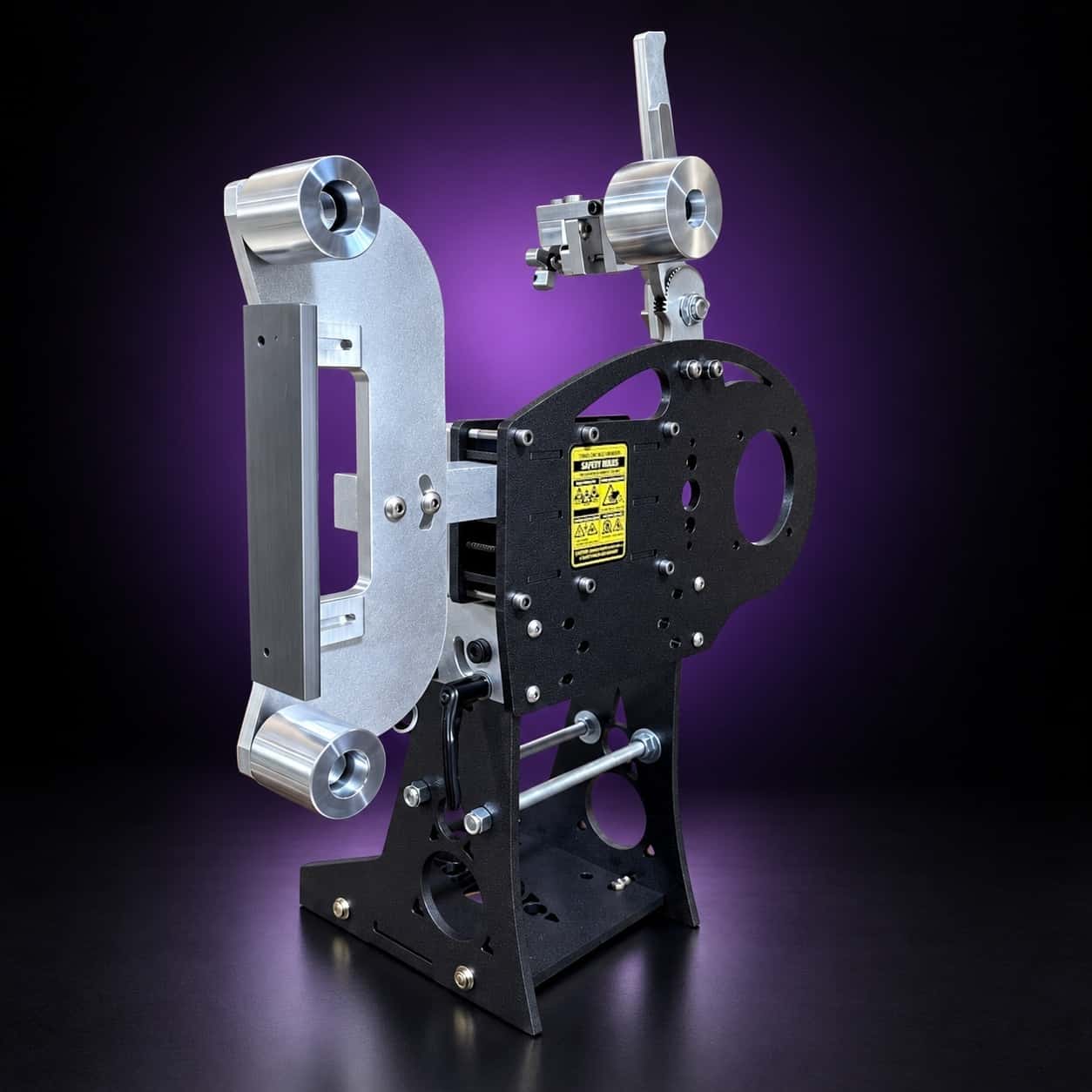
Current dual-axis platform with a steel chassis, more mass and less vibration.
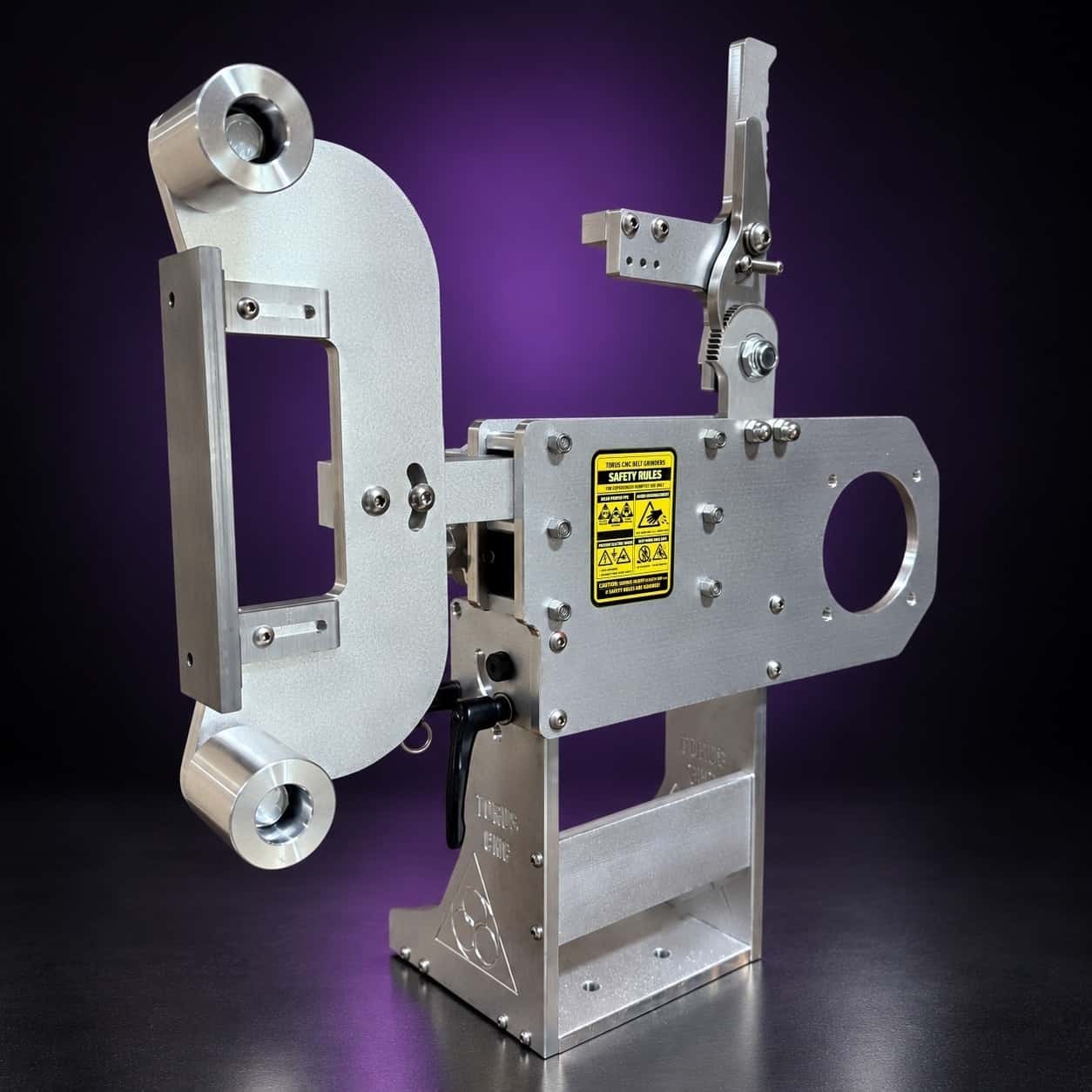
Prior-design aluminum chassis, 90-degree tilt and 1.5-inch tooling arms.
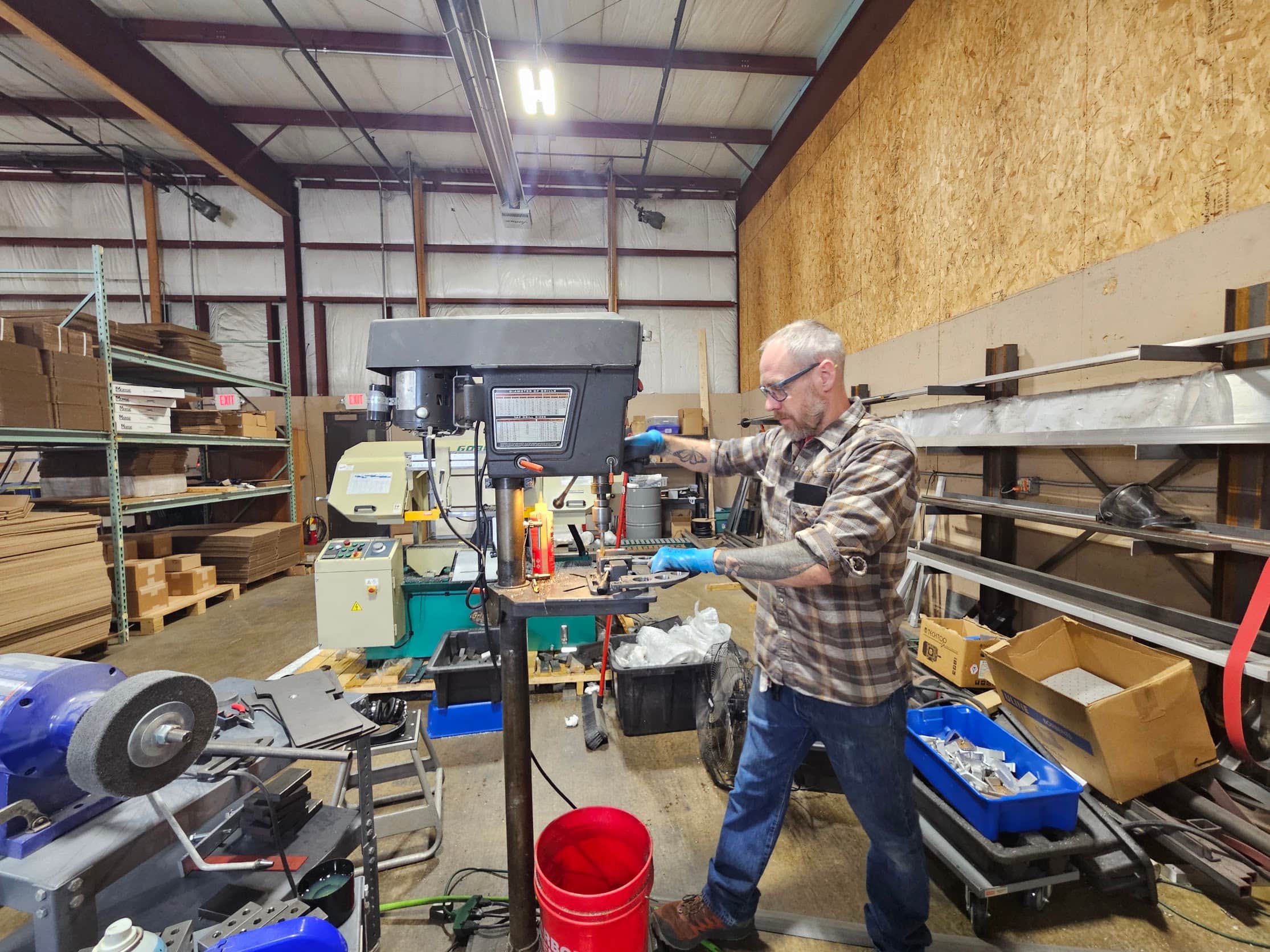
One-man shop
I answer my own email. Tell me the steel, the machine and what it is doing, and I will tell you what I would try next.