
Blade Design
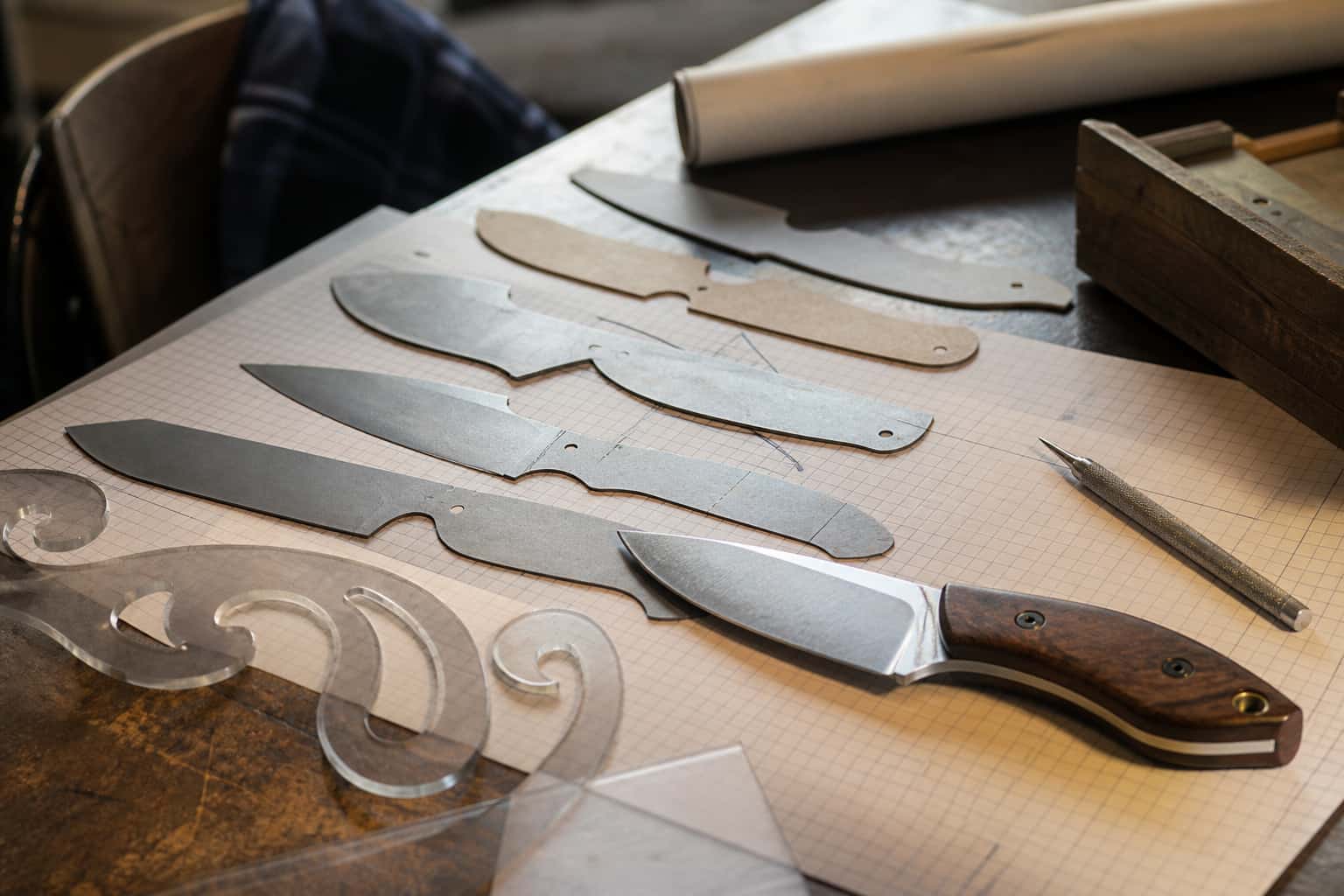
Bevel Angles by Knife Type: The Working Chart
Every knife argument eventually lands on angles. Here is the chart we wish someone had handed us — edge angle per side, the grind that usually carries it…
Blade Design
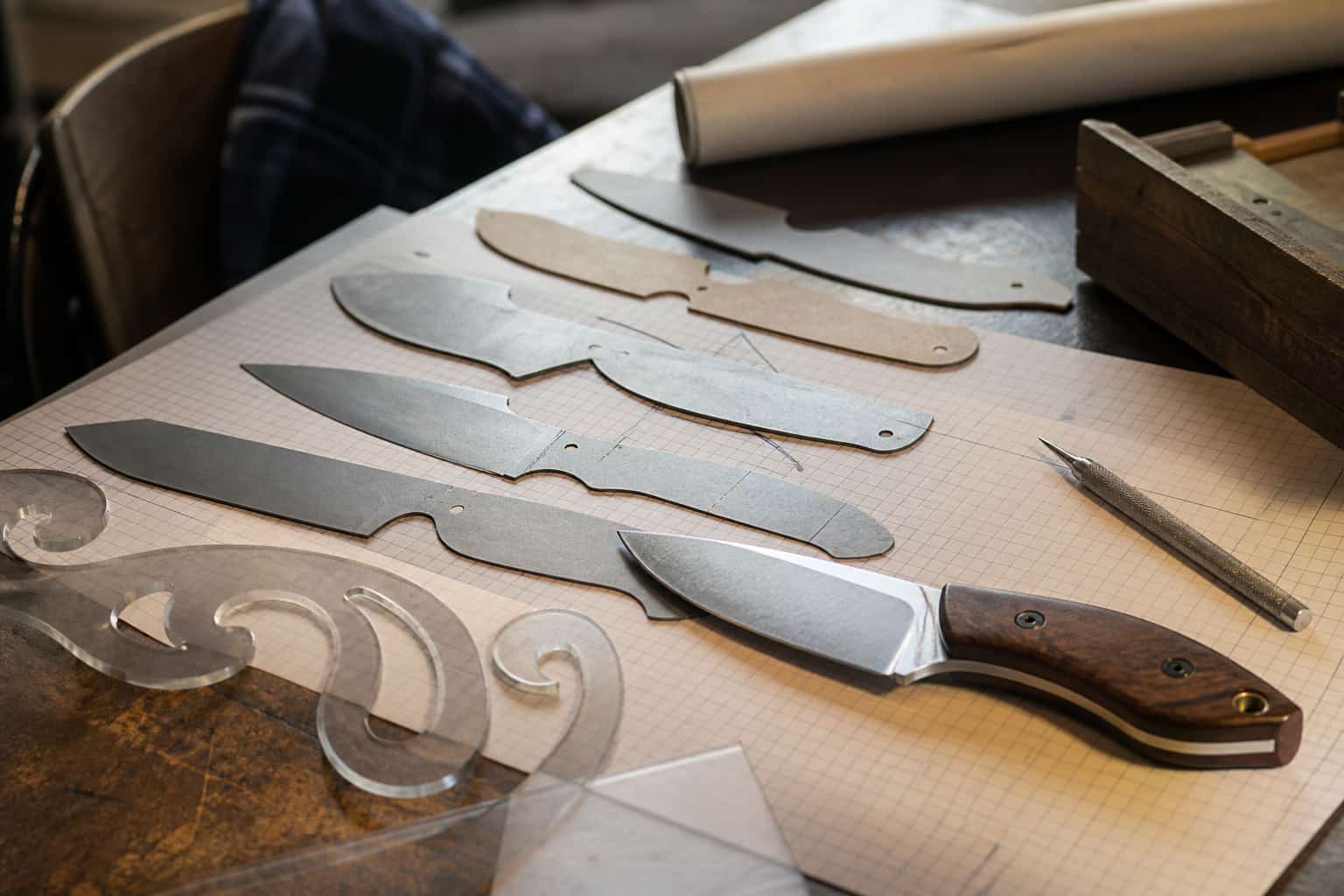
Big blade geometry: 22-30 dps impact edges, convex logic, sweet spot and balance, edge thickness that survives, and steel picks for choppers.
2 min readWritten by Rich LinvilleFree to read
Big blades live on impact, and impact rewrites the geometry rules: the edge is a wedge under shock load, balance is a cutting spec, and thin-behind-the-edge — the hero of every slicer conversation — becomes the failure mode. Here is how the geometry changes when the blade passes eight inches.
Camp knives and choppers: 22–25 degrees per side. Machetes: 24–30. These numbers are not conservatism, they are physics — a chop concentrates the blade’s momentum on whatever fiber, knot or hidden staple the edge meets, and acute angles concentrate the damage in return. Convex profiles rule here: the curved cheeks back the apex with steel, and a slack-belt pass maintains them in minutes. Edge thickness before the final bevel: 0.030–0.040 inch, double a slicer’s number, on purpose.
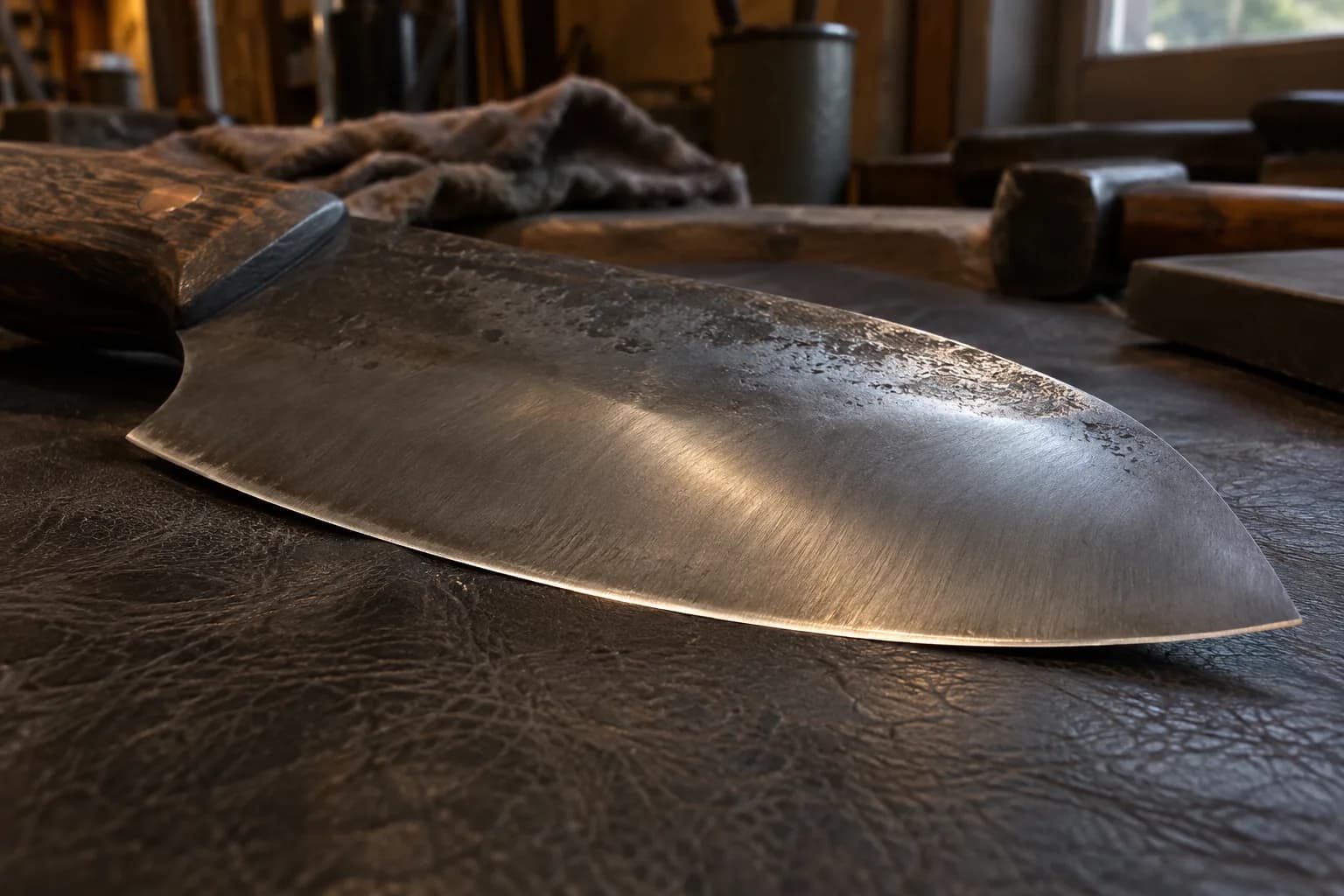
Every chopper has a point along the edge where a strike transmits no sting to the hand and maximum energy to the wood — ahead of the center of gravity, where blade presence is deepest. Design the belly’s fullest section there and you have built a blade that chops beyond its weight. Blade-heavy balance (an inch or two ahead of the guard) is correct for choppers; neutral balance belongs on the bushcraft knife riding next to it.
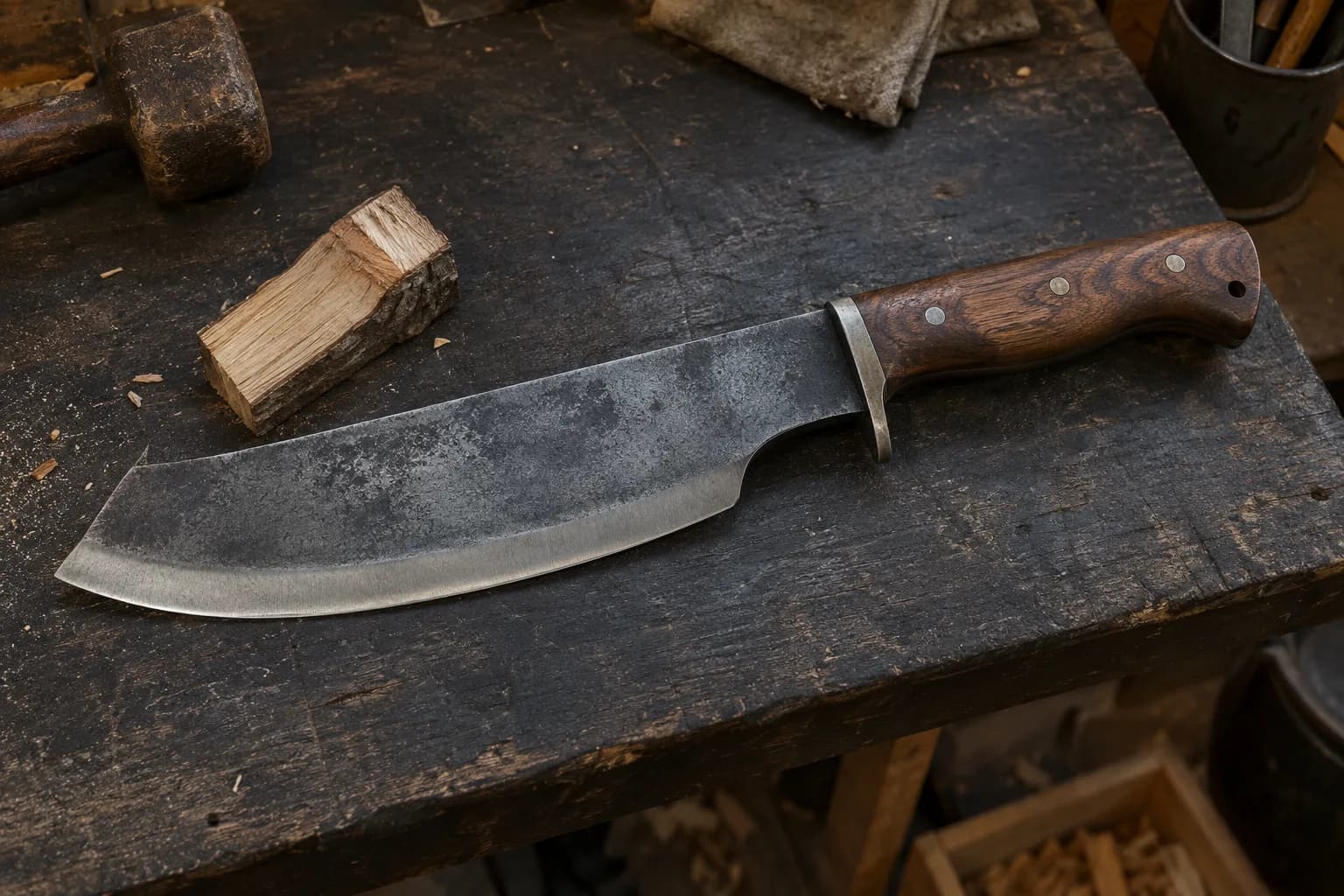
They solve different vegetation. A machete is speed: 1/16–3/32 thin, 16–22 inches, flat sabre grind, velocity doing the work on green growth. A chopper is mass: 3/16–1/4 stock, 9–12 inches, convex edge, momentum doing the work on dead hardwood. Swing a chopper at vines and you tire; swing a machete at seasoned oak and it folds or rebounds. The customer’s actual property decides the blade.
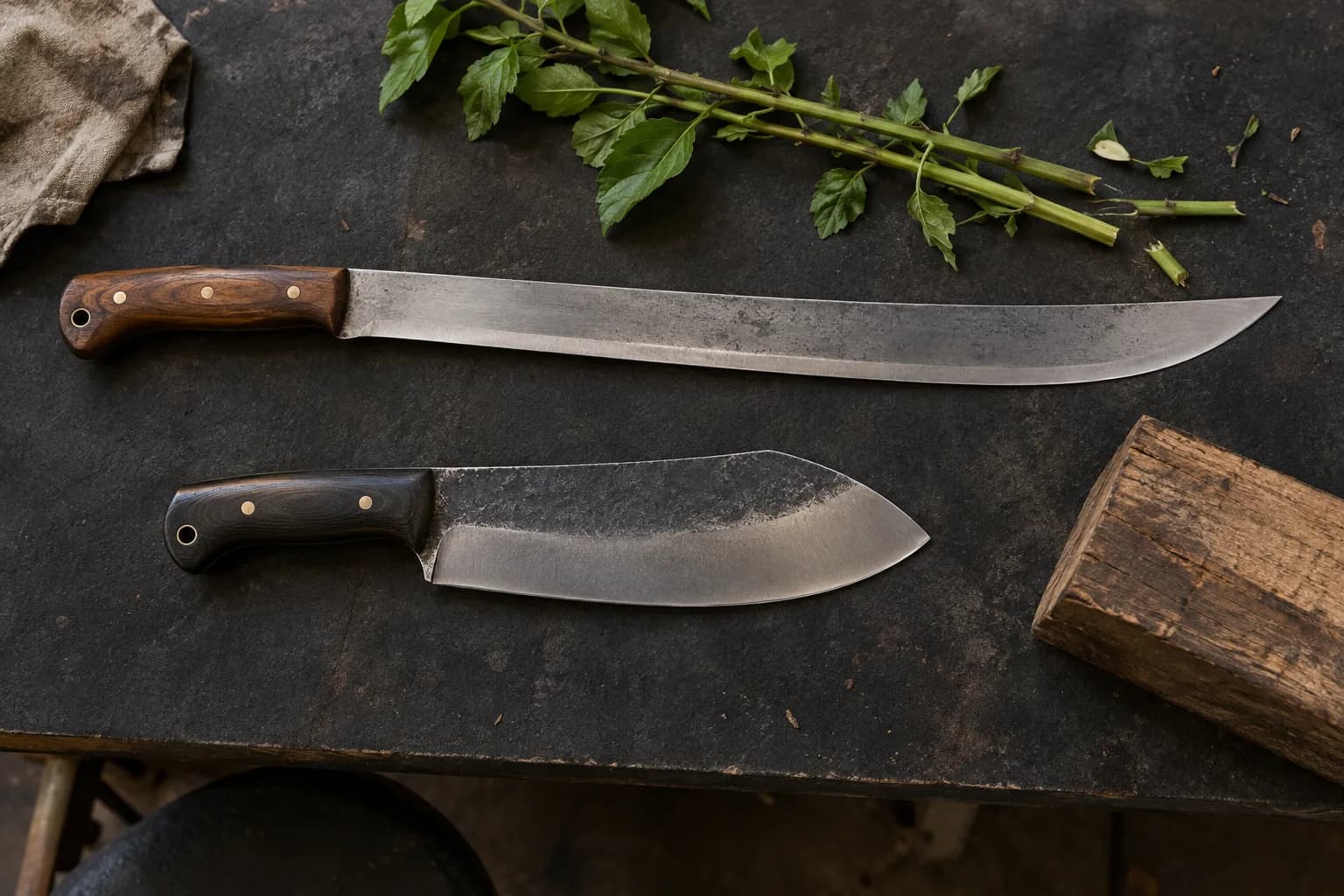
This is 5160 and 8670 country — the toughness-first steels — with 80CrV2 for a bit more edge and CPM 3V as the premium answer. Run hardness modest (56–59) and consider a soft spine: differential hardness turns a cracked blade into a bent one, the trade explained in our differential heat treat guide.
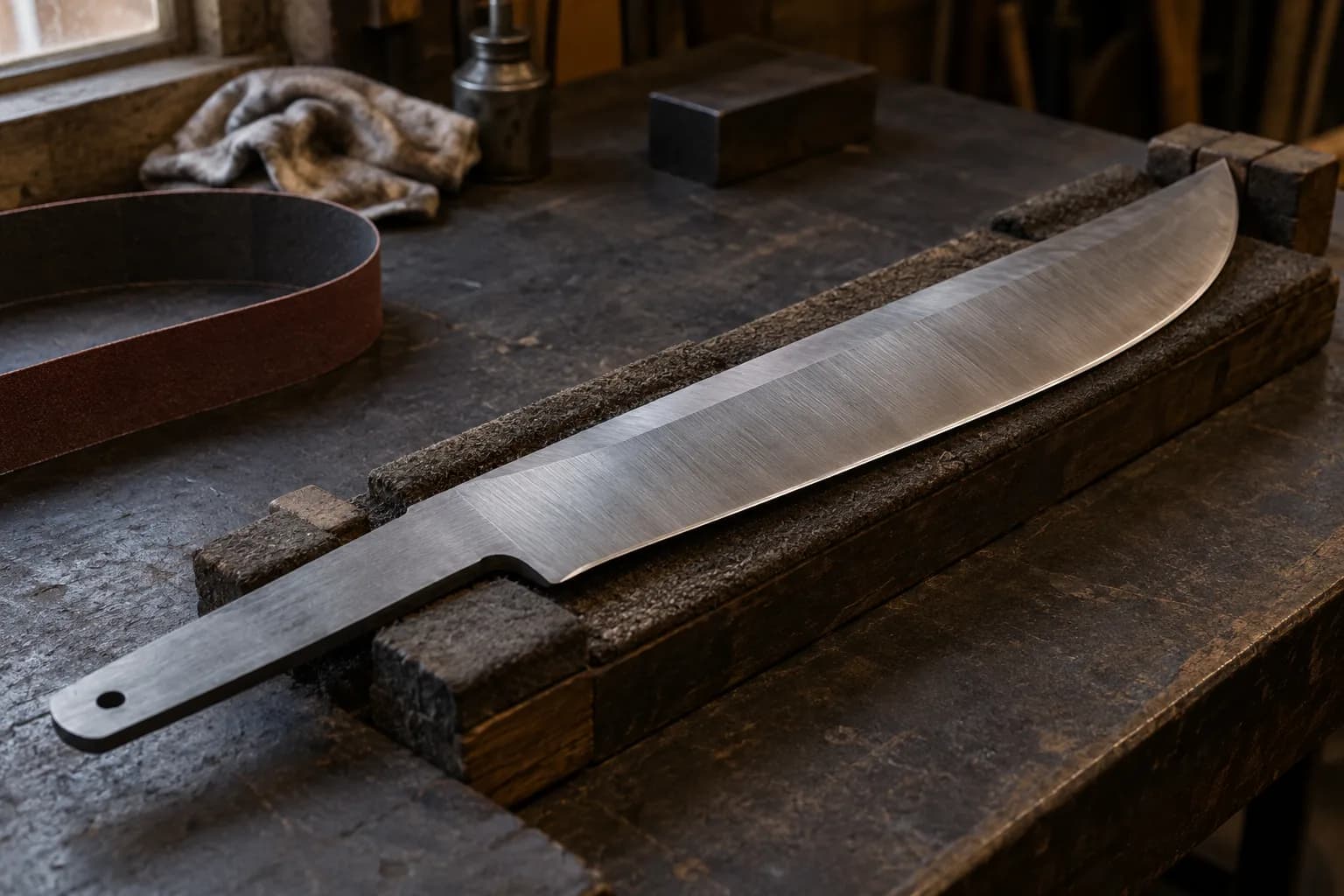
Long blades exceed the platen — grind in overlapping zones with the workpiece moving steadily, and expect the 2×72’s 72-inch belt to earn its keep on heat. Convex edges go on at the slack section; keep the primary flat or sabre for stiffness. A distal taper (see the taper guide) moves balance and liveliness more than any other single choice on a big blade.
Keep reading
Three more from the same bench.
Every knife argument eventually lands on angles. Here is the chart we wish someone had handed us — edge angle per side, the grind that usually carries it…
Bushcraft is the only knife category where the grind is practically a religion. The scandi faithful have a point: for controlled wood carving — feather…
Two knives can share the same steel, grind type, and blade shape and still perform completely differently, because of stock thickness and how that…
Same bench
I machine the parts, hand-assemble, track and test Torus grinders in Sterling, Illinois. Most orders ship in seven to ten business days from time of order.
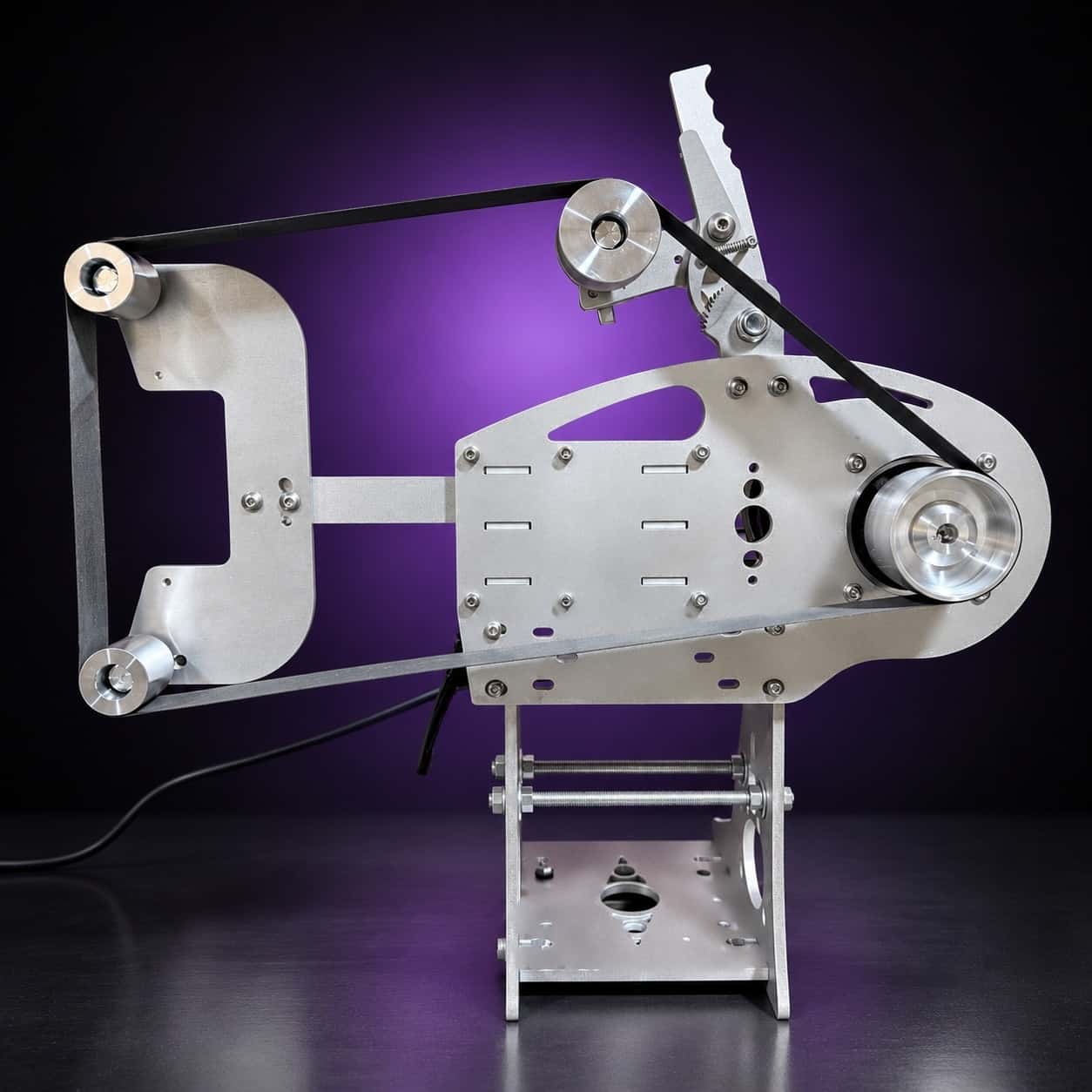
Current dual-axis platform with a fiber-laser-cut 6061 chassis and single-knob tracking.
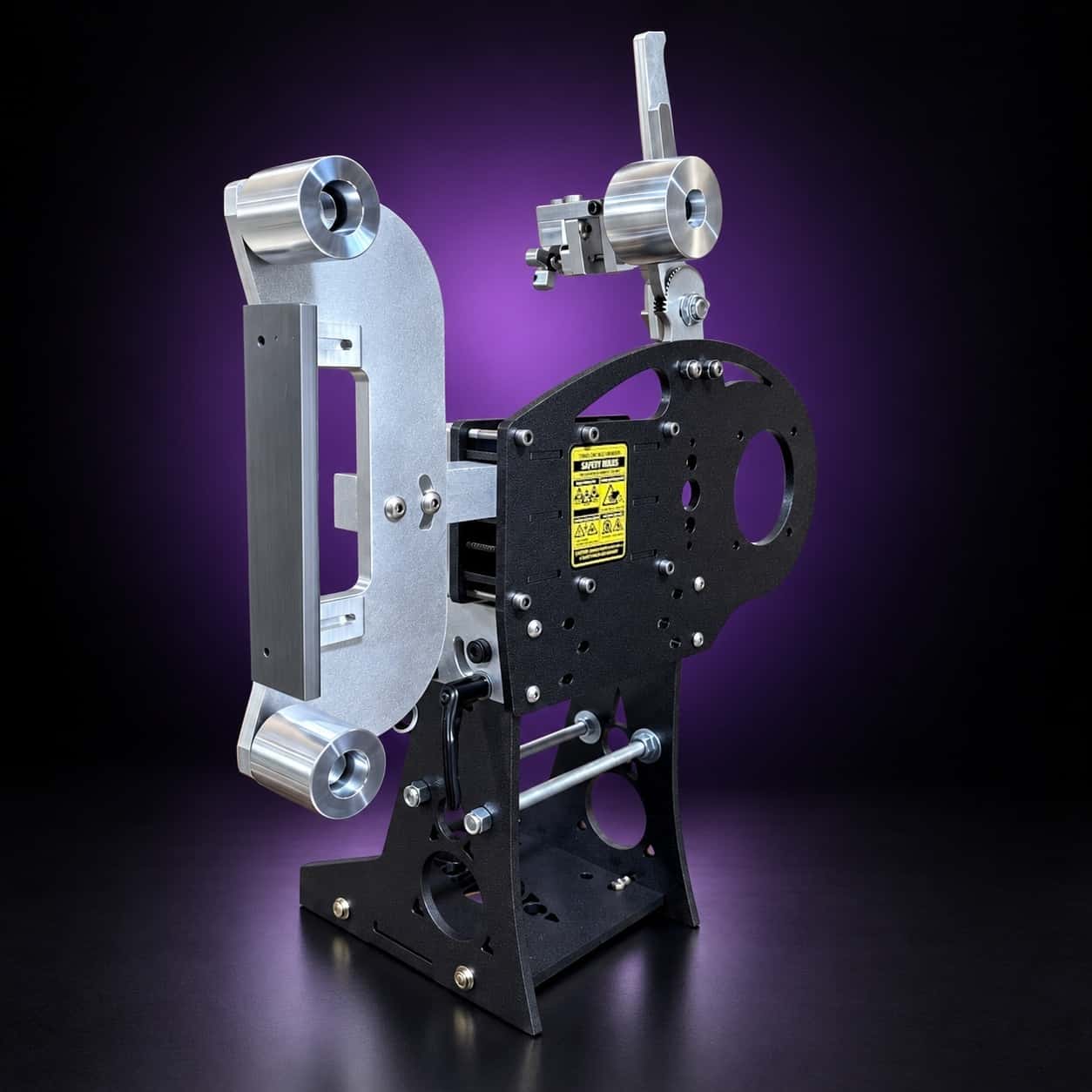
Current dual-axis platform with a steel chassis, more mass and less vibration.
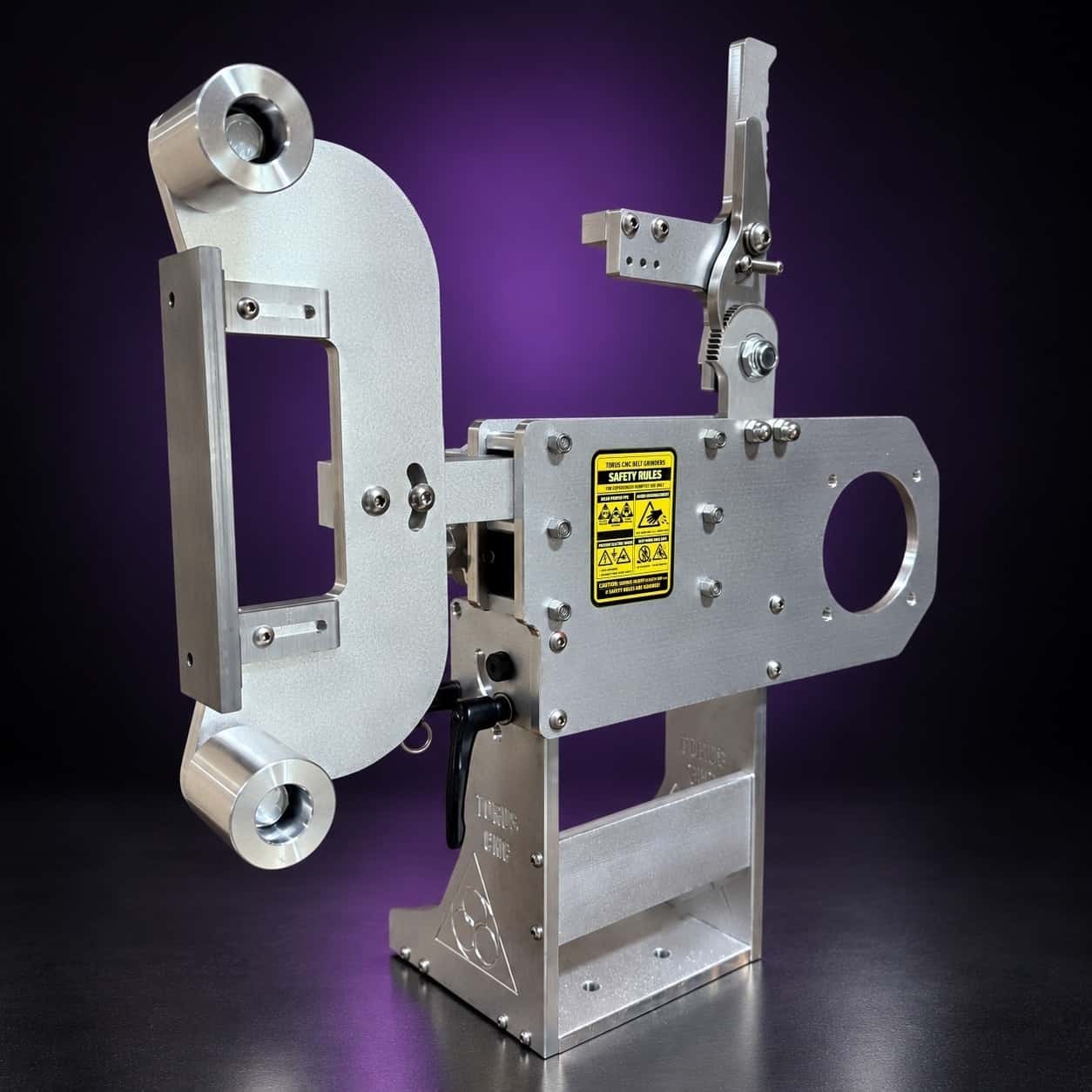
Prior-design aluminum chassis, 90-degree tilt and 1.5-inch tooling arms.
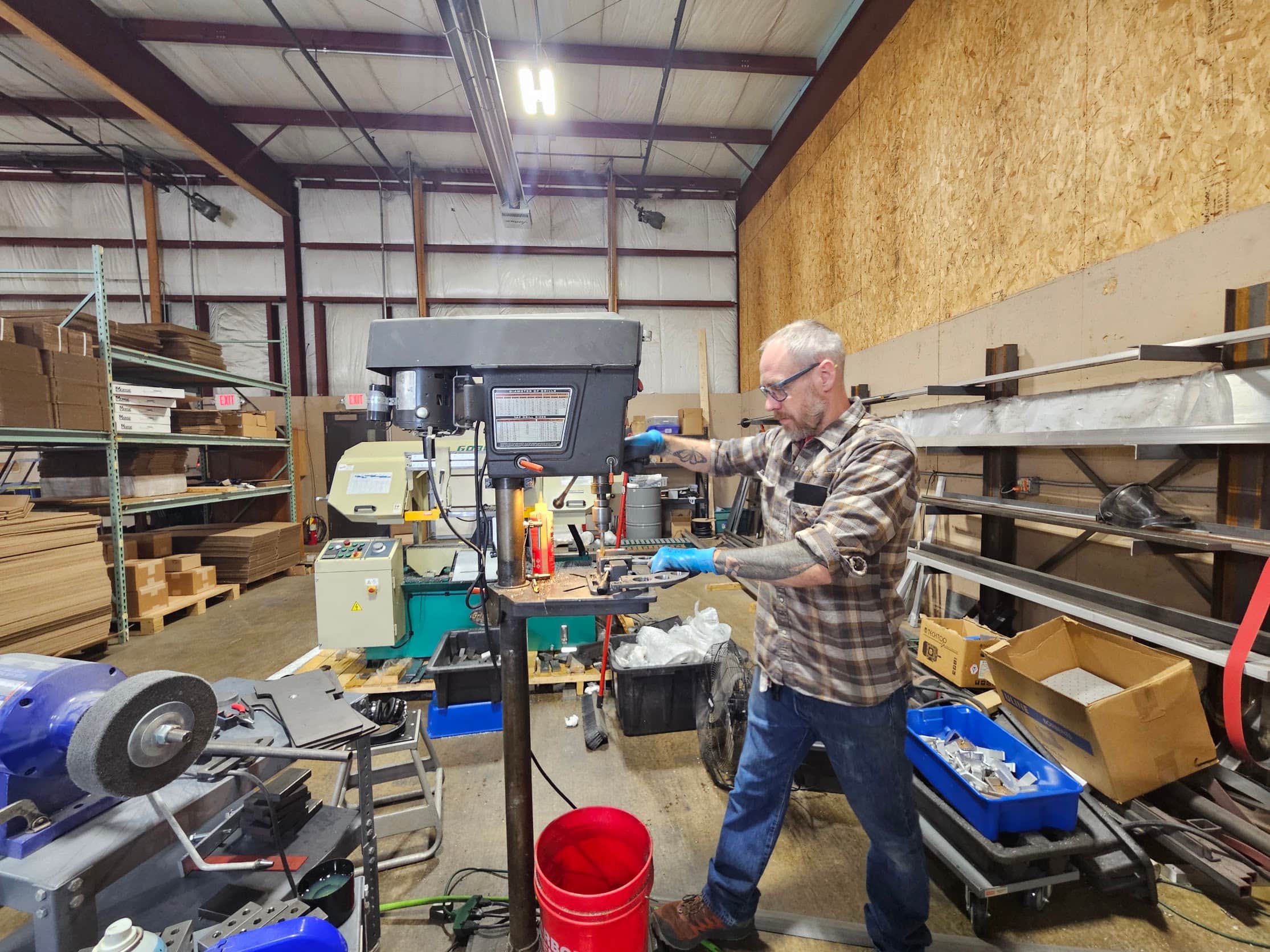
One-man shop
I answer my own email. Tell me the steel, the machine and what it is doing, and I will tell you what I would try next.