
Beginner Guides
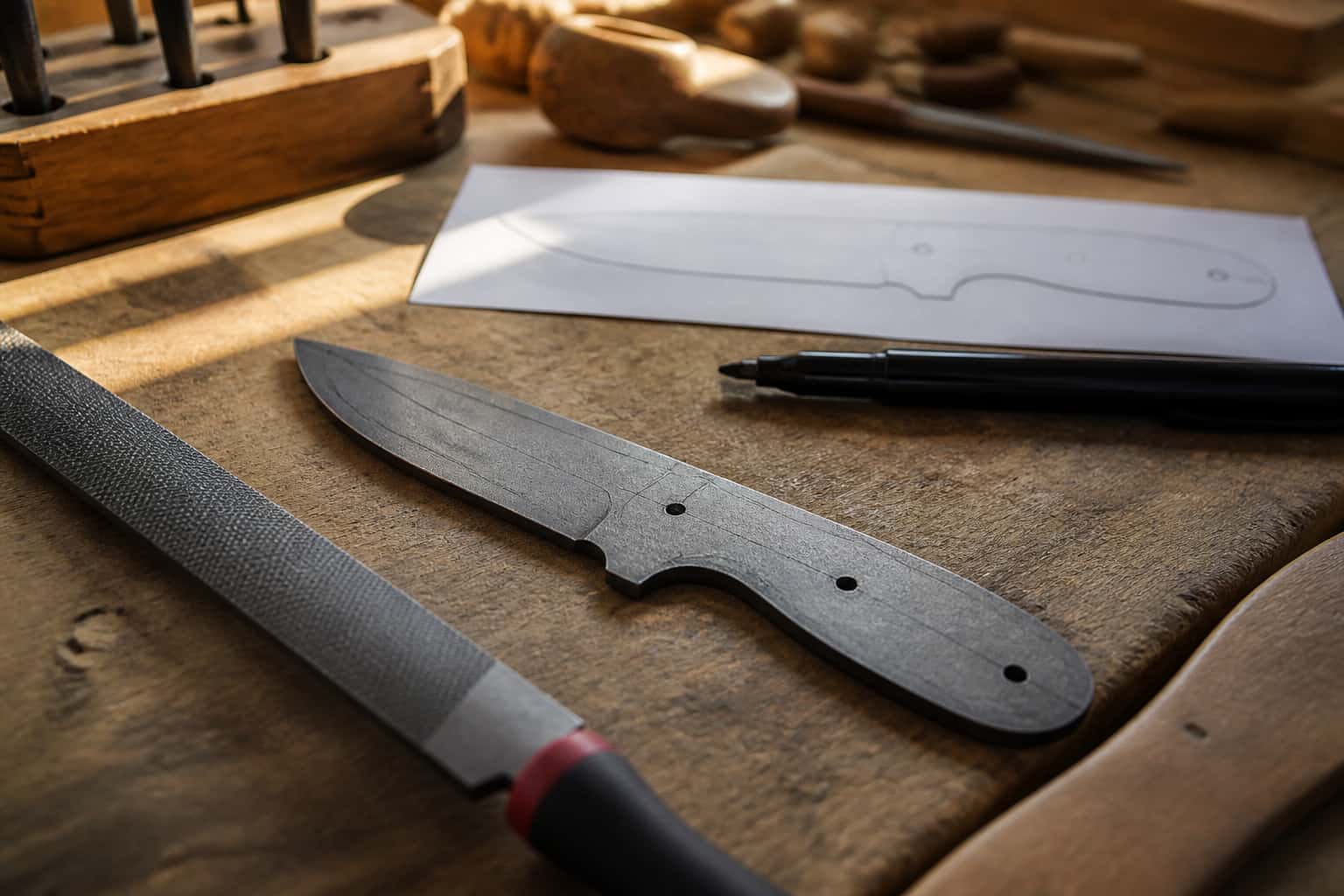
Basic Knife Anatomy & Terminology
Knifemaking has its own vocabulary, and a lot of guides (including this one) assume you already know it. Here’s every term you’ll actually run into…
Blade Design
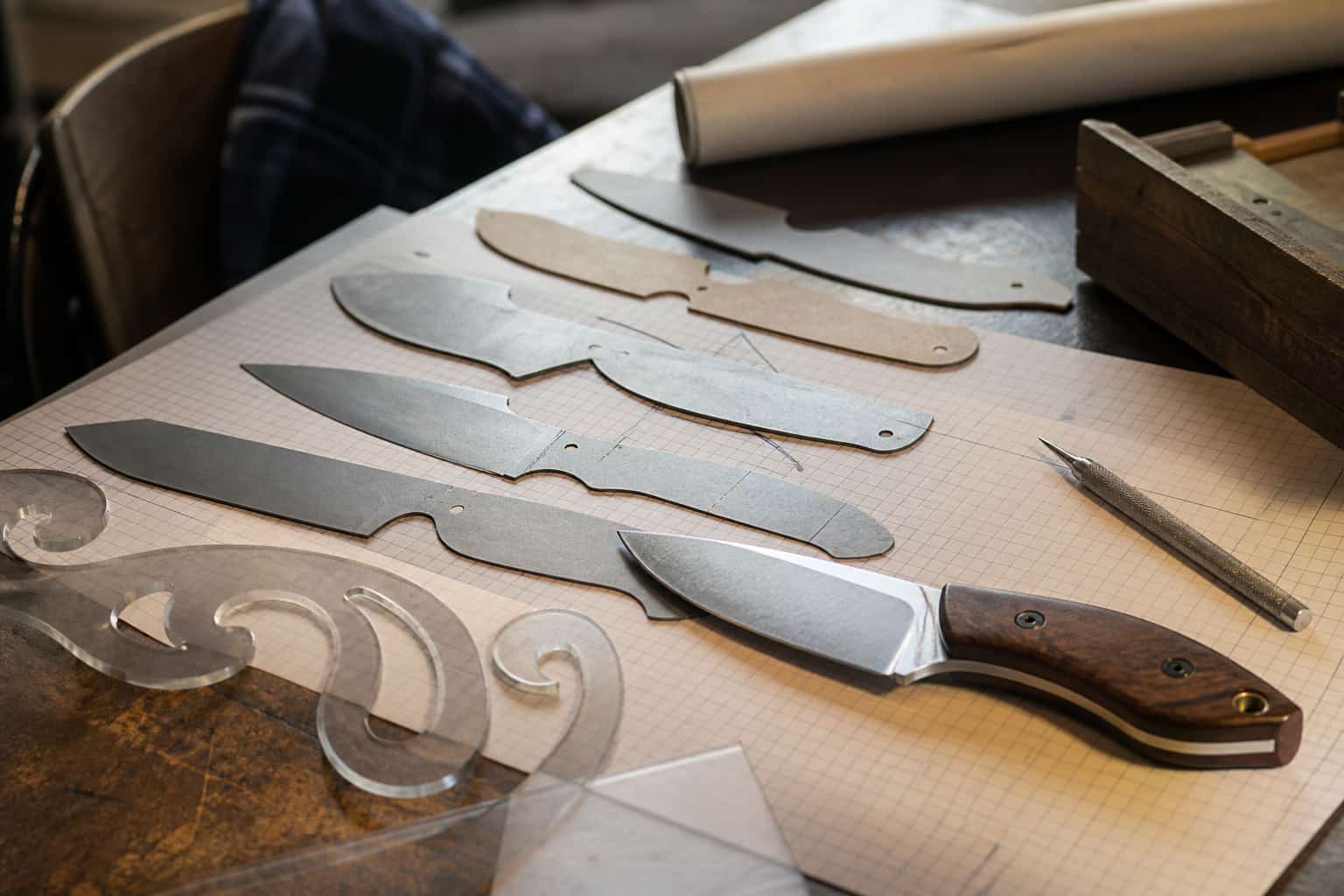
How flat, hollow, saber, and convex knife grinds differ in cutting performance, strength, and sharpening, and which one to start with on a 2x72.
3 min readWritten by Rich LinvilleFree to read
The grind is the cross-sectional shape of a blade, how the flat stock gets thinned down from spine to edge, and it affects cutting performance, edge strength, and how hard the blade is to sharpen more than almost any other design choice. Here’s how the main grind types actually differ.
A single straight bevel running in a flat plane from somewhere on the blade down to the edge. It’s the standard grind for stock removal on a 2×72 belt grinder because it’s ground against a flat platen, no curved wheel or freehand slack-belt work required. Flat grinds cut well, are straightforward to sharpen (a consistent flat angle), and are the most forgiving grind for a beginner to produce evenly on both sides.
A flat grind where the bevel starts right at the spine, with no flat, unground section left near the top of the blade. This removes the most material and produces the thinnest, best-cutting edge geometry of the flat-grind family, at some cost to edge strength on harder use.
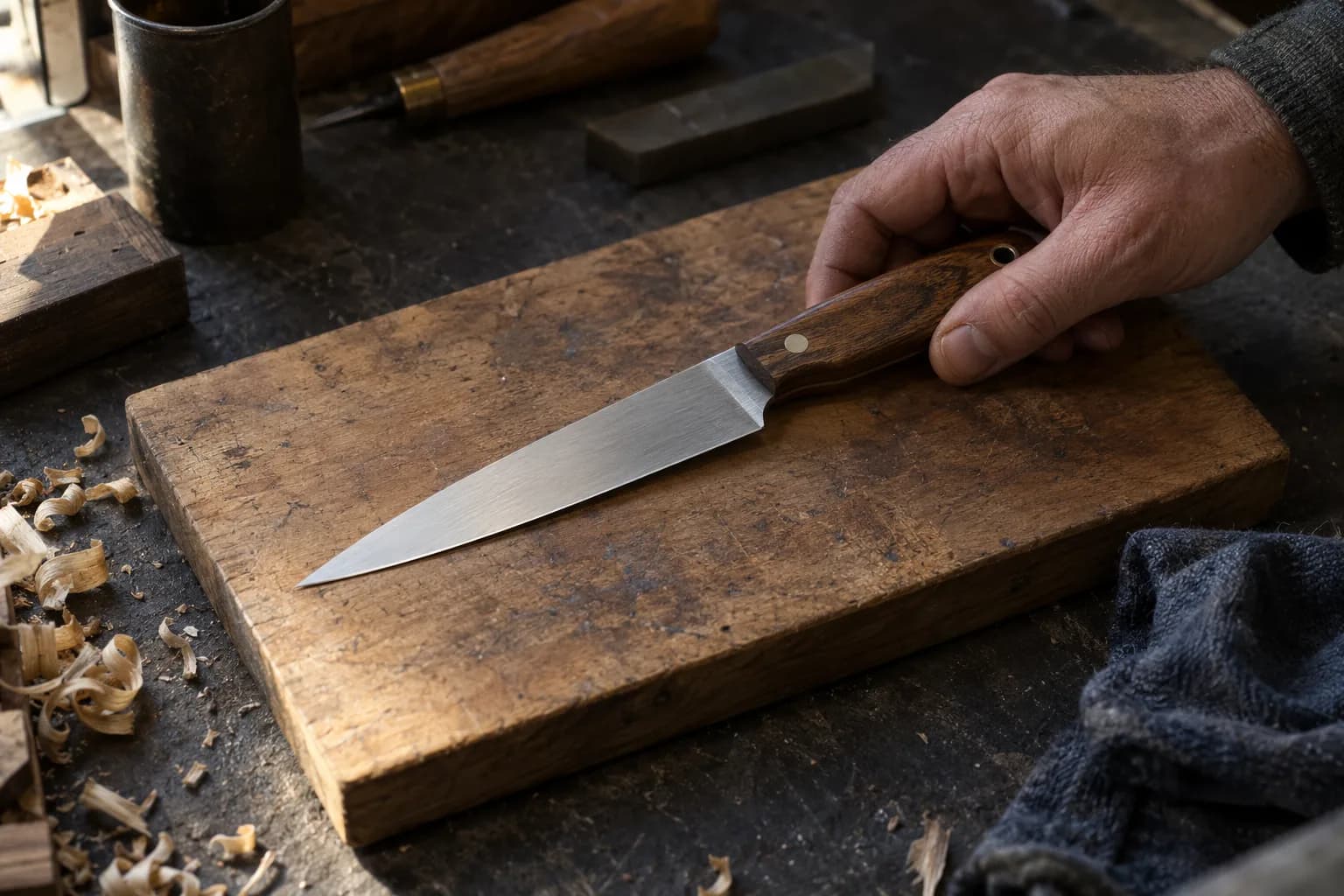
A flat grind where the bevel starts partway down the blade instead of at the spine, leaving a flat, unground section near the spine. That extra material near the spine adds strength for harder use (chopping, prying resistance) at the cost of a slightly less efficient slicing edge than a full flat grind.
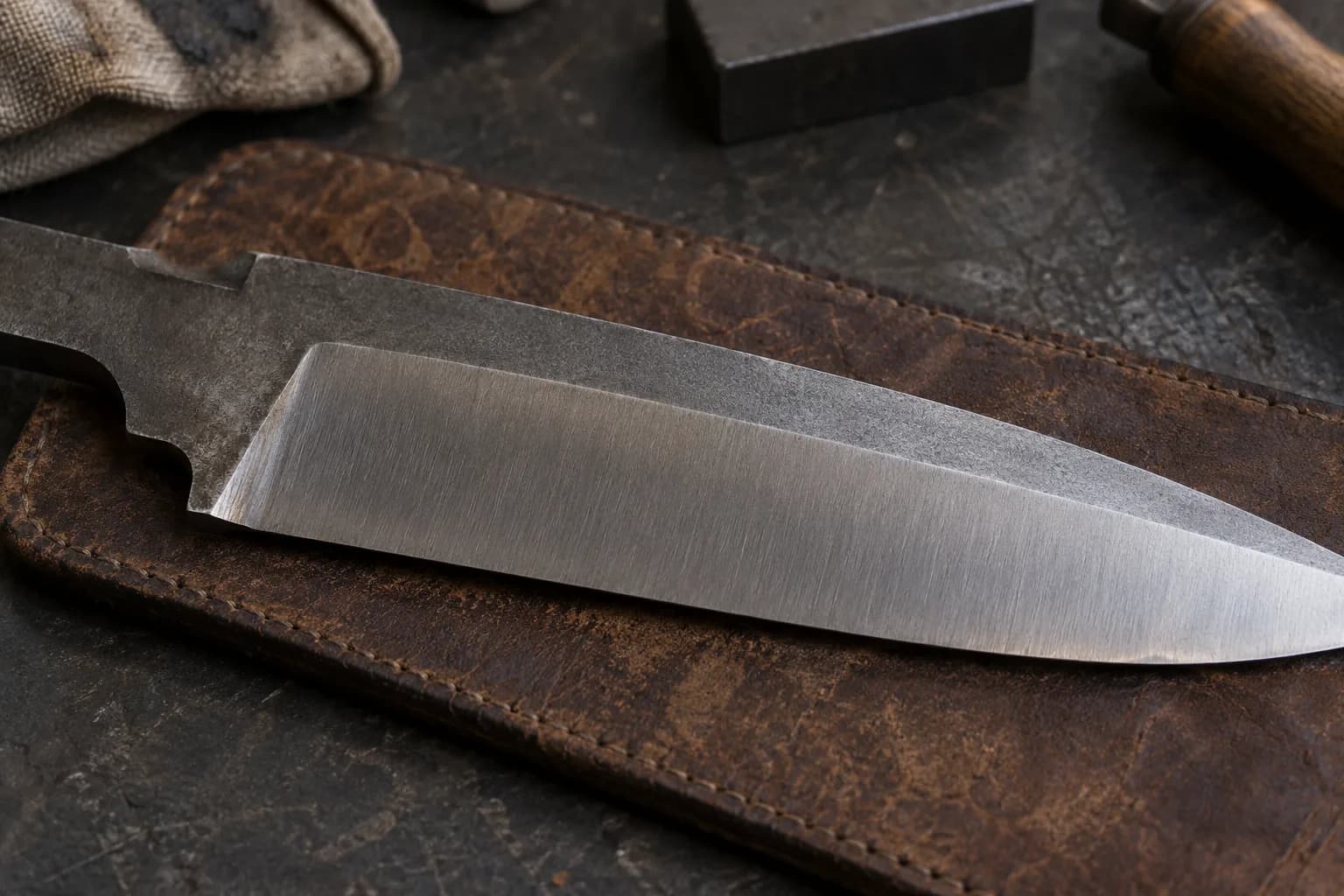
A concave bevel, ground with a curved contact wheel rather than a flat platen. Hollow grinds produce a very thin, keen edge that’s easy to sharpen (the concave curve naturally guides the angle), which is why it’s the standard grind for straight razors and many hunting knives. The tradeoff is a weaker edge for hard use like chopping or prying, since the blade thins out more aggressively behind the edge.
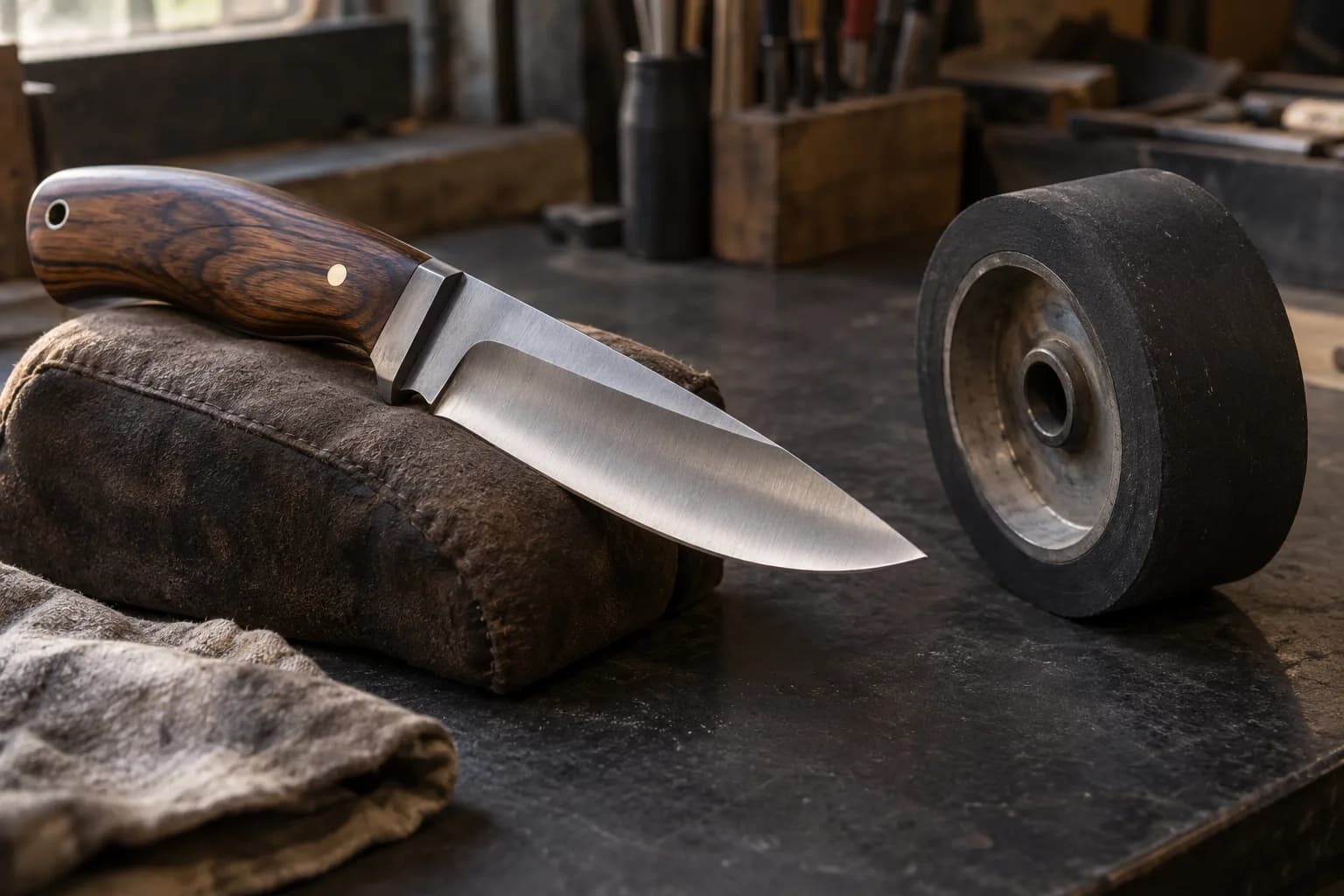
A curved, outward-bulging bevel, the opposite curve from a hollow grind. This shape backs the edge with more material than a flat or hollow grind at the same edge angle, making it strong and well-suited to chopping and heavy use, which is why it’s common on axes and outdoor/survival knives. Convex grinds are harder to produce on a standard flat-platen 2×72 setup; they’re typically done freehand against a slack (unsupported) section of belt, which takes more practice to keep even.
A single bevel ground on only one side of the blade, with the other side left flat. Common on some Japanese-style knives and specialty tools. It’s simpler to sharpen (only one angle to maintain) but cuts asymmetrically, pulling slightly to one side, which takes some adjustment to use well.
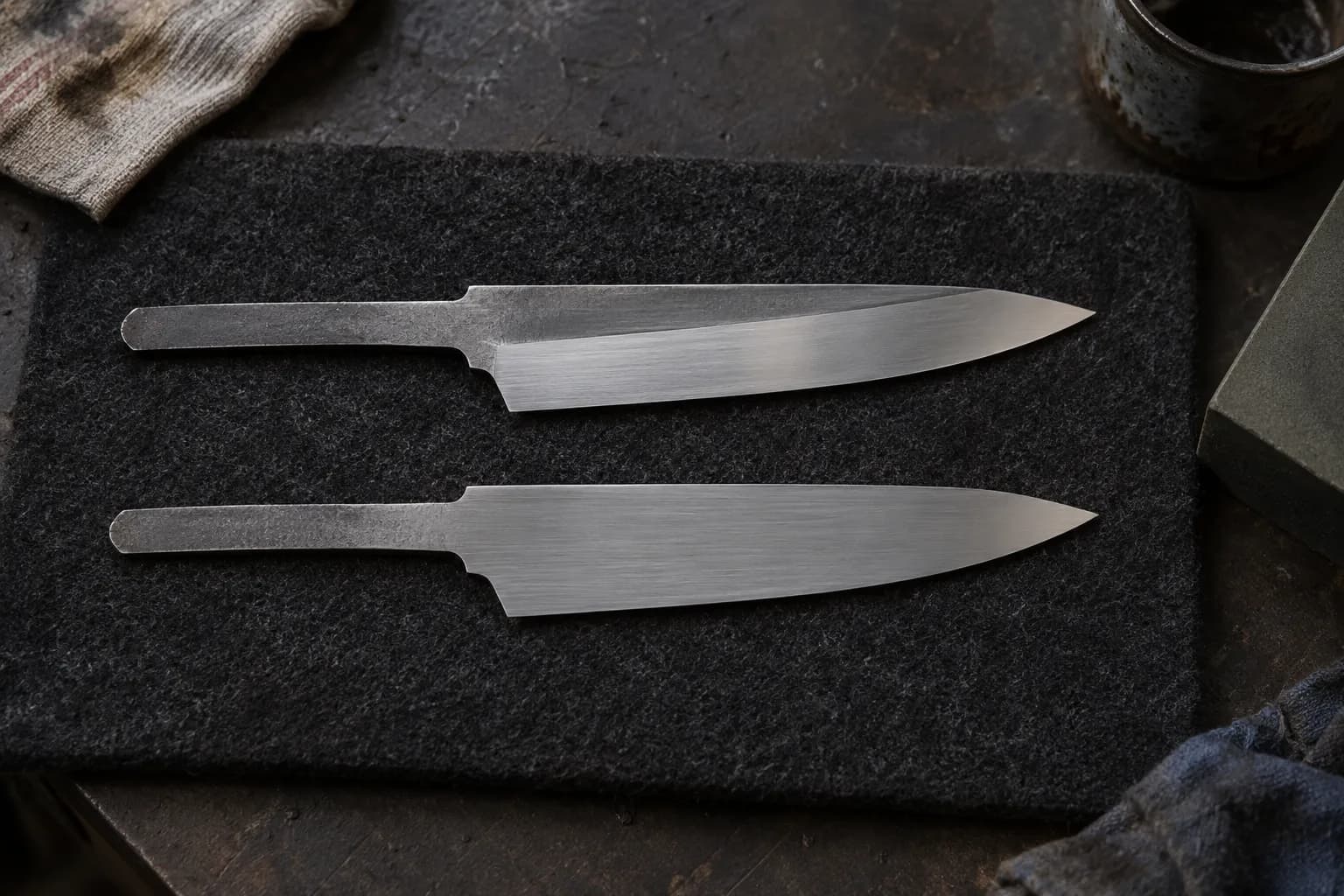
A flat or saber grind, ground against a flat platen. It’s the most predictable to produce evenly on both sides of the blade, the easiest to sharpen consistently, and doesn’t require the freehand slack-belt technique that convex grinding demands. Once flat-grinding is solid, hollow and convex grinds are natural next skills to build. See Basic Knife Anatomy & Terminology for how grind fits into the rest of blade geometry.
Hollow grinds are typically easiest, the concave curve naturally registers against a sharpening stone or rod at a consistent angle. Flat grinds are a close second and easier to produce in the first place.
Not special equipment exactly, but a different technique: convex grinds are usually done freehand against an unsupported (slack) section of belt rather than against the flat platen used for flat grinds, since a flat platen can’t produce a curved bevel.
Yes, that’s effectively what a chisel grind is, a bevel on one side only. It’s less common but functional, and some specialty knives use asymmetric grinds (different bevel angles per side) intentionally for specific cutting tasks.
Keep reading
Three more from the same bench.
Knifemaking has its own vocabulary, and a lot of guides (including this one) assume you already know it. Here’s every term you’ll actually run into…
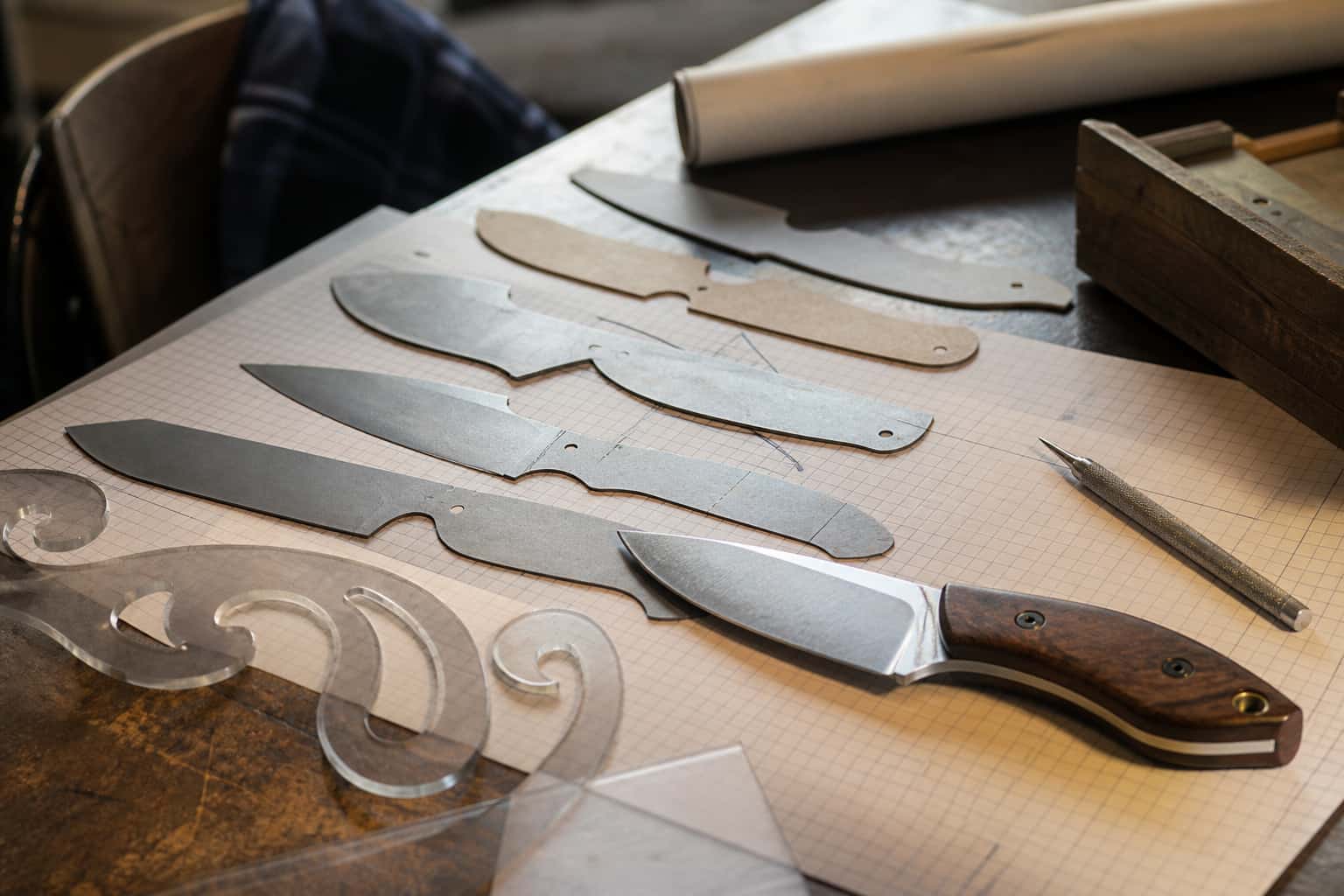
It’s easy to look at a fully outfitted professional shop and assume you need all of it to make your first knife. You don’t. Here’s what actually matters…
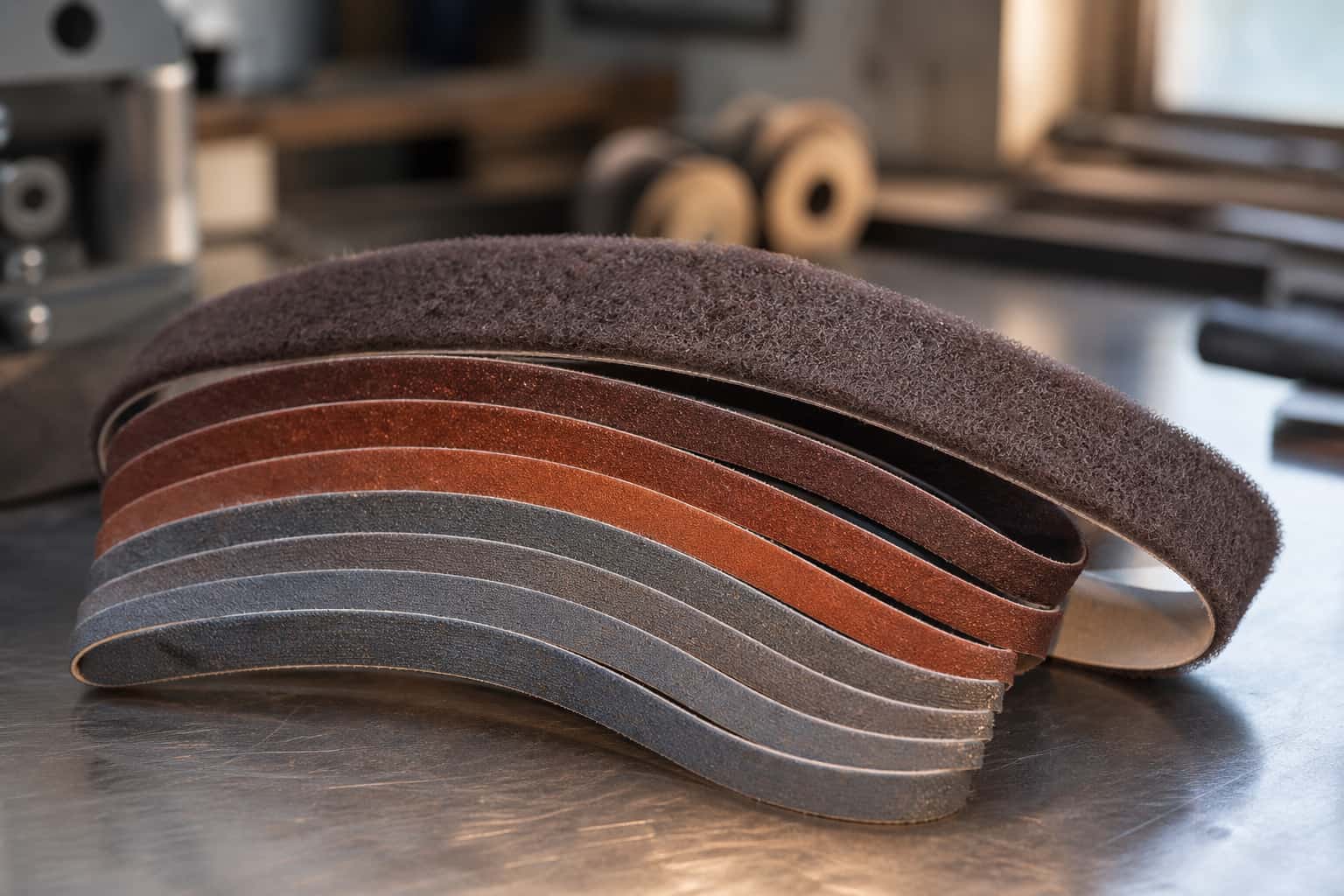
Blade shape, the profile of the blade when viewed from the side, determines what a knife is actually good at. A shape built for skinning game handles very…
Same bench
I machine the parts, hand-assemble, track and test Torus grinders in Sterling, Illinois. Most orders ship in seven to ten business days from time of order.
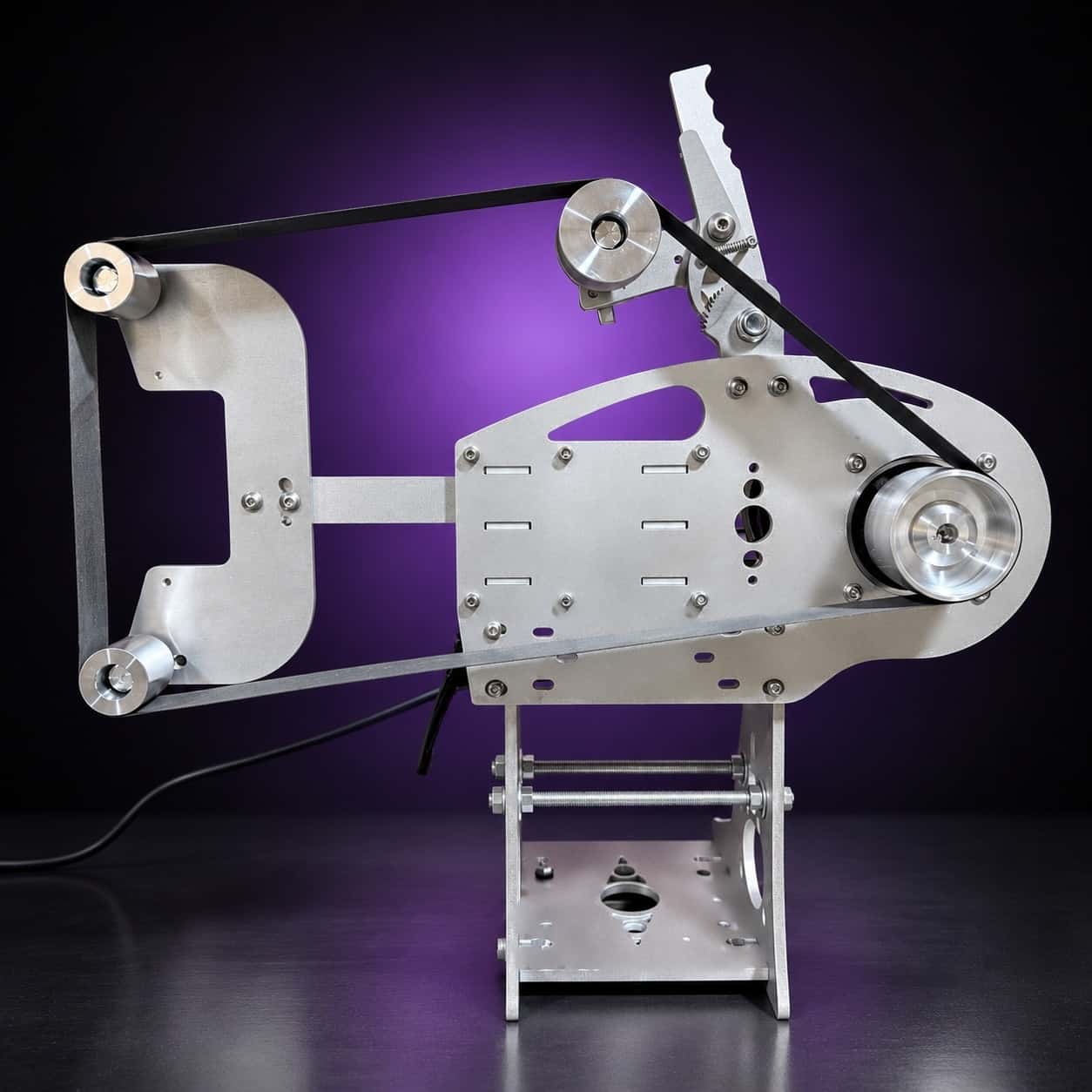
Current dual-axis platform with a fiber-laser-cut 6061 chassis and single-knob tracking.
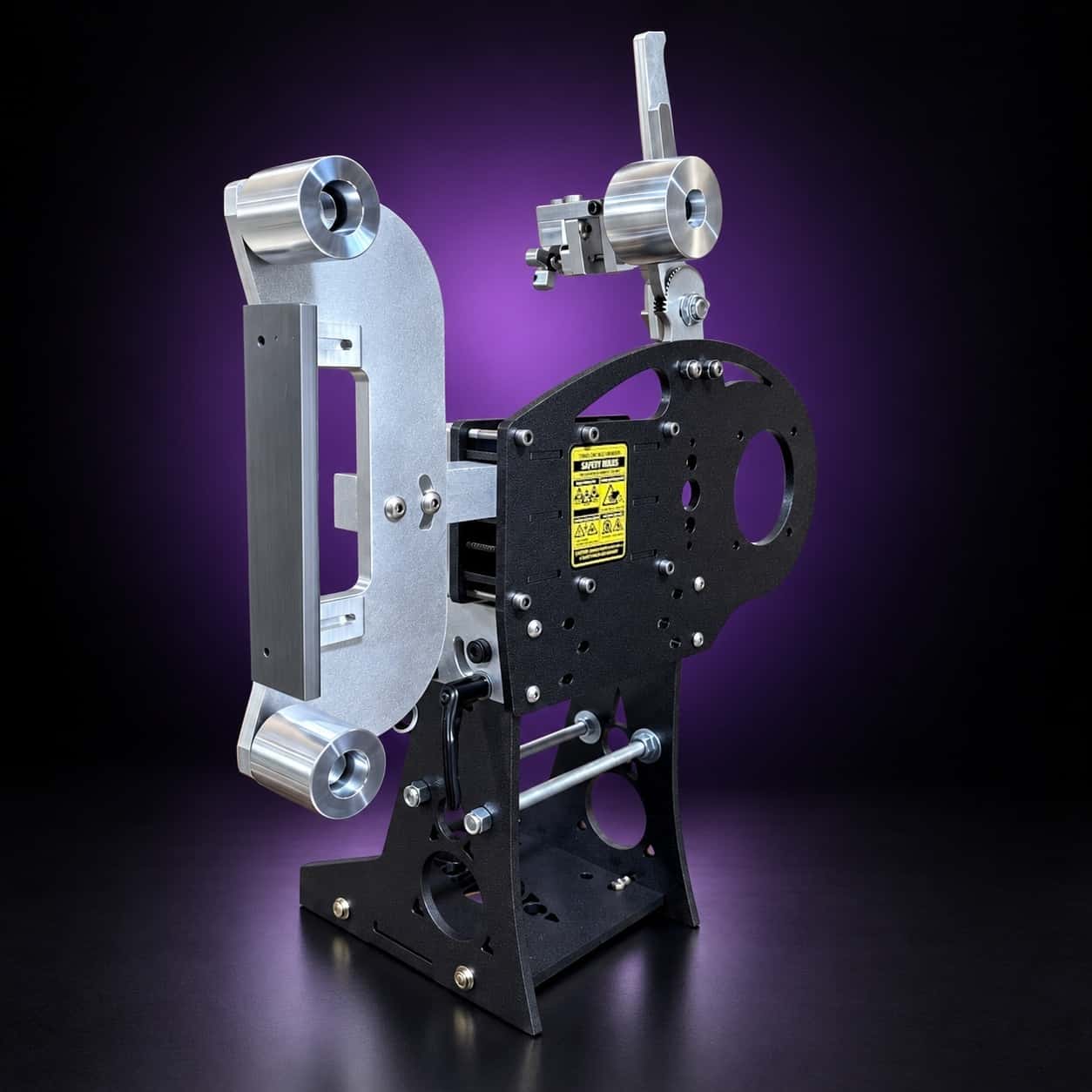
Current dual-axis platform with a steel chassis, more mass and less vibration.
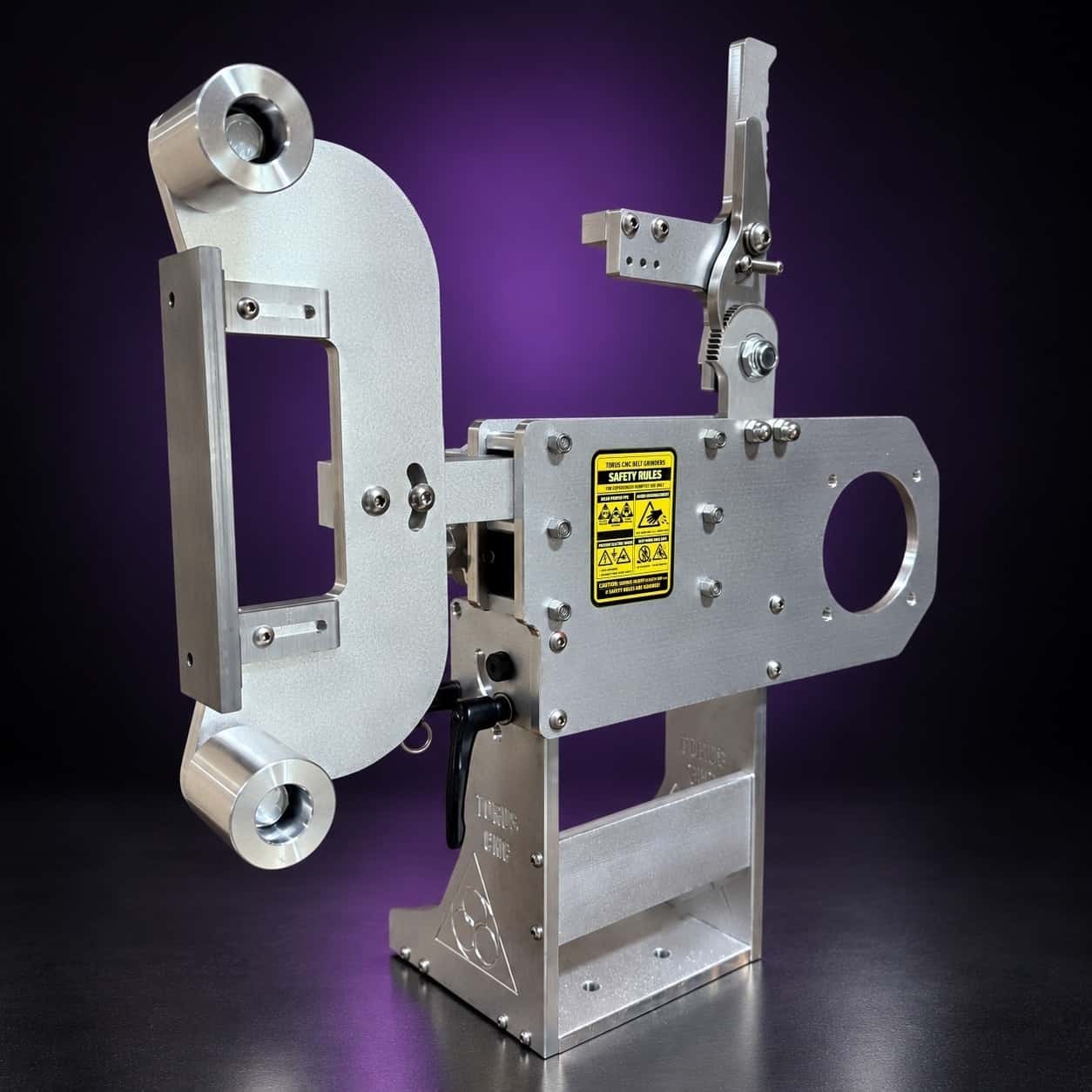
Prior-design aluminum chassis, 90-degree tilt and 1.5-inch tooling arms.
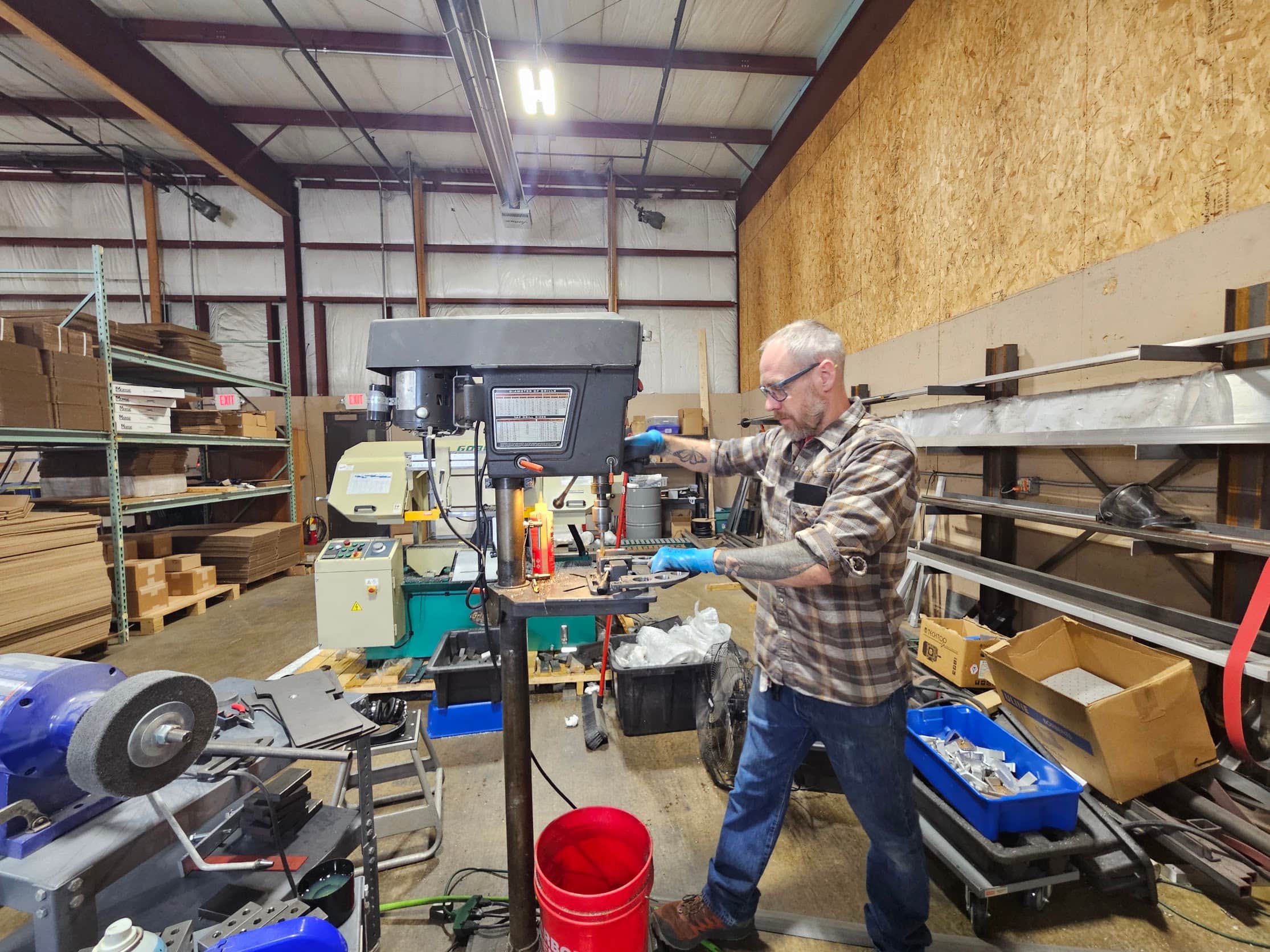
One-man shop
I answer my own email. Tell me the steel, the machine and what it is doing, and I will tell you what I would try next.