

Blade Design
Bevel Angles by Knife Type: The Working Chart
Every knife argument eventually lands on angles. Here is the chart we wish someone had handed us — edge angle per side, the grind that usually carries it…
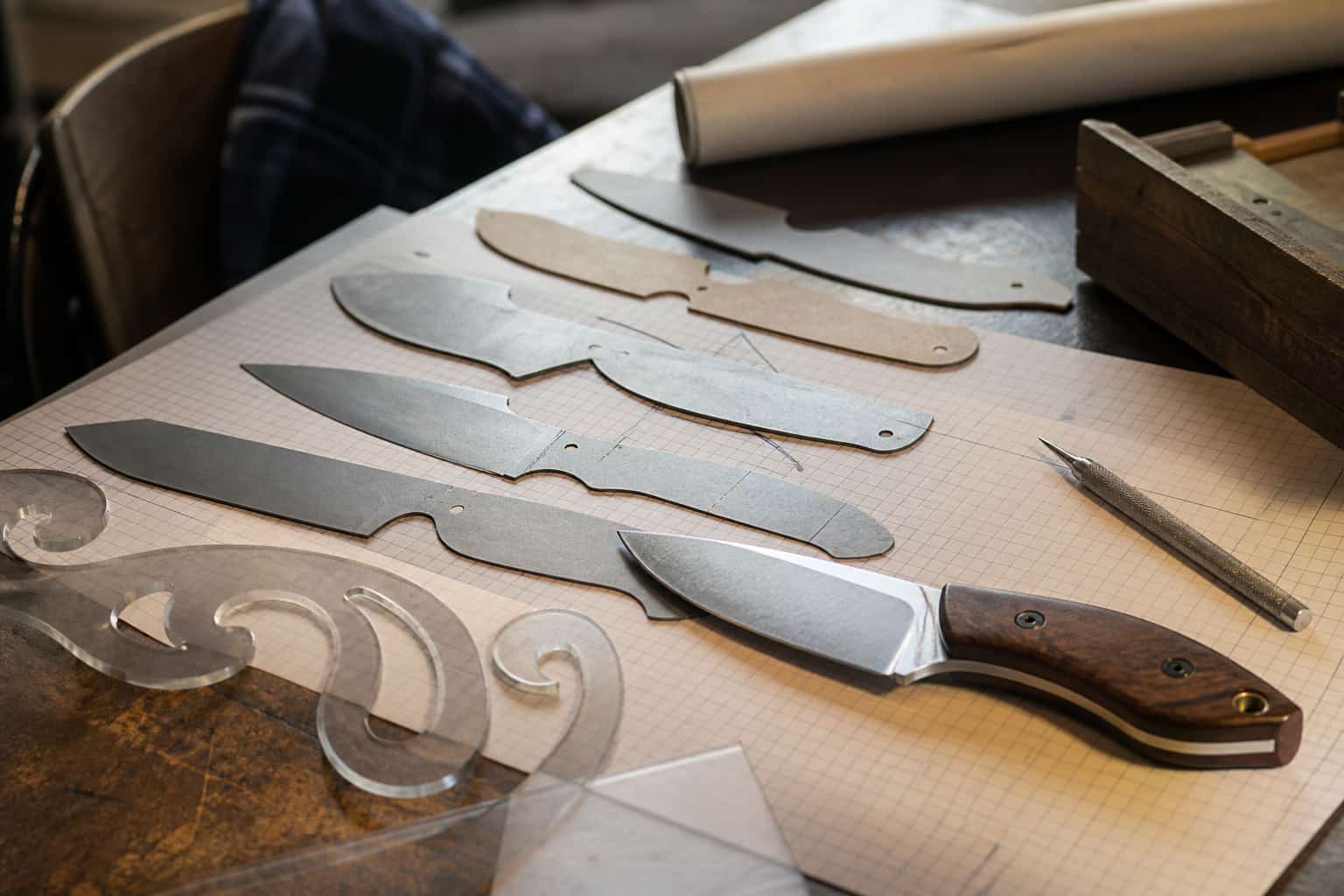
Blade Design
Japanese kitchen edges run 10-15 degrees per side, Western 15-20. How hardness buys angle, plus asymmetric edges, single bevels and thickness behind the edge.
2 min readWritten by Rich LinvilleFree to read
Kitchen knives run the lowest working angles of any knife you will build, because their whole job is falling through food and their whole hazard list is a cutting board. The Japanese tradition takes that logic further than the Western one — and the difference is mostly a steel-hardness story, not a cultural preference.
Western kitchen convention: 15–20 degrees per side, matched to softer stainless (say 56–58 HRC) that would fold thinner. Japanese convention: 10–15 dps, carried by harder steel (60–64 HRC) that can support the acuity. That is the whole trick — hardness buys angle. A maker running AEB-L or 14C28N at 61–62, or a carbon steel like 52100, gets to use the Japanese numbers regardless of styling. The full hardness argument lives in Why Hardness Matters.
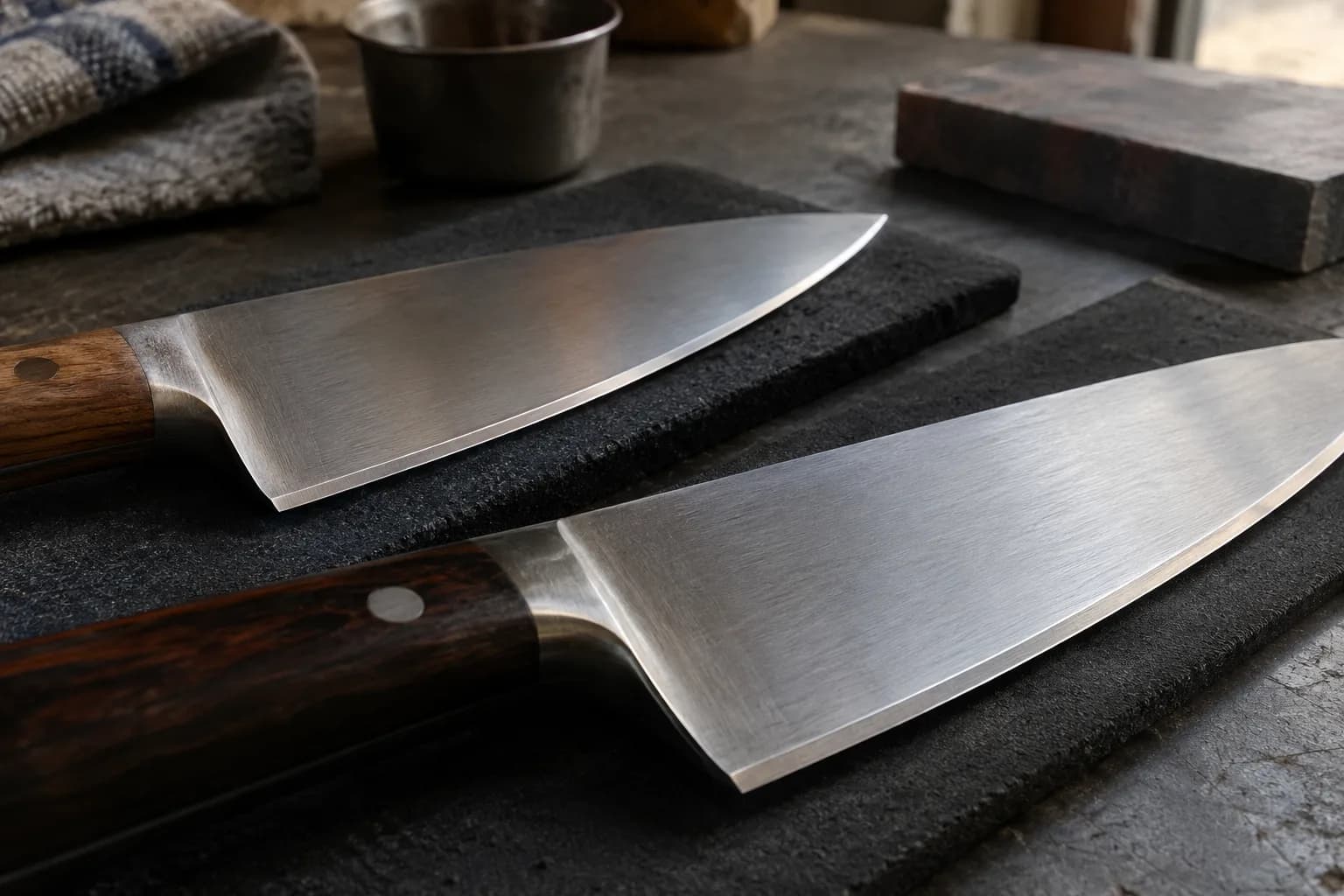
Angle gets the arguments; thickness behind the edge wins the cooking. A gyuto at 0.010–0.015 inch a quarter-inch above the apex falls through an onion at 15 dps; a thick-shouldered blade wedges at any angle. We make that case at length in Kitchen Knife Geometry — read the two together.
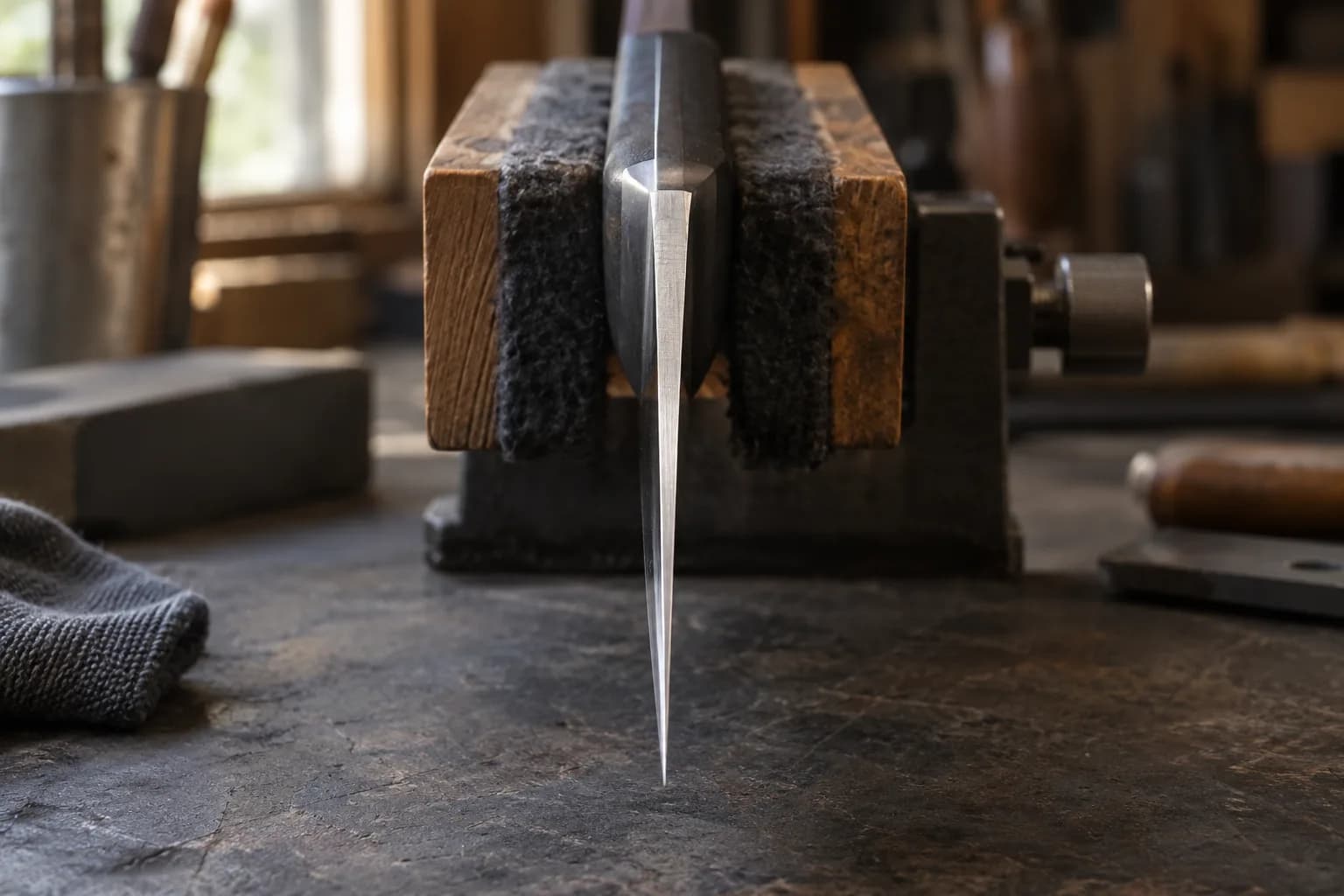
Many Japanese-style double bevels ship asymmetric — 70/30 or 60/40 — slightly steeper on the face toward the user’s knuckles. The payoff is steering: food falls away cleaner and the edge tracks straighter for a right-handed cut. Grind it by giving the front face more passes at a shade lower angle. Worth trying on your third kitchen knife, not your first.
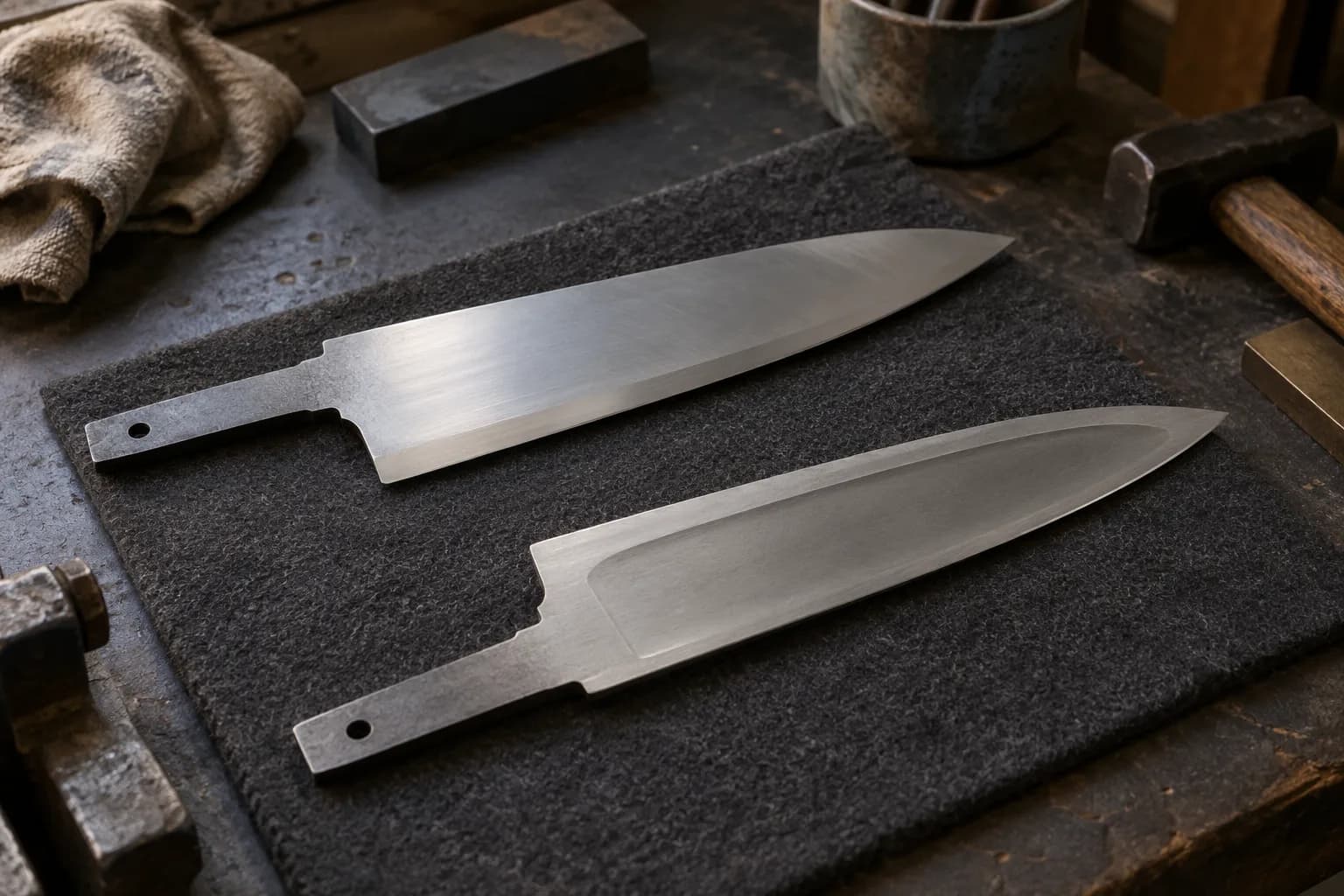
True single-bevel geometry — yanagiba, usuba, deba — is its own discipline: one ground face around 10–15 degrees, a flat-to-concave back (urasuki), and jobs it does spectacularly (sashimi pulls, katsuramuki) at the price of being wrong for almost everything else. Our single vs double bevel guide covers when that trade makes sense.
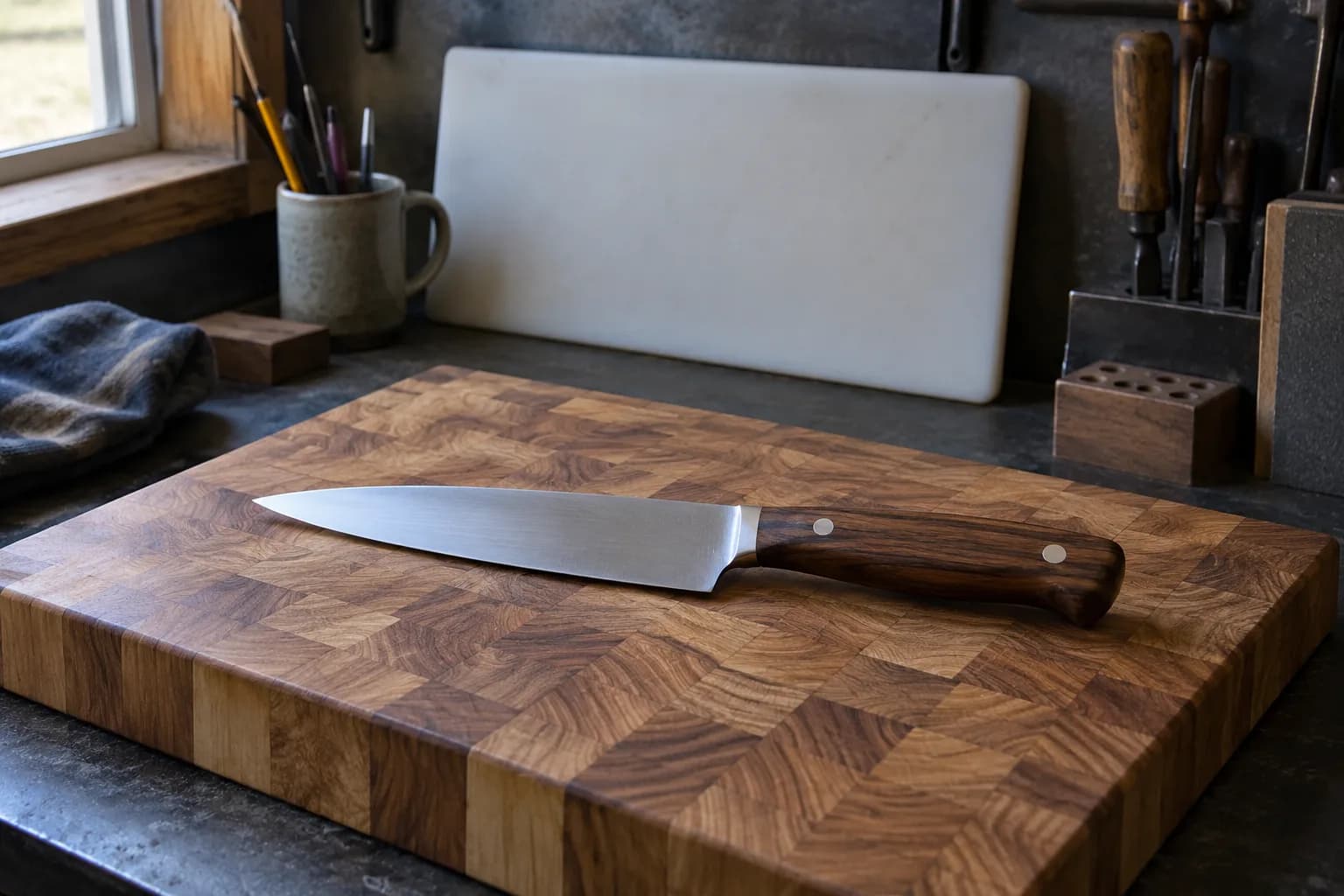
Every kitchen edge dies on the board, not in the food. End-grain wood and quality poly boards keep a 12-dps edge alive for months; bamboo, glass and ceramic plates kill it in sessions. If the knife’s owner will not control the board, grind the Western number and add a microbevel — see Microbevels and Edge Angles — instead of mourning the delicate edge later.
Keep reading
Three more from the same bench.
Every knife argument eventually lands on angles. Here is the chart we wish someone had handed us — edge angle per side, the grind that usually carries it…
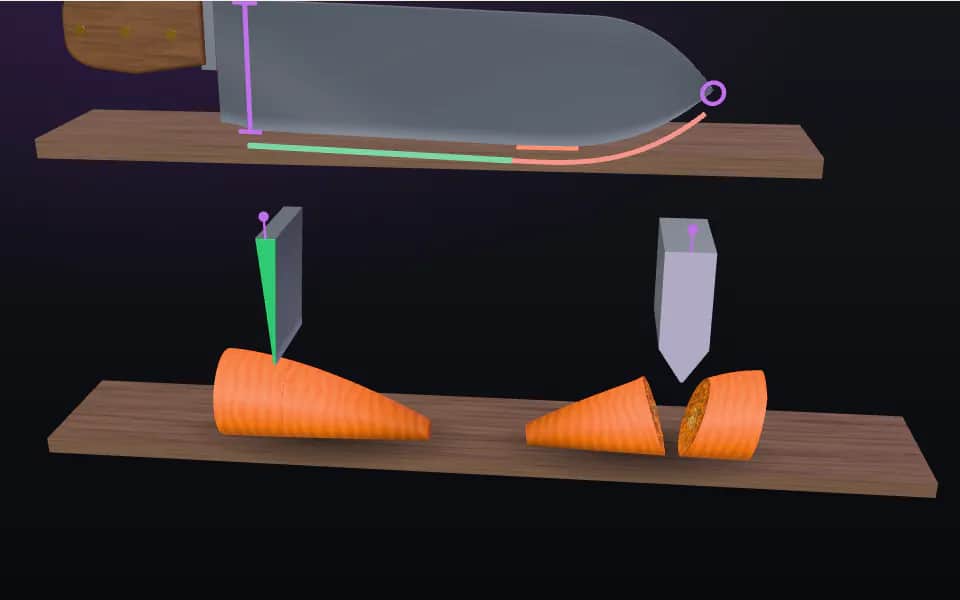
Kitchen knives are where blade geometry stops being theory and starts being dinner. A camp knife forgives a thick grind; a chef’s knife wedges apart a…

Most Western knives use a double bevel edge without anyone thinking twice about it, but single bevel (chisel ground) edges show up often enough…
Same bench
I machine the parts, hand-assemble, track and test Torus grinders in Sterling, Illinois. Most orders ship in seven to ten business days from time of order.

Current dual-axis platform with a fiber-laser-cut 6061 chassis and single-knob tracking.

Current dual-axis platform with a steel chassis, more mass and less vibration.

Prior-design aluminum chassis, 90-degree tilt and 1.5-inch tooling arms.

One-man shop
I answer my own email. Tell me the steel, the machine and what it is doing, and I will tell you what I would try next.