

Blade Design
Bevel Angles by Knife Type: The Working Chart
Every knife argument eventually lands on angles. Here is the chart we wish someone had handed us — edge angle per side, the grind that usually carries it…
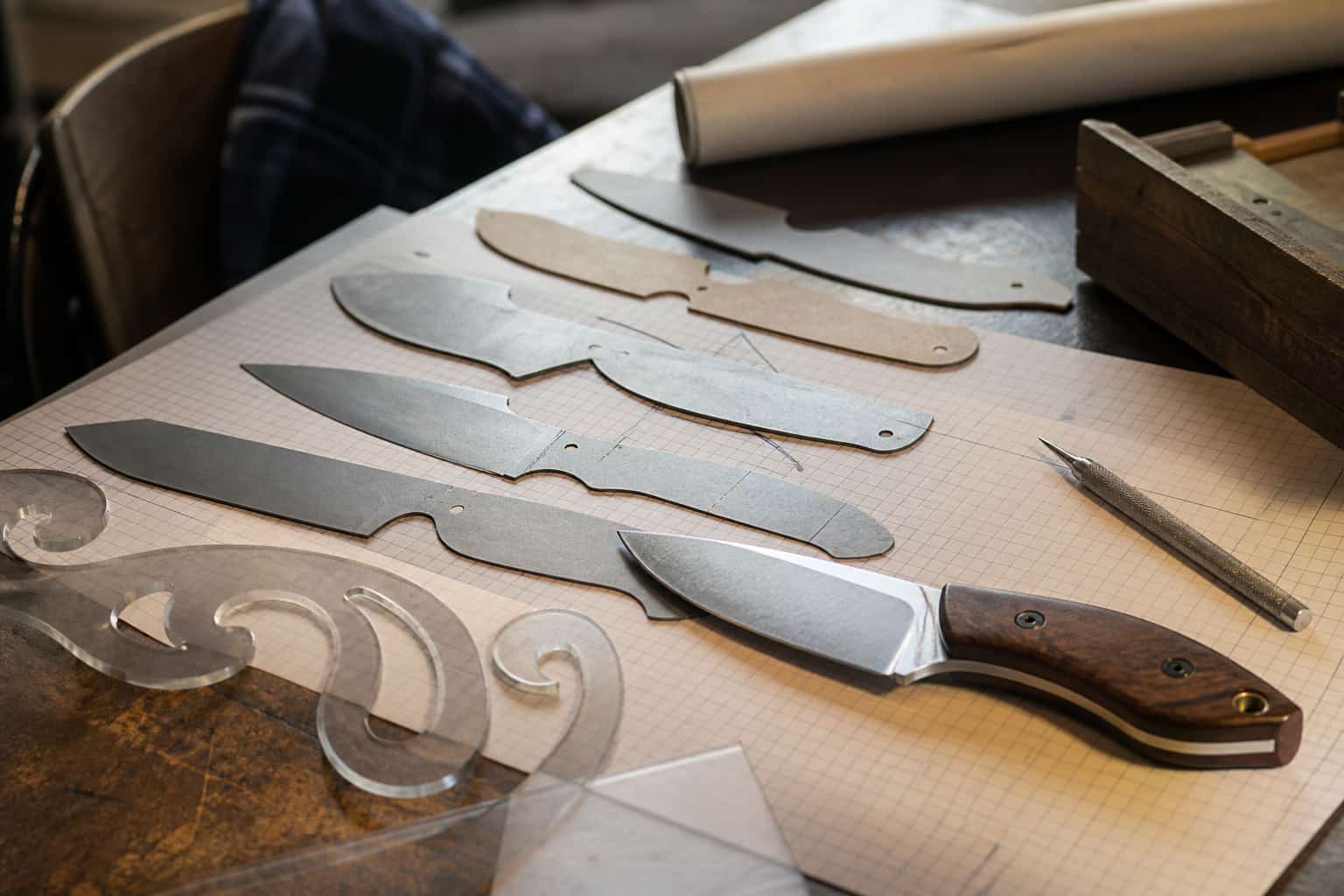
Blade Design
Fillet blade geometry: 12-15 dps edges, why flex is a spec not a flaw, thickness by species, boning stiffness, and grinding thin without warps.
2 min readWritten by Rich LinvilleFree to read
A fillet knife is the only blade a maker builds where floppiness is a feature. The blade rides bones and skin as a flexible follower — geometry that would be a defect anywhere else is the entire point here, which makes fillet knives one of the best pure grinding exercises a 2×72 owner can take on.
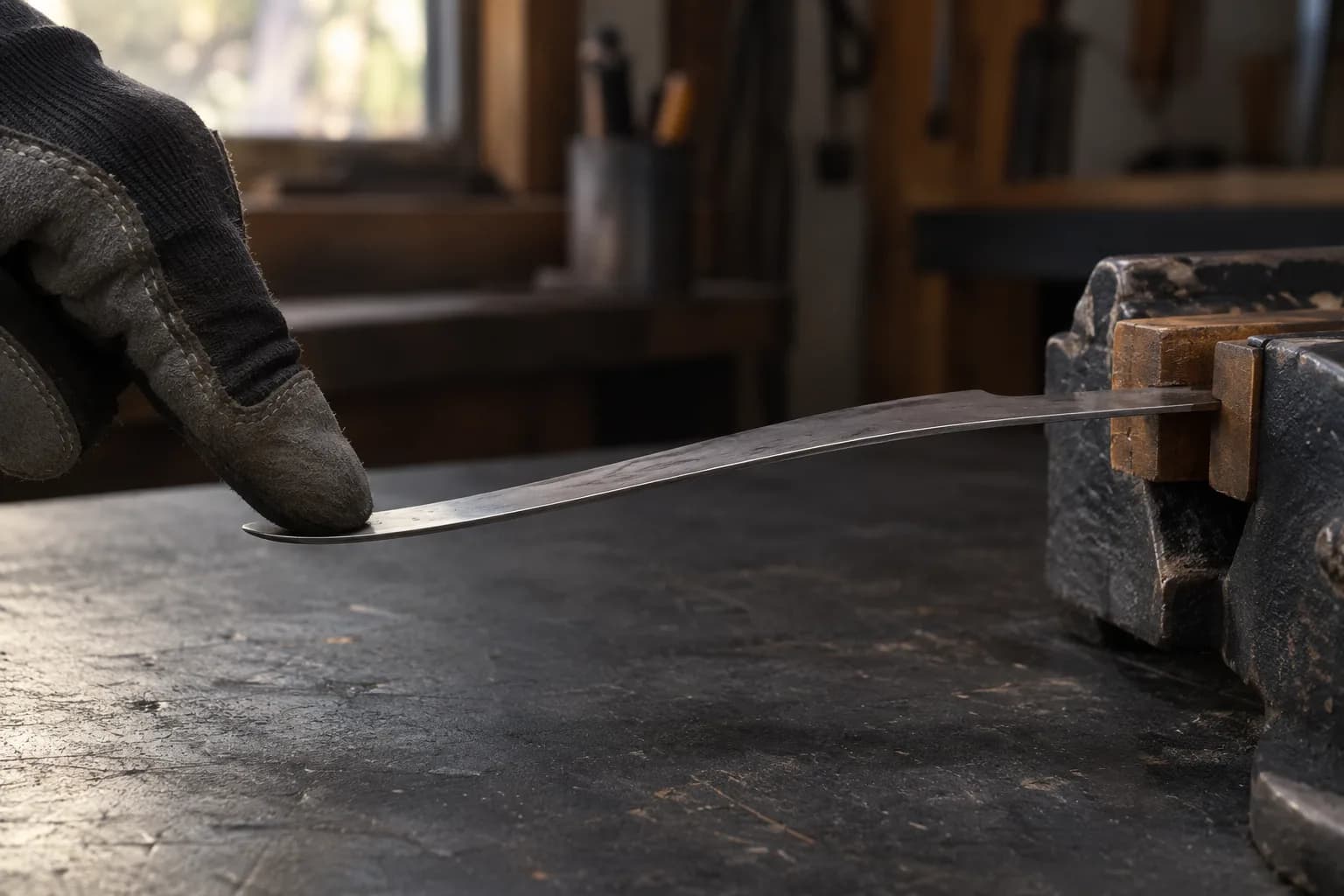
Edge: 12–15 degrees per side — soft flesh punishes nothing, so keenness is free. Stock: 1/16 to 3/32 inch, full flat ground to a working thickness of 0.008–0.015 behind the edge. Length by species: 6 inches for panfish, 7.5 for walleye and bass, 9-plus for salmon and pike. Flex follows length and thickness: a panfish blade should bend 30-plus degrees under finger pressure; a salmon blade stays stiffer through the spine cut.
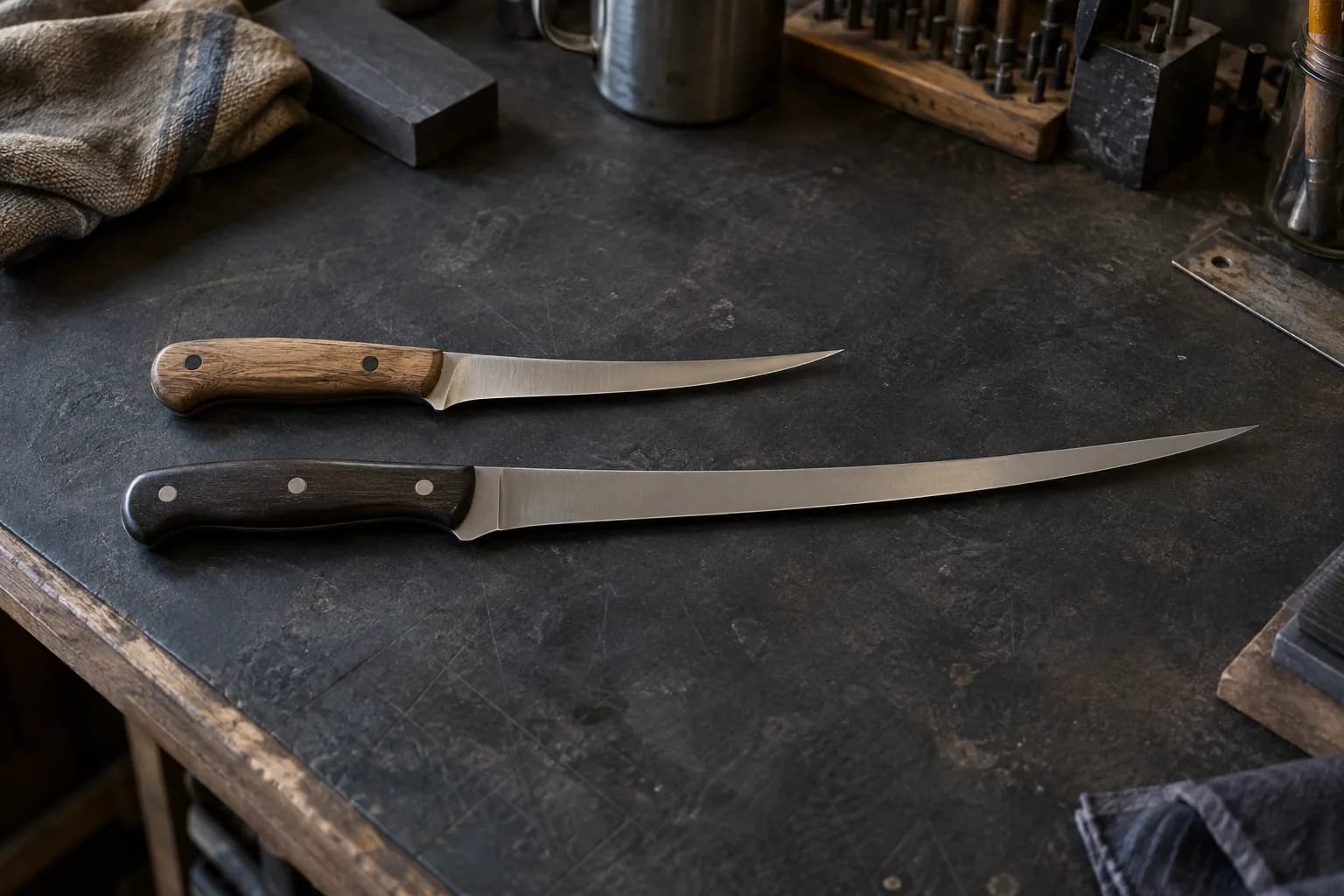
Filleting is a feel operation: the blade bends to keep the edge planing along the ribcage and skin while the handle stays put. Distal taper delivers that curve honestly — thickness fading from handle to tip bends progressively instead of hinging at one spot. Taper theory is in Blade Thickness and Distal Taper; a fillet blade is that guide’s final exam.
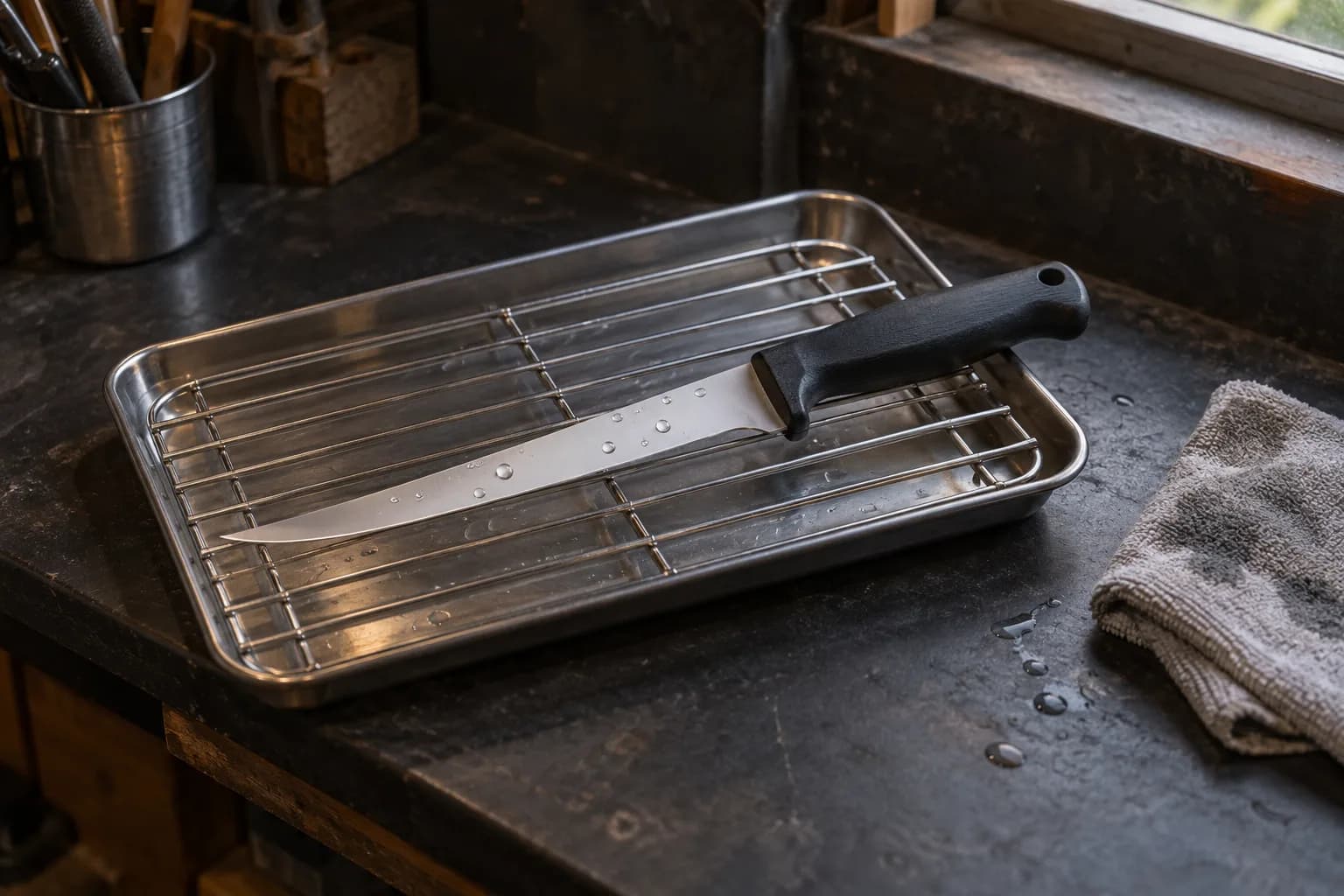
This is the most rust-exposed knife in the catalog — slime, blood and a wet cleaning table all day. Stainless is nearly mandatory for customers: 14C28N and AEB-L are ideal (tough enough at 0.010 thin, keen, and they shrug off the wet), Nitro-V likewise. Carbon steel fillet knives exist for makers who accept the wipe-down discipline; sell them with eyes open.
Thin flexible stock is the platen’s trickiest customer: it flutters, it heats instantly, and it reveals every pressure inconsistency as a wavy grind. Fresh sharp belts, light even pressure, and constant motion — the blade cannot dwell anywhere. Grind post-heat-treat as much as possible (thin profiles warp savagely in the quench; leave 0.030 at the edge going in, per plate-quench practice in our plate quenching guide) and accept that the last thickness comes off slowly, cool, and with the flat of your hand reading temperature every pass.
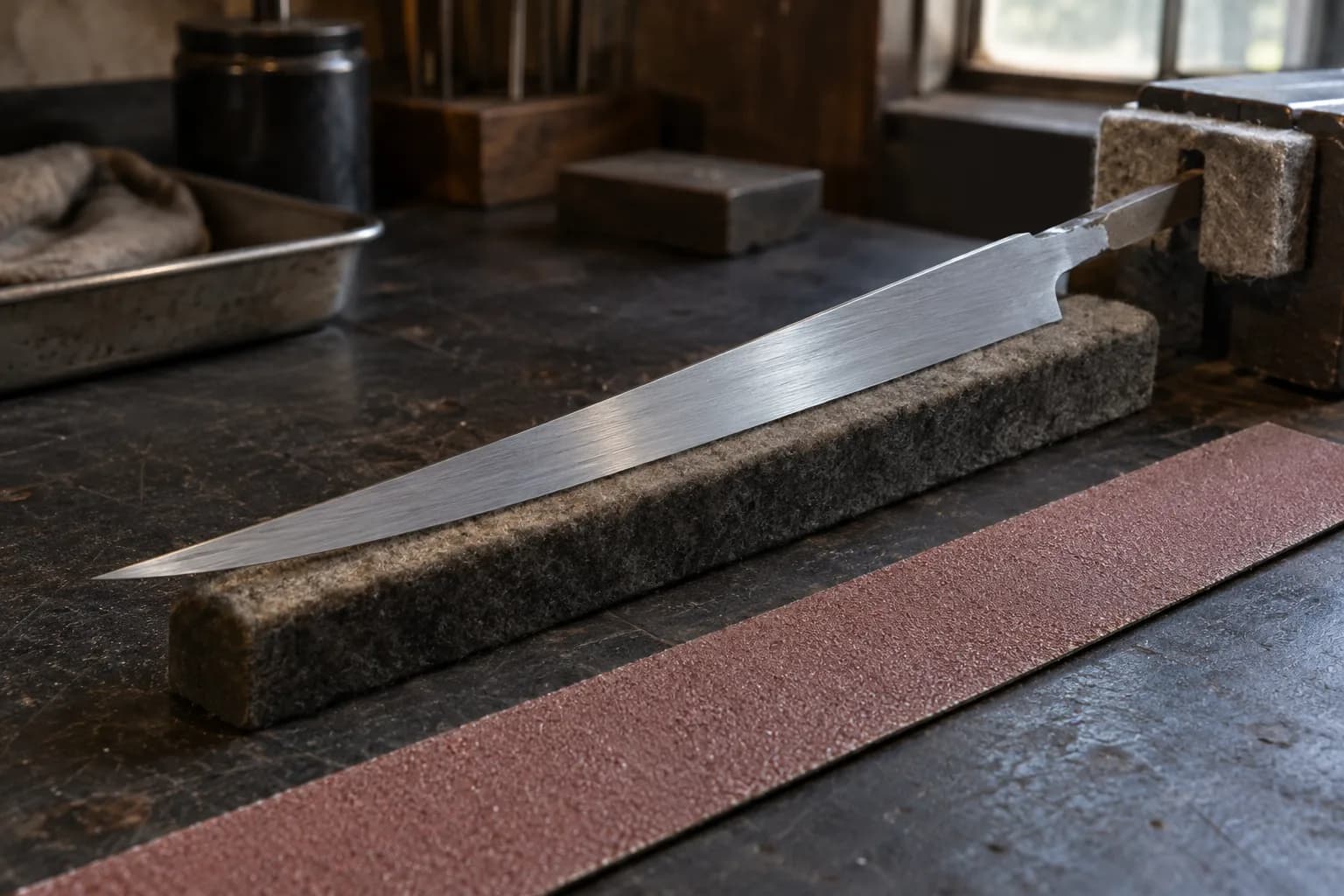
A boning knife shares the profile but not the flex: 5–6 inches, stiffer 3/32 stock, 15–18 dps, semi-flex at most. It levers around joints and through cartilage that would fold a fillet blade. Different tool; customers conflate them, makers should not.
Keep reading
Three more from the same bench.
Every knife argument eventually lands on angles. Here is the chart we wish someone had handed us — edge angle per side, the grind that usually carries it…

Two knives can share the same steel, grind type, and blade shape and still perform completely differently, because of stock thickness and how that…

Kitchen knives run the lowest working angles of any knife you will build, because their whole job is falling through food and their whole hazard list is a…
Same bench
I machine the parts, hand-assemble, track and test Torus grinders in Sterling, Illinois. Most orders ship in seven to ten business days from time of order.

Current dual-axis platform with a fiber-laser-cut 6061 chassis and single-knob tracking.

Current dual-axis platform with a steel chassis, more mass and less vibration.

Prior-design aluminum chassis, 90-degree tilt and 1.5-inch tooling arms.

One-man shop
I answer my own email. Tell me the steel, the machine and what it is doing, and I will tell you what I would try next.