

Blade Design
Bevel Angles by Knife Type: The Working Chart
Every knife argument eventually lands on angles. Here is the chart we wish someone had handed us — edge angle per side, the grind that usually carries it…
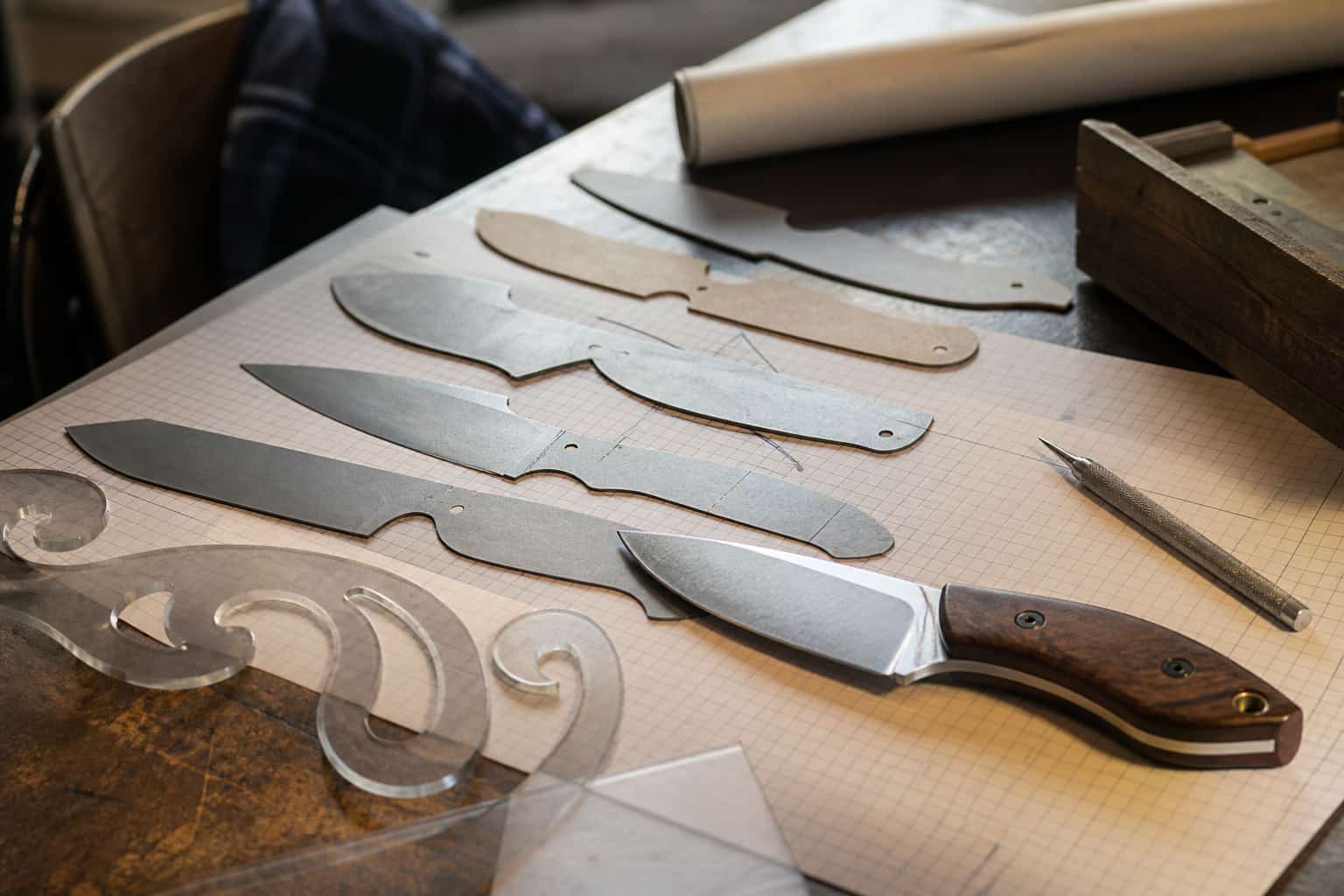
Blade Design
Straight razor geometry: how spine thickness sets the 7-8 dps angle, hollow grinding on wheels, points, and the steels that take shaving edges.
2 min readWritten by Rich LinvilleFree to read
The straight razor is the purest geometry exercise in bladesmithing: a blade whose edge angle is fixed by its own proportions, whose grind approaches translucent, and whose performance test is your own face. Nothing else a 2×72 makes is as unforgiving or as satisfying to get right.
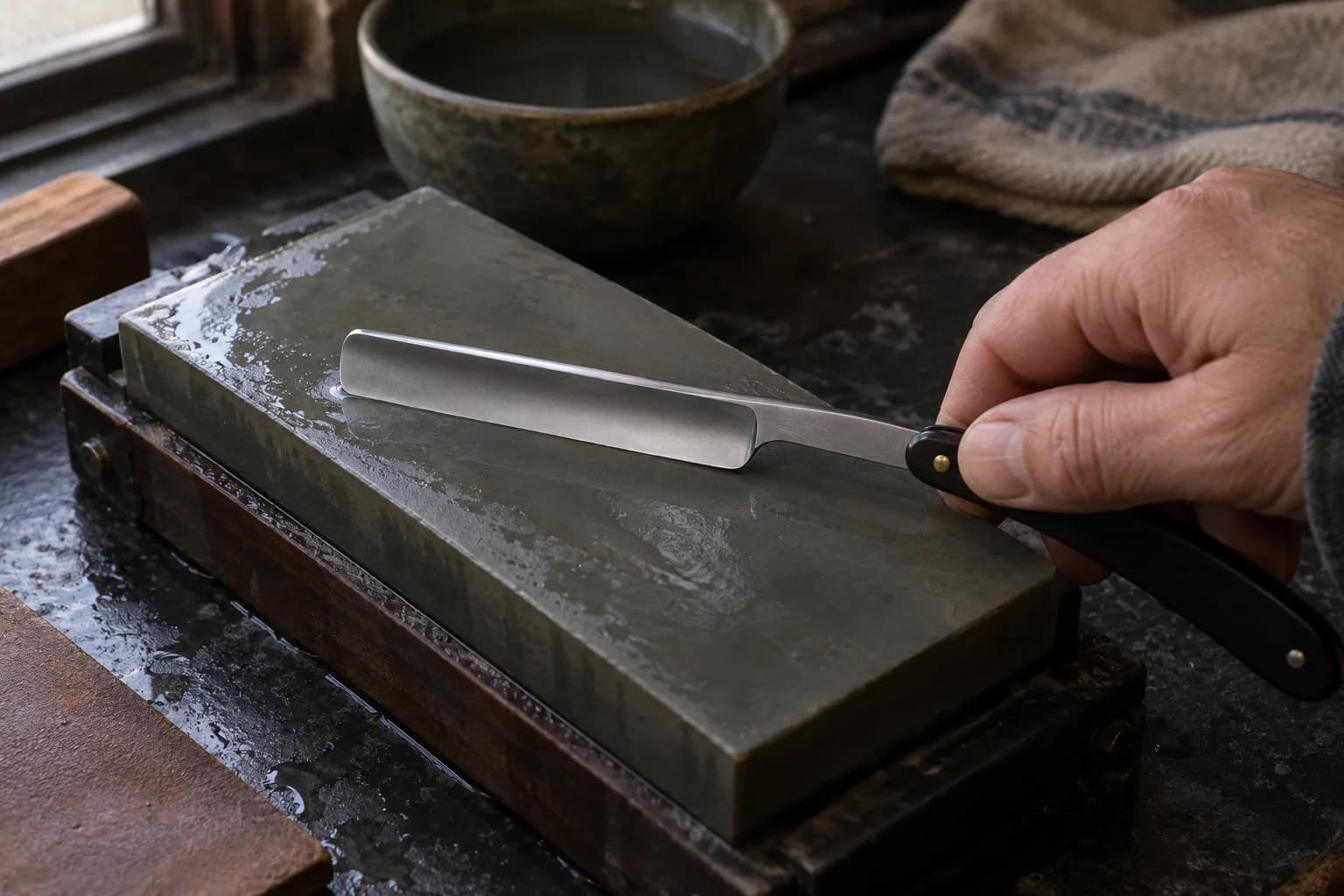
A razor hones lying flat on its spine, so spine thickness and blade width set the edge angle permanently. The classical proportion — spine one-quarter of blade width, say a 1/4 inch spine on a 1 inch blade — yields the traditional 7–8 degrees per side. Grind the spine thick or the blade narrow and the owner shaves with a chisel forever. Design the ratio first; everything else follows.
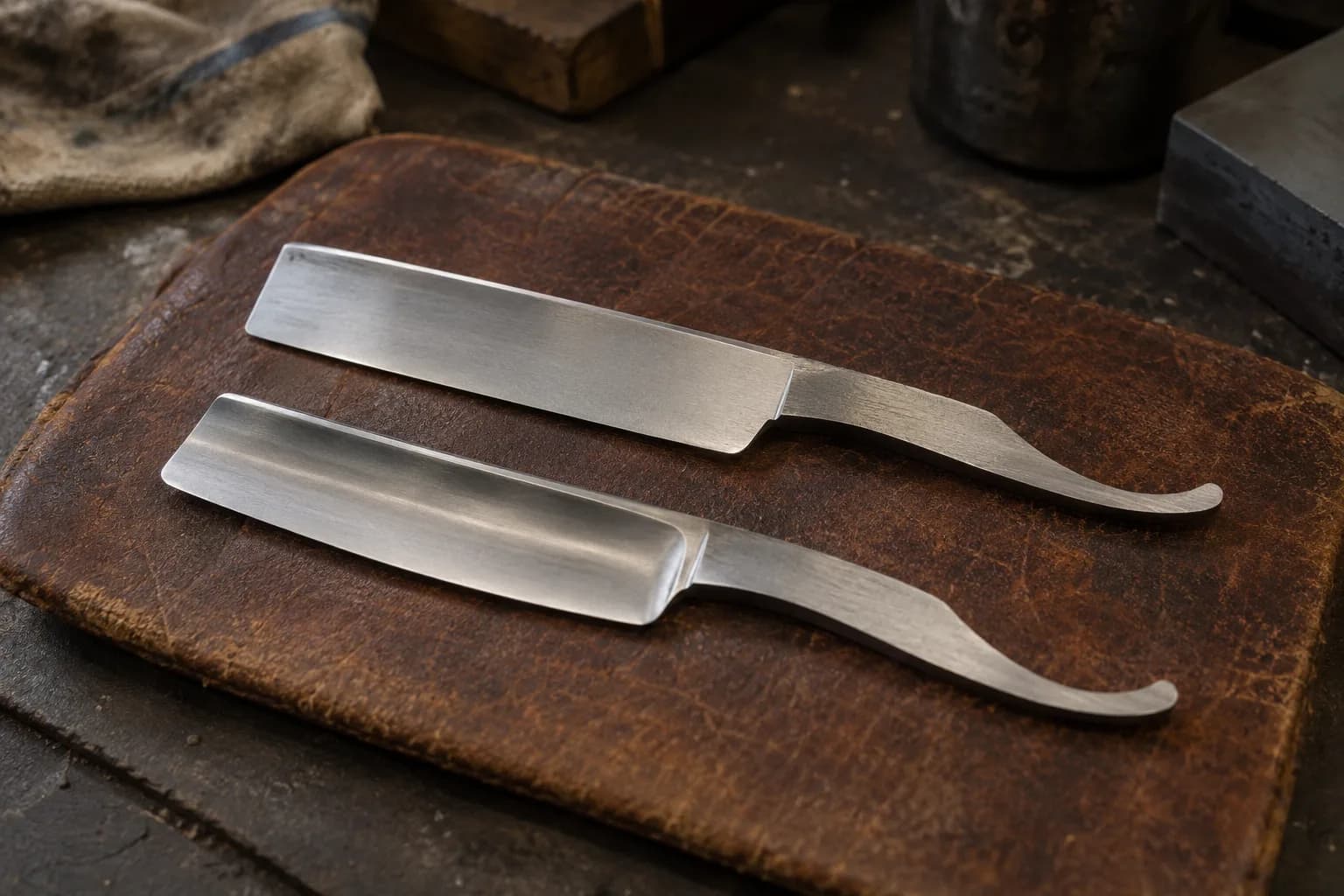
Razor grinds run from near-wedge (stiff, quiet, forgiving to grind) through quarter and half hollow to full and extra hollow — the singing, flexing extreme ground on progressively smaller wheels. Full hollows want a big contact-wheel pass followed by smaller-wheel finishing near the edge; the classic double-hollow look uses two wheel diameters deliberately. Wedges and near-wedges grind on the platen and are the honest first-razor recommendation: every classical razor assumed a wedge, and faces cannot tell keenness from resonance.
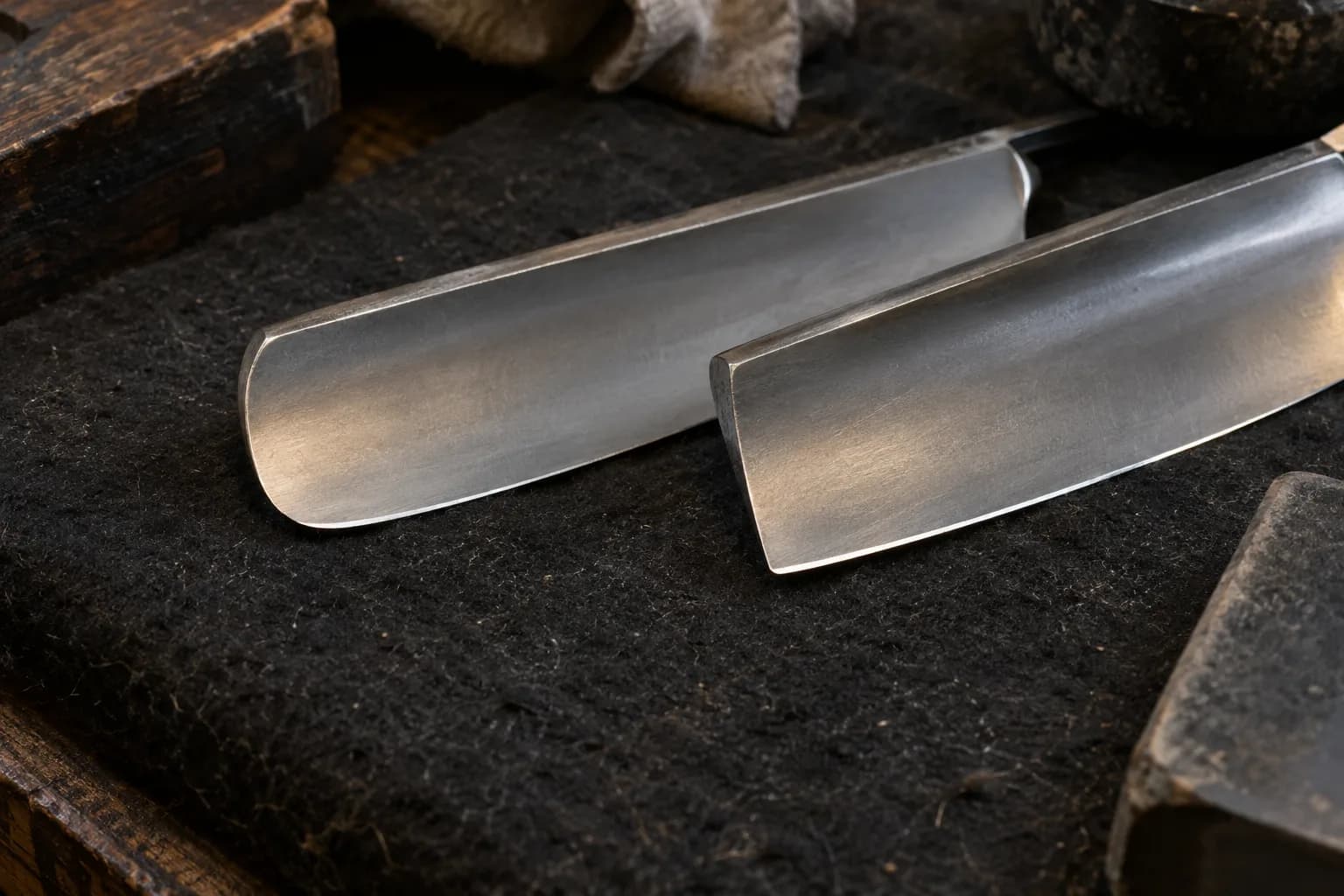
Razor edges finish at apex widths where carbide size is visible reality — fine-grained steel is not optional. The traditional answers remain the best: O1, W2 and 52100 in carbon, AEB-L as the stainless razor steel it was literally invented to be. Hardness runs hard — 60–63 — because the edge is supported by nothing and stropping is the daily maintenance. Big-carbide stainless steels shave like a rasp regardless of sharpening effort.
Round points forgive; square points define (and nick — they are the experienced shaver’s choice); French and barber’s notch points are style with minor function. The tang and monkey-tail balance the open blade on the fingers, the jimps give wet-thumb traction, and the shoulder must leave honing clearance or the first stone session fights the grind. Small blade, dozens of decisions.
Razor stock is 1/4 by 1 inch bar ground to near-zero — the most heat-sensitive work a belt grinder does. Post-heat-treat grinding with constant dunking is the norm; the last passes are feather-light. Then honing, which is its own craft: the progression logic in our sharpening guide extended through 8000 grit and a linen-and-leather strop. The 2×72 makes the razor; the stones make the shave.
Keep reading
Three more from the same bench.
Every knife argument eventually lands on angles. Here is the chart we wish someone had handed us — edge angle per side, the grind that usually carries it…

Kitchen knives run the lowest working angles of any knife you will build, because their whole job is falling through food and their whole hazard list is a…

Sharpening is where knifemaking gets humbled: you can grind a flawless blade and still hand someone a knife that won’t slice paper. The good news …
Same bench
I machine the parts, hand-assemble, track and test Torus grinders in Sterling, Illinois. Most orders ship in seven to ten business days from time of order.

Current dual-axis platform with a fiber-laser-cut 6061 chassis and single-knob tracking.

Current dual-axis platform with a steel chassis, more mass and less vibration.

Prior-design aluminum chassis, 90-degree tilt and 1.5-inch tooling arms.

One-man shop
I answer my own email. Tell me the steel, the machine and what it is doing, and I will tell you what I would try next.