
Blade Design
Bevel Angles by Knife Type: The Working Chart
Every knife argument eventually lands on angles. Here is the chart we wish someone had handed us — edge angle per side, the grind that usually carries it…
Blade Design
Hunting blade geometry: 20-22 dps edges that touch bone, why belly does the skinning, drop vs trailing points, gut hooks, and caping blades.
2 min readWritten by Rich LinvilleFree to read
A hunting knife’s geometry is a negotiation between hide, sinew and the bone it was never supposed to touch but always does. The angles run steeper than kitchen numbers, the belly matters more than the point, and the best patterns were settled by working hunters a century before belt grinders.
Twenty to twenty-two degrees per side. Field dressing hits bone — pelvis splits, joint work, a slip against a rib — and a 15-dps edge that dazzled on paper chips at first contact. At 20–22 with a tough steel the edge dents instead, and a dented edge finishes the animal. Steels that fit: 80CrV2 and 52100 in carbon, S35VN or MagnaCut for the stainless buyer.
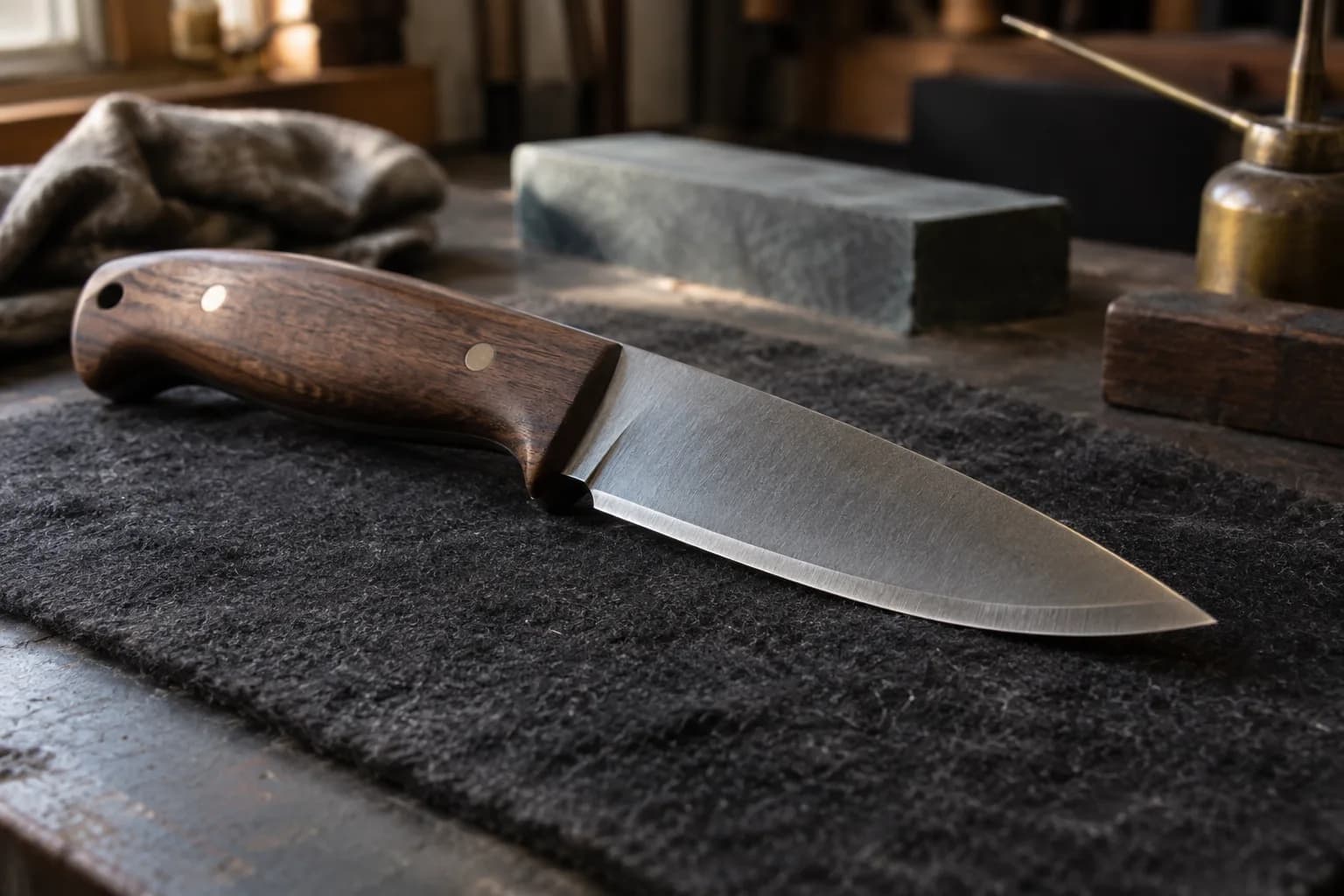
Skinning is a long sweeping cut, and the curved belly section of the edge does all of it — a skinner is basically a belly delivery system. Deep continuous curve, 3.5–4 inch blades, wide profile: the classic skinner pattern keeps the edge loaded through the sweep without the point nicking the hide. Grind bellies with smooth wrist rotation through the pass; flat-spotted bellies snag mid-stroke and show as chatter in the hide.
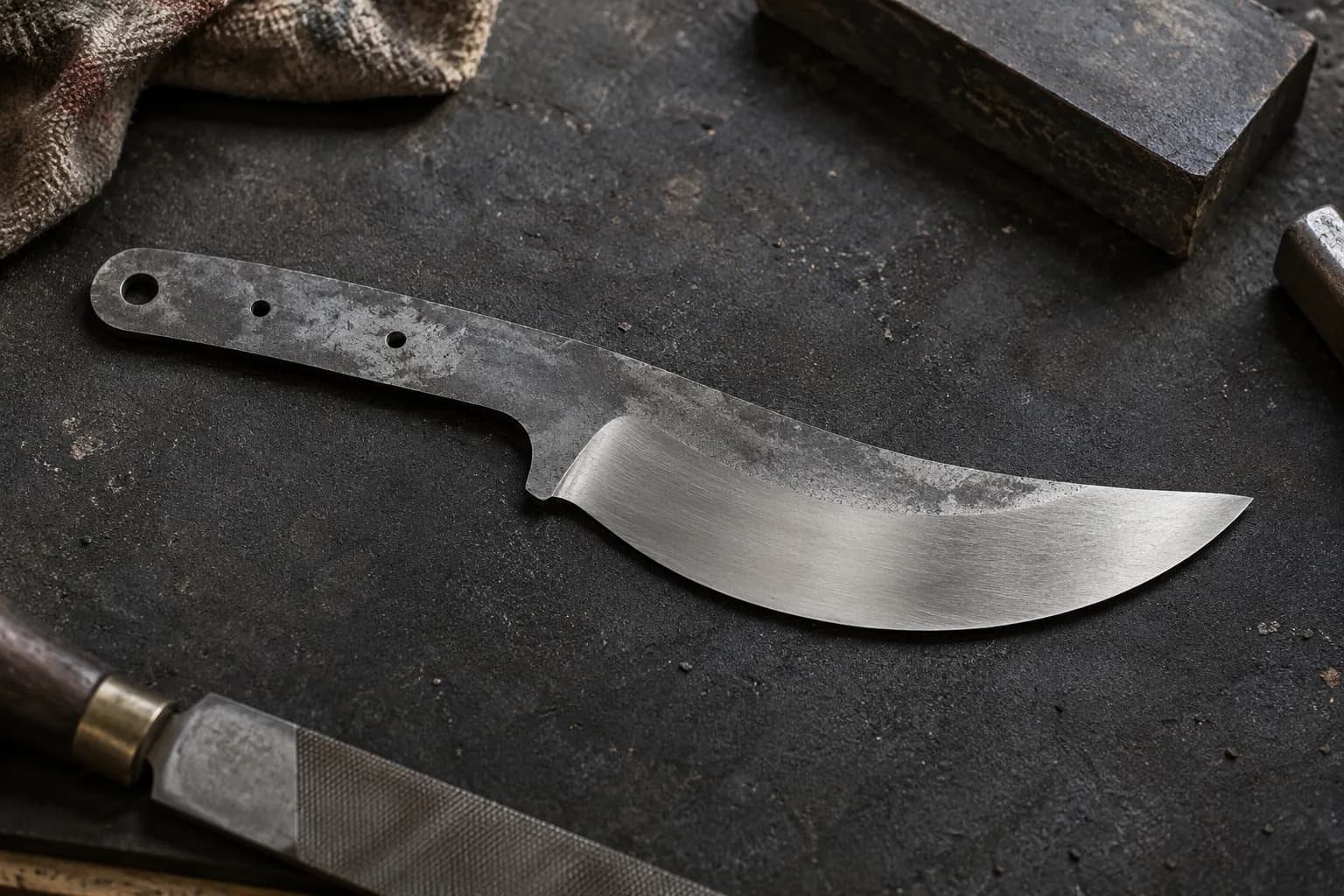
The drop point earns its dominance: a lowered, thick-spined tip that resists puncturing the gut sack during opening cuts and survives joint leverage. Trailing points lift the tip out of the way and add belly, splendid for pure skinning, fragile for camp double duty. Clip points give precision at the price of a finer tip. For the opening cut itself, a gut hook — a sharpened C-notch on the spine — unzips hide without the point entering the cavity; grind them with a small wheel or chainsaw file before heat treat.
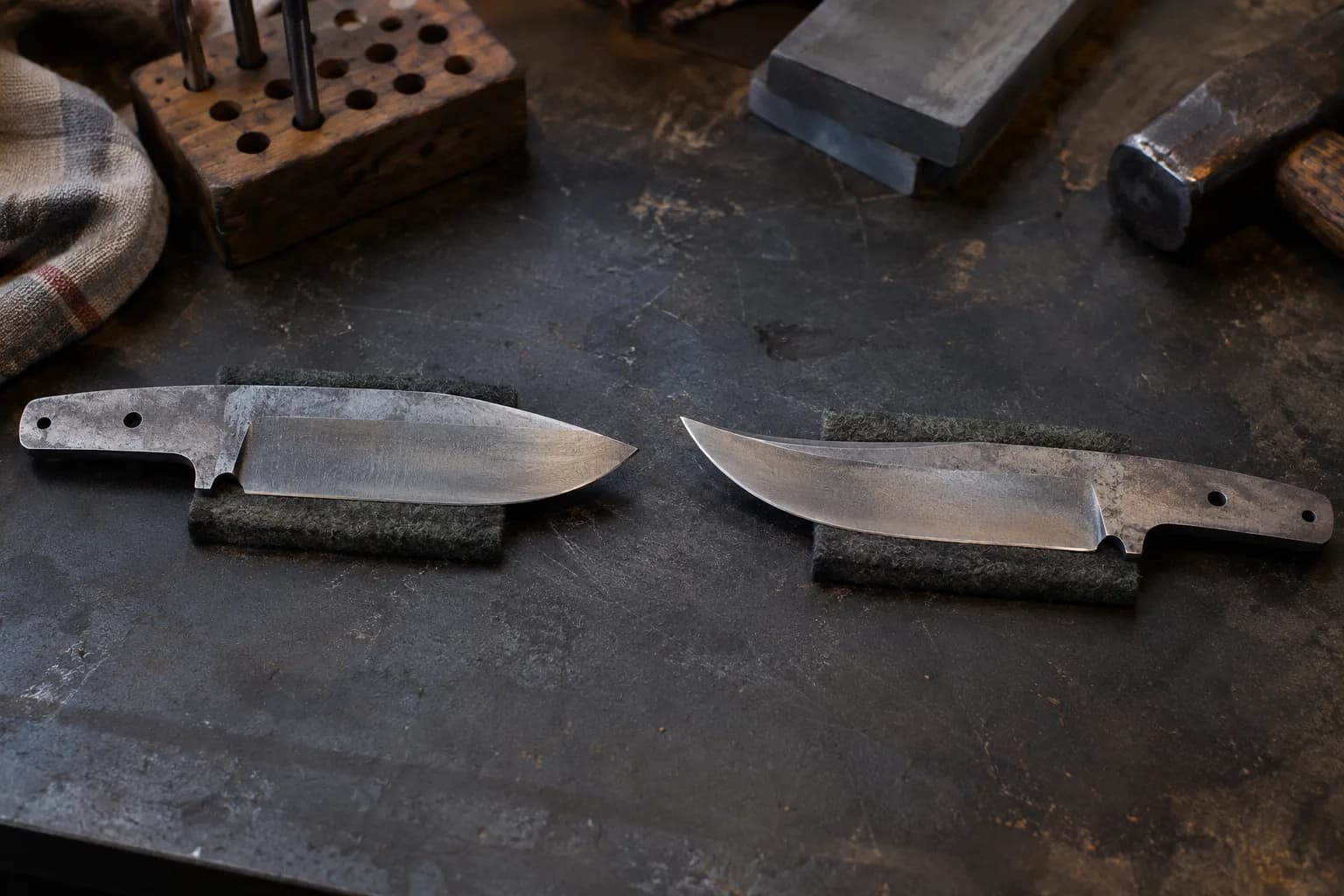
Caping — freeing the shoulder cape for taxidermy — wants the opposite blade: 2.5–3 inches, fine controllable point, lighter 18–20 dps edge for detail around eyes and ears. Many makers sell hunter-plus-caper pairs; geometrically they are a skinner and a scaled-down precision blade sharing a sheath.
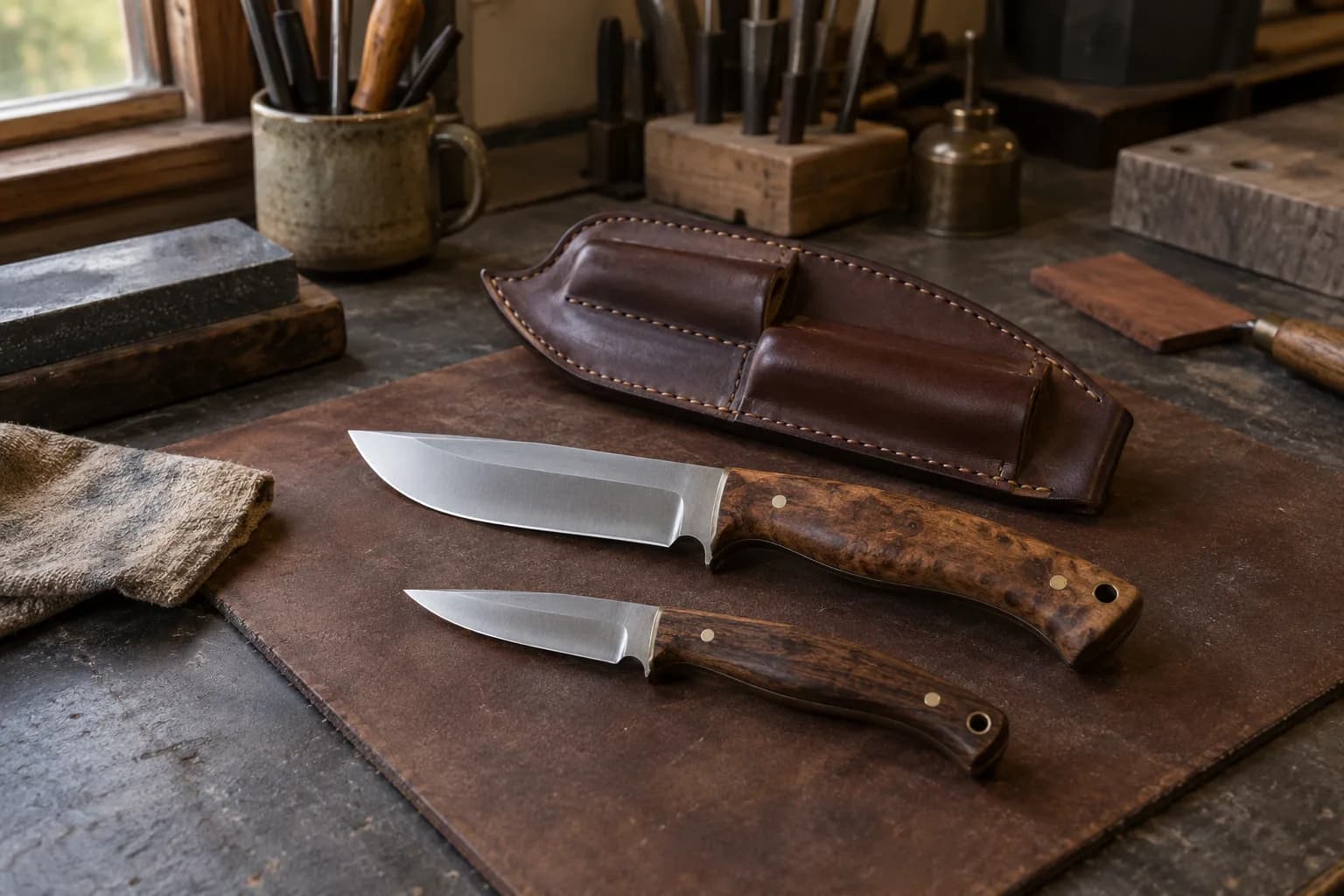
1/8 inch stock, full flat or high sabre, 0.020–0.030 behind the edge. Hollow grinds skin beautifully but wedge on joint work. Hide dulls edges shockingly fast — hair is mineral-loaded — so give hunting customers the honest talk: touch-up steel in the field kit beats a promised forever edge. Our sharpening guide covers field maintenance.
Keep reading
Three more from the same bench.
Every knife argument eventually lands on angles. Here is the chart we wish someone had handed us — edge angle per side, the grind that usually carries it…
An EDC blade leads the hardest life in the knife world: cardboard by the mile, plastic strapping, food at lunch, a staple it never saw coming — owned by…
Sharpening is where knifemaking gets humbled: you can grind a flawless blade and still hand someone a knife that won’t slice paper. The good news …
Same bench
I machine the parts, hand-assemble, track and test Torus grinders in Sterling, Illinois. Most orders ship in seven to ten business days from time of order.
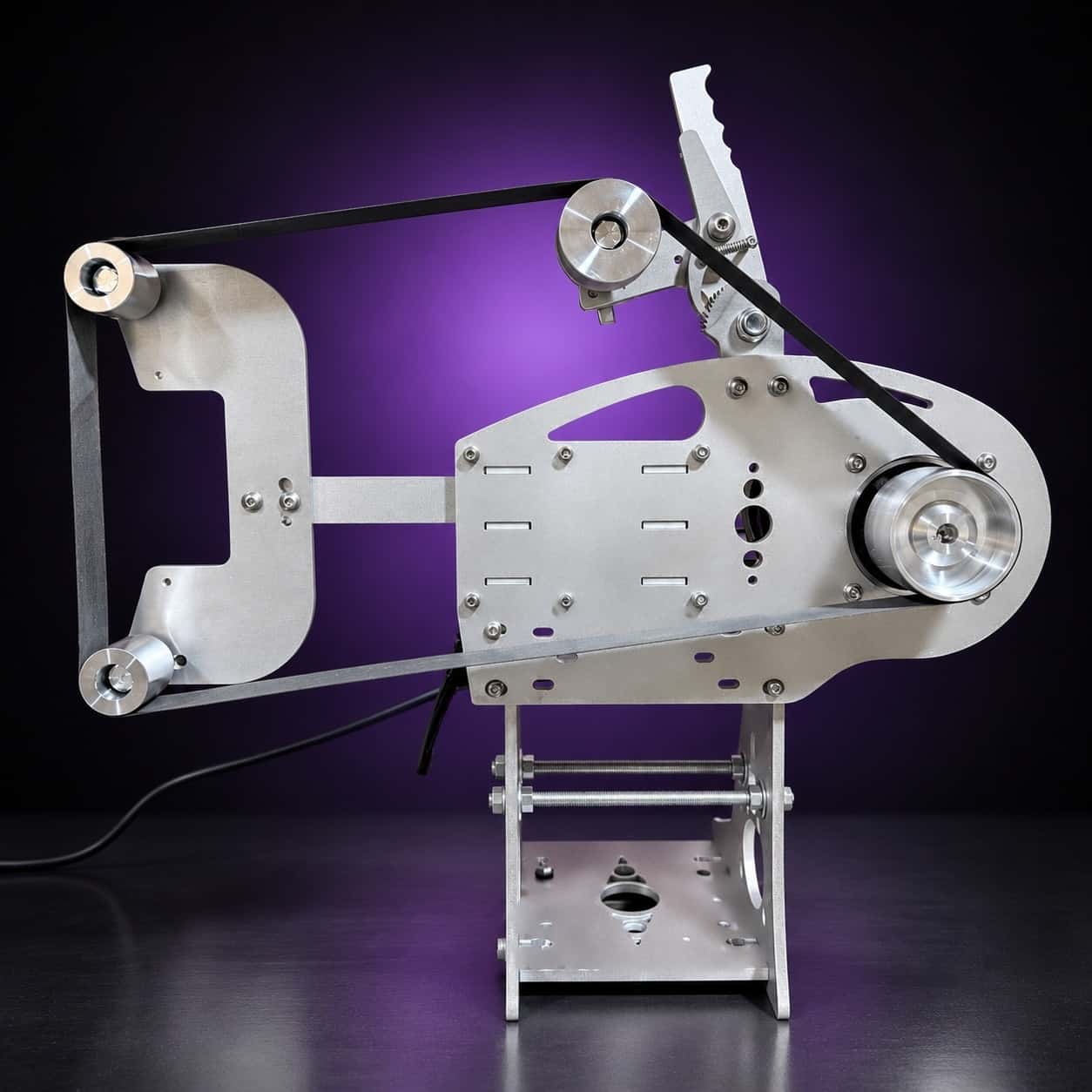
Current dual-axis platform with a fiber-laser-cut 6061 chassis and single-knob tracking.
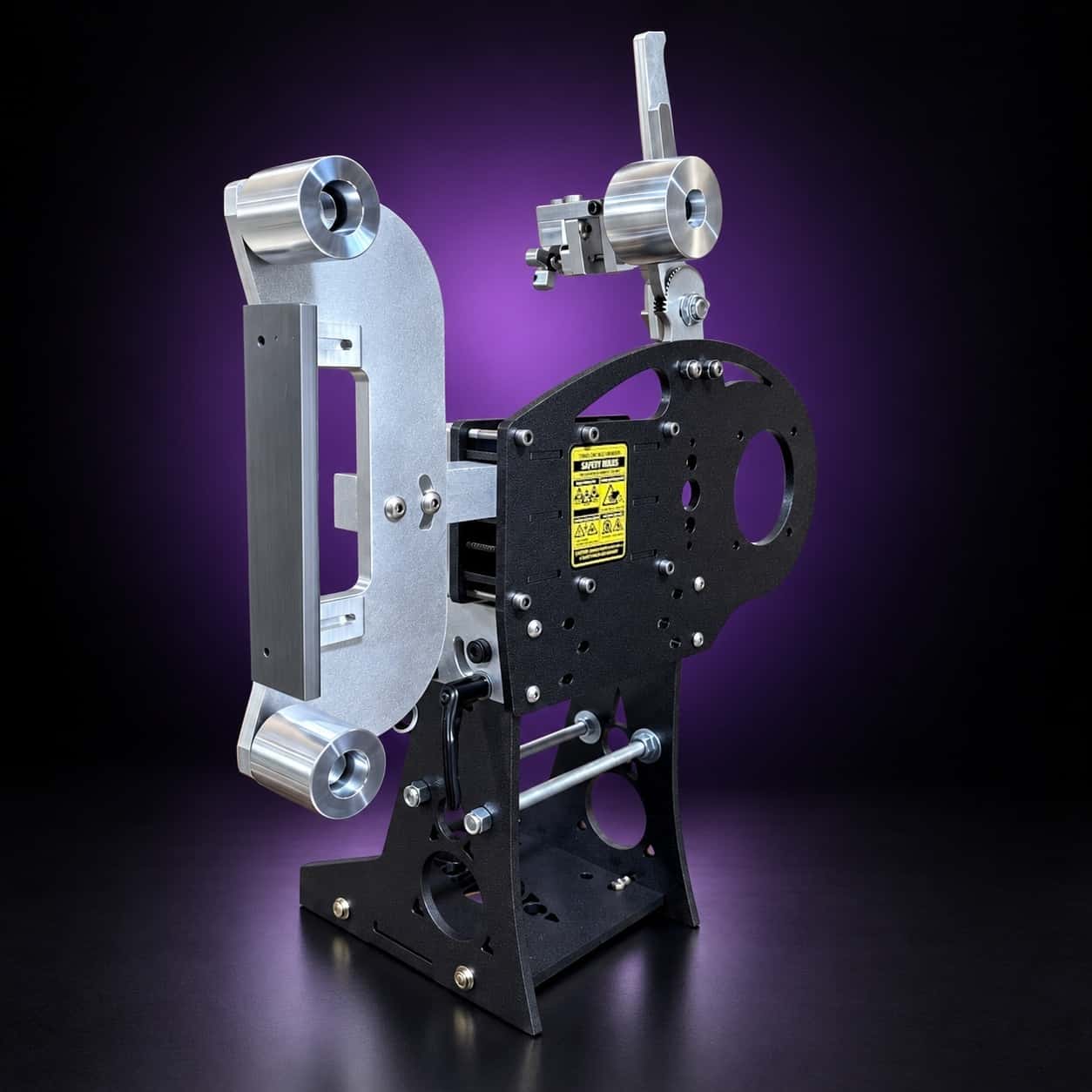
Current dual-axis platform with a steel chassis, more mass and less vibration.
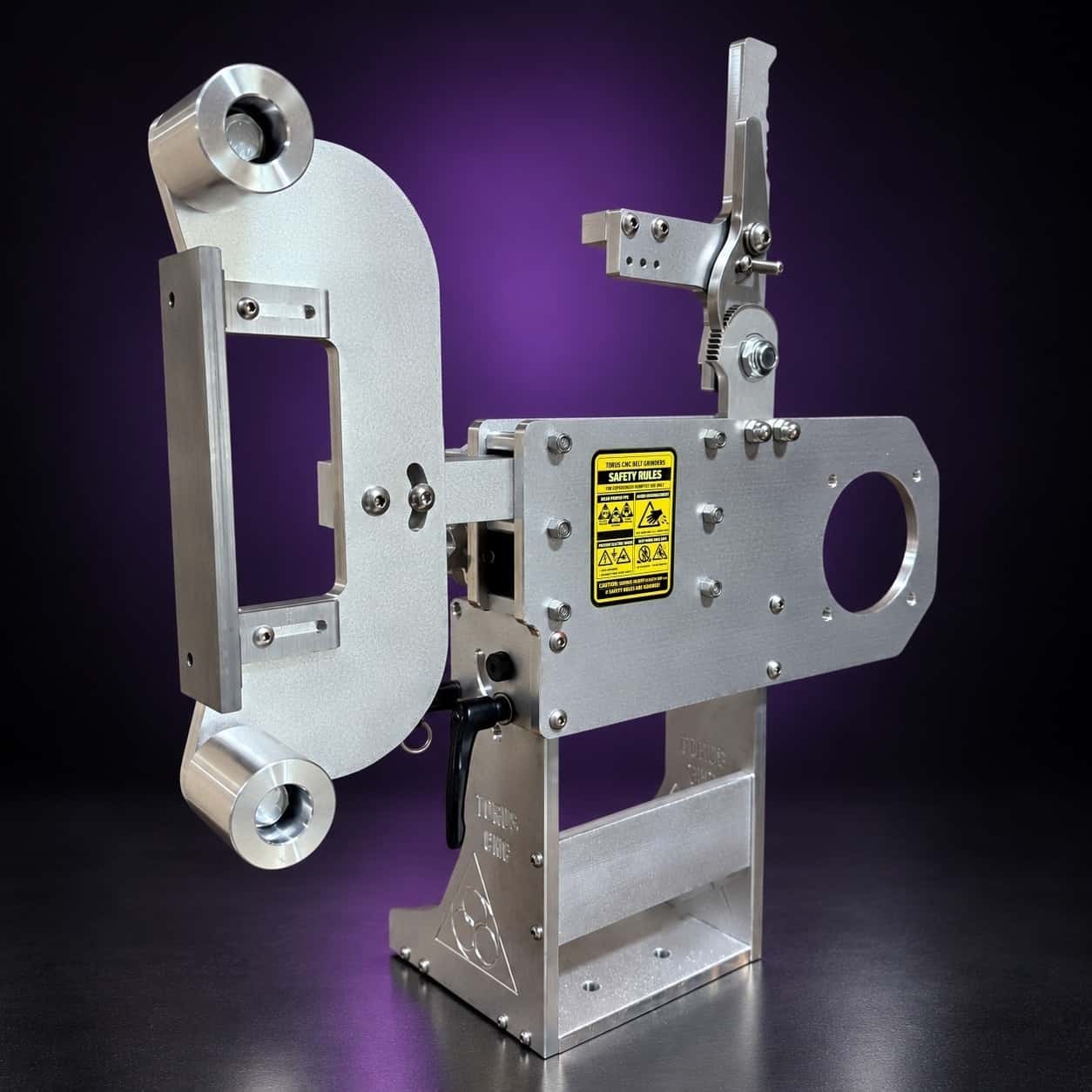
Prior-design aluminum chassis, 90-degree tilt and 1.5-inch tooling arms.
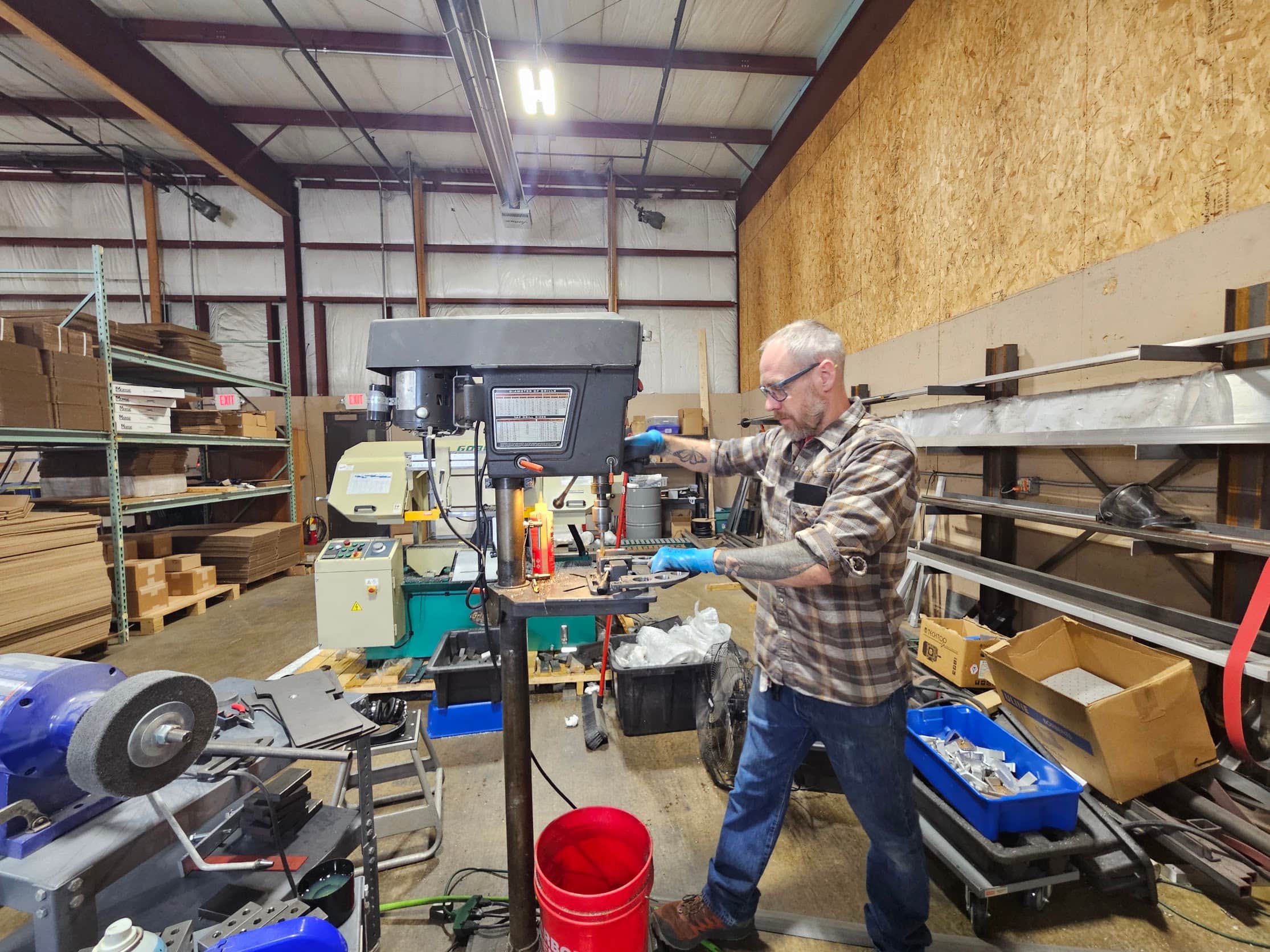
One-man shop
I answer my own email. Tell me the steel, the machine and what it is doing, and I will tell you what I would try next.