
Blade Design
Bevel Angles by Knife Type: The Working Chart
Every knife argument eventually lands on angles. Here is the chart we wish someone had handed us — edge angle per side, the grind that usually carries it…
Blade Design
Bushcraft blade geometry: a scandi at 11-12.5 degrees per side, when full flat wins, 3/32-1/8 inch stock, the 90-degree spine for ferro rods, and batoning.
2 min readWritten by Rich LinvilleFree to read
Bushcraft is the only knife category where the grind is practically a religion. The scandi faithful have a point: for controlled wood carving — feather sticks, notches, trap parts — a single bevel of 11 to 12.5 degrees per side riding flat on the wood gives feedback nothing else matches. The heresy also has a point: a full flat grind slices food, skins game and batons with less drama. Here is the geometry underneath the argument.
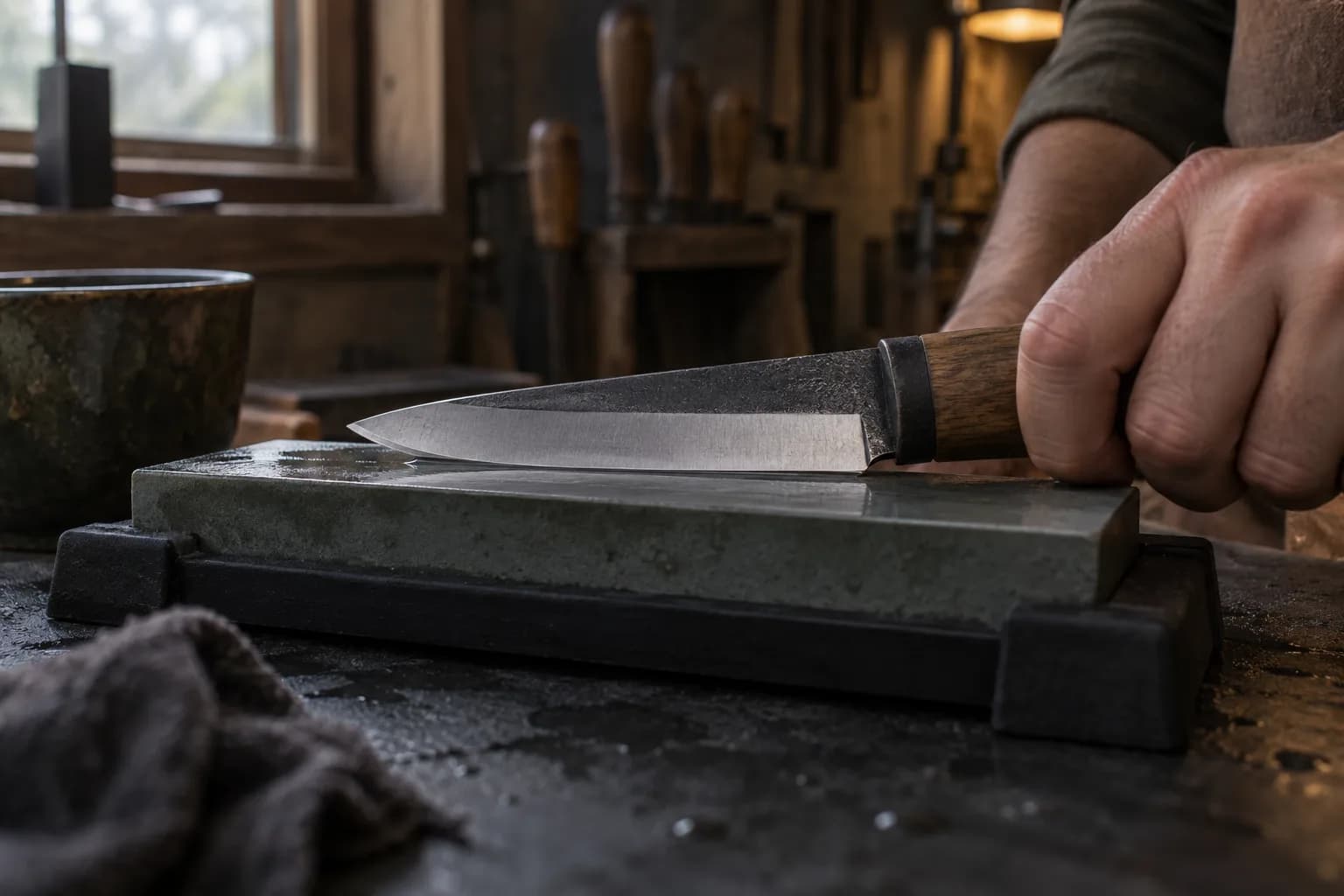
A scandi is a low sabre grind with no secondary bevel — the primary bevel IS the edge. At 11–12.5 dps it carves superbly and sharpens intuitively: lay the bevel on the stone and follow it. The costs are real: that wide bevel is slow steel-heavy sharpening, it wedges in deep cuts and food, and at carving angles the apex is delicate against staples and knots. Hard-use scandis run 15 dps and give back some of the carving magic.
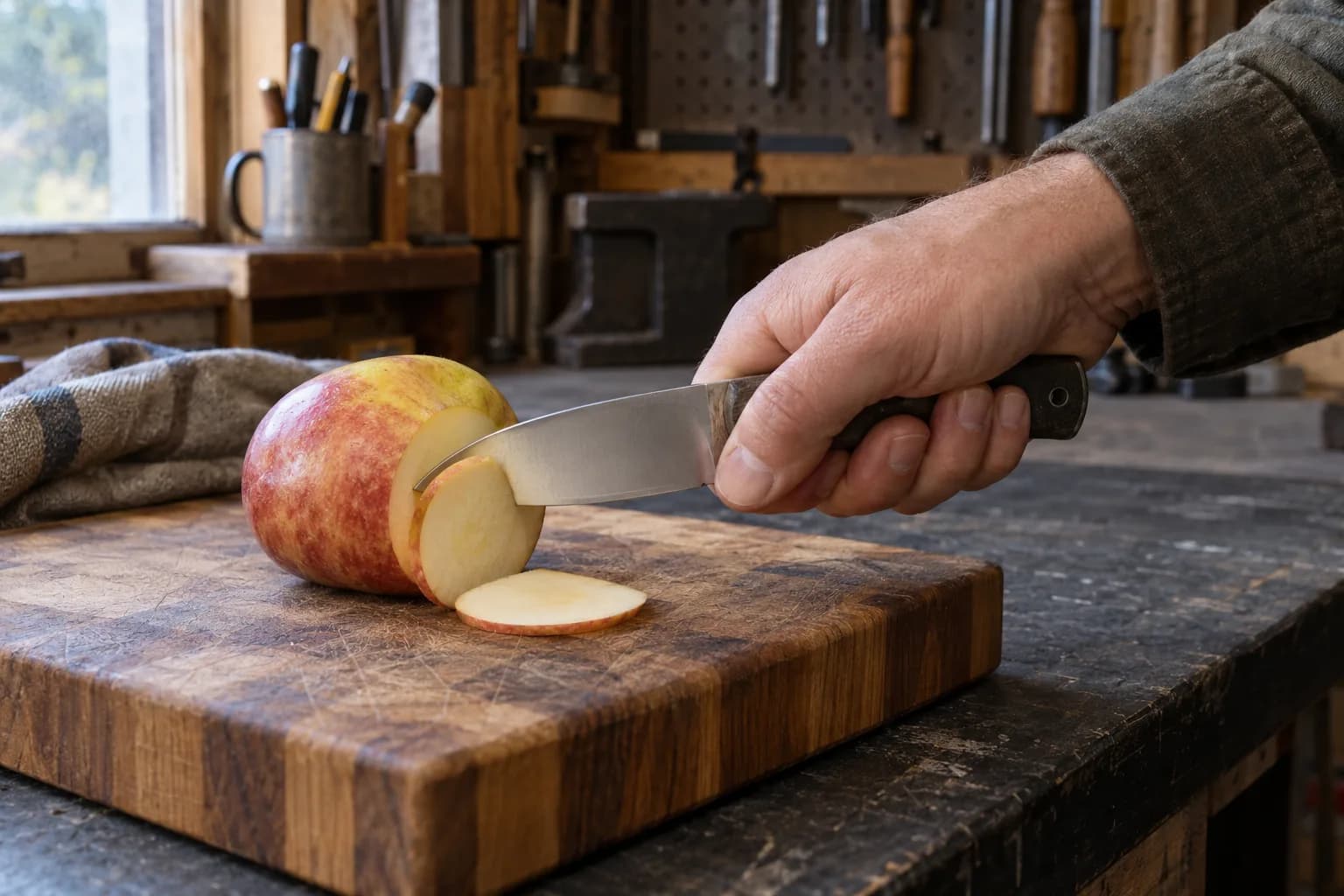
A full flat at 3/32–1/8 inch stock with a 15–18 dps secondary is the generalist answer: better slicer, easier fine-edge maintenance, still batons fine wood. It gives up the bevel-registration carving feel — that is the whole trade. Convex splits the difference for choppier bushcraft blades; see Blade Grind Types for the full family.
The bushcraft sweet spot is 3/32 to 1/8 inch — thick enough for prying honesty, thin enough to carve. The classic profile is a 3.5–4.5 inch drop point or spear point with a flat-enough belly for planing cuts and a point that drills. Beyond 5 inches you are building a camp knife, which is a different geometry conversation.
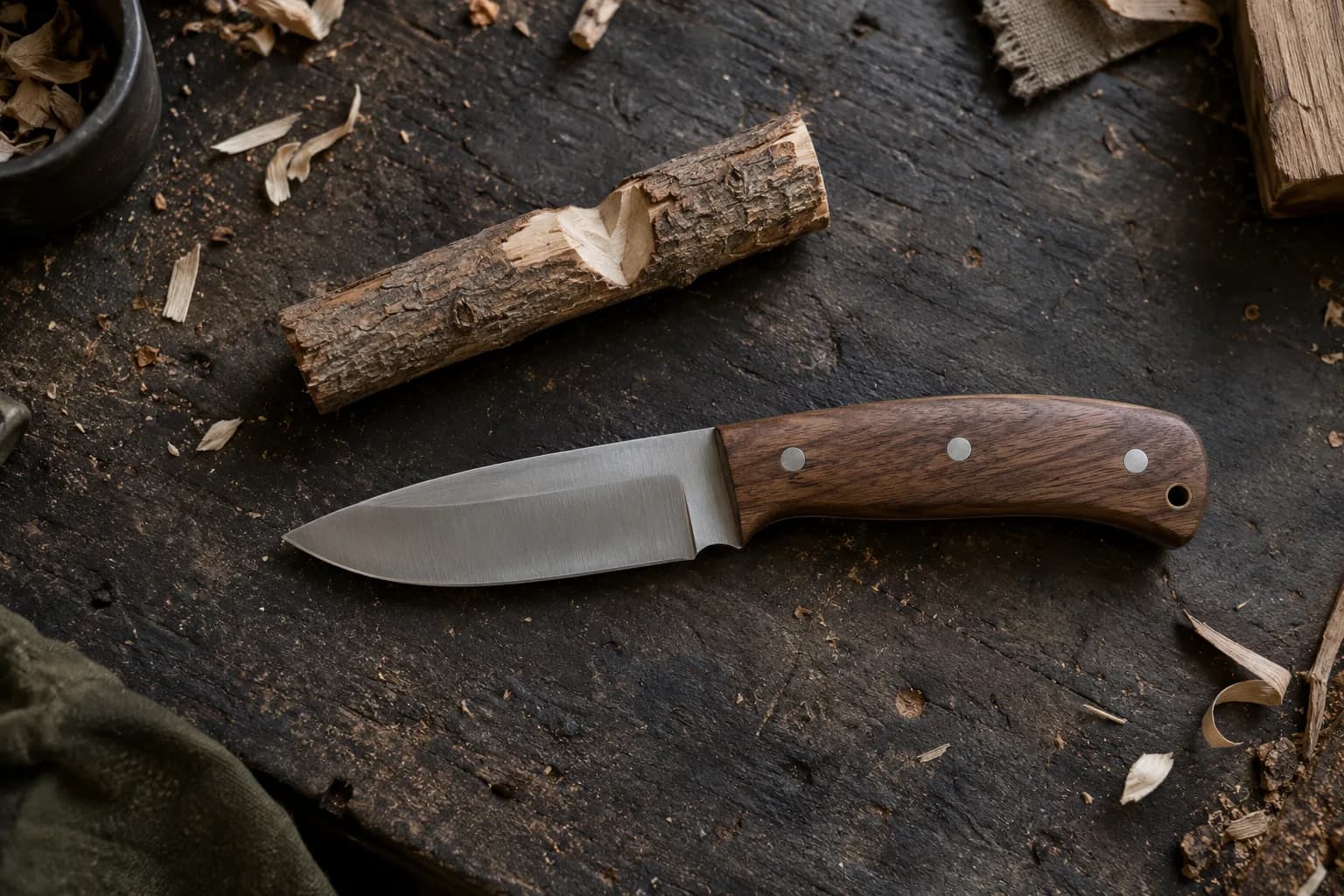
A bushcraft signature worth building deliberately: leave the spine crisp and square — a true 90-degree corner — instead of easing it. That corner throws ferro-rod sparks and scrapes fatwood and bark better than most dedicated tools, and it costs one careful pass on the platen. Ease only the thumb ramp area for comfort. It is the cheapest feature you will ever add.
Tough carbon steels own this category: 80CrV2, 8670 and 1084 all hold scandi edges through wood contact and sharpen in the field. Stainless buyers get honest service from 14C28N at bushcraft angles.
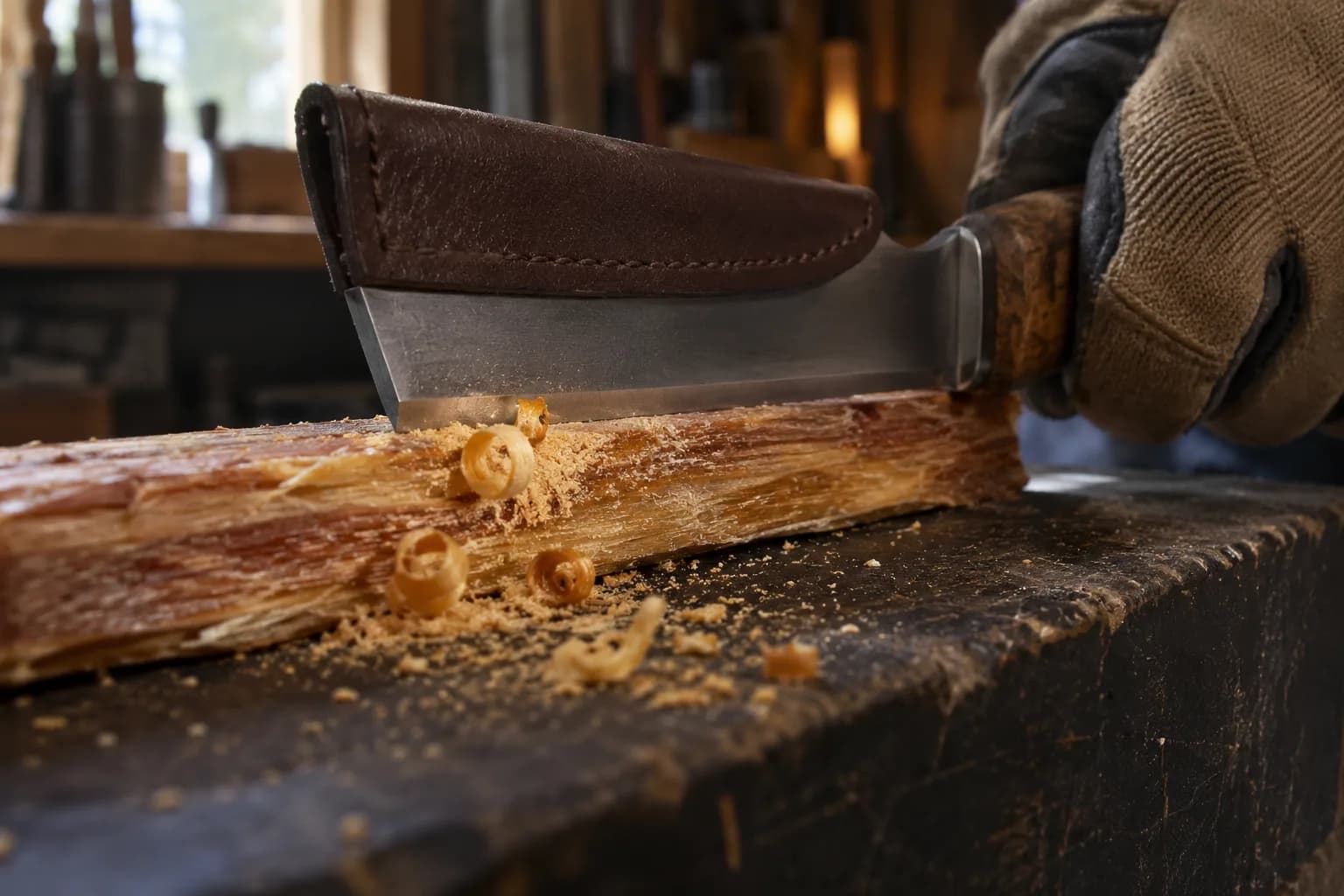
Geometry for batoning survival: 15 dps minimum at the edge, full tang, and a spine unhardened or drawn soft — the differential ideas in our differential hardening guide apply to working blades, not just art. A 12-dps carving scandi through a knotty round is how YouTube knife-fail compilations get made.
Keep reading
Three more from the same bench.
Every knife argument eventually lands on angles. Here is the chart we wish someone had handed us — edge angle per side, the grind that usually carries it…
The grind is the cross-sectional shape of a blade, how the flat stock gets thinned down from spine to edge, and it affects cutting performance, edge…
Two knives can share the same steel, grind type, and blade shape and still perform completely differently, because of stock thickness and how that…
Same bench
I machine the parts, hand-assemble, track and test Torus grinders in Sterling, Illinois. Most orders ship in seven to ten business days from time of order.
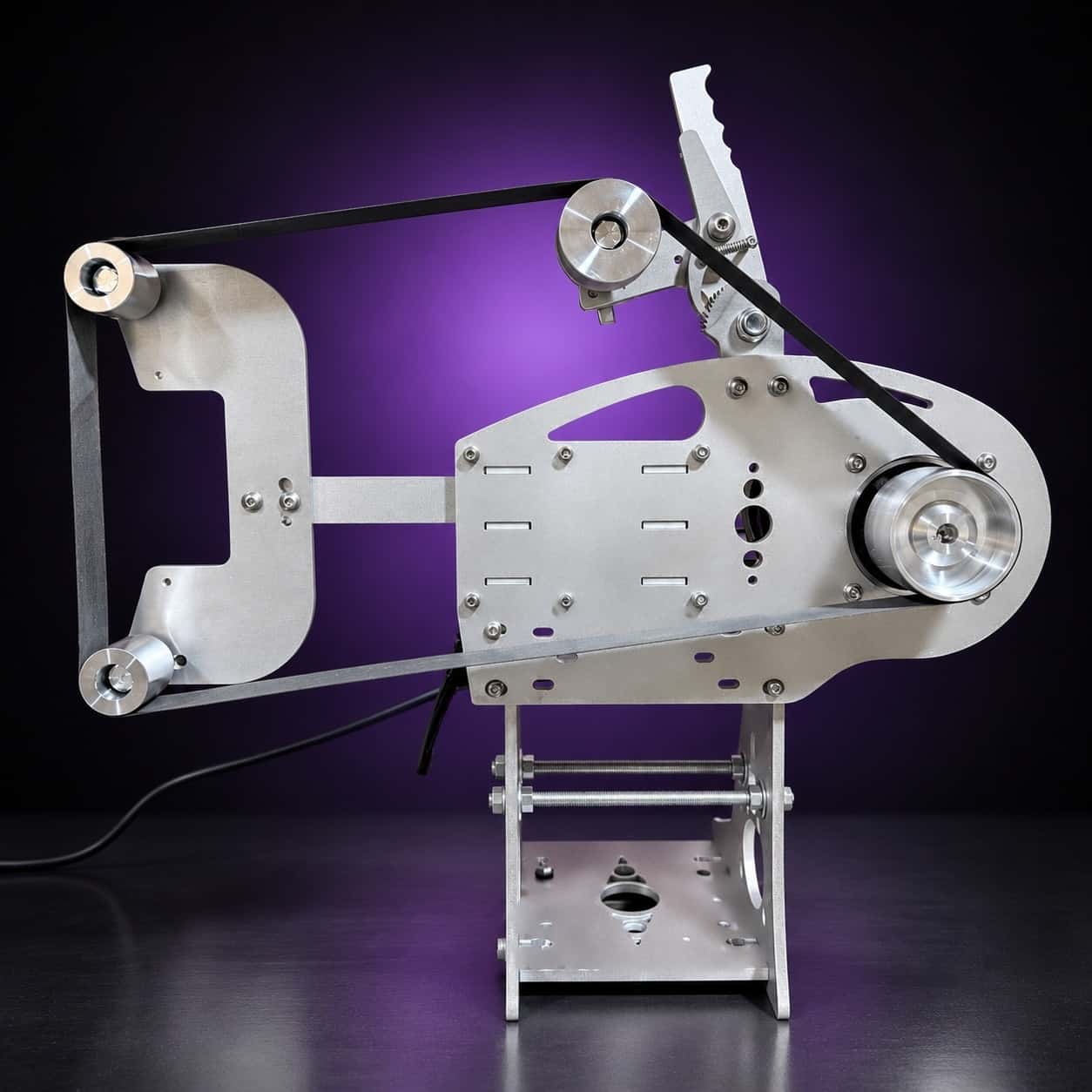
Current dual-axis platform with a fiber-laser-cut 6061 chassis and single-knob tracking.
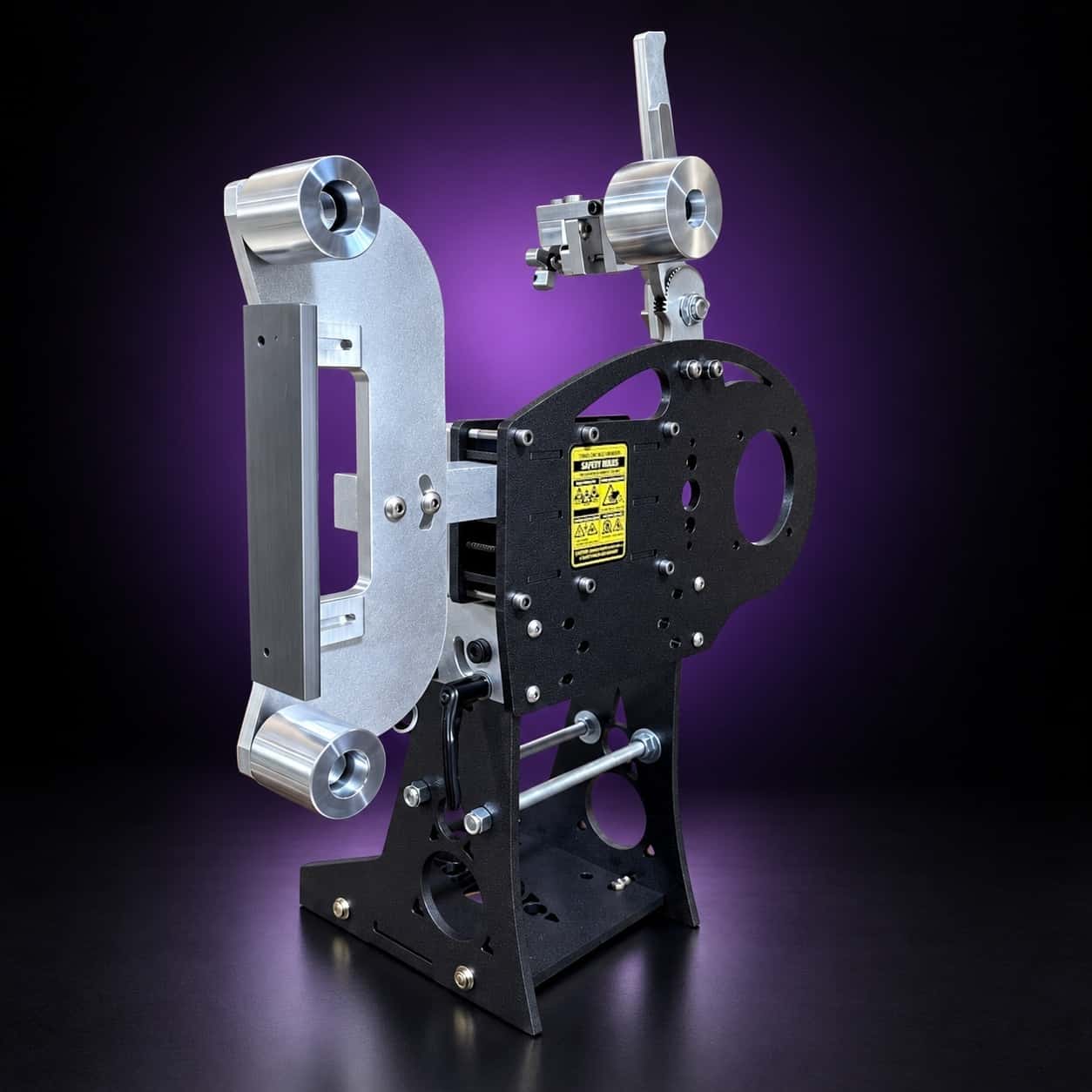
Current dual-axis platform with a steel chassis, more mass and less vibration.
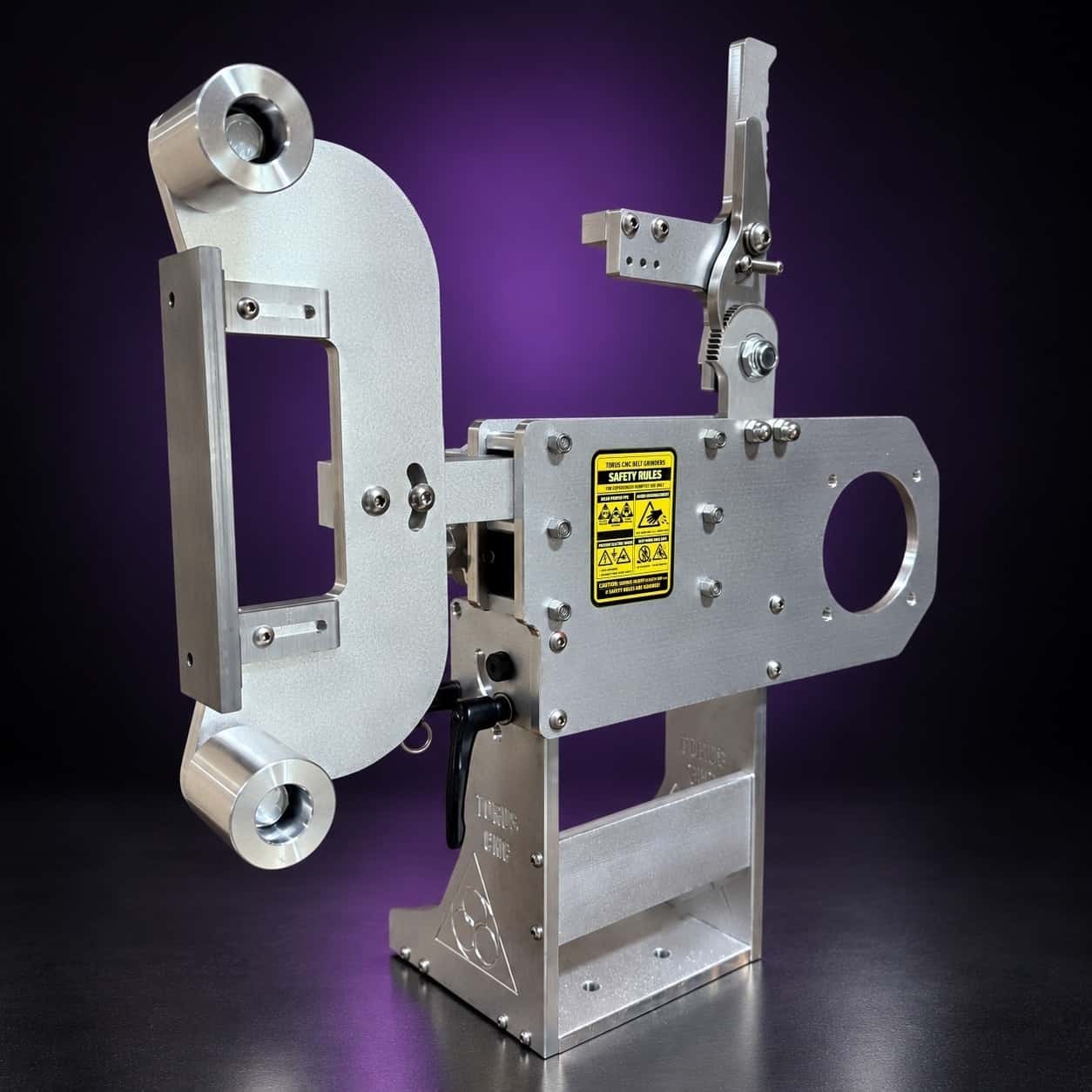
Prior-design aluminum chassis, 90-degree tilt and 1.5-inch tooling arms.
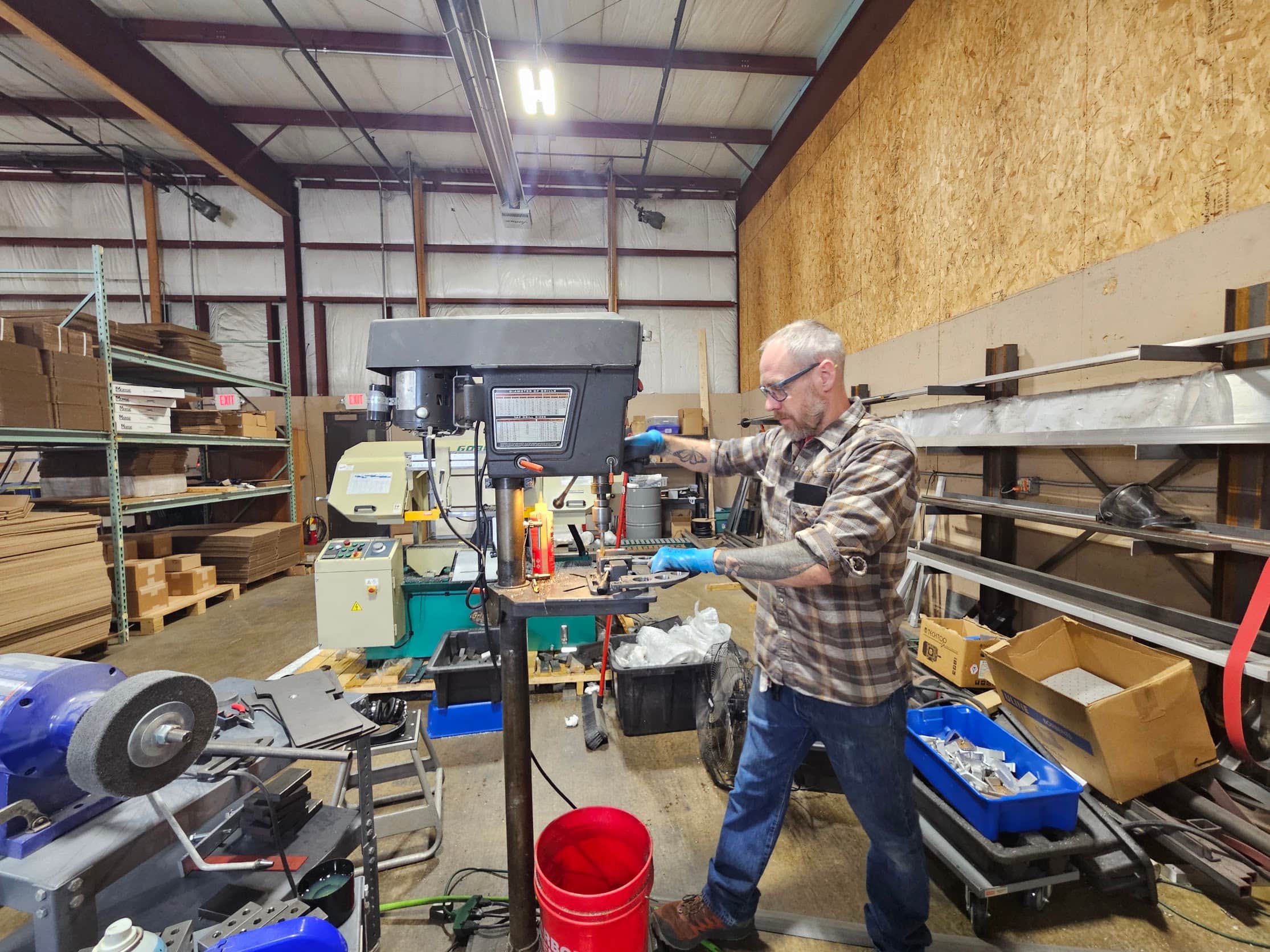
One-man shop
I answer my own email. Tell me the steel, the machine and what it is doing, and I will tell you what I would try next.