
Blade Design
Bevel Angles by Knife Type: The Working Chart
Every knife argument eventually lands on angles. Here is the chart we wish someone had handed us — edge angle per side, the grind that usually carries it…
Blade Design
Tactical blade geometry without the marketing: tanto tips, compound grinds and recurves, the pry-bar question, coatings and utility patterns that earn it.
2 min readWritten by Rich LinvilleFree to read
No knife category carries more marketing per ounce than “tactical,” so this guide does the unfashionable thing and talks geometry. Under the black coating, a tactical or hard-use utility blade is a set of honest engineering trades — tip strength against precision, edge durability against slicing, one-tool-does-all against doing anything well.
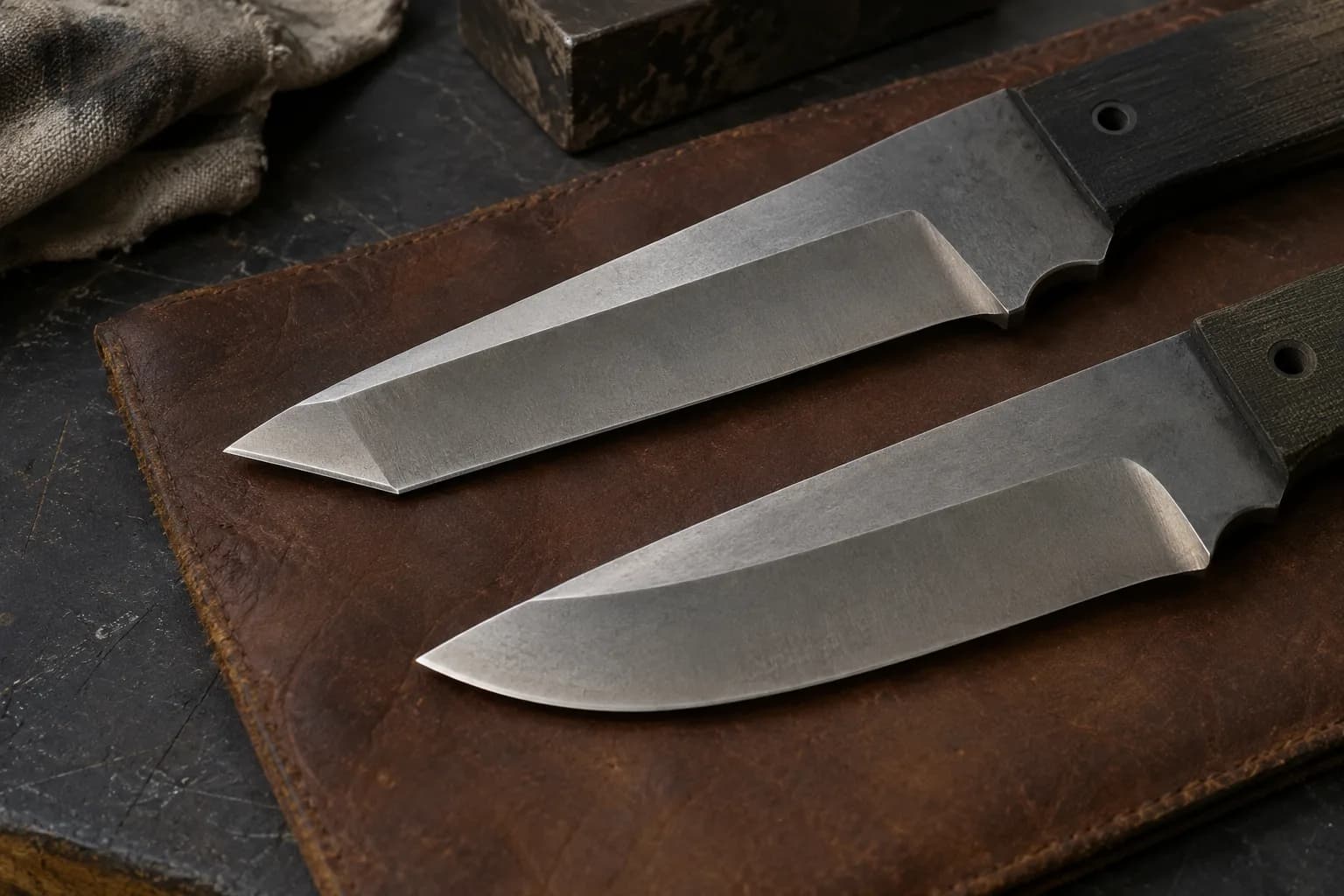
The Americanized tanto — flat main edge, angular secondary point edge, thick spine carried to the tip — genuinely delivers one thing: a massively reinforced tip that survives stabbing into and prying against hard media. The cost is honest too: the angular transition is awkward to sharpen, the missing belly gives up slicing and any skinning pretensions, and the famous piercing profile mostly pierces packaging. As a working choice it suits scraping, digging and abuse-forward roles; as a general blade it is a specialist sold as a generalist. Compare the drop point doing 90 percent of the same work with a full belly attached.
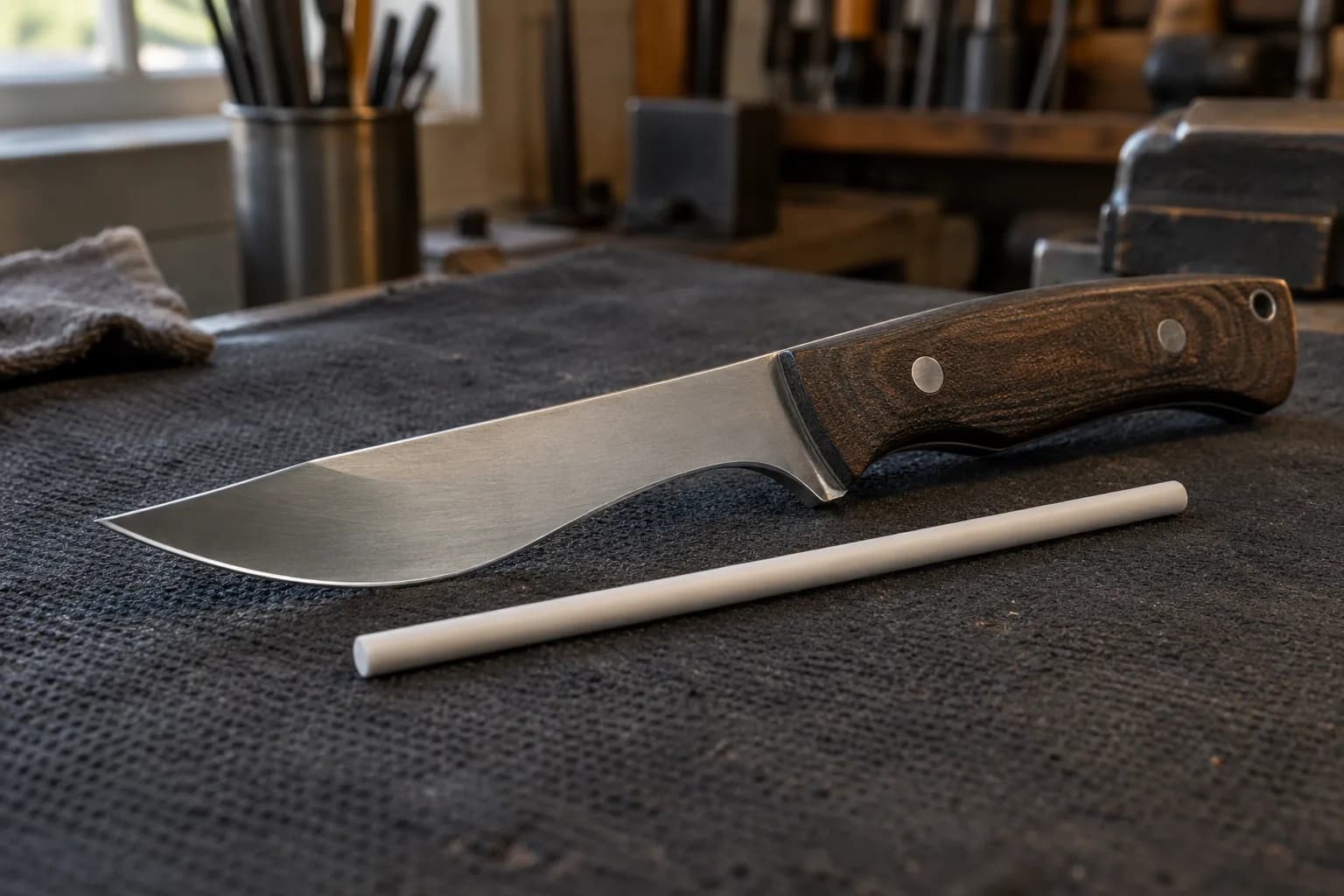
Compound edges — steeper near the guard for hard work, finer toward the tip for cutting — are the thinking version of the tactical promise, and they grind naturally on a 2×72 by varying pressure zones. Recurved edges load the cut like a shallow hawkbill and slice rope wickedly; they also demand rods or small-diameter stones forever after. Both are legitimate; both should be chosen by the sharpener who will maintain them.
Hard-use buyers will pry. Geometry that survives it: 3/16 stock, sabre grind for spine stiffness, 20–22 dps edge, drop or tanto tip with meat behind it, and a tough steel — CPM 3V, CruWear, 8670 on a budget — at restrained hardness. What no geometry survives is the side load on a hollow-ground thin blade; if the spec sheet says pry, the grind says sabre.
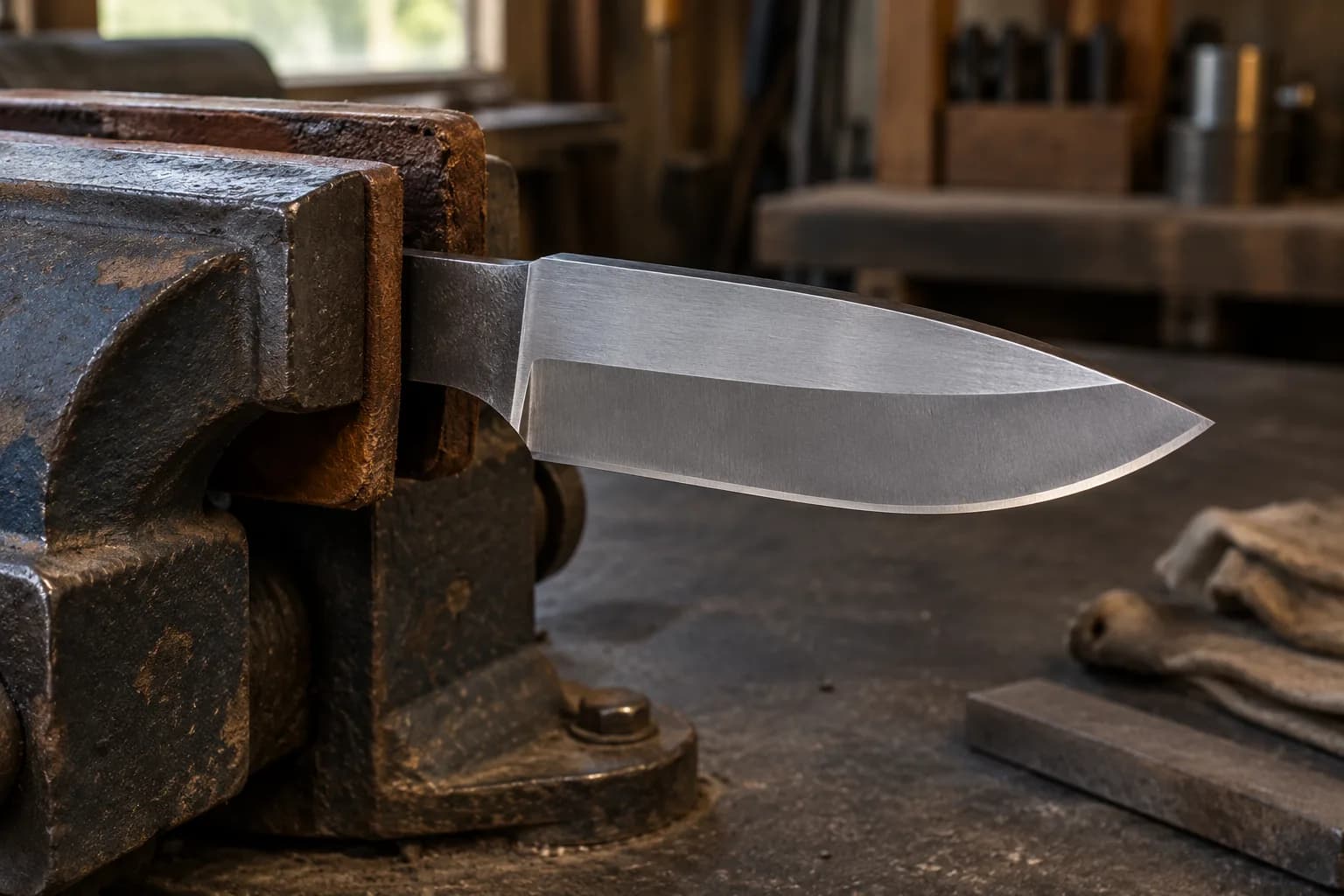
The quiet heroes of this category are utility shapes: wharncliffe and sheepsfoot blades whose straight edges cut strapping and open boxes with the tip never pointed at anything soft, spear points splitting the difference, and 90-degree spines (borrowed from bushcraft practice) that scrape and spark. A working utility fixed blade at 1/8 stock, full flat, 18–20 dps outcuts every mall-ninja profile in daily reality.
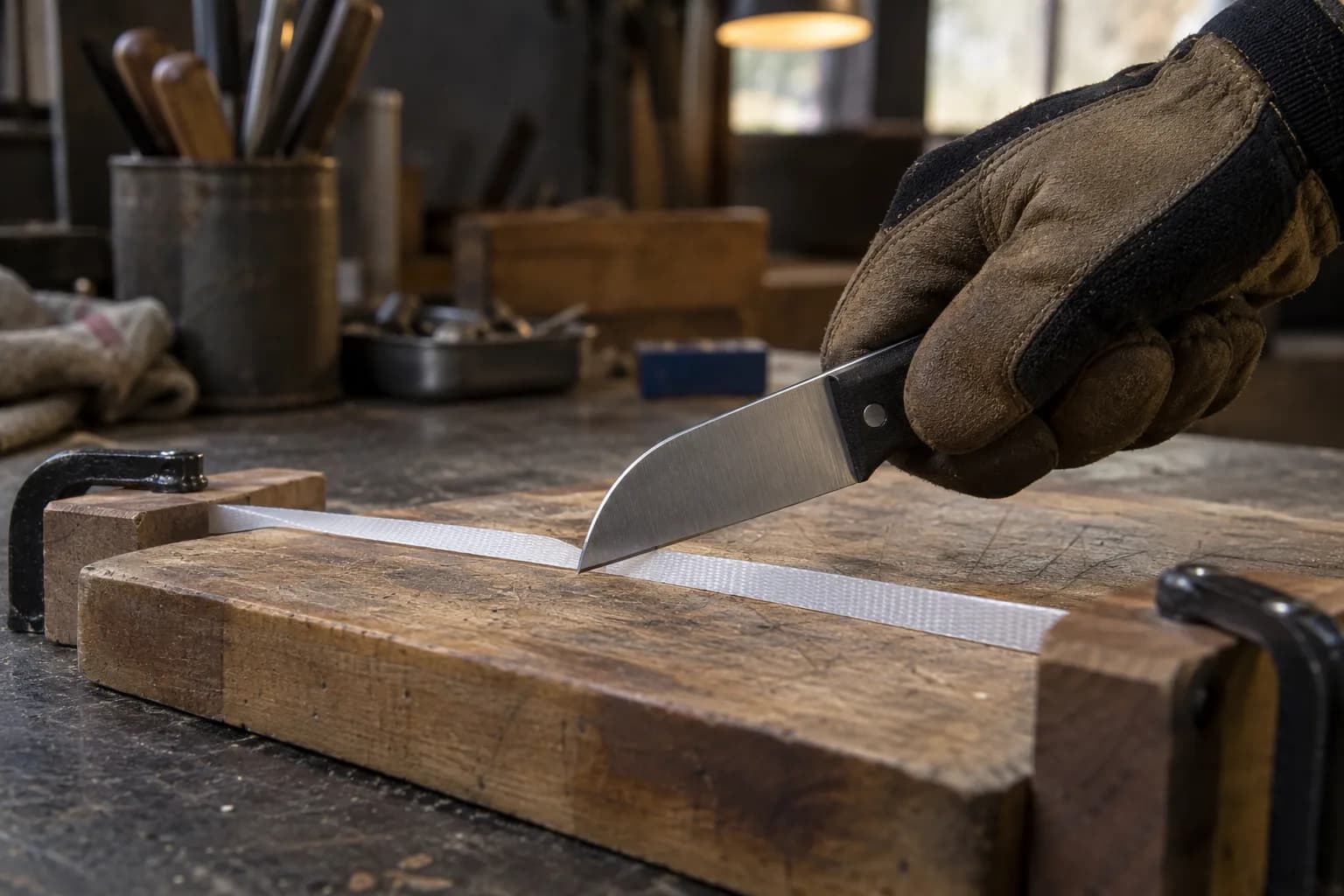
Coatings hide carbon steel’s rust honestly and add friction through cuts — a real trade, choose knowingly (finish options in Blade Finishes Explained). Partial serrations buy rope-cutting aggression and cost you the sharpening simplicity of a plain edge; on short blades they mostly cost. Geometry first, dress-up second.
Keep reading
Three more from the same bench.
Every knife argument eventually lands on angles. Here is the chart we wish someone had handed us — edge angle per side, the grind that usually carries it…
An EDC blade leads the hardest life in the knife world: cardboard by the mile, plastic strapping, food at lunch, a staple it never saw coming — owned by…
The final surface finish on a blade is more than cosmetic, it affects corrosion resistance, how scratches show up over time, and how much grinding and…
Same bench
I machine the parts, hand-assemble, track and test Torus grinders in Sterling, Illinois. Most orders ship in seven to ten business days from time of order.
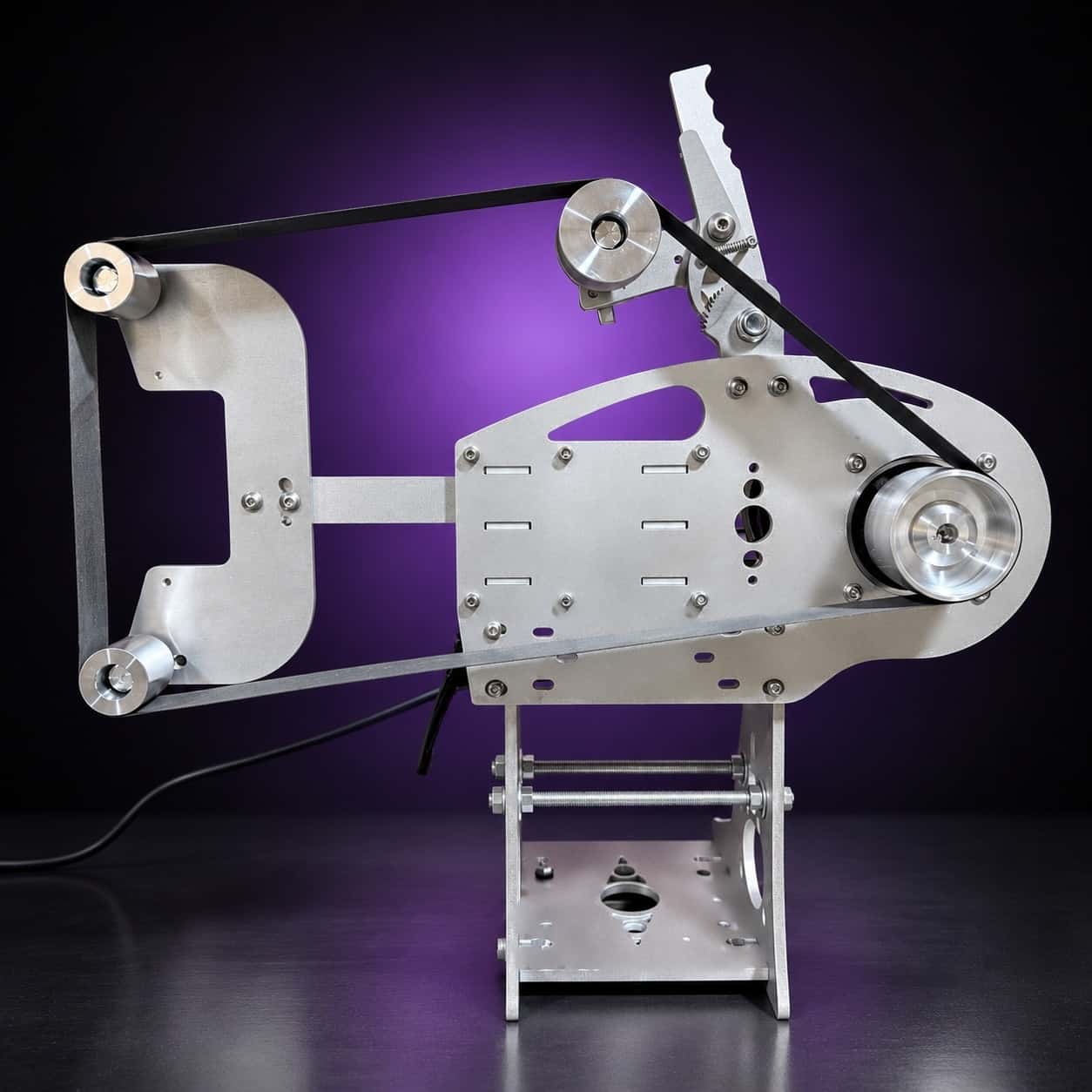
Current dual-axis platform with a fiber-laser-cut 6061 chassis and single-knob tracking.
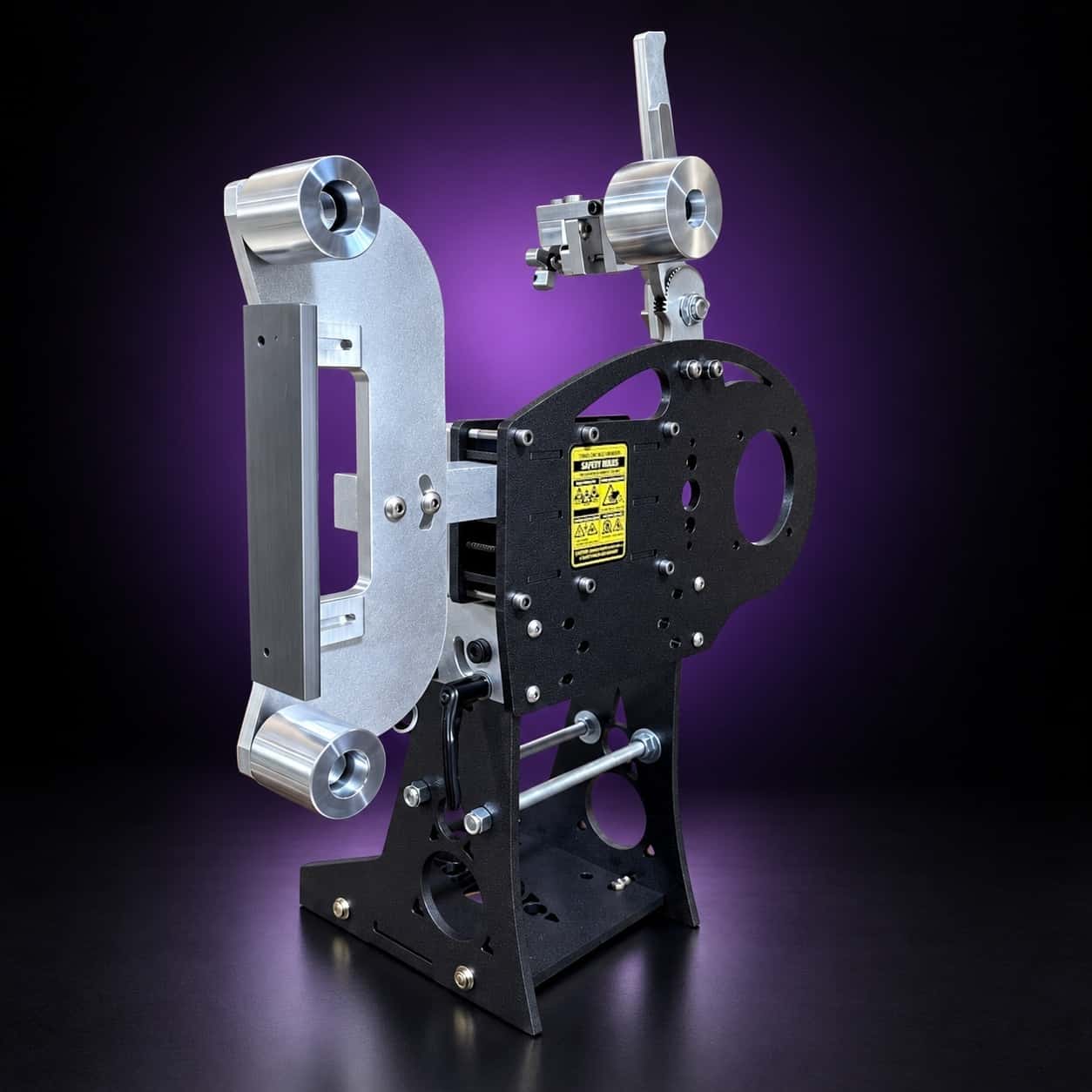
Current dual-axis platform with a steel chassis, more mass and less vibration.
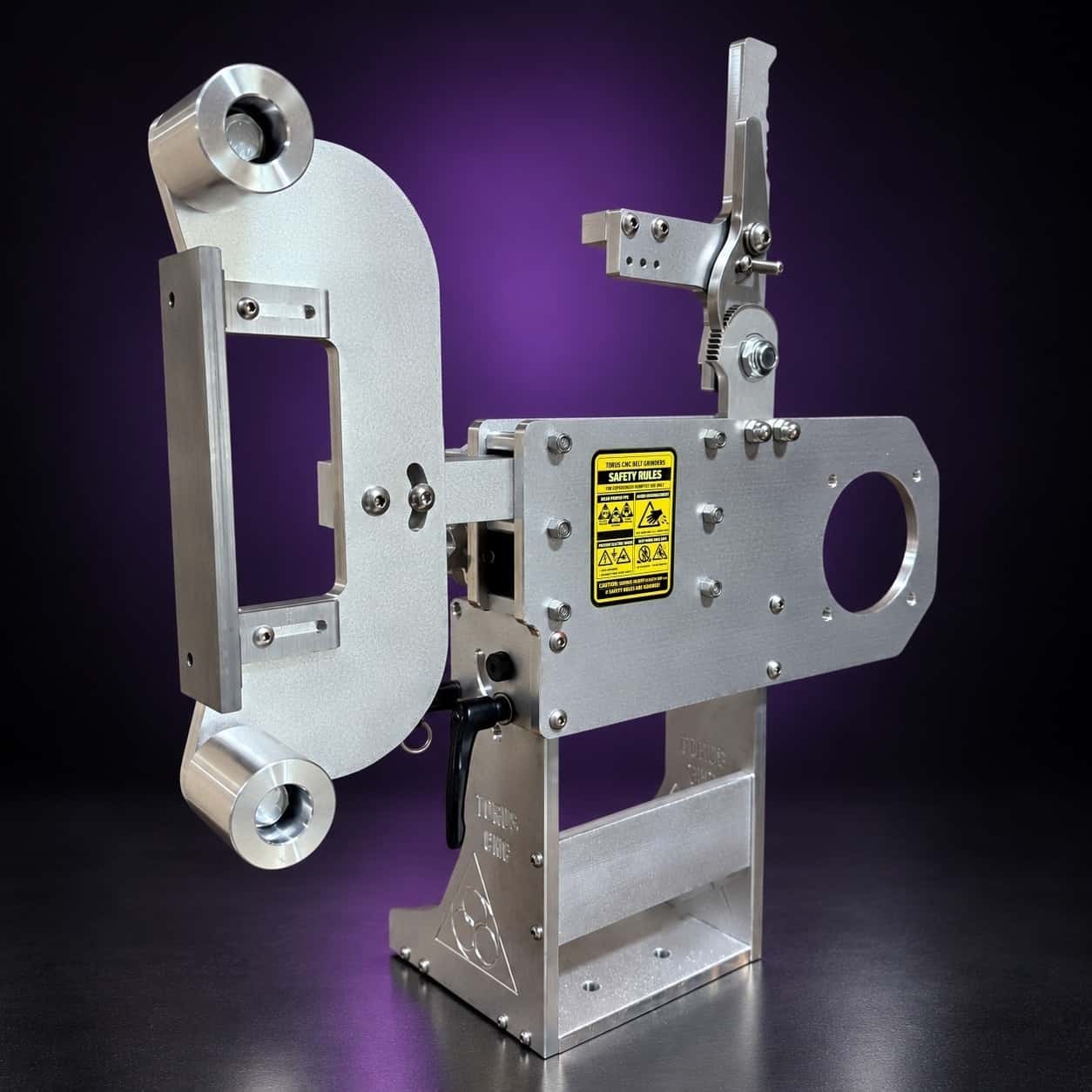
Prior-design aluminum chassis, 90-degree tilt and 1.5-inch tooling arms.
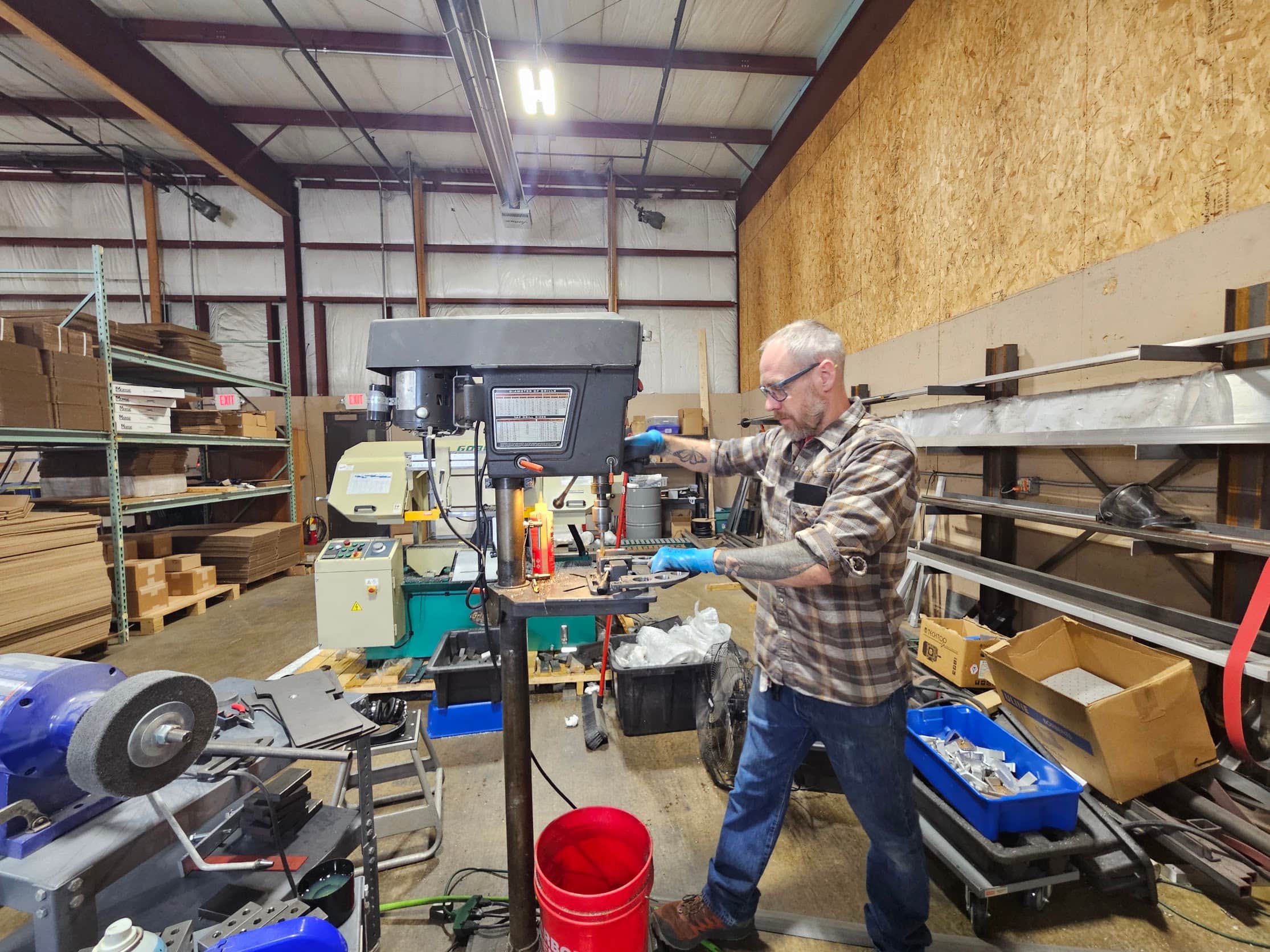
One-man shop
I answer my own email. Tell me the steel, the machine and what it is doing, and I will tell you what I would try next.