

Blade Design
Bevel Angles by Knife Type: The Working Chart
Every knife argument eventually lands on angles. Here is the chart we wish someone had handed us — edge angle per side, the grind that usually carries it…
Blade Design
A microbevel is 2-3 light passes per side at 1-3 degrees steeper: how it toughens a thin edge, how back bevels work, and when to skip the whole idea.
2 min readWritten by Rich LinvilleFree to read
The single highest-leverage trick in edge geometry costs three passes on a fine stone: the microbevel. It lets a blade carry a thin, fast-cutting main bevel and a hairline of steeper insurance right at the apex — two angles doing two jobs, and the reason a well-set-up knife can cheat the chart in Bevel Angles by Knife Type.
Sharpen the edge bevel at, say, 15 degrees per side, then raise the angle 1–3 degrees for the final two or three light passes per side. The result is a micro-bevel a few thousandths wide: invisible without magnification, but the apex now carries 17-degree strength while the geometry behind it stays 15-degree thin. Cutting feel keeps the thin bevel’s speed; edge stability gets the steeper angle’s support. Nearly every production knife ships this way whether the marketing says so or not.
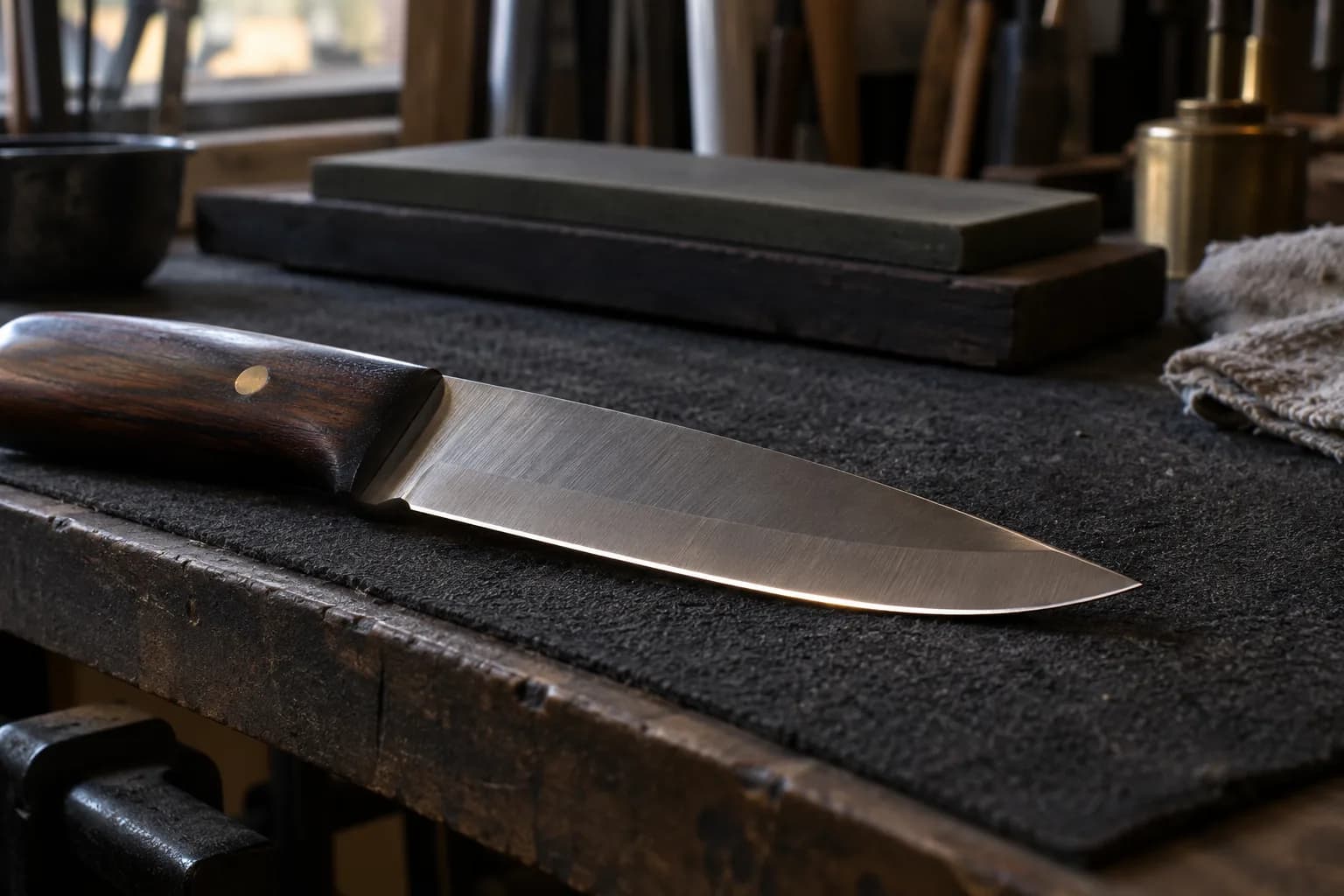
Edges fail at the apex — the last few microns fold, chip or wear. Strengthening only that zone buys most of the durability of a steeper edge at almost none of the cutting cost, because the wedge the material actually feels is the main bevel. It also transforms maintenance: a touch-up is three strokes on the micro, not a regrind of the whole bevel face. The steel’s toughness decides how much micro you need — fine tough steels (AEB-L, 14C28N) barely need one, chippy high-carbide edges are civilized by one.
The same logic runs in reverse. A back bevel (or relief grind) drops the angle BEHIND the edge — thinning a thick factory bevel from 22 to 15 dps, then micro-beveling the apex back to durability. This is the standard rescue for over-built knives and the honest description of what “thinning behind the edge” means at the stones rather than the grinder. Kitchen sharpeners live by it; the full geometry argument is in Kitchen Knife Bevel Angles.
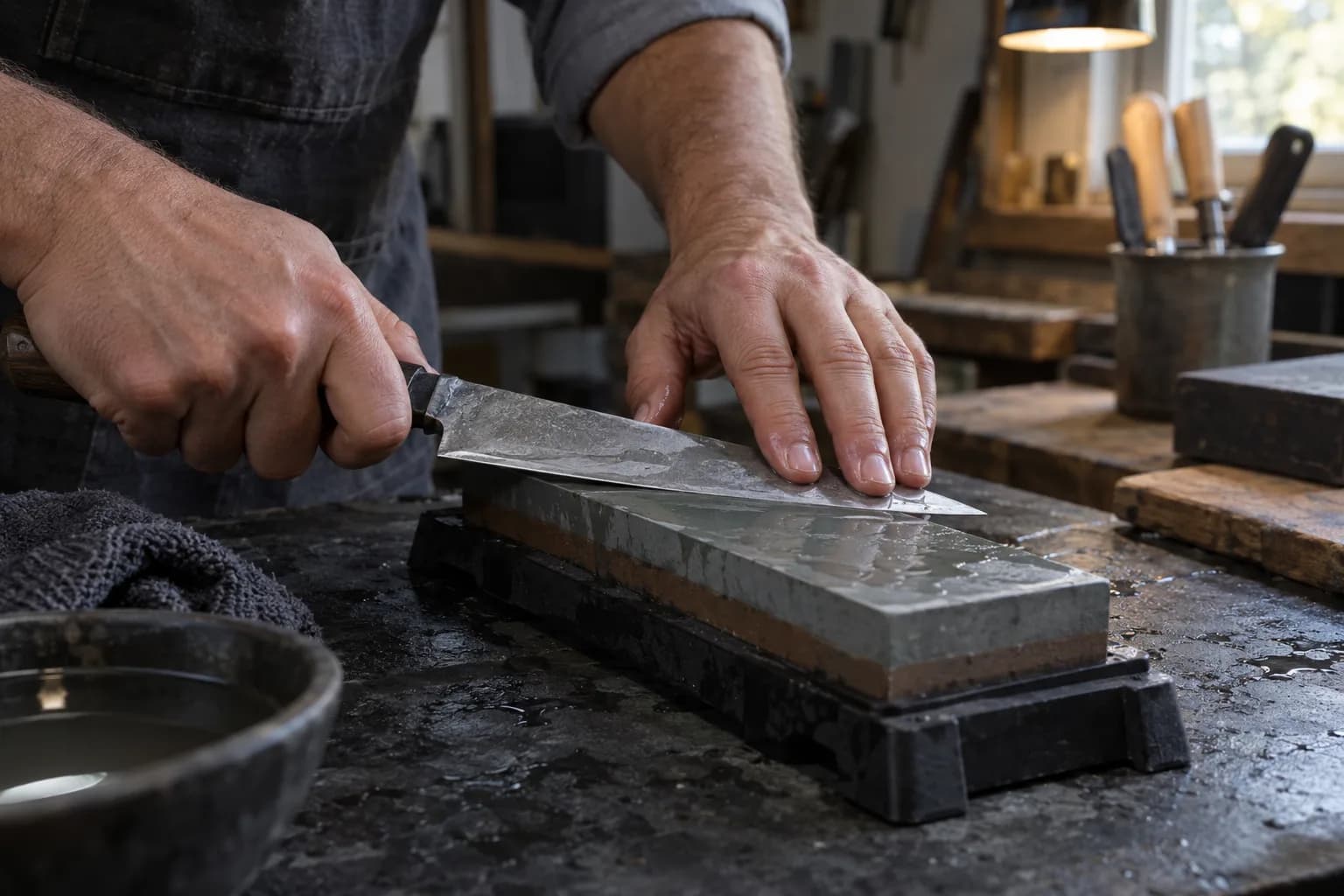
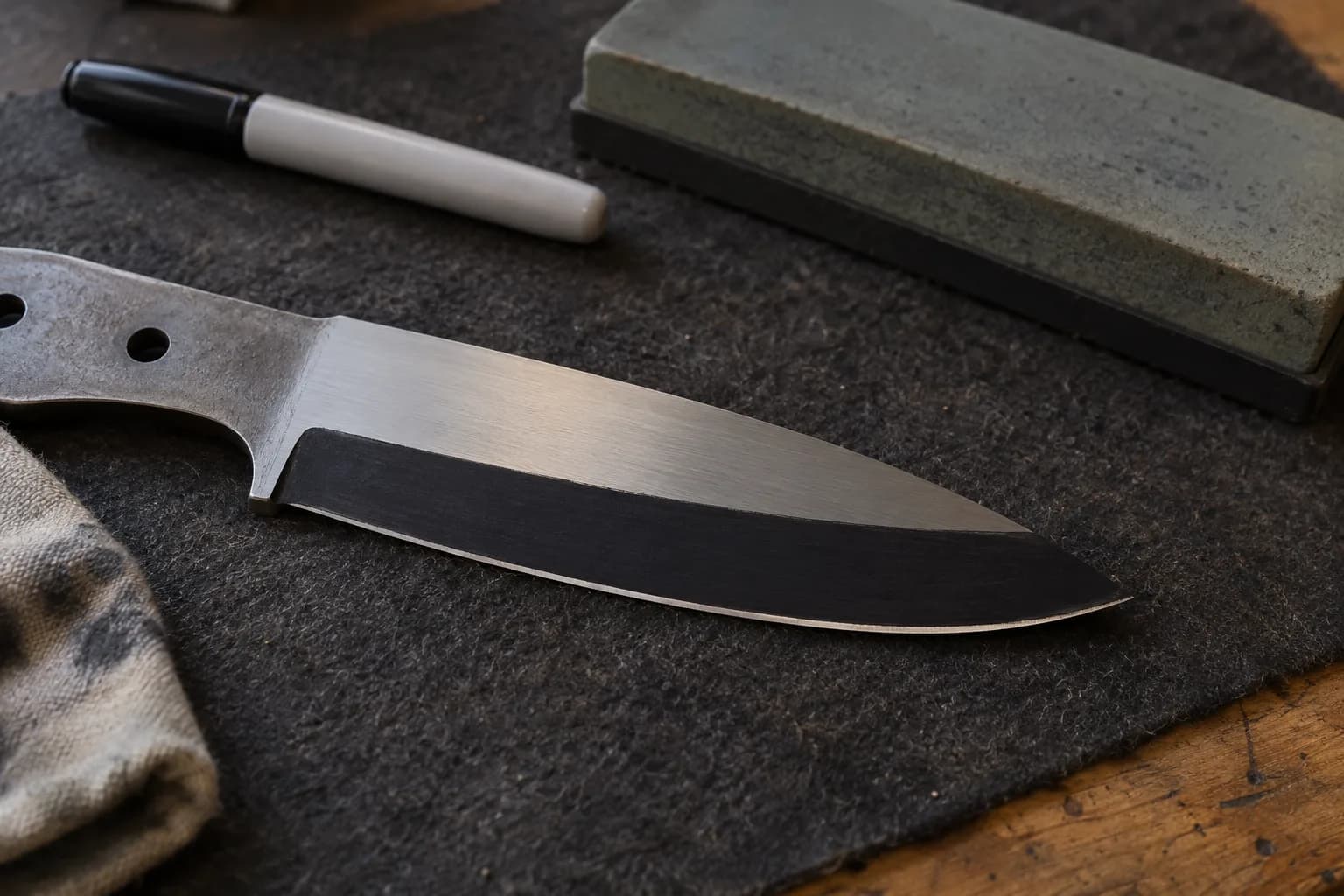
Freehand sharpeners drift 3–5 degrees without noticing, which makes the marker test the essential instrument: ink the bevel, one light pass, read where the ink survived. Ink gone at the shoulder — too shallow; gone at the apex only — too steep for the existing bevel (or exactly right, if a microbevel is the goal). An angle cube on the grinder platen and a wedge gauge at the stones close the loop between what you built and what you maintain, which is the whole sharpening system in one sentence.
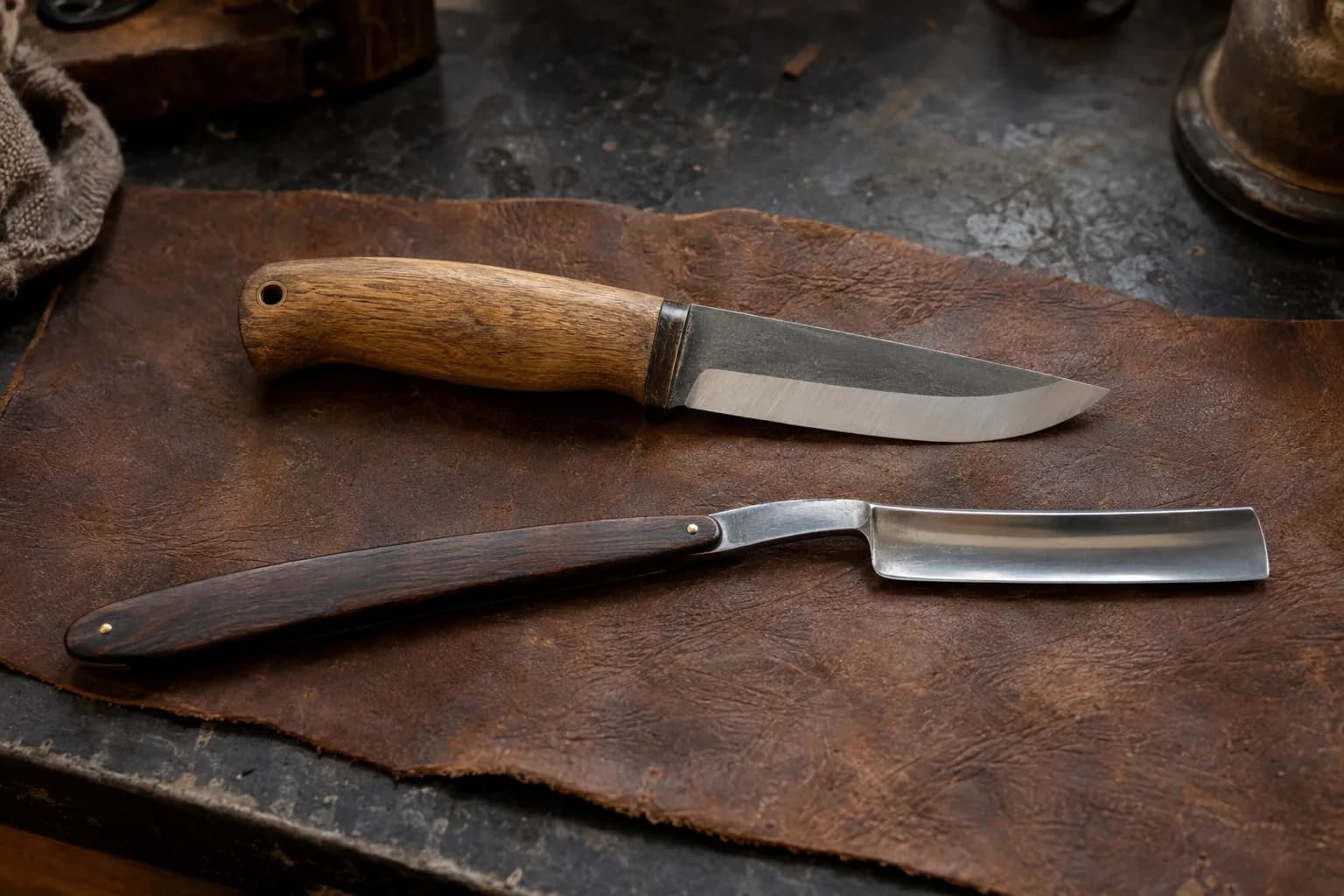
Scandi bushcraft edges (the flat bevel IS the reference — a micro breaks wood feel, though hard-use scandis take one anyway and pretend otherwise), straight razors (the strop is the microbevel), and chisel-ground blades where registration matters. Everywhere else, the three passes are free durability.
Keep reading
Three more from the same bench.
Every knife argument eventually lands on angles. Here is the chart we wish someone had handed us — edge angle per side, the grind that usually carries it…

Kitchen knives run the lowest working angles of any knife you will build, because their whole job is falling through food and their whole hazard list is a…

Sharpening is where knifemaking gets humbled: you can grind a flawless blade and still hand someone a knife that won’t slice paper. The good news …
Same bench
I machine the parts, hand-assemble, track and test Torus grinders in Sterling, Illinois. Most orders ship in seven to ten business days from time of order.

Current dual-axis platform with a fiber-laser-cut 6061 chassis and single-knob tracking.

Current dual-axis platform with a steel chassis, more mass and less vibration.

Prior-design aluminum chassis, 90-degree tilt and 1.5-inch tooling arms.

One-man shop
I answer my own email. Tell me the steel, the machine and what it is doing, and I will tell you what I would try next.