
Blade Design
Blade Thickness & Distal Taper: How They Affect Performance
Two knives can share the same steel, grind type, and blade shape and still perform completely differently, because of stock thickness and how that…
Blade Design
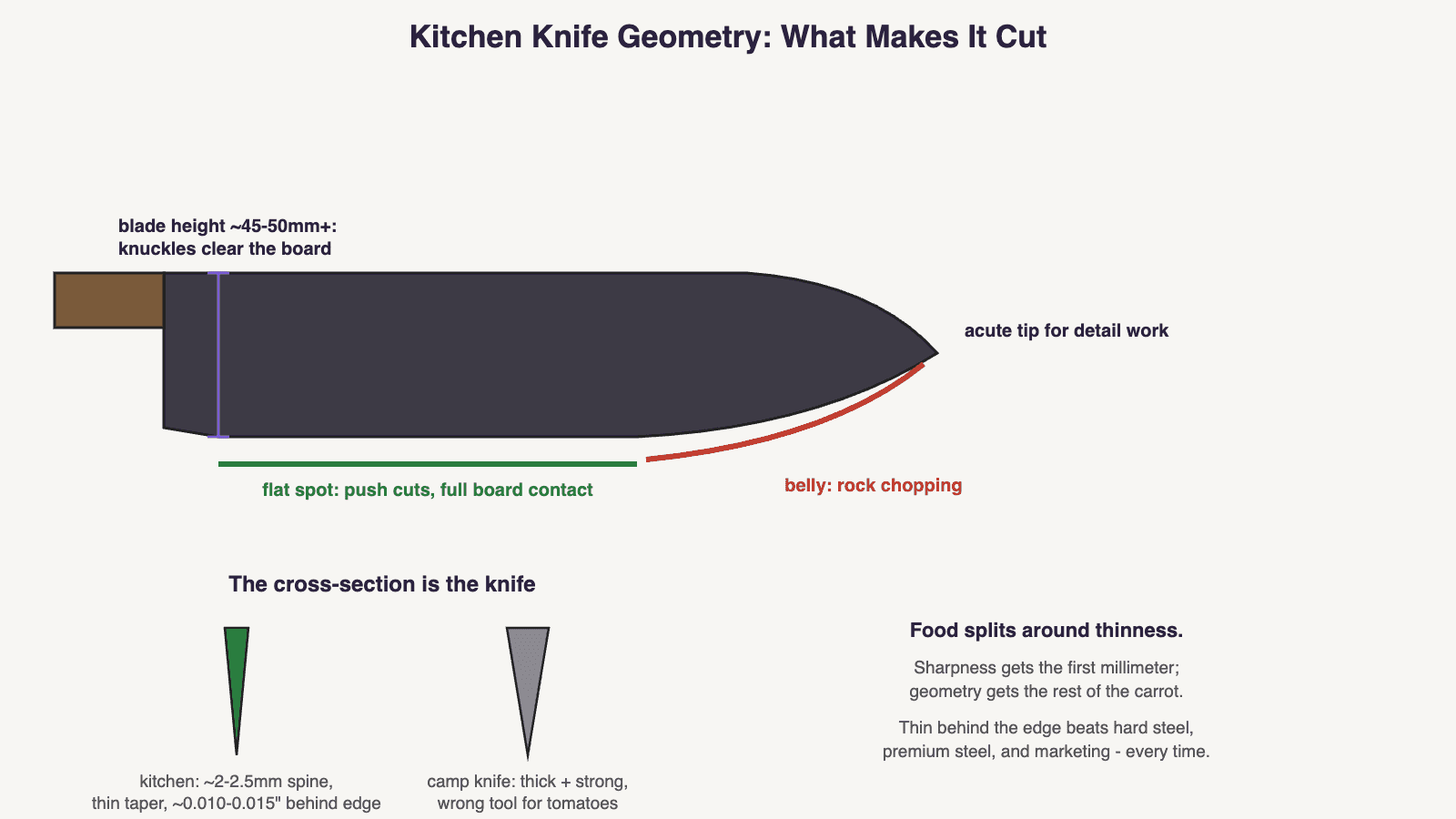
Making chef knives that actually cut: 0.010-0.015 inch behind the edge, spine thickness, knuckle clearance, flat spot vs. belly, steel picks.
3 min readWritten by Rich LinvilleFree to read
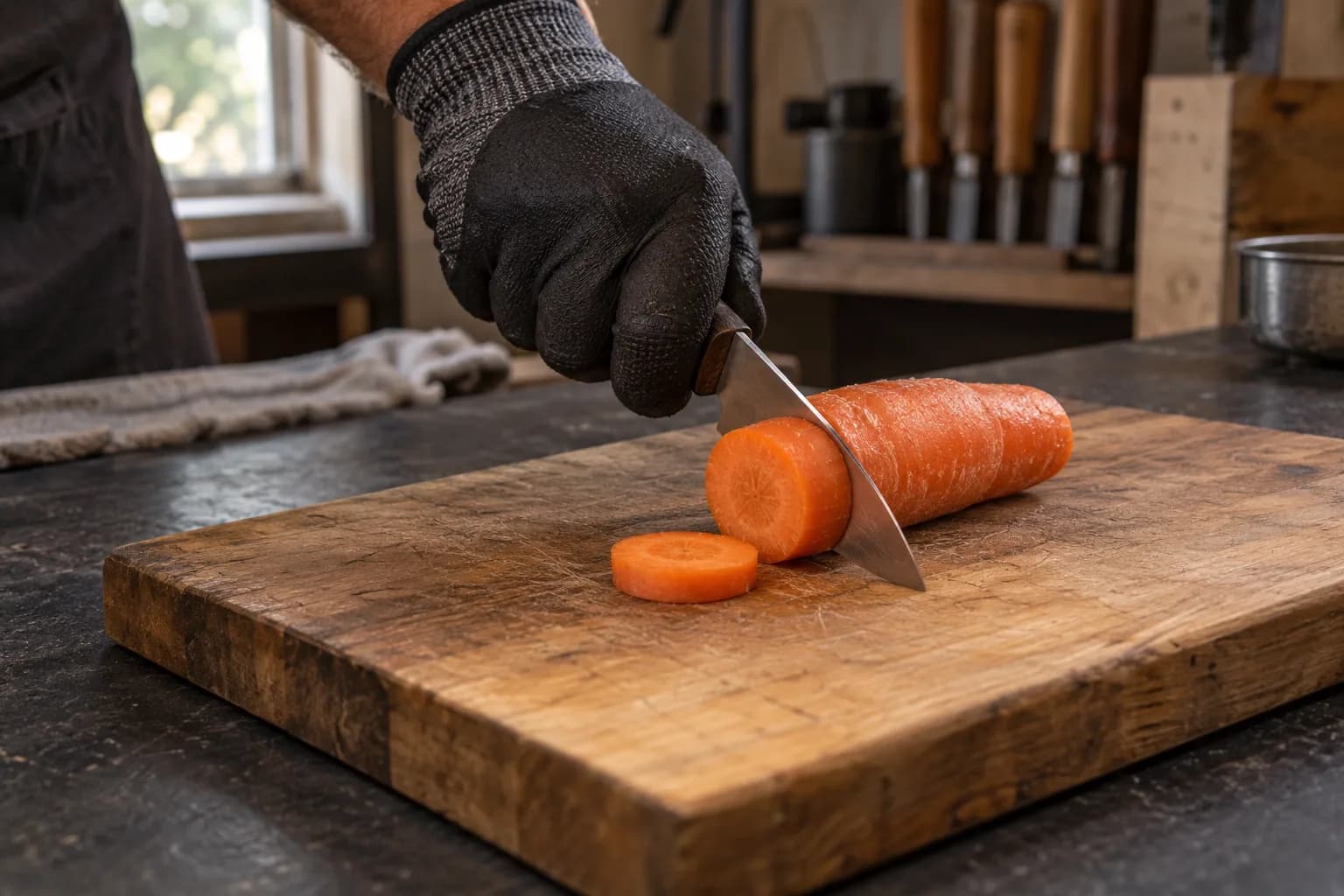
Kitchen knives are where blade geometry stops being theory and starts being dinner. A camp knife forgives a thick grind; a chef’s knife wedges apart a carrot and gets left in the drawer. The difference isn’t the steel and it isn’t even the sharpening — it’s geometry, and it’s why kitchen knives are simultaneously the easiest knives to grind (flat! thin! no guard!) and the hardest to grind well.
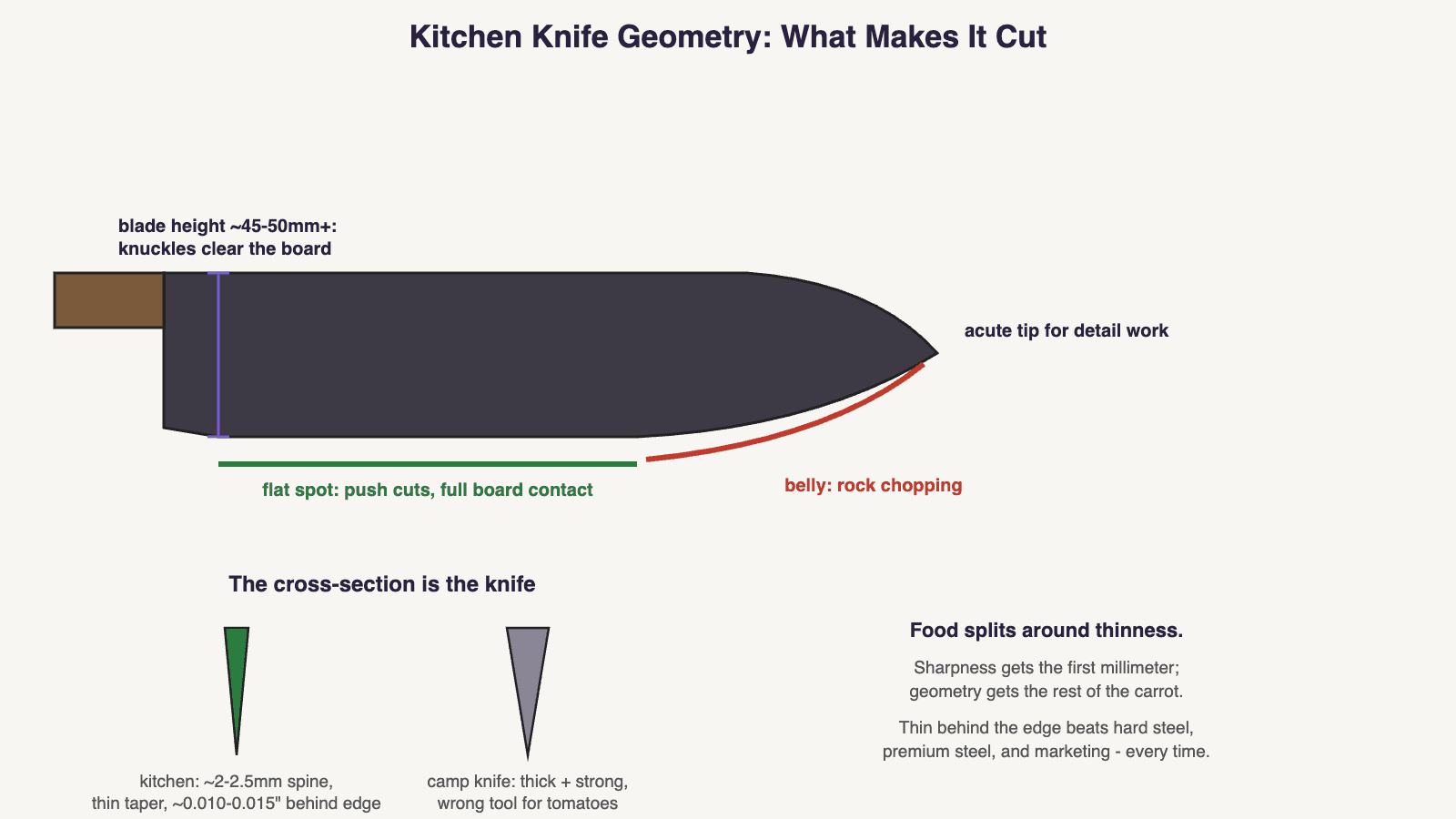
Sharpness gets the edge into the carrot; the cross-section decides whether the rest follows cleanly or cracks apart in a wedge. The number that rules kitchen performance is thickness behind the edge (BTE): measure a millimeter or two up from the apex. The maker-consensus target for a chef’s knife is 0.010–0.015″ before sharpening (fine slicers and Euro-style chef’s knives push toward 0.008–0.010″). A blade at 0.020″+ BTE will feel “fat” on food no matter how scary-sharp the apex is. This is the whole game — everything else on this page supports it.
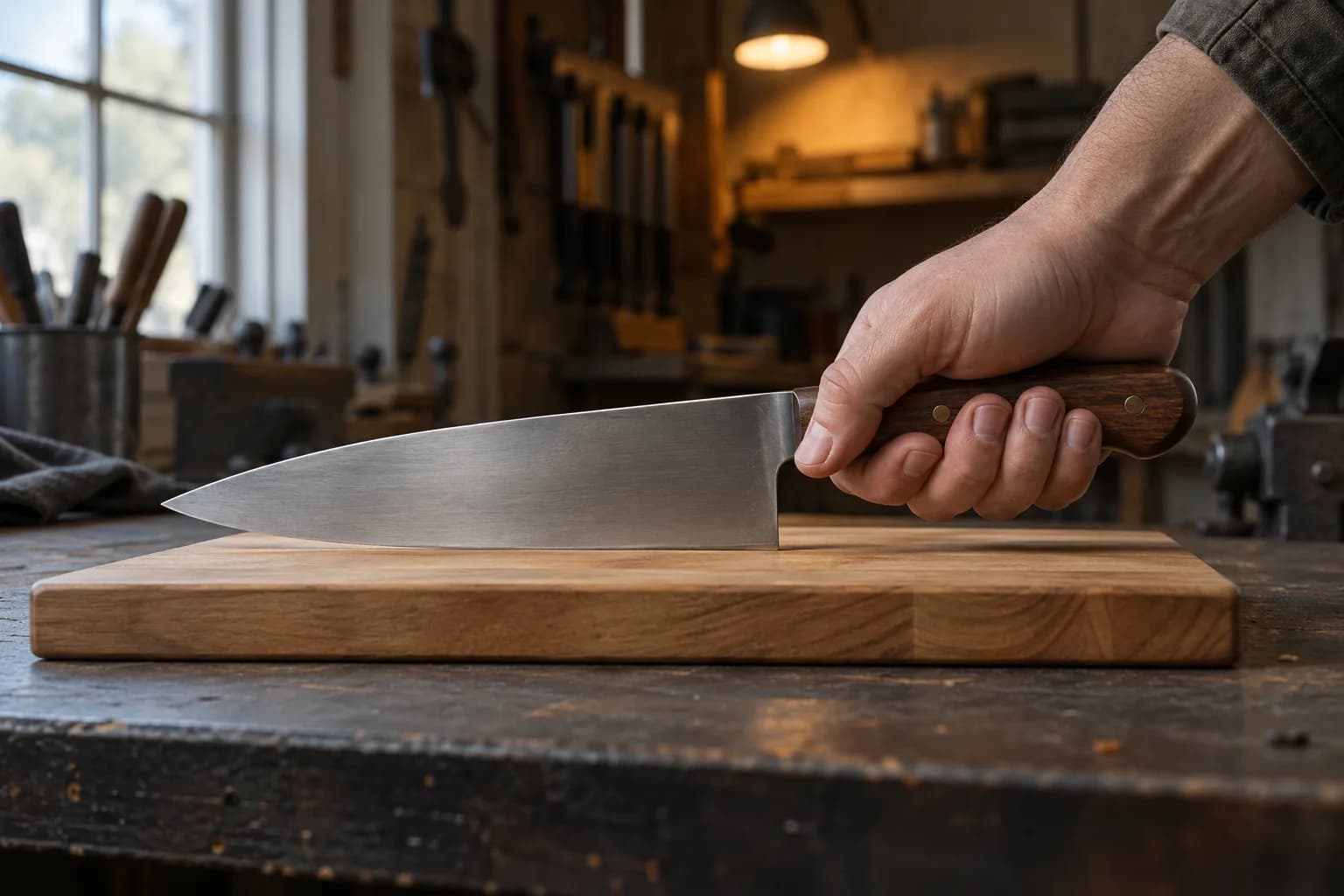
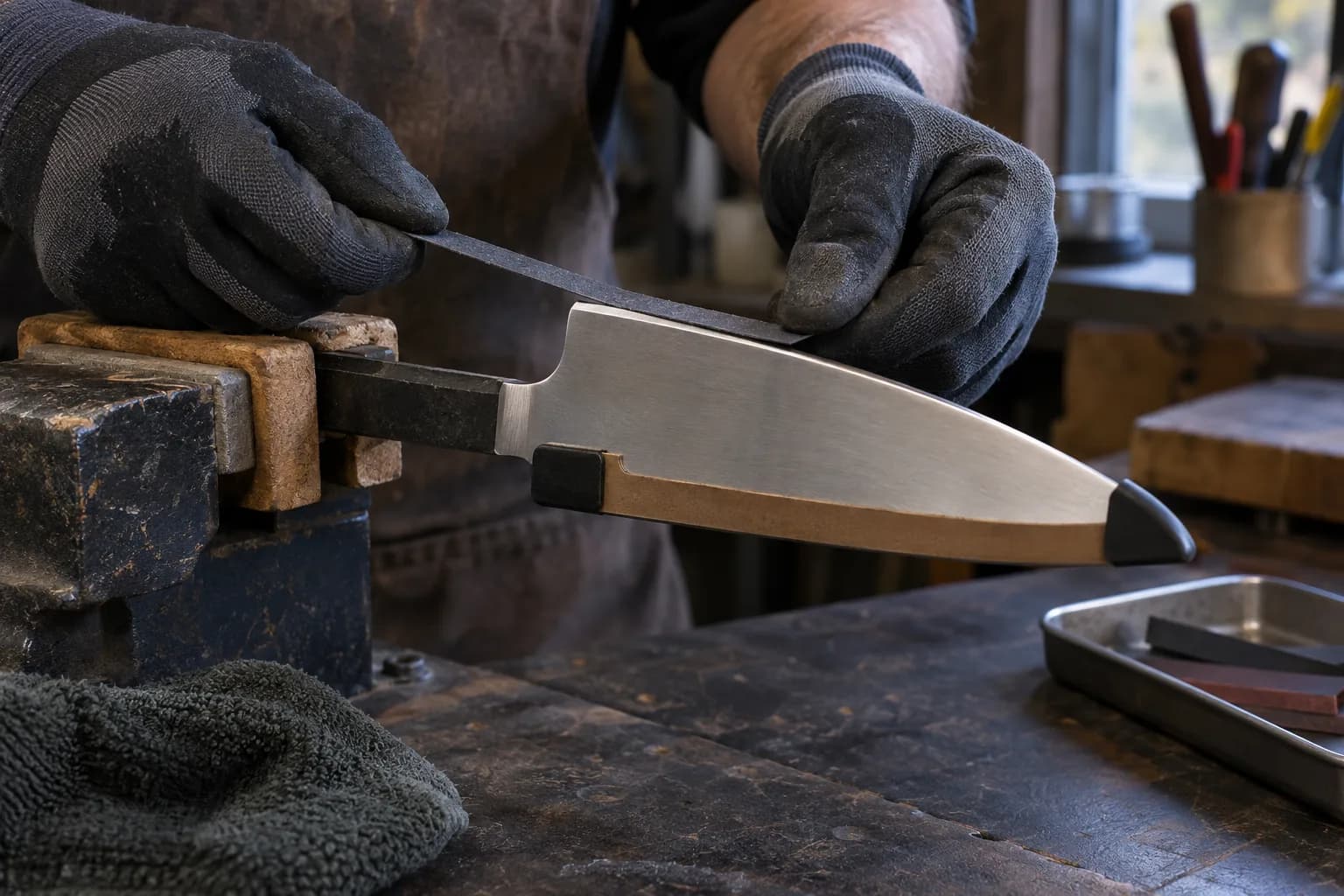
The kitchen favors fine-grained steels that take keen, thin edges: AEB-L is the maker darling for exactly this (we grind it enough to have a dedicated AEB-L kitchen guide), with MagnaCut, 154CM, and — for patina-friendly carbon — 52100 and 1084 (see forced patinas) all excellent. Edge angles run fine: 12–15° per side (sharpening guide), supported by that thin BTE. Carbide-coarse steels like D2 fight the whole concept — the carbide guide explains why.
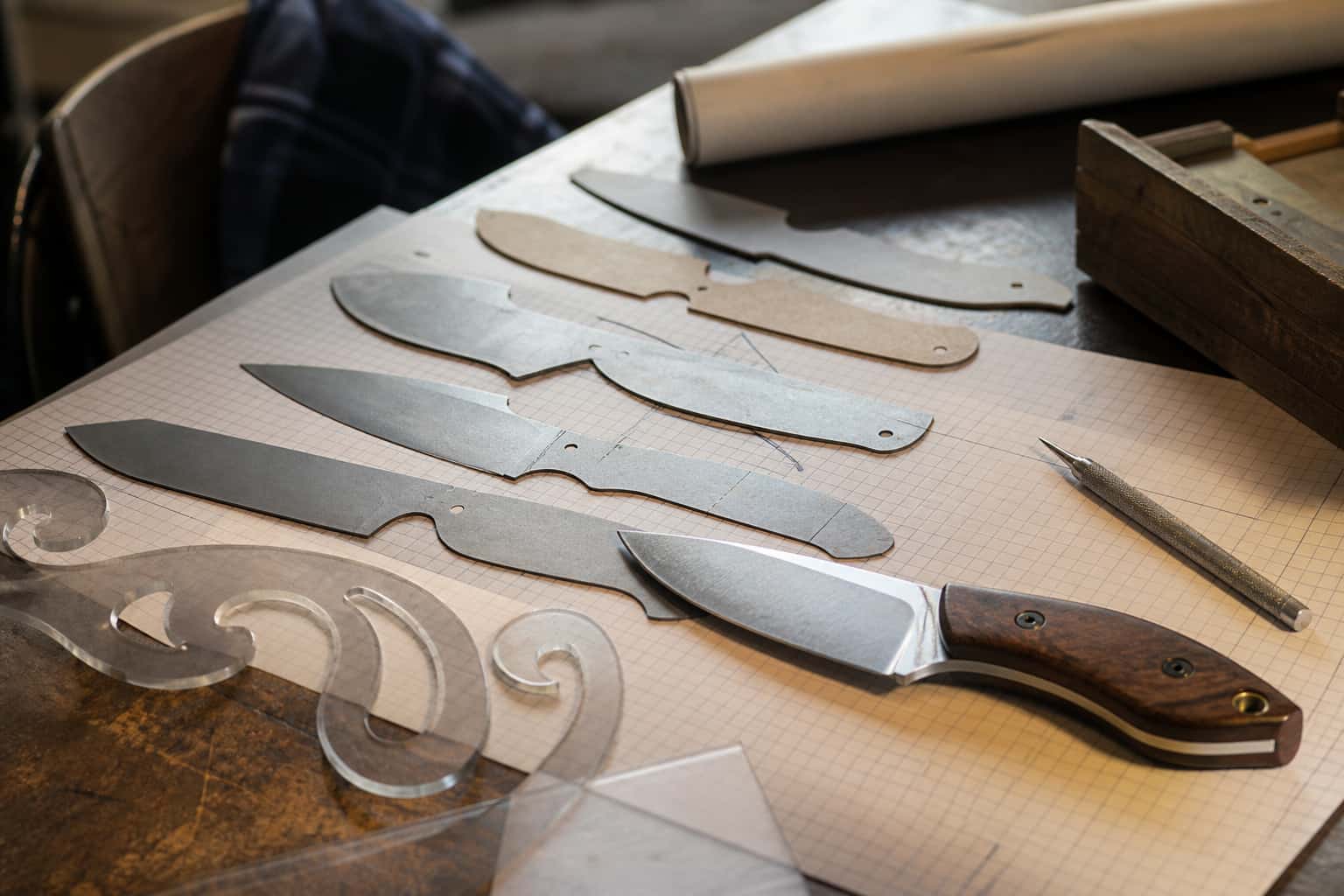
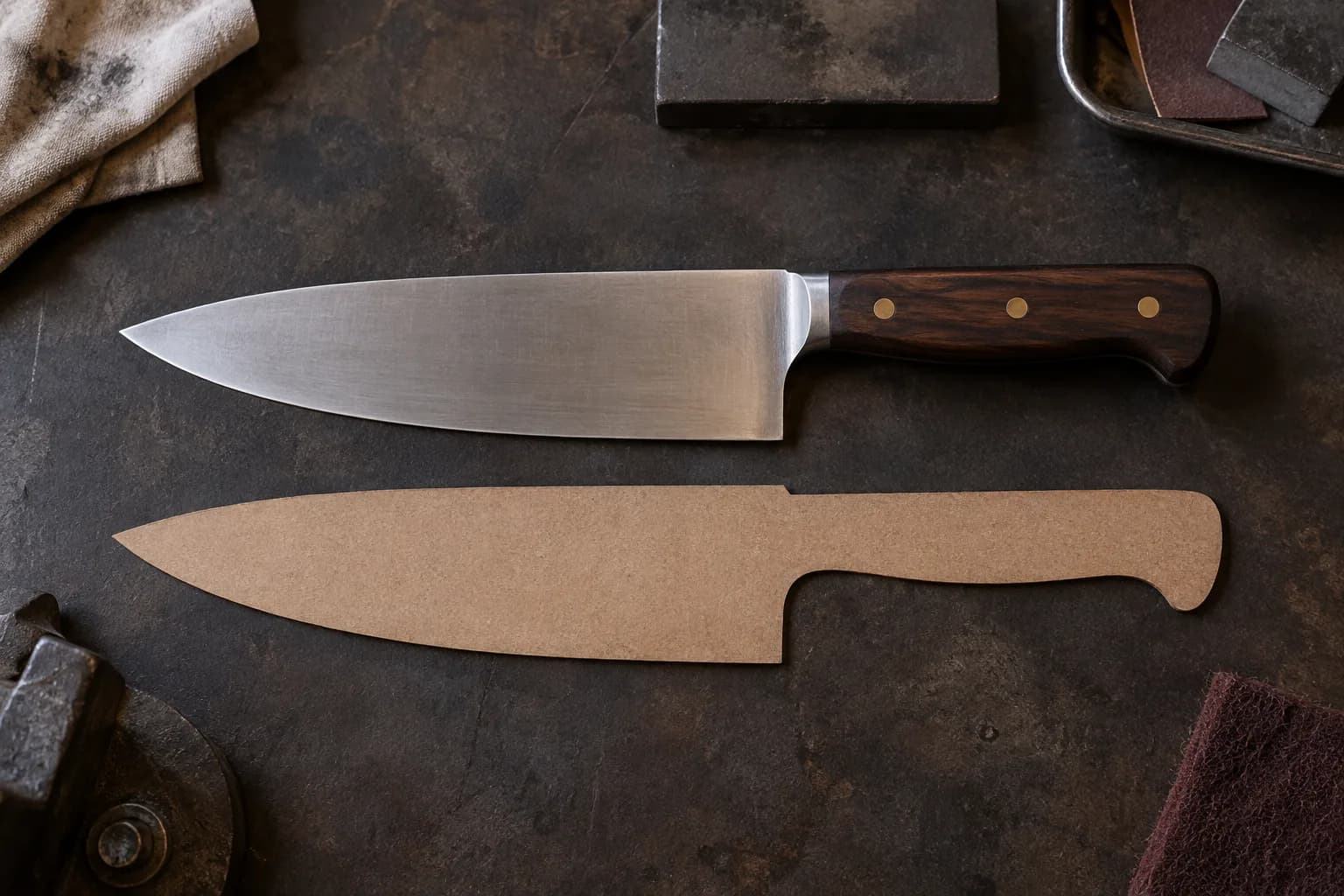
Before designing from scratch, trace a knife the cook in your life already loves — commercial kitchen knives embody a century of geometry consensus, and your first from-scratch template teaches more with that head start. Then thin it more than feels safe. The universal review of a first maker kitchen knife is “great, but a little thick” — spend that lesson here instead.
Keep reading
Three more from the same bench.
Two knives can share the same steel, grind type, and blade shape and still perform completely differently, because of stock thickness and how that…
The grind is the cross-sectional shape of a blade, how the flat stock gets thinned down from spine to edge, and it affects cutting performance, edge…
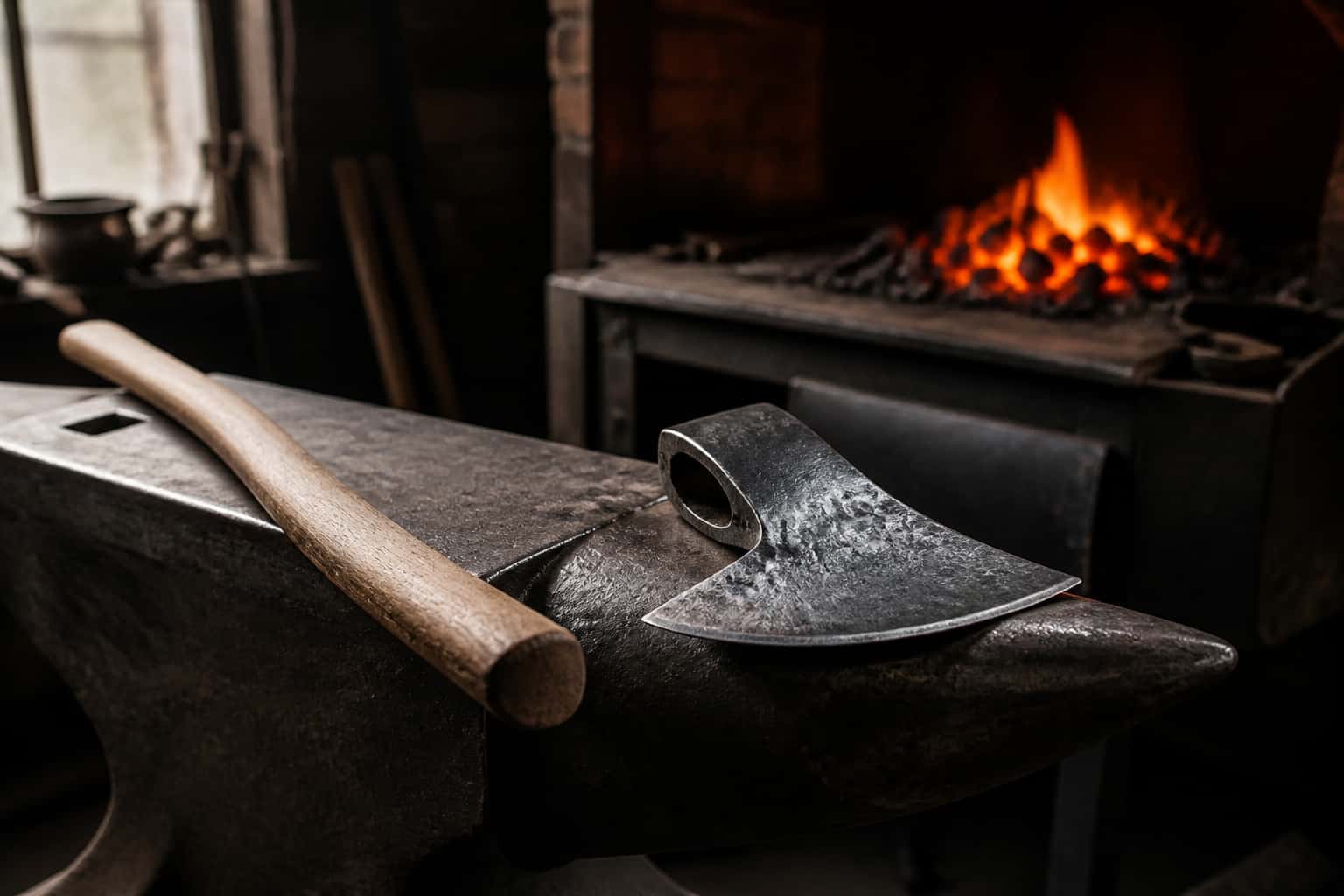
AEB-L has the opposite reputation of high-carbide steels like MagnaCut or CPM 20CV: instead of loading and dulling belts quickly, its simple, fine-grained…
Same bench
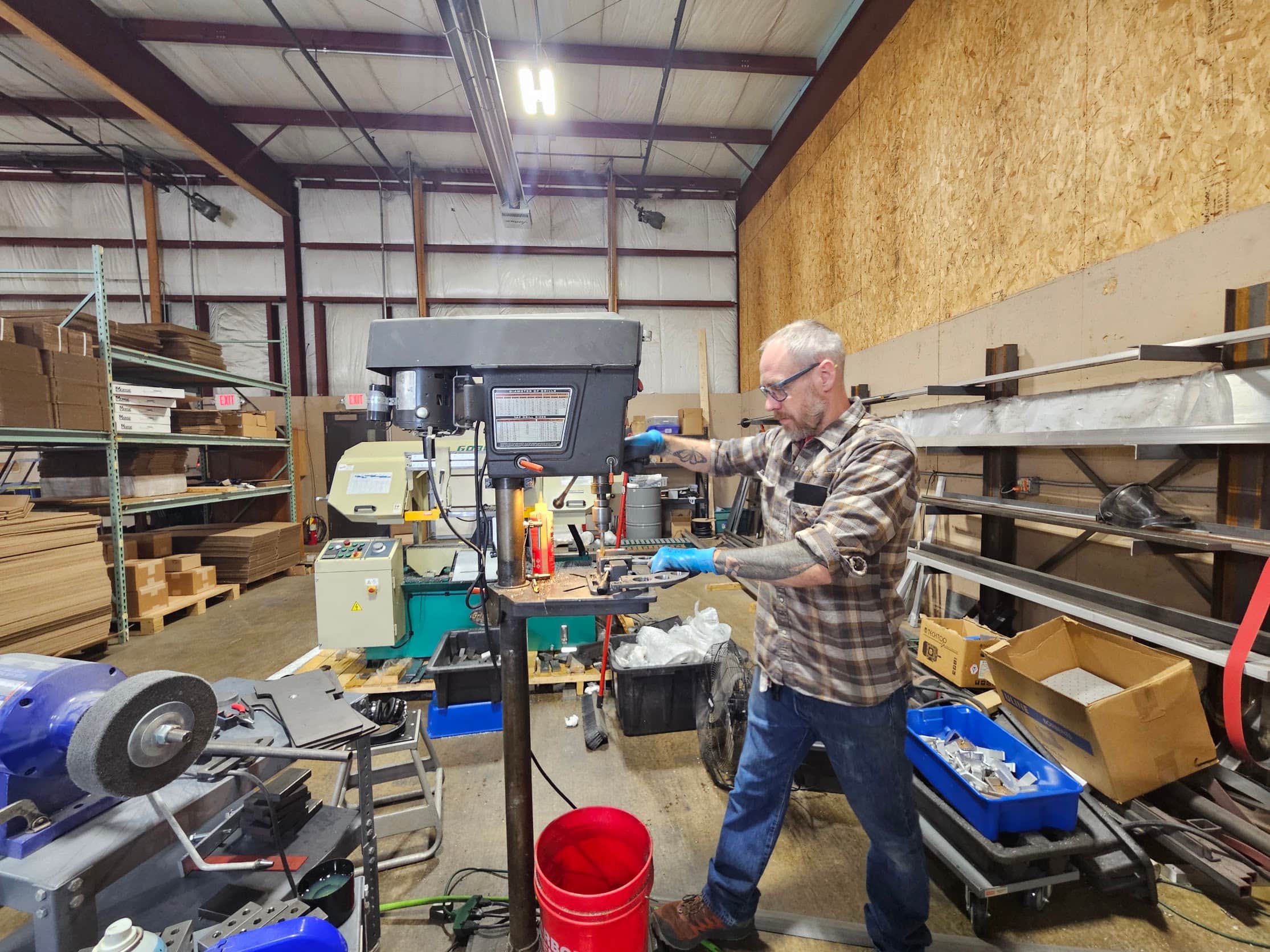
I machine the parts, hand-assemble, track and test Torus grinders in Sterling, Illinois. Most orders ship in seven to ten business days from time of order.
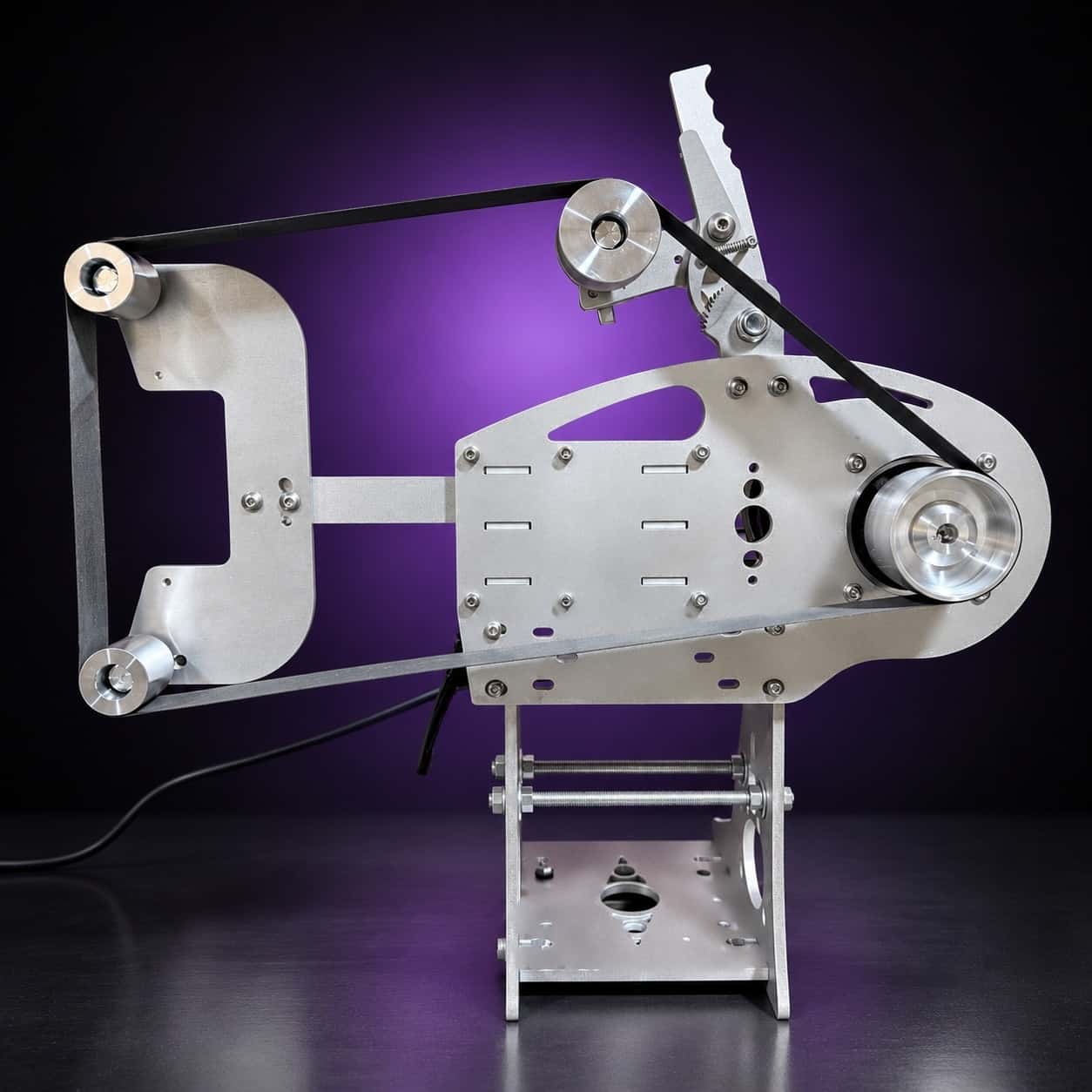
Current dual-axis platform with a fiber-laser-cut 6061 chassis and single-knob tracking.
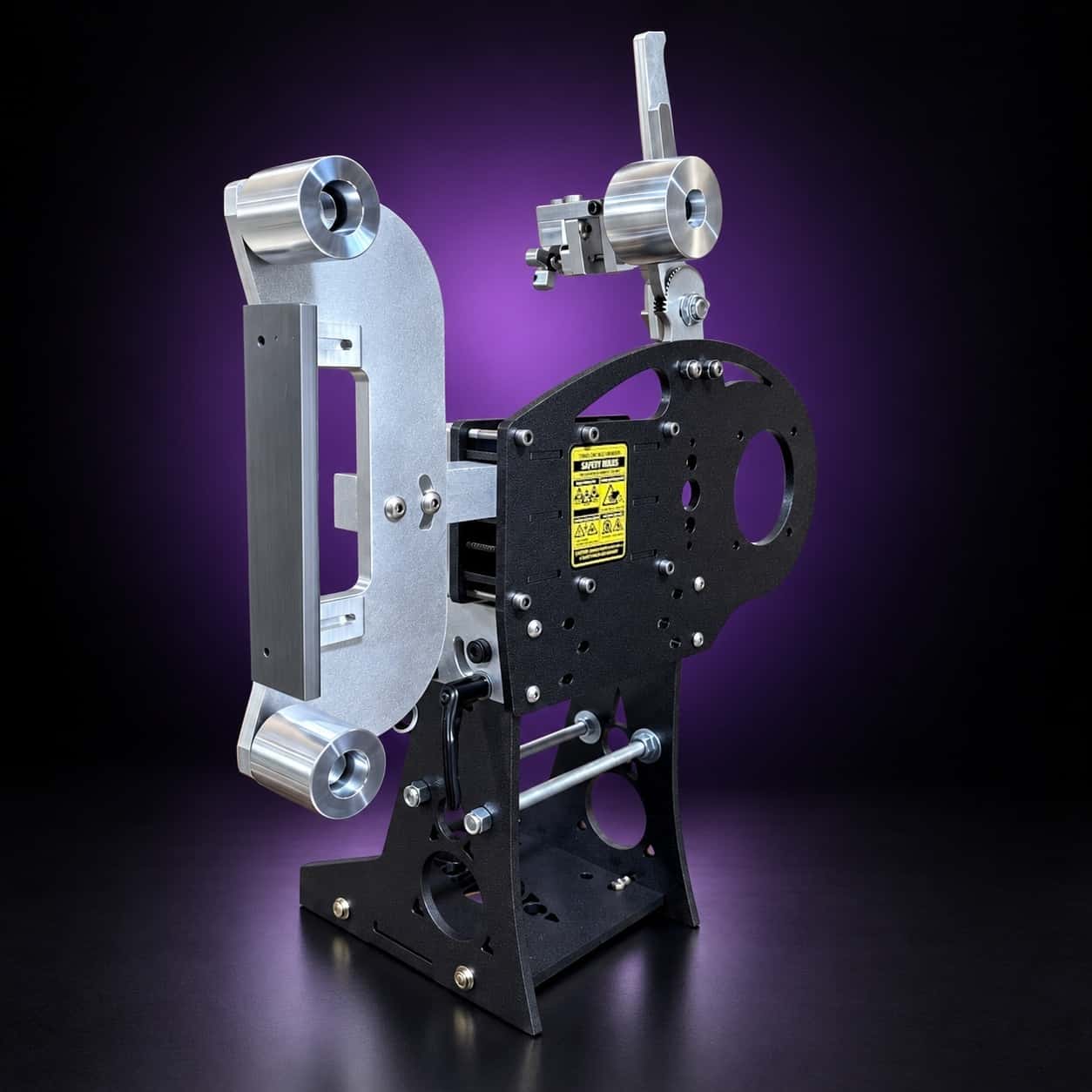
Current dual-axis platform with a steel chassis, more mass and less vibration.
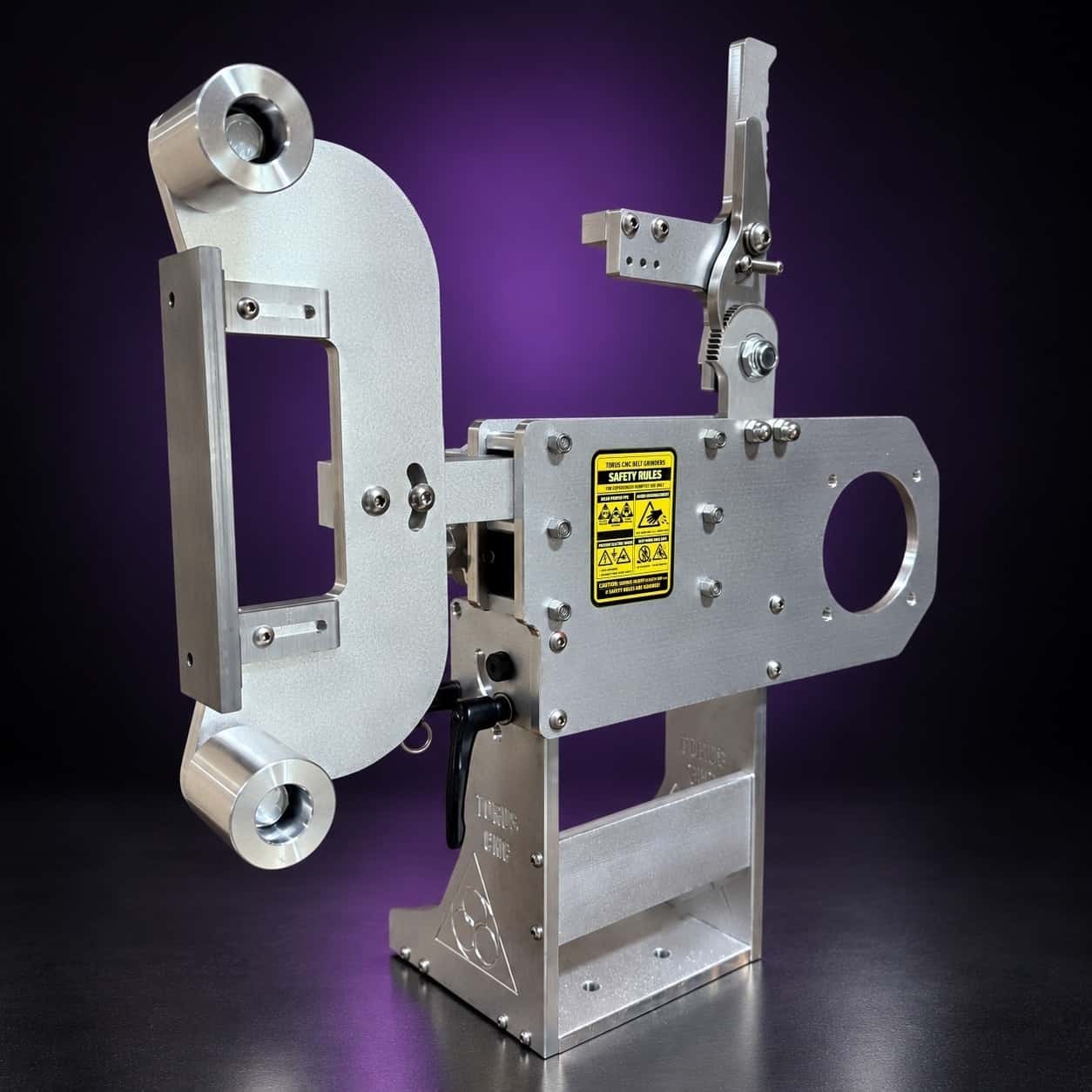
Prior-design aluminum chassis, 90-degree tilt and 1.5-inch tooling arms.
One-man shop
I answer my own email. Tell me the steel, the machine and what it is doing, and I will tell you what I would try next.