

Blade Design
Camp Knife, Chopper & Machete Geometry
Big blades live on impact, and impact rewrites the geometry rules: the edge is a wedge under shock load, balance is a cutting spec, and…
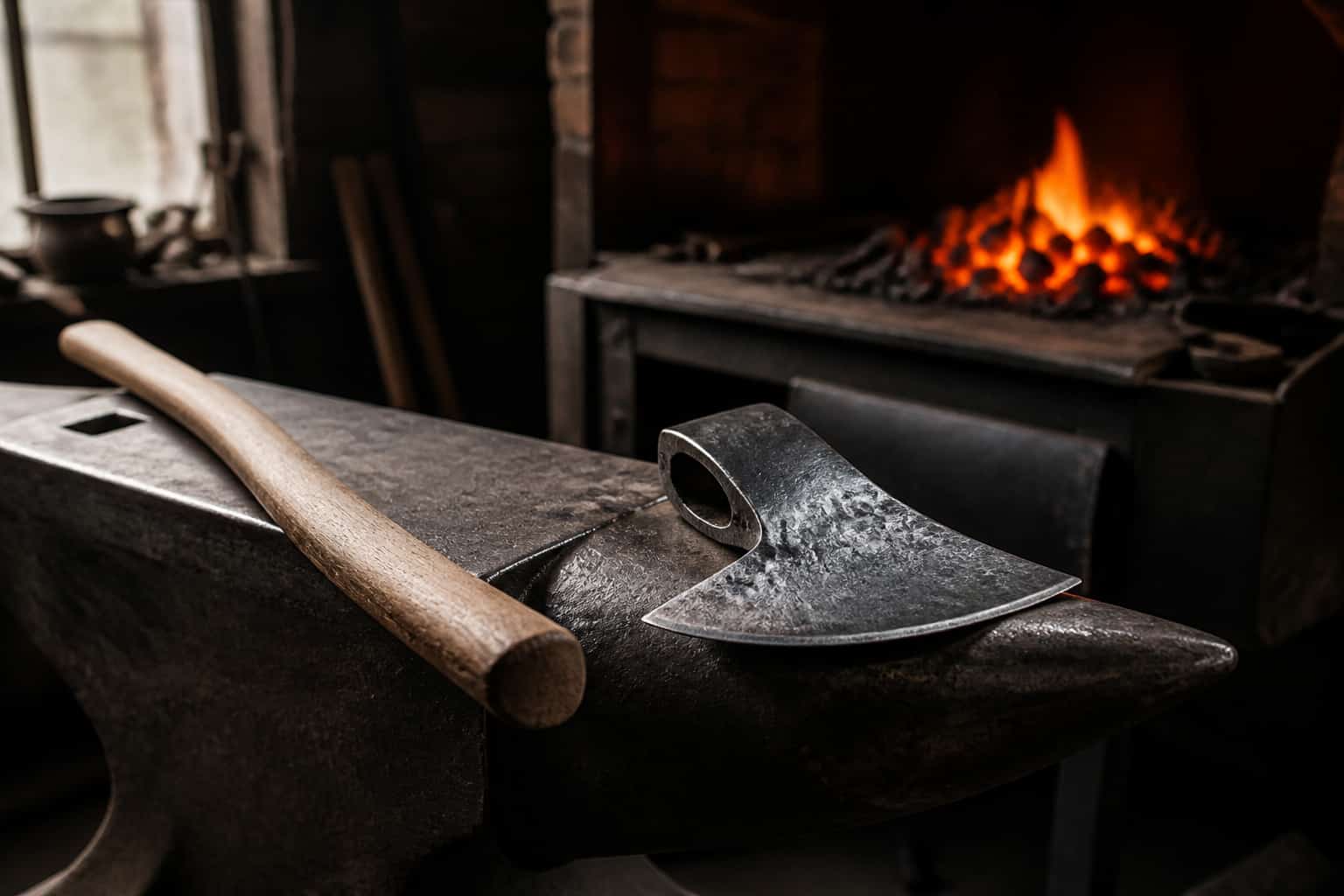
Axes & Tomahawks
Every part of an axe and every working type - felling, splitting, hatchet, broadaxe, carving - with weights, haft lengths, and the section map.
2 min readWritten by Rich LinvilleFree to read
The axe is the knife’s working-class cousin: same steel, same edge physics, ten times the leverage and none of the pretension. It is also the deepest rabbit hole in edge tools — patterns, history, restoration culture, a throwing sport, and the single best first forge-welding project in the craft. Start here with the vocabulary and the family tree; every branch gets its own deep dive.
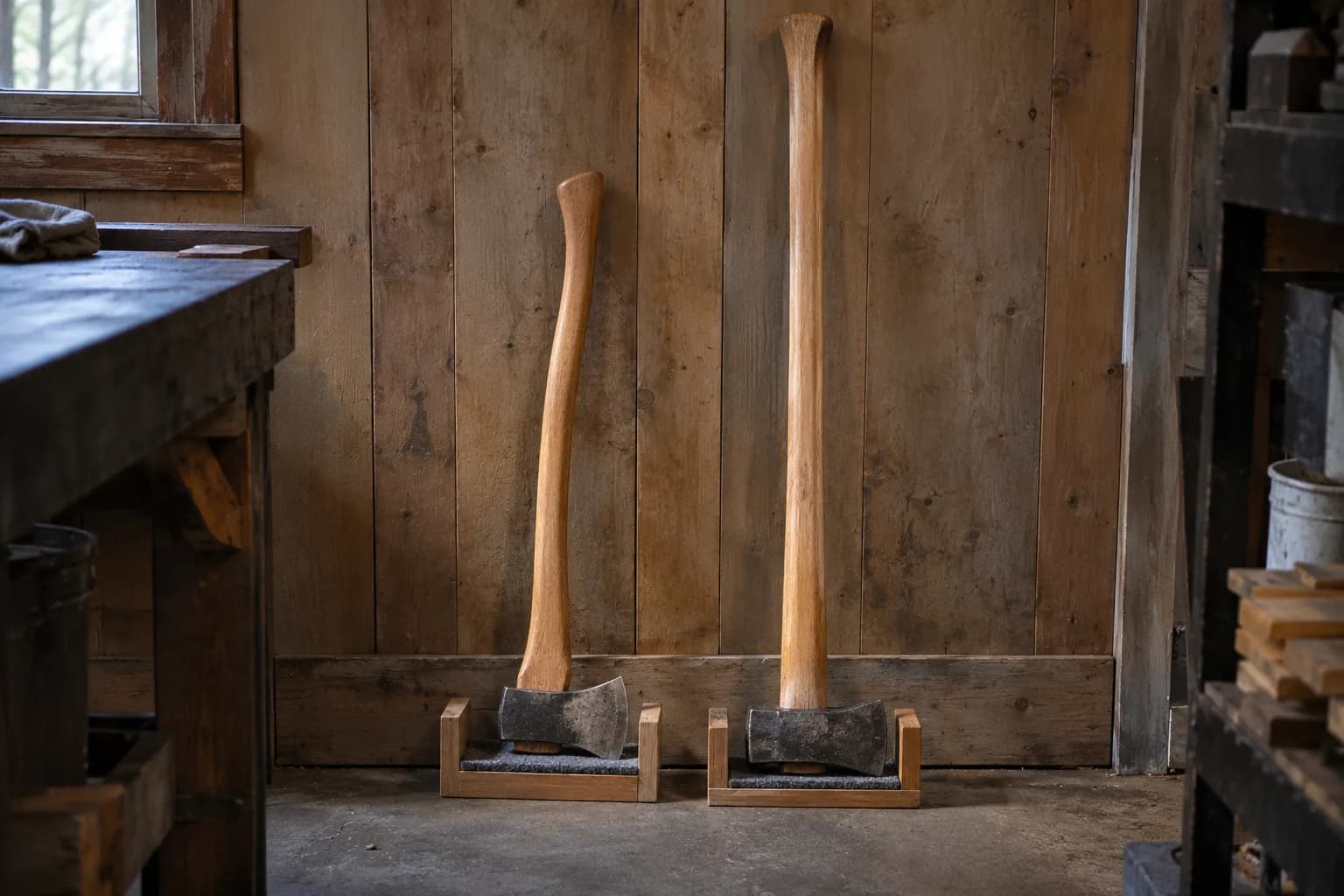
The head: the bit (the cutting edge, with its toe at top and heel at bottom), the cheeks (the faces behind the bit that decide how it cuts), the eye (the tapered hole the haft passes through), and the poll (the mass behind the eye — a hammering face on some patterns, pure counterweight on most, and the part never to hammer hardened steel with). A beard is a bit whose heel sweeps down below the body — more edge per ounce, a hand-shelter for choking up. The haft: grip, belly, shoulder and the swell that keeps a loose grip from becoming a flying axe. Handle geometry is its own science, covered in Hafting an Axe.
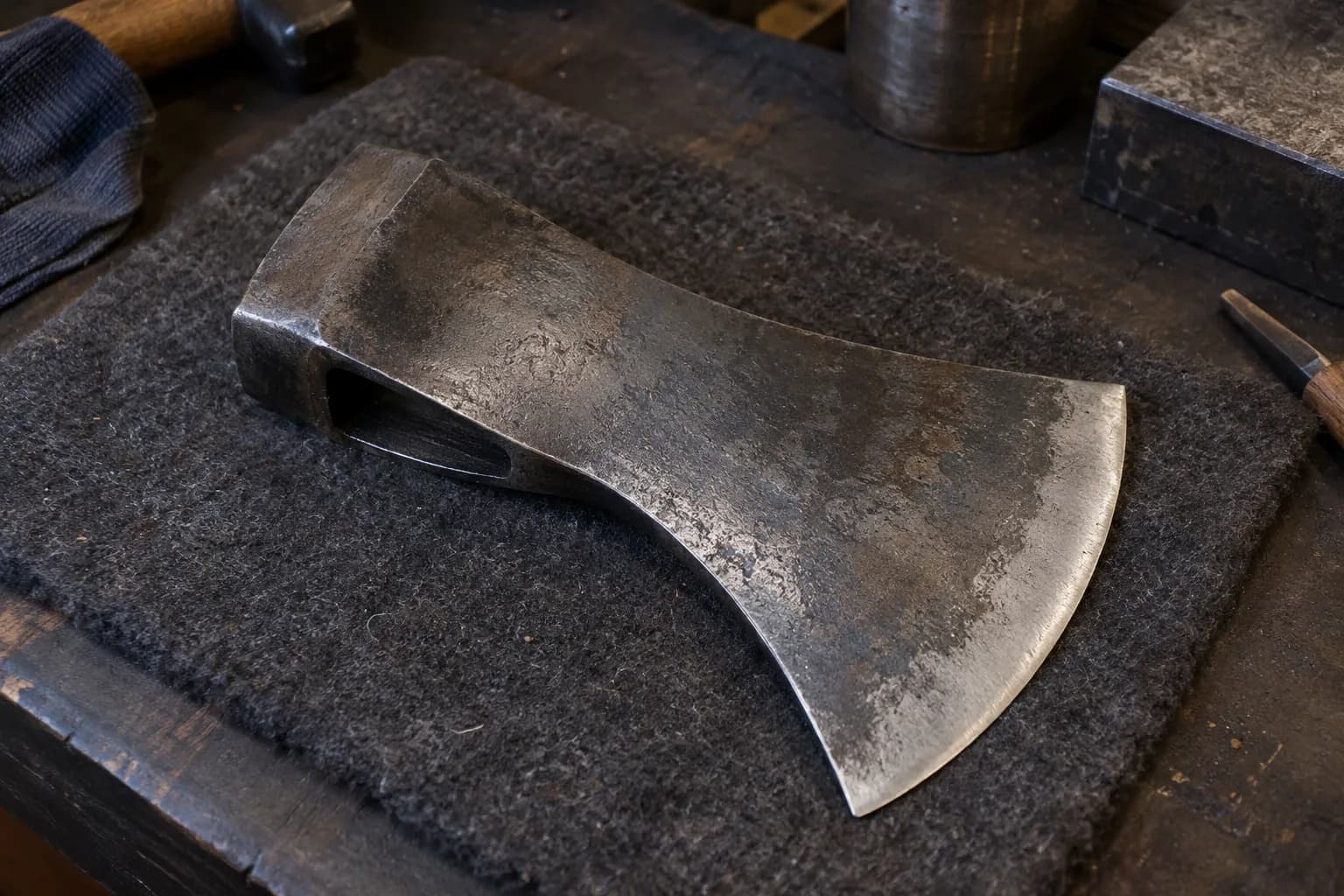
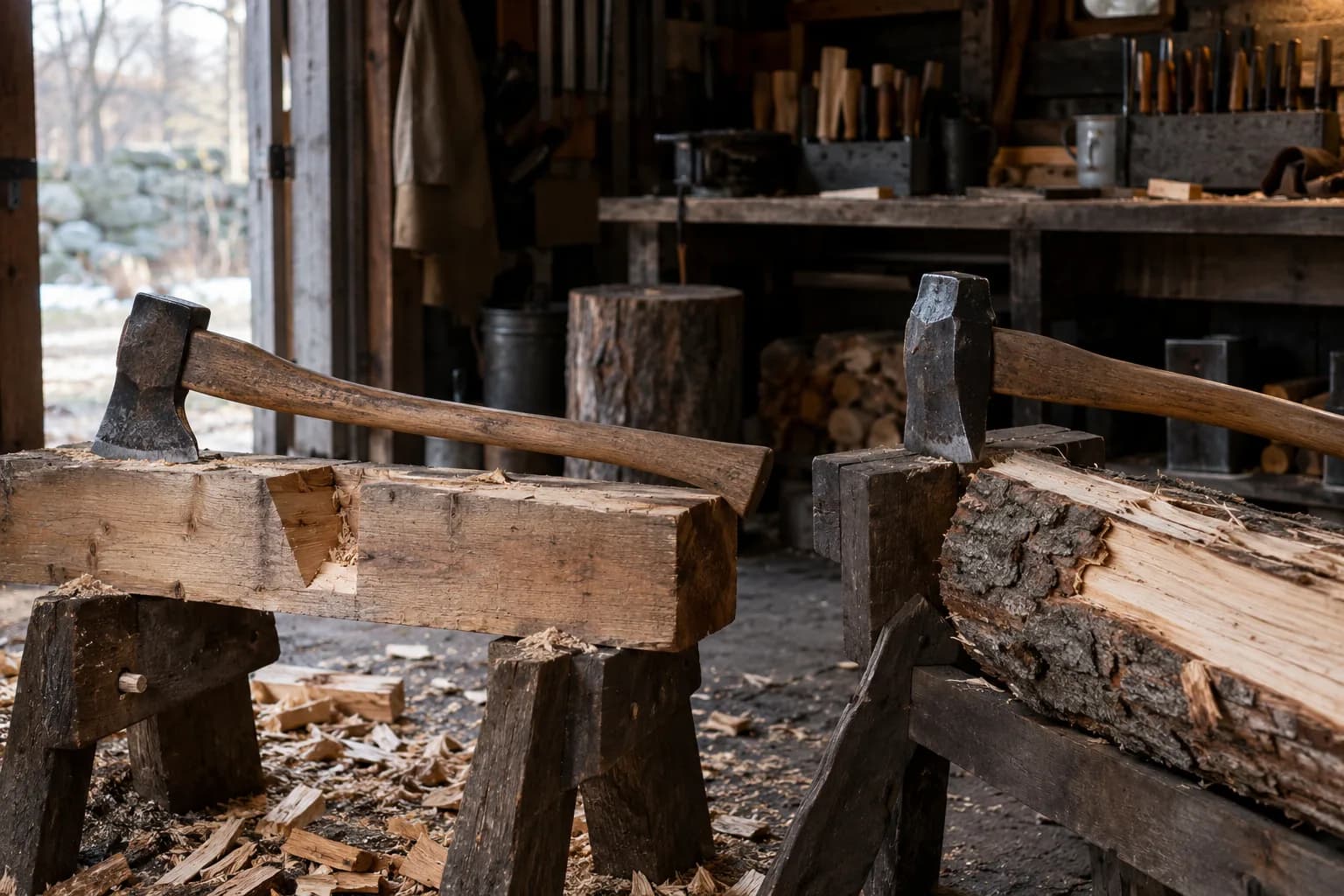
By job, not by catalog name: the felling axe (thin-cheeked, 2-3.5 lb head, 28-36 inch haft) severs fibers ACROSS the grain; the splitting axe and maul (wedge-cheeked, 3-6 lb and up) burst fibers APART along the grain — opposite geometries, endlessly confused, both detailed in Axe Geometry. The hatchet (one-hand, 1-1.5 lb, 12-18 inch) is the camp generalist; the carving axe trades chopping authority for knife-like edge control; the broadaxe (chisel-ground, offset haft) hews logs square; and the double-bit — the American logger’s icon — carries a keen bit and a stunt bit on one head, per American Axe Patterns.
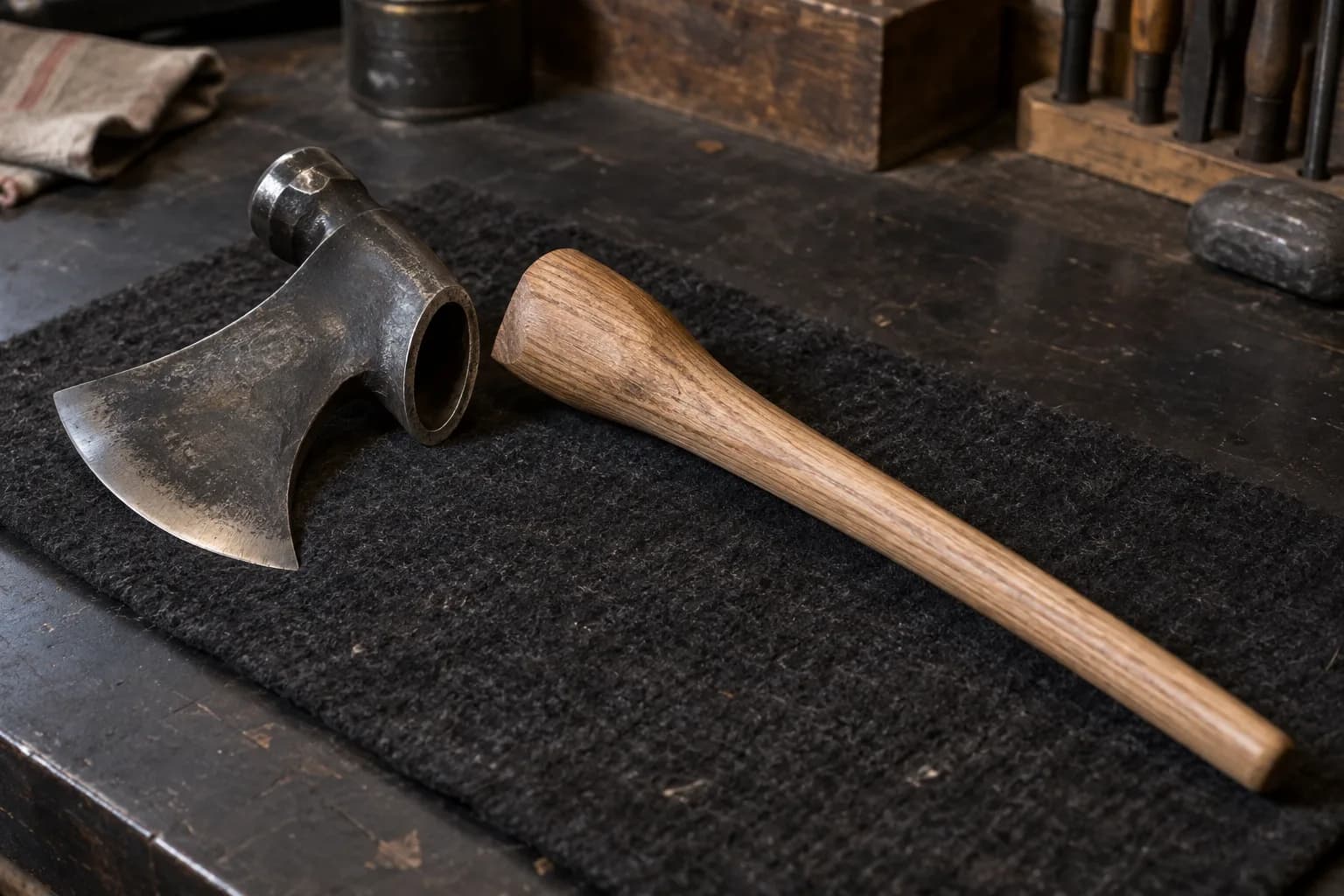
The tomahawk gets its own guides in this section: lighter head, straight friction-fit haft slid in from the top, and a history running from trade steel to the throwing lanes. The distinction matters in the hand and in the forge — the tomahawk guide makes the case, and Forging a Tomahawk makes the object, wrapped eye and all.
The chronic beginner error is too much head: a 2-2.5 lb felling head on a 28-inch haft outworks the 5-pound monster for everyone who is not splitting rounds all day, exactly the way a 2-pound hammer outworks the showpiece. Accuracy compounds; mass fatigues. Buy (or forge, or restore) lighter than pride suggests.
From here: bit steels and heat treat for what axes are made of, geometry for how they cut, hafting for the wood half, sharpening and care for the working edge, restoration for the flea-market habit, throwing for the sport, and battle axes plus American patterns for the history. The axe rewards all of it — and the 2×72 that grinds your knives handles every abrasive job in this section.
Keep reading
Three more from the same bench.
Big blades live on impact, and impact rewrites the geometry rules: the edge is a wedge under shock load, balance is a cutting spec, and…
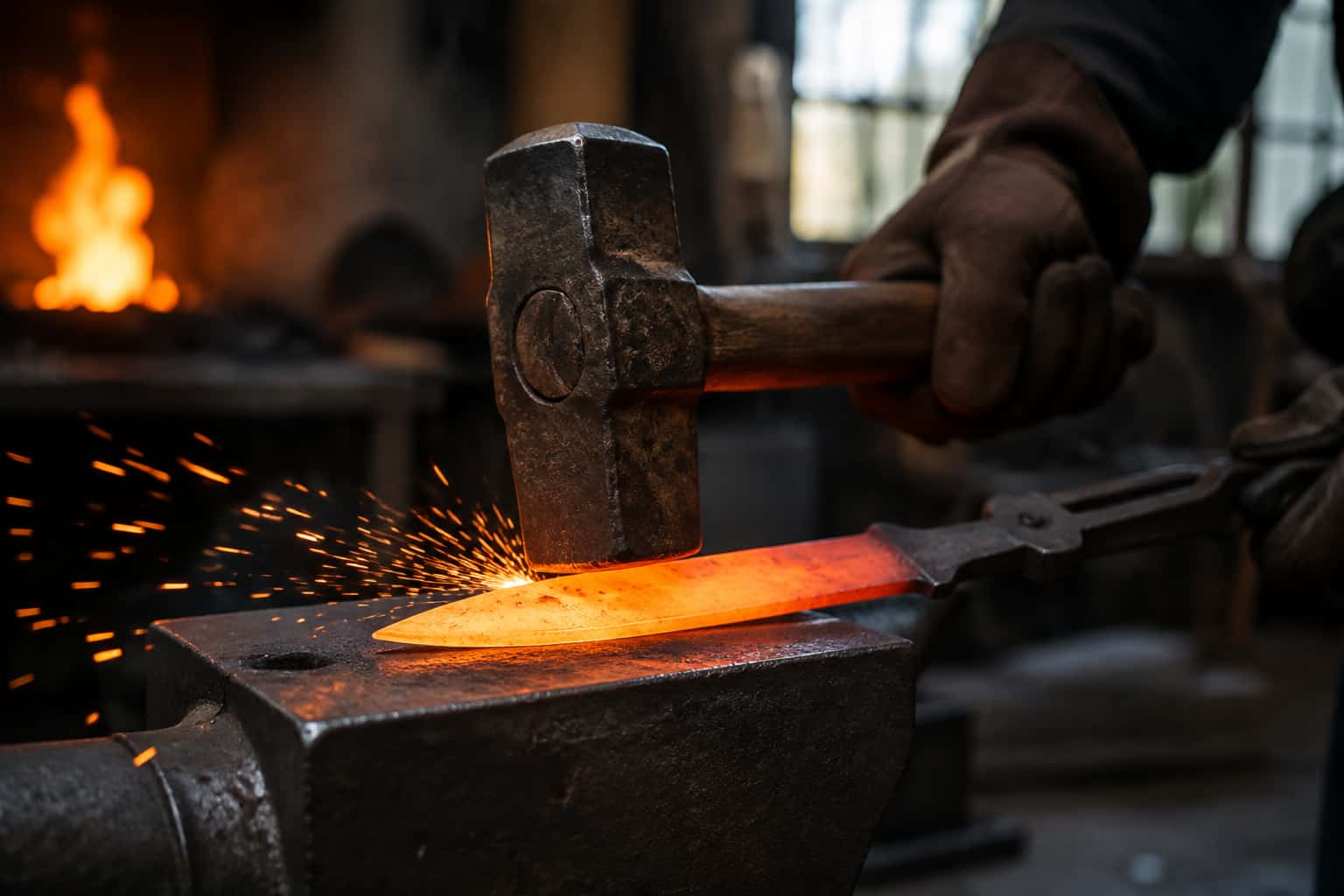
The hammer is the cheapest tool in the forge and the one your body will know best. Every smith eventually owns a rack of them, but they all trace to a…
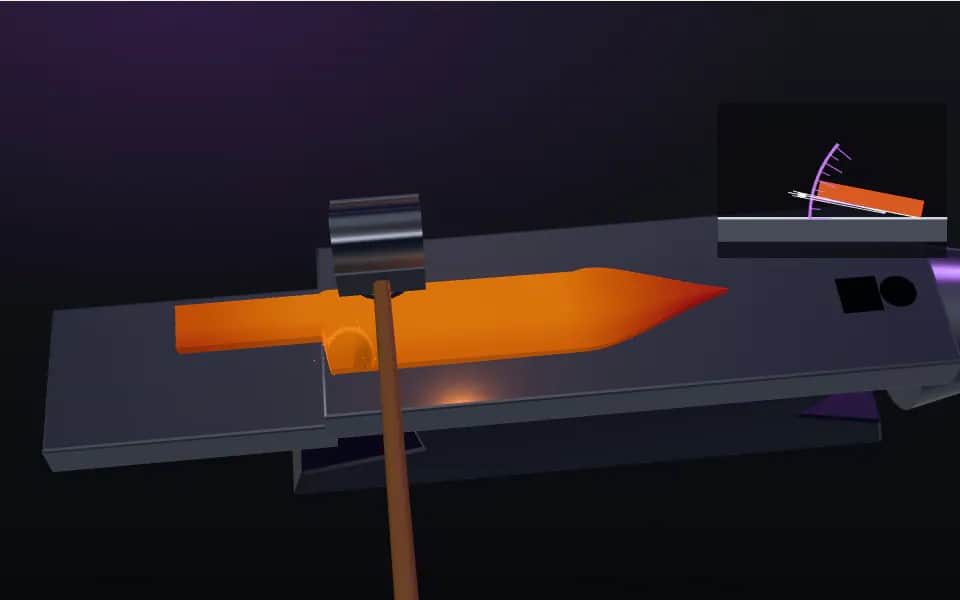
Forging a knife is not sculpting with sparks — it’s a sequence, and once you know the sequence, every session has a plan. This guide walks a first forged…
Same bench
I machine the parts, hand-assemble, track and test Torus grinders in Sterling, Illinois. Most orders ship in seven to ten business days from time of order.

Current dual-axis platform with a fiber-laser-cut 6061 chassis and single-knob tracking.

Current dual-axis platform with a steel chassis, more mass and less vibration.

Prior-design aluminum chassis, 90-degree tilt and 1.5-inch tooling arms.

One-man shop
I answer my own email. Tell me the steel, the machine and what it is doing, and I will tell you what I would try next.