

Axes & Tomahawks
Axe Anatomy & Types: The Field Guide
The axe is the knife’s working-class cousin: same steel, same edge physics, ten times the leverage and none of the pretension. It is also the deepest…
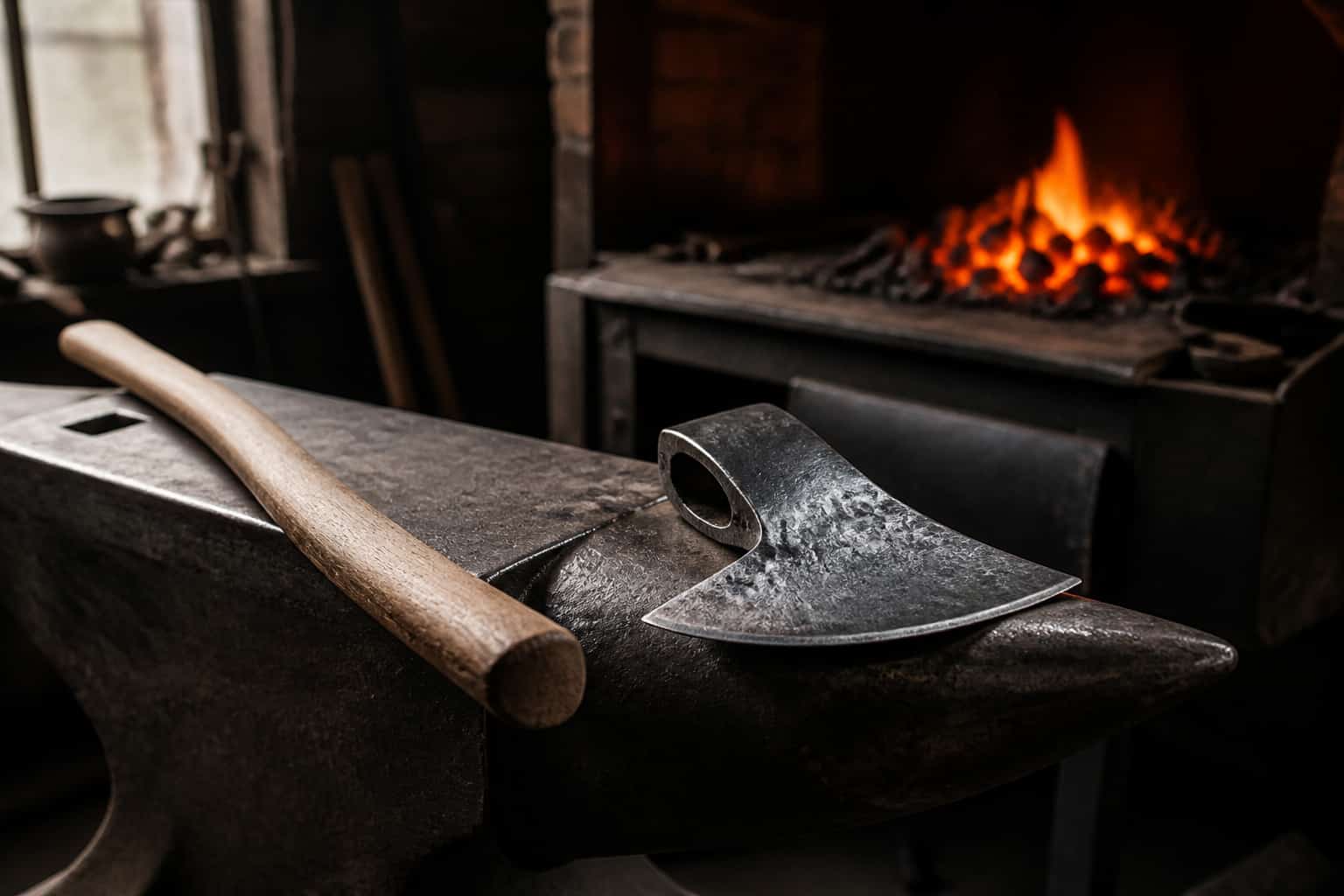
Axes & Tomahawks
Native fighting-club logic met European trade steel: friction-fit hafts, trade, pipe, spike and tactical hawks, and the modern revival of the tomahawk.
2 min readWritten by Rich LinvilleFree to read
The tomahawk is North America’s own axe: born from the meeting of Native fighting clubs and European trade steel, refined into something lighter, faster and more personal than any hatchet — and currently living its biggest revival in three centuries, from bushcraft packs to throwing lanes.
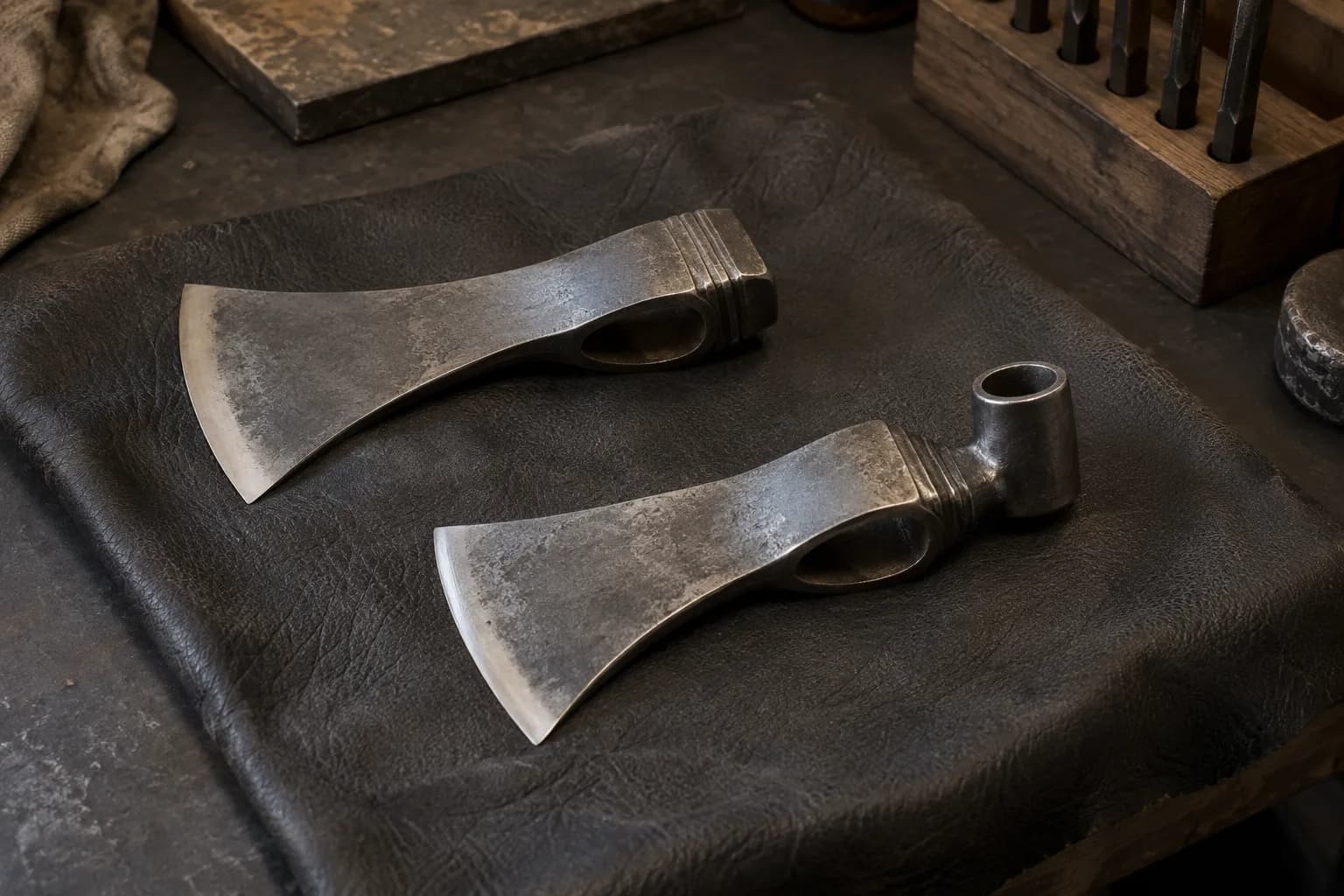
Pre-contact war clubs and stone axes established the form’s logic — light head, long reach, one hand. When European traders arrived, forged steel heads became one of the continent’s hottest trade goods: simple wrapped-eye axes by the thousand, English and French patterns adapted to Native specifications. The result was genuinely cross-cultural technology — European steel, Native use and refinement — and the tomahawk became both tool and symbol across the frontier. The pipe tomahawk carried the symbolism furthest: a smoking pipe bowl forged opposite the bit, war and peace in one object, presented at councils and treasured since; originals are museum treasures and modern makers still build them.
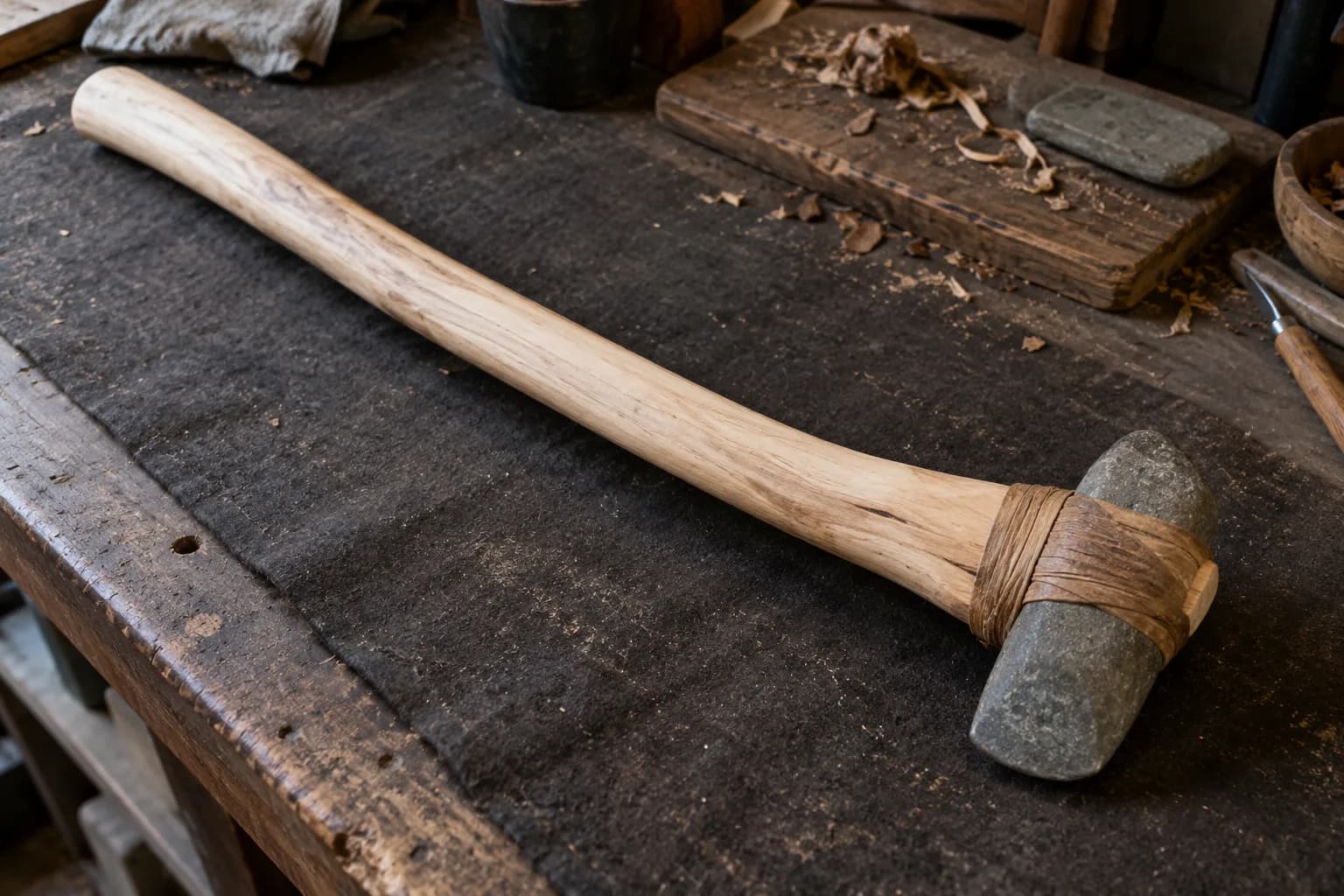
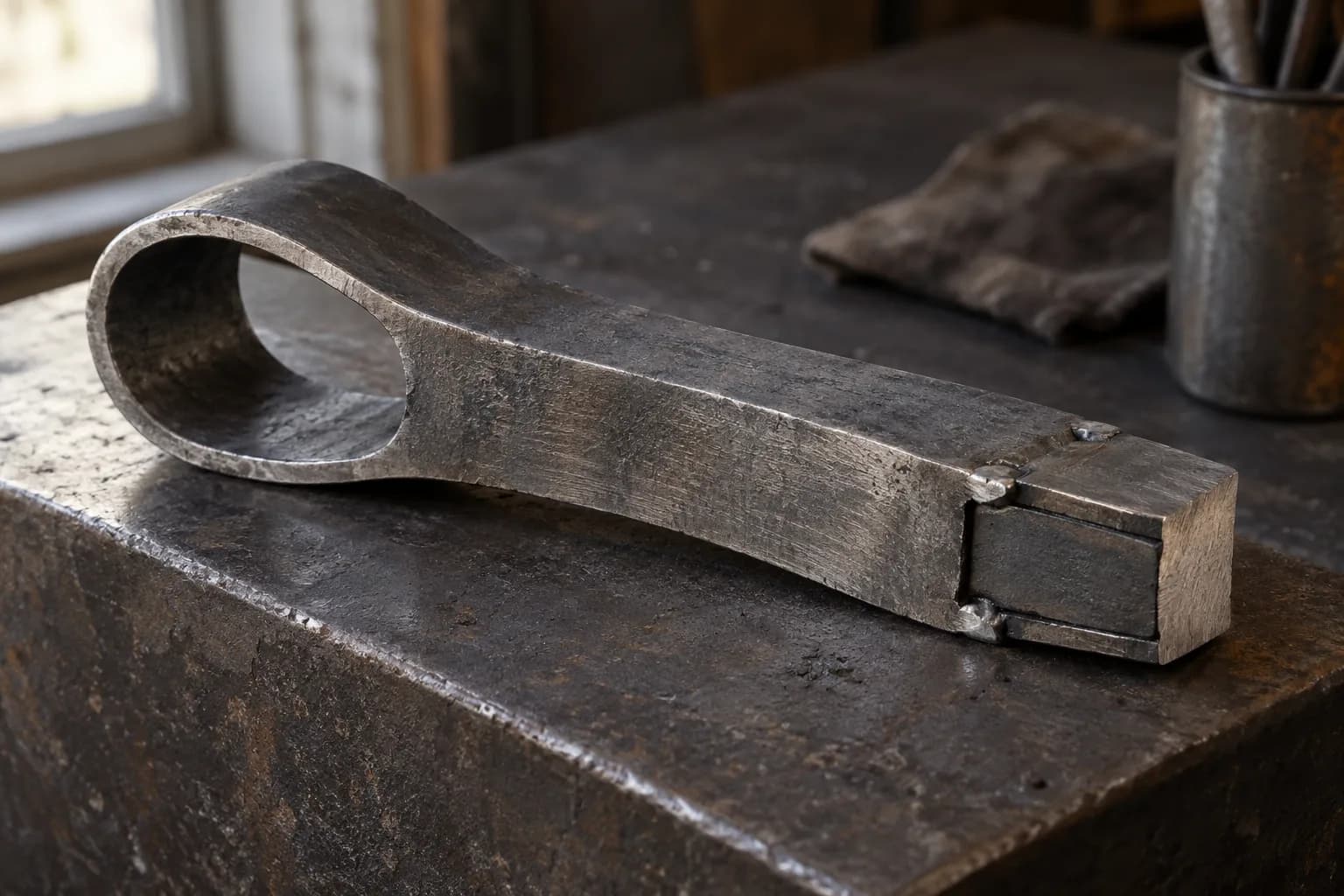
Three features separate the tomahawk from the hatchet it superficially resembles. The head is light — commonly 12 to 24 ounces against a hatchet’s 20-plus. The haft is straight and passes THROUGH the eye from the top, held by friction and geometry alone: the eye tapers wider toward the top, so every swing seats the head tighter, and a broken haft is replaced trailside with a whittled stick — no wedge, no shop. And the balance is quick: neutral, wand-like handling closer to a long knife than a chopper, which is exactly why it fights and throws so well. The full head-hanging contrast is in Hafting an Axe.
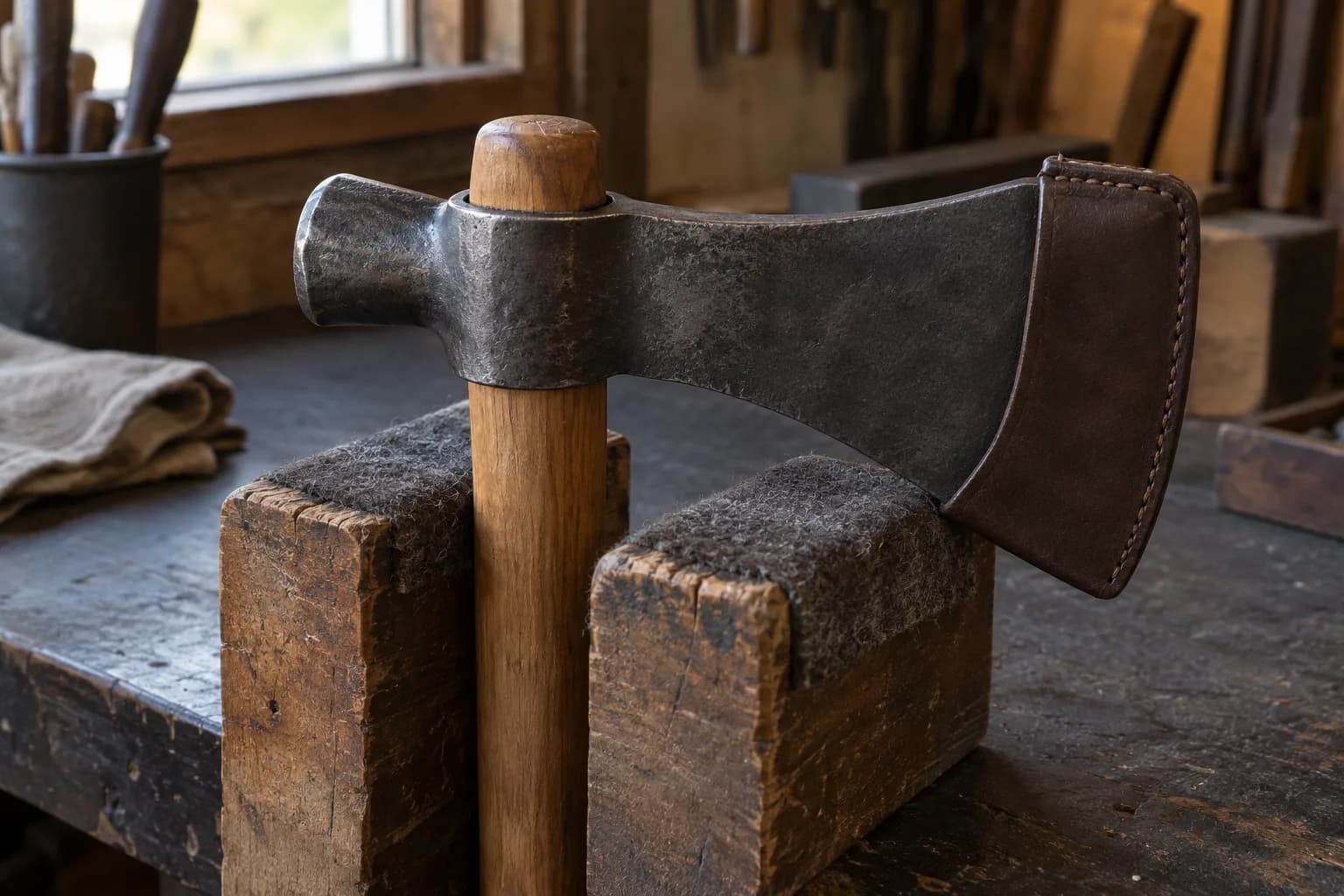
The trade hawk (plain round-eye bit, the ancestral pattern), the pipe hawk (ceremonial bowl poll), the spike hawk (a straight or curved spike poll — the fighting variant, revived in modern breaching tools), and the modern tactical hawk (synthetic hafts, full-tang one-piece builds, MOLLE sheaths — the pattern’s military-and-rescue descendant). Throwers form their own branch: longer hafts, thinner bits, specs in the throwing guide. Bushcrafters quietly run trade hawks as ultralight camp axes, one more chapter in a three-century service record.
Beyond the history: the tomahawk is the single best first forge-welding project in bladesmithing — a wrapped mild-steel eye around a high-carbon bit, every fundamental in one afternoon-scale object, per Forging a Tomahawk. It sells briskly (throwers buy in threes), it personalizes endlessly (file work, hamon-adjacent bit treatments, haft carving), and it introduces the maker to a buyer community — throwers, reenactors, bushcrafters — that the rest of this section serves. Few objects carry this much history per pound of steel.
Keep reading
Three more from the same bench.
The axe is the knife’s working-class cousin: same steel, same edge physics, ten times the leverage and none of the pretension. It is also the deepest…
Forging a knife is not sculpting with sparks — it’s a sequence, and once you know the sequence, every session has a plan. This guide walks a first forged…
Nobody ever quit knifemaking because their anvil was too small — plenty quit because they spent the whole budget on a 250-pound showpiece and had nothing…
Same bench
I machine the parts, hand-assemble, track and test Torus grinders in Sterling, Illinois. Most orders ship in seven to ten business days from time of order.

Current dual-axis platform with a fiber-laser-cut 6061 chassis and single-knob tracking.

Current dual-axis platform with a steel chassis, more mass and less vibration.

Prior-design aluminum chassis, 90-degree tilt and 1.5-inch tooling arms.

One-man shop
I answer my own email. Tell me the steel, the machine and what it is doing, and I will tell you what I would try next.