
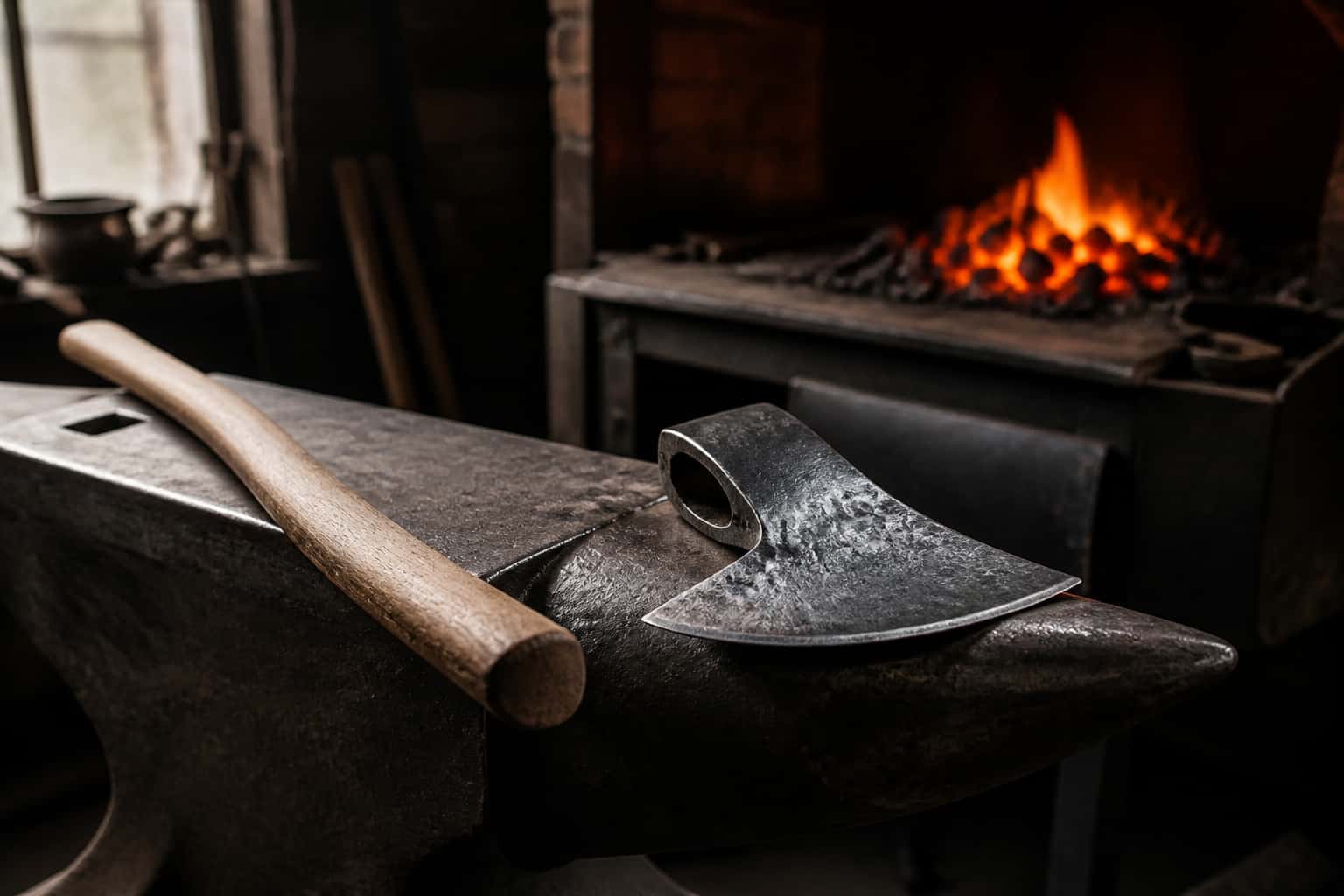
Axes & Tomahawks
Axe Anatomy & Types: The Field Guide
The axe is the knife’s working-class cousin: same steel, same edge physics, ten times the leverage and none of the pretension. It is also the deepest…
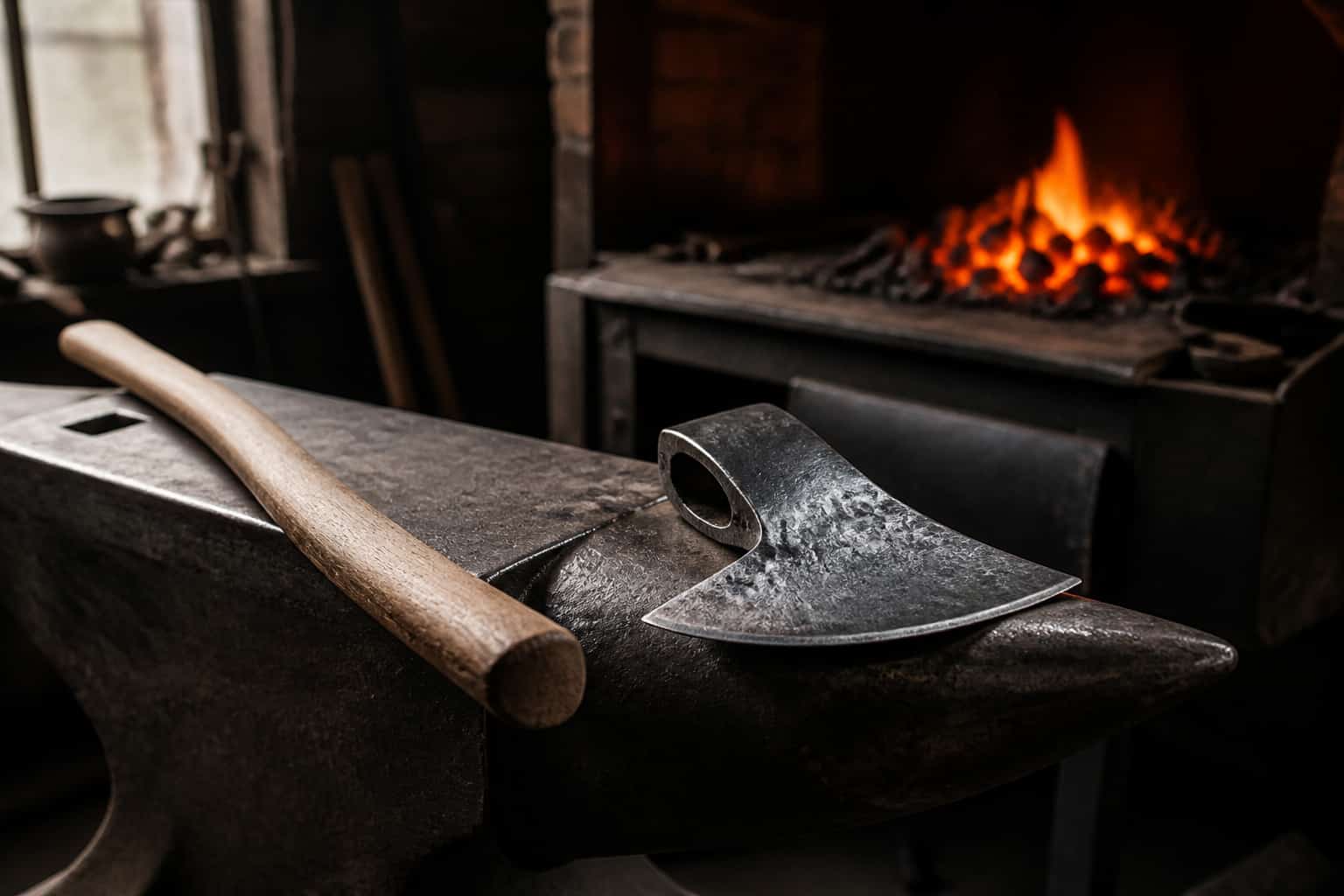
Axes & Tomahawks
How to hang an axe: hickory and grain orientation, fitting eye to haft, wood and steel wedges, alignment checks, and the tomahawk exception.
2 min readWritten by Rich LinvilleFree to read
Half an axe is wood, and the marriage of the two — the hang — is a craft old enough to have its own verbs. A perfectly forged head on a bad hang is a bad axe and a genuine hazard; a flea-market head hung well outworks it forever. Here is the whole discipline, from blank to seated wedge.
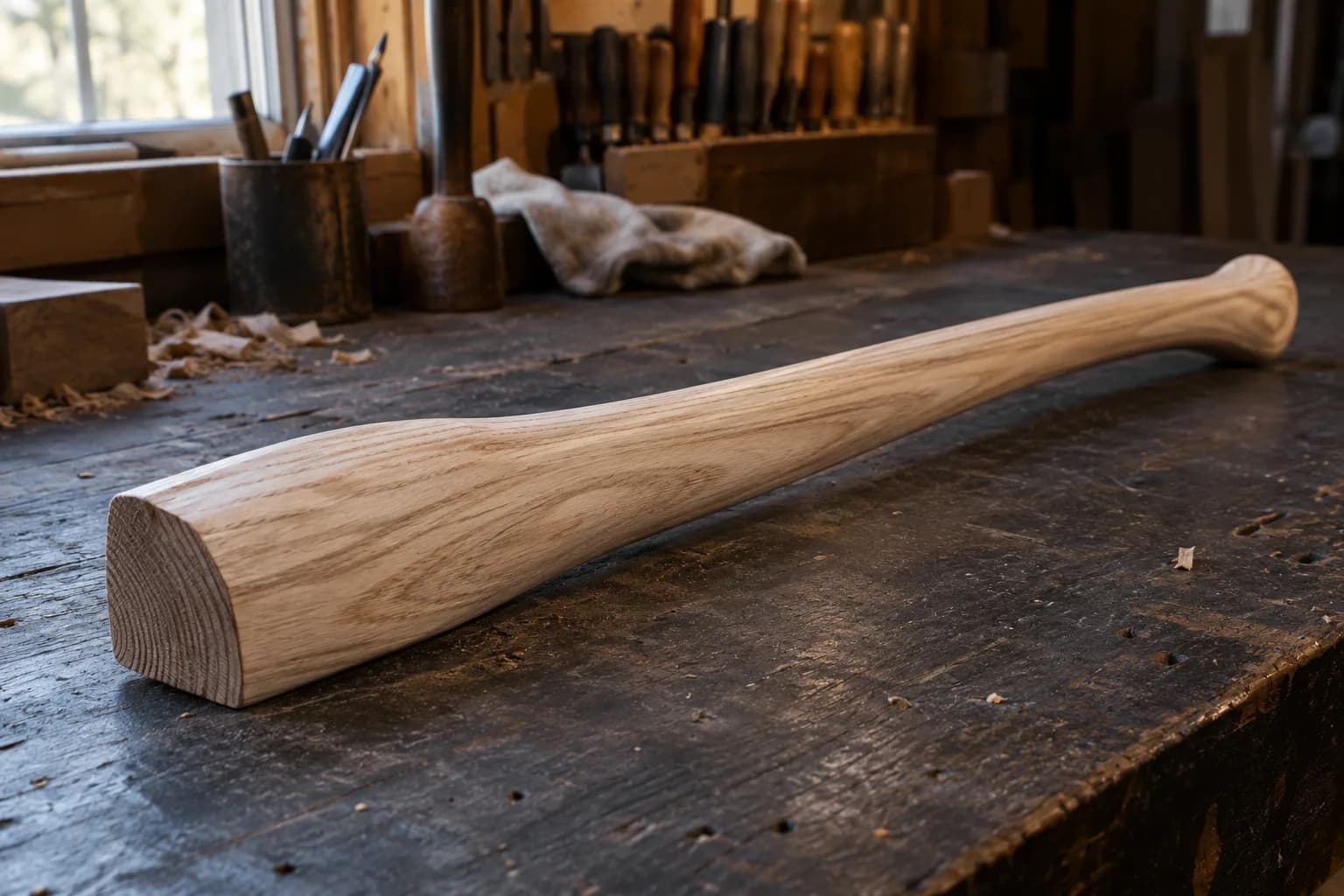
Hickory, as with hammer handles, and for the same reasons: long shock-eating fibers, strength per ounce, availability. Ash serves in hickory deserts. Grain rules: orientation running parallel to the bit’s swing plane (look at the end grain — lines running eye-to-edge, not across), continuous along the haft’s length, and runout — grain exiting the side of the haft mid-length — is the disqualifier, because that is where handles snap on overstrike. A fawn’s-foot swell for working axes, straighter for throwers; 28-36 inches for full axes, and store-bought blanks are honest starting stock that still need fitting.
The hang is a wood-to-steel joinery fit: the haft’s tongue shaved — rasp, spokeshave, or careful worn-belt passes on the 2×72 — until it slides three-quarters home by hand with even contact all around, checked by the scorch-and-scrape method (blacken the eye walls with pencil or soot, insert, and shave where the marks transfer). Impatience here is the whole failure mode: a tongue hogged thin rattles forever, and no wedge rescues a sloppy fit. Seat the head with downward taps of the haft’s butt on a block — inertia drives the head on — never by hammering the head itself.
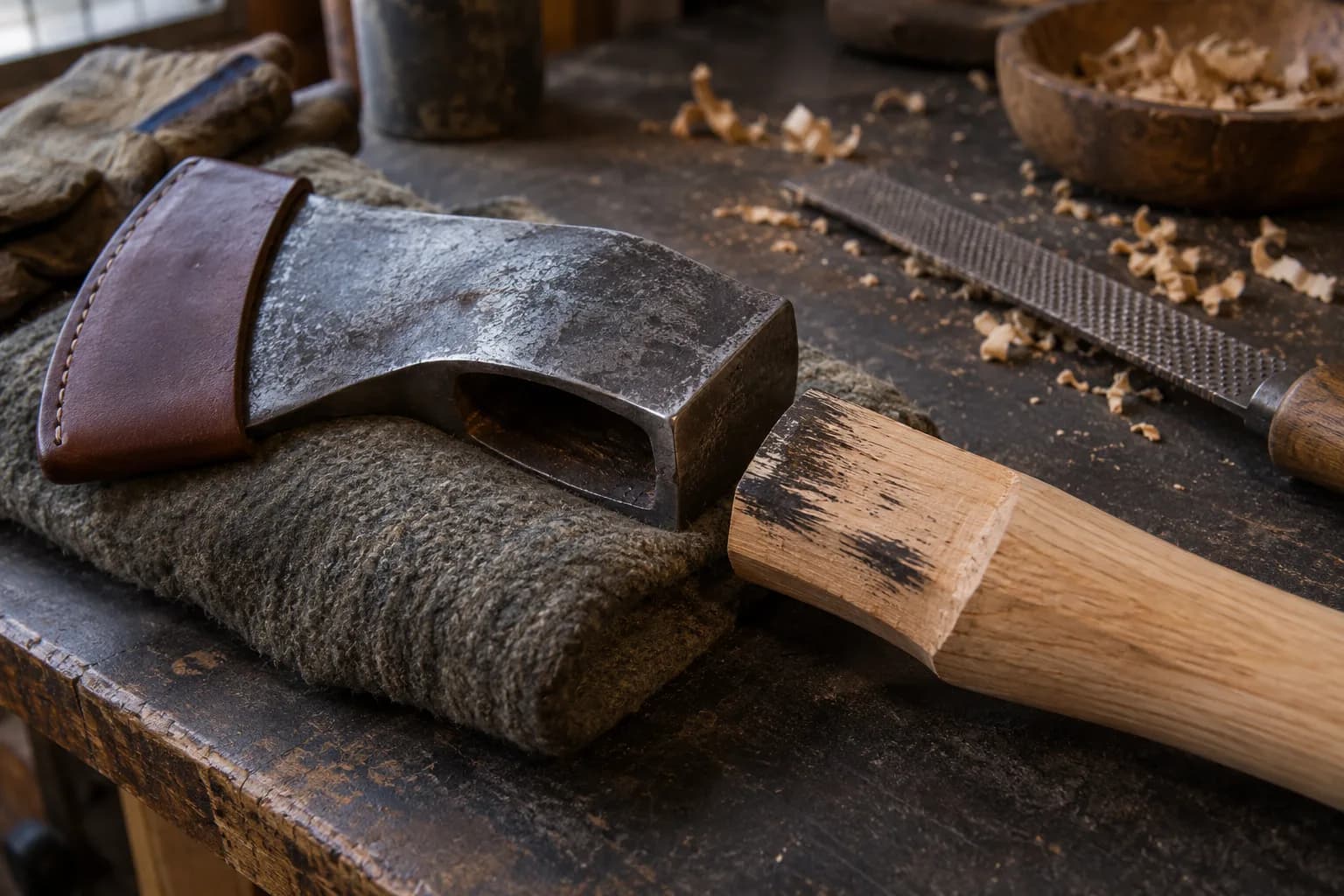
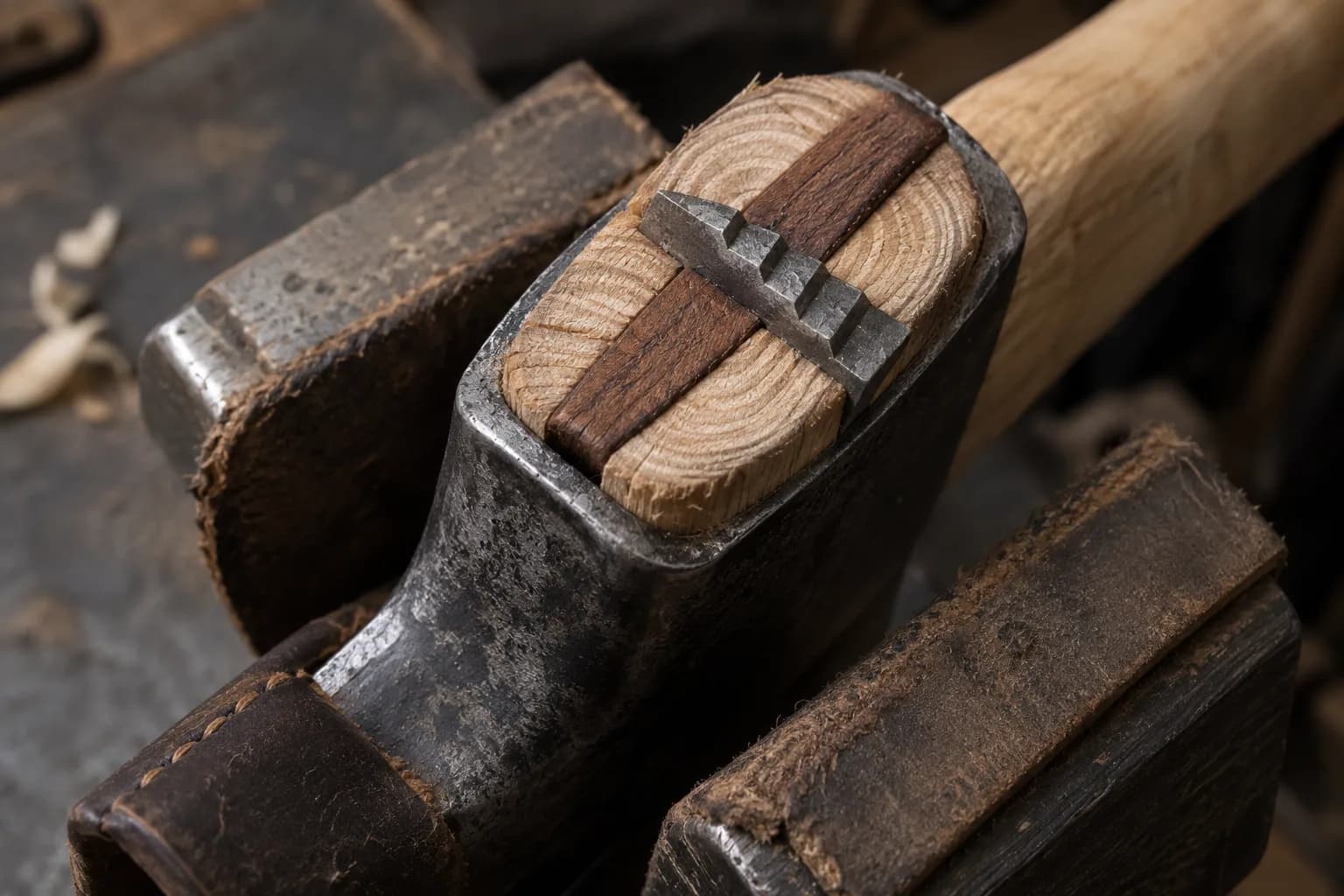
The seated tongue stands proud through the eye’s top, pre-slotted with a kerf cut before fitting. Drive the wooden wedge — hardwood, dry, sized to the kerf — with glue or without (the eternal argument; glue helps mediocre fits and complicates re-hangs), until it stops dead, then trim flush. The steel step wedge follows, driven diagonal across the wooden one, spreading the tongue both ways. Result: wood expanded against the eye’s inner taper in every direction — the same mechanical lock as a hammer eye, scaled up. Leaving a quarter inch of tongue proud of the eye (the modern fashion) adds insurance against creep.
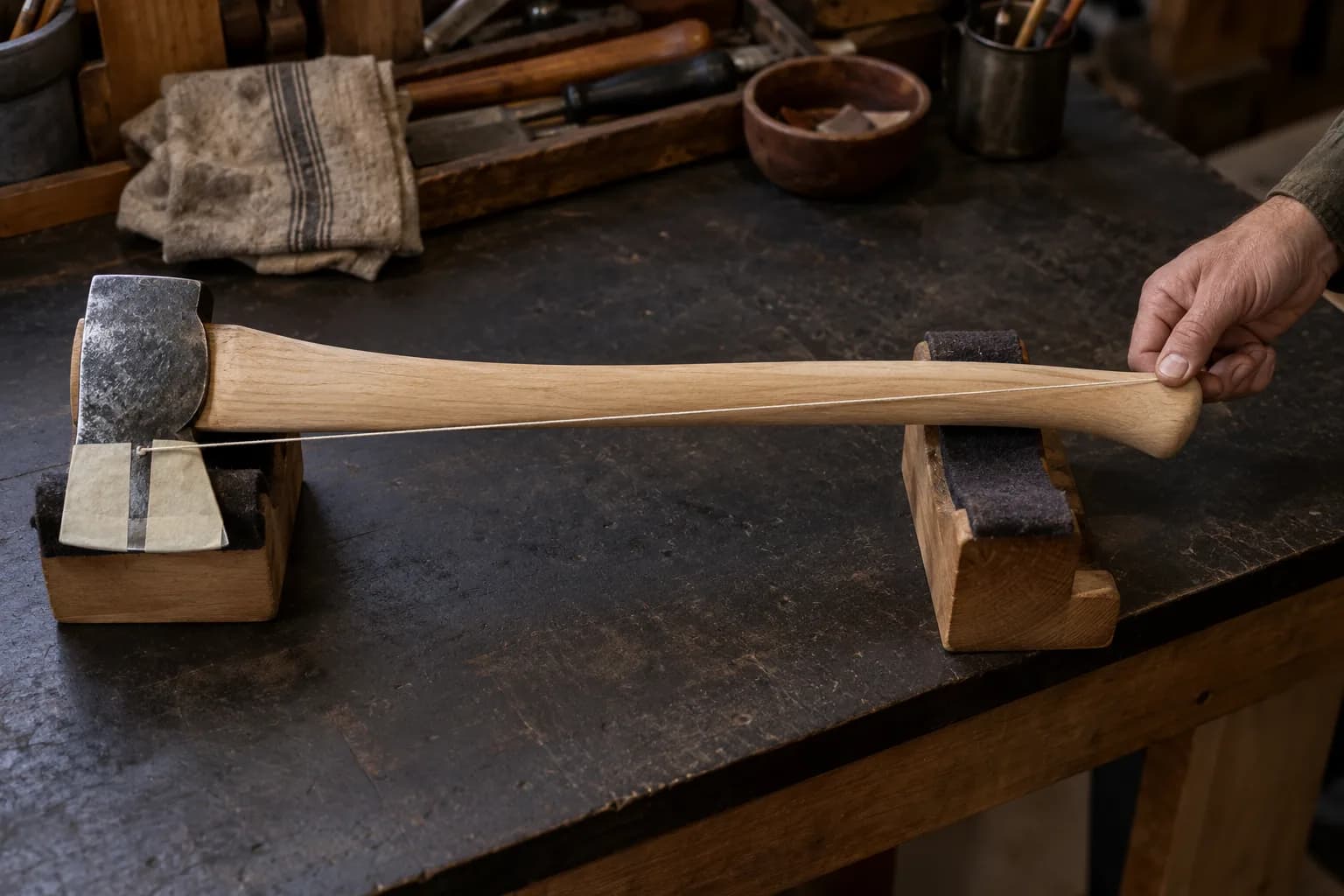
Before wedging commits everything: sight down the bit from above — the edge splits the haft’s centerline; stand the axe on a flat surface edge-down — the bit’s contact point and the haft’s swell touch in line; and the classic string test from bit center to swell confirms it. A cocked hang steers every swing subtly wrong and telegraphs amateur from across the yard. Ten minutes of sighting; a lifetime of straight cuts.
The tomahawk inverts everything: straight haft in from the TOP, no wedge, friction and the eye’s taper doing all the work — swings seat it, inversion drops it, replacement is a whittling job. Do not wedge a hawk; the removability is the design. For all hangs: raw linseed oil on the wood (never varnish — blisters, per hammer practice), a seasonal top-up, and re-seat or re-wedge at the first hint of movement. Heads loosen in dry winters and soaking a loose head is the campfire fix that ruins the fit by spring; the wedge, not the swelling, is the repair. Restoration re-hangs get their own walkthrough in Restoring Old Axes.
Keep reading
Three more from the same bench.
The axe is the knife’s working-class cousin: same steel, same edge physics, ten times the leverage and none of the pretension. It is also the deepest…
The tomahawk is North America’s own axe: born from the meeting of Native fighting clubs and European trade steel, refined into something lighter, faster…

Ask a hundred smiths for the best first forge-welding project and the tomahawk wins by a landslide: one weld, generous target, forgiving geometry, and a…
Same bench
I machine the parts, hand-assemble, track and test Torus grinders in Sterling, Illinois. Most orders ship in seven to ten business days from time of order.
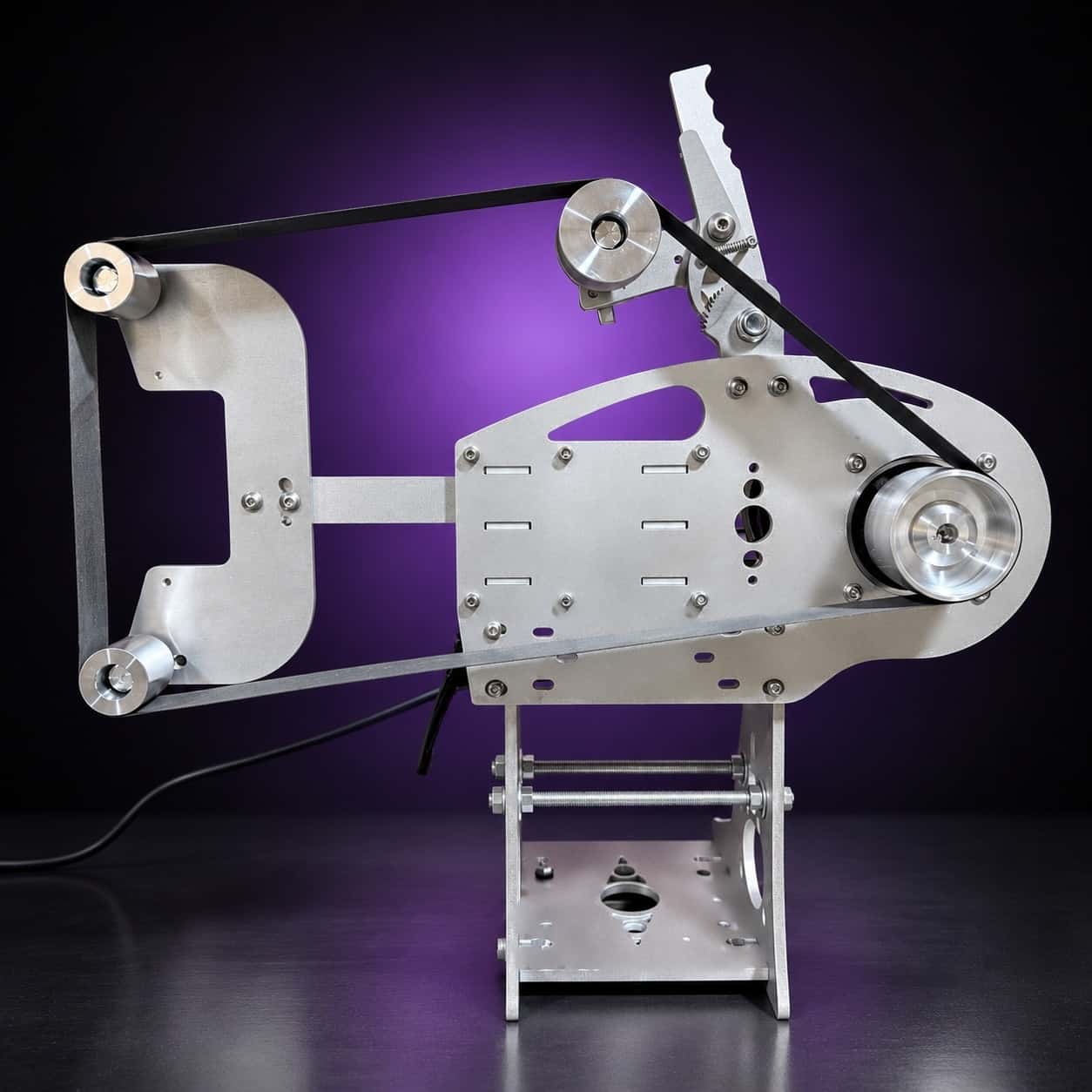
Current dual-axis platform with a fiber-laser-cut 6061 chassis and single-knob tracking.
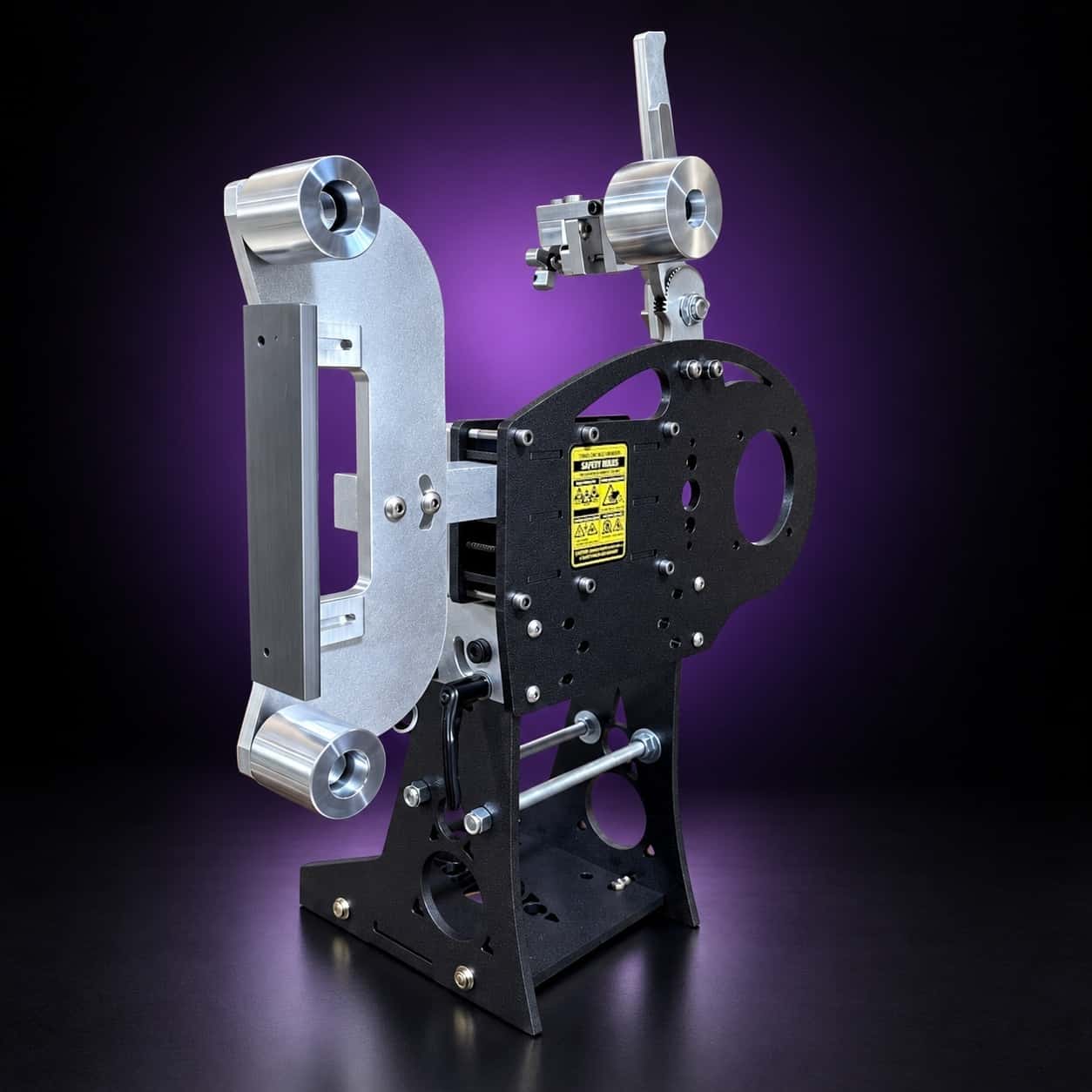
Current dual-axis platform with a steel chassis, more mass and less vibration.
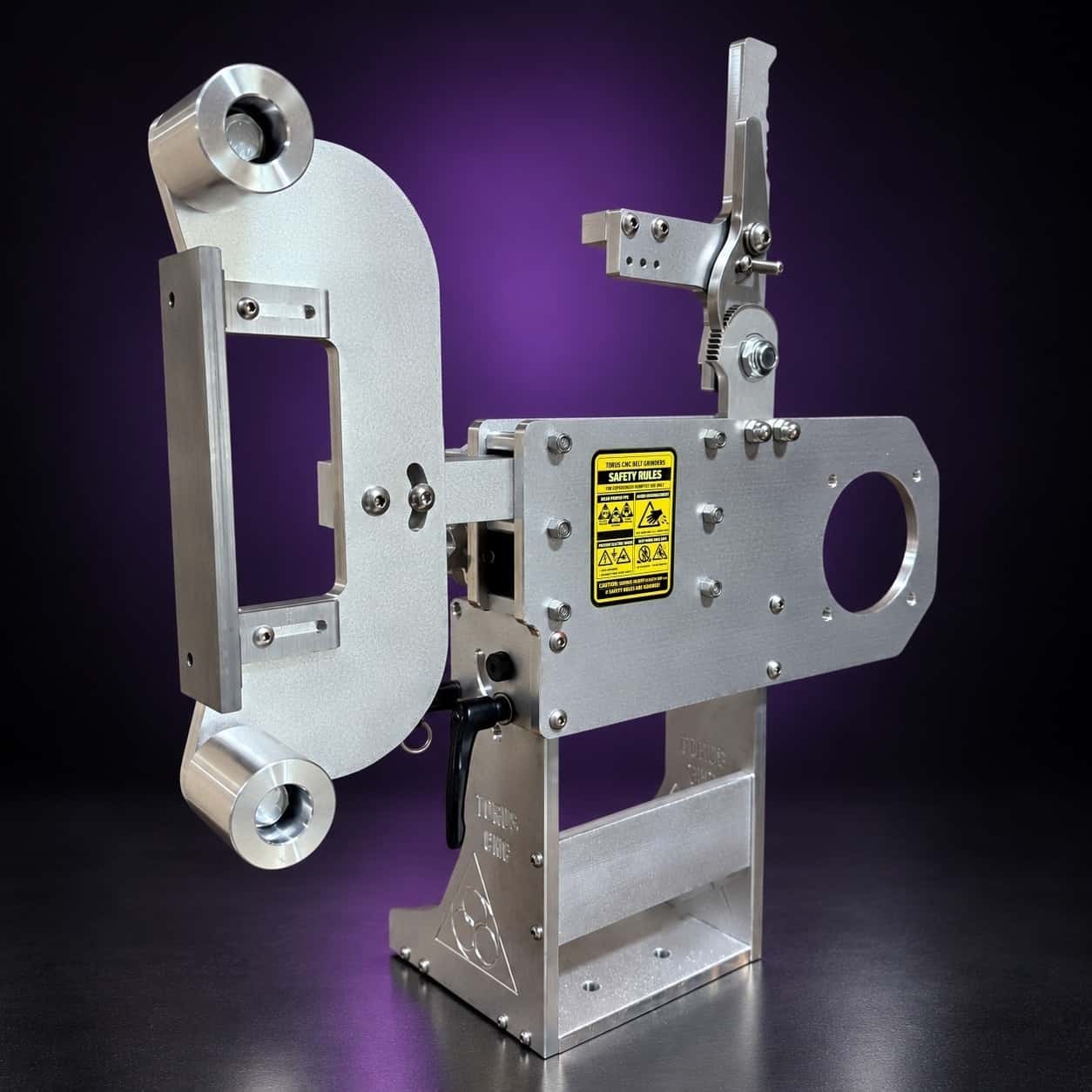
Prior-design aluminum chassis, 90-degree tilt and 1.5-inch tooling arms.
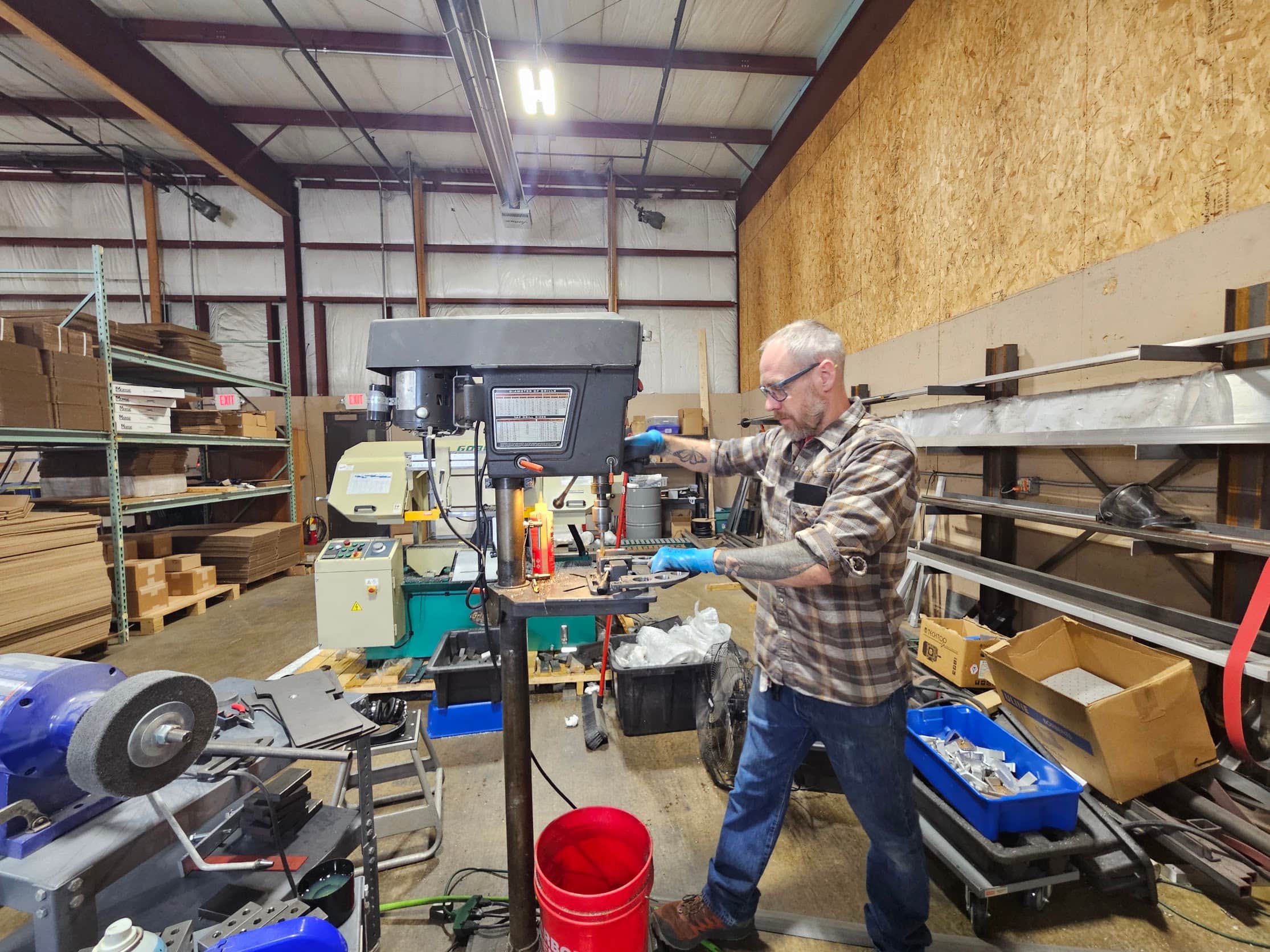
One-man shop
I answer my own email. Tell me the steel, the machine and what it is doing, and I will tell you what I would try next.