
Axes & Tomahawks
Axe Anatomy & Types: The Field Guide
The axe is the knife’s working-class cousin: same steel, same edge physics, ten times the leverage and none of the pretension. It is also the deepest…
Axes & Tomahawks
The axes that work close: Scandinavian carving axe geometry, sloyd tradition, bushcraft axe selection, choked grips, and technique that spares thumbs.
2 min readWritten by Rich LinvilleFree to read
At the opposite pole from the felling swing lives the axe as a knife with momentum: the carving axe shaping spoons and bowls a controlled inch at a time, and the bushcraft axe running a whole camp on a pound and a half of head. This end of the family rewards exactly the sensibilities knifemakers bring — geometry, edge quality, and control over force.
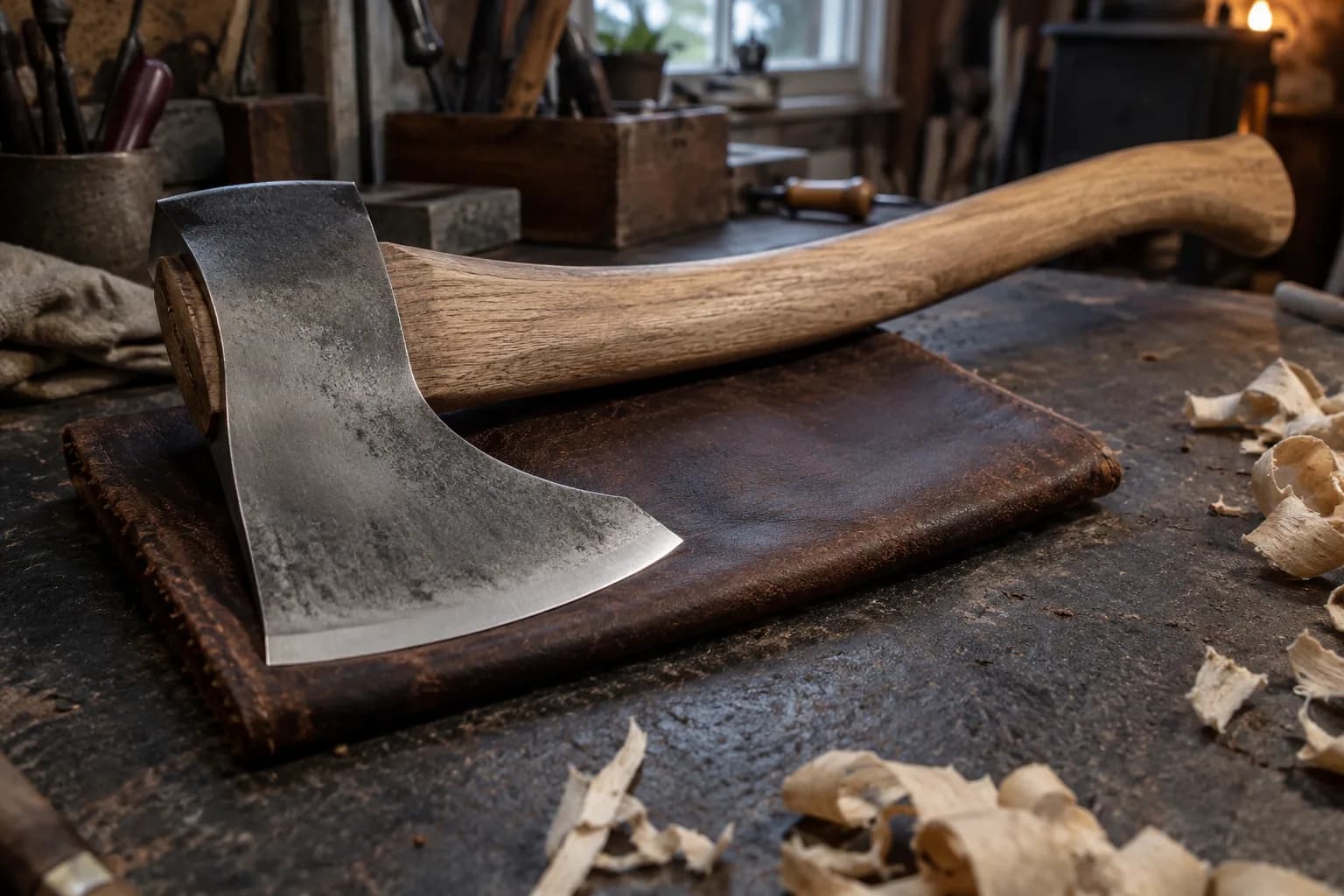
The Scandinavian sloyd tradition — green-wood spoons, bowls, stools — kept alive the axe’s most refined form: a light head (1 to 1.75 pounds), a long open bearded edge, thin nearly flat-ground cheeks, and a keen edge closer to knife practice than axe practice — flatter and finer than any working convex, per the exception noted in Axe Geometry, and finished to shaving standard. Many are ground asymmetric — flatter on the face toward the work — for the same steering logic as a chisel. The beard is the control system: the grip chokes up behind the edge, wrist above the cut, and the axe carves with the precision of a drawknife swung one inch at a time. A curved haft drops the edge into the cut at the wrist’s natural angle; the whole tool is ergonomics wearing an axe costume.
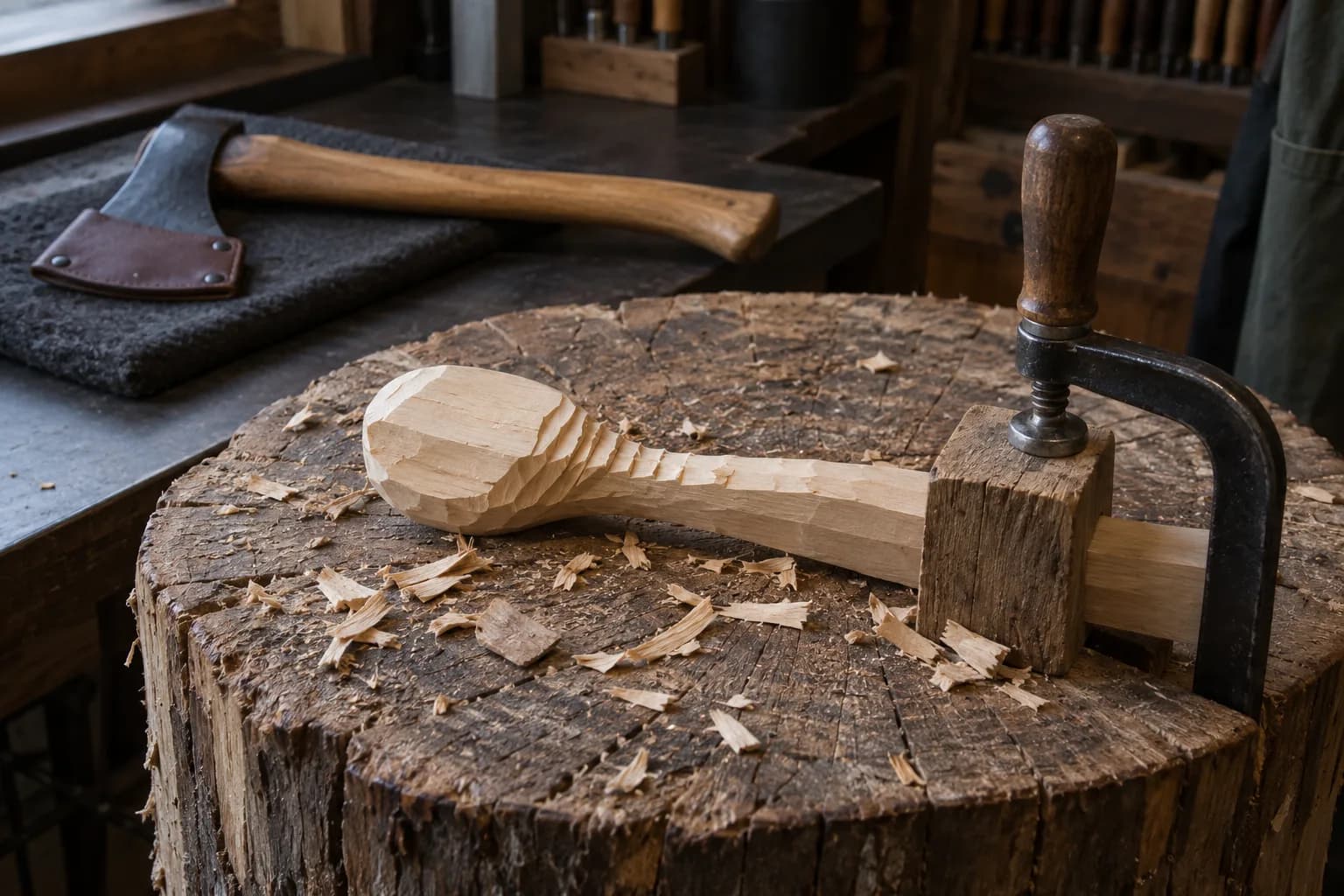
The axe does the roughing that saves the knife hours: stop cuts across grain, then controlled slicing chops down to them, workpiece braced on a stump chopping block ALWAYS — the block takes every follow-through, which is the entire safety architecture of the craft. Grips graduate: full-haft swings for hogging, choked-to-the-beard for shaping, and the high thumb-on-poll pinch for the final knife-like strokes. Green wood carves like cheese and dries to finished hardness — the reason the tradition works — and the knife work that follows the axe work belongs to the bushcraft knife’s sloyd cousins.
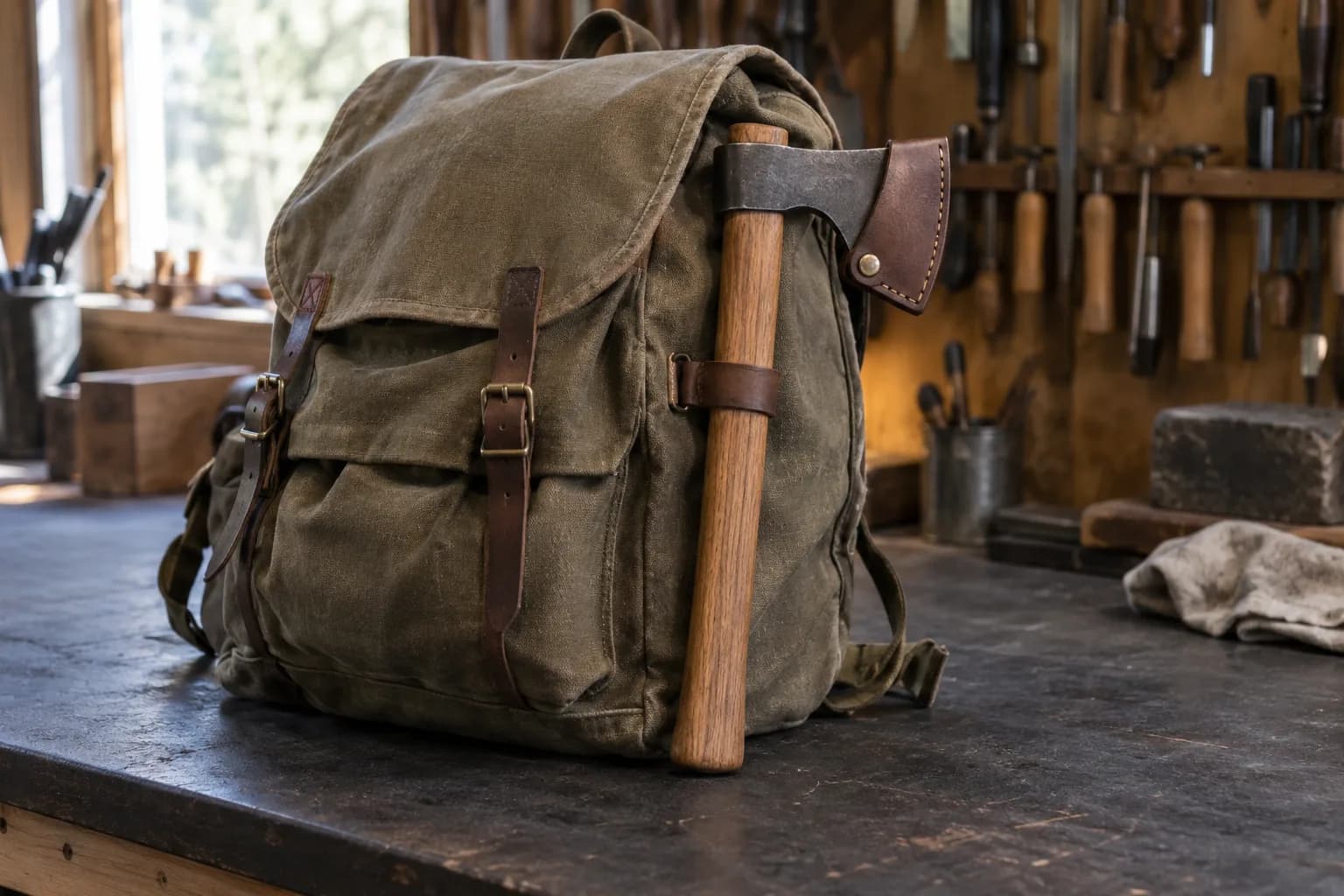
The camp axe question — what rides in the pack — resolves to honest weight classes: the small forest axe (1.5-2 lb head, 19-25 inch haft) as the consensus all-rounder that fells small stuff, splits kindling, limbs and carves passably; the Hudson Bay pattern as its heritage-shaped cousin; the true hatchet for ultralight kits (accepting its limits at anything bigger than wrist-thick); and the tomahawk as the lightest option of all, with field-replaceable hafting as its ace. The Scandinavian makers’ reputations in this class are earned — but so is the vintage path: a restored boy’s axe from the flea-market guide delivers the same service for a tenth the money and twice the story.
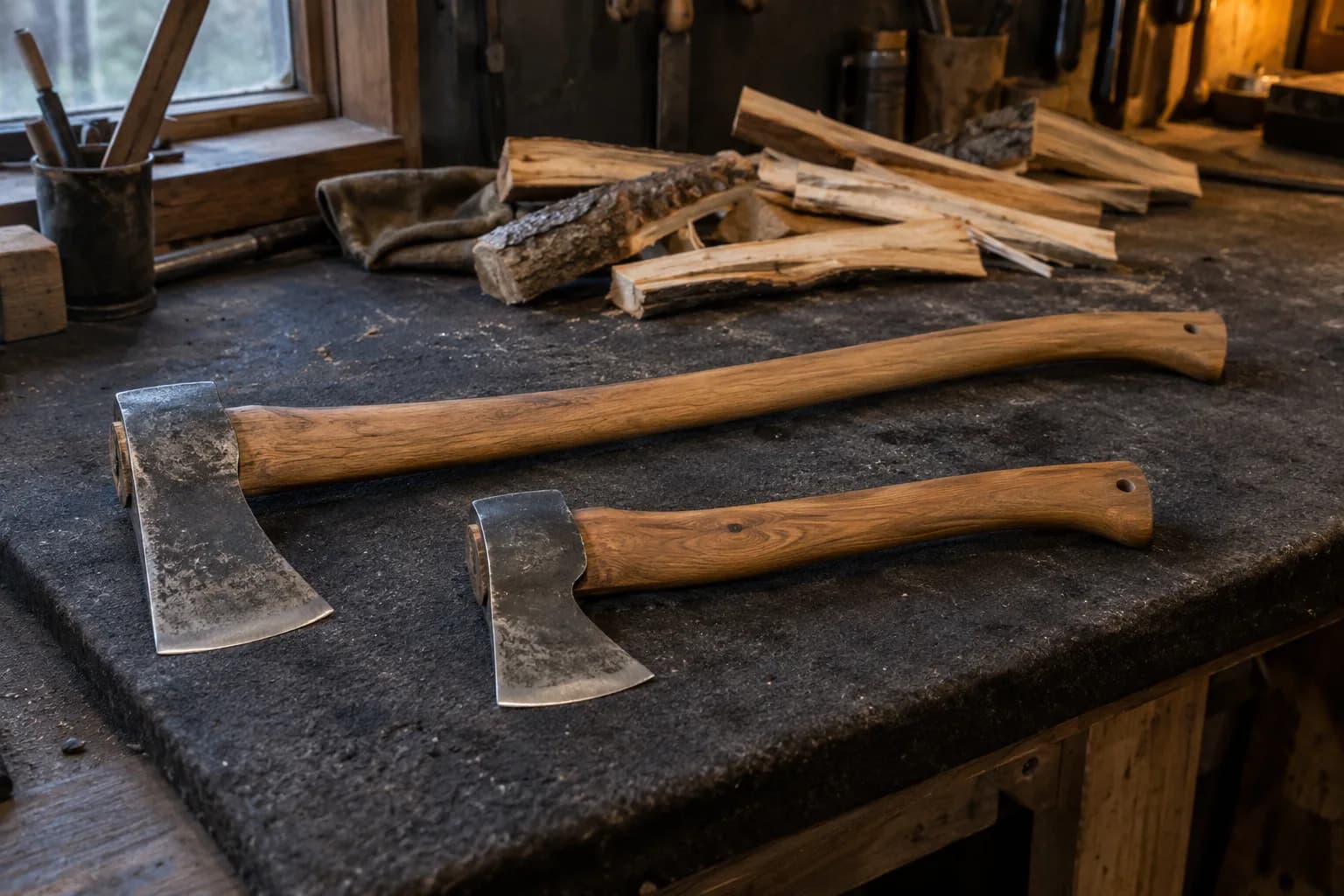
Choosing between all of the above is one question: what does the wood in YOUR life look like? Splitting stove kindling — a stout hatchet; green-woodworking — the carving axe and nothing else; general camp duty — the small forest axe; every gram counted — the hawk. For makers, the carving axe is the section’s premium product waiting to happen: it is bought by woodworkers who pay knife-grade prices for knife-grade edges, it showcases bit steel and heat treat quality like nothing else with a haft, and its edge is maintained on the same strop you already taught them to buy.
Keep reading
Three more from the same bench.
The axe is the knife’s working-class cousin: same steel, same edge physics, ten times the leverage and none of the pretension. It is also the deepest…
An axe is edge geometry with a run-up. Everything the knife-angle chart teaches applies, then the swing multiplies the stakes: geometry that merely…
The tomahawk is North America’s own axe: born from the meeting of Native fighting clubs and European trade steel, refined into something lighter, faster…
Same bench
I machine the parts, hand-assemble, track and test Torus grinders in Sterling, Illinois. Most orders ship in seven to ten business days from time of order.
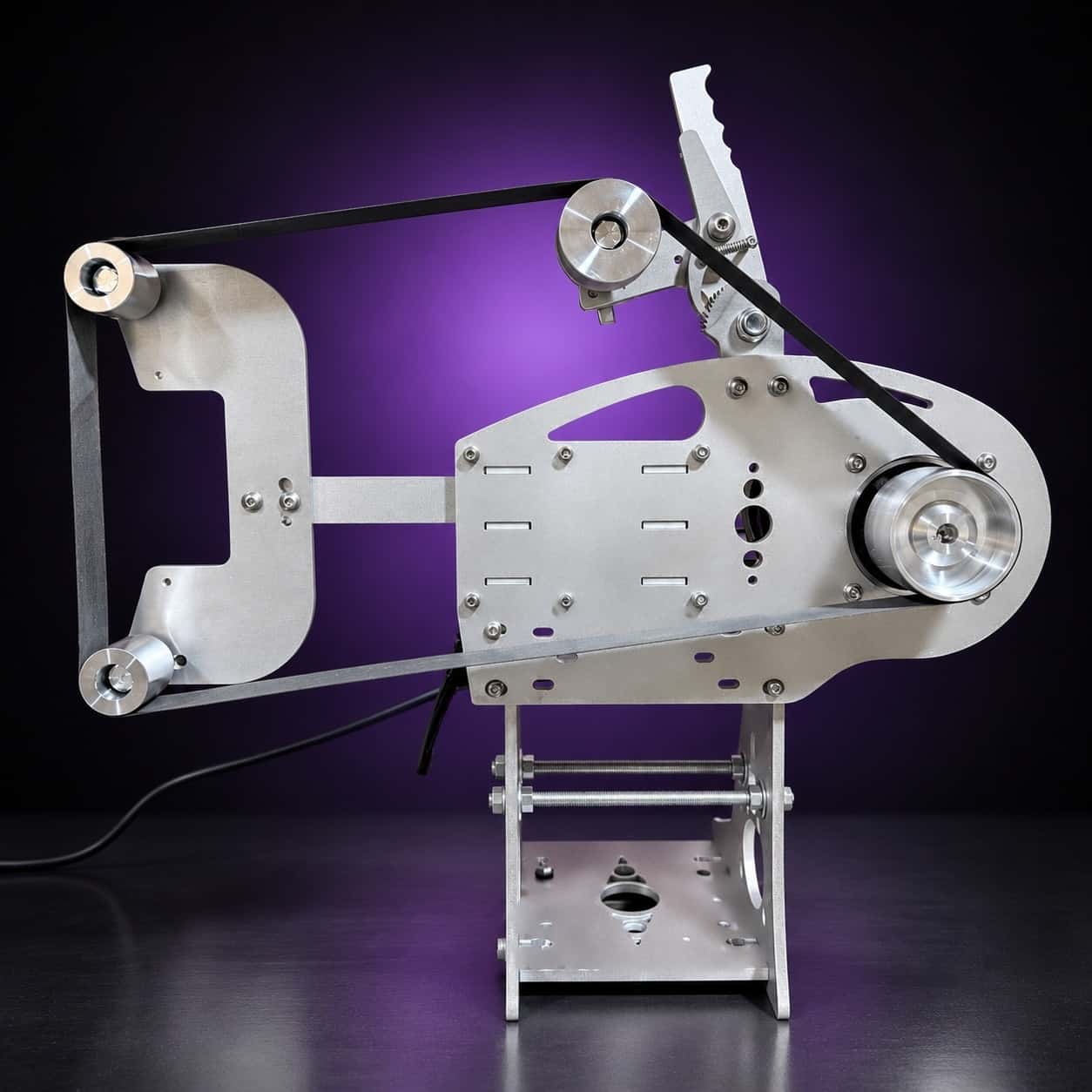
Current dual-axis platform with a fiber-laser-cut 6061 chassis and single-knob tracking.
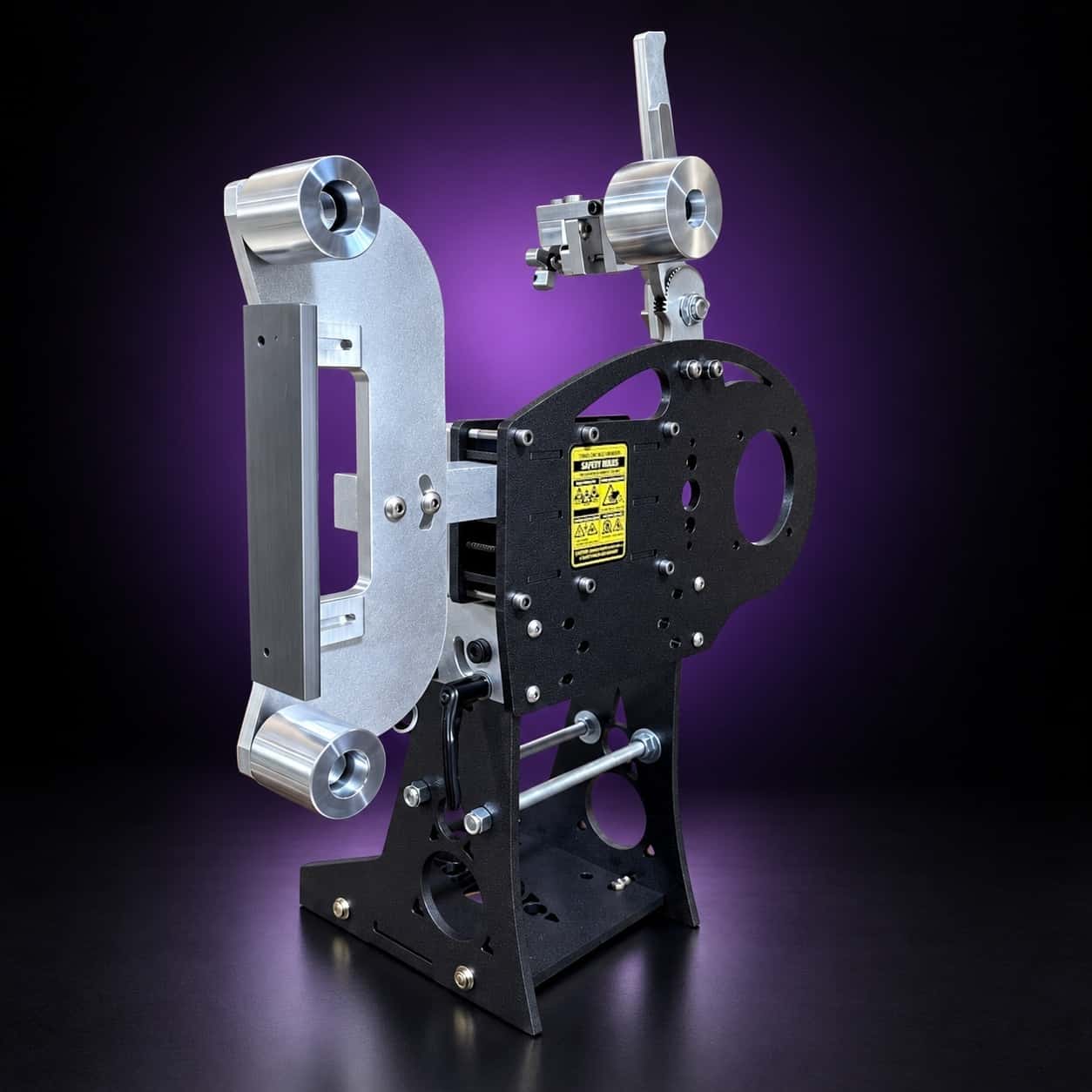
Current dual-axis platform with a steel chassis, more mass and less vibration.
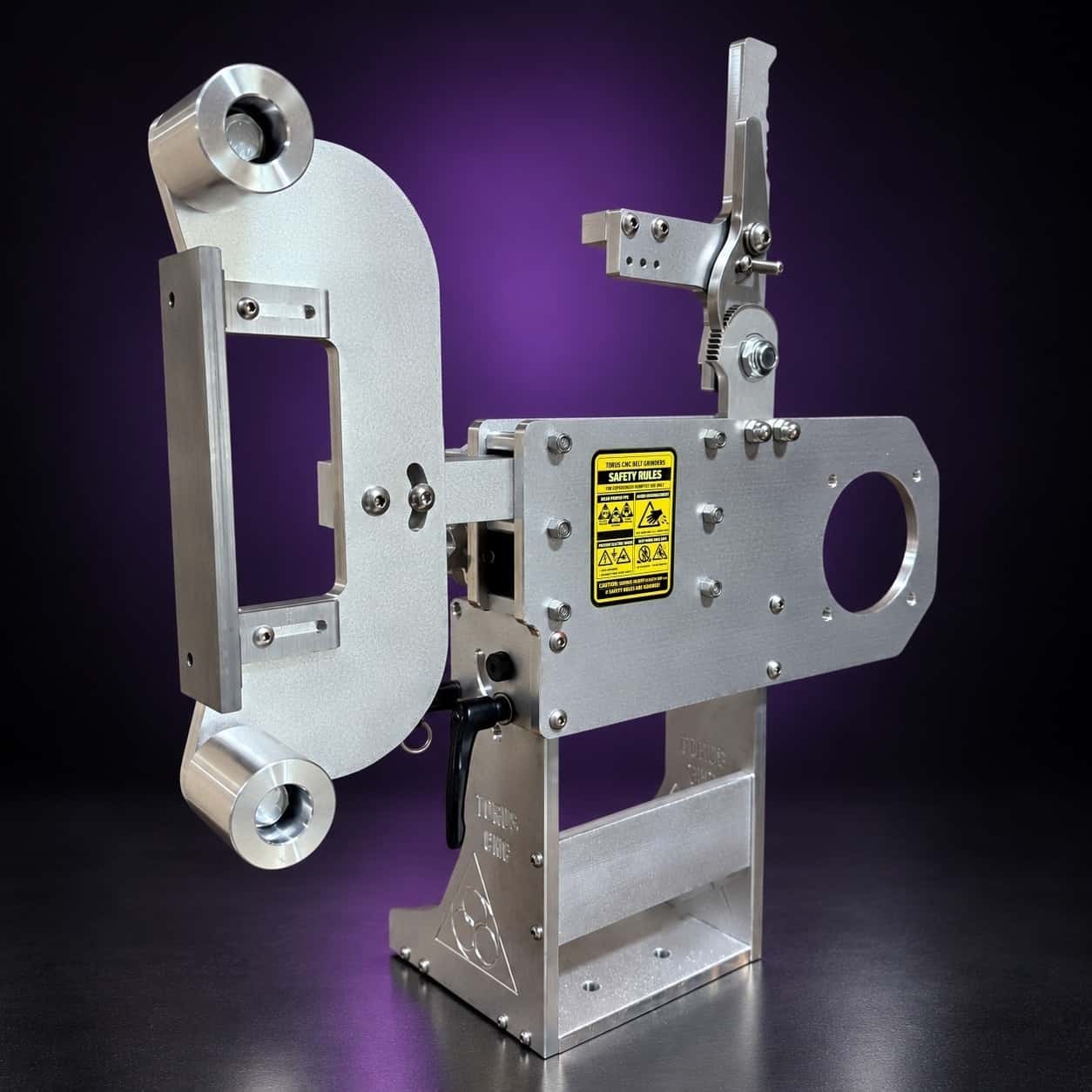
Prior-design aluminum chassis, 90-degree tilt and 1.5-inch tooling arms.
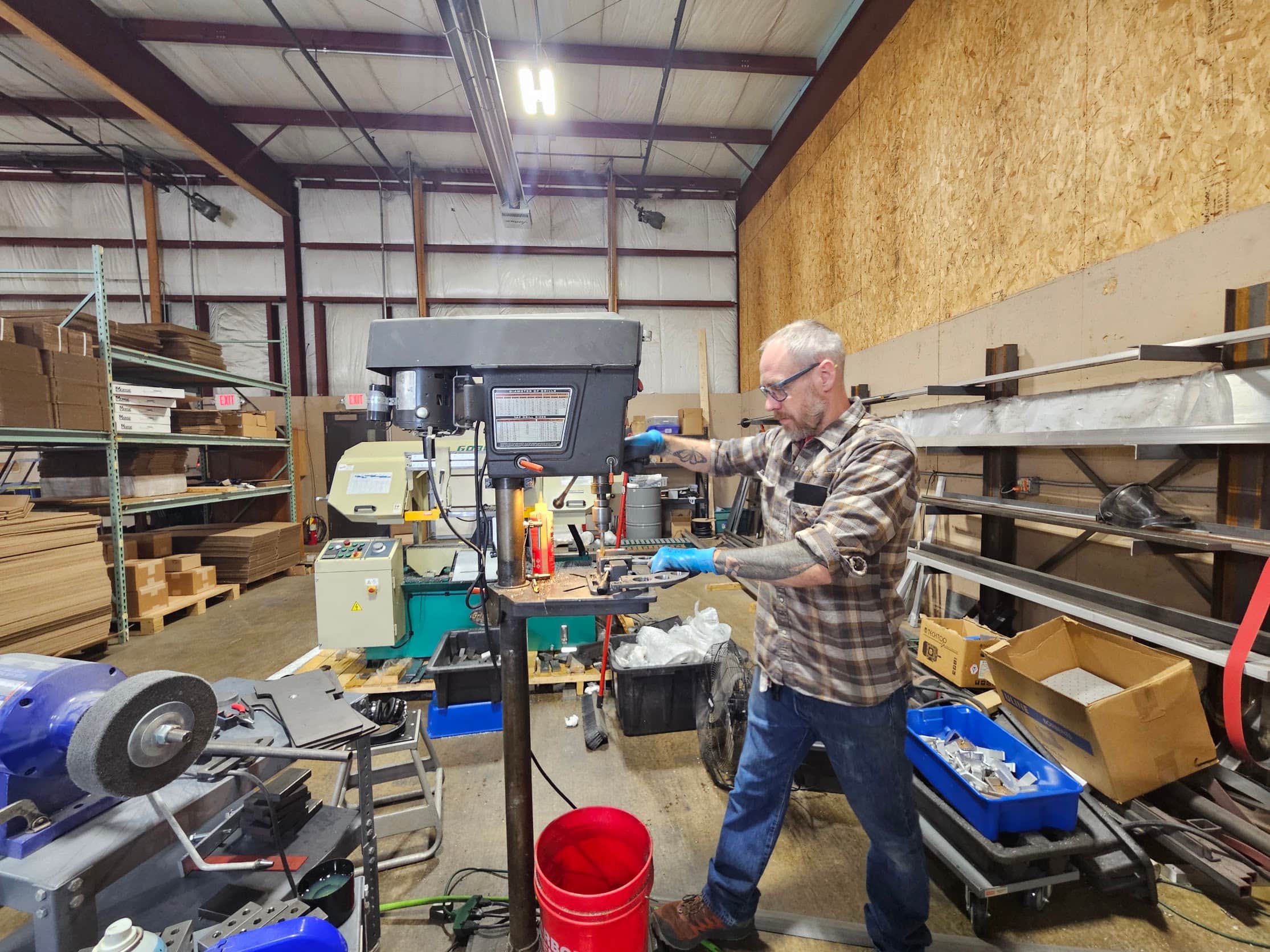
One-man shop
I answer my own email. Tell me the steel, the machine and what it is doing, and I will tell you what I would try next.