

Axes & Tomahawks
The Tomahawk: Trade Steel to Throwing Lanes
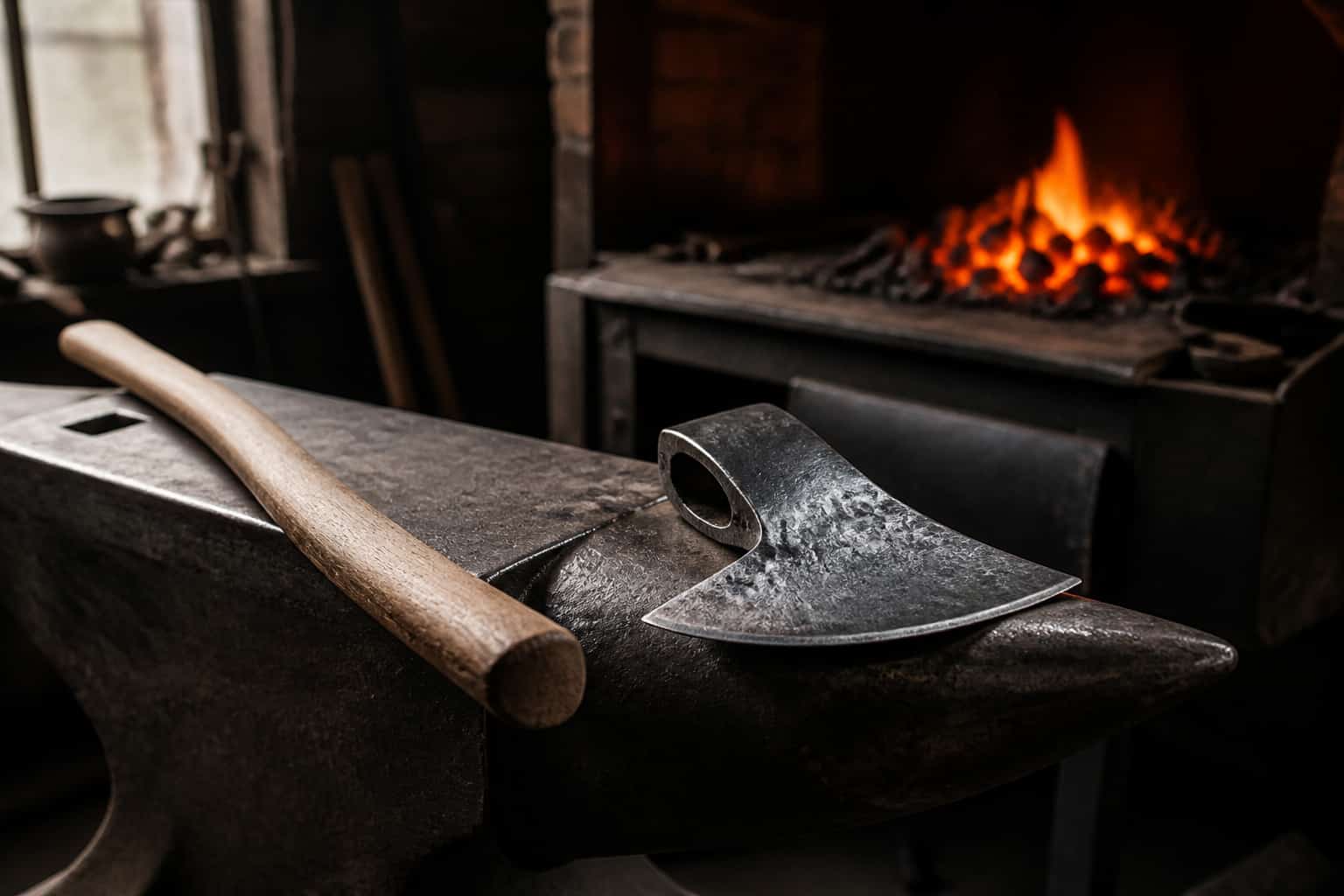
The tomahawk is North America’s own axe: born from the meeting of Native fighting clubs and European trade steel, refined into something lighter, faster…
Axes & Tomahawks
Historical battle axes without the fantasy: light Viking bearded axes, the two-handed Dane axe, medieval horseman's axes, and maker takeaways.
2 min readWritten by Rich LinvilleFree to read
The battle axe suffers the greatsword’s PR problem in reverse: fantasy art draws twenty-pound slabs no human could swing, while the real weapons were shockingly light — most under three pounds, many under two — because their designers understood what every working axe teaches: speed and edge placement kill; mass just tires.
A tool axe fights wood, which pushes back the same way every swing; a war axe fights people who dodge, parry and wear armor unevenly. So battle-axe heads shed every ounce the edge did not need: thin cheeks, broad cutting arcs, cutouts and sweeping beards, on hafts from one-hand belt lengths to two-hand reach. Against mail and padding a fast two-pound axe concentrated more violence per swing than any sword of equal weight — cheaper to make, too, which armed a lot of history. The axe was the working warrior’s weapon, and it was engineered like one.
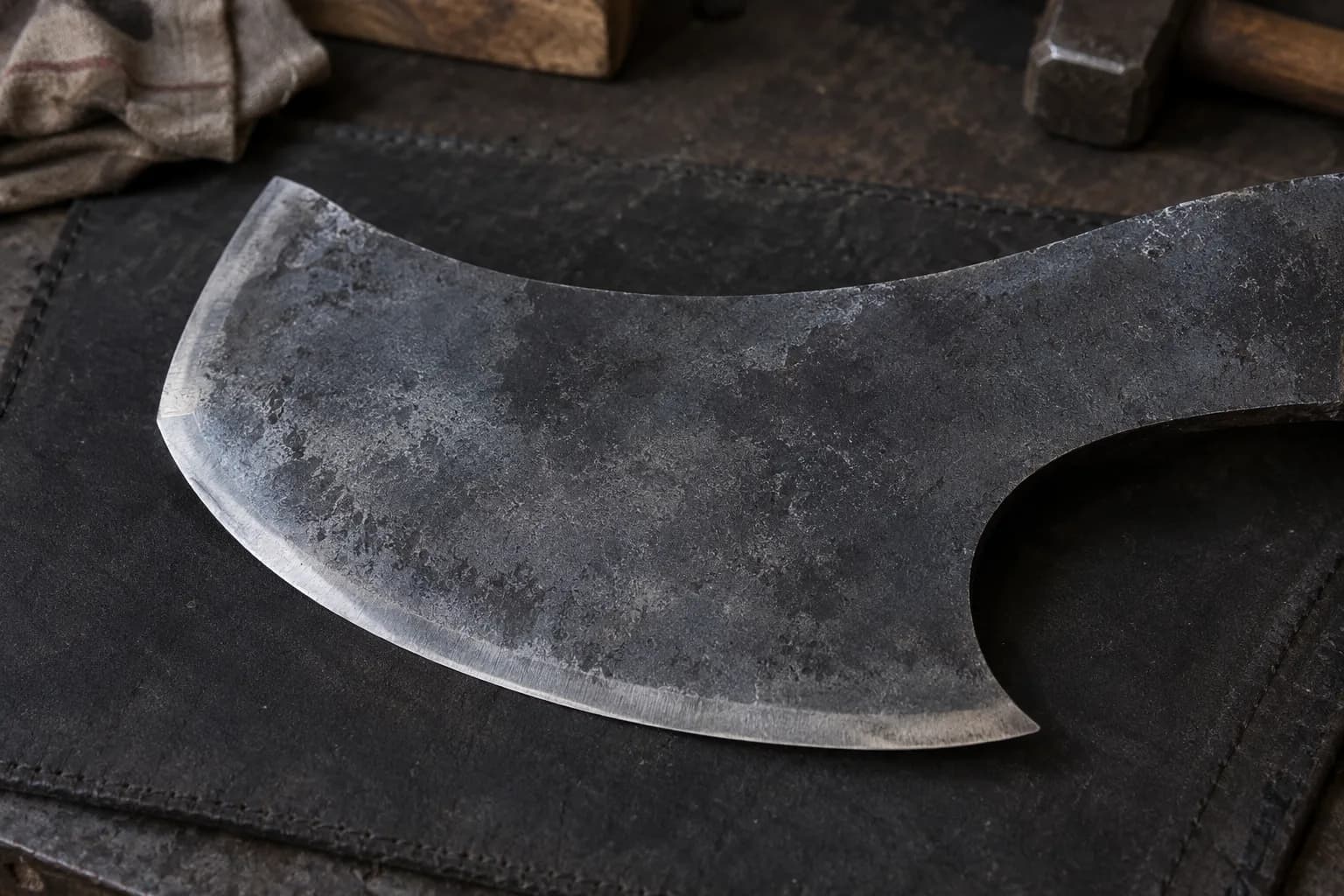
The Norse made the axe iconic. The bearded axe (skeggox) dropped its heel into the sweeping beard — more edge per ounce, plus a hook that caught shield rims and pulled them down, and a shelter to choke up behind for close work; the same geometry that makes carving axes controllable made it lethal. Its great descendant, the Dane axe of the late Viking age, put a broad thin crescent — flared toe and heel, cheeks drawn near knife-thin — on a five-to-six-foot haft: a two-handed reach weapon whose head commonly ran barely two to three pounds, swung by the housecarls at Hastings and the Varangian guard in Constantinople. Surviving heads read like blade work, not tool work — some carry hardened edge steel welded onto iron bodies, the same inserted-bit construction as the trade axes eight centuries later.
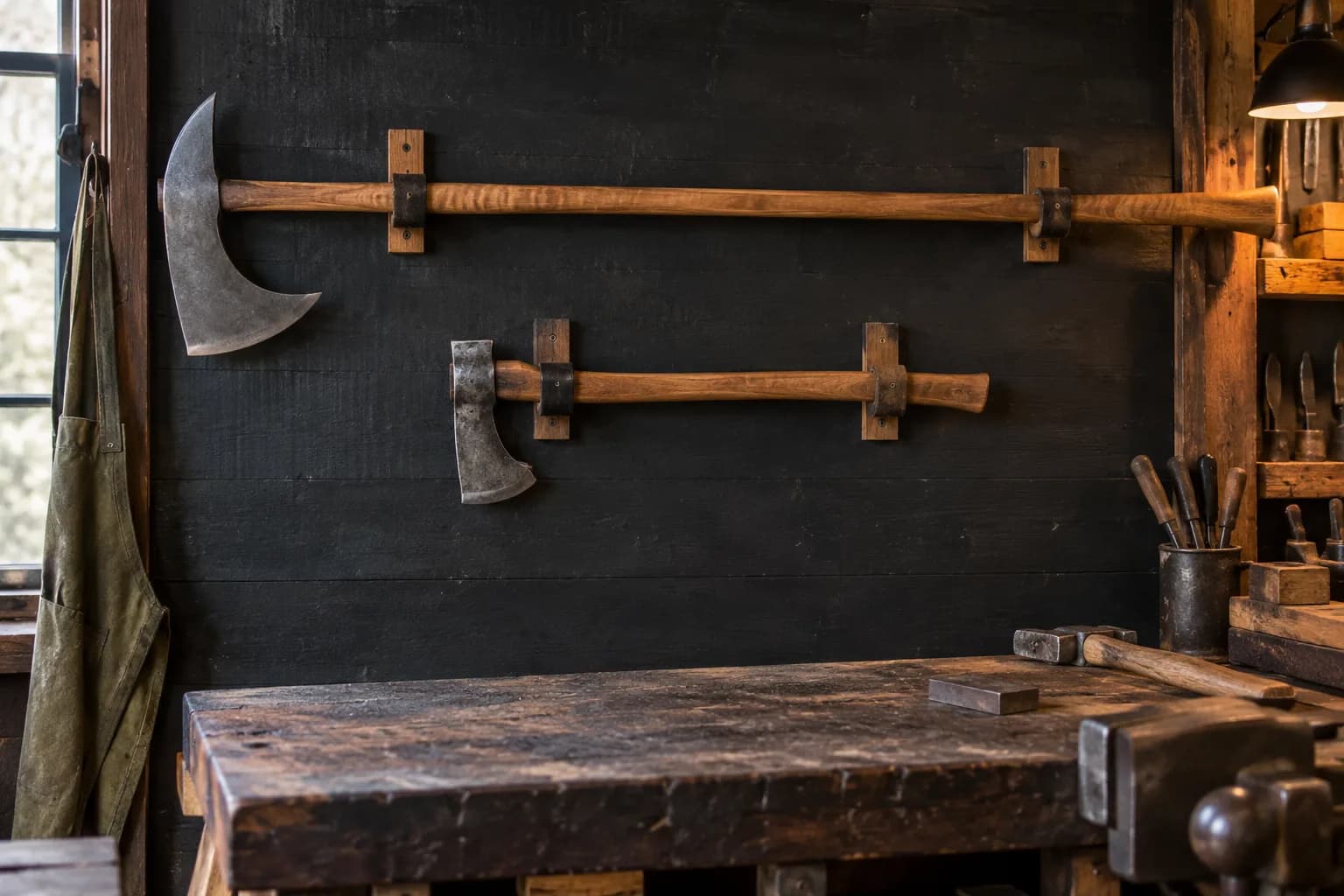
As plate armor spread, the cutting axe evolved into the armor-opening axe: the horseman’s axe and the poleaxe family paired a compact bit with a hammer or spike poll and a top spike — a can-opener toolkit on a haft, aimed at the joints and dents where plate yields. The pure broad cutter retired to the tool shed it came from; the sparth and Lochaber axes carried the long-axe idea to the Scots; and the throwing francisca — the Frankish short axe that named a people — had already shown centuries earlier that a thrown axe was worth an army’s respect.
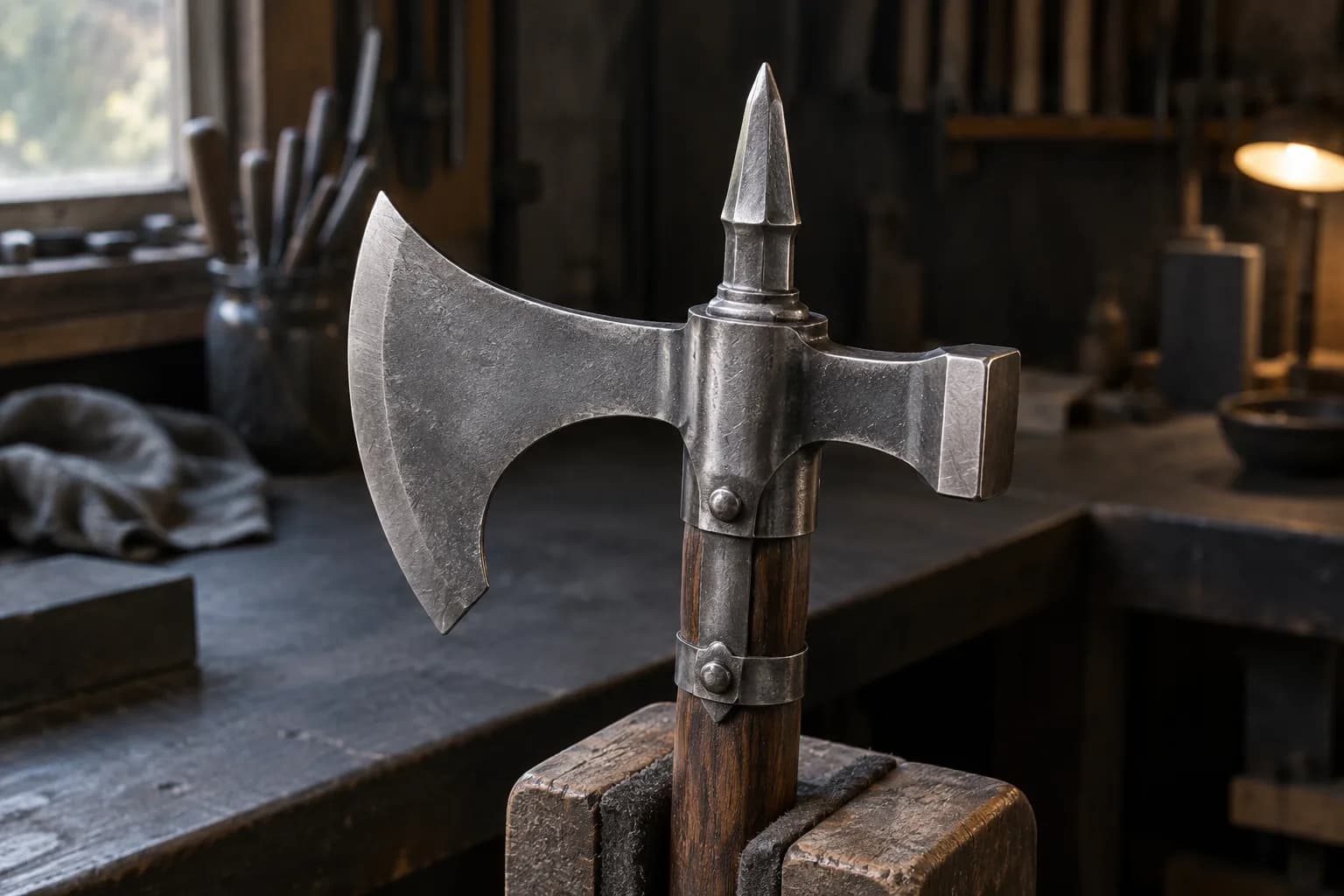
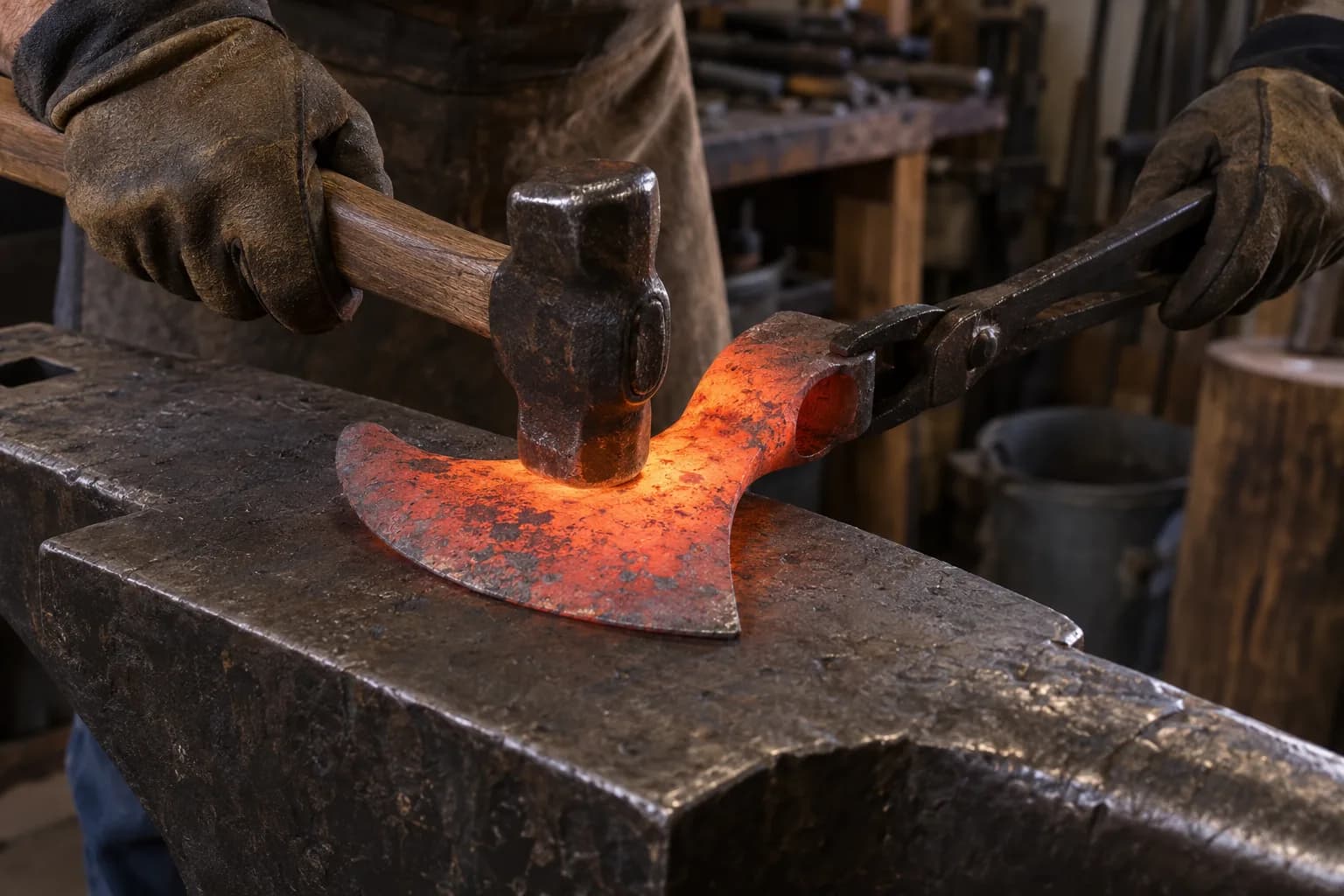
For the maker, battle-axe reproduction is the wrapped-eye craft at its most rewarding: a bearded Viking axe is the direct big brother of the forged tomahawk — same wrap, same welded bit, more drawing — and the thin-cheeked Dane crescent is a forging masterclass in moving steel WIDE without leaving it thick. Respect the real weights (a reproduction that gains a pound over the original loses everything the original was); leave hand-forged surfaces honest for the reenactment market; and let the historical construction — iron body, steeled edge — be the selling story it genuinely is. The customers are the HEMA, reenactment and LARP communities, and they know their typology cold: build to the finds, and they will find you.
Keep reading
Three more from the same bench.
The tomahawk is North America’s own axe: born from the meeting of Native fighting clubs and European trade steel, refined into something lighter, faster…
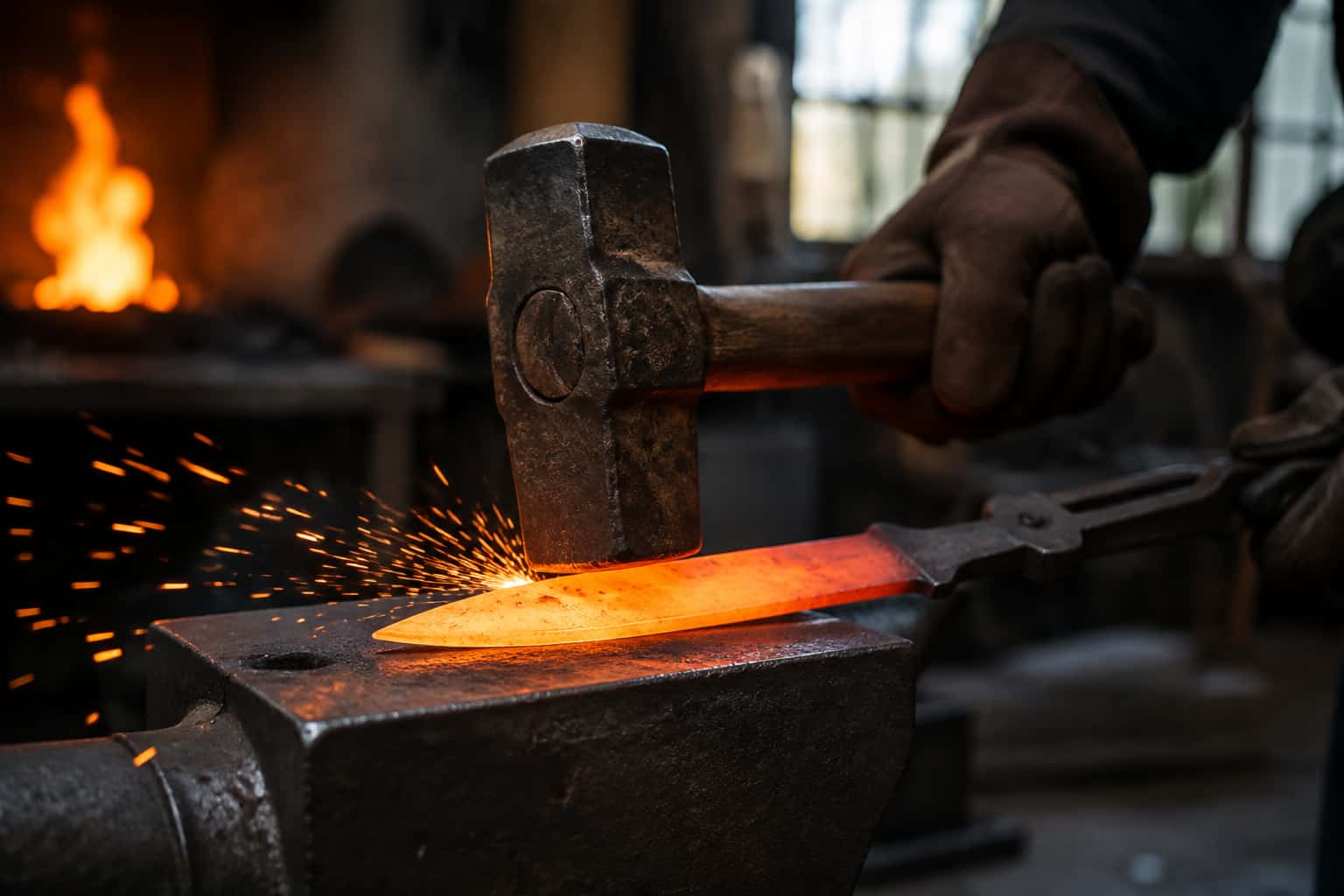
Ask a hundred smiths for the best first forge-welding project and the tomahawk wins by a landslide: one weld, generous target, forgiving geometry, and a…
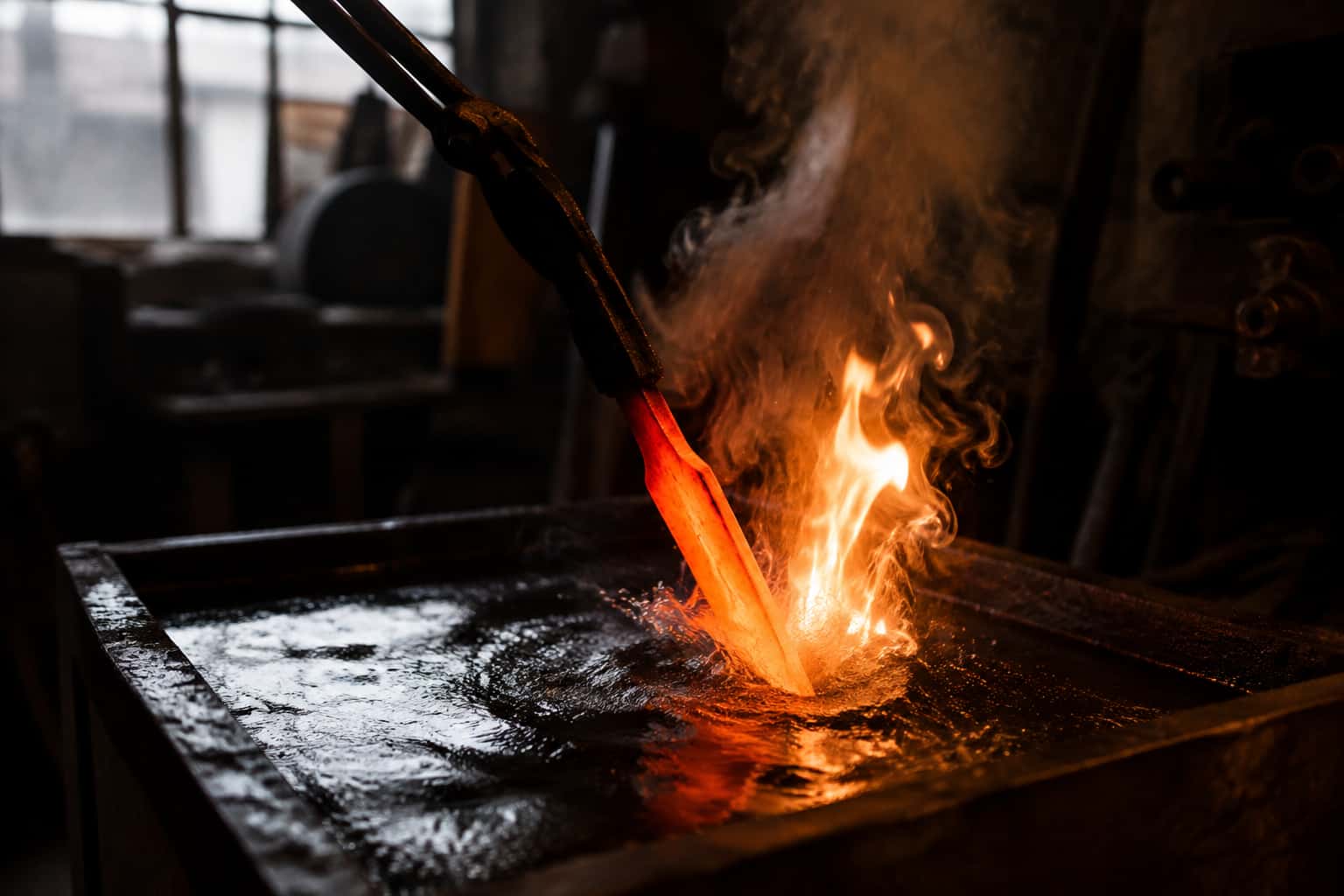
An axe is edge geometry with a run-up. Everything the knife-angle chart teaches applies, then the swing multiplies the stakes: geometry that merely…
Same bench
I machine the parts, hand-assemble, track and test Torus grinders in Sterling, Illinois. Most orders ship in seven to ten business days from time of order.

Current dual-axis platform with a fiber-laser-cut 6061 chassis and single-knob tracking.

Current dual-axis platform with a steel chassis, more mass and less vibration.

Prior-design aluminum chassis, 90-degree tilt and 1.5-inch tooling arms.

One-man shop
I answer my own email. Tell me the steel, the machine and what it is doing, and I will tell you what I would try next.