
Axes & Tomahawks
The Tomahawk: Trade Steel to Throwing Lanes
The tomahawk is North America’s own axe: born from the meeting of Native fighting clubs and European trade steel, refined into something lighter, faster…
Axes & Tomahawks
Axe throwing for makers: WATL and IATF leagues, one-rotation basics from about 12 feet, thrower specs, backyard range rules and what to build.
2 min readWritten by Rich LinvilleFree to read
The tomahawk’s oldest pastime became the 2010s’ unlikeliest boom: axe-throwing venues in every city, two international leagues, televised finals — and a permanent new market for makers, because throwers break, tune and collect their tools like golfers. Here is the sport, the specs and the physics of the satisfying thunk.
Organized throwing runs mainly under the World Axe Throwing League (WATL) and the International Axe Throwing Federation (IATF). The shared shape: hatchet-class throwing from a line about 12 feet out — the distance that naturally gives one full rotation — at a wooden bullseye target; big-axe rounds throw from farther (15-plus feet) to buy the same rotation with a longer handle. WATL boards score rings up to a 6-point bullseye with corner killshots worth 8 that must be called before the throw; IATF runs its 5-3-1 board with a 7-point clutch. Matches are typically ten throws, sudden-death on ties. The venue boom put lanes and coaching in reach of everyone — and put replacement-hawk demand on every maker’s bench within driving distance.
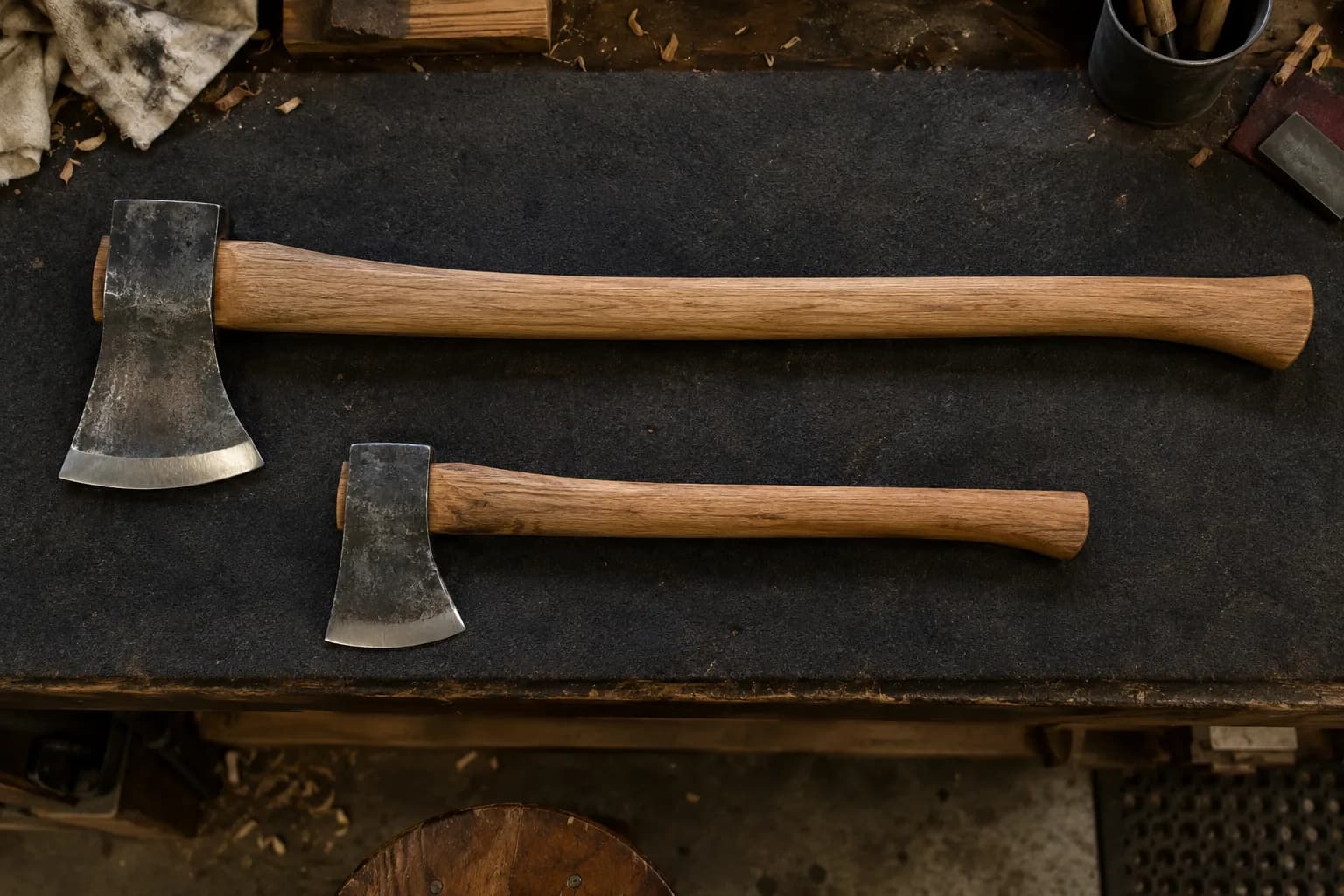
A throwing hawk diverges from the working tomahawk on purpose: head light (commonly in the 16-20 oz zone for hawk-class), bit narrow and THIN — penetration into end-grain pine is the whole job, so the stout convex of a working edge gives way to a leaner grind — haft straight and longer than feels natural (14-19 inches by class and style), and overall balance tuned so rotation is predictable. League rules bound weights, lengths and edge limits; anyone building for competitors reads the current rulebook before quoting, because specs are the sport. Durability design matters more than edge design: throwers miss, hit handles-first, and glance off targets onto concrete — soft-tempered 1060-class or 4140 heads and easily replaced hafts are the honest engineering.
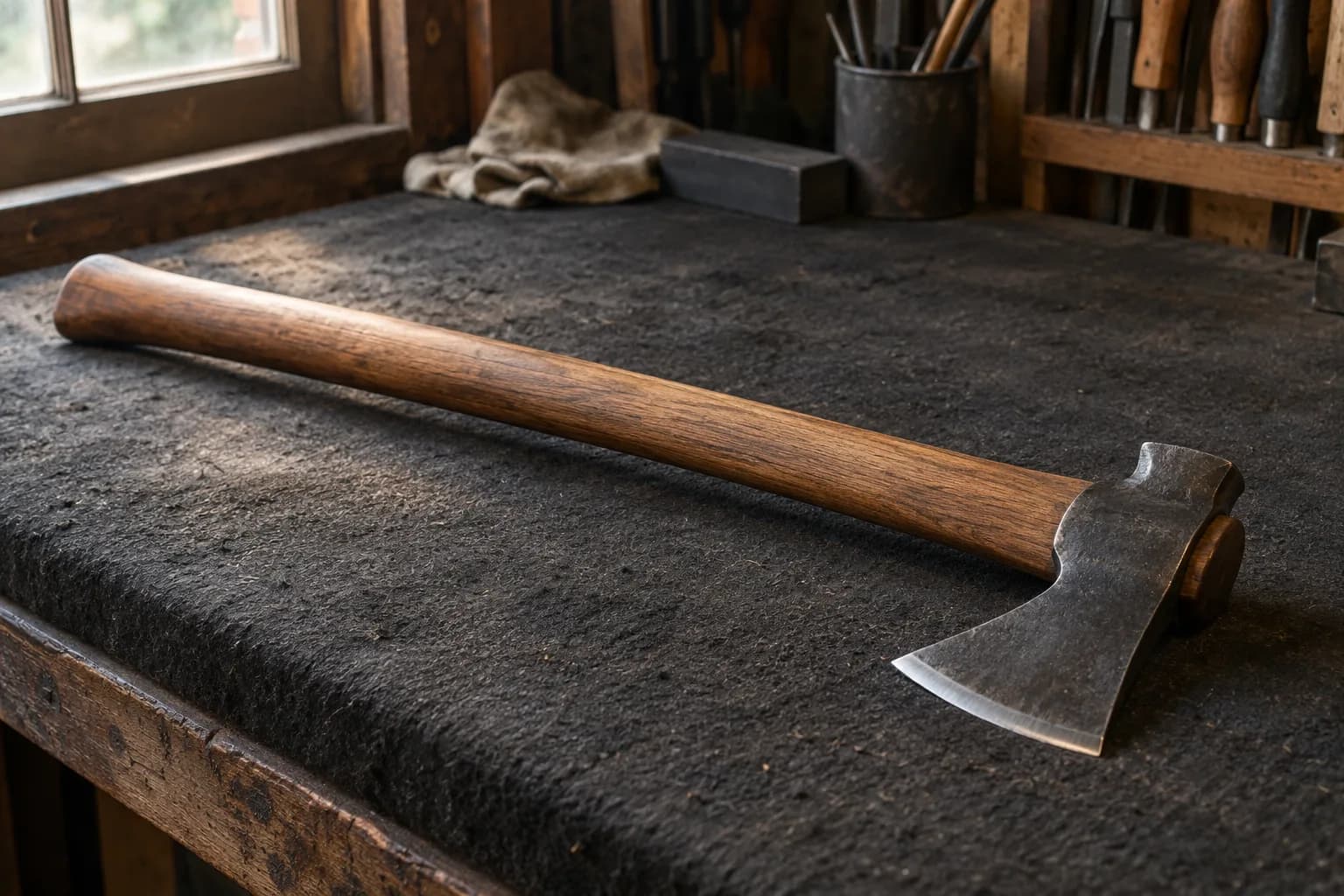
One-rotation throwing is consistency physics, not strength: same grip (handshake, thumb along the flat or wrapped, loose enough to release clean), same stance, same smooth overhead stroke with the release when the haft passes vertical — the axe does the rotating; the thrower’s only job is doing nothing differently. Distance tunes rotation: blade over-rotates (handle-high strikes), step BACK; under-rotates (handle-low), step in. Half-rotation and no-spin styles exist at shorter distances and long knives borrow the same lanes, but one clean rotation at twelve feet is the craft’s front door, and most people stick their first bullseye inside an hour of coached throwing.
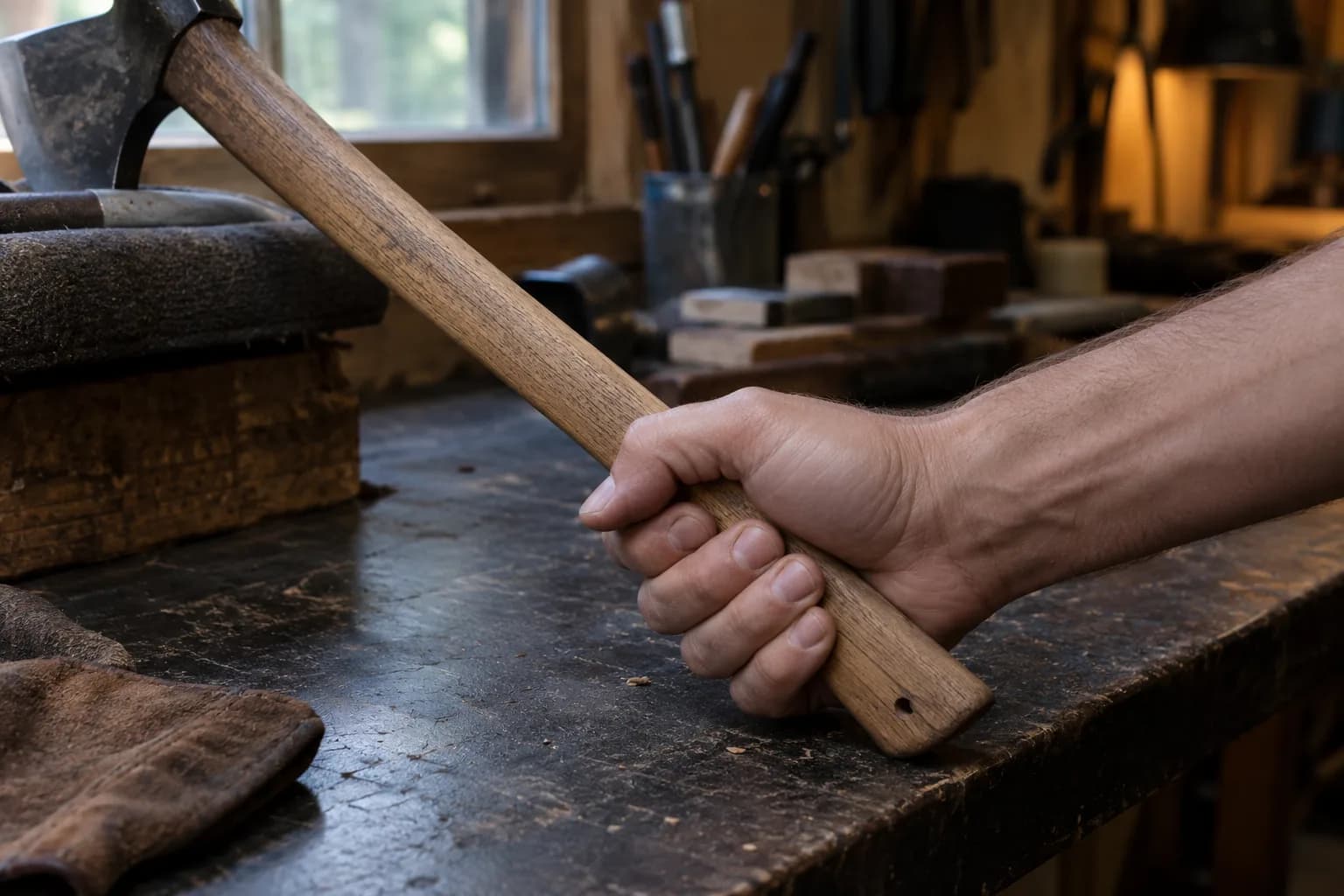
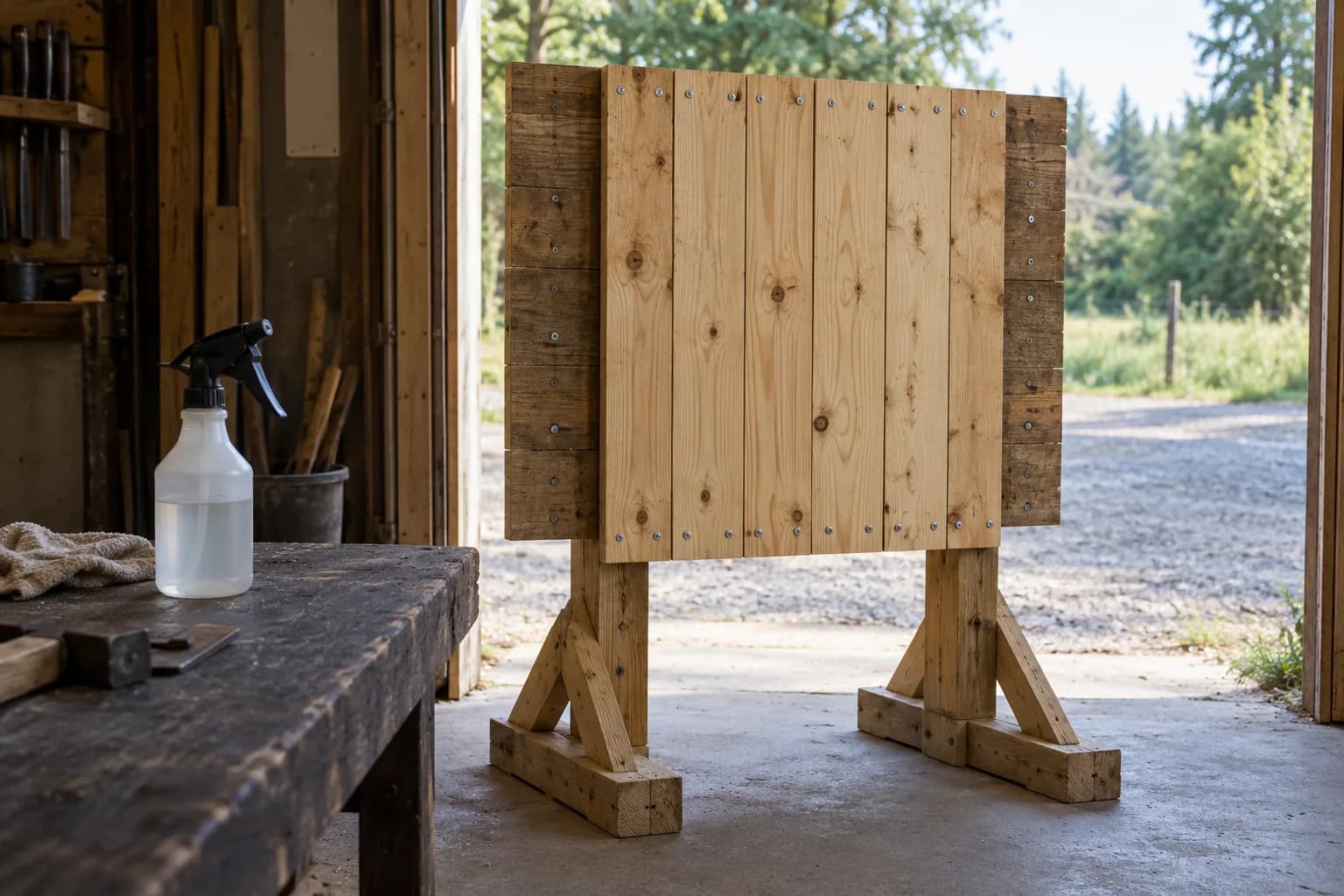
A home lane is an afternoon build: end-grain rounds or a board target of soft pine or cottonwood (face boards vertical, replace as they chew), a backstop wider than optimism, twelve measured feet, and range rules enforced like a grinder’s: one thrower on the line, everyone else behind it, retrieve together, never throw at a target someone is near, and sticking distance clear of ricochet lines. Soak or mist dry targets — seasoned-dry pine spits axes back. For makers, the range doubles as product development: every prototype hawk earns a hundred throws before a customer sees one, and the forged hawk that survives your own lane is the one worth signing.
Keep reading
Three more from the same bench.
The tomahawk is North America’s own axe: born from the meeting of Native fighting clubs and European trade steel, refined into something lighter, faster…
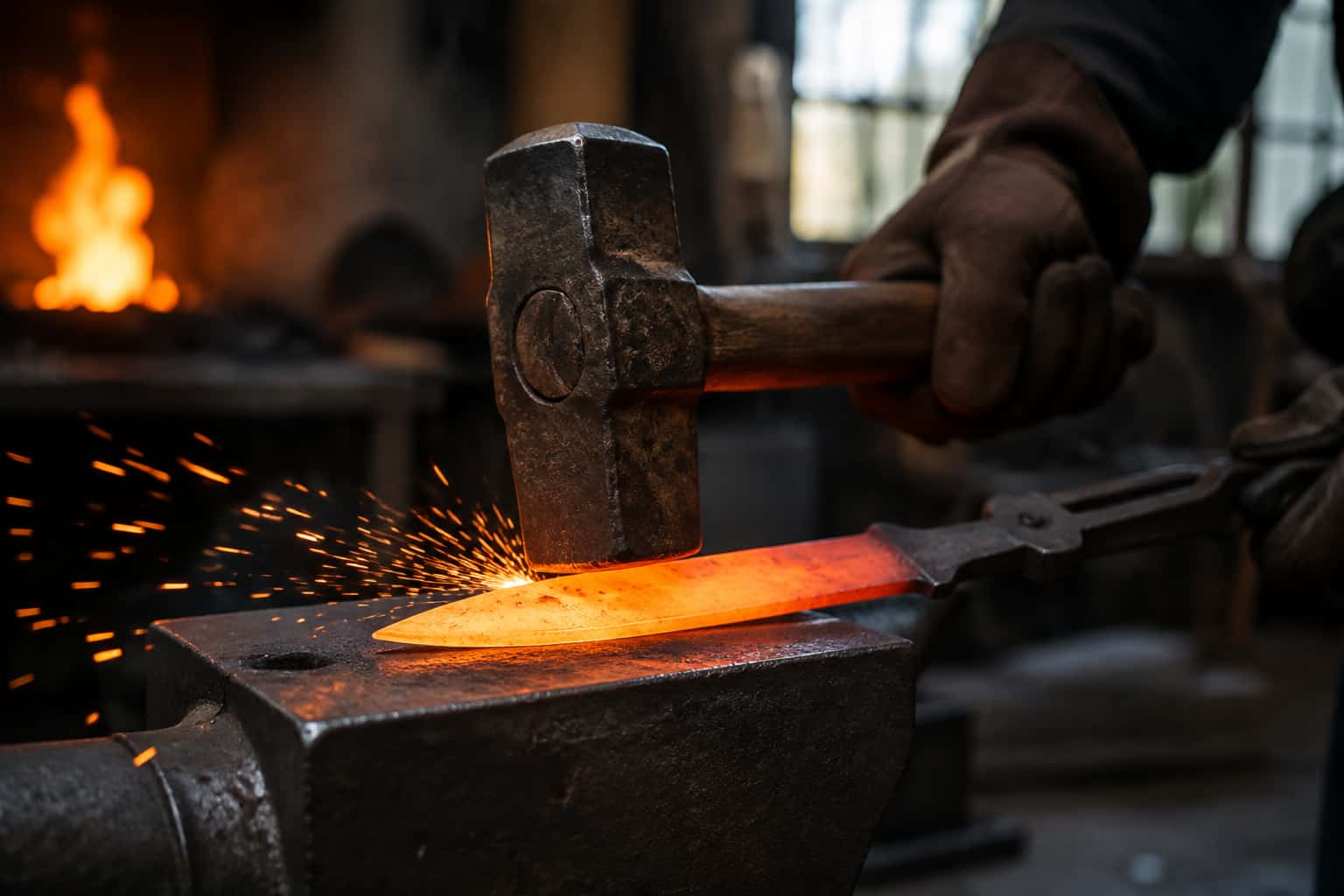
Ask a hundred smiths for the best first forge-welding project and the tomahawk wins by a landslide: one weld, generous target, forgiving geometry, and a…
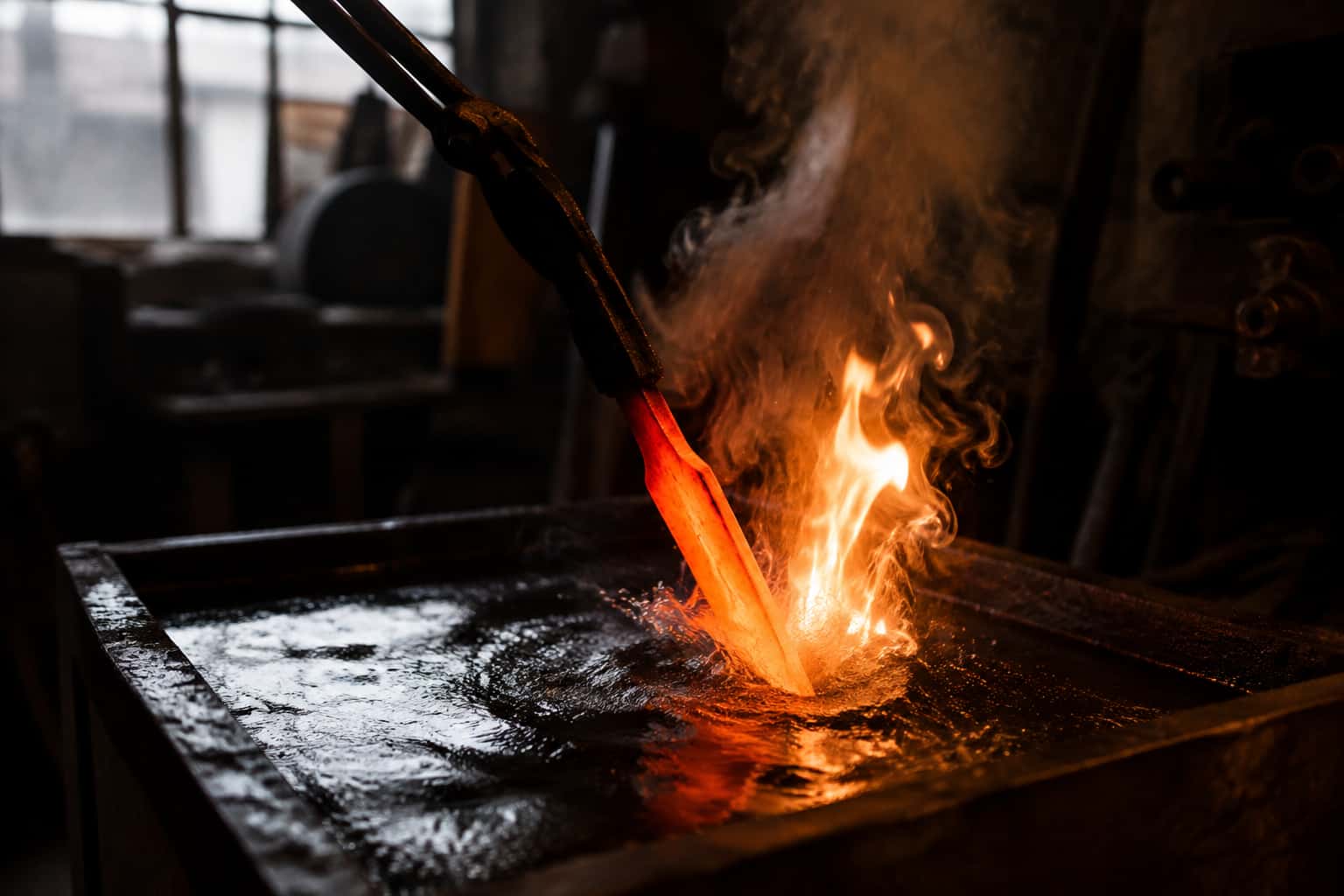
Axe metallurgy is knife metallurgy with the volume turned down and the toughness turned all the way up: lower carbon, lower hardness, and a design…
Same bench
I machine the parts, hand-assemble, track and test Torus grinders in Sterling, Illinois. Most orders ship in seven to ten business days from time of order.
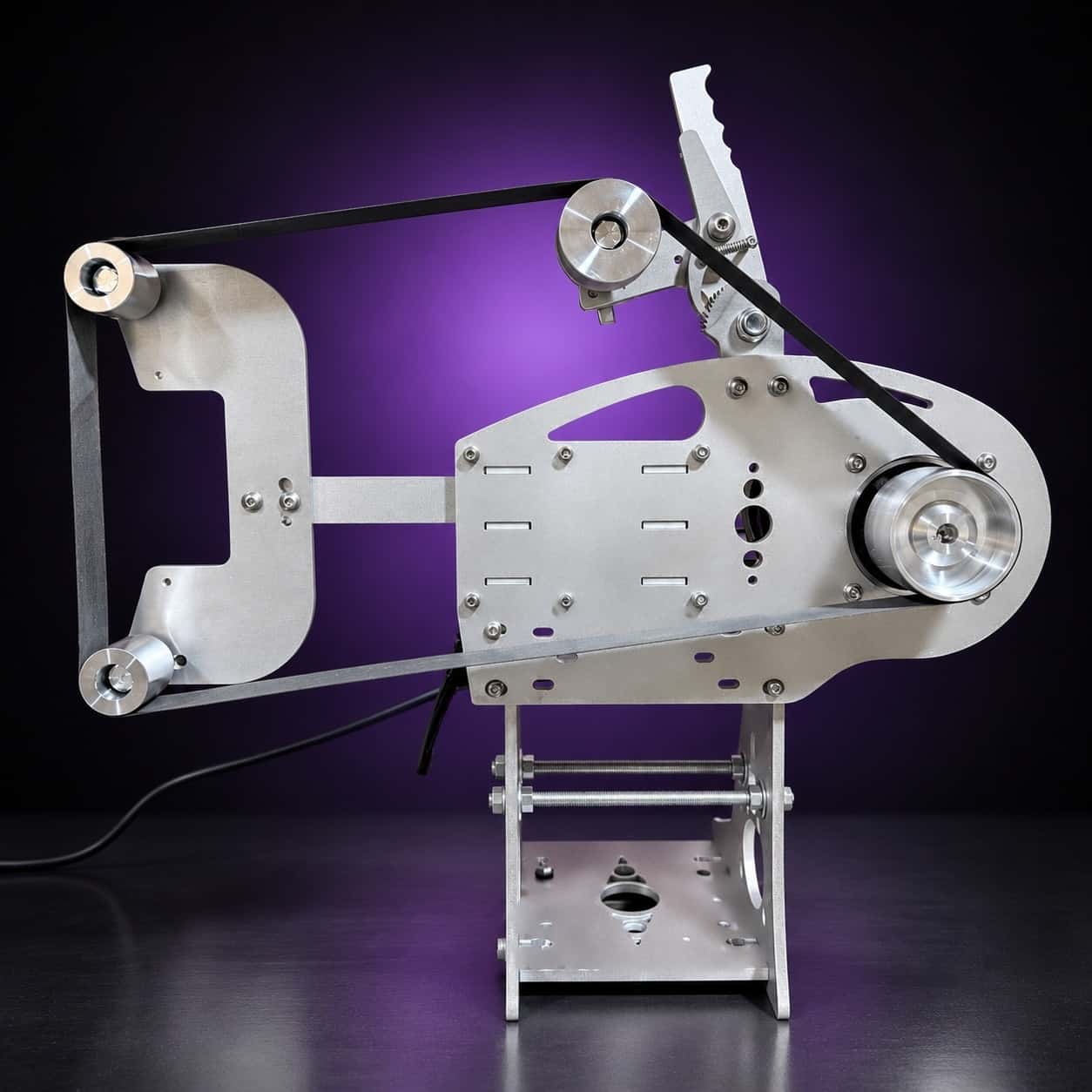
Current dual-axis platform with a fiber-laser-cut 6061 chassis and single-knob tracking.
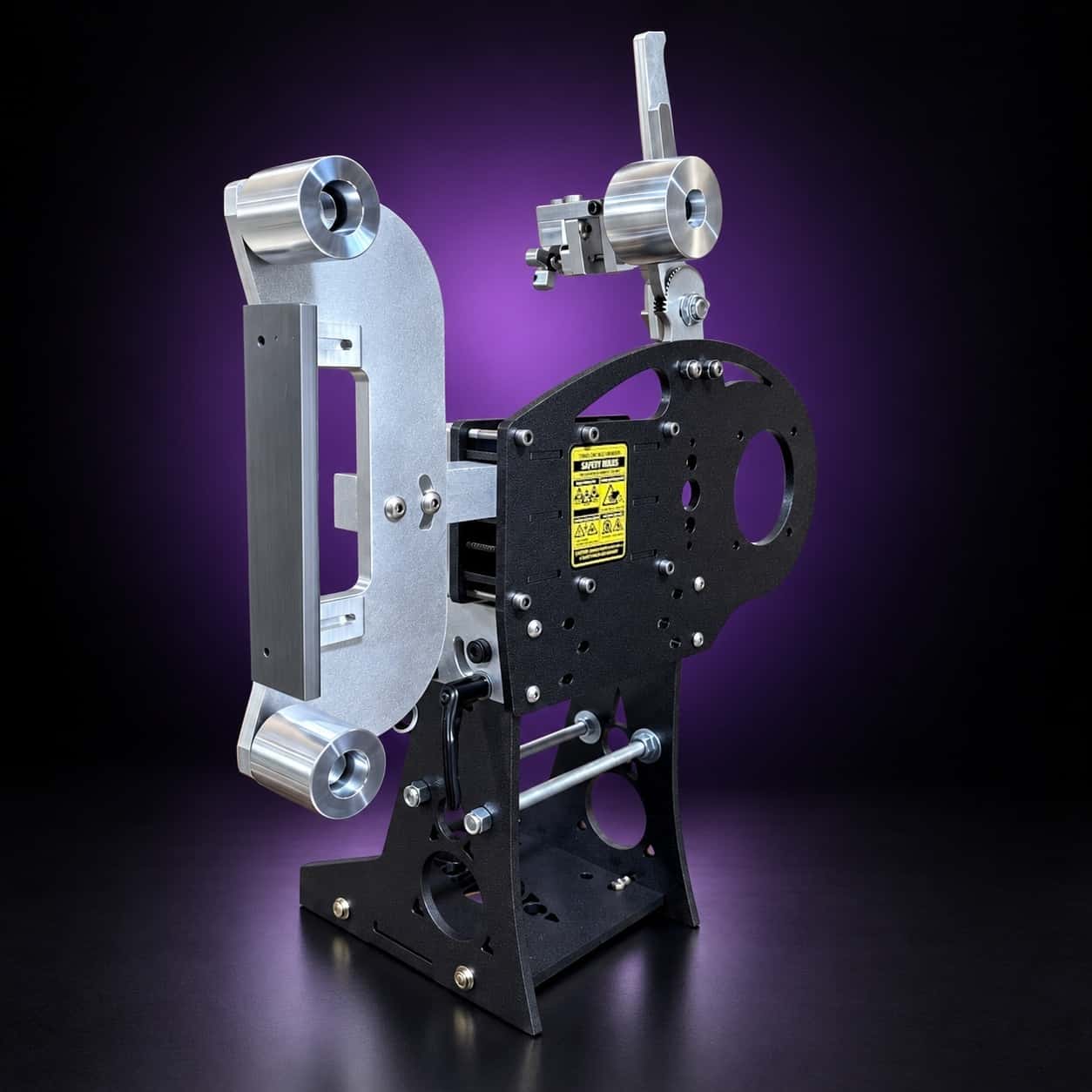
Current dual-axis platform with a steel chassis, more mass and less vibration.
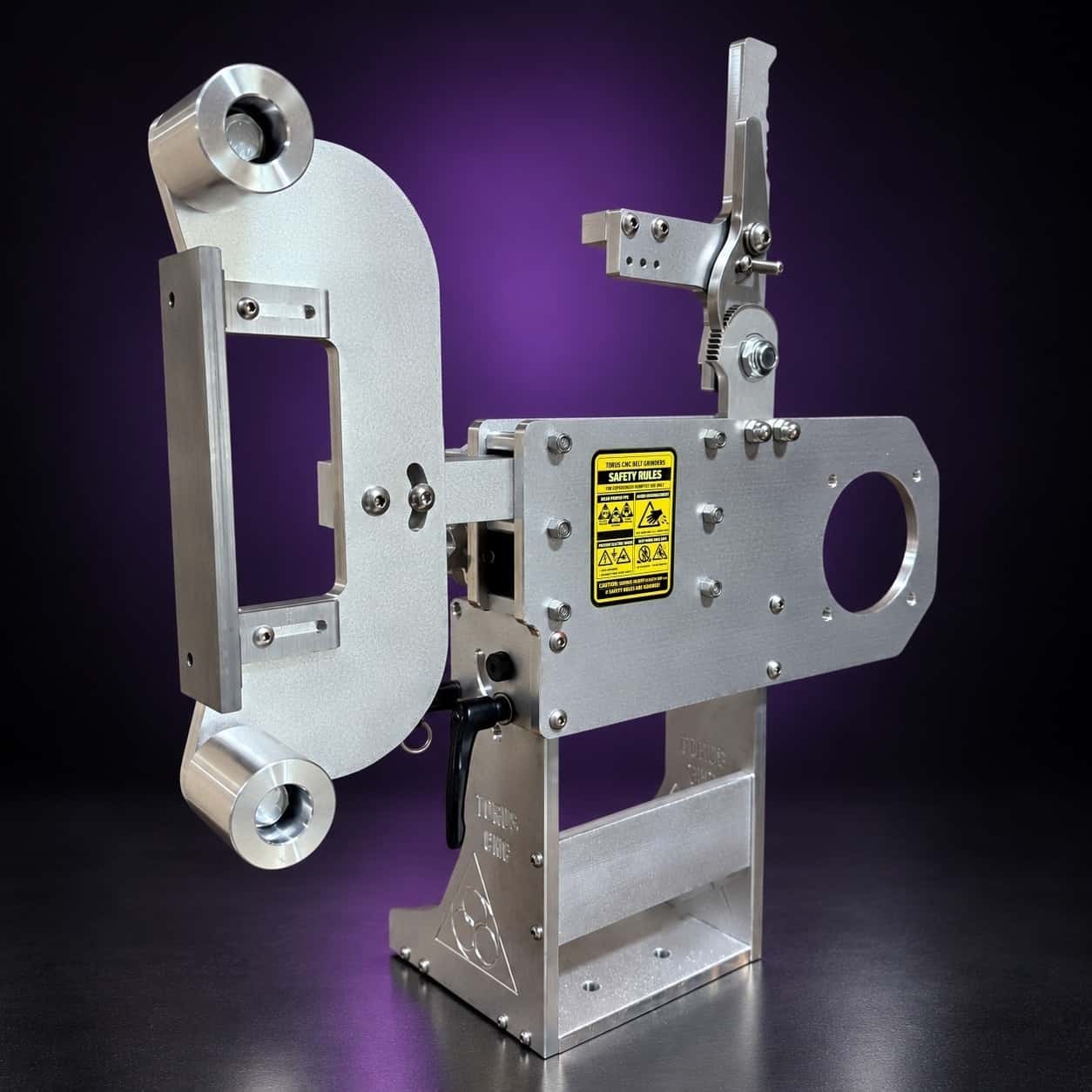
Prior-design aluminum chassis, 90-degree tilt and 1.5-inch tooling arms.
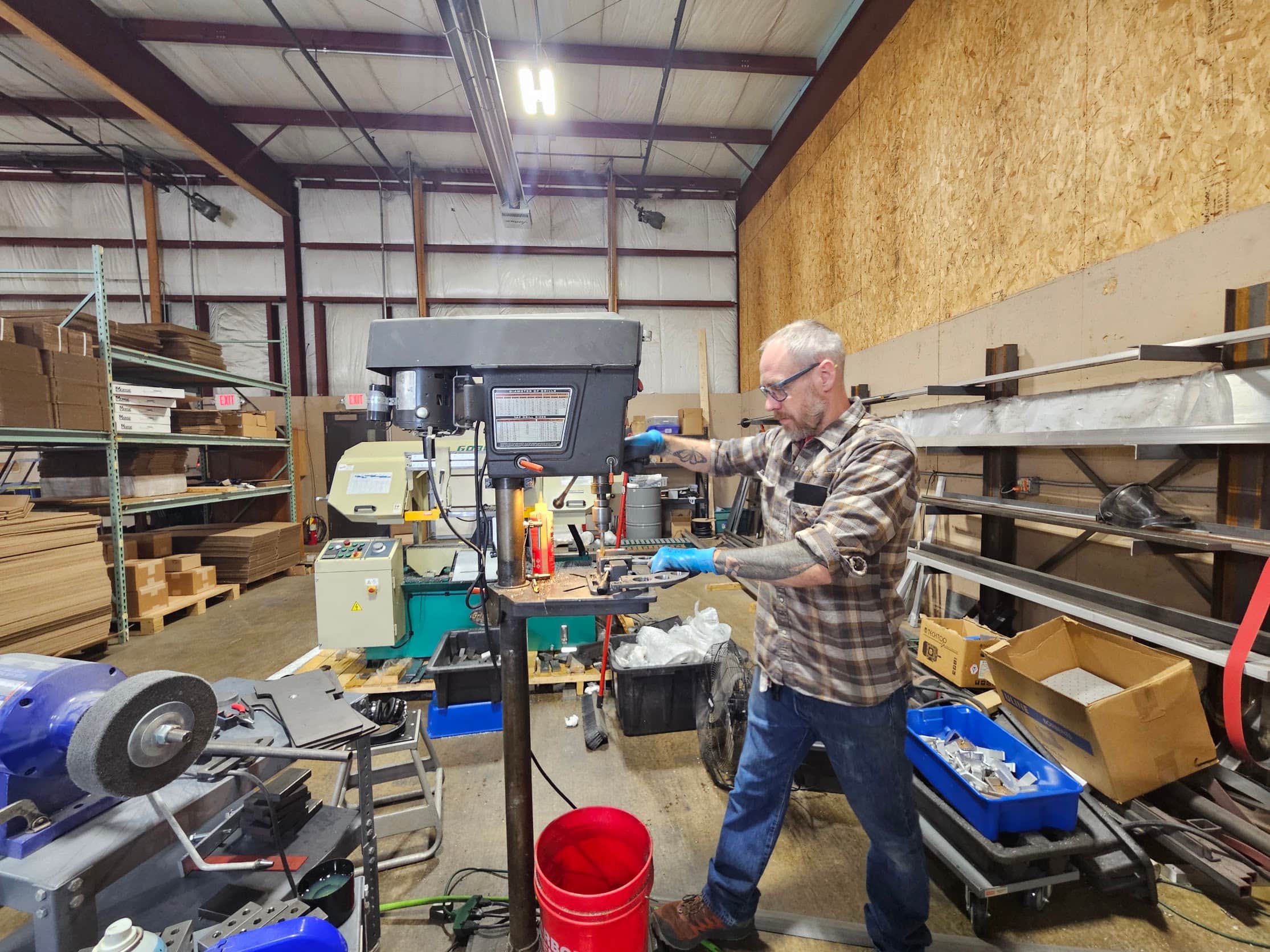
One-man shop
I answer my own email. Tell me the steel, the machine and what it is doing, and I will tell you what I would try next.