

Axes & Tomahawks
Restoring Old Axes: The Flea-Market Habit
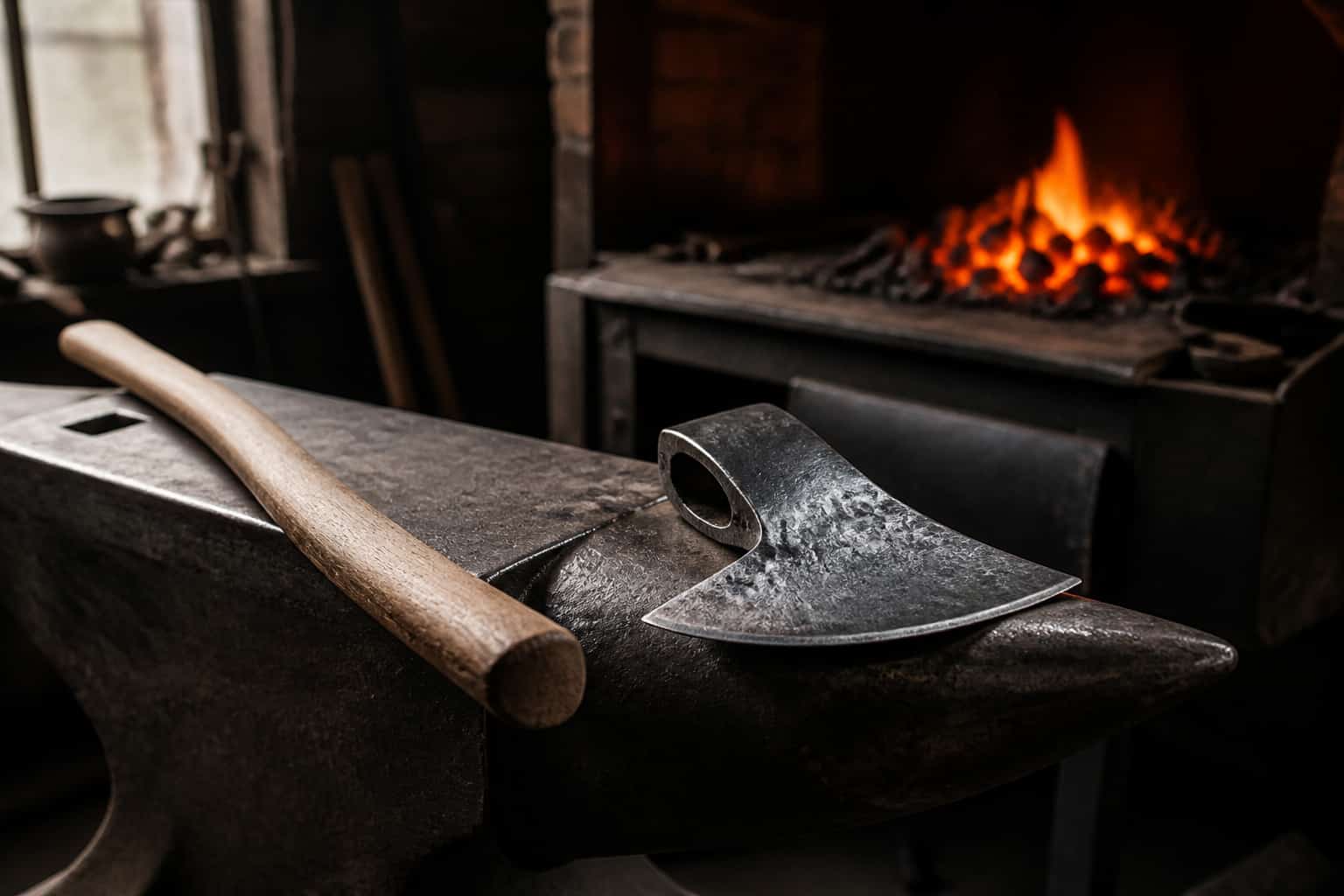
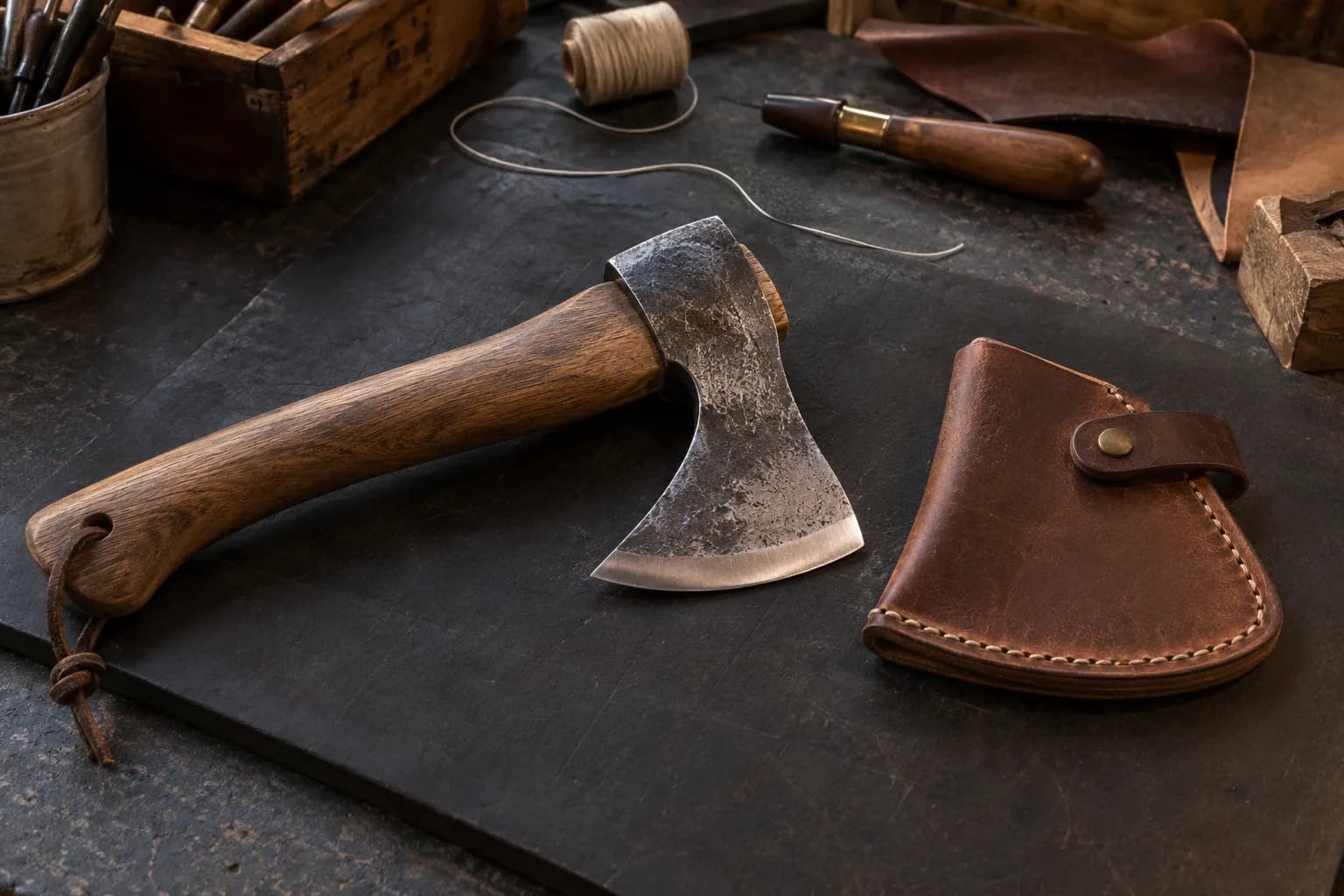
Somewhere between the knife bench and the forge, nearly every maker catches the axe-restoration bug: five-dollar heads with a century of American tool…
Axes & Tomahawks
American felling patterns decoded: Michigan, Dayton and Jersey, the double-bit and Hudson Bay, how regional specs happened, and how to read an old head.
2 min readWritten by Rich LinvilleFree to read
Between the frontier and the chainsaw, America conducted a two-century experiment in axe design: every logging region tuning heads to its own timber until catalogs carried dozens of named patterns. Most are gone; the survivors — Jersey, Michigan, Dayton, the double-bits, the little Hudson Bay — are the vocabulary of every flea-market table, and knowing them is knowing what you are holding.
The American felling axe itself was an innovation: colonial smiths grew the poll — the heavy flat counterweight the European trade axe lacked — and the balanced head chopped straighter and bit deeper. From that base, regions diverged: softwood country wanted wide thin bits for big pine; hardwood country wanted stouter edges that survived oak and hickory; and every improvement traveled by catalog once the great axe factories industrialized the craft. A pattern name is really a compressed spec sheet — bit width, cheek thickness, corner shape, poll mass — settled by men who swung ten hours a day and voted with their wages.
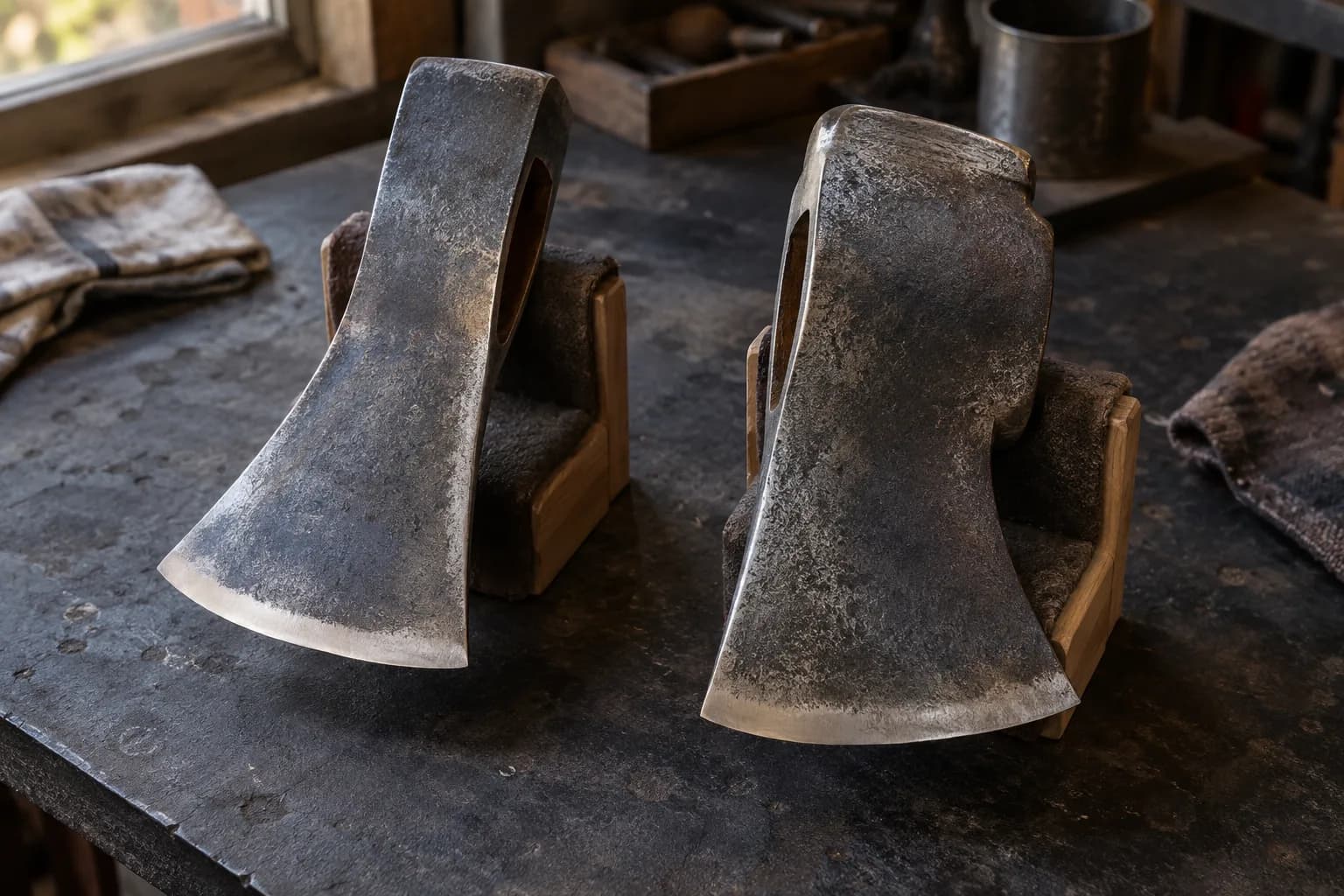
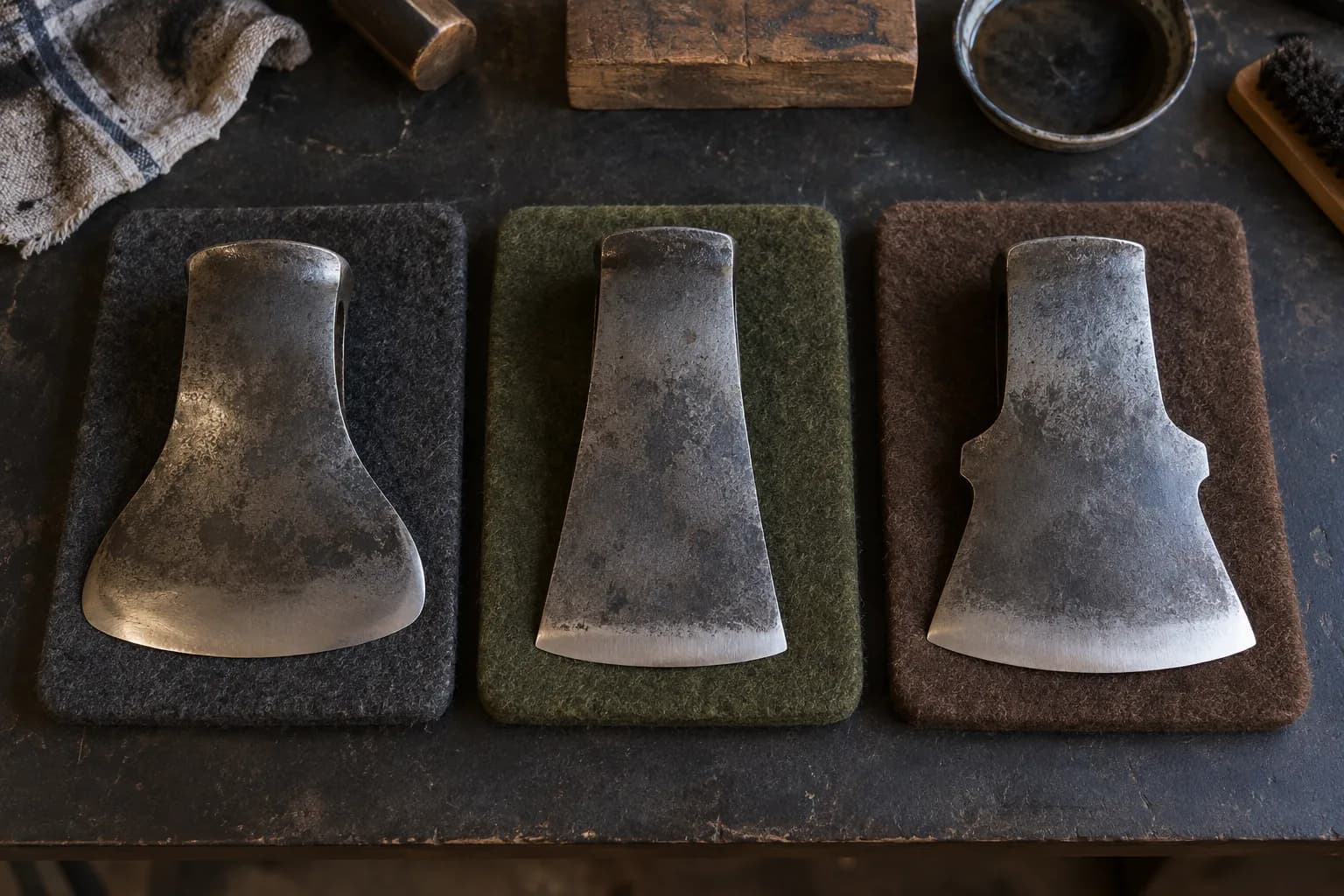
The Michigan — born in the 1860s white-pine boom — carries a rounded poll, gently curved bit and slightly rounded toe and heel that resist chip-out, with cheeks stout enough to double at splitting; it became the general-purpose default and still is. The Dayton runs leaner and straighter-lined than the Michigan’s convexity, a clean fast feller typically in the 3.5-to-5-pound band. The Jersey announces itself with lugs — the little cheek extensions reaching down toward the haft — adding eye contact and a distinctive silhouette; it is the least common of the three survivors and collectors notice it accordingly. Telling them apart at a rusty table: lugs mean Jersey; no lugs, rounder poll and convex cheeks lean Michigan; flatter, more concave lines lean Dayton — and the geometry guide explains what each choice was for.
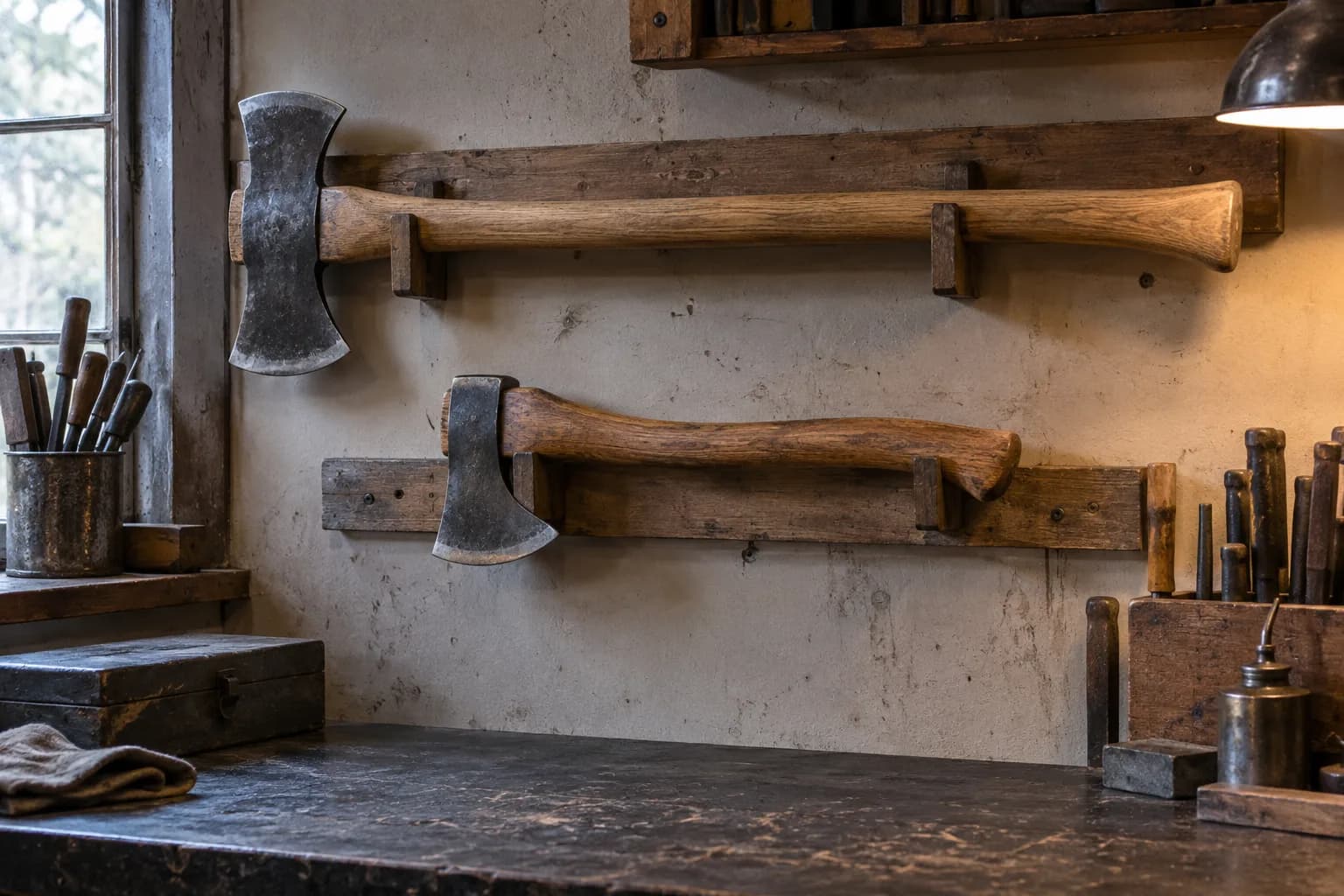
The double-bit — the twin-edged logger’s icon on its long straight haft — is the pattern with a workflow built in: one bit filed keen for clean chopping, the other left stout for grubbing near dirt and roots, swapped by flipping the head. It ruled the professional West’s big timber. At the other end of the scale, the Hudson Bay — the fur-trade camp pattern — puts a small swept bit with an upswept toe on a light head: a canoe-country all-rounder for limbing and camp work, never a felling axe, and the ancestor of every boutique camp hatchet sold today. Between them sit the boy’s axe (a three-quarter Michigan on a 28-inch haft — honestly the best first axe anyone can buy) and a graveyard of regional patterns whose names survive on collector lists.
For the restorer, pattern literacy is triage: a stamped Jersey from a classic maker is a collector conversation; an unmarked Michigan is a superb user rescue; a double-bit missing an inch of one edge still has a whole second axe on the other side. For the maker, the patterns are proven geometry to reproduce honestly — regional heritage sells, and a hand-forged Hudson Bay with the inserted bit and a stitched mask is a complete premium product with its story built in. The patterns earned their names one cord at a time; they are the rare marketing that is also engineering.
Keep reading
Three more from the same bench.
Somewhere between the knife bench and the forge, nearly every maker catches the axe-restoration bug: five-dollar heads with a century of American tool…
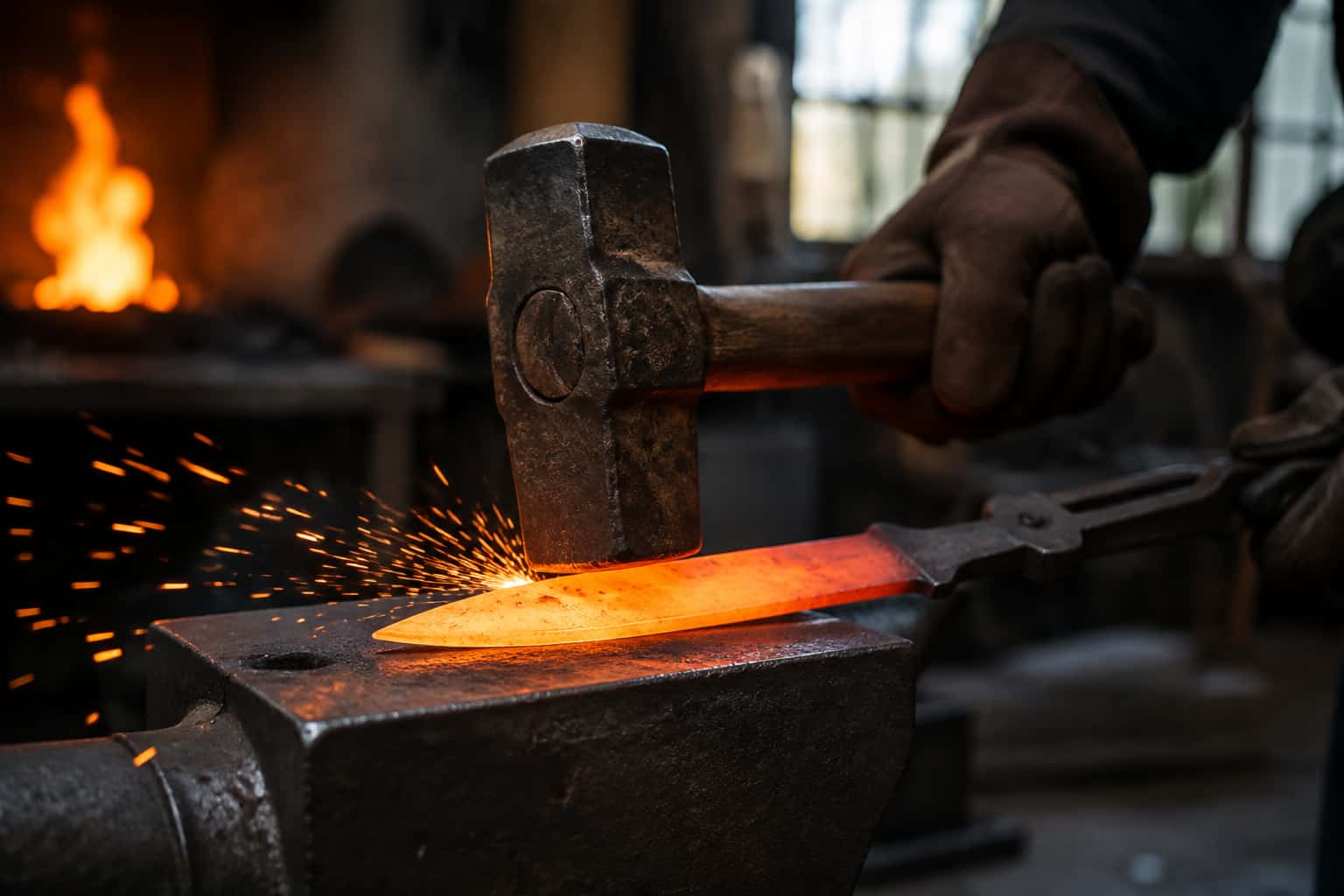
An axe is edge geometry with a run-up. Everything the knife-angle chart teaches applies, then the swing multiplies the stakes: geometry that merely…
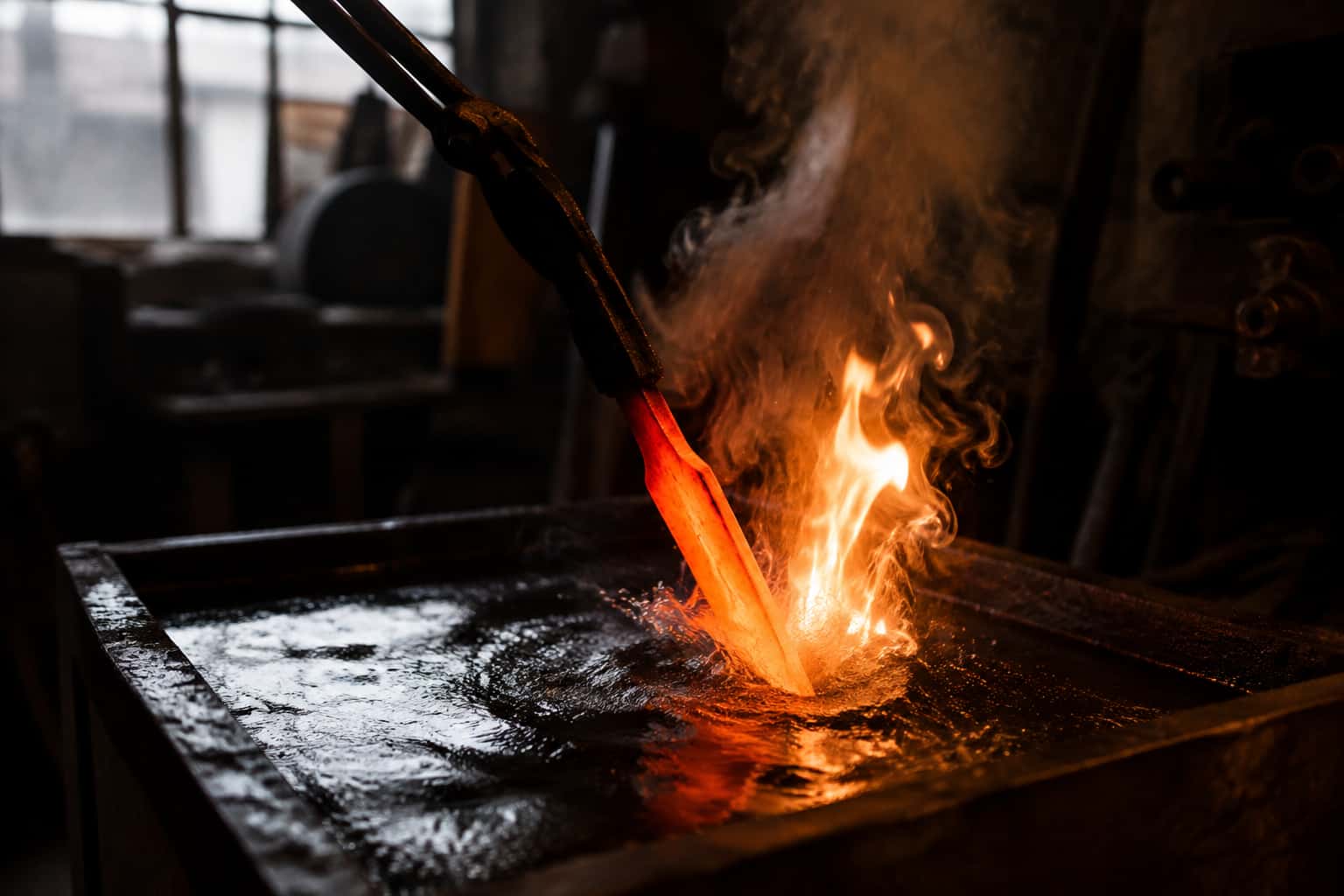
The axe is the knife’s working-class cousin: same steel, same edge physics, ten times the leverage and none of the pretension. It is also the deepest…
Same bench
I machine the parts, hand-assemble, track and test Torus grinders in Sterling, Illinois. Most orders ship in seven to ten business days from time of order.

Current dual-axis platform with a fiber-laser-cut 6061 chassis and single-knob tracking.

Current dual-axis platform with a steel chassis, more mass and less vibration.

Prior-design aluminum chassis, 90-degree tilt and 1.5-inch tooling arms.

One-man shop
I answer my own email. Tell me the steel, the machine and what it is doing, and I will tell you what I would try next.