
Axes & Tomahawks
Hafting an Axe: The Hang
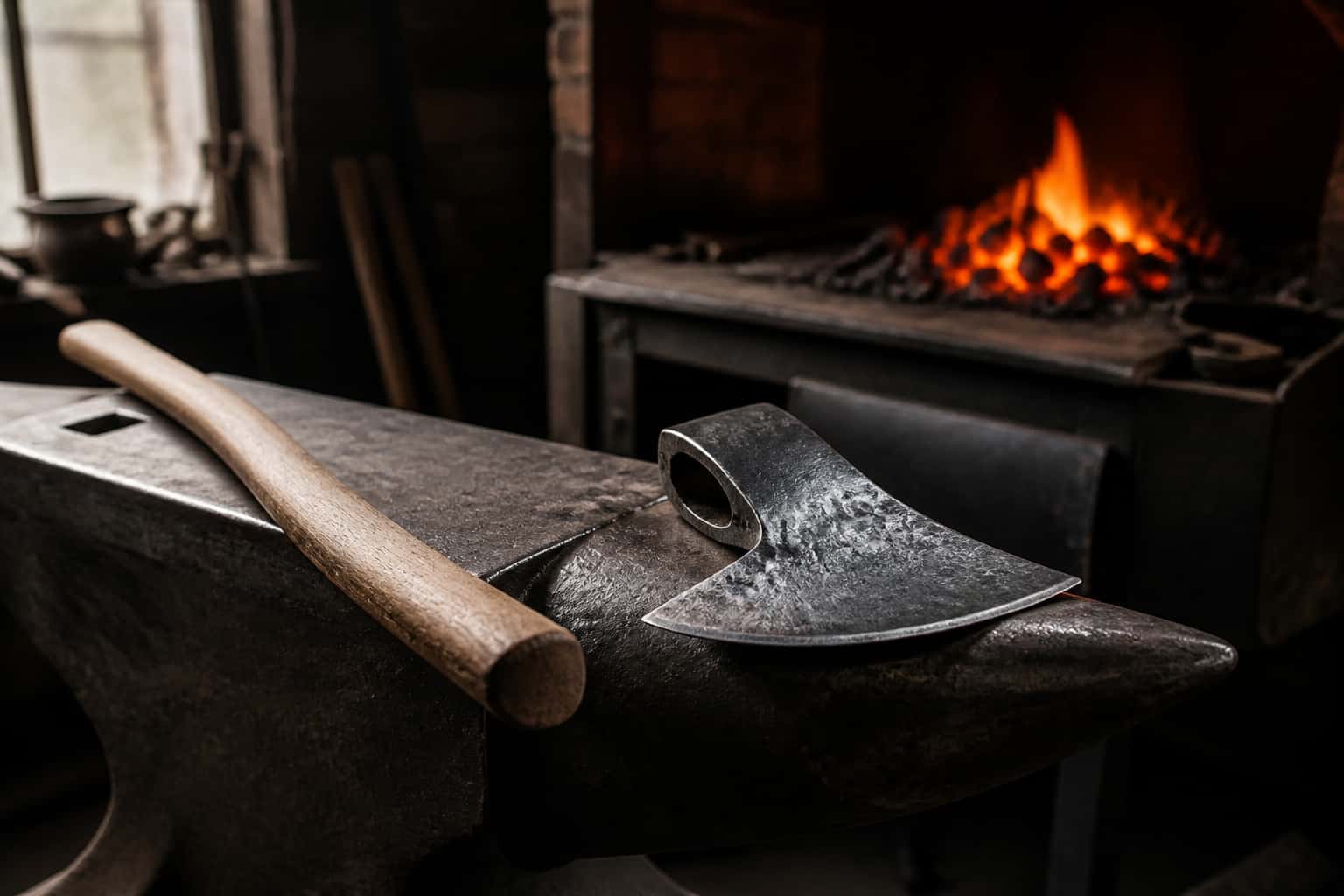
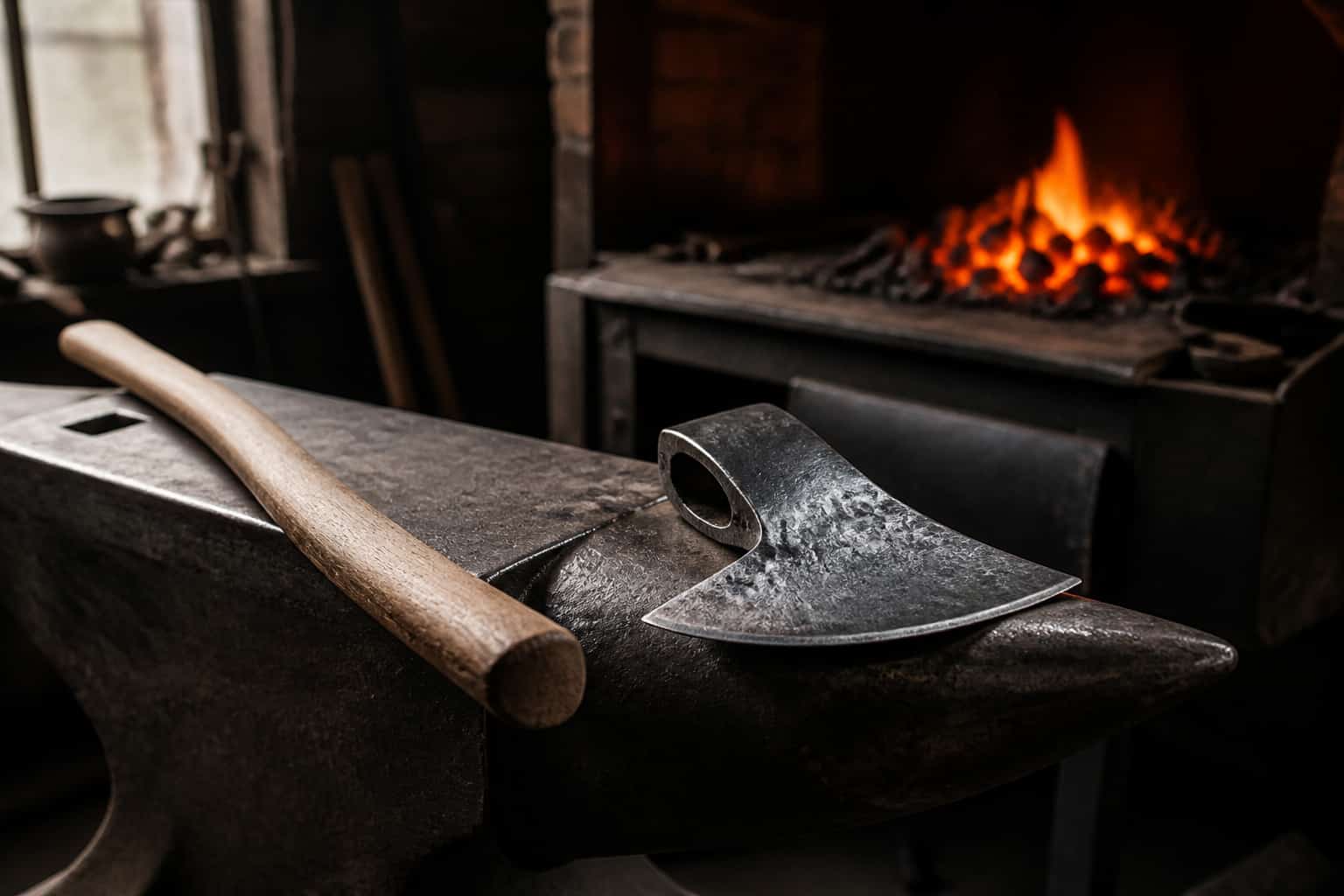
Half an axe is wood, and the marriage of the two — the hang — is a craft old enough to have its own verbs. A perfectly forged head on a bad hang is a bad…
Axes & Tomahawks
Axe restoration start to finish: evaluating flea-market heads, vinegar and wire-wheel cleanup, re-profiling on the 2x72, re-hanging, and honesty.
2 min readWritten by Rich LinvilleFree to read
Somewhere between the knife bench and the forge, nearly every maker catches the axe-restoration bug: five-dollar heads with a century of American tool steel under the rust, waiting on a vinegar bath and an afternoon. It is the cheapest satisfaction in edge tools, a genuine service business, and the best possible education in axe geometry — taught by the people who invented it.
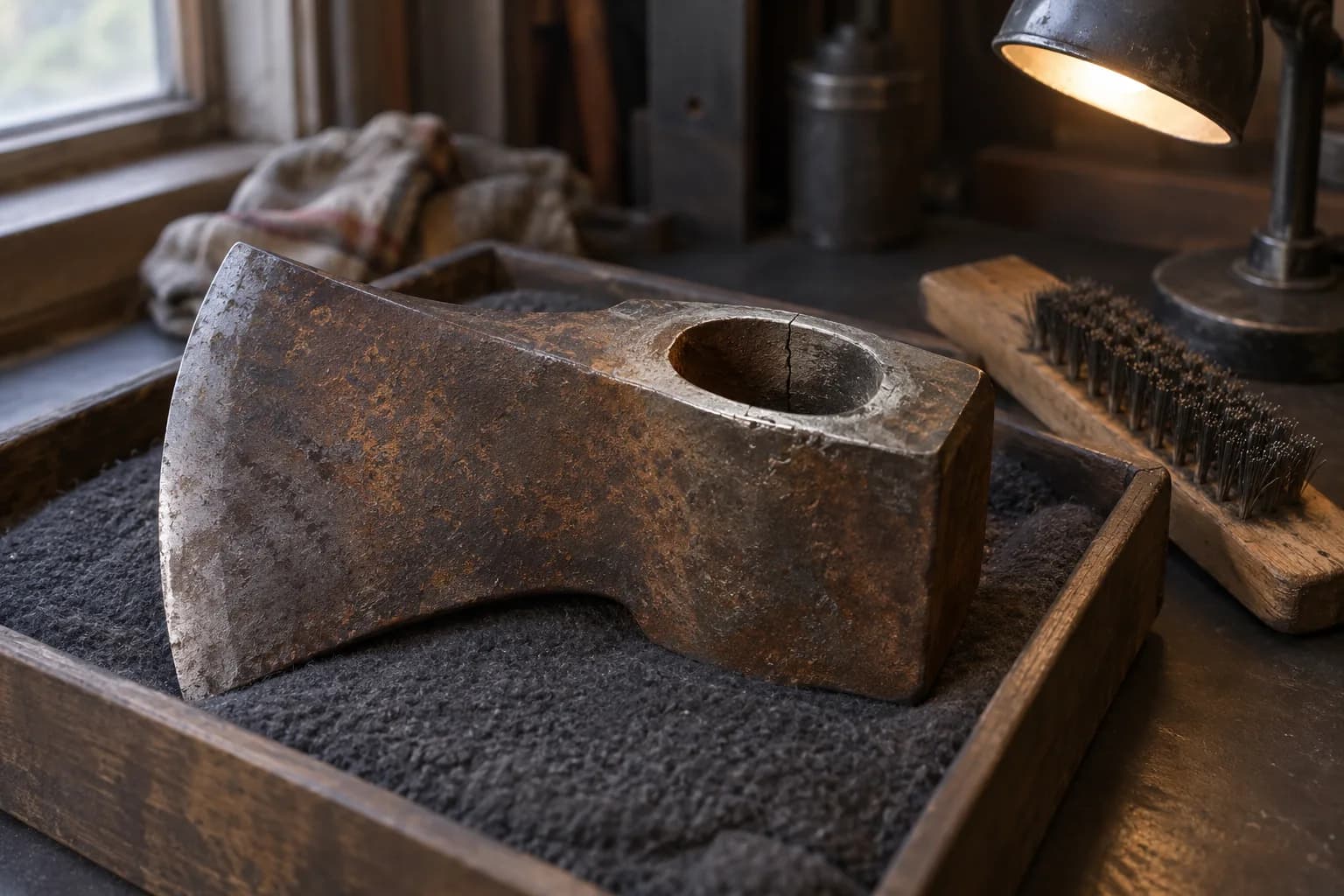
Buy with a checklist. Deal-breakers: cracks (check the eye walls and bit corners hard — rust hides them; a wire-brush pass and a close look before money moves), a bit filed away to a stub, deep pitting ON the edge itself, and mushrooming so severe the poll has flowed. Green lights: honest surface rust (cosmetic), a loose or broken haft (irrelevant — it is leaving anyway), and maker’s stamps under the crust — legible stamps from the classic American makers turn a user rescue into a collector flip, and the pattern guide helps date and place what the stamp starts. The vintage bonus hiding in many old heads: an inserted high-carbon bit in an iron body, per Bit Steels — better steel where it counts than most modern production.
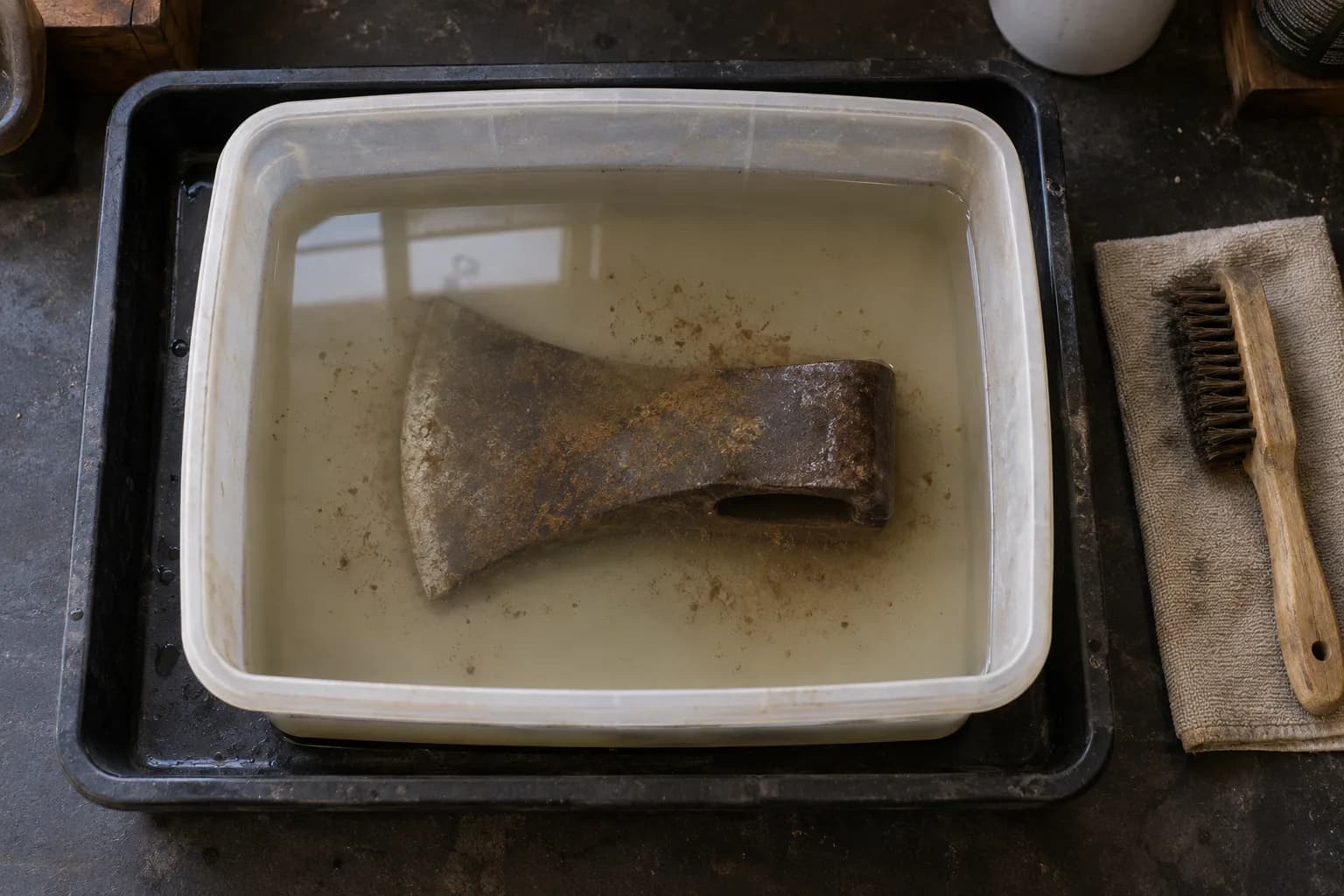
De-haft (saw the haft, drive the stub out with a drift — save nothing but the wedge lesson), then the classic bath: white vinegar submersion, 12-24 hours, the rust converting to black sludge that scrubs off with a stiff brush. Neutralize in baking-soda water, dry IMMEDIATELY and oil — vinegar-cleaned steel flash-rusts in an hour of humid air. The wire wheel (or a worn 120 belt, lightly) takes the last crust and leaves the honest dark gray of old steel. The etch will also ghost out the bit’s weld line on inserted-bit heads and sometimes banding in the body — the head’s biography, surfacing.
Restoration has an ethic worth adopting early: preserve, do not erase. Patina stays — the gray-black skin is protection and provenance; mirror-polishing a hundred-year head deletes its history for a finish it never wore. Stamps are sacred: grind AROUND maker’s marks always. Pitting away from the edge stays too — it is texture, not damage. What gets corrected without apology: the edge (chips out, profile trued, convex rebuilt on the slack belt per Sharpening and Care), a mushroomed poll dressed flush, and any previous owner’s angle-grinder sins faired back toward the pattern’s original lines — old catalogs and the pattern guide tell you what those were.
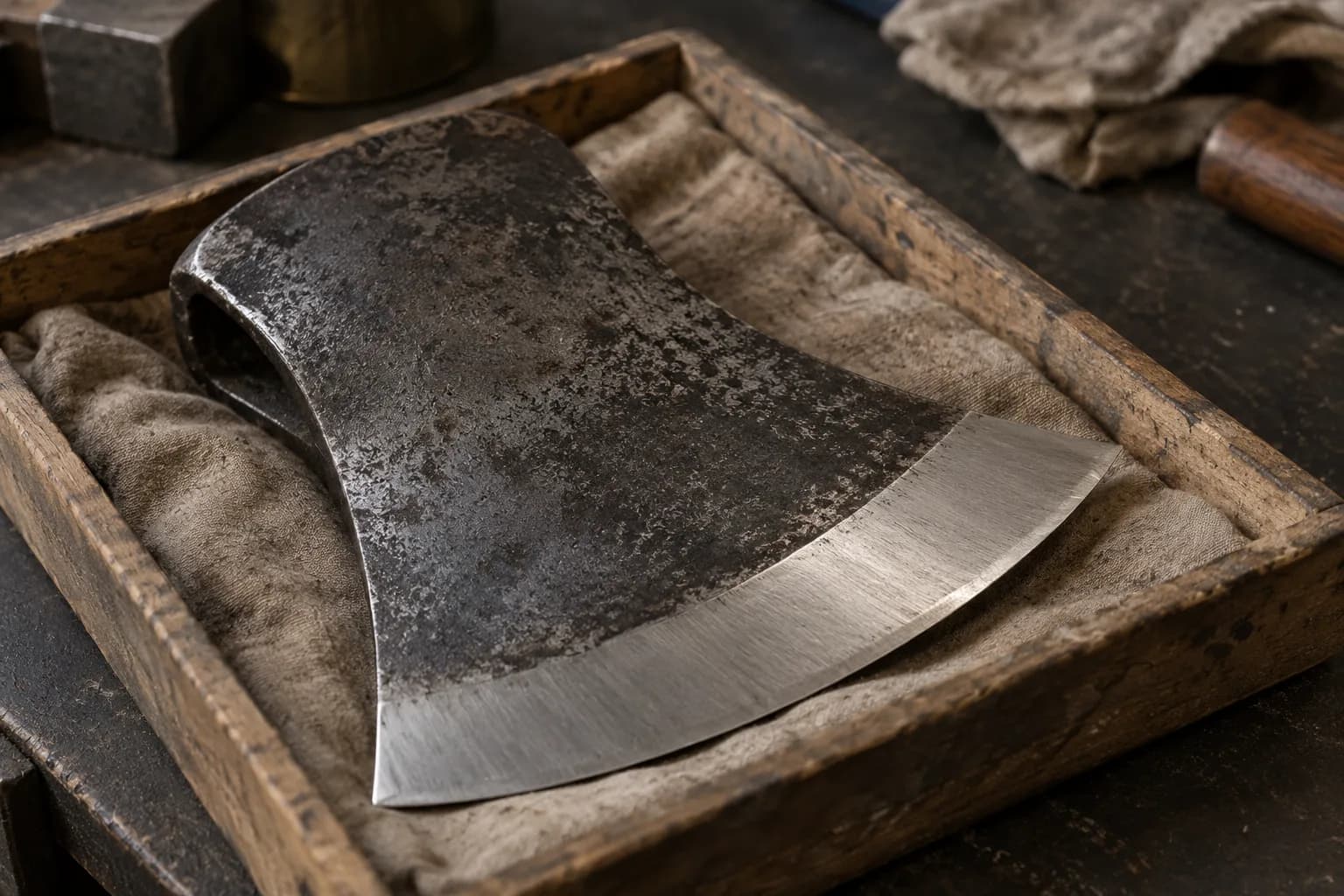
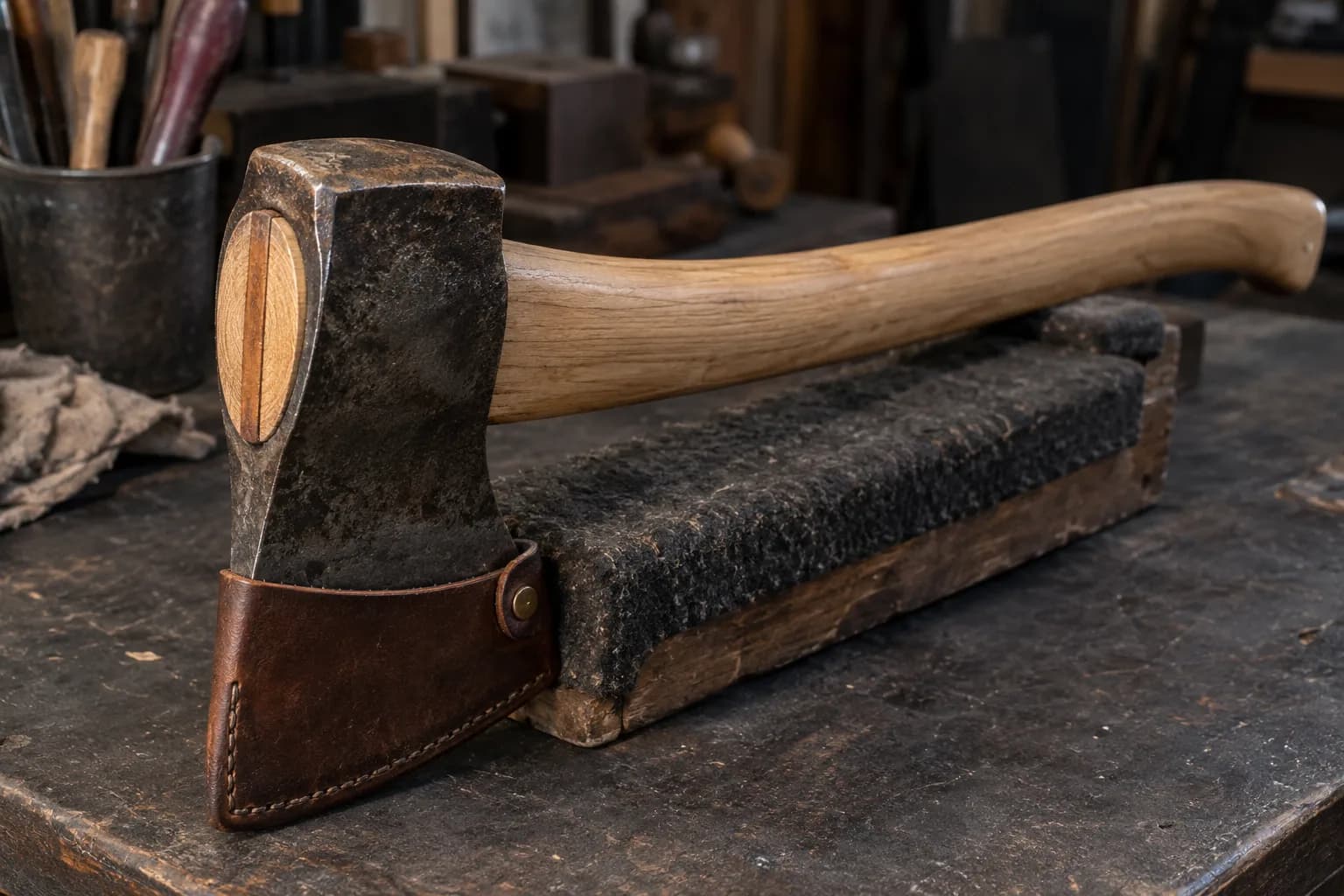
The full hafting discipline applies — new hickory, grain read, fit shaved, sighted, wedged — and the moment the wedge seats flush, a dead tool is a working axe again, usually better-steeled than anything at the hardware store and carrying a story no new head can. Test the temper before trusting it hard (file bite at the bit, per the bit-steel guide’s checks; a head that survived a barn fire files dead soft and needs the full heat treat conversation). Then oil it, mask it, and either put it to work or price it — restored classics with their stamps showing sell themselves at every show, and the restoration story IS the listing copy.
Keep reading
Three more from the same bench.
Half an axe is wood, and the marriage of the two — the hang — is a craft old enough to have its own verbs. A perfectly forged head on a bad hang is a bad…
An axe asks less maintenance than any knife you own and rewards it more visibly: the difference between a working edge and a neglected one is the…
Between the frontier and the chainsaw, America conducted a two-century experiment in axe design: every logging region tuning heads to its own timber until…
Same bench
I machine the parts, hand-assemble, track and test Torus grinders in Sterling, Illinois. Most orders ship in seven to ten business days from time of order.
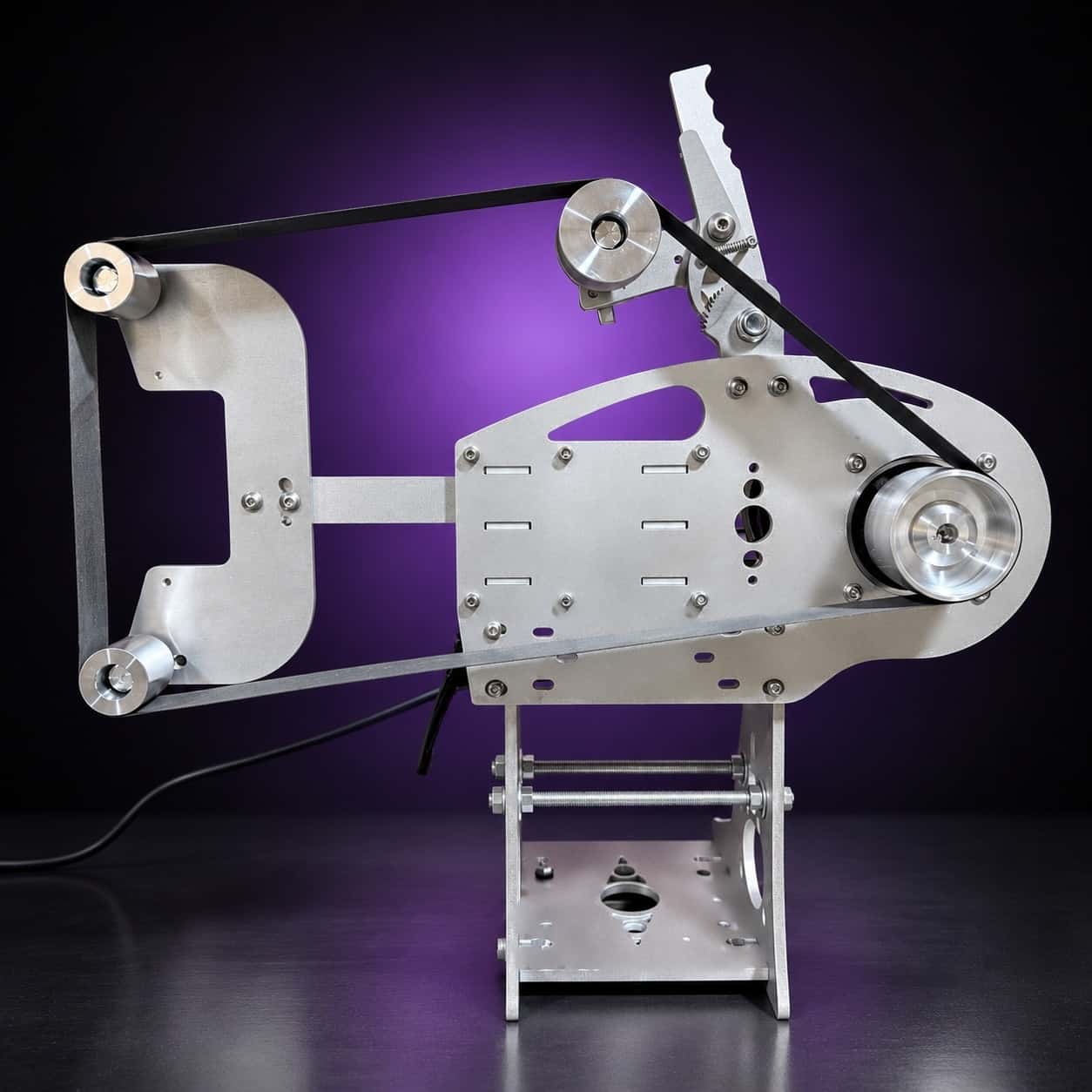
Current dual-axis platform with a fiber-laser-cut 6061 chassis and single-knob tracking.
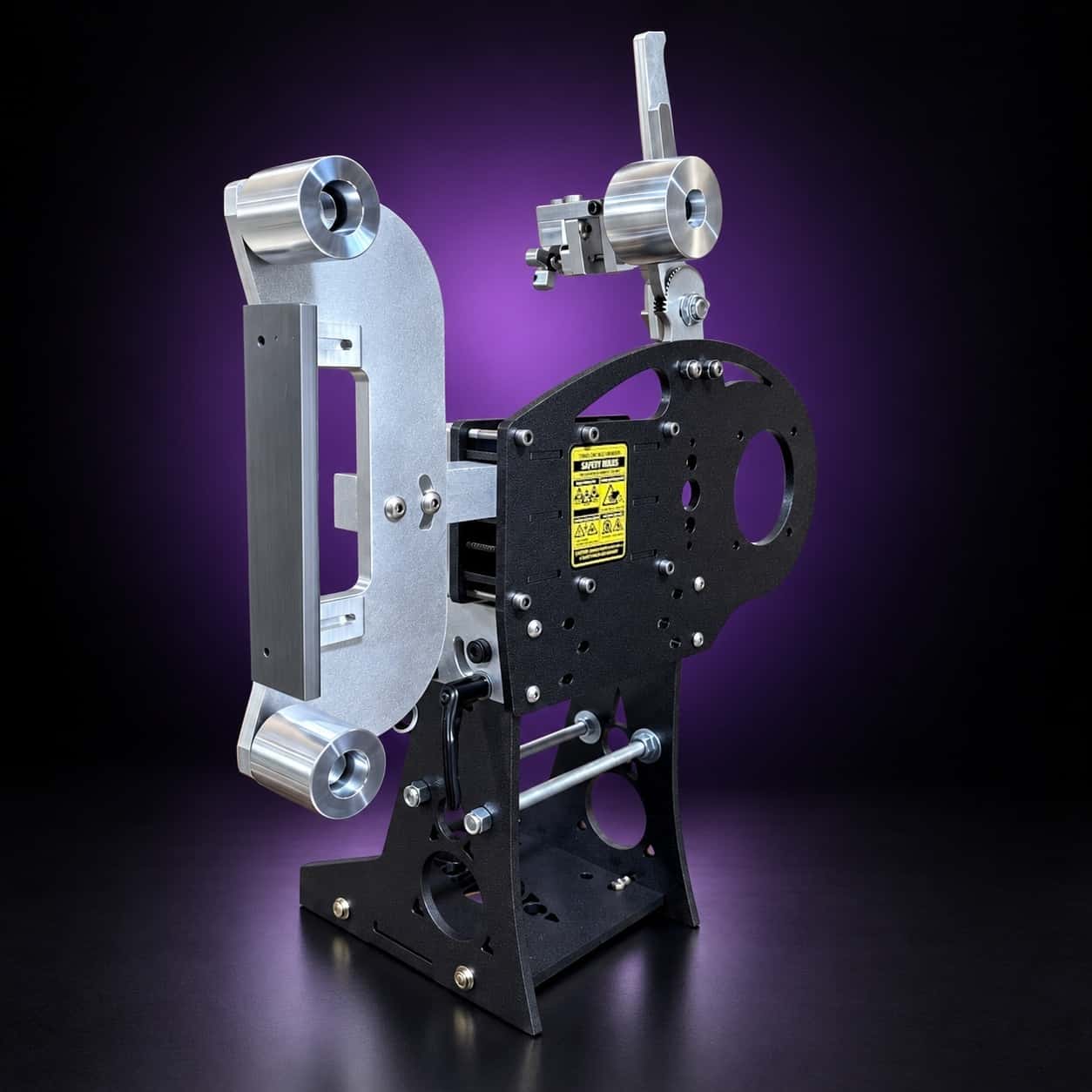
Current dual-axis platform with a steel chassis, more mass and less vibration.
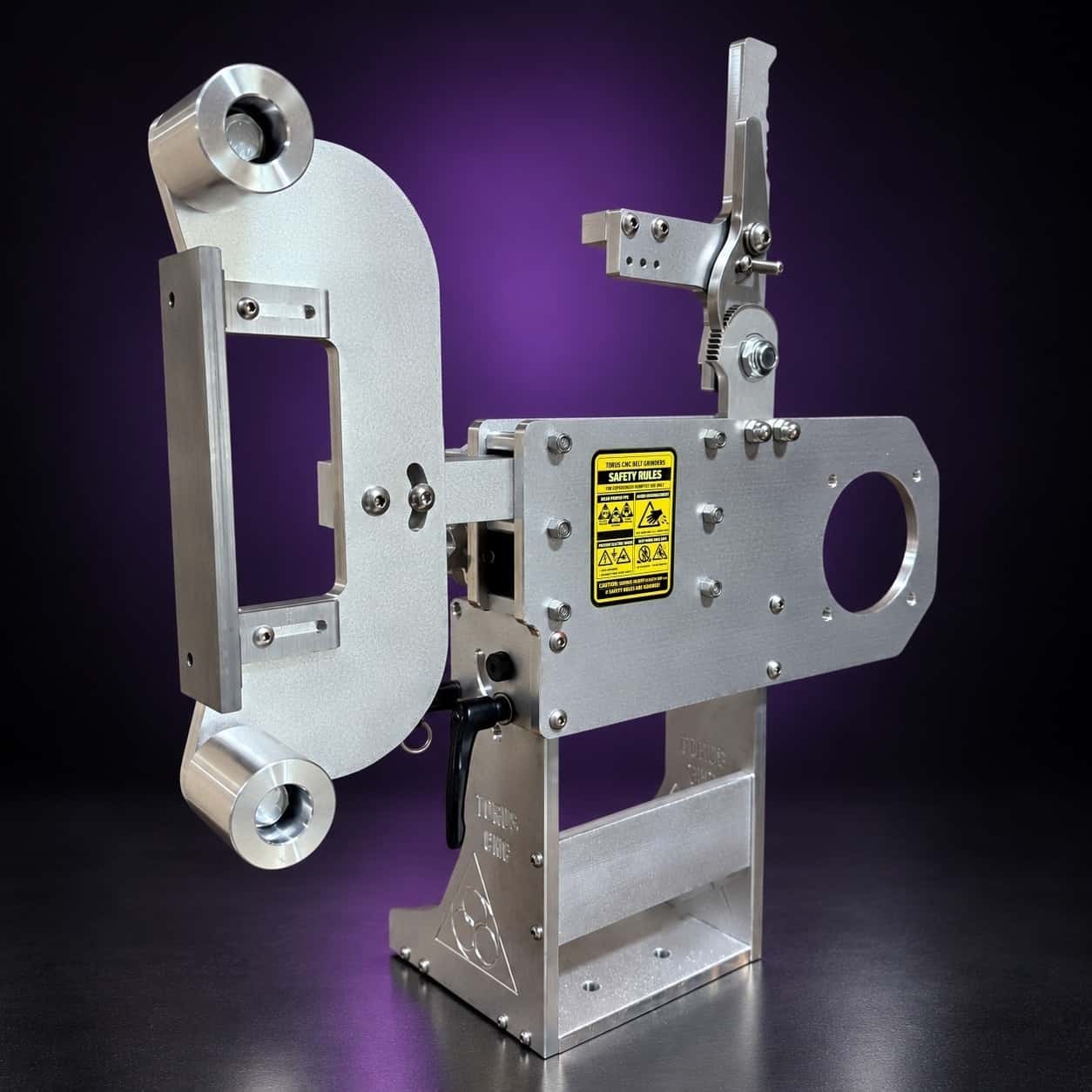
Prior-design aluminum chassis, 90-degree tilt and 1.5-inch tooling arms.
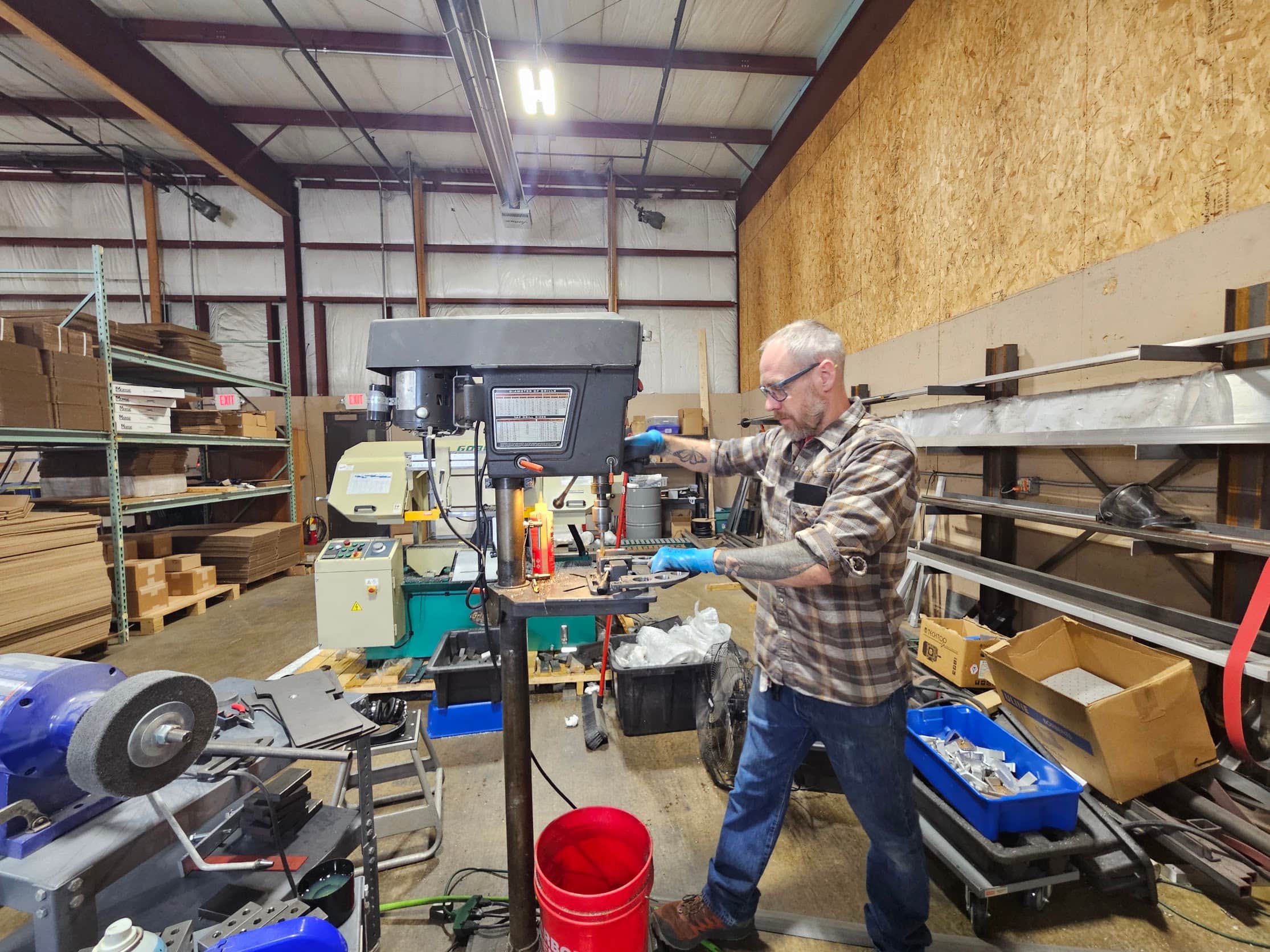
One-man shop
I answer my own email. Tell me the steel, the machine and what it is doing, and I will tell you what I would try next.