

Axes & Tomahawks
Axe Anatomy & Types: The Field Guide
The axe is the knife’s working-class cousin: same steel, same edge physics, ten times the leverage and none of the pretension. It is also the deepest…
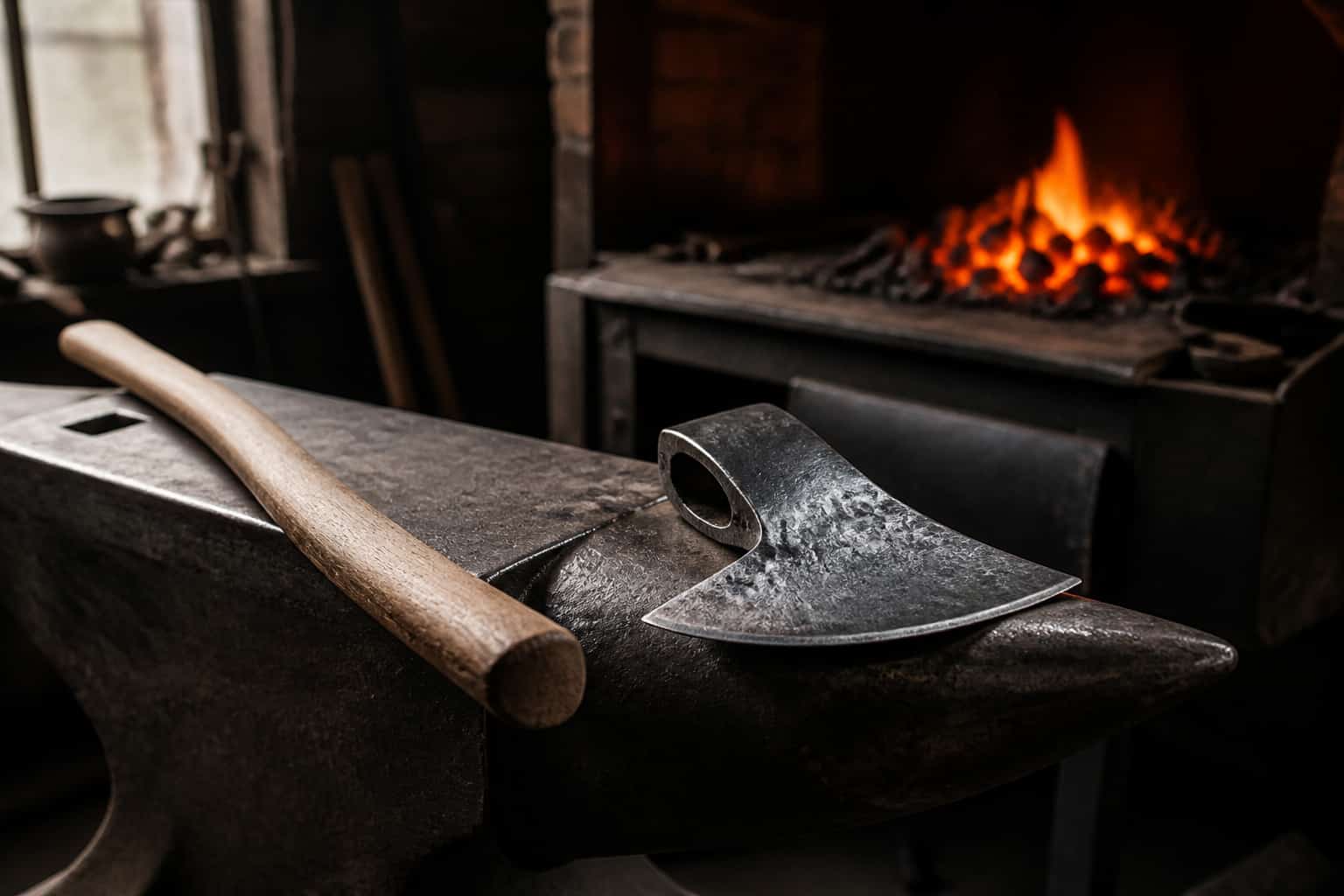
Axes & Tomahawks
How axes actually cut: felling vs splitting geometry, cheek profiles, convex edges around 25-30 inclusive, high centerlines, and tuning on a 2x72.
2 min readWritten by Rich LinvilleFree to read
An axe is edge geometry with a run-up. Everything the knife-angle chart teaches applies, then the swing multiplies the stakes: geometry that merely underperforms in a knife actively punishes in an axe — sticking, glancing, or stinging the hands. Here is how the shapes do the work.
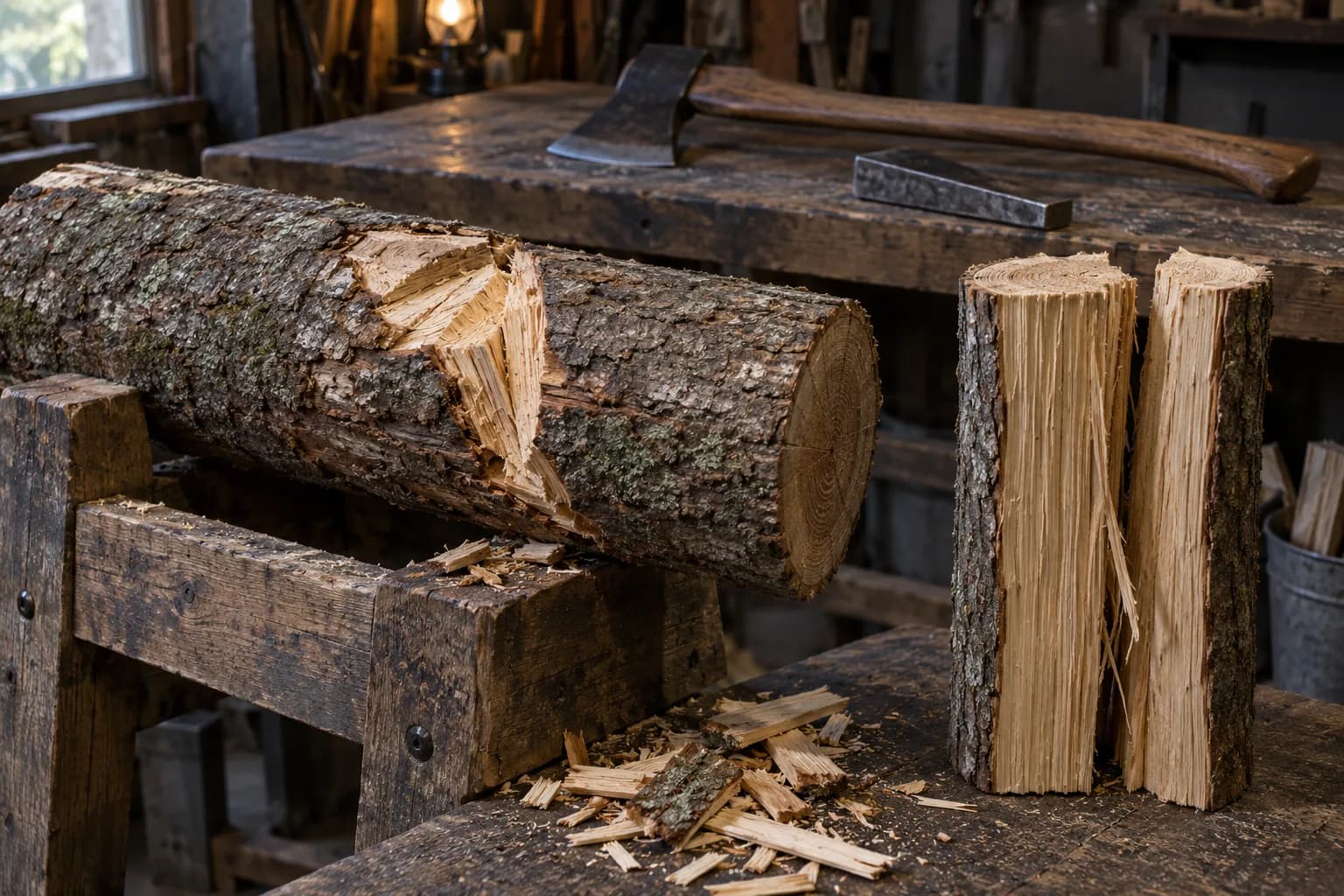
Felling and bucking cut ACROSS grain: the bit severs fibers, so it wants knife-thinking — a keen convex edge and lean cheeks that penetrate deep, with chips popping free between angled strokes. Splitting works ALONG grain: the bit is a wedge, penetration is nearly irrelevant, and fat cheeks that convert downward energy into sideways burst are the whole design. Every axe lives somewhere on this axis; the chronic mistake is buying one end and doing the other’s job — the thin feller stuck forever in rounds, the fat splitter bouncing off a trunk.
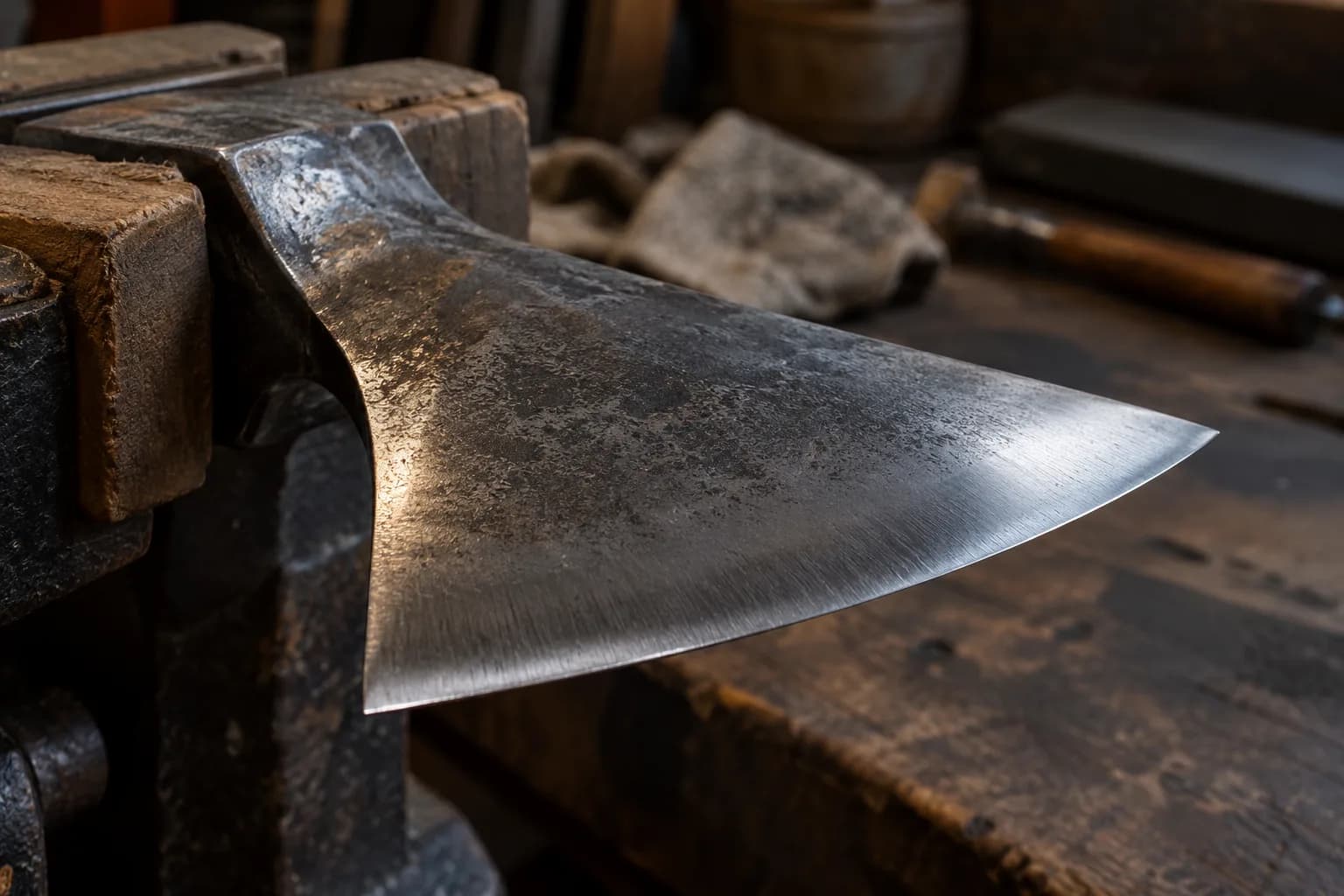
Working axe edges are convex — the appleseed curve, no distinct secondary bevel — at roughly 25 to 30 degrees inclusive for general work: felling profiles toward the keen end, splitting and rough-duty toward the stout, the same impact logic as the chopper chart one size up. Convex backs the apex with steel (no shoulder to crack), releases from the cut instead of wedging, and maintains naturally on a slack belt or with a file-and-puck rhythm, per Sharpening and Care. Carving axes break the rule deliberately — flatter, keener grinds for controlled slicing — covered in their own guide.
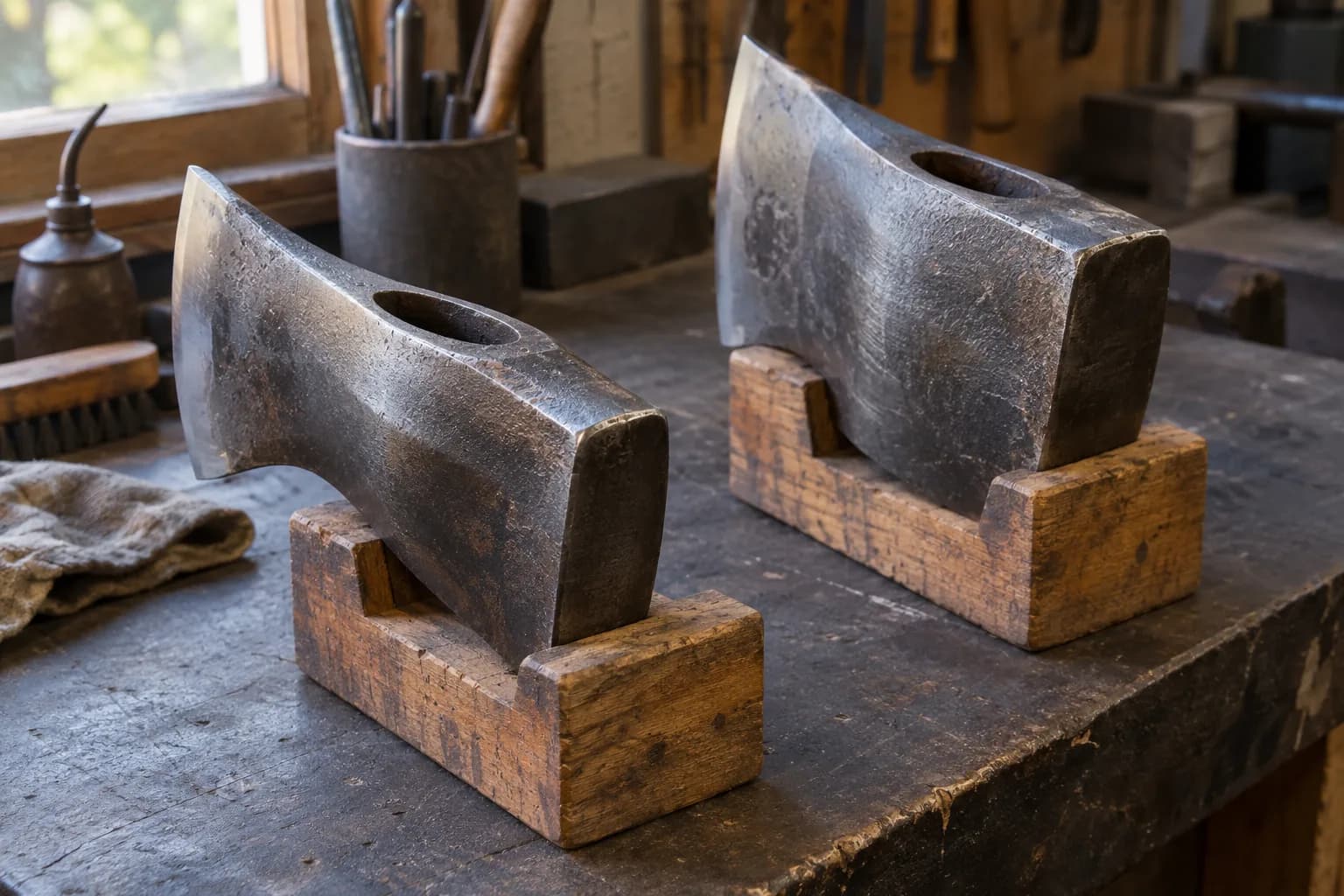
Behind the edge, the cheeks decide the personality. Quality felling patterns carry a high centerline — cheeks crowned toward a ridge rather than dead flat — so the head releases from the cut and steers straight; dead-flat cheeks suck into wet wood. Splitting heads exaggerate the crown into a true wedge. Restorers meet this directly: a hollow-cheeked worn head cuts deep and sticks hard, and part of restoration is deciding how much of the original convexity to grind back.
The edge’s arc is tuned too: a curved bit concentrates each blow into a shorter biting section (and survives overstrikes at the corners better); a straighter bit spreads the blow for hewing and slicing cuts. The toe does precision work and dies first in throwers and rock-finders; the heel does the choked-up carving. American pattern history — Michigan’s rounded corners against chip-out, Dayton’s leaner lines — is largely regional tuning of exactly these variables, per American Axe Patterns.
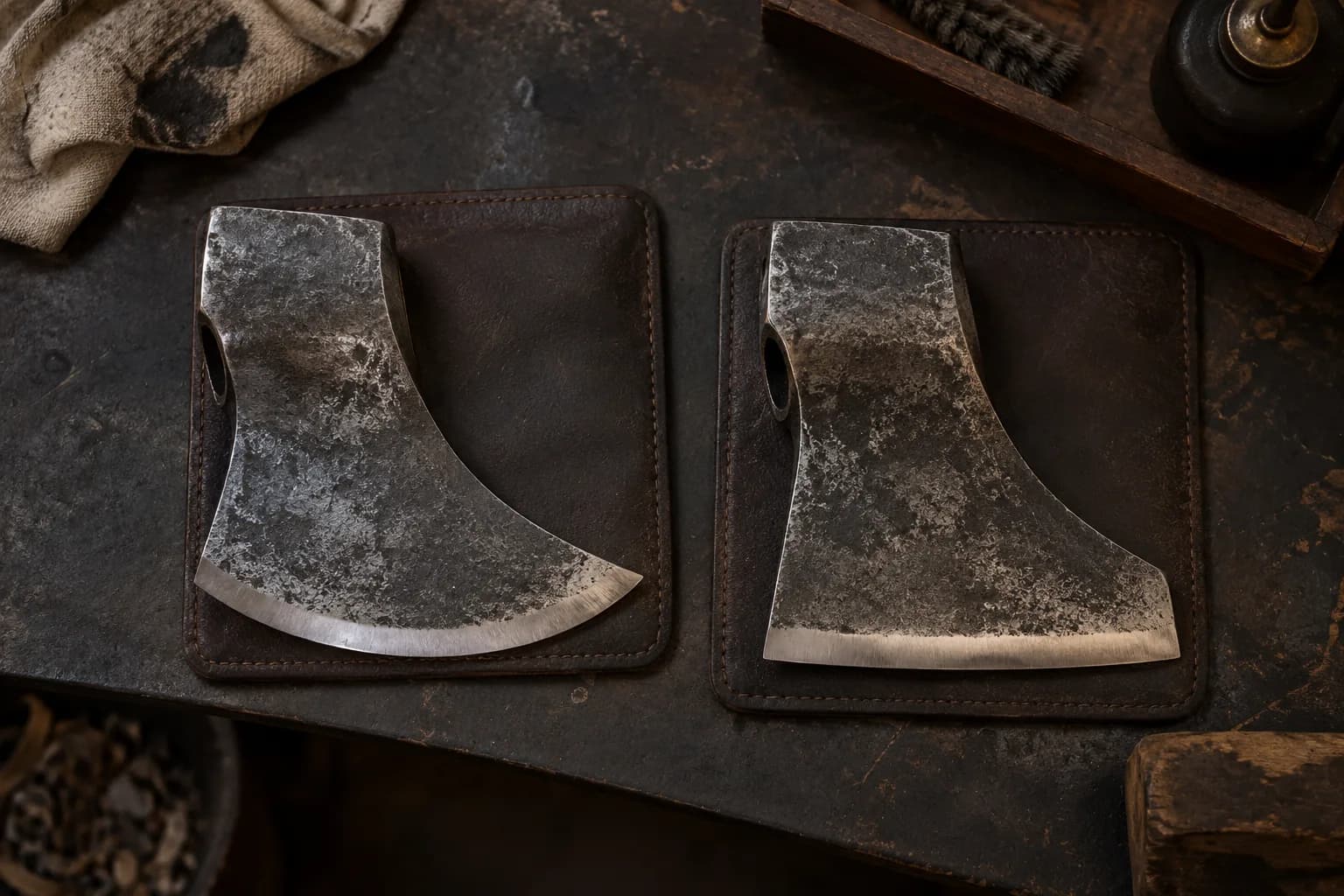
The belt grinder is the axe-geometry tool the old-timers wished they had: slack-belt passes maintain convex honestly, the platen re-establishes a profile a file would take an afternoon to move, and a worn 220 belt followed by the strop puts a shaving edge on a felling bit in minutes. Work COOL — the bit’s low-50s temper (per Bit Steels) draws at temperatures grinding reaches casually, and a blued edge is a re-heat-treat, not a touch-up. Light passes, bare hands on the head, water close: the same discipline as every thin blade, applied to a thick one.
Keep reading
Three more from the same bench.
The axe is the knife’s working-class cousin: same steel, same edge physics, ten times the leverage and none of the pretension. It is also the deepest…
Axe metallurgy is knife metallurgy with the volume turned down and the toughness turned all the way up: lower carbon, lower hardness, and a design…

Big blades live on impact, and impact rewrites the geometry rules: the edge is a wedge under shock load, balance is a cutting spec, and…
Same bench
I machine the parts, hand-assemble, track and test Torus grinders in Sterling, Illinois. Most orders ship in seven to ten business days from time of order.

Current dual-axis platform with a fiber-laser-cut 6061 chassis and single-knob tracking.

Current dual-axis platform with a steel chassis, more mass and less vibration.

Prior-design aluminum chassis, 90-degree tilt and 1.5-inch tooling arms.

One-man shop
I answer my own email. Tell me the steel, the machine and what it is doing, and I will tell you what I would try next.