

Axes & Tomahawks
Axe Geometry: Felling, Splitting & the Convex Truth
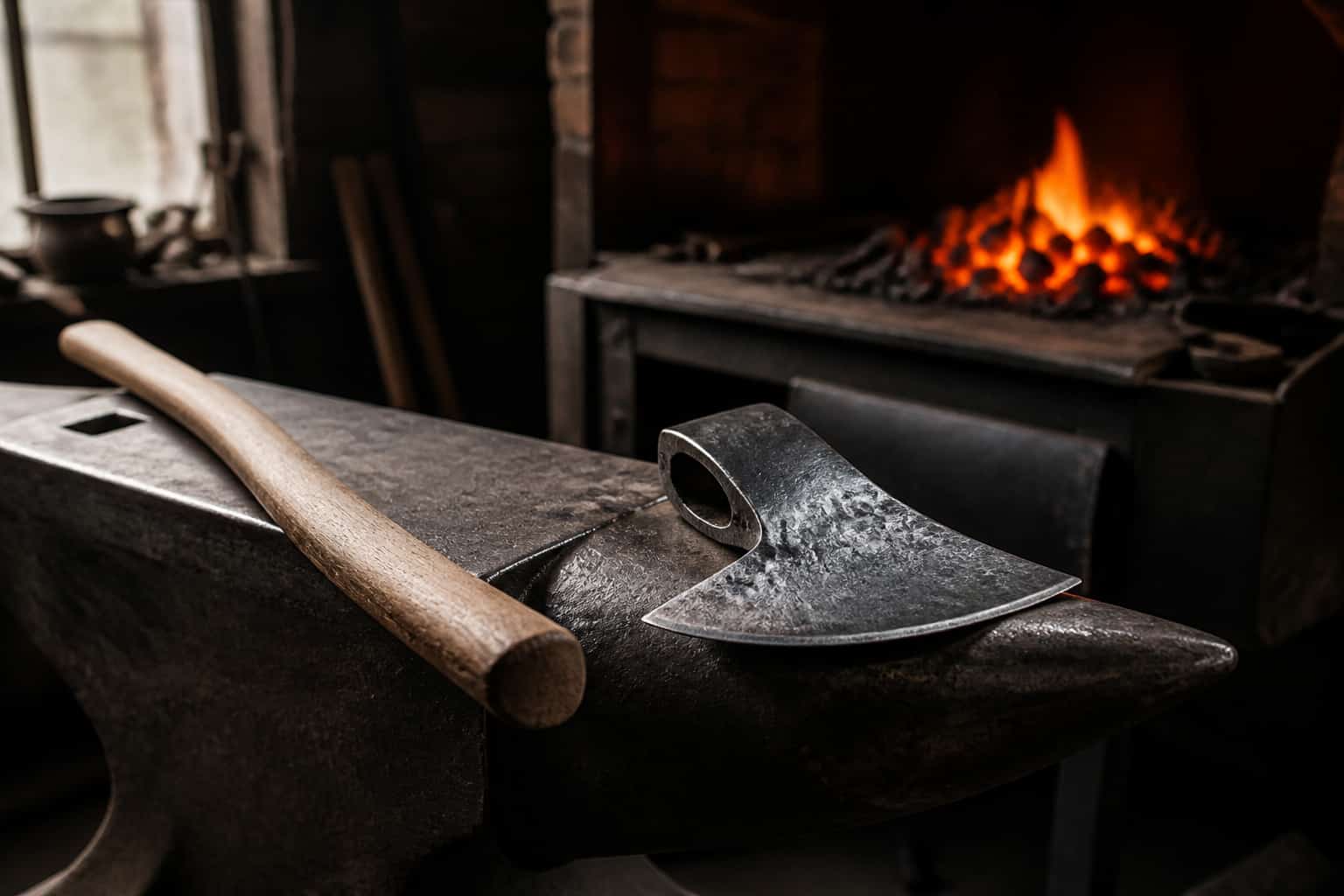
An axe is edge geometry with a run-up. Everything the knife-angle chart teaches applies, then the swing multiplies the stakes: geometry that merely…
Axes & Tomahawks
Keep an axe working: file-and-puck sharpening in the field, slack-belt convex maintenance in the shop, profile restoration, rust care and storage rules.
2 min readWritten by Rich LinvilleFree to read
An axe asks less maintenance than any knife you own and rewards it more visibly: the difference between a working edge and a neglected one is the difference between chips flying and the axe bouncing. The whole discipline is a file, a puck, an occasional belt session, and habits that fit in a coat pocket.
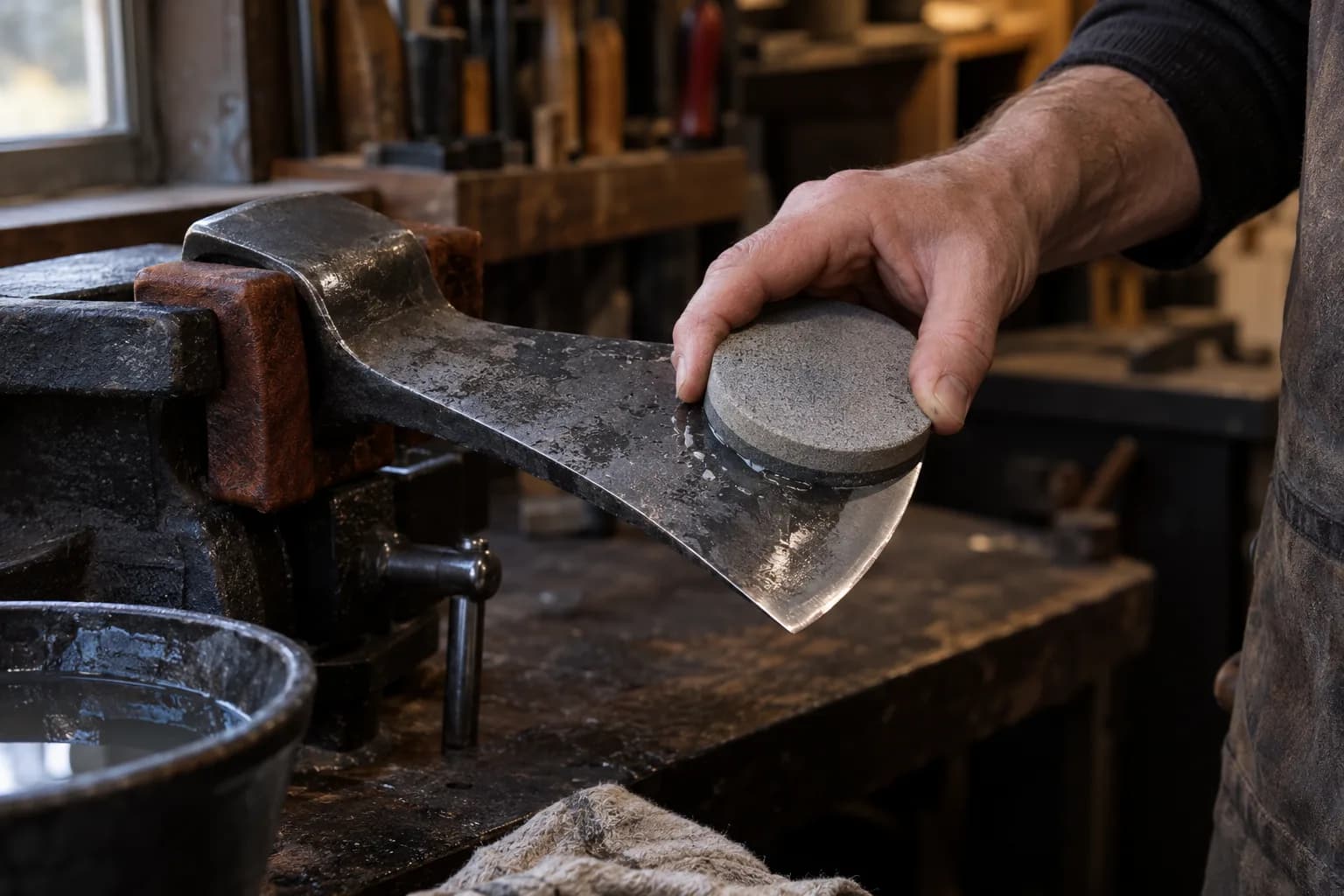
The stump-side method that maintained a continent of axes: a 10-inch mill bastard file to raise the edge (strokes INTO the edge from behind it, following the convex curve, alternating sides evenly), then the round sharpening puck — coarse side, fine side — worked in overlapping circles along the bit to erase the file’s teeth and polish the appleseed. The bit’s file-friendly low-50s hardness is a design spec, per Bit Steels: if the file skates, the head is too hard for its job. Field cadence: puck at every session, file when dents arrive, and the edge never gets far enough gone to need the shop.
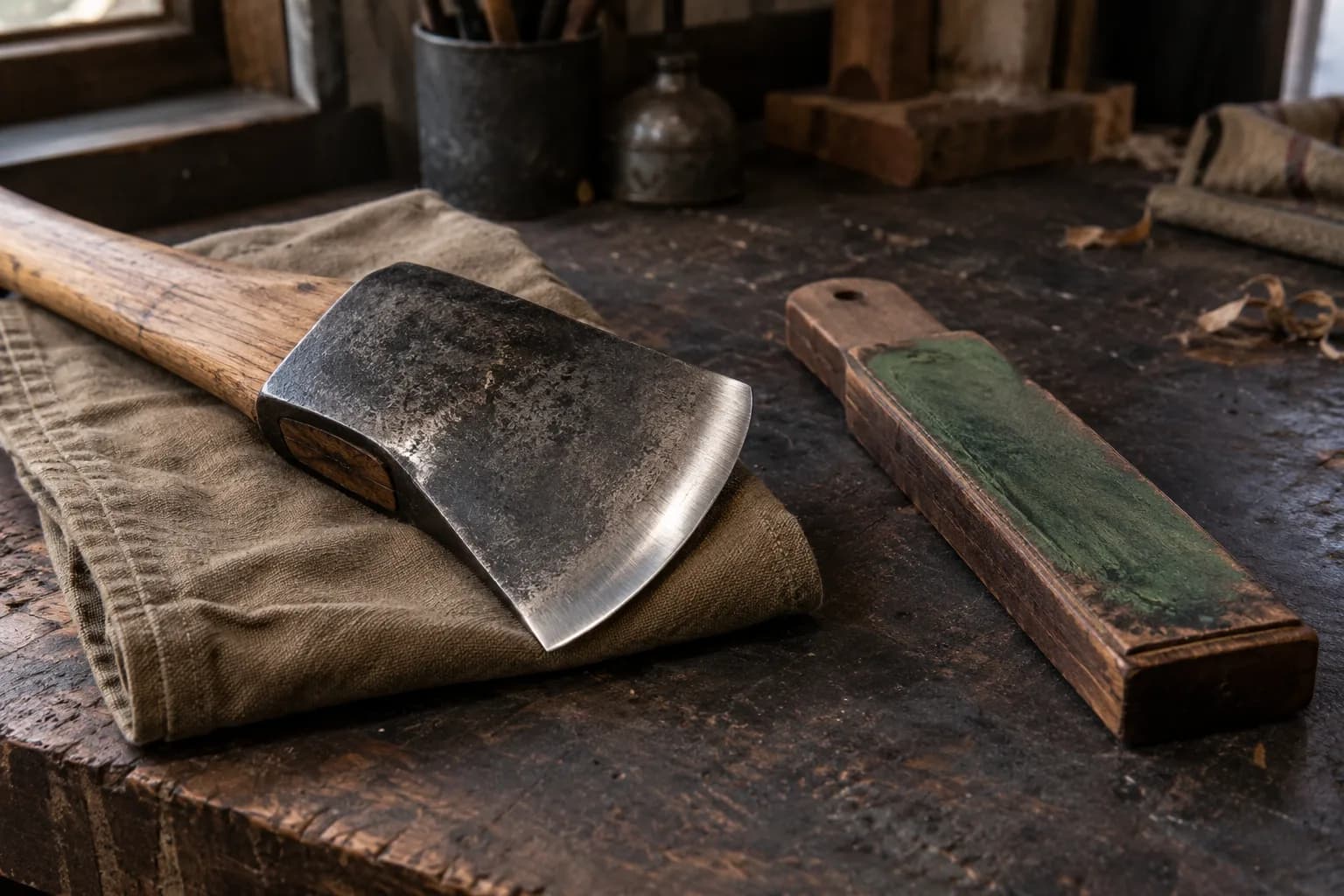
On the 2×72, the axe is a five-minute customer: slack-belt passes with a worn 220 following the convex — the belt’s give matches the appleseed naturally — then a charged strop to a working polish. Two rules carry all the risk: COOL (the low-50s temper draws fast; blued edge equals ruined temper, and bare fingers on the bit are the thermometer), and EDGE GEOMETRY UNCHANGED — maintenance follows the existing convex, it does not flatten it into bevels, per the geometry guide. A felling axe finishing shaving-sharp is correct, not excessive; a splitting maul needs only honest-clean.
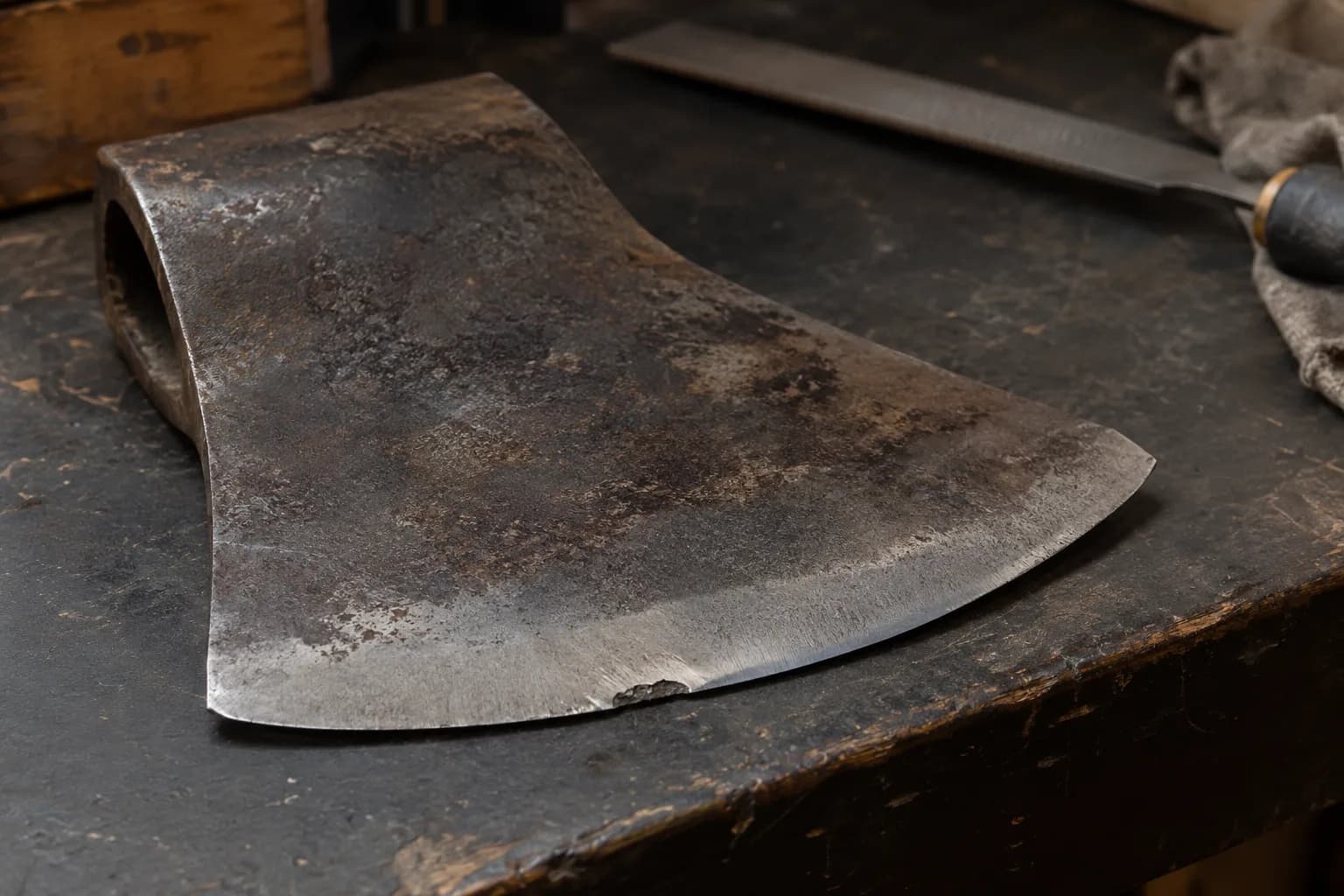
Rock strikes, decades of filing, or a flea-market rescue eventually call for re-profiling: platen work to re-establish the bit’s curve and grind out chips, then rebuilding the convex on the slack belt. Take the long view a file teaches — remove the least steel that makes the edge continuous, keep the toe and heel corners honest, and preserve the centerline. Deep chips ground fully out in one session waste bit life; a working edge tolerates a shallow flat that future sharpenings erase.
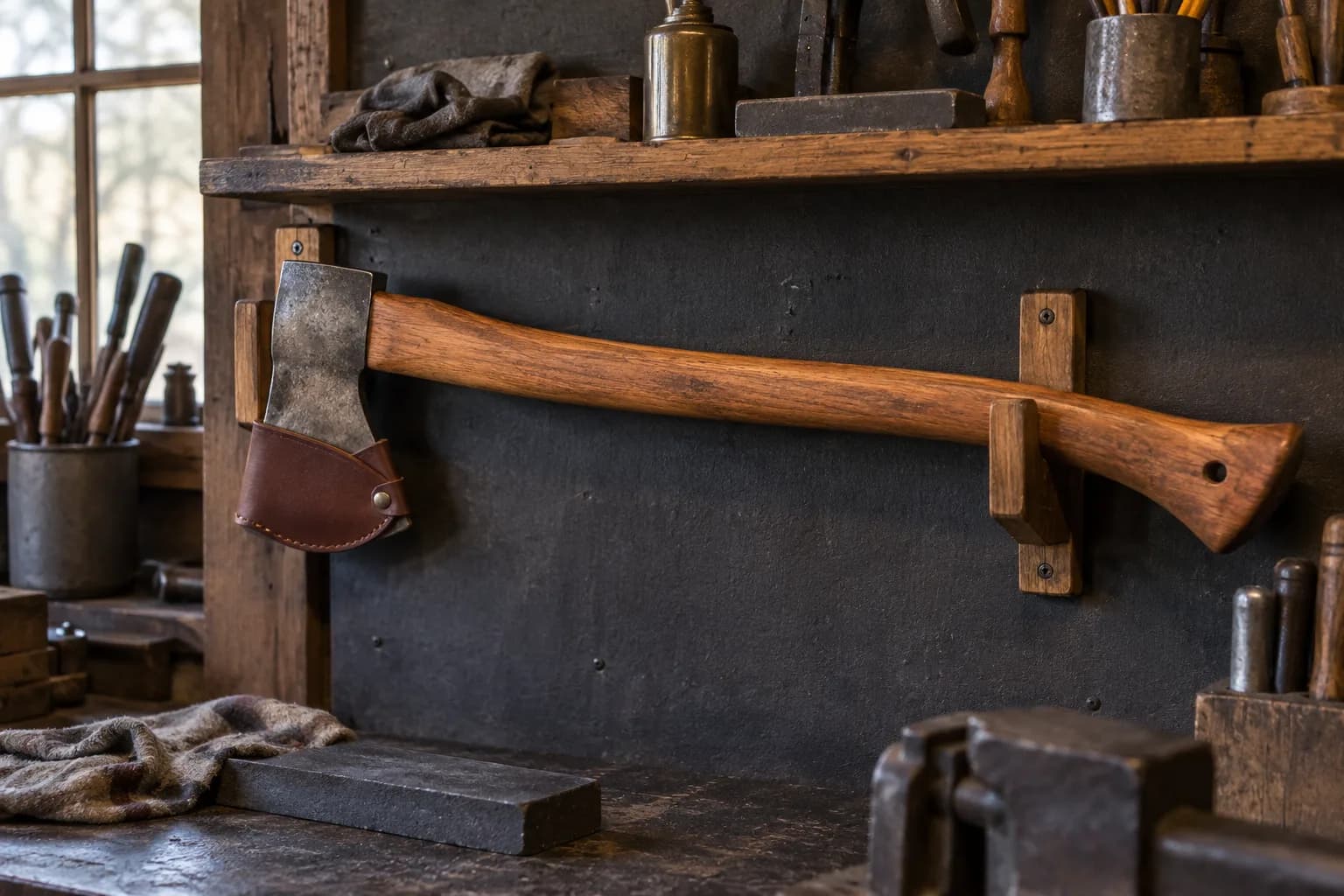
Heads: wipe after use, oil before storage — the patina rules apply, and a gray working patina is protection, not neglect; active red rust is the enemy, wire-wheeled and oiled away. Hafts: raw linseed seasonally, sand-and-oil when weathered, and inspect at the shoulder where overstrikes bruise. Storage: dry, edge masked, and NOT sunk in a stump outdoors (romantic, ruinous — moisture wicks straight up the grain). The mask itself is a first-evening leather project — a fold of 8-9 oz veg-tan and two snaps guarding the edge, the truck, and every shin that walks past the woodpile.
Keep reading
Three more from the same bench.
An axe is edge geometry with a run-up. Everything the knife-angle chart teaches applies, then the swing multiplies the stakes: geometry that merely…
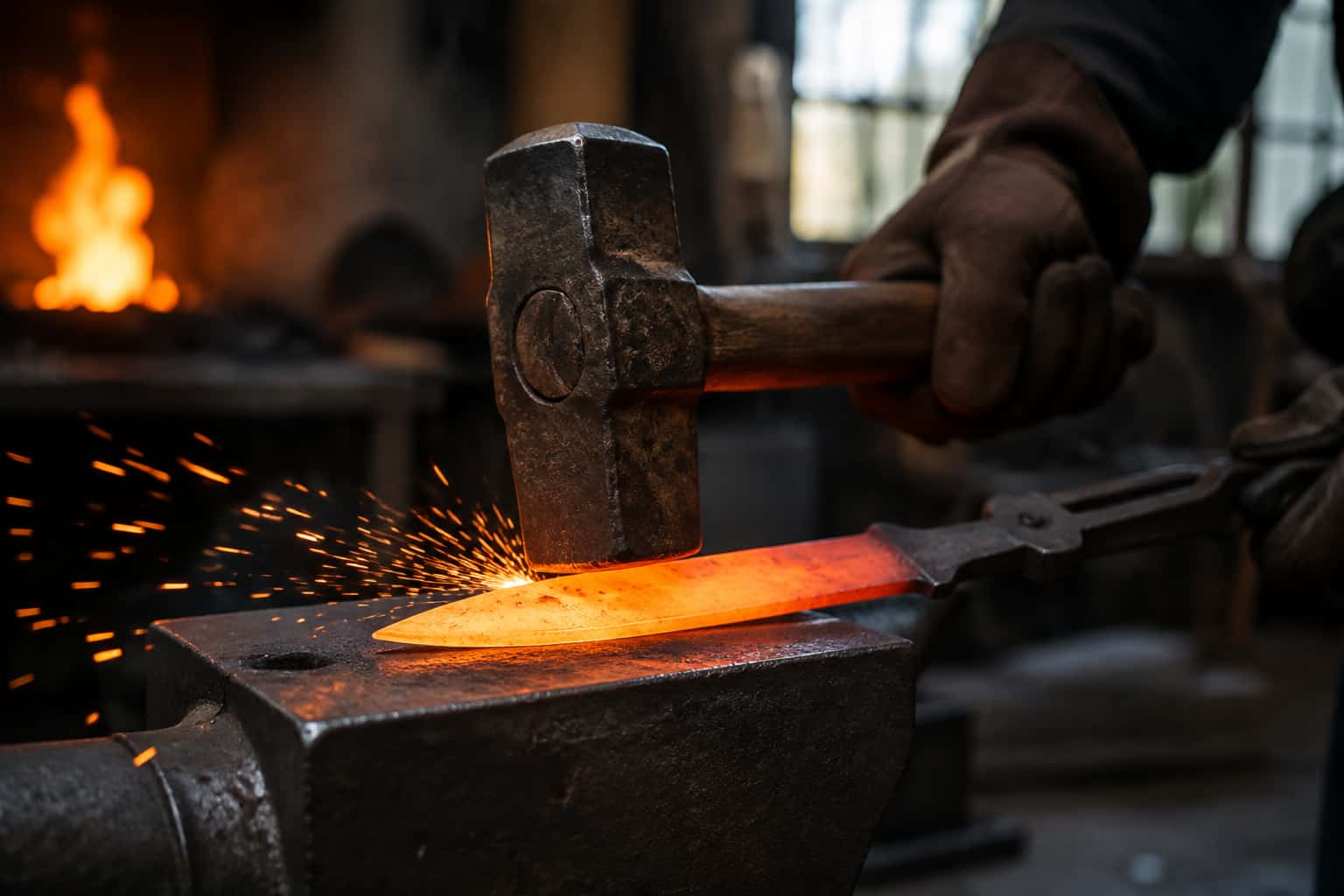
Axe metallurgy is knife metallurgy with the volume turned down and the toughness turned all the way up: lower carbon, lower hardness, and a design…

Sharpening is where knifemaking gets humbled: you can grind a flawless blade and still hand someone a knife that won’t slice paper. The good news …
Same bench
I machine the parts, hand-assemble, track and test Torus grinders in Sterling, Illinois. Most orders ship in seven to ten business days from time of order.

Current dual-axis platform with a fiber-laser-cut 6061 chassis and single-knob tracking.

Current dual-axis platform with a steel chassis, more mass and less vibration.

Prior-design aluminum chassis, 90-degree tilt and 1.5-inch tooling arms.

One-man shop
I answer my own email. Tell me the steel, the machine and what it is doing, and I will tell you what I would try next.