
Beginner Guides
How to Choose Your First Knife Steel
With dozens of knife steels to choose from, picking your first one can feel overwhelming. The good news: for a first knife, the right answer is almost…
Metallurgy
What carbon, chromium, vanadium, molybdenum, manganese, nickel, silicon and nitrogen each do in knife steel, and how their balance sets how a steel behaves.
3 min readWritten by Rich LinvilleFree to read
Every knife steel is iron plus a specific recipe of other elements, and each of those elements pulls the steel’s behavior in a particular direction. Knowing what each one actually does makes steel names and spec sheets make sense instead of just being letters and numbers.
The single most important element after iron. Carbon is what lets steel harden at all, more carbon generally means a harder maximum hardness and better edge retention, but also more brittleness and a higher risk of chipping if pushed too far. Every steel discussed on this site has enough carbon to be a proper knife steel; the differences between them come mostly from what else is added alongside it.
Chromium’s headline job is corrosion resistance, steel needs roughly 12%+ chromium to be called “stainless.” It also forms hard chromium carbides that add wear resistance. The tradeoff: high chromium content can make a steel harder to get a truly keen, refined edge on compared to simpler carbon steels, and it changes the heat-treat recipe significantly. See Understanding Knife Steel Ratings for how corrosion resistance gets scored across steels on this site.
Forms extremely hard, fine carbides that boost wear resistance and edge retention significantly, while also refining grain structure for added toughness. Vanadium is a big part of why modern powder-metallurgy steels like CPM MagnaCut or CPM S30V hold an edge so much longer than older steels. The tradeoff is that vanadium carbides are hard enough to make sharpening slower, especially with standard abrasives.
Improves toughness and resistance to softening at high temperatures (“red hardness”), which matters both during heat treat and during hard use where the edge heats up under friction. Commonly paired with chromium in stainless steels to help offset some of chromium’s brittleness tendency.
Improves hardenability (how deeply and reliably the steel hardens during quench) and helps counteract impurities like sulfur that would otherwise make steel brittle. Present in small amounts in most knife steels as a supporting element rather than a headline one.
Adds toughness and some corrosion resistance without significantly hurting hardness. Common in tool steels and some stainless grades where extra resistance to chipping and cracking is valued alongside edge retention.
Mainly used as a deoxidizer during steel production, and in larger amounts (as in some spring steels) improves elasticity and resistance to permanent bending. Not usually a major factor in typical knife steel behavior at the levels used.
Used in some modern stainless steels as a substitute or supplement for carbon, forming nitrides instead of (or alongside) carbides. It can boost corrosion resistance and toughness simultaneously, which is part of why some newer “nitrogen-alloyed” steels perform differently than older stainless recipes with similar chromium content.
No single element makes a great knife steel alone, it’s the balance. A simple carbon steel like 1084 leans on carbon alone for a straightforward, easy-to-sharpen, tough blade. A steel like CPM MagnaCut balances high chromium (stainless, corrosion resistant) with vanadium and niobium (edge retention, fine grain) and molybdenum (toughness), which is why it performs well across multiple categories at once instead of excelling narrowly. See individual steel pages in the Knife Steel Database for the exact composition of each steel covered on this site.
Vanadium forms carbides that are harder than typical sharpening abrasives used at lower grits, so the stone or belt has to actually cut through those hard particles rather than just the surrounding steel. Diamond or CBN abrasives handle high-vanadium steels much more effectively than standard aluminum oxide.
Generally yes, up to the level where enough chromium is left “free” in the steel (not locked up in carbides) to form a protective oxide layer, which is why the roughly 12%+ threshold matters. But other elements and the specific heat treat also affect how much of that chromium ends up actually available for corrosion resistance.
Yes. The exact ratios, the manufacturing process (conventional vs. powder metallurgy), and the heat treat all significantly change how those elements actually behave in the finished blade, not just which elements are present.
Keep reading
Three more from the same bench.
With dozens of knife steels to choose from, picking your first one can feel overwhelming. The good news: for a first knife, the right answer is almost…
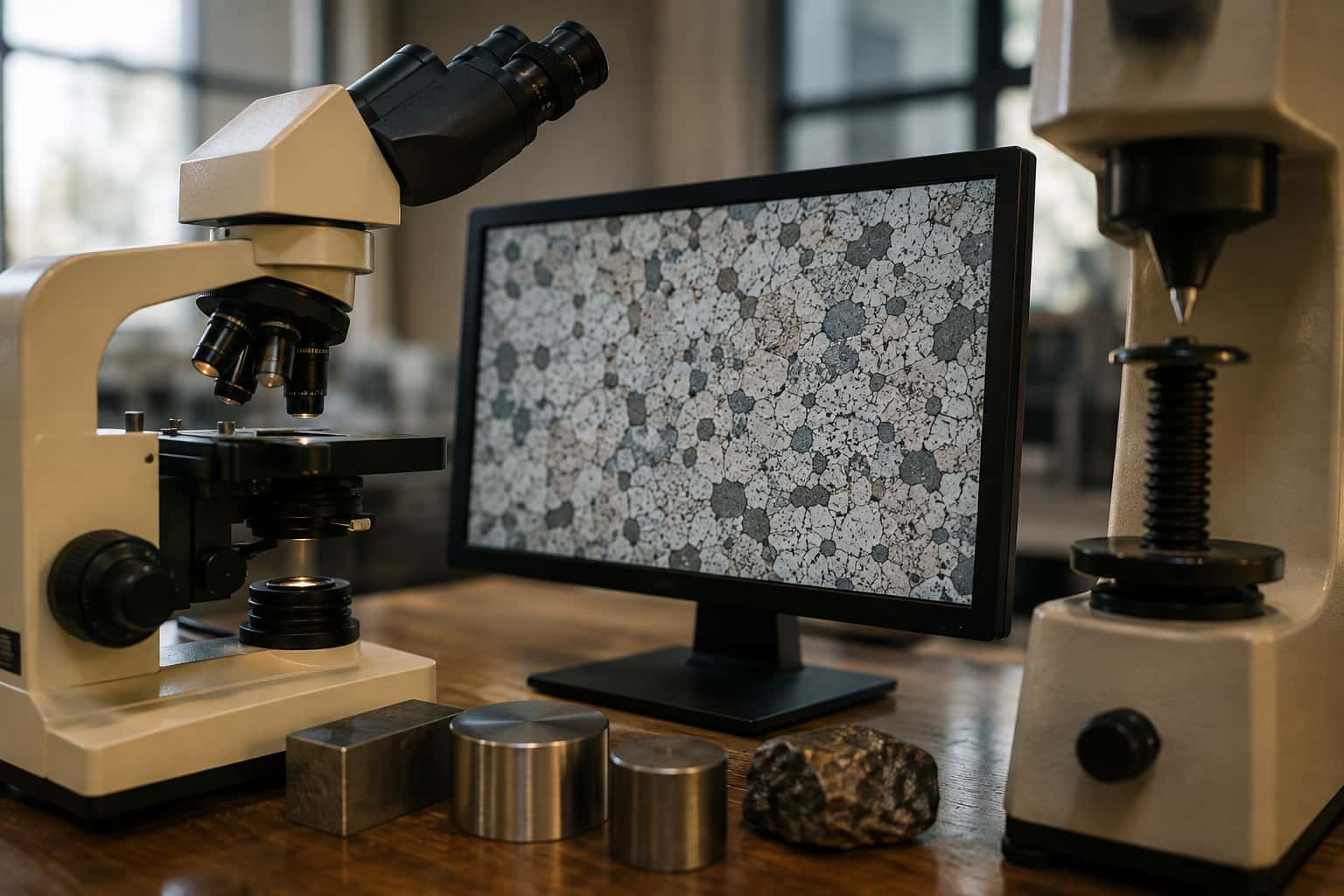
Every steel in the Knife Steel Database is rated 1-5 across four properties: toughness, edge retention, corrosion resistance, and machinability. Here’s…
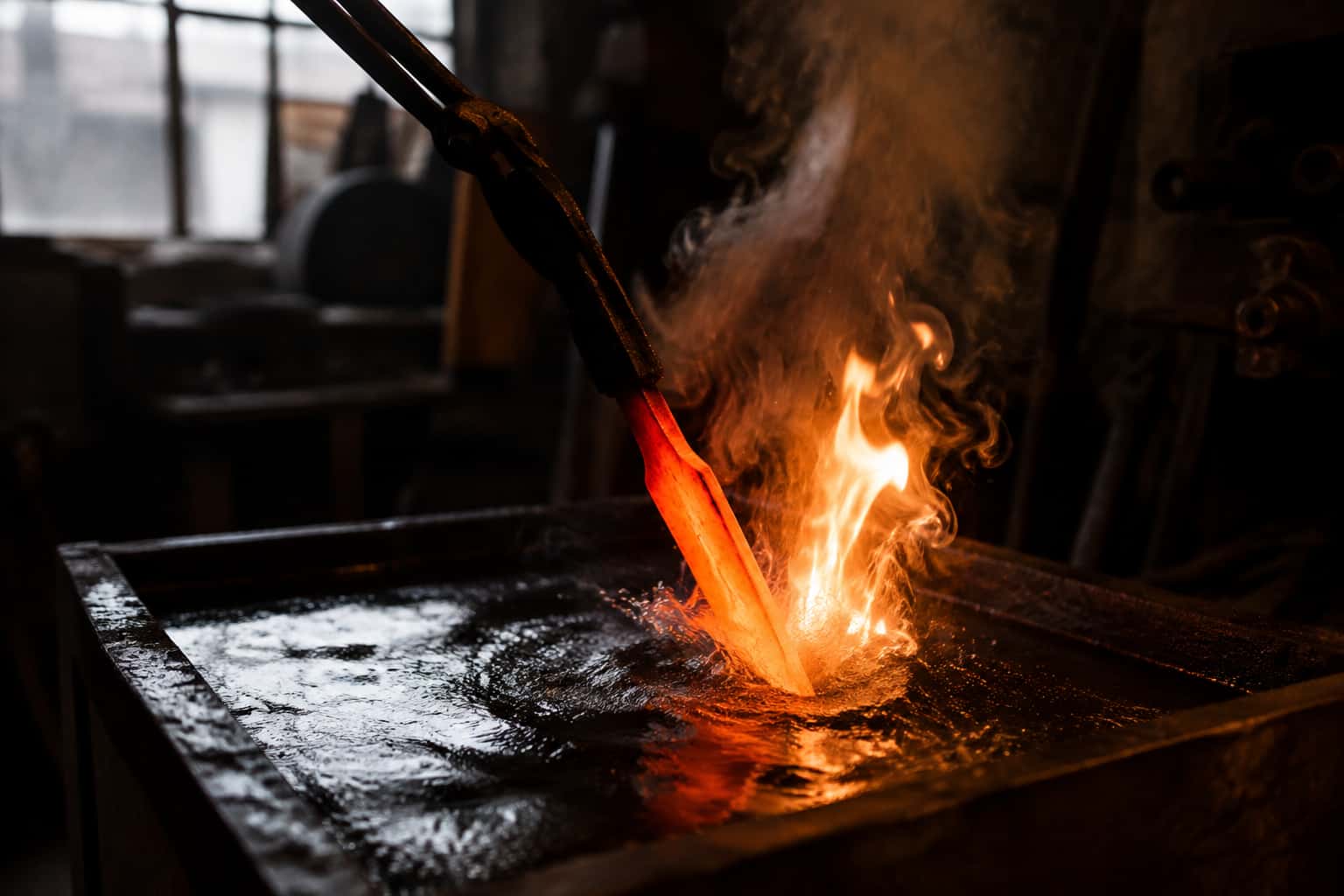
Heat treating is what turns a piece of flat bar stock into a functional knife blade. Done correctly, it transforms the steel’s internal crystal structure…
Same bench
I machine the parts, hand-assemble, track and test Torus grinders in Sterling, Illinois. Most orders ship in seven to ten business days from time of order.
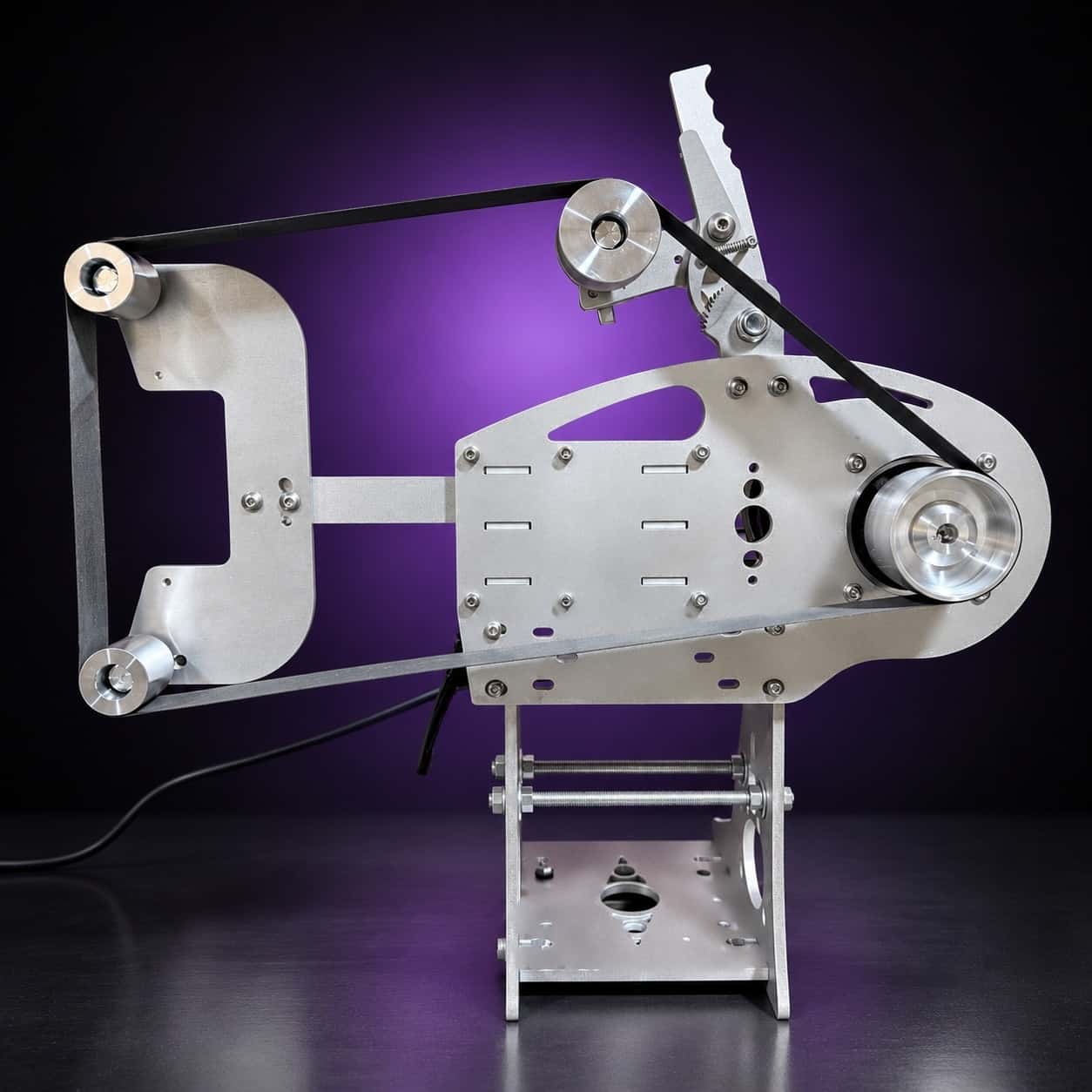
Current dual-axis platform with a fiber-laser-cut 6061 chassis and single-knob tracking.
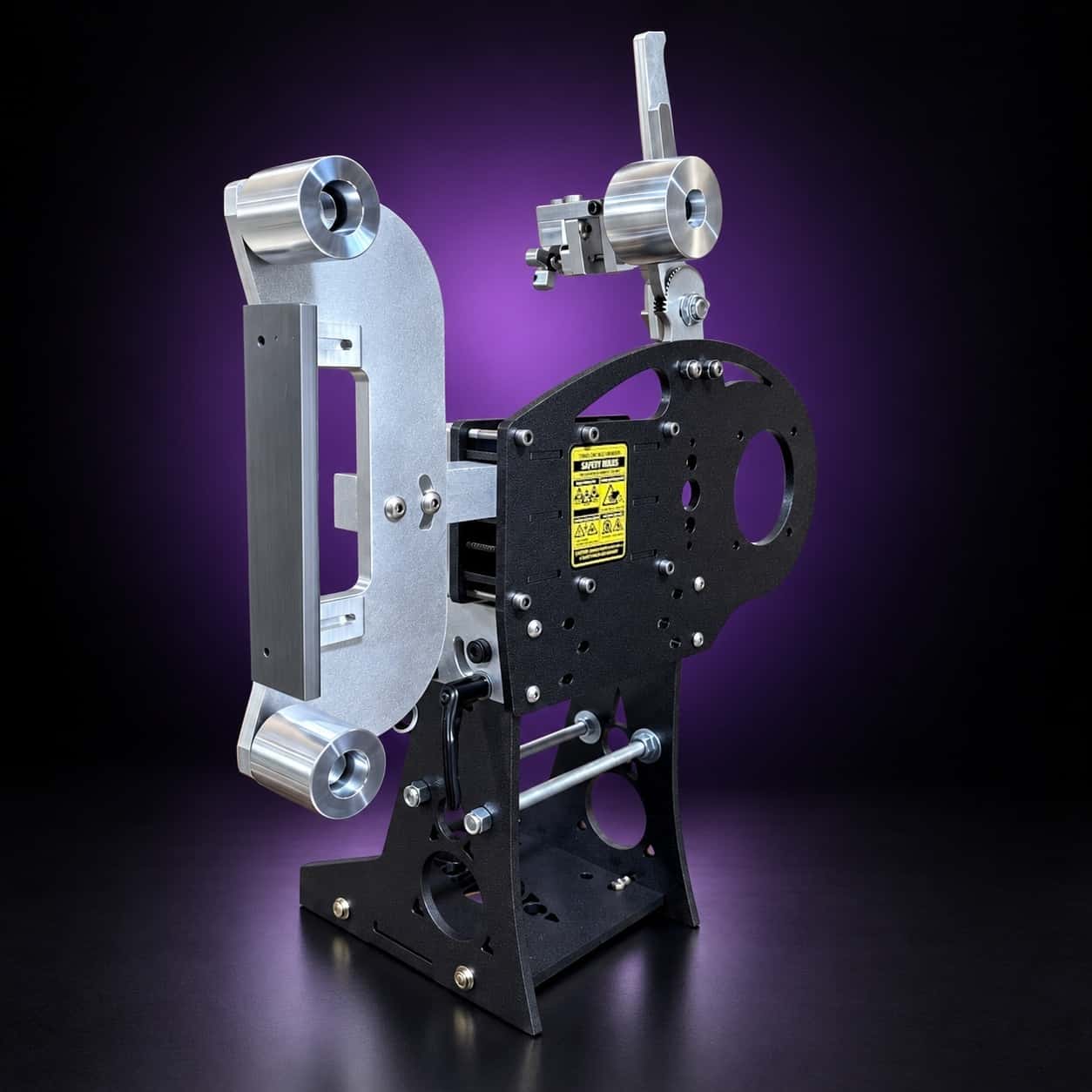
Current dual-axis platform with a steel chassis, more mass and less vibration.
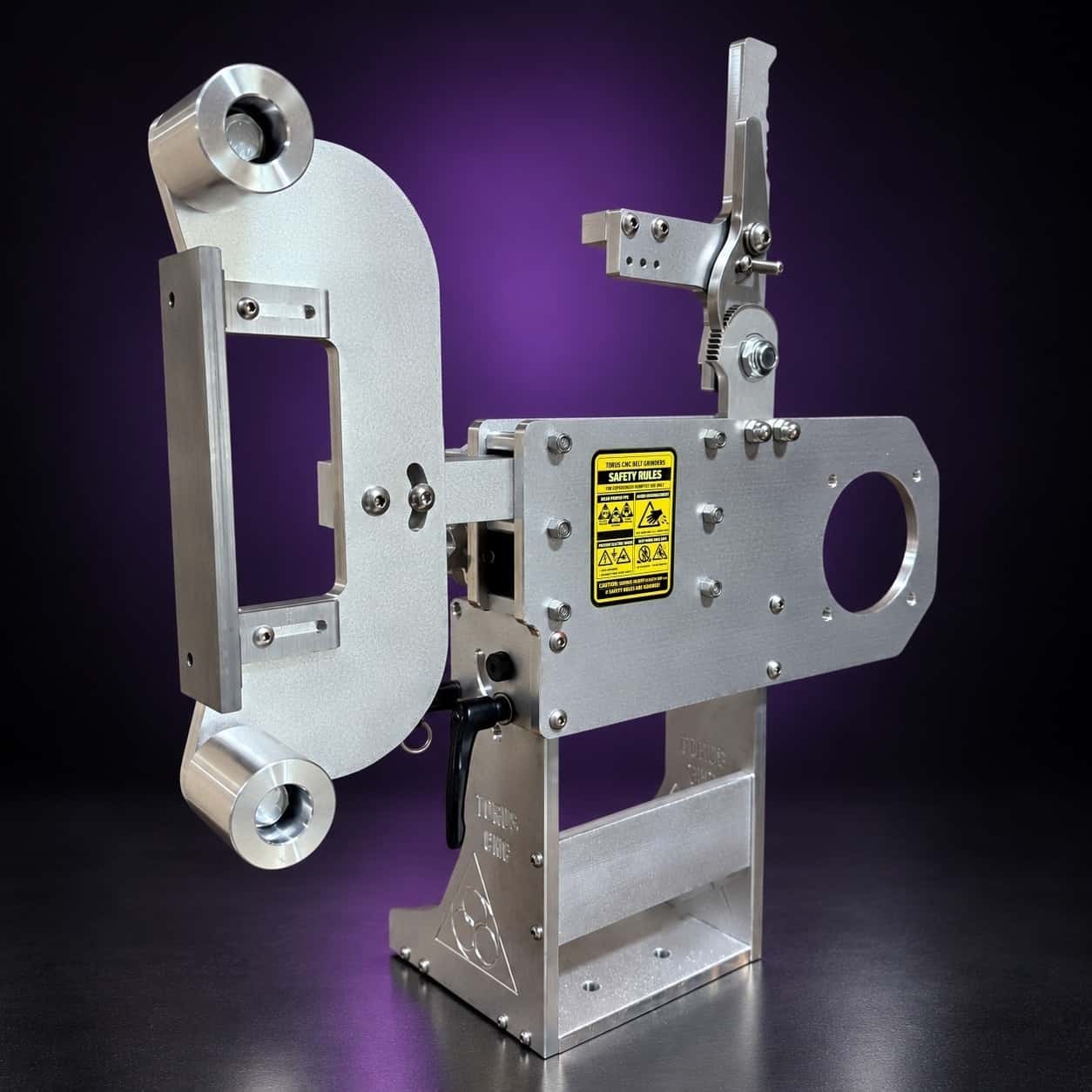
Prior-design aluminum chassis, 90-degree tilt and 1.5-inch tooling arms.
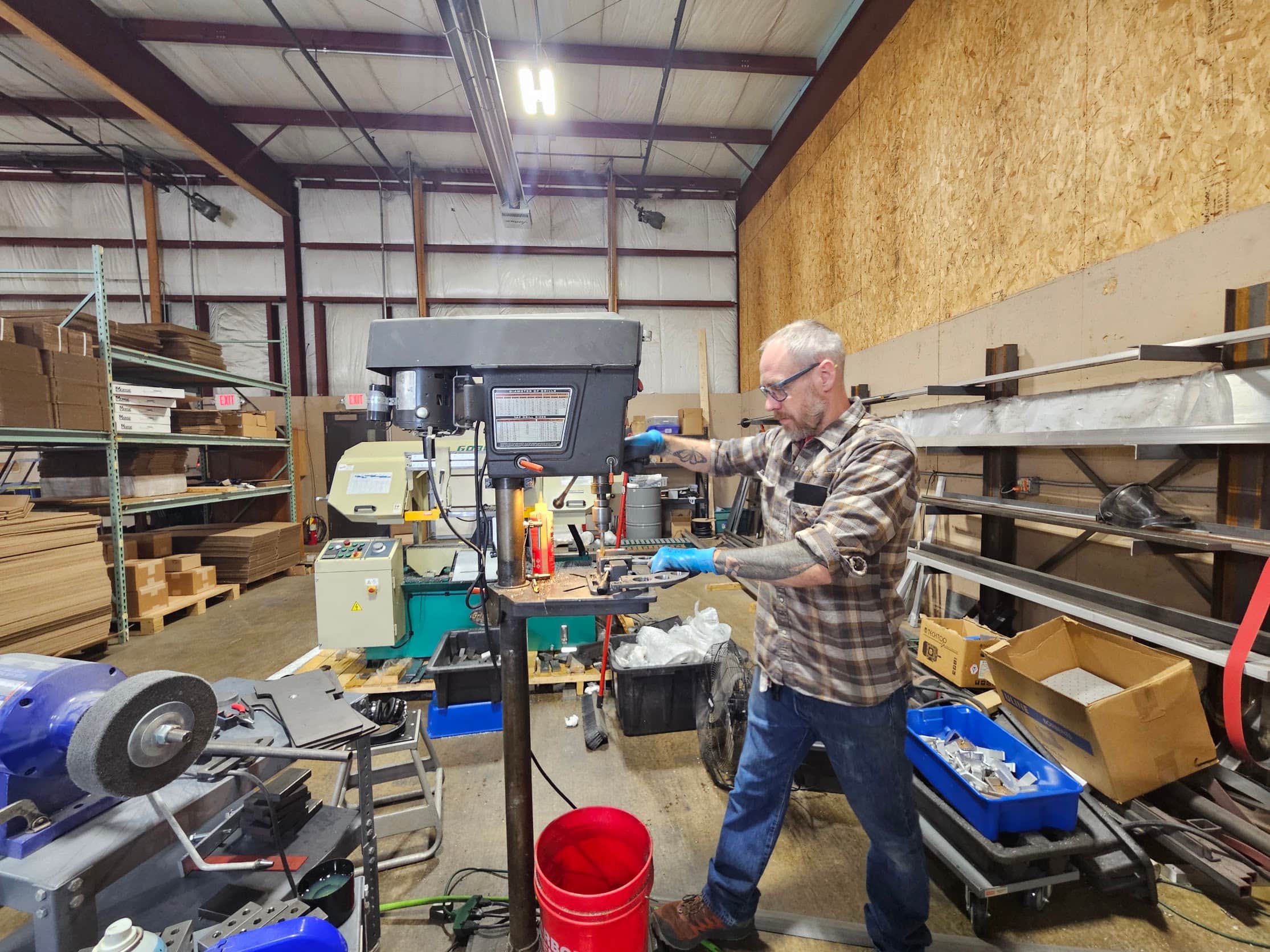
One-man shop
I answer my own email. Tell me the steel, the machine and what it is doing, and I will tell you what I would try next.