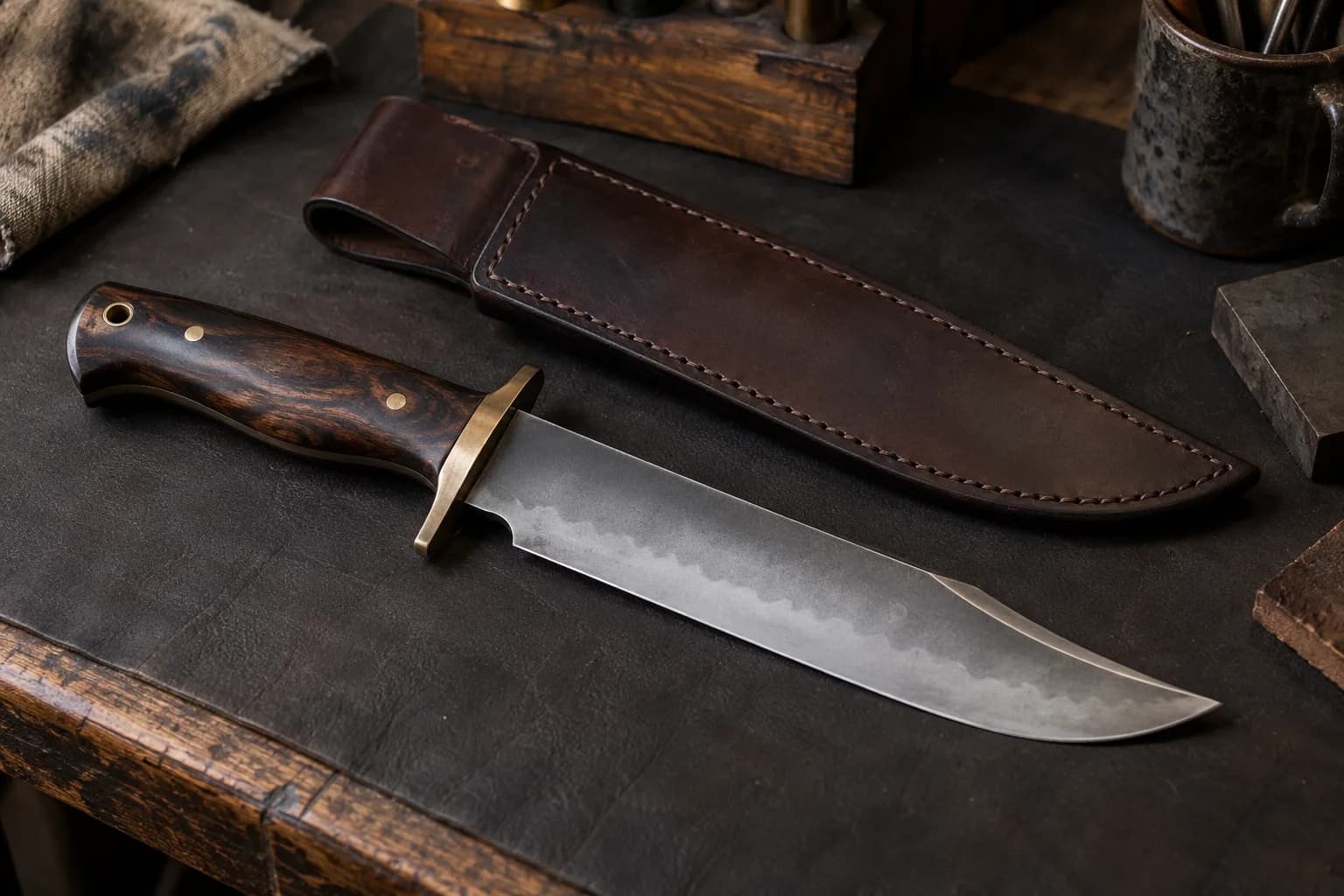
| Toughness | 2/5Through-hardened W2 sits in 1095 territory — high carbon, moderate at best, and not a chopper steel. The honest asterisk: a clay-quenched W2 blade behaves far tougher than its number, because the soft pearlite spine bends where a through-hardened blade breaks. Rate the steel a 2; rate a well-made hamon blade higher. | 3/5O1's honest weak point. The same high carbon and fine carbide content that give it a keen, wear-resistant edge cap its impact toughness at moderate — better than 1095 at equal hardness, but clearly behind 5160, 80CrV2, 15N20 and A2. Suited to slicing blades; a poor choice for choppers, machetes or big camp knives. | O1 by a hair through-hardened — its tungsten and chromium refine carbides without the brittleness of more carbon. Clay-quenched W2 flips the result completely: a soft-spined W2 bowie absorbs abuse no through-hardened O1 blade should be asked to. |
|---|
| Edge retention | 2/51095-class wear resistance — fine cementite, no meaningful alloy carbide, so it sharpens fast and dulls faster than alloyed steels. The vanadium's fine grain means the apex it takes is exceptionally keen, which is most of why razor and kitchen smiths tolerate the maintenance. | 3/5Strong for a low-alloy steel. Chromium and tungsten form fine, evenly distributed carbides that out-slice the simple carbon steels noticeably, and the fine structure means the apex itself is very keen rather than merely hard. Still well below D2 and the powder-metallurgy steels in raw wear resistance. | O1 wins. Its chromium and tungsten form fine wear-resistant carbides W2 simply lacks; at equal hardness O1 out-slices W2 comfortably. W2's answer is keenness rather than endurance — it takes a scary-fine apex and gives it up sooner. |
|---|
| Corrosion resistance | 1/5None. W2 rusts as eagerly as 1095 — flash rust on a fresh grind, spots overnight in a humid shop. Oil it, dry it, and remember the etch that reveals a hamon is controlled corrosion: the same reactivity that shows the line will eat the blade if neglected. | 1/5Essentially none. The ~0.5% chromium serves hardenability, not stain resistance. O1 rusts readily — it will spot overnight in a humid shop and flash rust on a fresh grind. Oil it, dry it, and treat a patina as a feature rather than a flaw. | A tie at the bottom: both rust readily, W2 marginally faster with its near-zero chromium. Neither belongs near salt water unoiled. Both take a handsome working patina. |
|---|
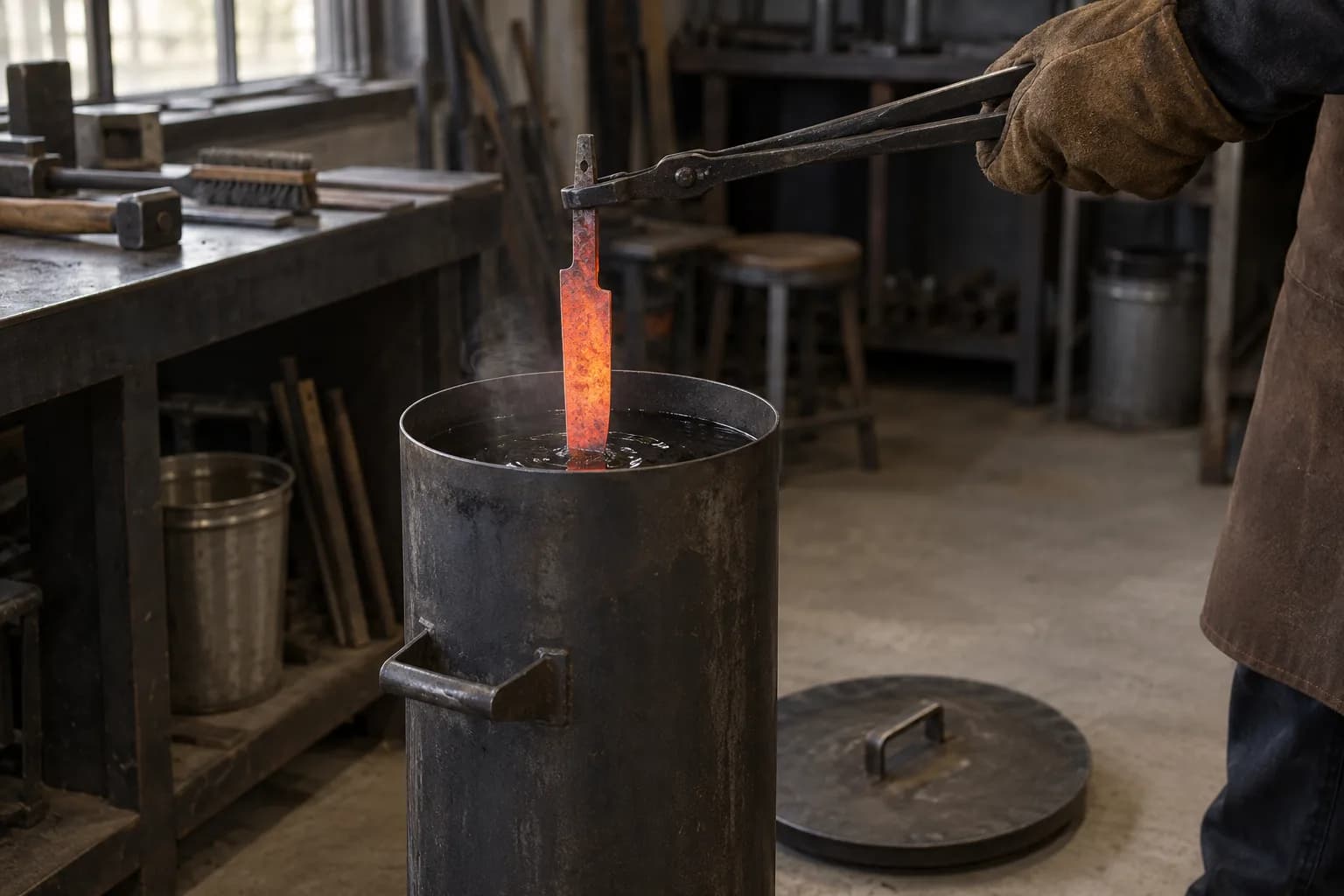
| Heat treat | Normalize 1600°F, cycle down (1475°F, then 1450°F). Austenitize 1425–1475°F — 1450°F typical — short soak. Quench in fast oil (Parks 50 class); water is traditional and dramatic but cracks blades. For a hamon: 1.5mm or less of satanite on the spine before the hardening heat. Temper 2×2h at 350–400°F (60–62 HRC) or 450°F for hard-use blades (58–59). The window is narrow — undershoot and it stays soft, overshoot and the hamon vanishes. | Normalize and thermal cycle first if the stock has been forged. Austenitize at 1475°F with a 10–15 minute soak — do not go to 1550°F, which testing shows reduces toughness with no hardness benefit. Quench in a medium-speed oil (Parks AAA or an 11-second class oil); O1 is deep hardening and does not need a fast oil. Temper twice for two hours at 350–450°F: ~400°F gives 59–61 HRC, 350°F holds 61–62 for thin blades, 450°F drops to 57–58 for larger ones. | Different worlds. O1: 1475°F soak, medium oil, deep hardening, wide margins — the beginner-friendly kiln steel. W2: 1425–1475°F, fast oil or nothing, shallow hardening by design, and clay work that O1's manganese and chromium make impossible. O1 punishes overshoot mildly; W2 punishes it by erasing your hamon. |
|---|
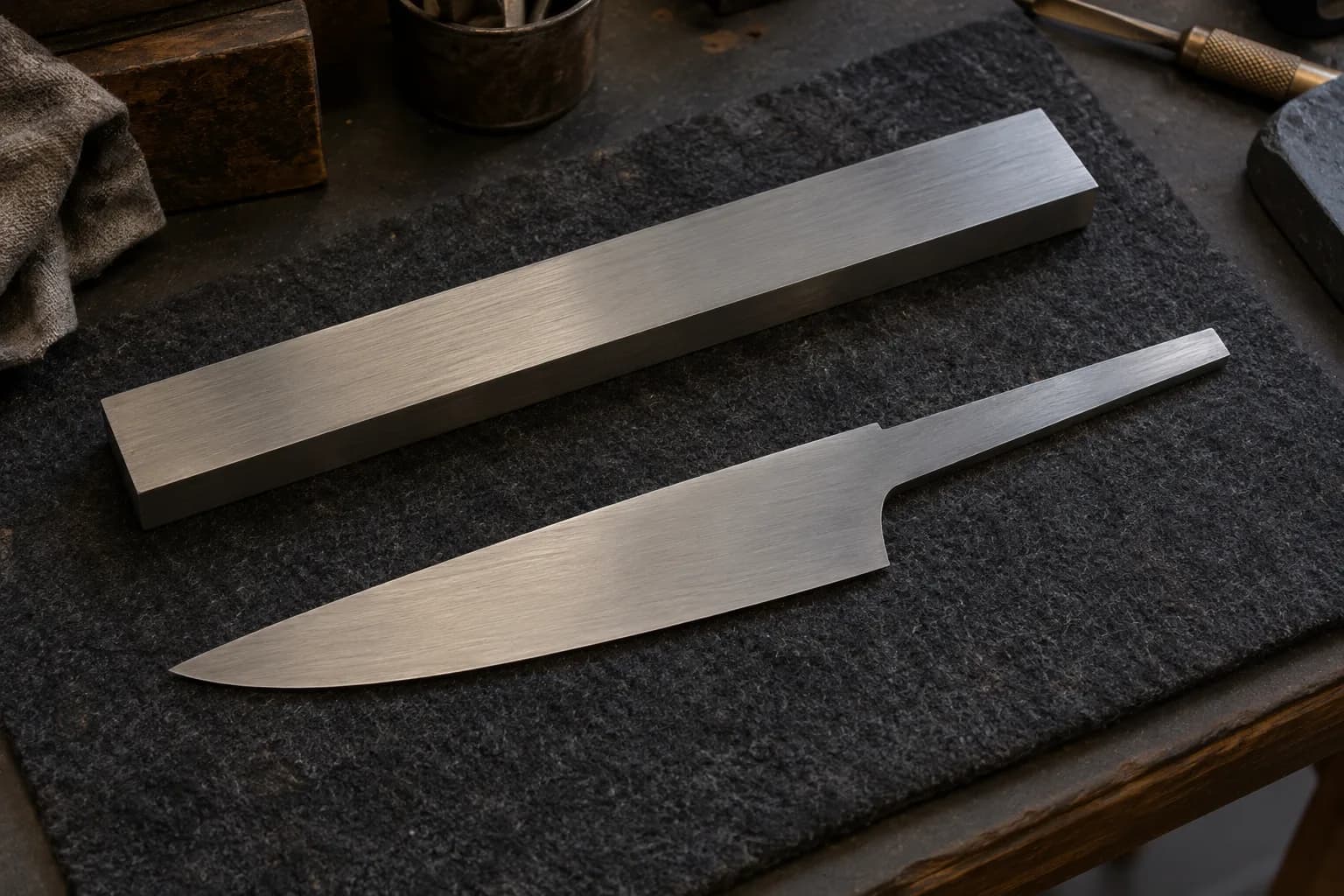
| Grinding | 4/5Annealed W2 files, drills and grinds cooperatively, and it forges beautifully — it moves under the hammer like 1095 with better grain manners. Docked a point only because knife-quality W2 comes and goes from suppliers in rounds and odd flats, so stock prep can involve more forging than a precision-ground steel. | 4/5One of the friendliest steels in the shop. Annealed O1 files, drills and grinds cleanly, and because it is sold as precision ground flat stock it arrives flat and square — no surface grinding needed before layout. Hand-sands to a clean finish without fighting back. | O1 wins the shop-time award — precision ground flat stock means layout and profiling start immediately. W2 grinds just as willingly but usually arrives in shapes that need forging or heavy stock removal first. Hardened, both demand the same cool-and-slow discipline near their low tempers. |
|---|