| Toughness | 3/5O1's honest weak point. The same high carbon and fine carbide content that give it a keen, wear-resistant edge cap its impact toughness at moderate — better than 1095 at equal hardness, but clearly behind 5160, 80CrV2, 15N20 and A2. Suited to slicing blades; a poor choice for choppers, machetes or big camp knives. | 2/5Middle-of-the-road toughness for a simple carbon steel, and generally less tough than higher-manganese steels like 1084 at a comparable hardness. Its high carbon content trades some toughness for hardness potential and edge sharpness. | Close, with a slight edge to O1 in practice. Both are high-carbon and only moderately tough, but 1095's shallow hardenability and fast-oil requirement make quench cracking and stress a genuine risk, and a cracked blade is the worst toughness failure there is. Neither belongs in a chopper. |
|---|
| Edge retention | 3/5Strong for a low-alloy steel. Chromium and tungsten form fine, evenly distributed carbides that out-slice the simple carbon steels noticeably, and the fine structure means the apex itself is very keen rather than merely hard. Still well below D2 and the powder-metallurgy steels in raw wear resistance. | 2/5Good for a simple carbon steel thanks to its high carbon content and the hardness it can reach (58-62+ HRC), taking a very keen edge, though it lacks the wear-resistant carbides of alloy tool steels. | O1 wins. Its chromium and tungsten carbides add wear resistance that 1095's plain iron-carbon structure cannot match, even though 1095 carries similar carbon. 1095 sharpens back very easily, which softens the blow. |
|---|
| Corrosion resistance | 1/5Essentially none. The ~0.5% chromium serves hardenability, not stain resistance. O1 rusts readily — it will spot overnight in a humid shop and flash rust on a fresh grind. Oil it, dry it, and treat a patina as a feature rather than a flaw. | 1/5No chromium and no corrosion resistance to speak of. Requires regular oiling and drying like any plain carbon steel. | A tie at the bottom of the scale. Both rust readily and both take a patina quickly. O1's half-percent of chromium changes nothing you will notice. |
|---|
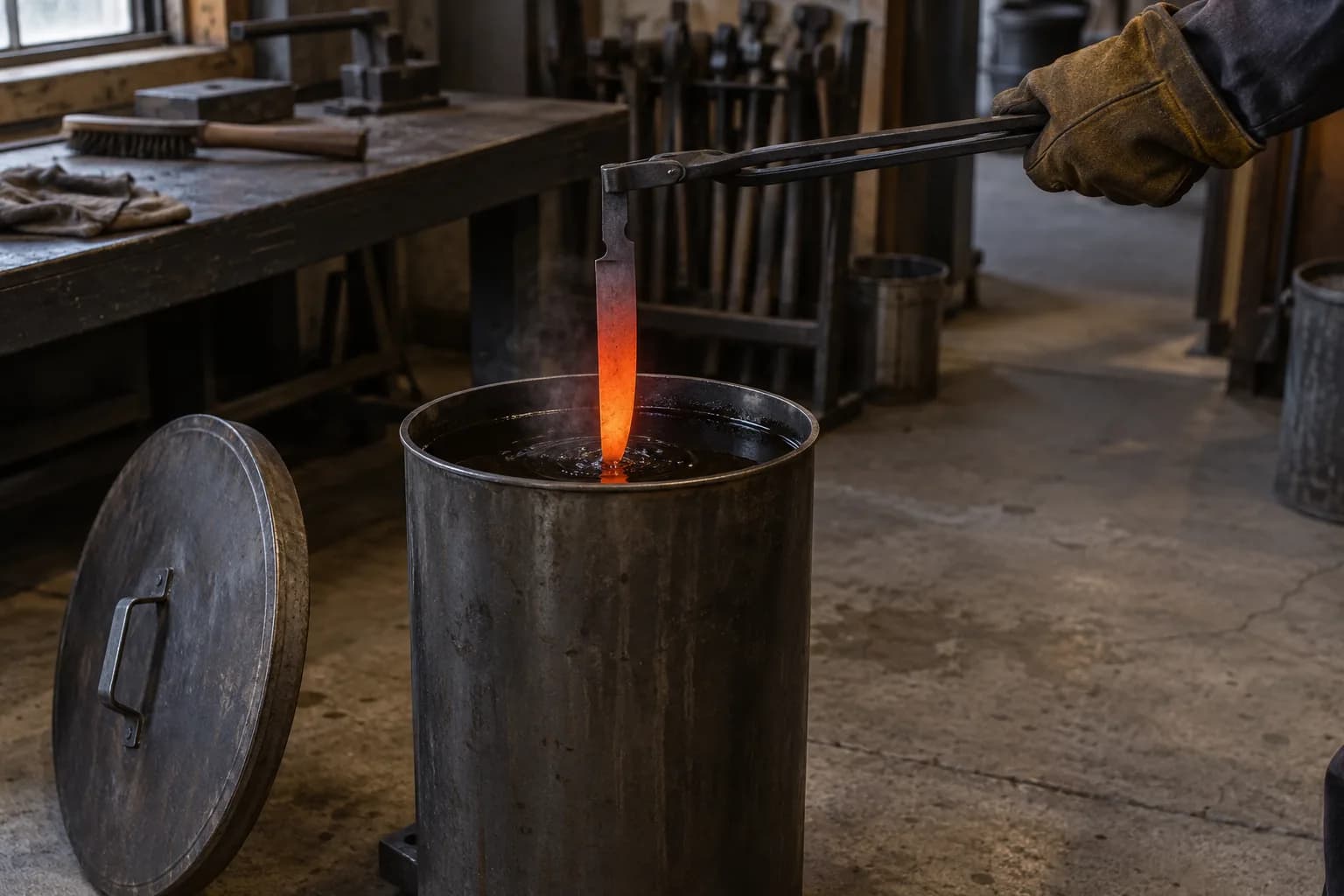
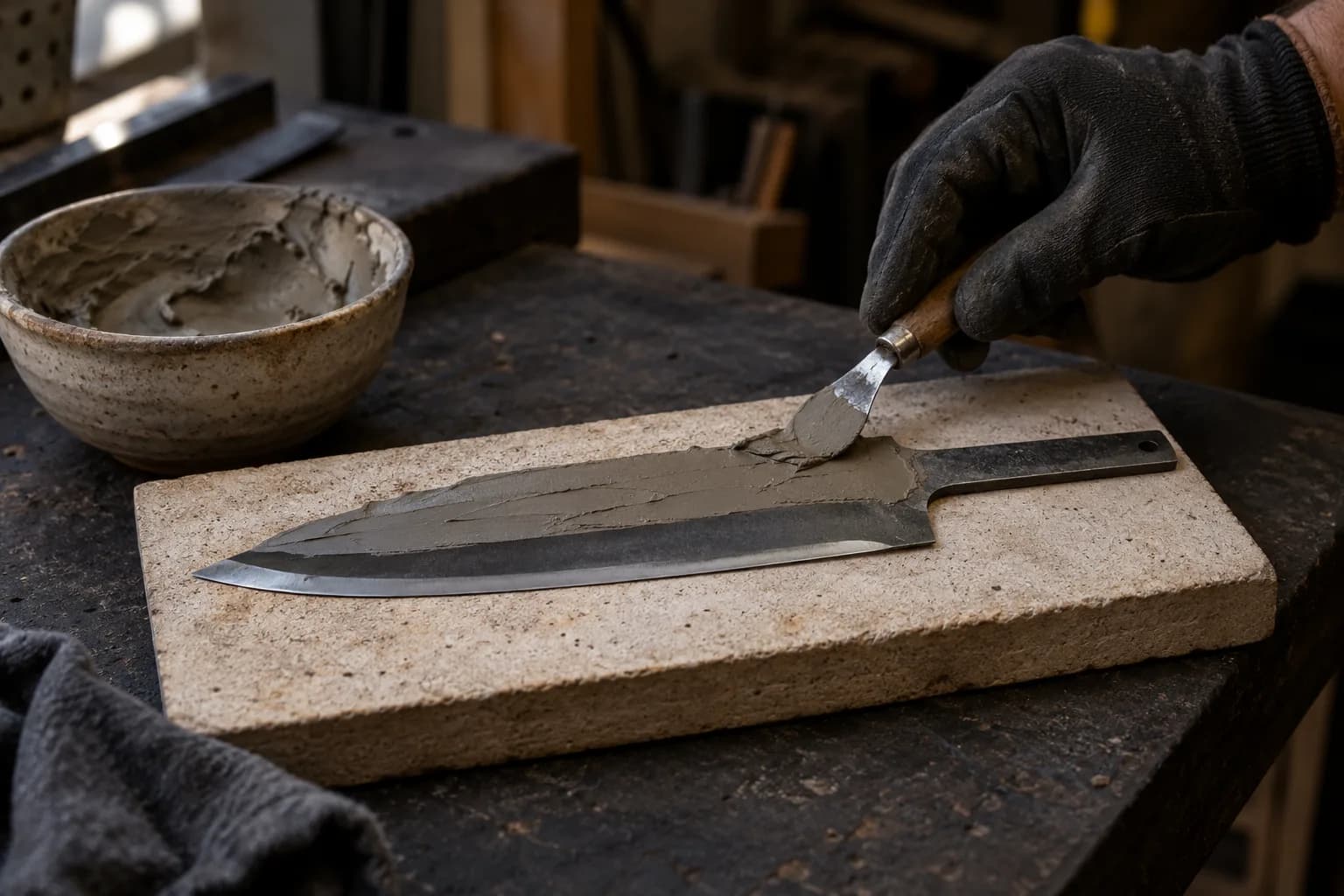
| Heat treat | Normalize and thermal cycle first if the stock has been forged. Austenitize at 1475°F with a 10–15 minute soak — do not go to 1550°F, which testing shows reduces toughness with no hardness benefit. Quench in a medium-speed oil (Parks AAA or an 11-second class oil); O1 is deep hardening and does not need a fast oil. Temper twice for two hours at 350–450°F: ~400°F gives 59–61 HRC, 350°F holds 61–62 for thin blades, 450°F drops to 57–58 for larger ones. | Austenitize between 1475-1550 F. Because 1095 has relatively low manganese and therefore low hardenability, it needs a genuinely fast quench to reach full hardness; water or brine are traditional choices, though many modern makers use a very fast oil (such as Parks 50) to reduce the cracking risk while still hitting the needed cooling rate. This low hardenability is exactly why 1095 has a reputation for being trickier to heat treat consistently than 1084, which has more manganese and hardens more reliably in oil. Temper at 400-700 F depending on desired final hardness, typically yielding around 58-62 HRC for knife use. | The core difference is hardenability. 1095 is shallow hardening: it demands a fast oil, gives you very little margin, and rewards precision with a hamon when clay-coated. O1 is deep hardening thanks to manganese, chromium and tungsten, so a medium-speed oil makes full hardness with far less warping and cracking — but it does require a real 10 to 15 minute soak at 1475°F rather than a quick heat. |
|---|
| Grinding | 4/5One of the friendliest steels in the shop. Annealed O1 files, drills and grinds cleanly, and because it is sold as precision ground flat stock it arrives flat and square — no surface grinding needed before layout. Hand-sands to a clean finish without fighting back. | 5/5Very easy to grind, like other simple carbon steels with no hard alloy carbides to fight through. | Very close. Both grind easily annealed and neither punishes belts. O1 has the practical advantage of arriving as precision ground flat stock. |
|---|