| Toughness | 3/5O1's honest weak point. The same high carbon and fine carbide content that give it a keen, wear-resistant edge cap its impact toughness at moderate — better than 1095 at equal hardness, but clearly behind 5160, 80CrV2, 15N20 and A2. Suited to slicing blades; a poor choice for choppers, machetes or big camp knives. | 4/5The reason makers pick A2: clearly tougher than D2 and other high-carbide tool steels at working hardness — the classic choice for choppers and hard-use blades that must not chip. Modern PM steels like CPM 3V exceed it, at a price. | A2 wins, and it is not close. Its restrained carbide structure and lower effective carbon give it real impact resistance at working hardness, which is why it spent years as Bark River's hard-use steel. O1 is a slicer that will chip where A2 will deform. |
|---|
| Edge retention | 3/5Strong for a low-alloy steel. Chromium and tungsten form fine, evenly distributed carbides that out-slice the simple carbon steels noticeably, and the fine structure means the apex itself is very keen rather than merely hard. Still well below D2 and the powder-metallurgy steels in raw wear resistance. | 3/5Moderate carbide volume holds a solid working edge — above simple carbon steels, clearly below D2 and the CPM class. Takes a notably fine, keen edge for a tool steel thanks to its restrained carbide structure. | Roughly even in slicing life, with O1 taking the finer edge. A2's higher chromium gives more carbide volume and slightly more wear resistance; O1's finer carbides produce a keener apex that many makers prefer on kitchen and detail work. Neither threatens D2 or the powder steels. |
|---|
| Corrosion resistance | 1/5Essentially none. The ~0.5% chromium serves hardenability, not stain resistance. O1 rusts readily — it will spot overnight in a humid shop and flash rust on a fresh grind. Oil it, dry it, and treat a patina as a feature rather than a flaw. | 2/5About 5% chromium: slows rust slightly versus 1084/1095 but this is tool steel, not stainless. It patinas and will rust if neglected — oil it, dry it, and consider a forced patina on users. | A2 is marginally better at roughly 5% chromium versus O1's 0.5%, but the practical difference is small and neither is stainless. Both patina, both rust if neglected, both want oil. |
|---|
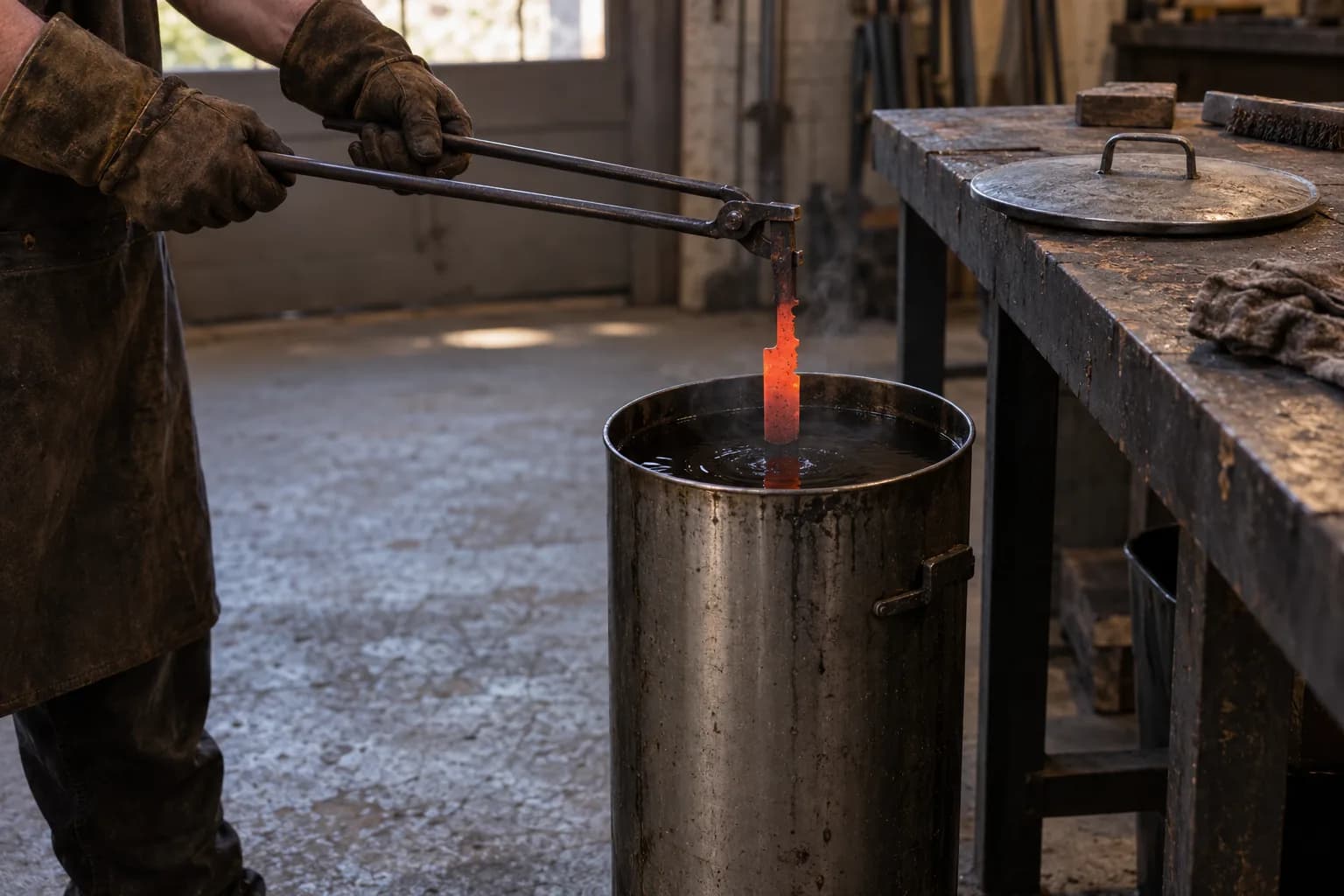
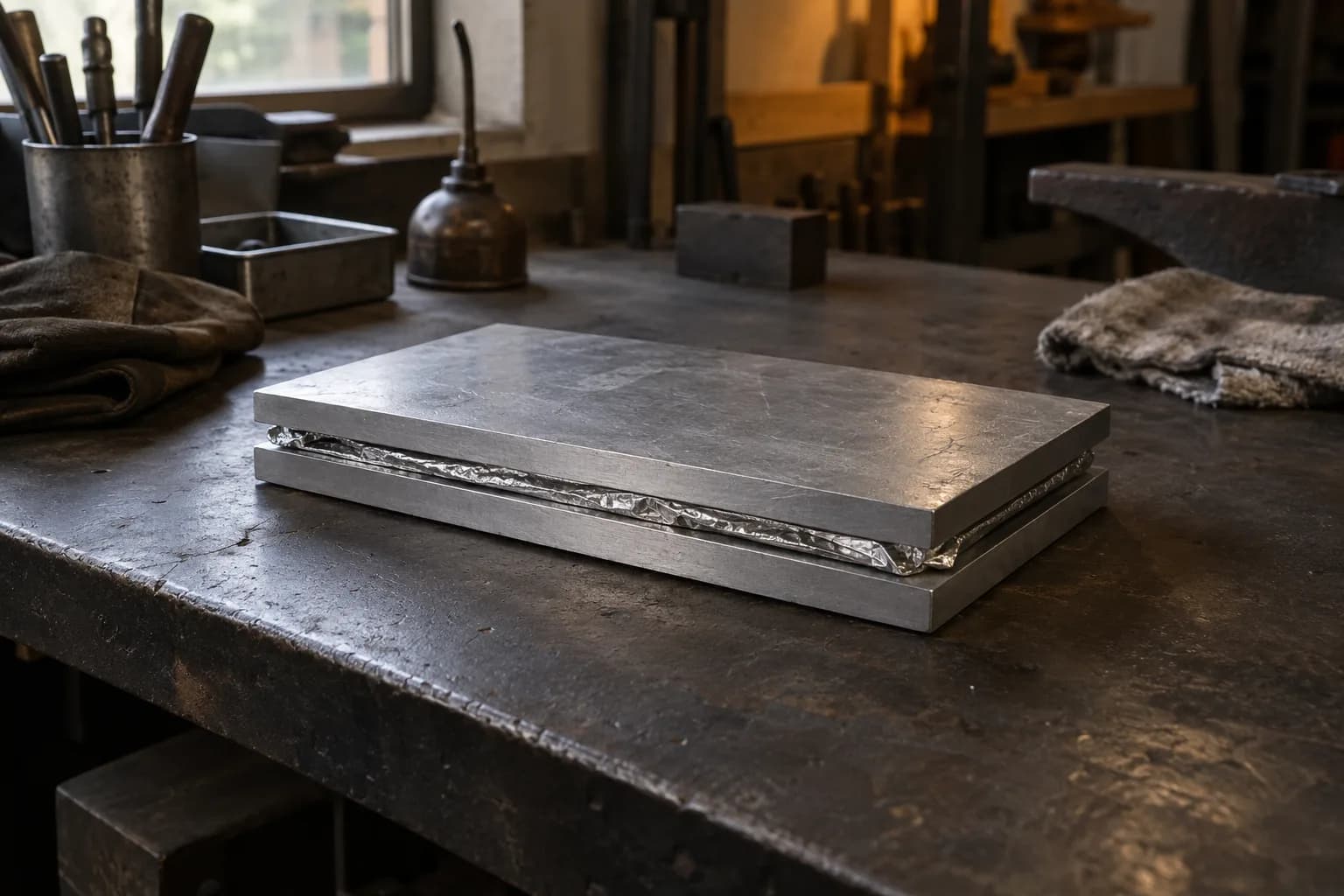
| Heat treat | Normalize and thermal cycle first if the stock has been forged. Austenitize at 1475°F with a 10–15 minute soak — do not go to 1550°F, which testing shows reduces toughness with no hardness benefit. Quench in a medium-speed oil (Parks AAA or an 11-second class oil); O1 is deep hardening and does not need a fast oil. Temper twice for two hours at 350–450°F: ~400°F gives 59–61 HRC, 350°F holds 61–62 for thin blades, 450°F drops to 57–58 for larger ones. | Air hardening — kiln territory (or a heat-treat service). Foil-wrap, austenitize 1750–1800°F, soak 30–45 minutes, then quench in still air or between aluminum plates (plates keep thin blades dead flat — see our plate quenching guide). Cool below ~150°F, then double temper 2 hours each: ~400°F for 60–62 HRC, 450–500°F for 58–60 with extra toughness. Cryo treatment is a worthwhile optional step (Lie-Nielsen cryo-treats its A2). | The deciding factor for most shops. O1 austenitizes at 1475°F and quenches in medium oil — reachable with a modest kiln. A2 needs 1750 to 1800°F with a 30 to 45 minute soak, but then hardens in still air or between aluminum plates, which means far less warp and no quench tank. If your oven cannot hold 1800°F, the decision is made for you. |
|---|
| Grinding | 4/5One of the friendliest steels in the shop. Annealed O1 files, drills and grinds cleanly, and because it is sold as precision ground flat stock it arrives flat and square — no surface grinding needed before layout. Hand-sands to a clean finish without fighting back. | 4/5One of the friendlier tool steels on the grinder and under files when annealed; finishes and hand-sands more cleanly than D2 or the PM steels. | Both are cooperative by tool-steel standards. A2 hand-finishes exceptionally cleanly; O1 grinds a touch easier annealed and arrives as flat stock. Neither fights back the way D2 does. |
|---|