
Blade Design
Kitchen Knife Geometry: Why Thin Behind the Edge Wins Dinner
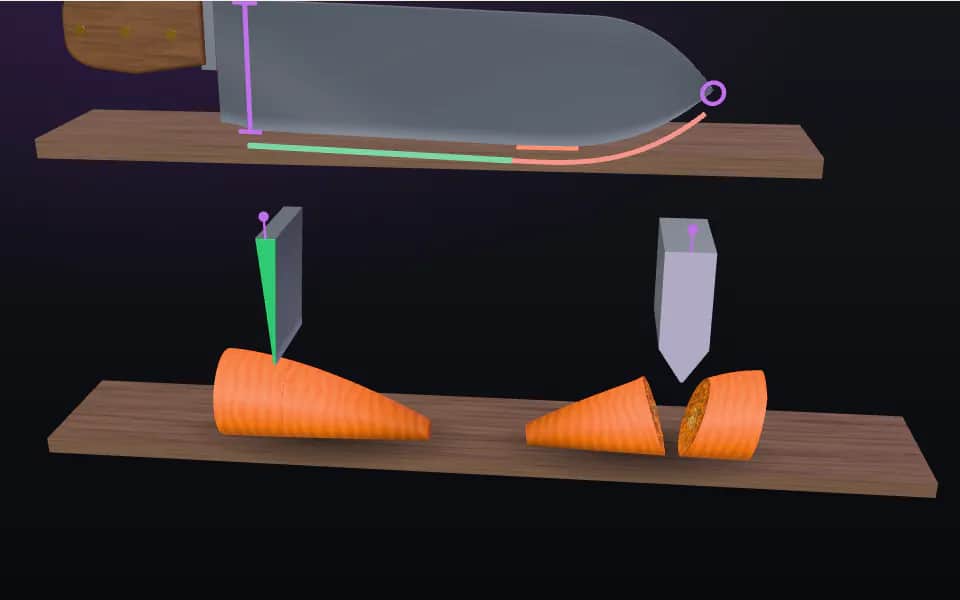
Kitchen knives are where blade geometry stops being theory and starts being dinner. A camp knife forgives a thick grind; a chef’s knife wedges apart a…
Blade Design
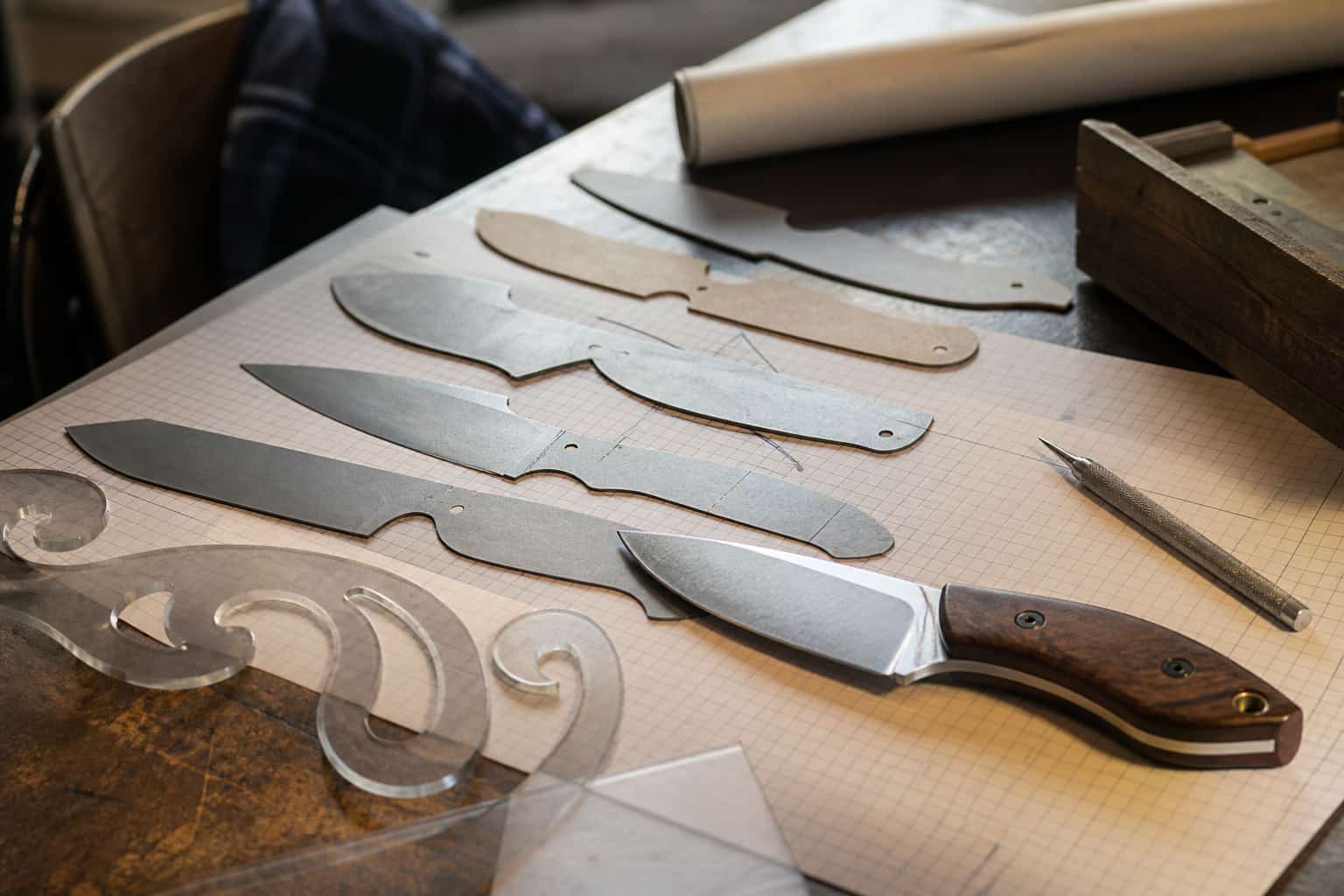
The gyuto from a maker's bench: profile and flat-to-belly balance, thin-behind-edge targets, steel picks, wa vs western handles, grind discipline.
2 min readWritten by Rich LinvilleFree to read
The gyuto is Japan’s answer to the French chef’s knife and the single most commissioned kitchen pattern in the custom world: a 210-270mm-class (8-10 inch) generalist that push-cuts, rocks a little, and falls through food. It is also the pattern that exposes every grinding sin, which is why makers who master the gyuto master thin. Here is the build sheet.
The gyuto’s personality lives in its edge profile: a long, nearly flat run from heel through mid-blade (the push-cut and chop zone) rising into a gentle belly at the front third (the rock-and-slice zone), ending in a fine working tip for detail. More belly drifts French; dead-flat drifts toward the santoku’s planing style. Blade heights run ~45-55mm at the heel (call it 1.75-2.1 inches) — tall enough for knuckle clearance and board contact, the food-release geometry the kitchen geometry guide lives on.
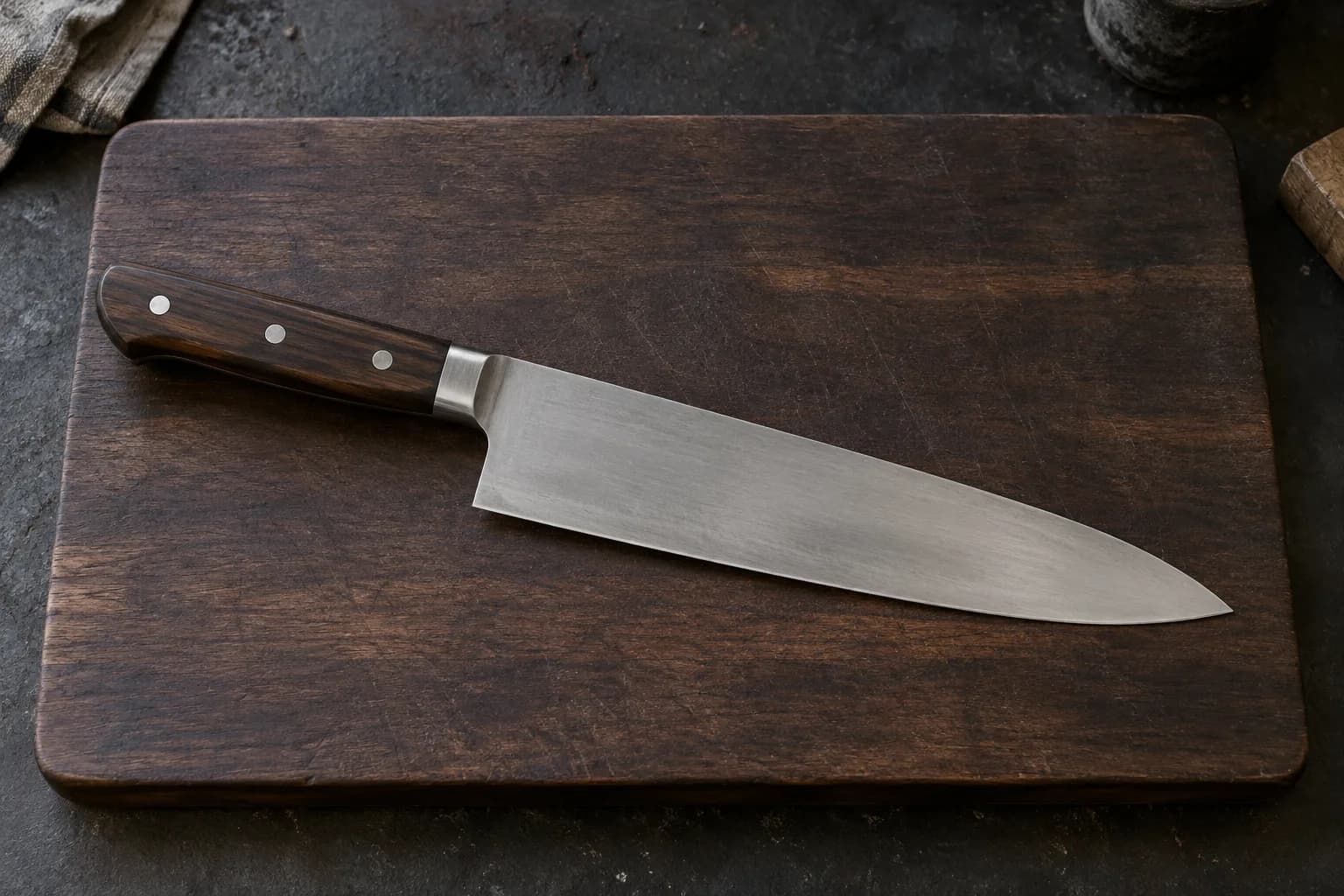
Stock: 3/32″ and thinner — gyutos are ground from thin and finish thinner. The spec that separates real gyutos from knife-shaped objects is thickness BEHIND the edge: 0.010-0.015″ a quarter-inch up, tapering thinner toward the tip, with a distal taper running the spine. Edge angles per the kitchen angle guide: 10-15 dps on hard steel, often asymmetric. Grind: full flat or gentle convex; a wide-bevel (sanjo-style) grind is the handsome traditional alternative.
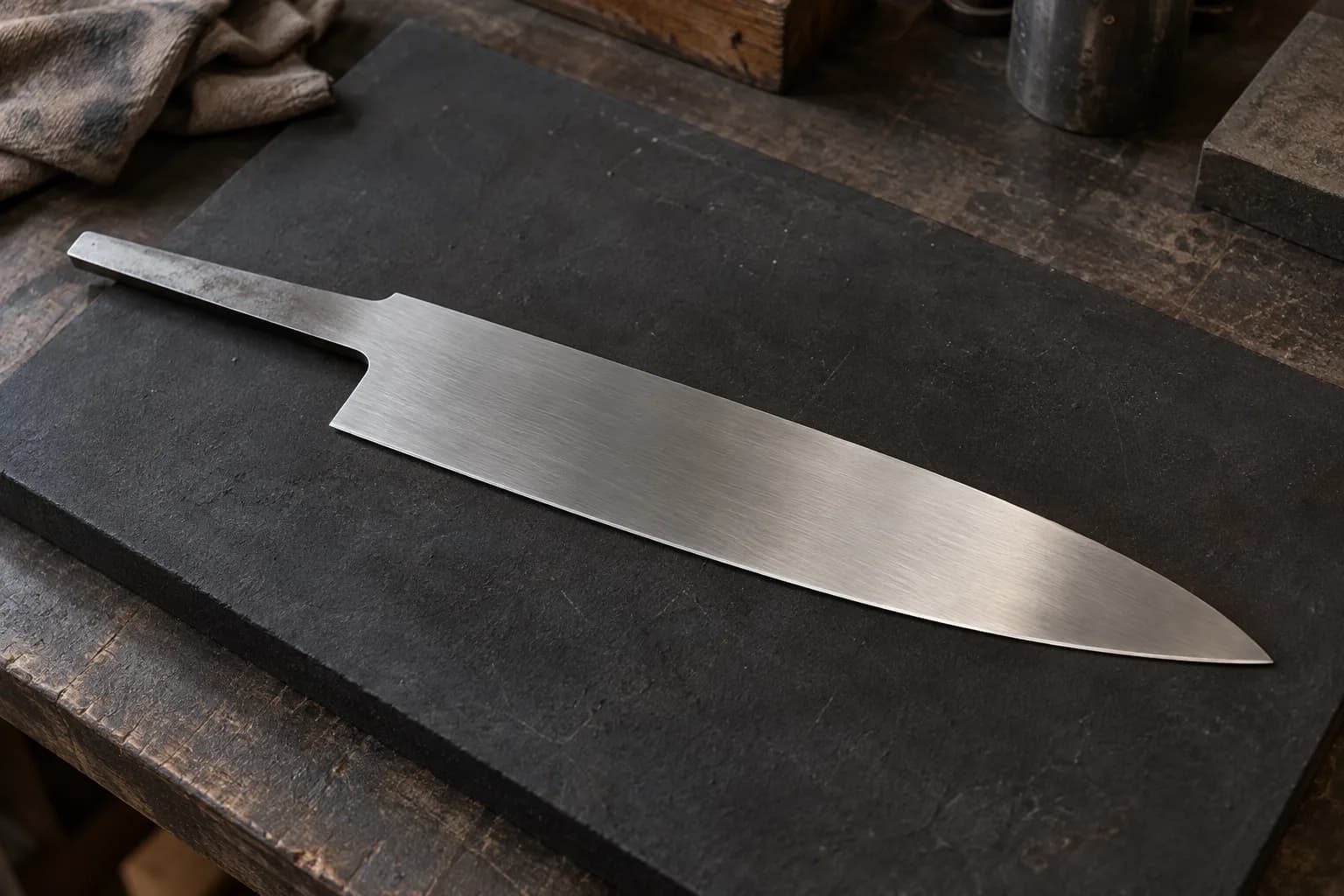
The gyuto is the pattern hard fine steels were born for: AEB-L and 14C28N at 61-62 for stainless service, 26C3 and W2 (with hamon, if you must show off) for carbon patina culture, ApexUltra at 65+ for the flagship commission, 52100 as the tough carbon classic. Softer steels waste the pattern — at gyuto thinness, edge stability IS hardness.
The wa handle (octagonal or D, hidden tang, burned or glued to a ferrule) is light and shifts balance to the pinch grip — the traditional pairing and easier to build than it looks. Western full-tang scales suit the workhorse read. Either way the balance target is at-or-just-ahead of the pinch, and the handle silo covers materials; kitchens punish unstabilized wood.
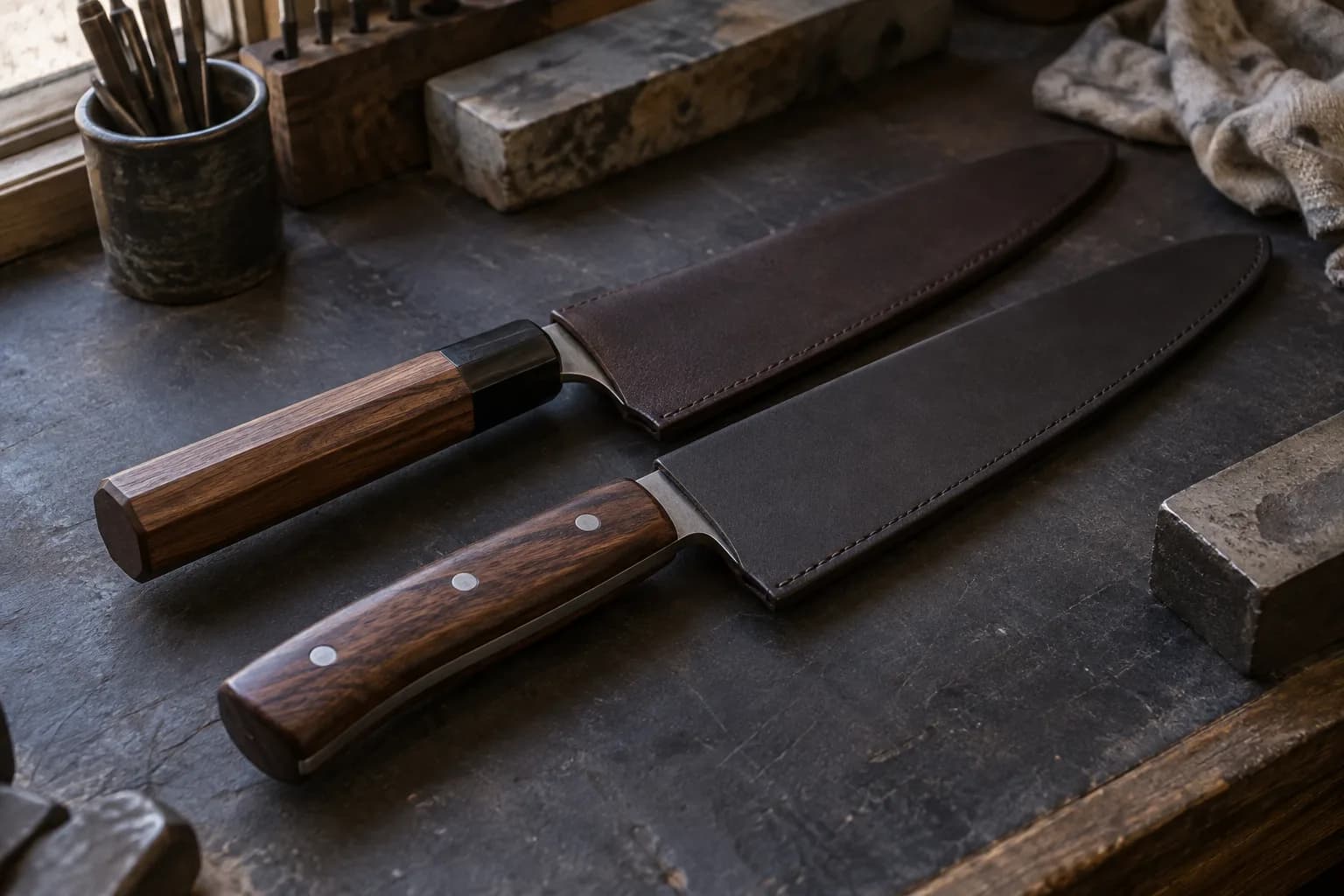
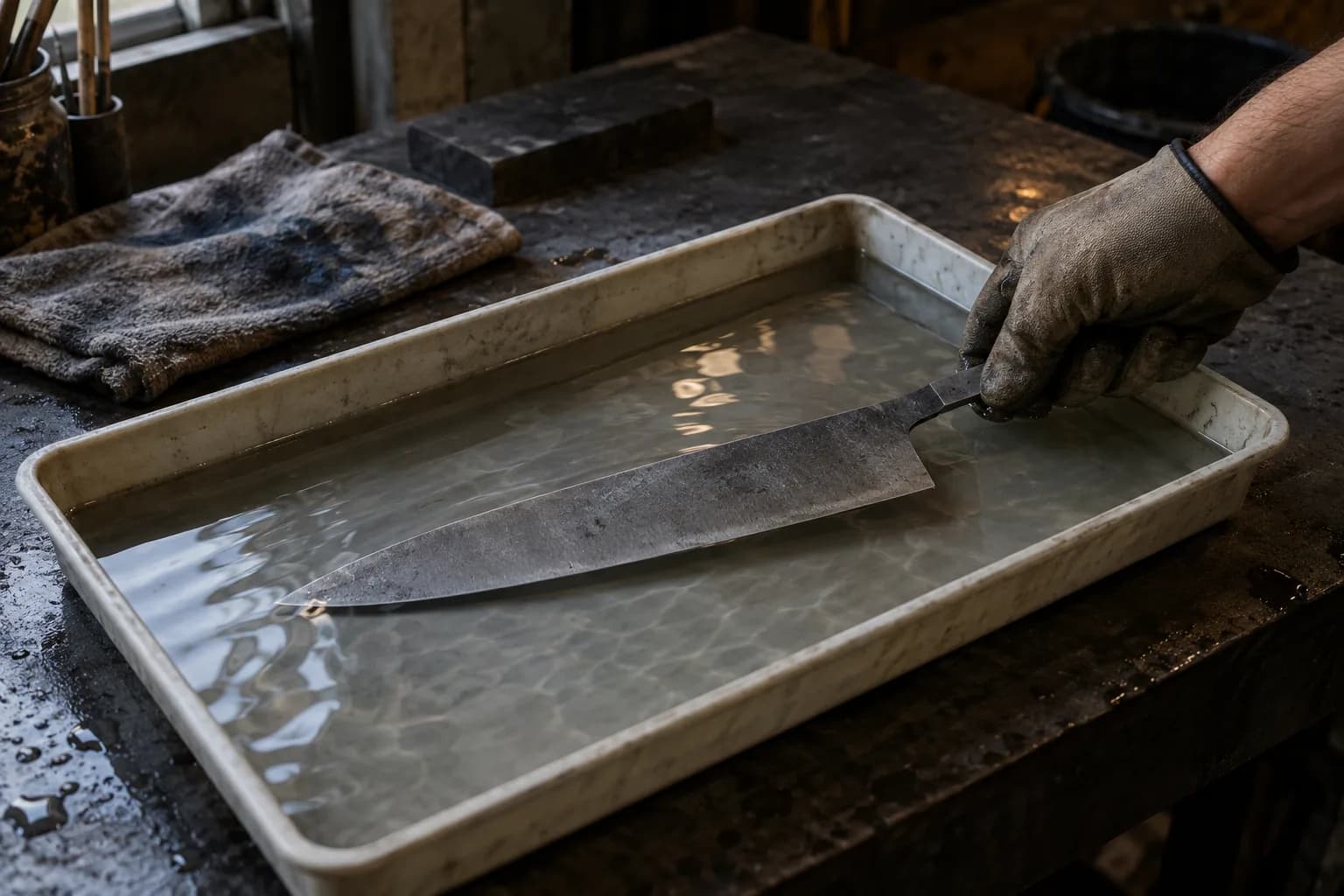
Thin tall blades flex, flutter and burn: fresh belts, light passes, constant motion, dunk cadence — the whole thin-hard playbook — with post-HT grinding doing most of the finish work (thin profiles warp in the quench; leave 0.030 at the edge going in, per plate-quench practice for stainless). Check thickness with calipers at heel, middle and tip every session; the gyuto’s whole magic is a taper you cannot see but every onion feels. Sell it with a strop and the edge-care talk — a maker’s gyuto in a good kitchen is a decade-long advertisement.
Keep reading
Three more from the same bench.
Kitchen knives are where blade geometry stops being theory and starts being dinner. A camp knife forgives a thick grind; a chef’s knife wedges apart a…
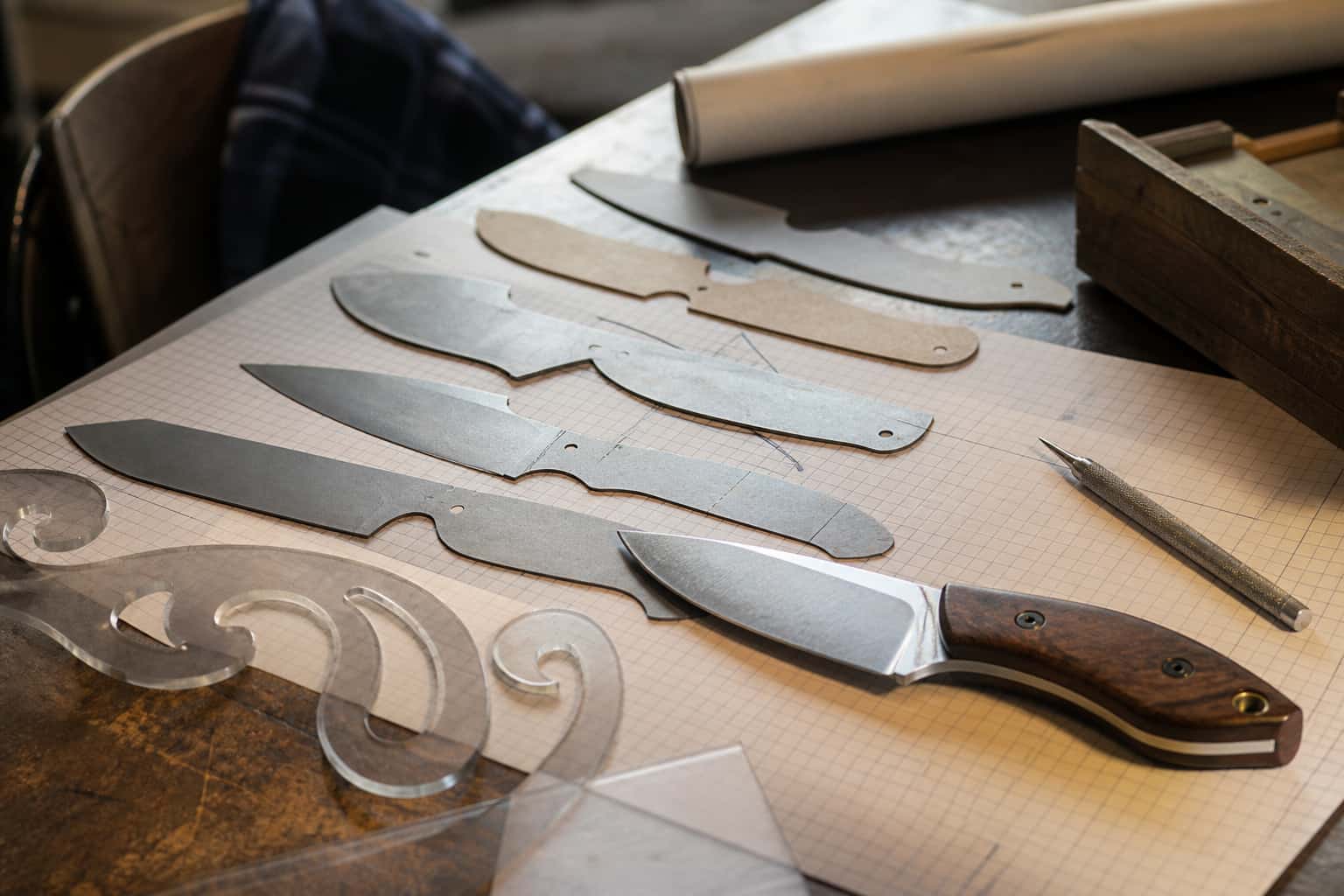
Kitchen knives run the lowest working angles of any knife you will build, because their whole job is falling through food and their whole hazard list is a…
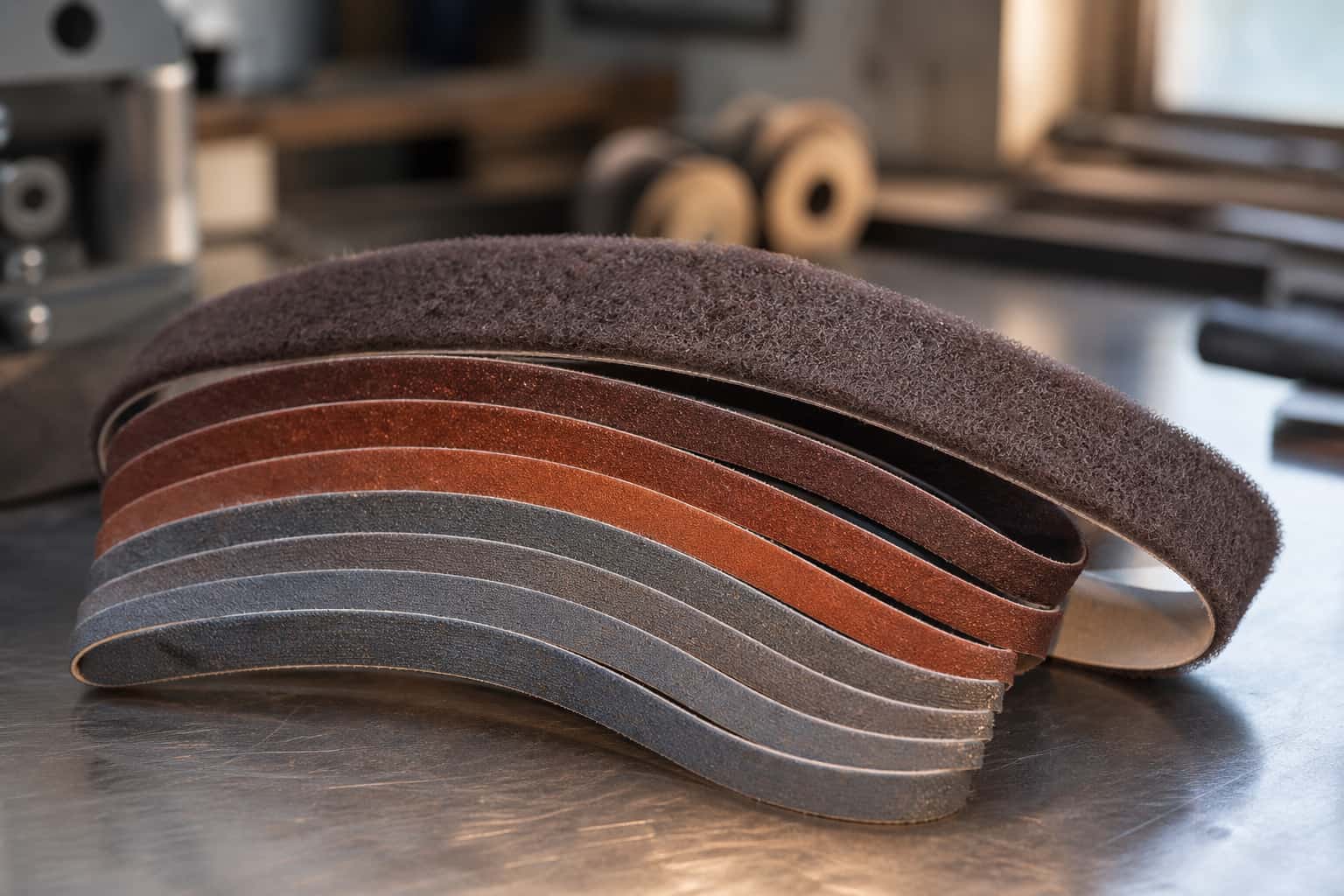
Two knives can share the same steel, grind type, and blade shape and still perform completely differently, because of stock thickness and how that…
Same bench
I machine the parts, hand-assemble, track and test Torus grinders in Sterling, Illinois. Most orders ship in seven to ten business days from time of order.
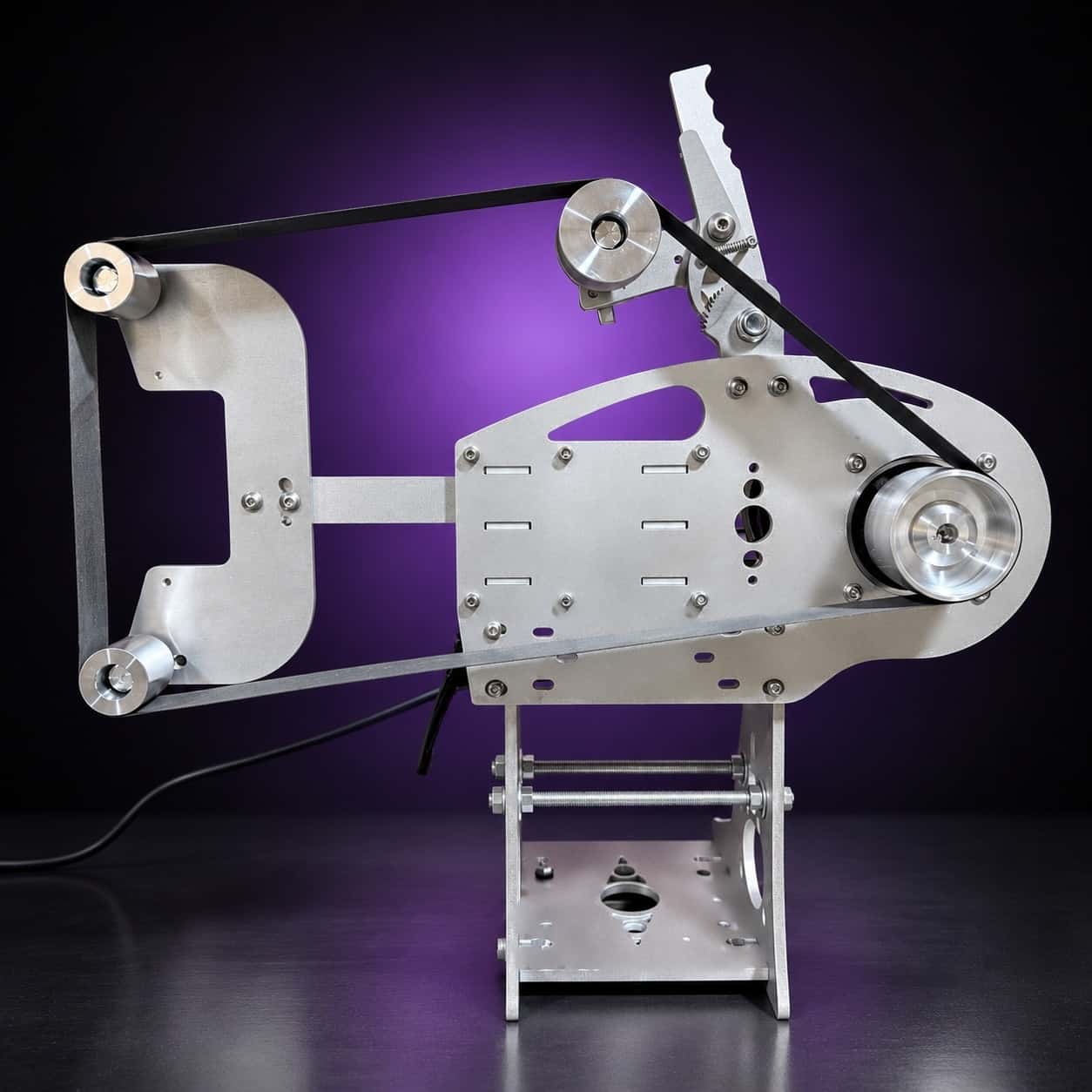
Current dual-axis platform with a fiber-laser-cut 6061 chassis and single-knob tracking.
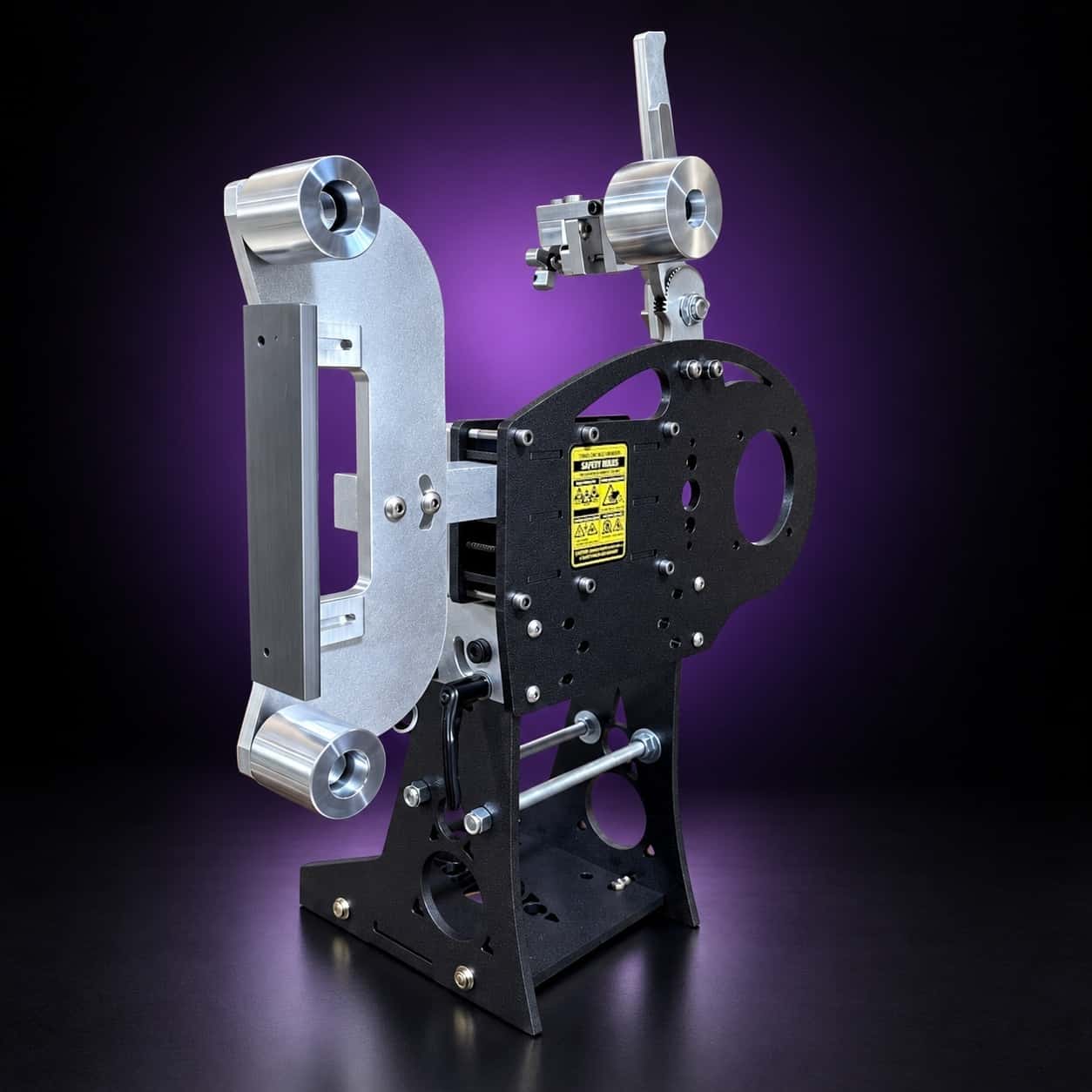
Current dual-axis platform with a steel chassis, more mass and less vibration.
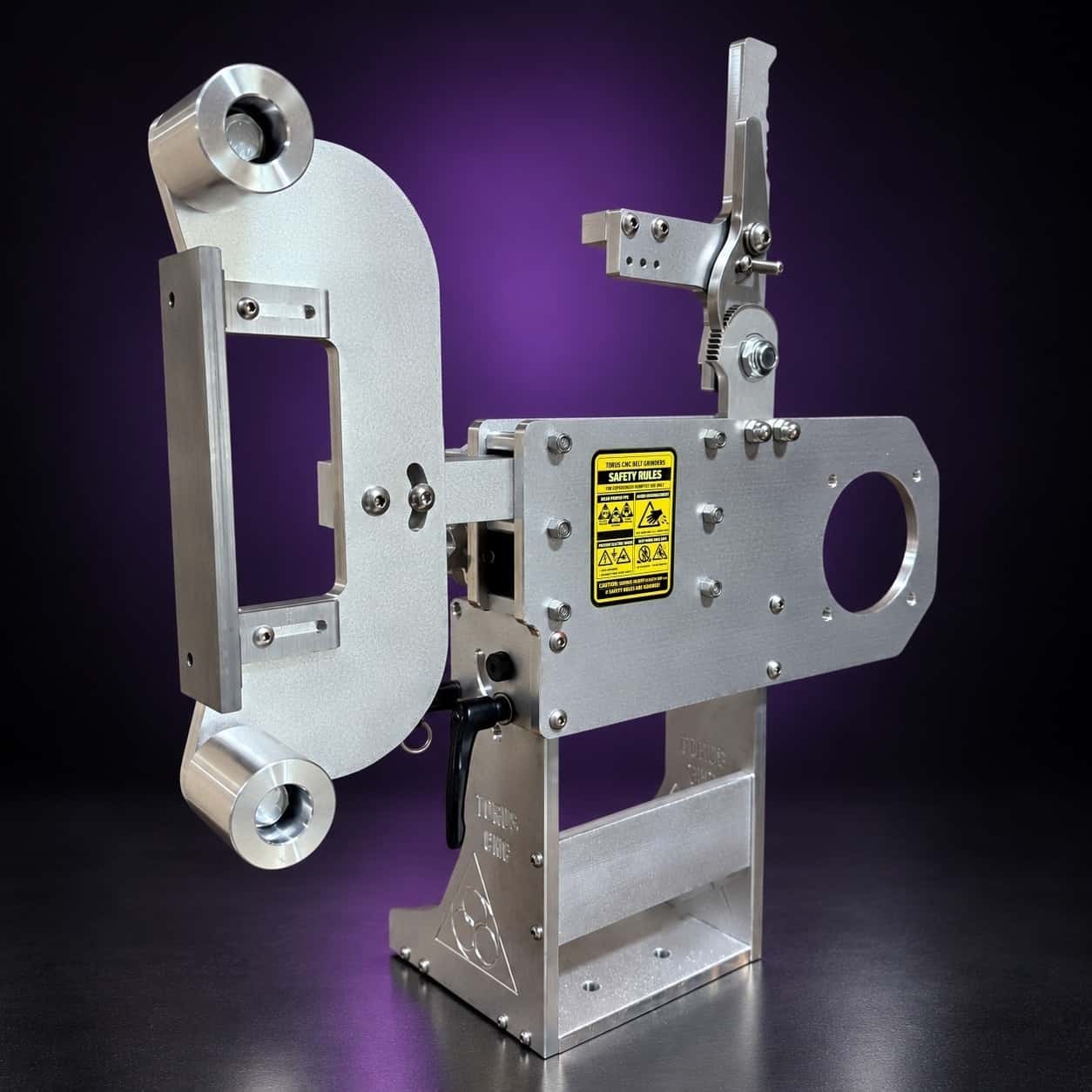
Prior-design aluminum chassis, 90-degree tilt and 1.5-inch tooling arms.
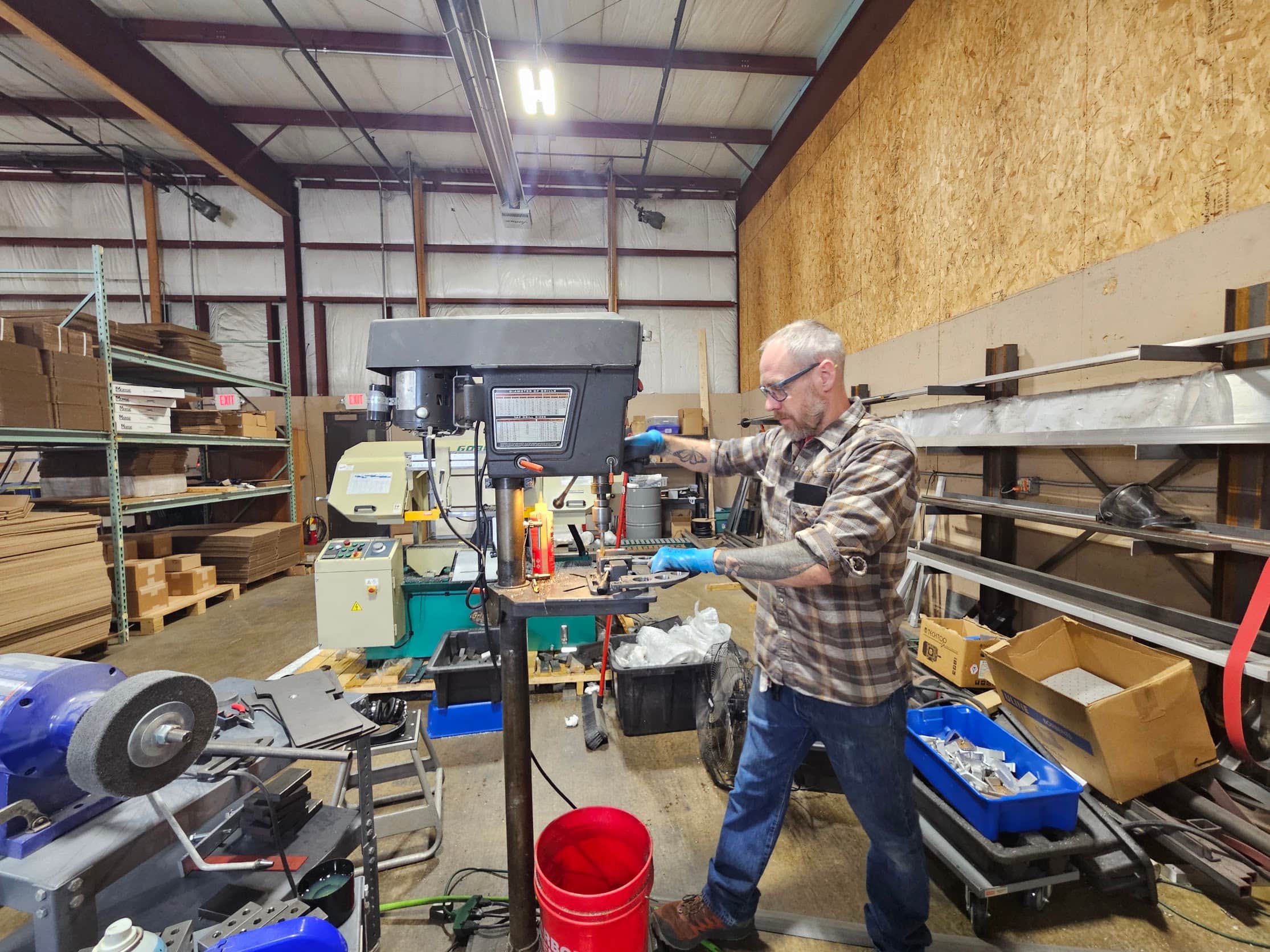
One-man shop
I answer my own email. Tell me the steel, the machine and what it is doing, and I will tell you what I would try next.