

Abrasives
Grinding & Sharpening ApexUltra
ApexUltra sits deliberately between worlds, and the shop experience matches: harder work than the classic carbon steels it forges like, far friendlier…

Knife steel
The forger's super steel: developed openly by Larrin Thomas, Tobias Hangler and Marco Guldimann (released 2023) - ~1.25% C, 2.6% W, 1.5% Cr engineered to hold real toughness at 64-67 HRC with edge retention far beyond classic carbon steels, while still forging and quenching like one. Boutique priced, kitchen-blade focused, the most interesting carbon steel in decades.
At a glance
The four meters are relative to the rest of the database. Composition is the published nominal analysis, not a mill certificate for your bar.
Working properties
ApexUltra (apexultrasteel.com); no equivalents - purpose-designed original.
Manganese and Silicon kept low (datasheet nominal)
Flagship forged kitchen knives, high-hardness EDC and hunters, straight razors, competition-grade fine edges - the showcase steel for makers selling heat-treat skill as the product.
At the bench
Open the property you are worried about. Every note is written for the blade in your hand, not for a spec sheet.
The full reference
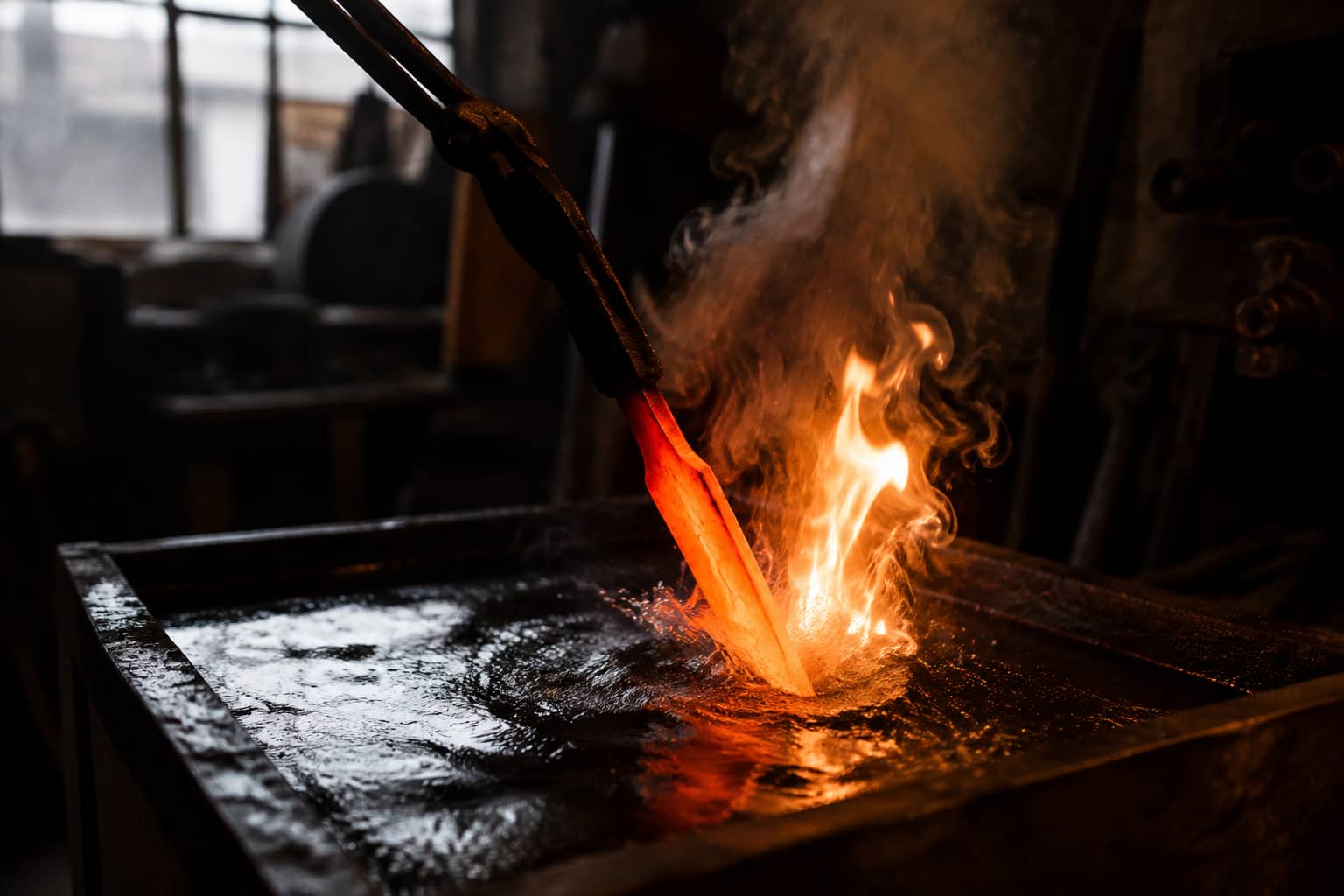
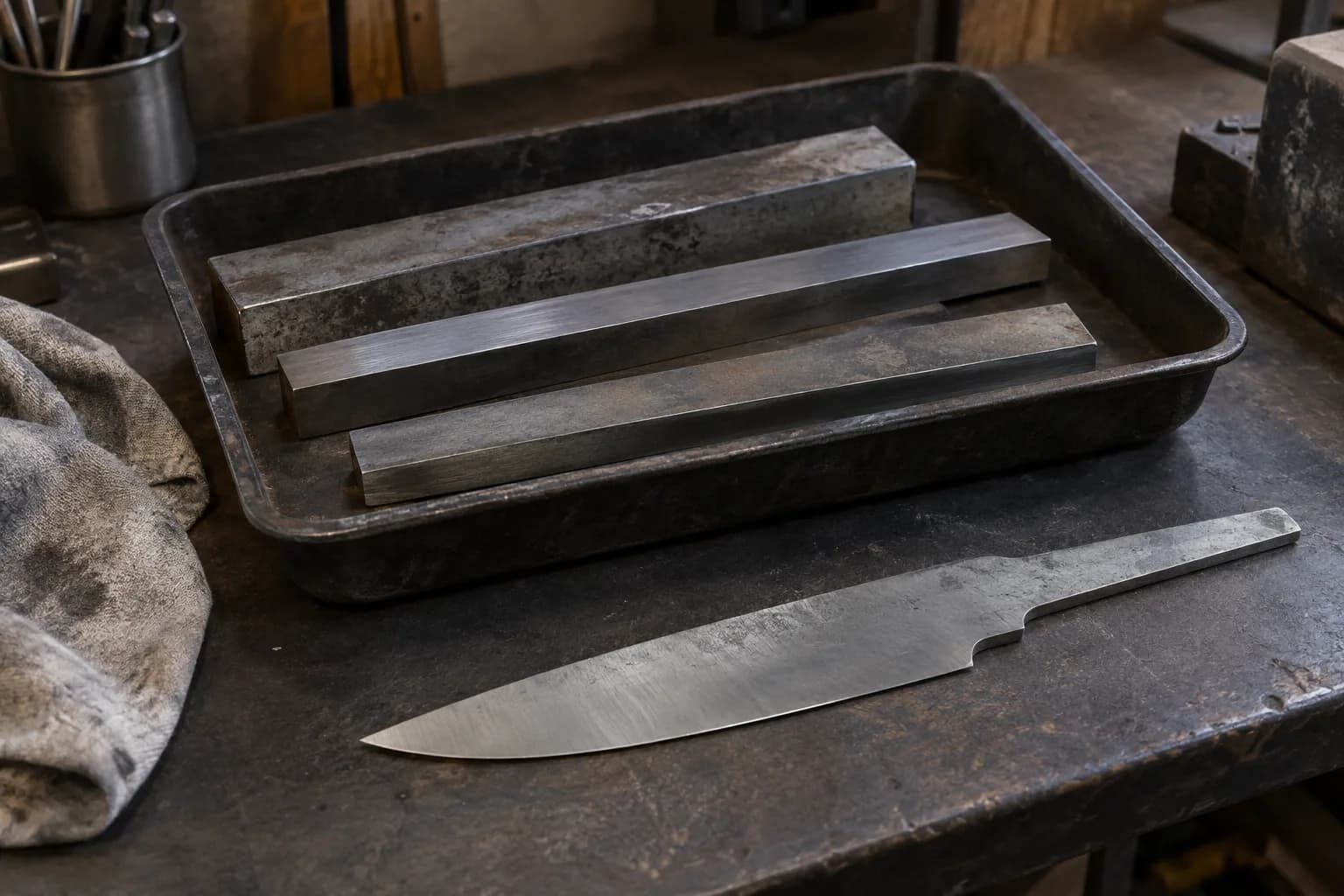
ApexUltra is the first steel designed from scratch, in public, for forging bladesmiths — developed by metallurgist Larrin Thomas of Knife Steel Nerds with knifemakers Tobias Hangler and Marco Guldimann, and released in 2023. The brief was audacious: a steel that forges and heat treats like the classic carbon steels but delivers edge retention and hardness in super-steel territory WITHOUT the usual toughness collapse. Roughly 1.25% carbon, 2.6% tungsten and 1.5% chromium later, the result holds working toughness at hardness numbers — 64 to 67 HRC — where traditional forging steels have long since turned to glass. It is expensive, it is deliberate, and it is the most interesting thing to happen to carbon steel in decades.
The hardness-toughness curve. Classic fine steels — 26C3, 1095, 52100 — trade toughness away fast above the low 60s. ApexUltra’s tungsten-carbide chemistry was engineered to keep meaningful toughness at 65-66 HRC, which lets a forged kitchen blade run hardness only powder steels used to visit while surviving real use. Edge retention lands clearly above every traditional low-alloy steel — tungsten and vanadium carbides doing the wearing.
That is the entire design brief — low enough alloy to move under the hammer and weld in a normal forge, unlike the PM stainless class. It forges harder than 1084 (that tungsten is doing something) but honestly, in a propane forge, with normal bladesmith technique: forge high, cycle carefully, and it rewards discipline with astonishing test numbers. This is the steel M390 buyers wish existed for the anvil.
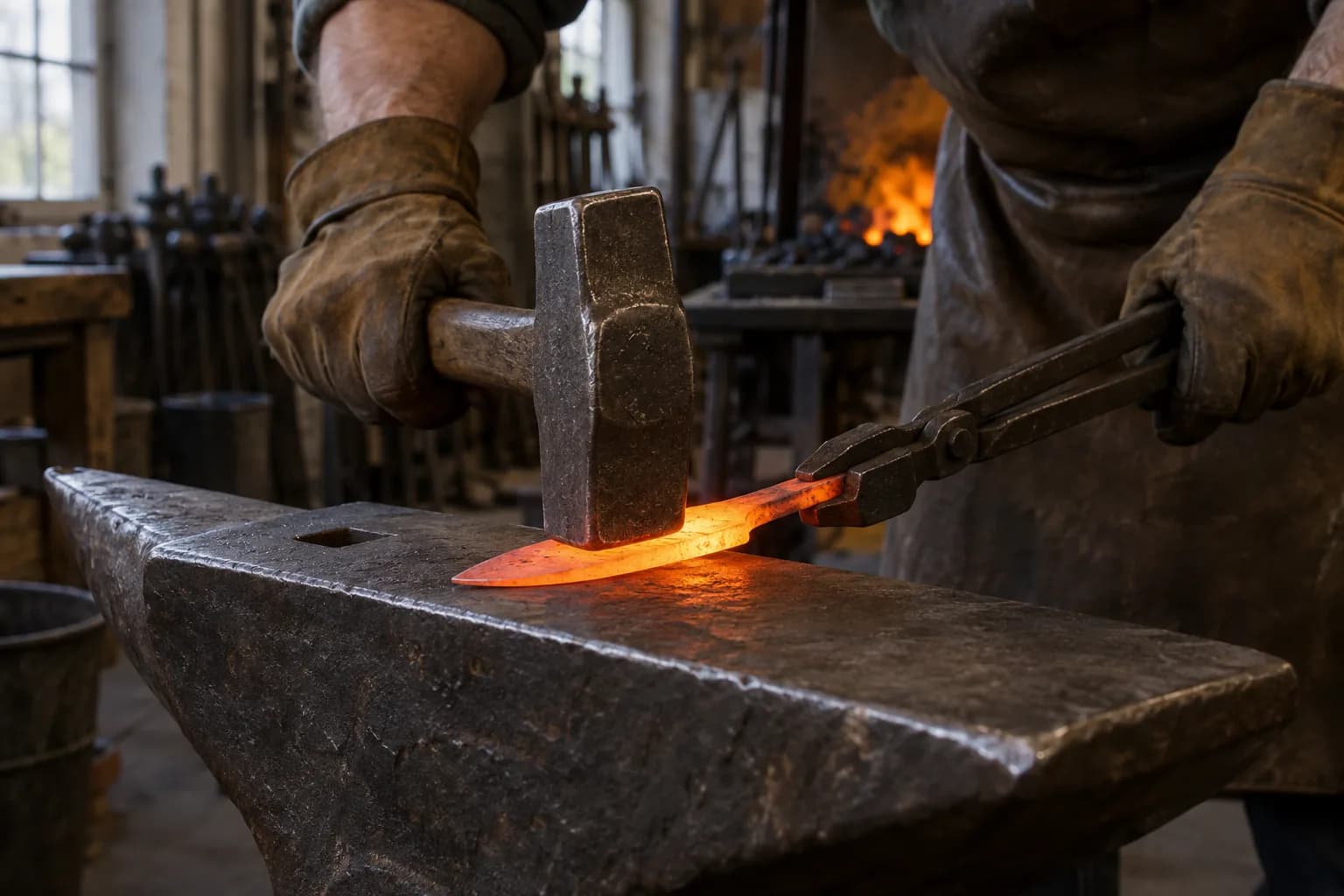
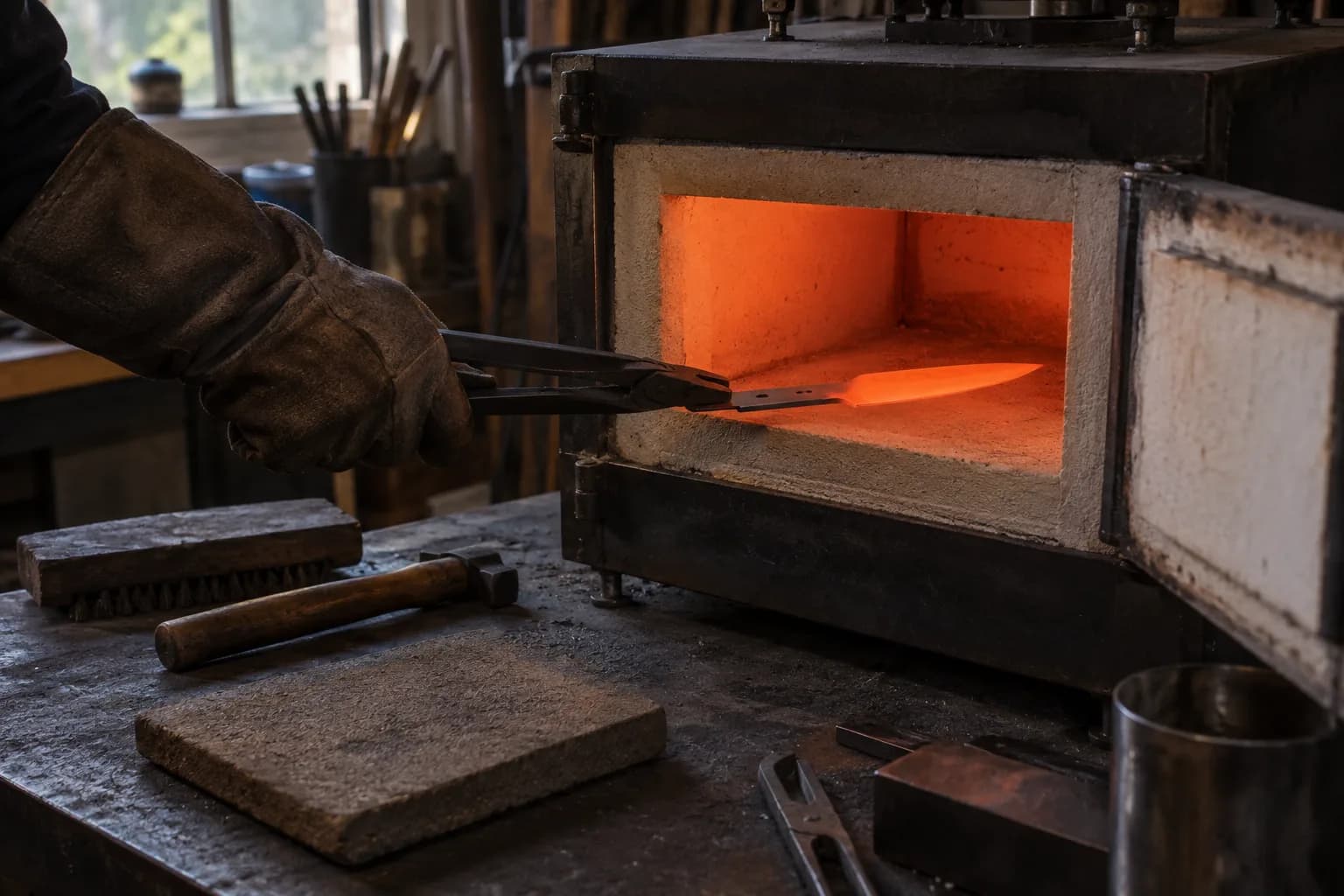
Carbon-steel simple, precision preferred: austenitize around 1475–1500°F (datasheet protocols; a kiln makes the numbers honest), quench in fast oil, temper low — around 300–350°F — to land 64–66 HRC working hardness; harder protocols reach 67. No cryo required for excellent results, though careful practice squeezes more. The developers published full open protocols — rare and welcome — via Knife Steel Nerds and the ApexUltra datasheet. Thin kitchen edges at 65+ are the design target, not a stunt.
It is tough FOR ITS HARDNESS — the curve is the achievement, not an exemption from physics. At 64-66 it comfortably out-toughs every classic steel run that hard; it is still not a 58-HRC 5160 chopper and should not be built like one. Kitchen blades, EDC, hunters, razors: ideal. Camp choppers: use the tough class.
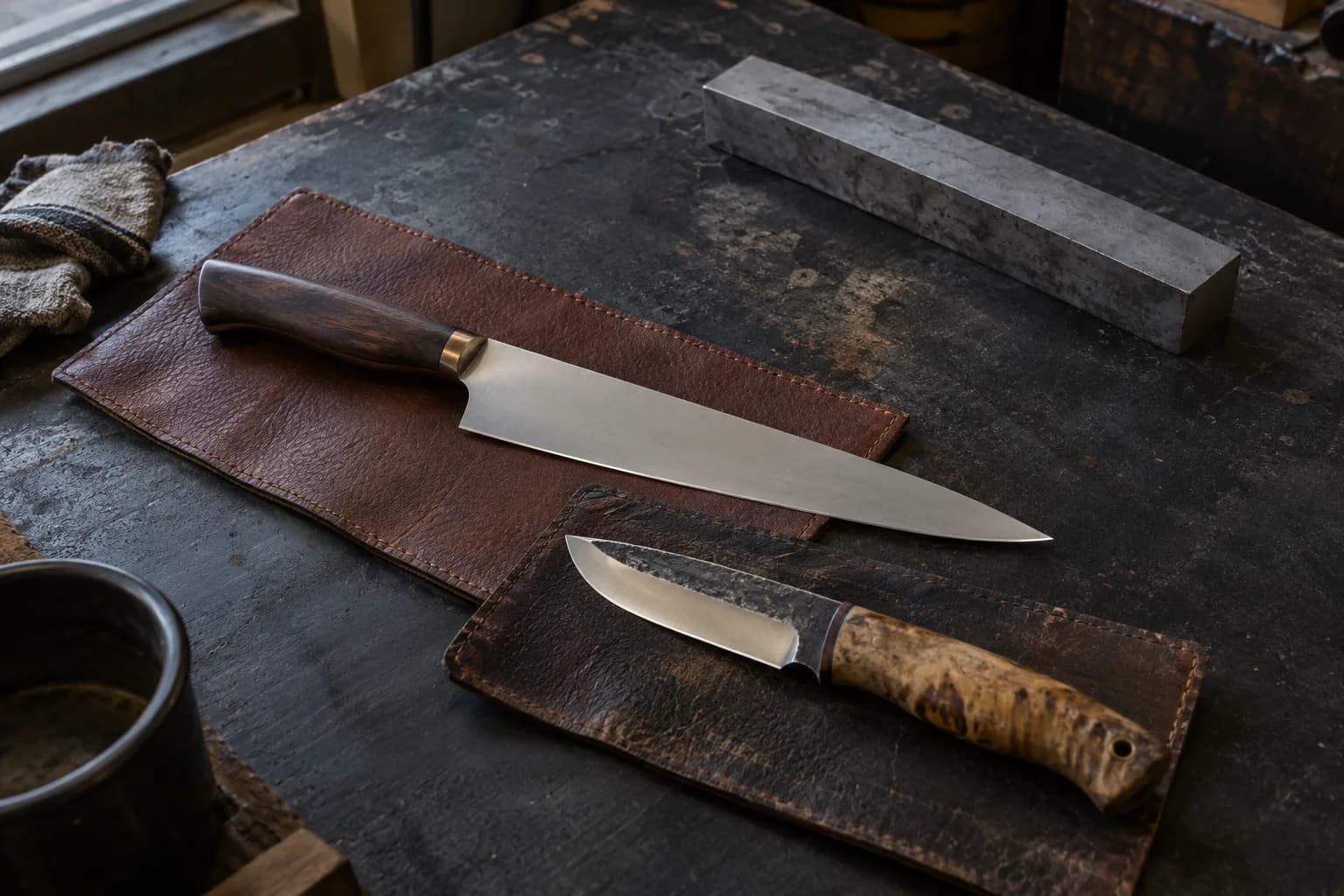
Premium boutique pricing — several times classic carbon-steel money — through specialist knife-steel suppliers (Barmond in the UK produced early stock; various regional dealers carry it). Sizes are knife-bar focused. The price buys the R&D and the numbers; for a flagship forged kitchen knife the material cost disappears into the finished price anyway.
The new rivalry. 26C3 gives the classic White-steel keenness and hamon artistry at friendly prices; ApexUltra gives higher working hardness, several times the wear resistance, and modern R&D at boutique cost. Edge feel honors go to whichever the maker heat treats better. Full breakdown: ApexUltra vs 26C3.
Head to head
Every matchup ApexUltra appears in, dimension by dimension.
Keep reading
ApexUltra sits deliberately between worlds, and the shop experience matches: harder work than the classic carbon steels it forges like, far friendlier…

Every knife steel is iron plus a specific recipe of other elements, and each of those elements pulls the steel’s behavior in a particular direction…

Two steels with similar hardness numbers can feel completely different under a sharpening stone, one glides along smoothly, another feels like it’s…
Same bench
Whatever the steel, the grind is only as flat as the platen behind it. I machine the parts, hand-assemble and test Torus grinders in Sterling, Illinois.

Current dual-axis platform with a fiber-laser-cut 6061 chassis and single-knob tracking.

Current dual-axis platform with a steel chassis, more mass and less vibration.

Prior-design aluminum chassis, 90-degree tilt and 1.5-inch tooling arms.

One-man shop
Tell me what the blade is for and how you heat treat. I will tell you whether this is the steel I would use, and what I would use instead.