
Beginner Guides
Basic Knife Anatomy & Terminology
Knifemaking has its own vocabulary, and a lot of guides (including this one) assume you already know it. Here’s every term you’ll actually run into…
Blade Design
Handle materials for a first build: G10, Micarta, stabilized wood, bone, carbon fiber, aluminum and titanium compared for durability and grip.
3 min readWritten by Rich LinvilleFree to read
Handle material affects grip, durability, weather resistance, and how a knife feels in the hand, arguably as much as blade steel affects how it cuts. Here’s what the common options actually are and what each one is genuinely good at.
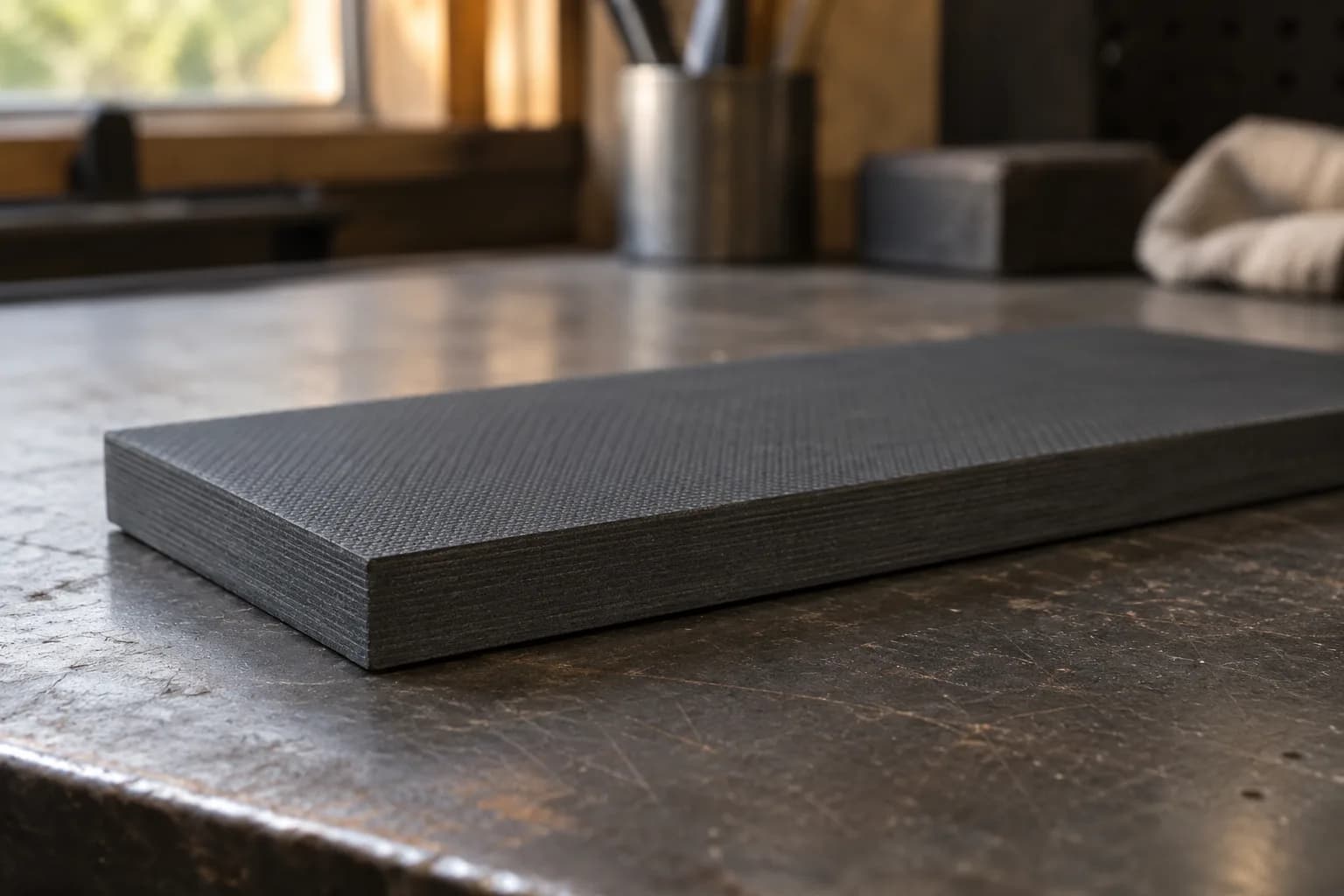
A fiberglass-based composite made from layers of glass cloth soaked in resin and compressed under heat. G10 is essentially indestructible for handle purposes, waterproof, chemical-resistant, and completely stable across temperature and humidity swings. It has no natural grain or figure, so color and texture come entirely from manufacturing (including textured surfaces for grip). It’s the standard choice for hard-use and outdoor knives where reliability matters more than looks, and it’s inexpensive and easy to source in sheet form.
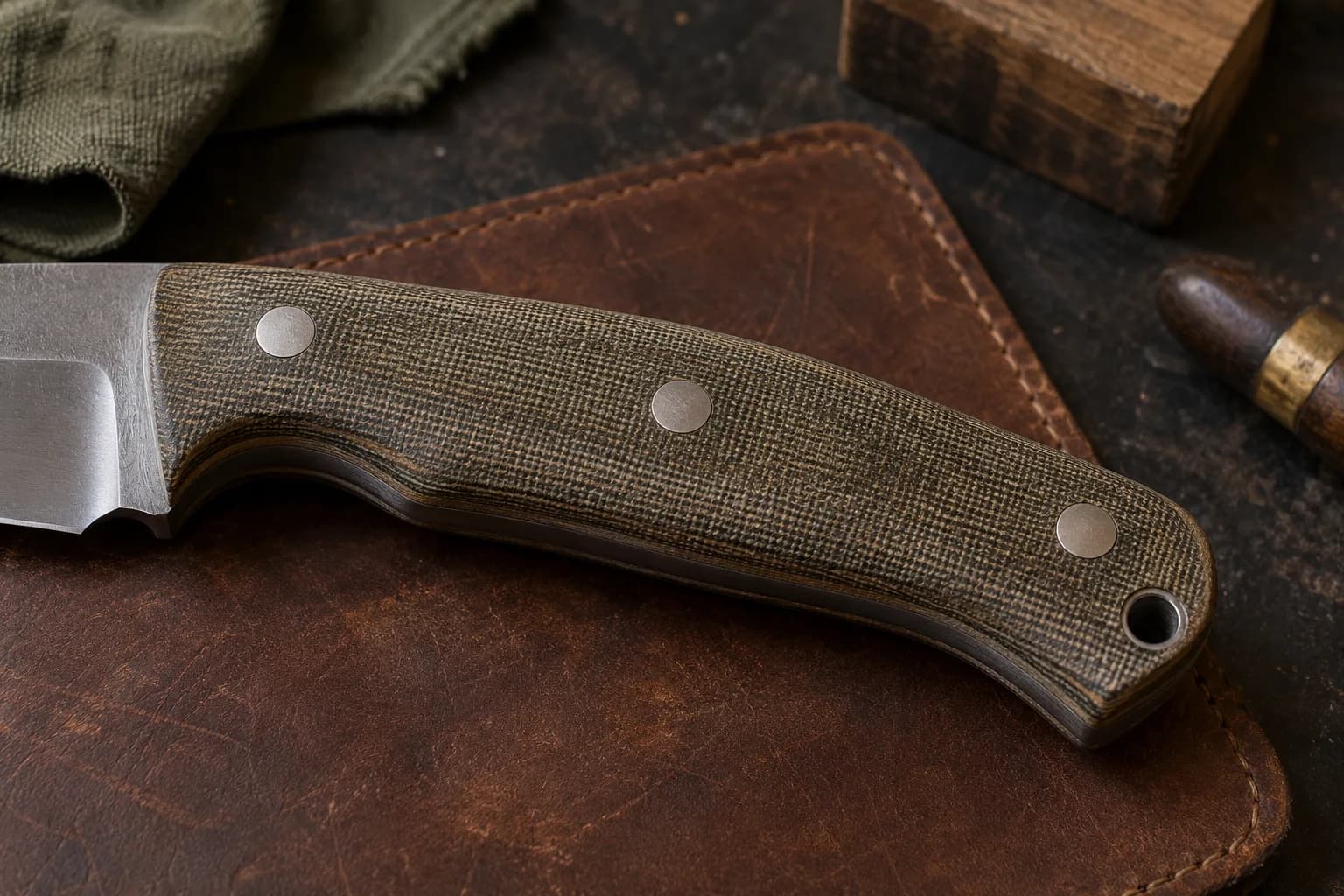
Similar construction to G10 (layered material soaked in resin under pressure), but traditionally made with linen, canvas, or paper layers instead of fiberglass. Micarta is tougher and slightly more forgiving to work with than G10 (less prone to chipping at edges during shaping), and develops a distinctive, often attractive layered look when sanded and finished, especially canvas Micarta. It’s a common premium choice for both hard-use and higher-end knives.
Natural wood (burls, spalted wood, exotic species) that’s been vacuum-impregnated with a resin to fill the wood’s natural pores, dramatically improving its stability, water resistance, and durability compared to raw wood. Stabilized wood keeps the natural grain and figure that makes wood handles visually appealing while largely solving wood’s traditional weaknesses (cracking, swelling, water damage). It costs more than G10 or standard Micarta and requires sourcing from a supplier who does the stabilization process, but it’s a strong middle ground between natural material aesthetics and real durability.
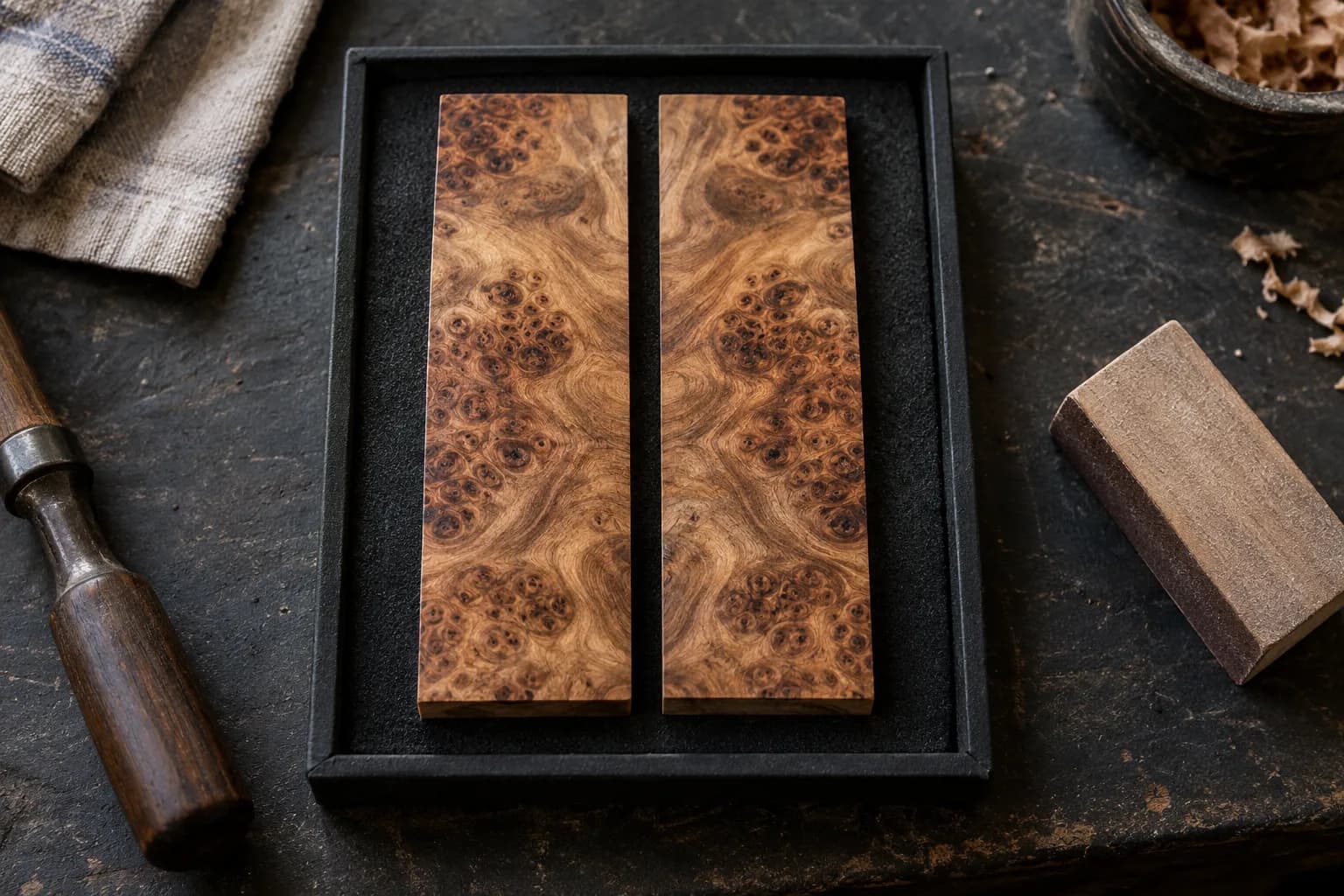
Traditional wood handle material without resin stabilization. It’s the least weather-resistant option here, prone to swelling, shrinking, and cracking with humidity changes, and needs regular oiling to stay in good condition. It remains popular for traditional-style knives and kitchen knives kept in controlled indoor environments where its weaknesses matter less, and for makers who want to work with a wider range of species than stabilization services typically offer.
Traditional materials, especially common on traditional and slip-joint style knives. Bone (often dyed) and horn (like buffalo horn or stag) offer a classic look tied to knife history, but both are more moisture-sensitive than synthetic materials and can crack or warp over time, especially horn, which is also sensitive to heat during shaping and grinding. Best suited to knives that will be handled carefully and not subjected to hard outdoor use.
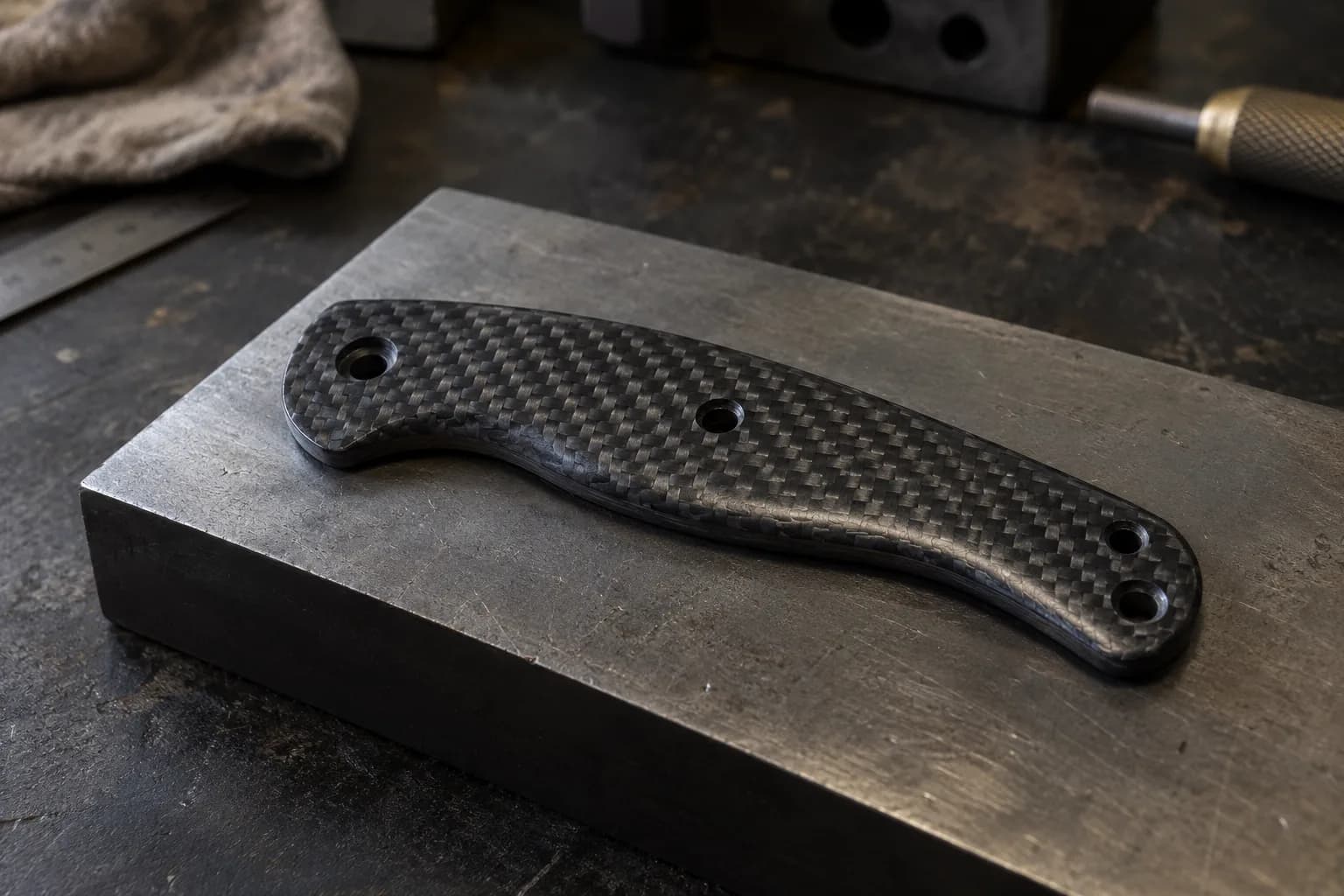
Woven carbon fabric set in resin, similar construction logic to G10 but using carbon fiber cloth instead of fiberglass. It’s lighter than G10 for a given thickness and has a distinctive woven visual texture that’s become popular on premium and tactical-style knives. It’s more expensive than G10 and, being thinner and lighter, sometimes benefits from slightly different attachment approaches (thinner scales, more pins) to stay secure.
Metal handle materials, usually machined rather than cut from sheet stock. Both are extremely durable and immune to moisture damage entirely. Aluminum is lighter and easier to machine but softer and can dent; titanium is tougher, more corrosion-resistant, and lighter than steel but significantly harder to machine and more expensive. Metal handles are common on folding knives and premium fixed blades where a distinct look and maximum durability matter more than cost.
G10 is the most forgiving material to start with: cheap, tough, easy to shape on a 2×72 grinder without special technique, and unaffected by mistakes with moisture or heat during finishing. Once flattening, shaping, and attachment technique are solid, moving to Micarta or stabilized wood for a more refined look is a natural next step. See Essential First Tools & Equipment for what else a handle build needs.
G10, carbon fiber, and metal (aluminum/titanium) are all essentially immune to moisture and temperature damage. Among natural-look materials, stabilized wood is far more durable than unstabilized wood, bone, or horn.
Not strictly better, different tradeoffs. G10 is tougher against impact and cheaper; Micarta is slightly easier to work with and often considered more attractive once finished. Both are excellent, reliable choices.
No, most makers buy wood already stabilized from a supplier rather than doing the vacuum-stabilization process themselves, which requires specialized equipment. Raw wood can be used unstabilized, but with the durability tradeoffs covered above.
Keep reading
Three more from the same bench.
Knifemaking has its own vocabulary, and a lot of guides (including this one) assume you already know it. Here’s every term you’ll actually run into…
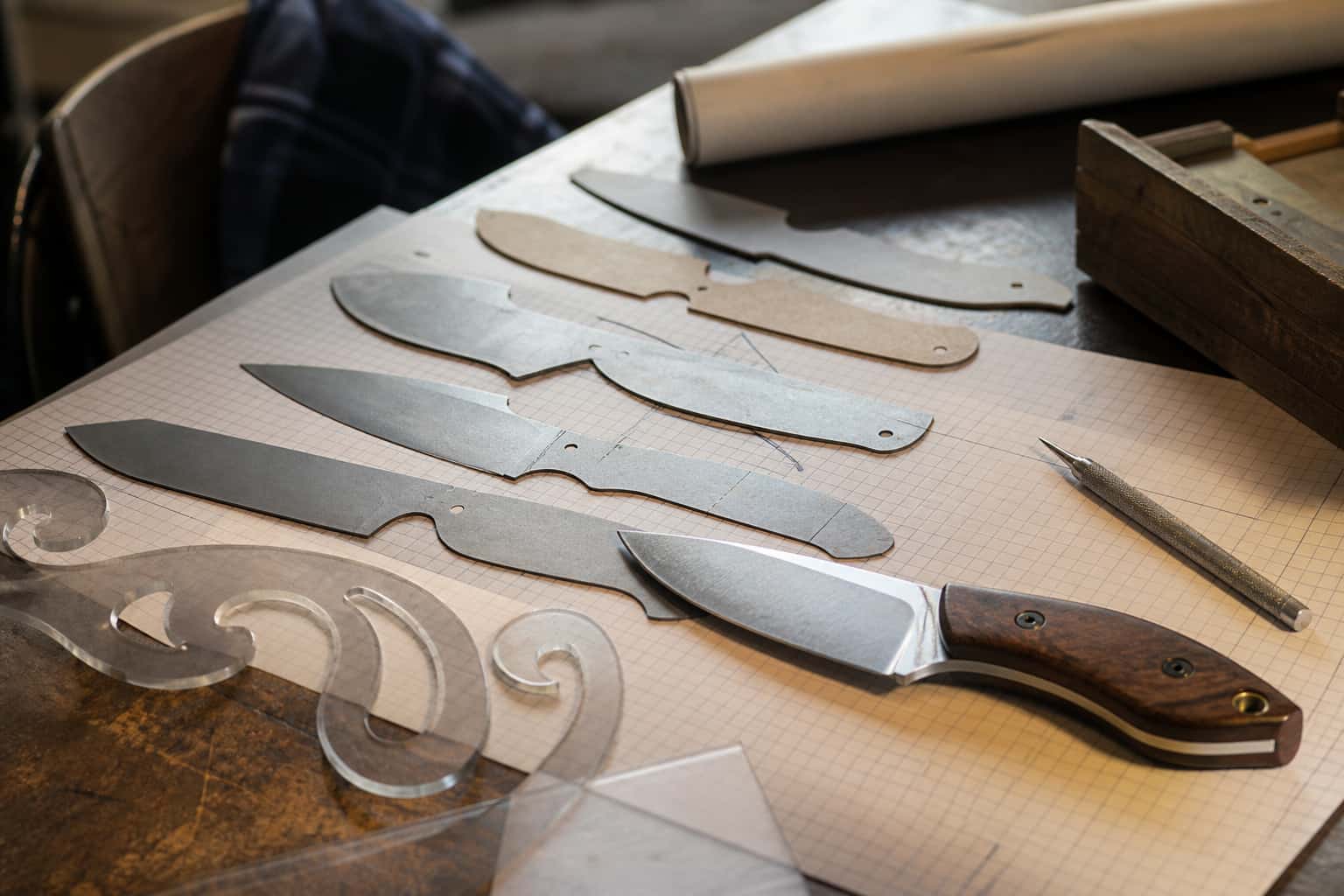
It’s easy to look at a fully outfitted professional shop and assume you need all of it to make your first knife. You don’t. Here’s what actually matters…
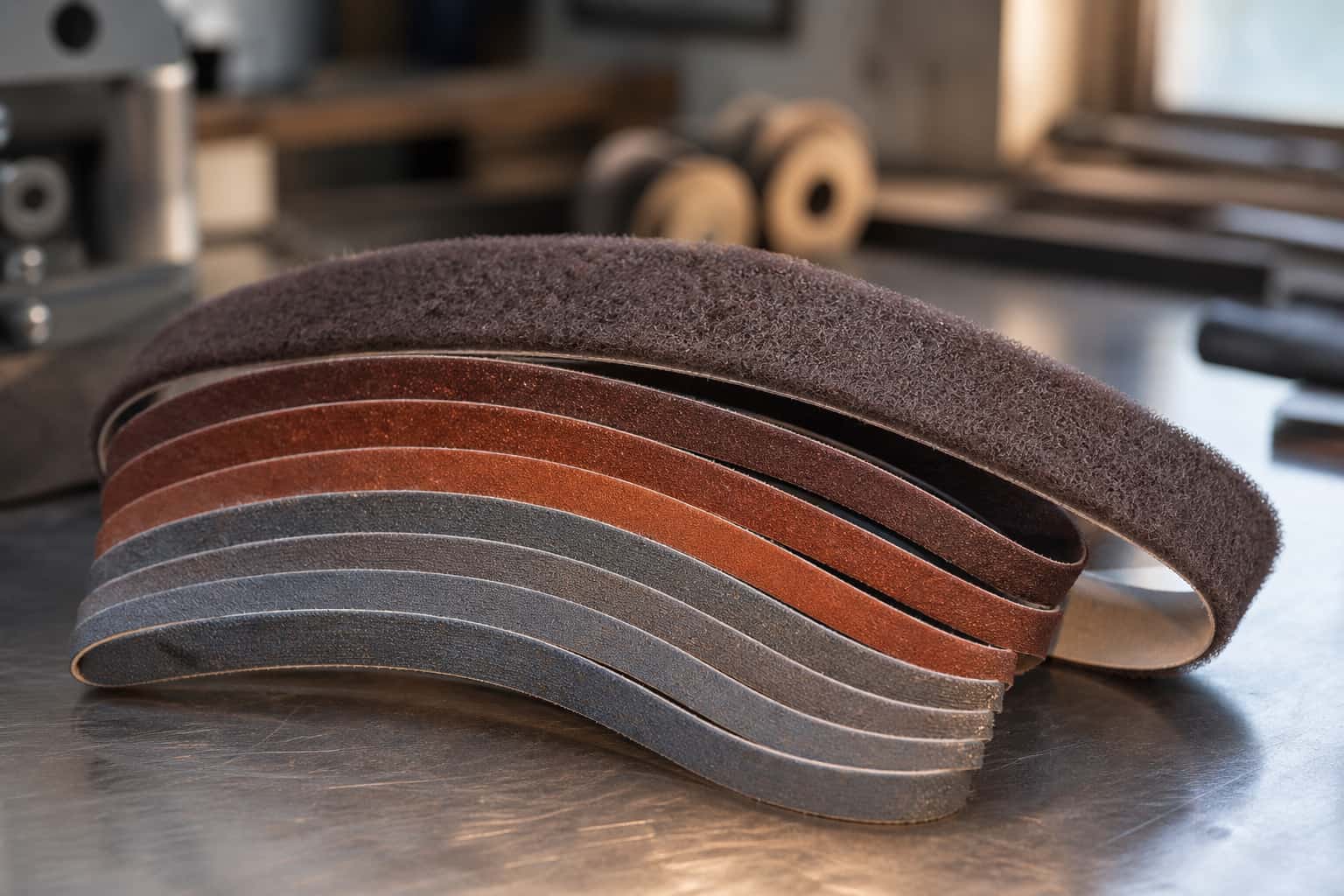
“Wood handle” covers an enormous range, from a plain domestic walnut block to a wildly figured stabilized burl costing more than the blade steel. Here’s…
Same bench
I machine the parts, hand-assemble, track and test Torus grinders in Sterling, Illinois. Most orders ship in seven to ten business days from time of order.
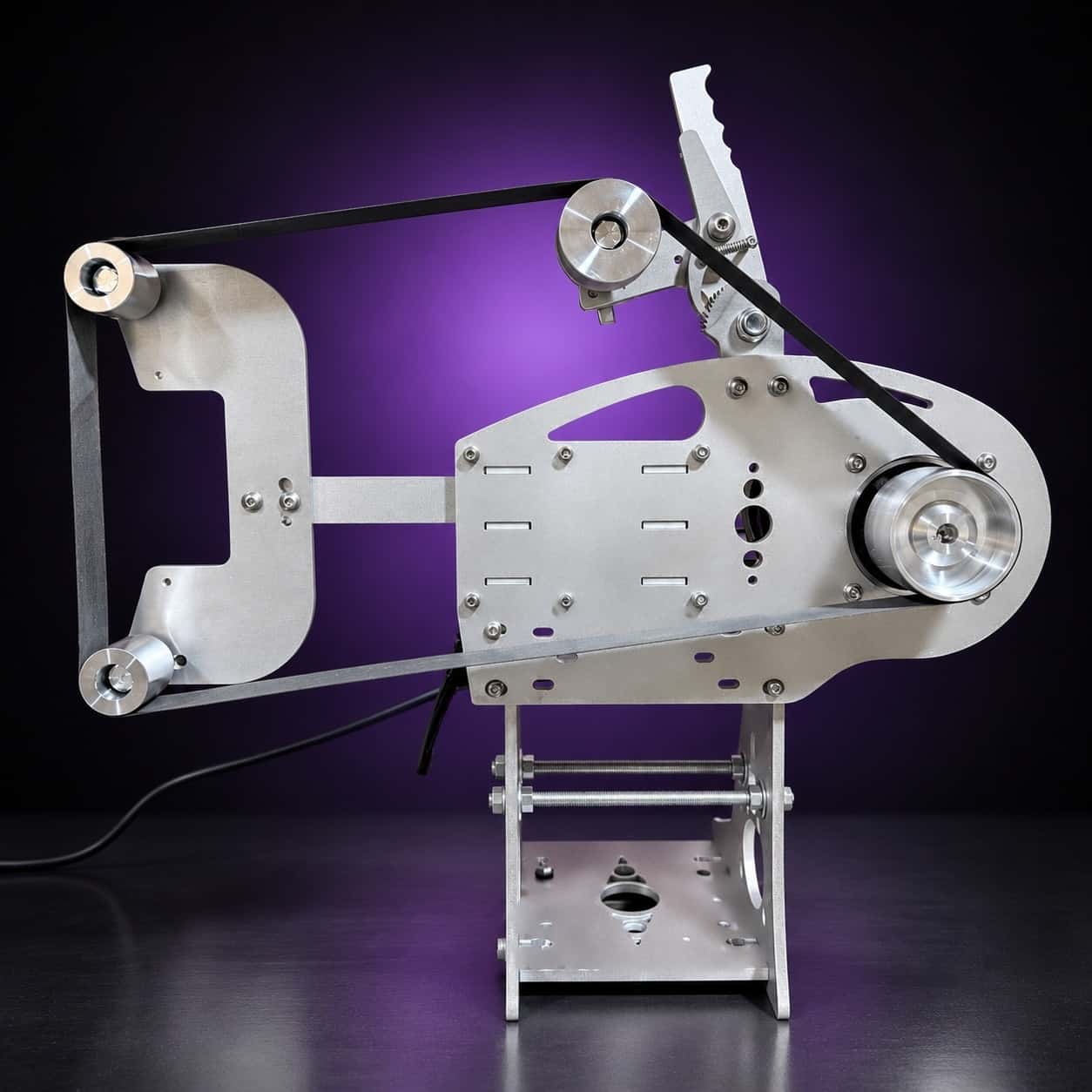
Current dual-axis platform with a fiber-laser-cut 6061 chassis and single-knob tracking.
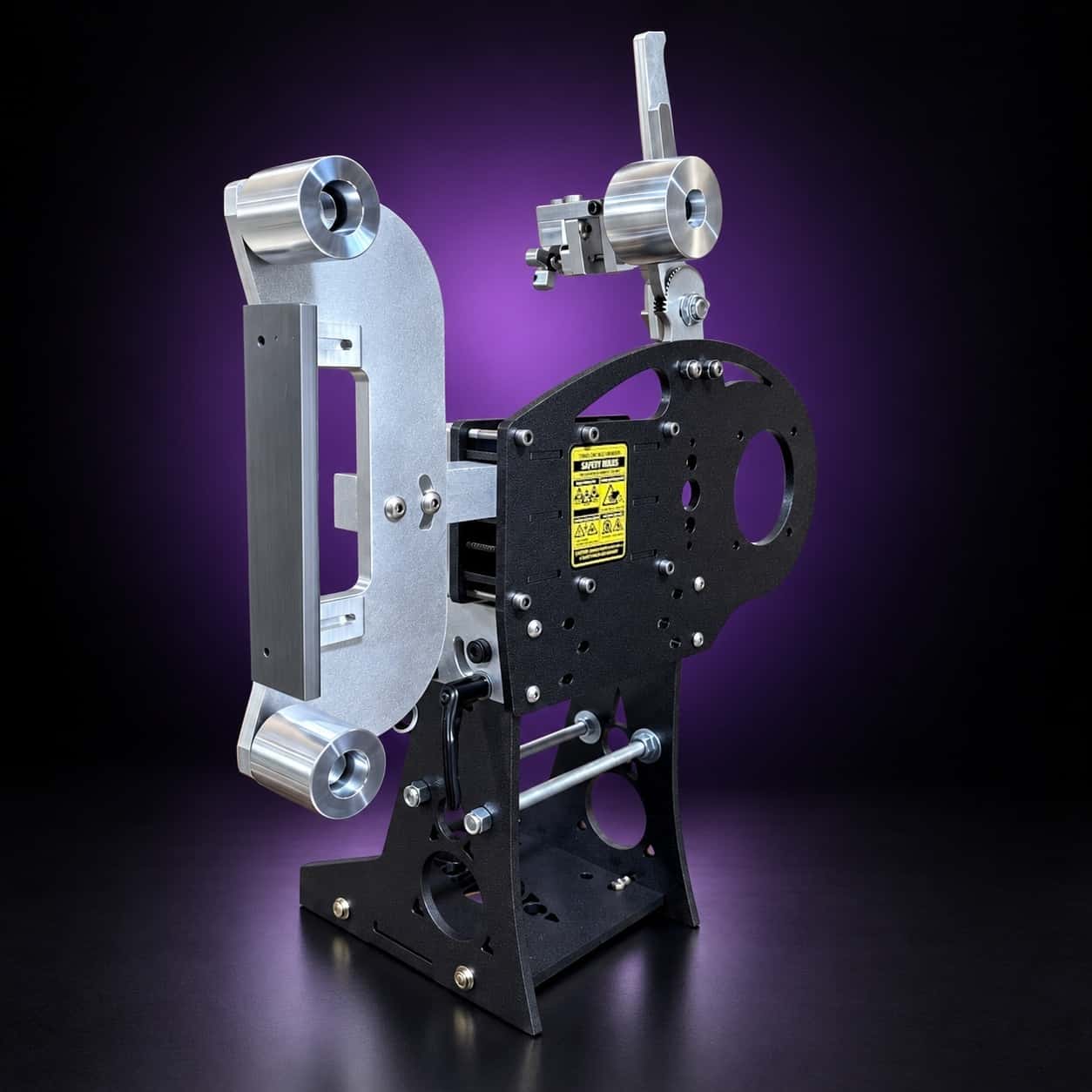
Current dual-axis platform with a steel chassis, more mass and less vibration.
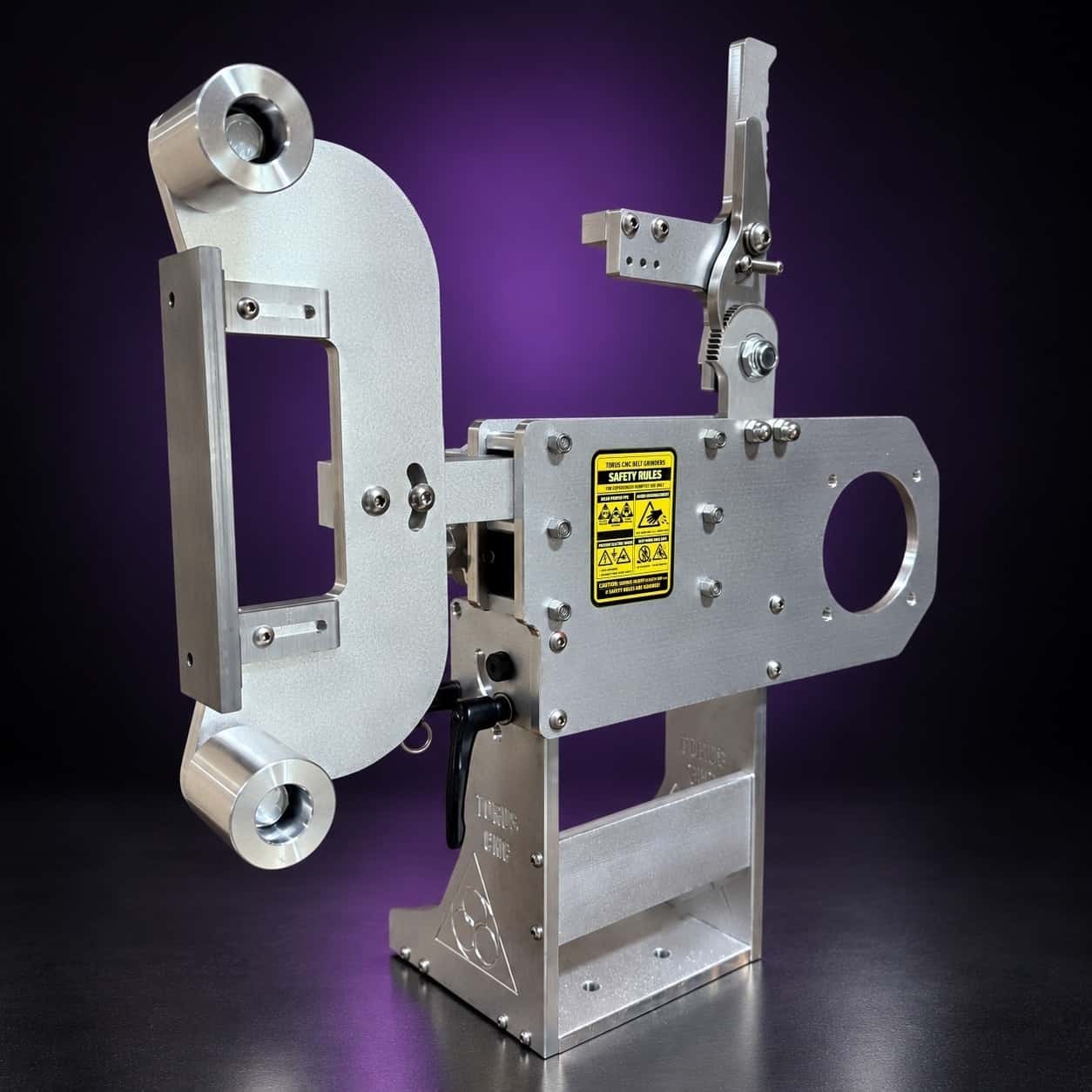
Prior-design aluminum chassis, 90-degree tilt and 1.5-inch tooling arms.
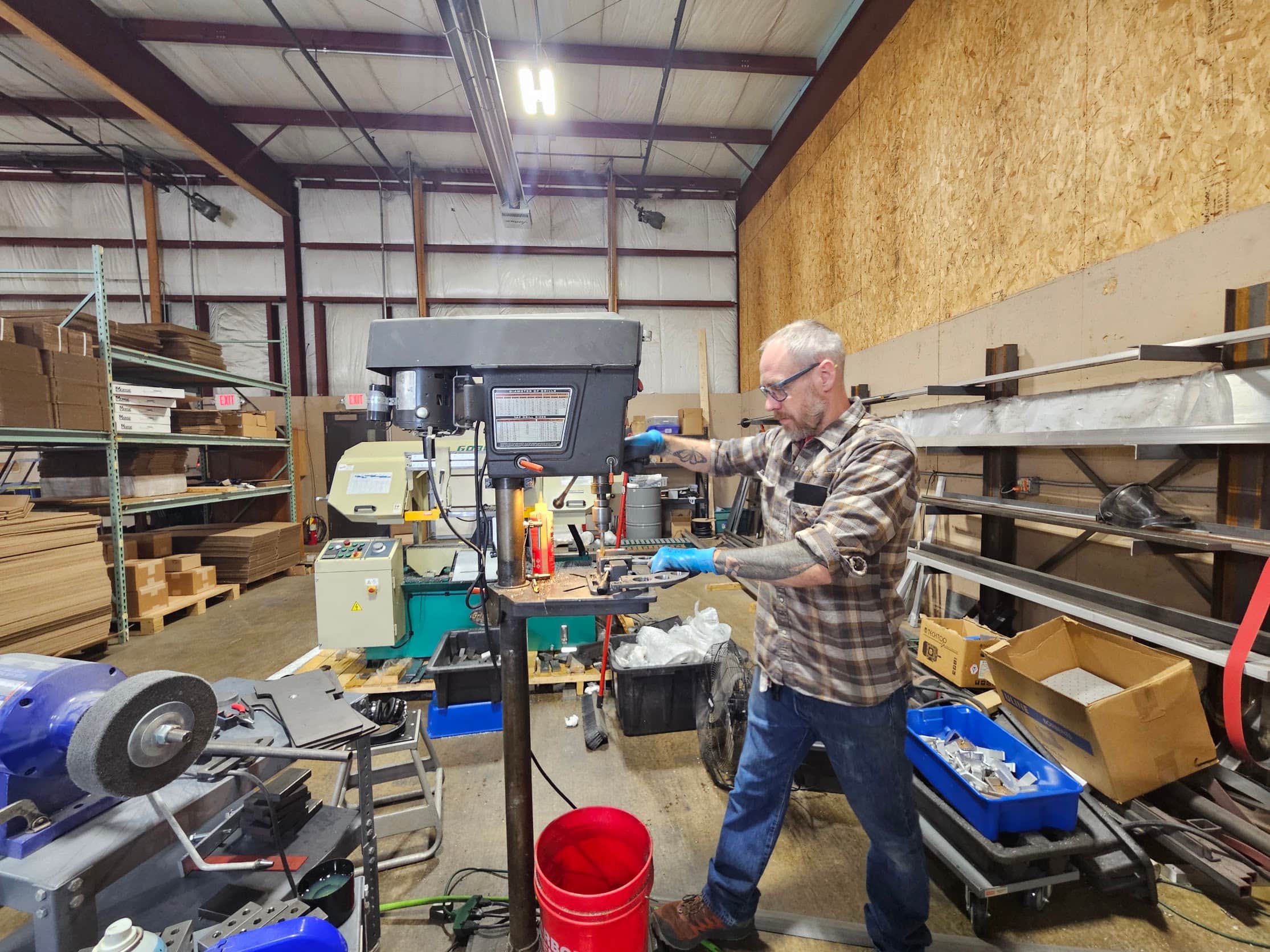
One-man shop
I answer my own email. Tell me the steel, the machine and what it is doing, and I will tell you what I would try next.