
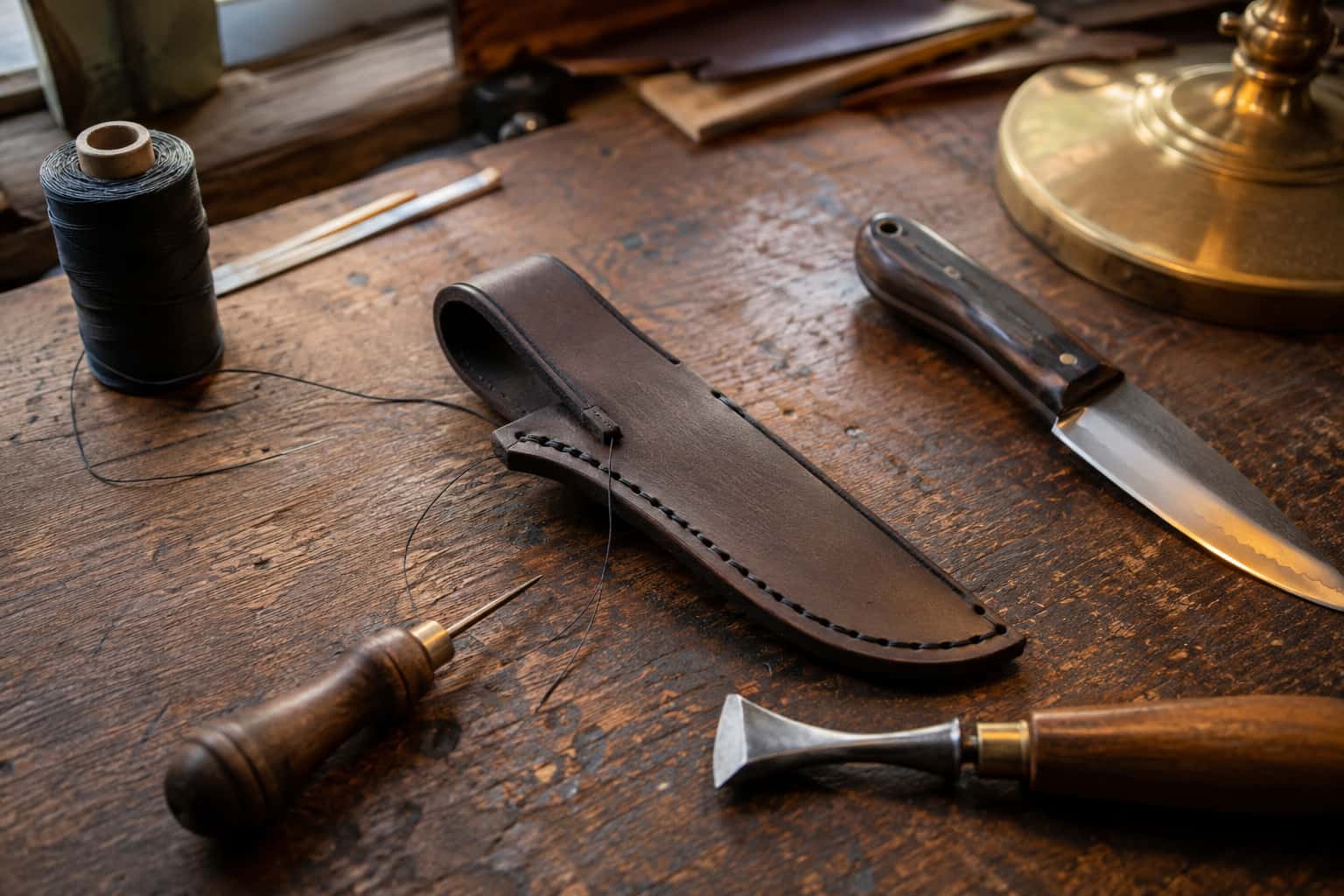
Leatherwork
Leatherworking for Knifemakers: Start Here
Every knifemaker meets the same moment: a finished blade, a proud photo — and nothing to put it in. A knife without a sheath is half a product, and…
Leatherwork
Build bench strops from sheath scrap: rough vs smooth side, compounds and grits, the paddle strop build, and stropping technique that works.
2 min readWritten by Rich LinvilleFree to read
The first leather project that pays for the whole hobby is not a sheath — it is the strop: a flat stick, a scrap of veg-tan, and glue, delivering the edge refinement that separates sharp from scary. Every knifemaker needs several; every leather order produces scrap that IS several. This is the crossover project, and it takes an evening.
After the stones, an edge carries a micro-burr and scratch-pattern teeth. Stropping — edge-TRAILING strokes on compound-charged leather — aligns the apex and polishes the last microns, converting stone-sharp to the effortless push-cut the sharpening guide finishes with. It is also daily maintenance that postpones the stones for weeks: the working edge lives longer on thirty seconds of strop than on any promise from the steel — which is why the strop belongs beside the coffee maker, not in the sharpening drawer.
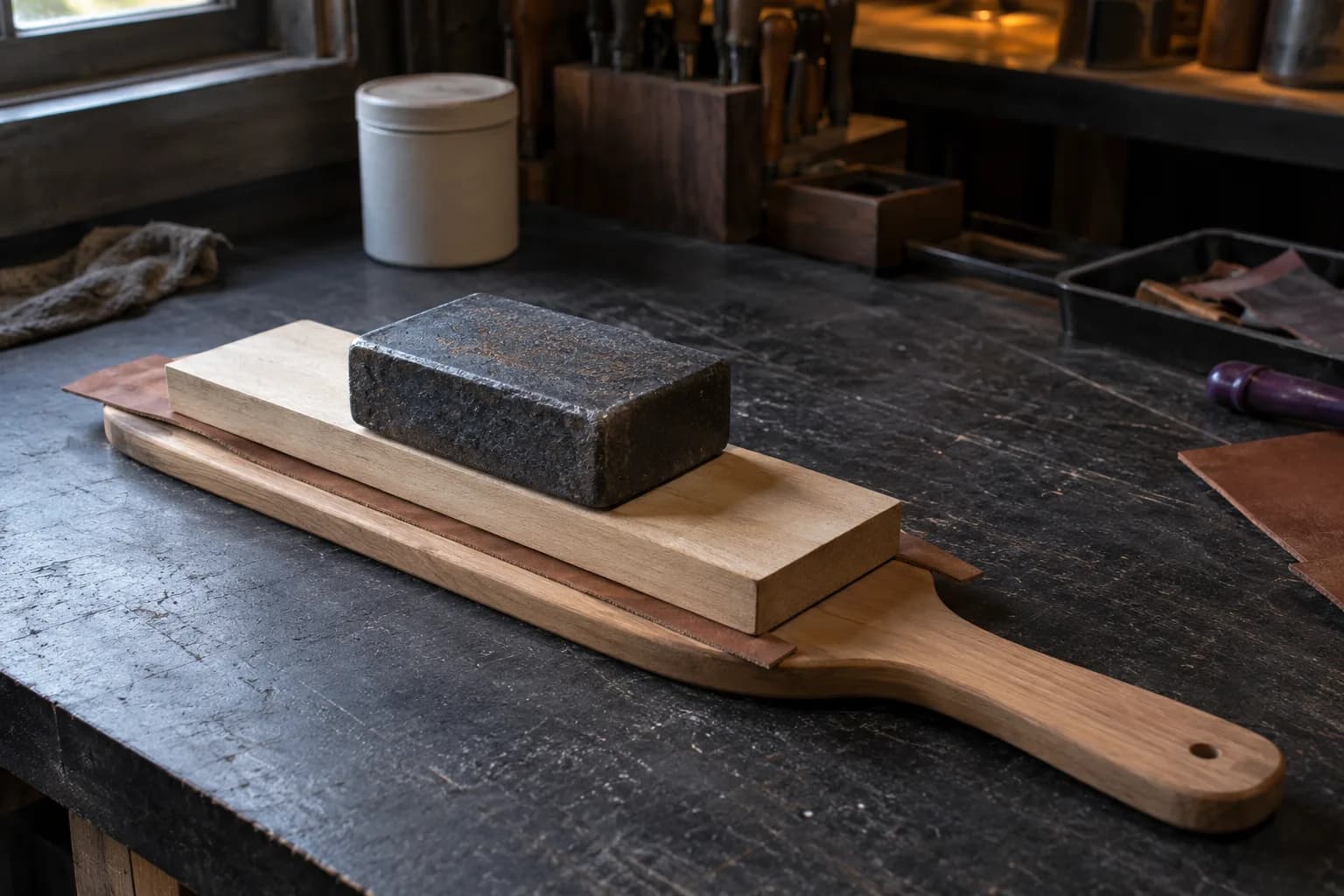
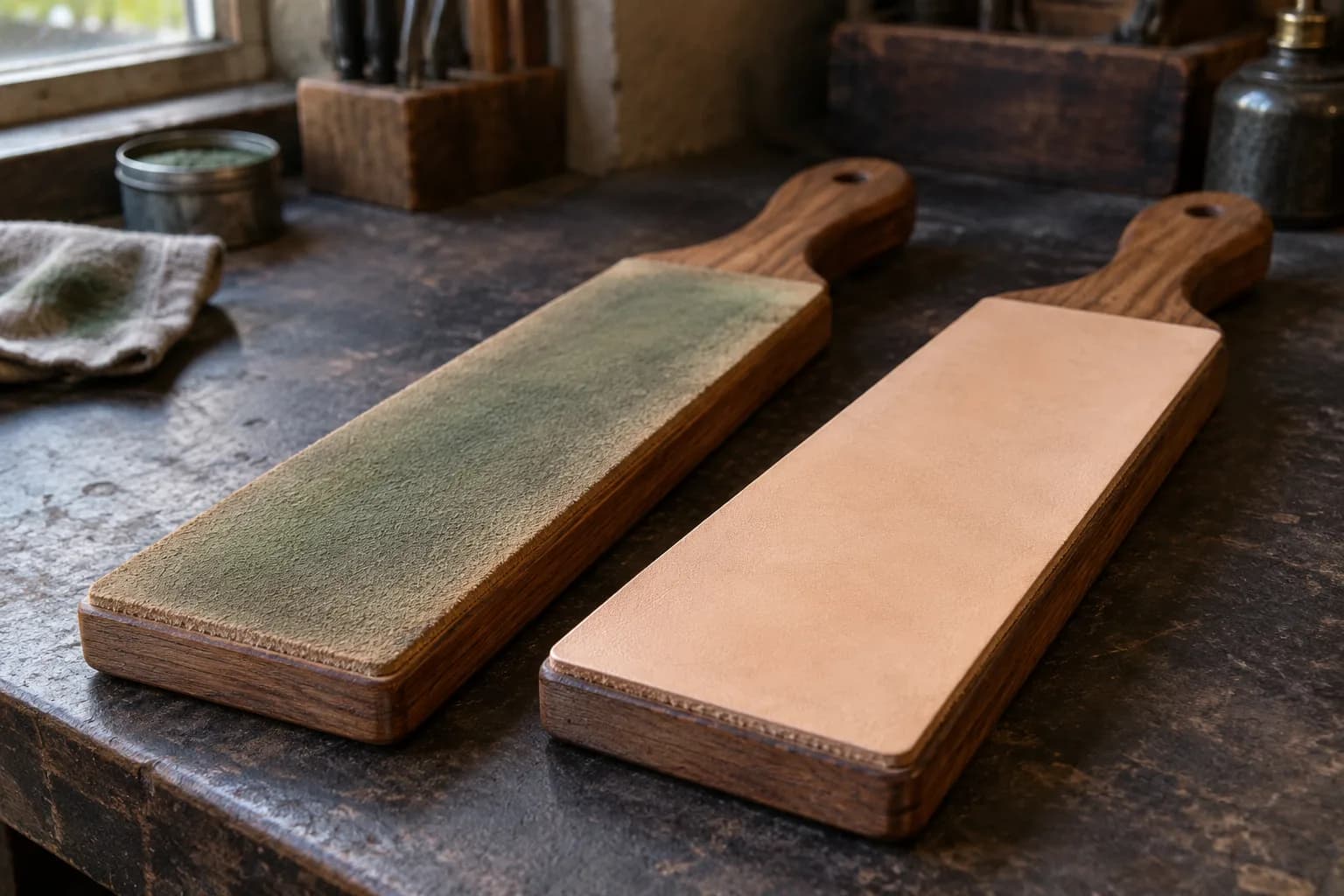
Paddle pattern: a hardwood board about 3 x 12 inches with a handle profile (bandsaw scrap; drill a hang hole), and 6-9 oz veg-tan cut oversize by a hair. Contact cement both faces, press under weight, trim flush when cured — the edge-finish habit applies to strops too. Build two: one charged with compound, one bare for the finishing passes. A two-sided paddle (leather both faces) does it in one stick. Scraps from every sheath build feed the strop shelf; sell the overflow at shows, where strops are the impulse item knife buyers actually use.
The eternal question: flesh side (rough) holds more compound and cuts faster with a softer touch on the apex; grain side (smooth) gives the firmer, flatter stroke that keeps convexing honest — the working answer is compound on the flesh side, finishing passes on bare grain, which the two-strop build delivers automatically. Compounds by color, roughly: black (coarse, ~emery) for post-stone cleanup, green chromium oxide (~0.5 micron) as the universal daily answer, white and red finer still for the razor-and-showoff tier. Green on rough plus bare smooth covers every knife that leaves your shop.
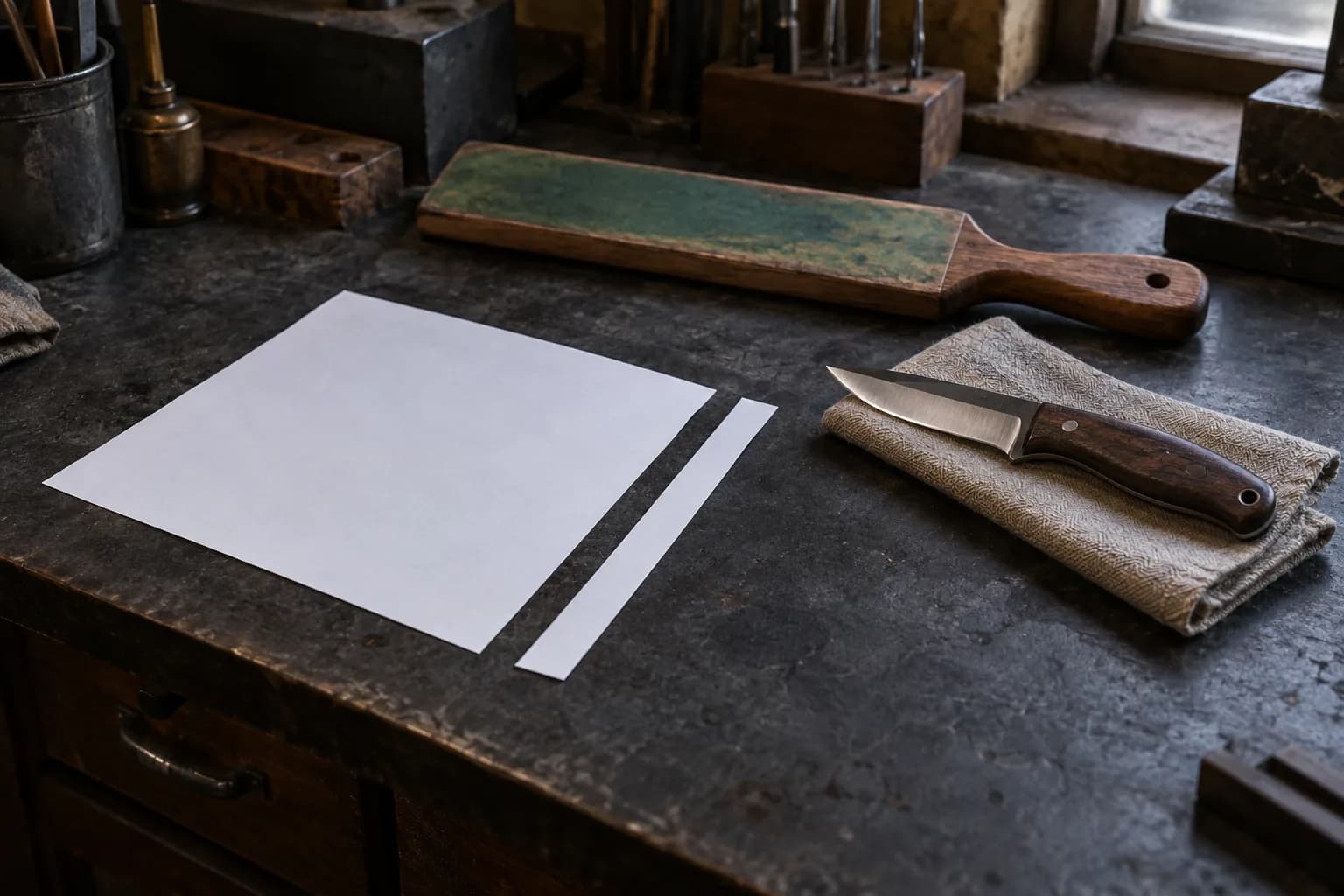
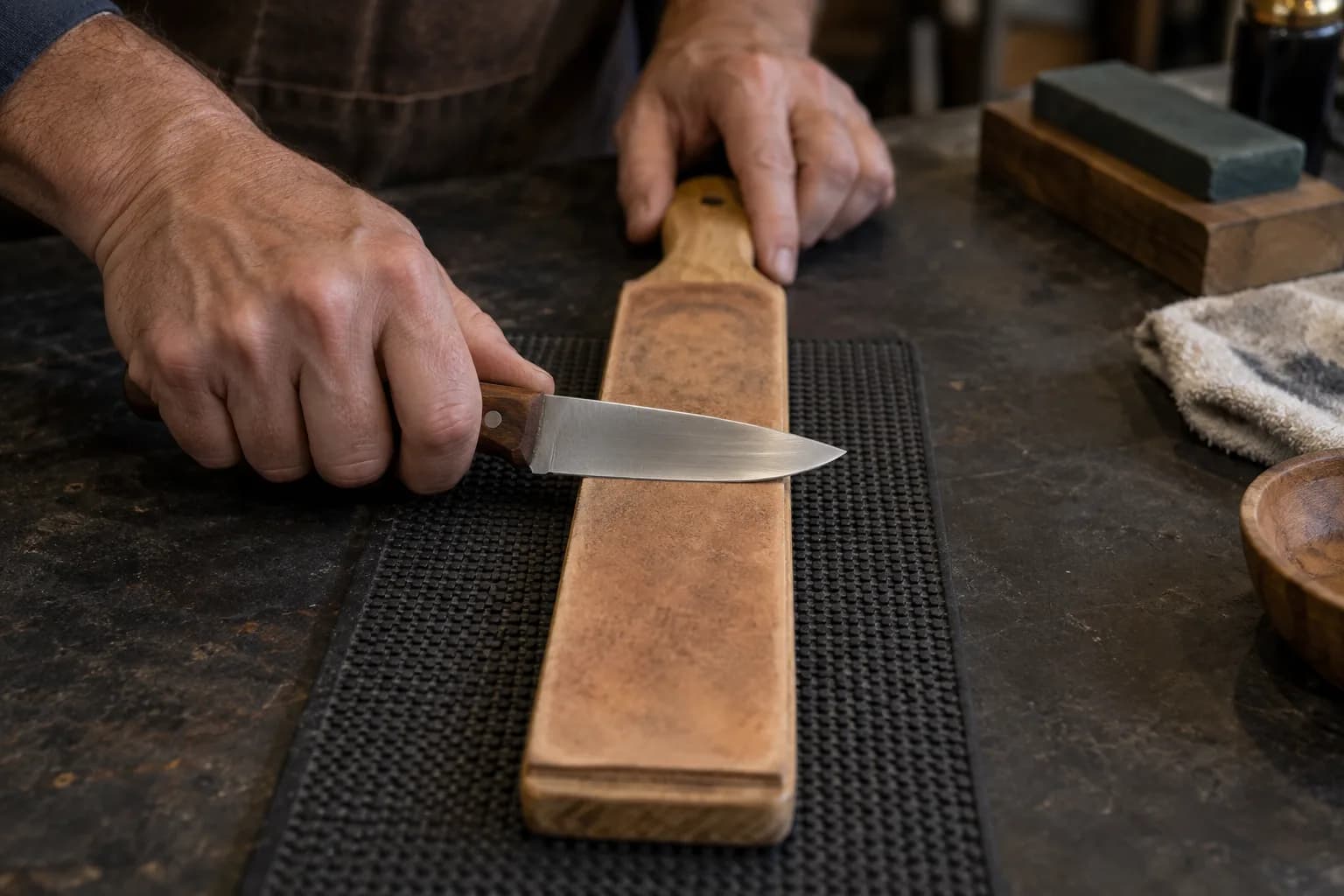
Edge trailing, always — spine leads, edge follows, or the strop gets cut and the edge gets rounded. Match the stone angle or a touch lower, light pressure (the leather compresses; pressure convexes), ten to twenty strokes a side, alternating. Test on paper: the push-cut that squeaks is the strop working. For 2×72 owners the powered version — a leather belt charged with green compound, run SLOW — delivers the same physics at production speed, with the same edge-trailing geometry built into the belt’s direction and double the consequences for inattention.
Keep reading
Three more from the same bench.
Every knifemaker meets the same moment: a finished blade, a proud photo — and nothing to put it in. A knife without a sheath is half a product, and…

Sharpening is where knifemaking gets humbled: you can grind a flawless blade and still hand someone a knife that won’t slice paper. The good news …

Belts are the single biggest recurring cost in this hobby, and buying the wrong ones wastes money twice: once on belts that wear out fast, and again on…
Same bench
I machine the parts, hand-assemble, track and test Torus grinders in Sterling, Illinois. Most orders ship in seven to ten business days from time of order.

Current dual-axis platform with a fiber-laser-cut 6061 chassis and single-knob tracking.

Current dual-axis platform with a steel chassis, more mass and less vibration.

Prior-design aluminum chassis, 90-degree tilt and 1.5-inch tooling arms.

One-man shop
I answer my own email. Tell me the steel, the machine and what it is doing, and I will tell you what I would try next.