
Blade Design
The Gyuto: Building the Japanese Chef’s Knife
The gyuto is Japan’s answer to the French chef’s knife and the single most commissioned kitchen pattern in the custom world: a 210-270mm-class (8-10 inch)…
Blade Design
The santoku from a maker's bench: sheep's-foot profile, flat-edge planing style, sizing, grants and dimples, and why it sells to home cooks.
2 min readWritten by Rich LinvilleFree to read
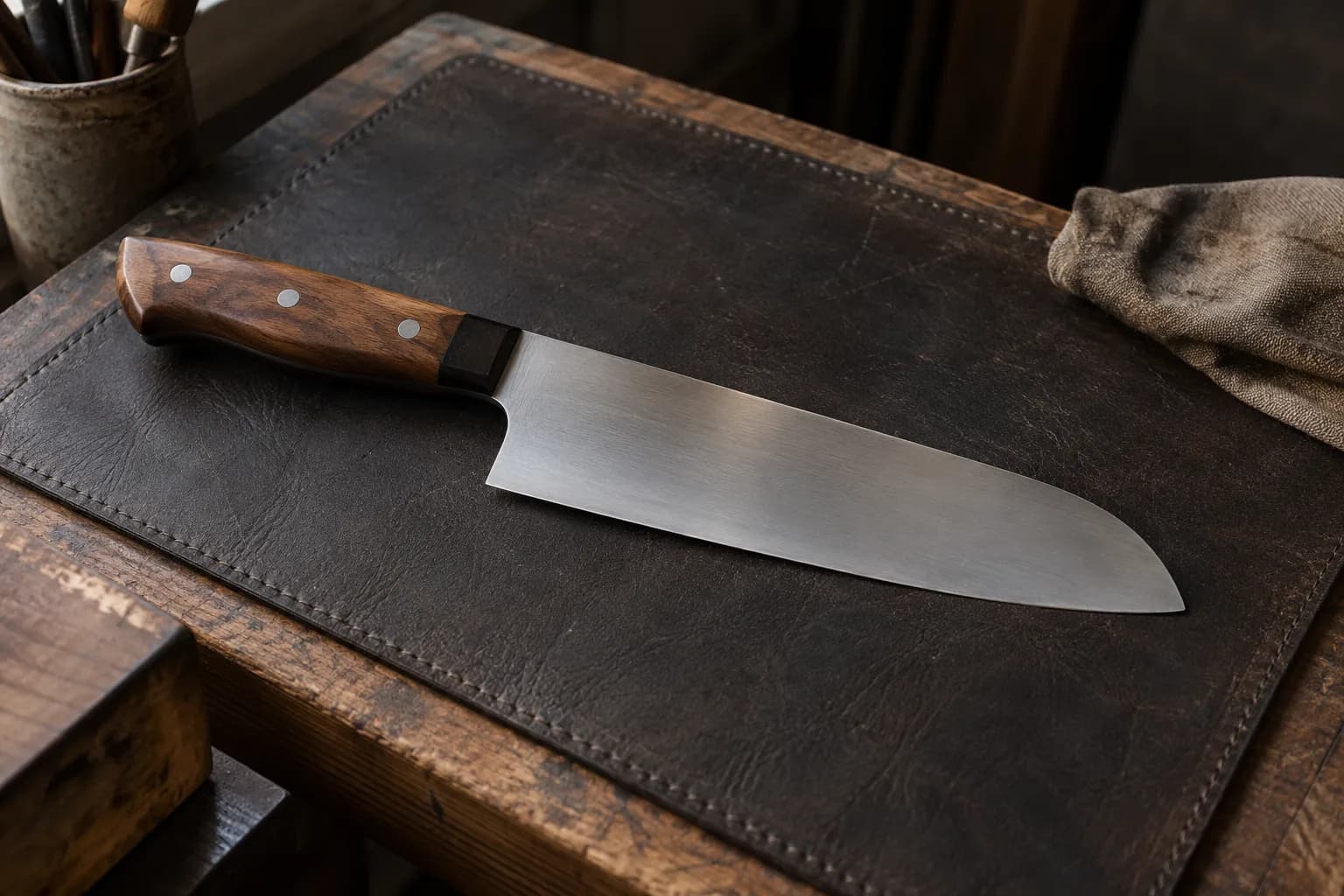
The santoku — “three virtues” — is Japan’s home-kitchen generalist: shorter, flatter and friendlier than a gyuto, with a sheep’s-foot spine dropping to a near-flat edge. It is the pattern home cooks already trust from the knife block, which makes it the custom maker’s easiest kitchen sale — and a forgiving first kitchen build with real teaching value.
The santoku’s spine curves down to meet a mostly flat edge at a dropped, blunted front — no acute tip, no deep belly. The cutting style follows: straight push cuts and a planing glide, not the rock-chop. Its three virtues are the classic trio — meat, fish, vegetables — at home-kitchen scale: 165-180mm (6.5-7 inch) blades, ~45-48mm tall. Compared to its siblings: flatter and shorter than the gyuto, more pointed and versatile than the nakiri — the middle child that most home cooks actually need.
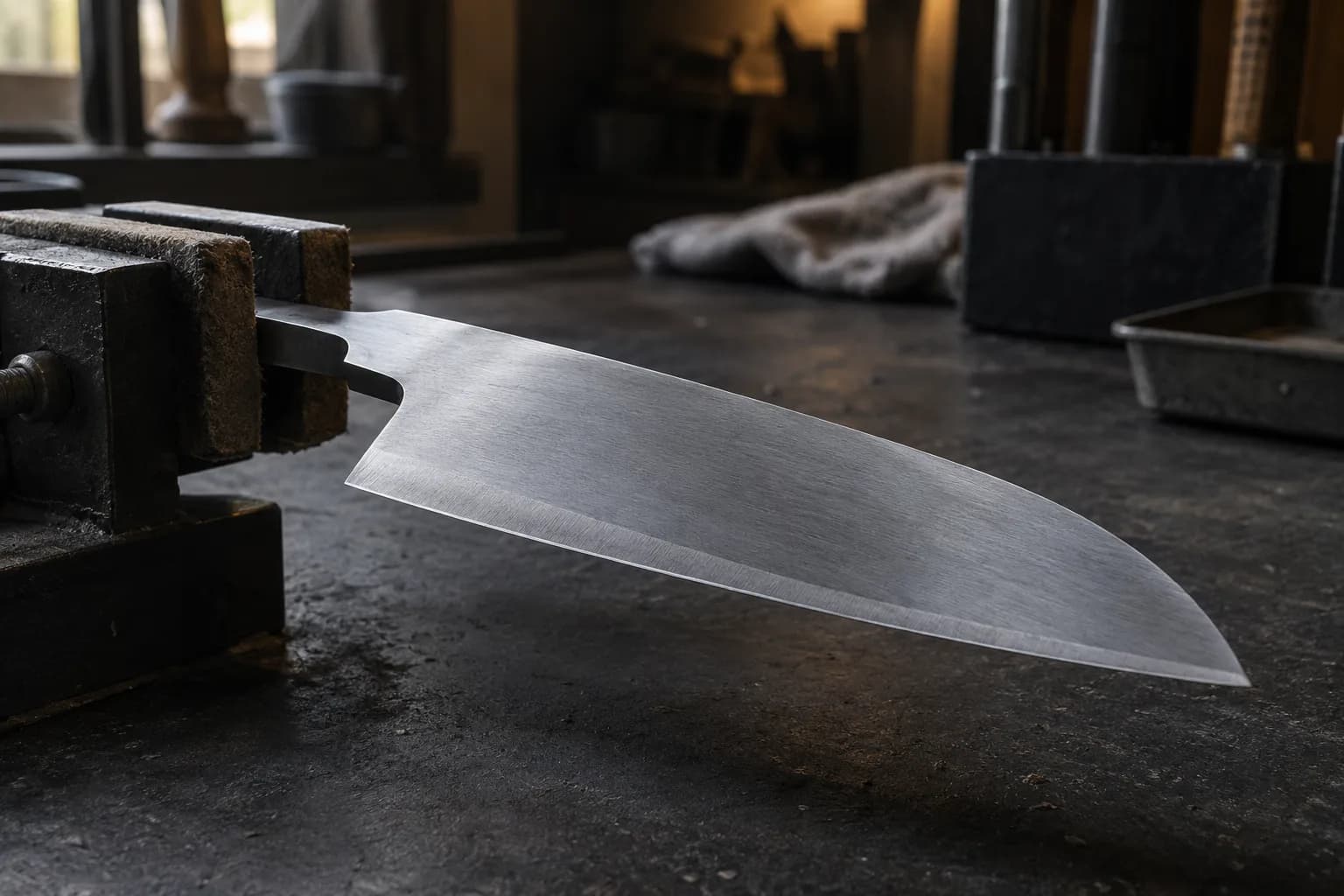
Same thin-kitchen numbers as the family: 3/32-or-under stock, 0.010-0.018 behind the edge (the santoku tolerates the slightly stouter end for home-cook boards), 12-16 dps per the angle guide, full flat grind. Steel: the stainless argument is strongest here — home cooks do not wipe blades, so AEB-L, 14C28N or LC200N for the truly maintenance-proof gift. Carbon santokus exist for patina people; know your buyer.
The dimpled blade — granton edge, kullenschliff — is the santoku’s signature in the production world, meant to release sticky slices. The honest maker’s read: shallow dimples do a little, mostly on wet starchy foods; geometry (thin behind the edge, a touch of convex, a tall clean face) does more. If you offer them, grind the scallops with a small-diameter wheel per small-wheel practice, evenly spaced above the edge line where sharpening will never reach them — or skip them and sell the geometry story instead. Tsuchime texture is the hand-made alternative that photographs better and releases at least as well.
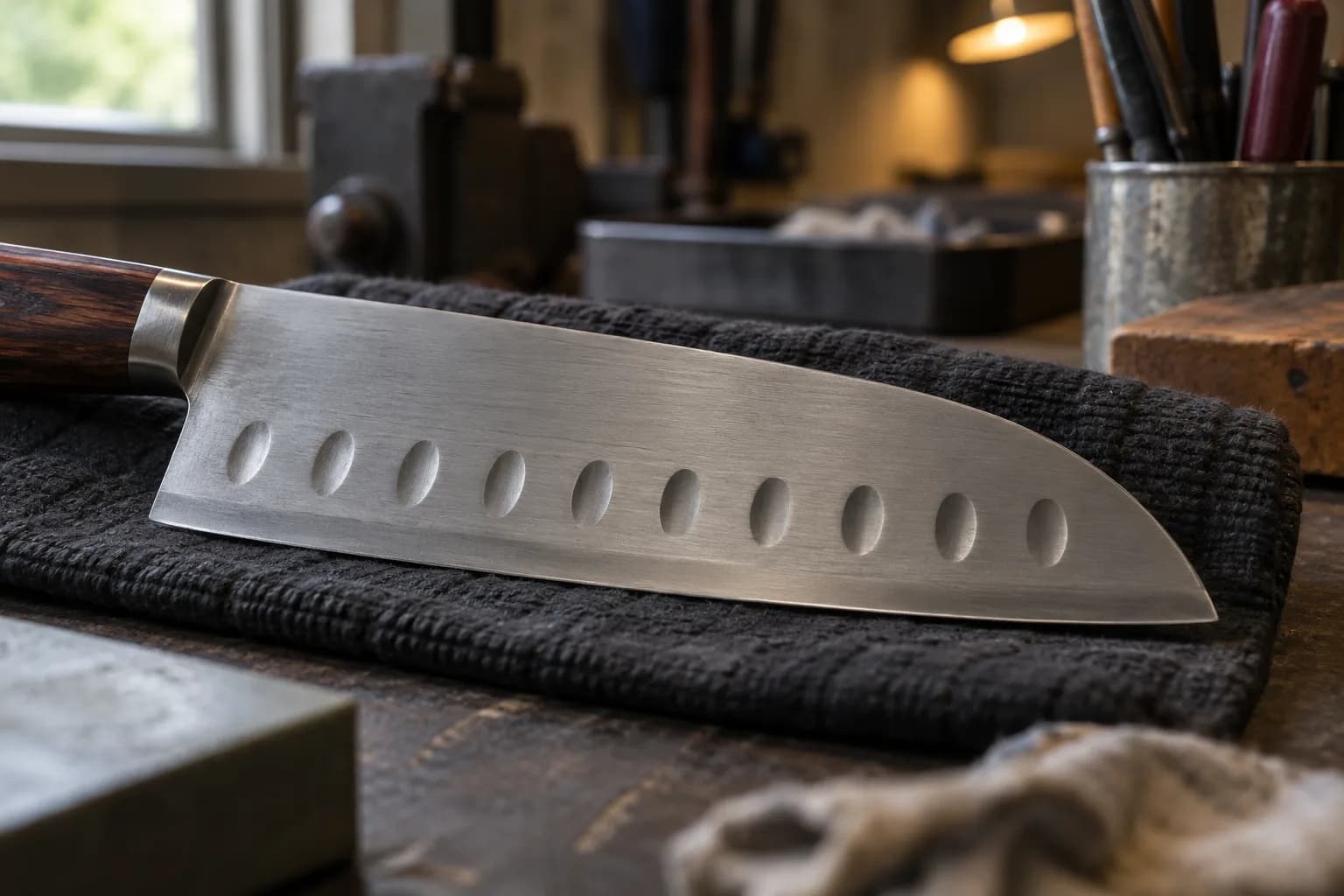
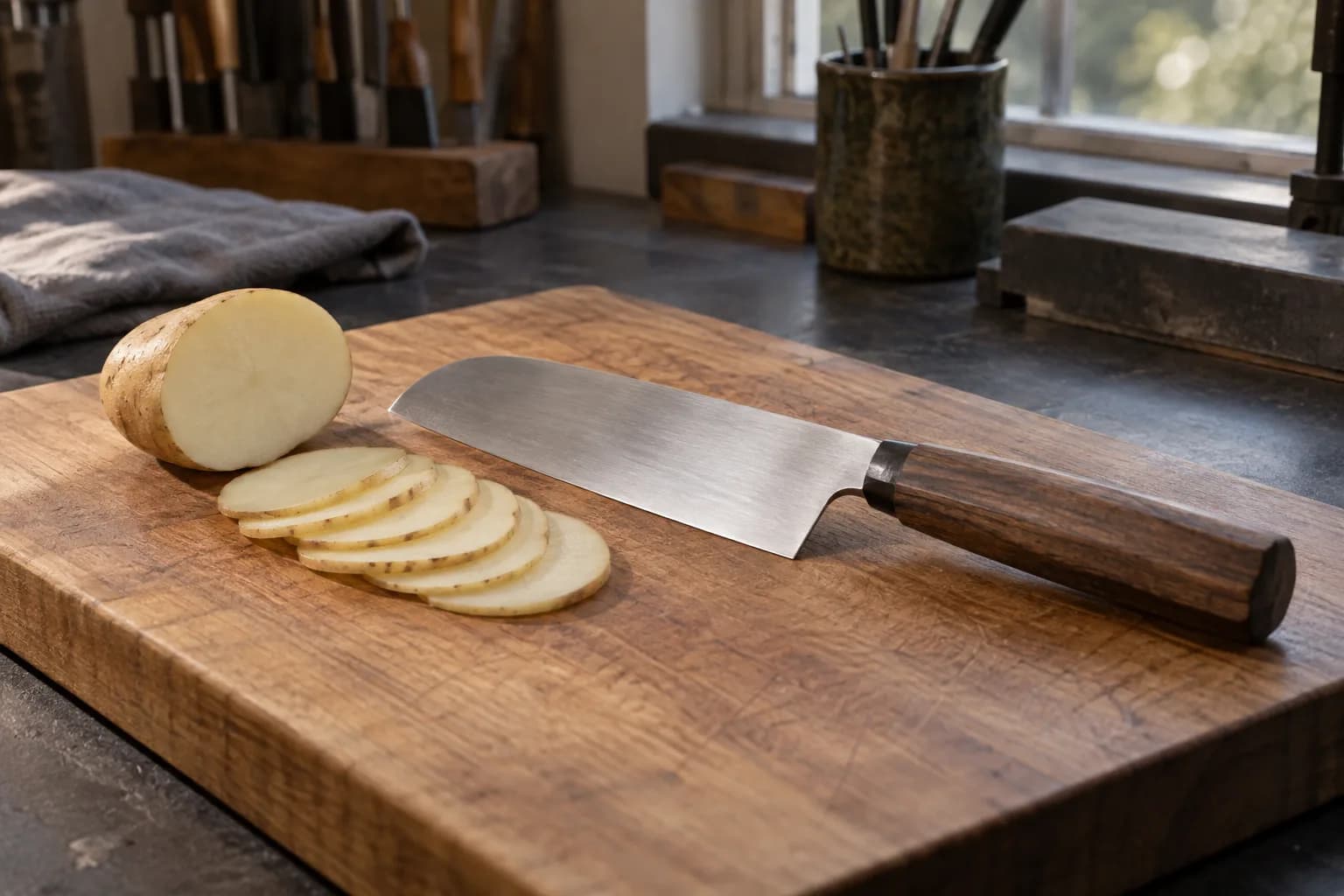
The santoku is recognition: the buyer already owns a factory one, already likes the shape, and a custom in real steel at proper thinness is a revelation upgrade to a knife they use daily. It gifts well (shorter blade reads friendly, stainless survives the recipient), prices accessibly below the gyuto flagship, and demos instantly — the planing glide through a potato tells the whole story. For the maker it is the volume kitchen pattern: simpler tip, flatter grind run, forgiving profile — the batchable kitchen knife. Pair every sale with the strop and care card, and the household that buys one santoku historically comes back for the gyuto.
Keep reading
Three more from the same bench.
The gyuto is Japan’s answer to the French chef’s knife and the single most commissioned kitchen pattern in the custom world: a 210-270mm-class (8-10 inch)…
The nakiri looks like a small cleaver and cuts like a razor: a rectangular, flat-edged vegetable specialist that push-cuts straight down through produce…
Kitchen knives run the lowest working angles of any knife you will build, because their whole job is falling through food and their whole hazard list is a…
Same bench
I machine the parts, hand-assemble, track and test Torus grinders in Sterling, Illinois. Most orders ship in seven to ten business days from time of order.
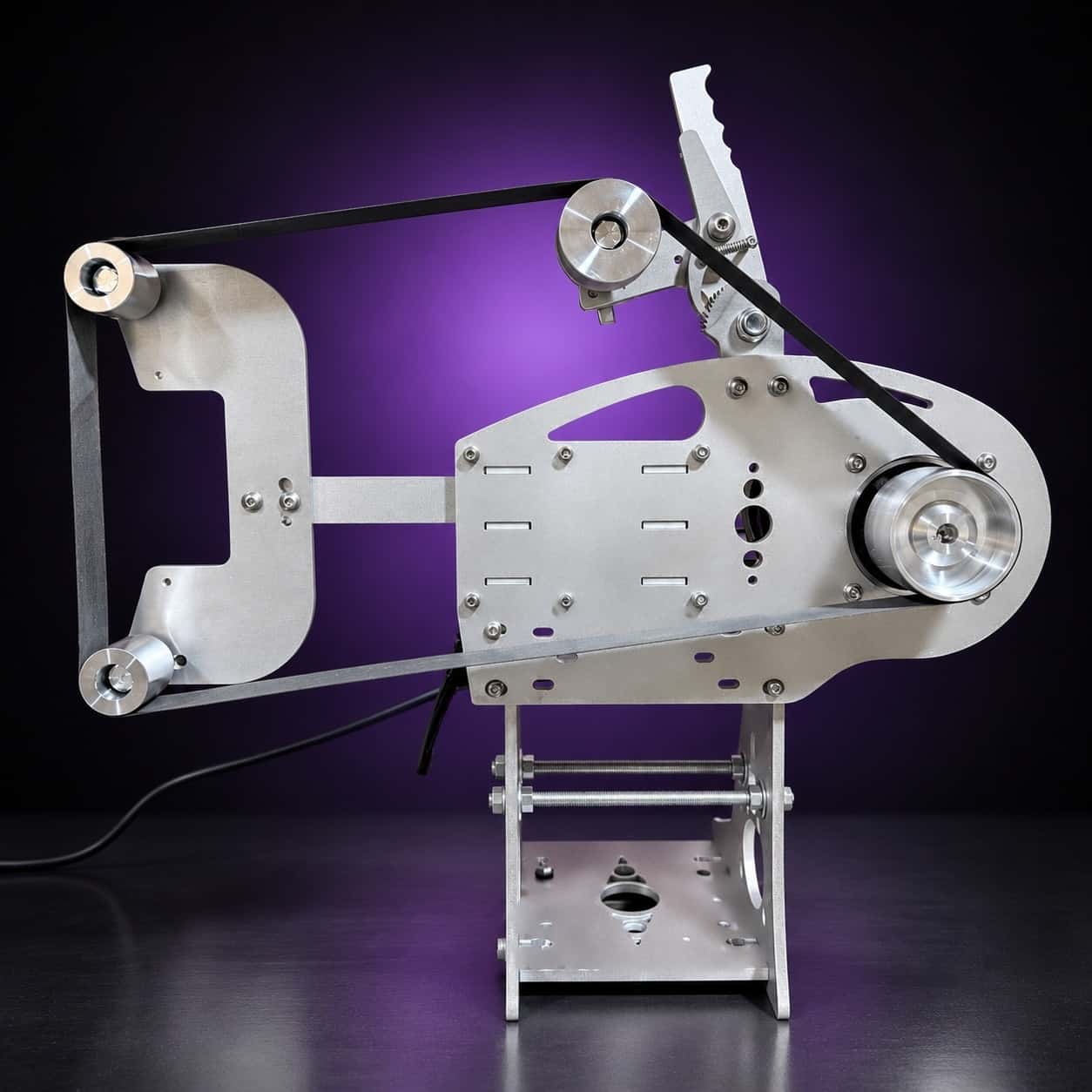
Current dual-axis platform with a fiber-laser-cut 6061 chassis and single-knob tracking.
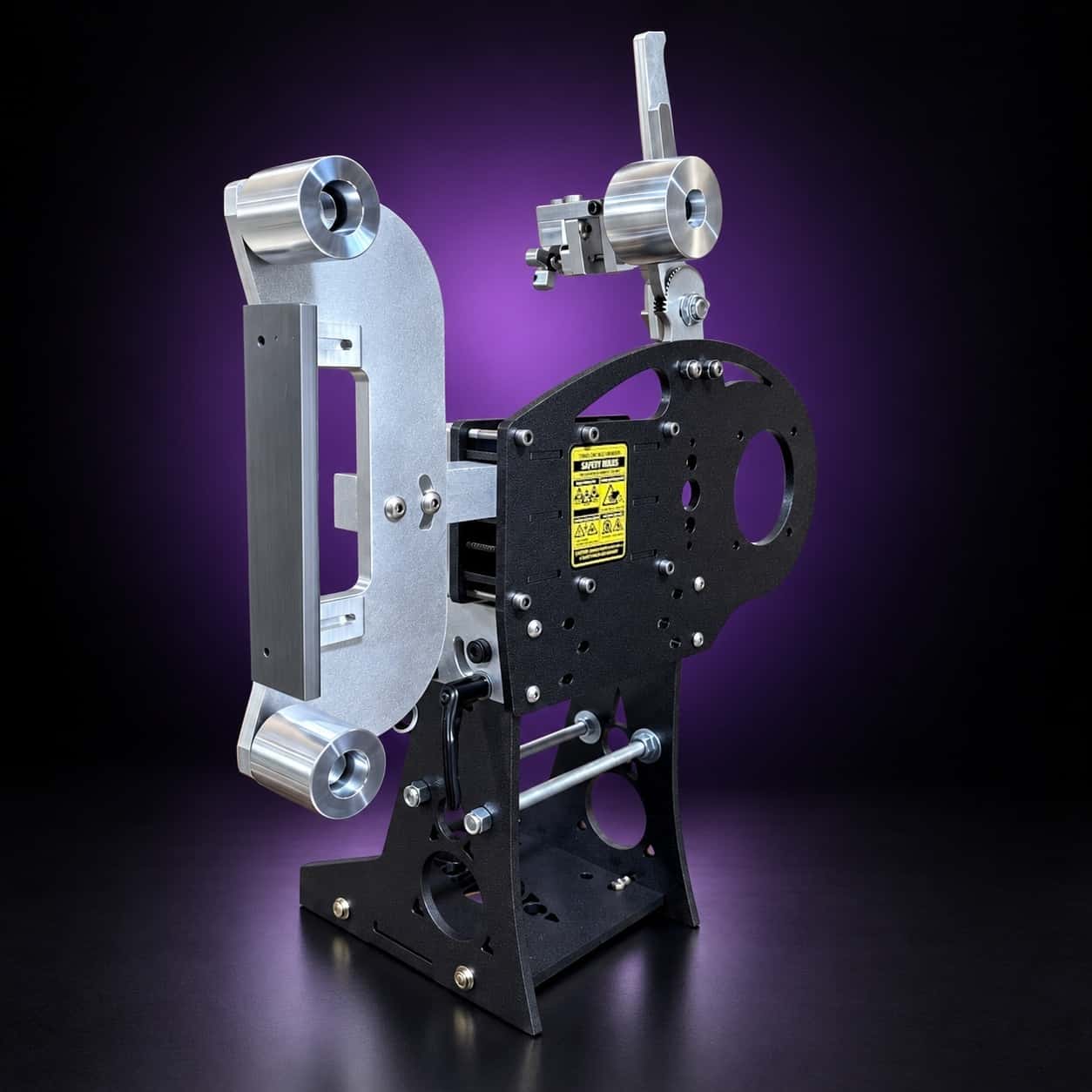
Current dual-axis platform with a steel chassis, more mass and less vibration.
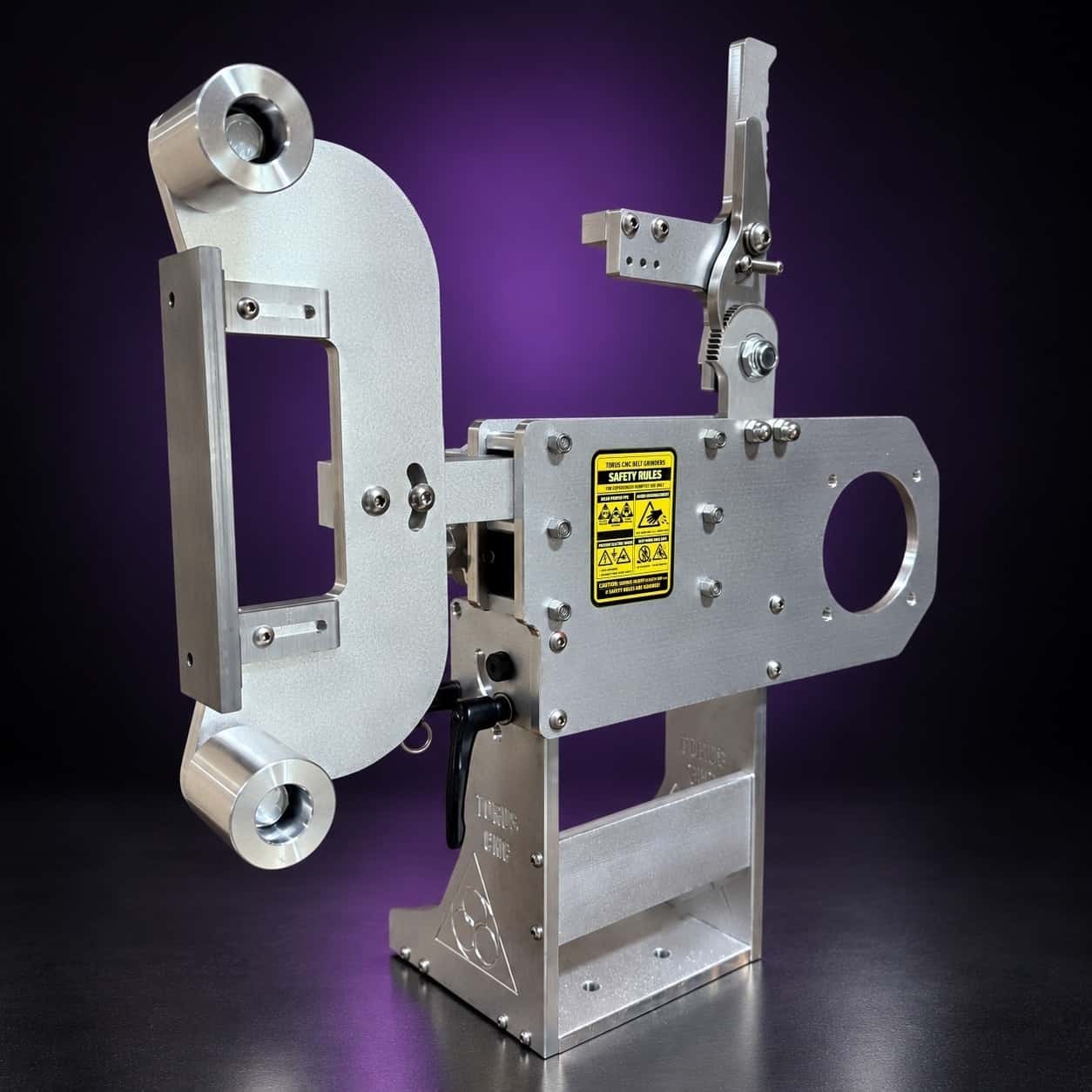
Prior-design aluminum chassis, 90-degree tilt and 1.5-inch tooling arms.
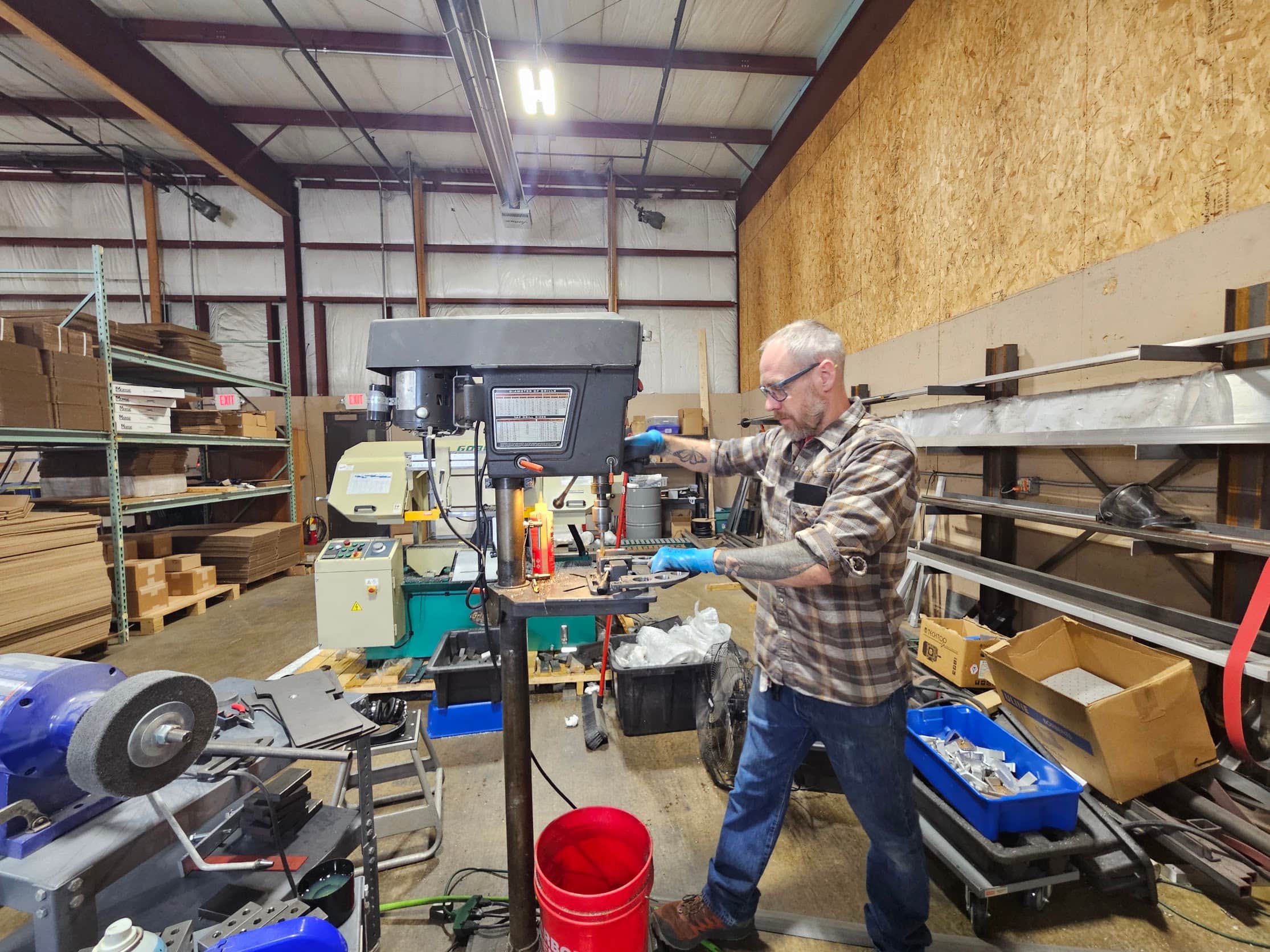
One-man shop
I answer my own email. Tell me the steel, the machine and what it is doing, and I will tell you what I would try next.