Gloved hands hammer a glowing orange knife blade on an anvil, sparks flying in a dark forge

Blog category

Blade Smithing

For makers who forge first: stripping scale, flattening forged blanks, grinding san mai and damascus, and getting a forged blade ready for heat treat.

13 articles · written in Sterling, Illinois

13 articles

Everything filed under Blade Smithing

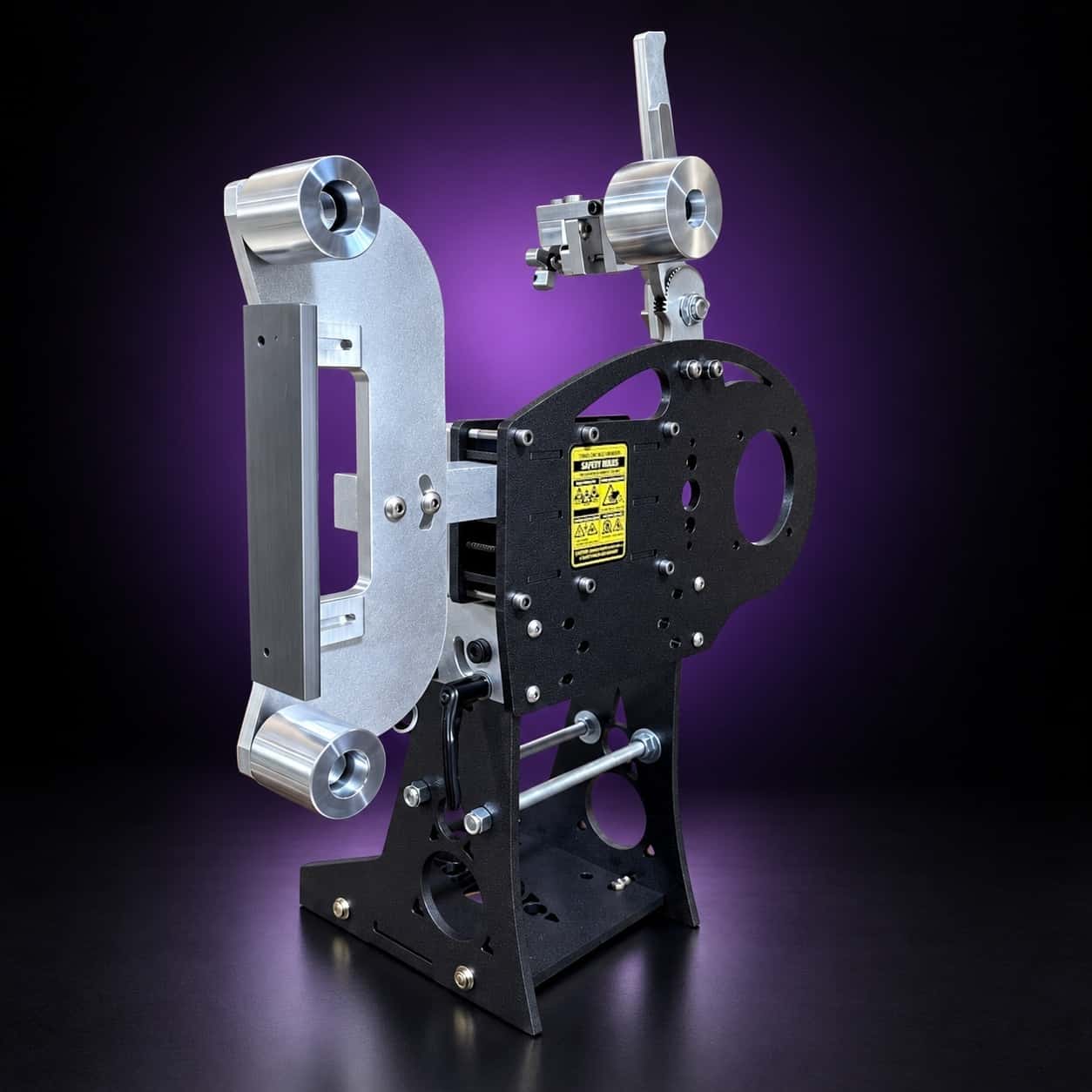
  • Nebula 2x72 grinder, front three-quarter view: aluminum arm, black plate, Safety Rules label, on black with a purple glow
    Belt Grinders2 min read

    The $845 Torus Steel Closeout

    Here is the plainest sentence this blog will ever run: a fully assembled, American-made, tilting 2×72 with a ratchet tensioner for $845, down from $1,195, in stock now. It is on closeout to make way for the Nova.
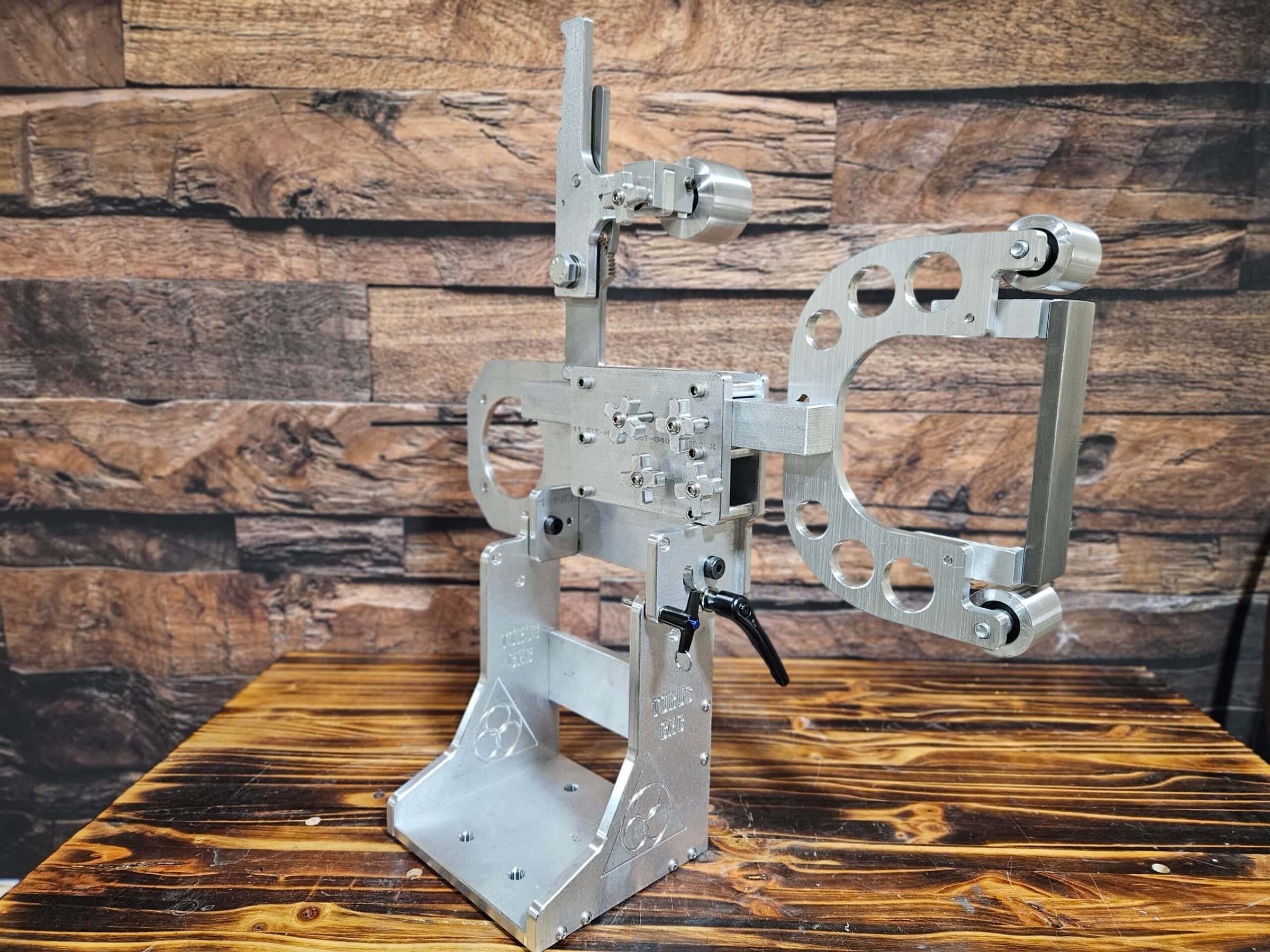
  • Torus aluminum 2x72 grinder frame with a horseshoe tool arm, four star knobs and a black cam lever, on a wood-grain backdrop
    2x72 Grinder Tips7 min read

    Sharpening Large Cleavers with Extended Work Rest

    A cleaver is wide, heavy and easy to rock, and a short rest lets the edge wander. Here is how I sharpen large cleavers on the 2×72 with an extended work rest: full support, angle setup, and safe handling.

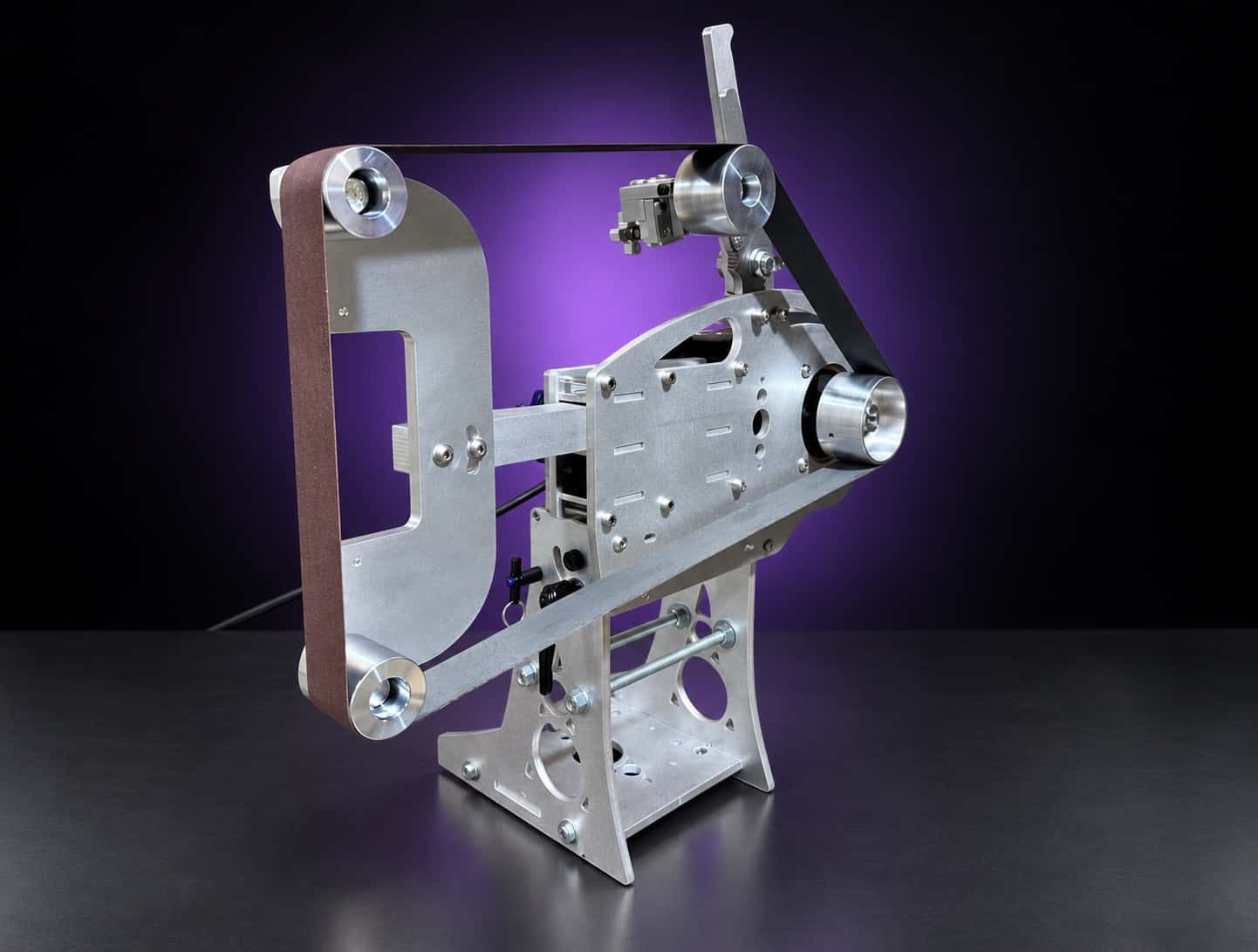
  • Nova aluminum 2x72 grinder with flat-platen tool arm and abrasive belt, three-quarter view, on black with a purple glow
    Belt Grinders6 min read

    Safely Grinding Non-Ferrous Metals on a Belt Grinder

    Brass, copper, aluminum and titanium each misbehave on a belt in their own way: loading, smearing, sparking. Here is how I grind non-ferrous metals on the 2×72 safely, from belt choice and speed to dust handling and protection.

  • Nebula dual-axis tracking assembly: star knob, spring and idler wheel, close-up, on black with a purple glow
    2x72 Grinder Tips6 min read

    Selecting the Right Abrasive Belt for Tough Steels

    Tough steels like CPM 3V, M4 and 52100 eat cheap belts and heat up fast. Here is how ceramic and Cubitron belts compare on cut rate, heat, life and cost, and which one I run on the 2×72.

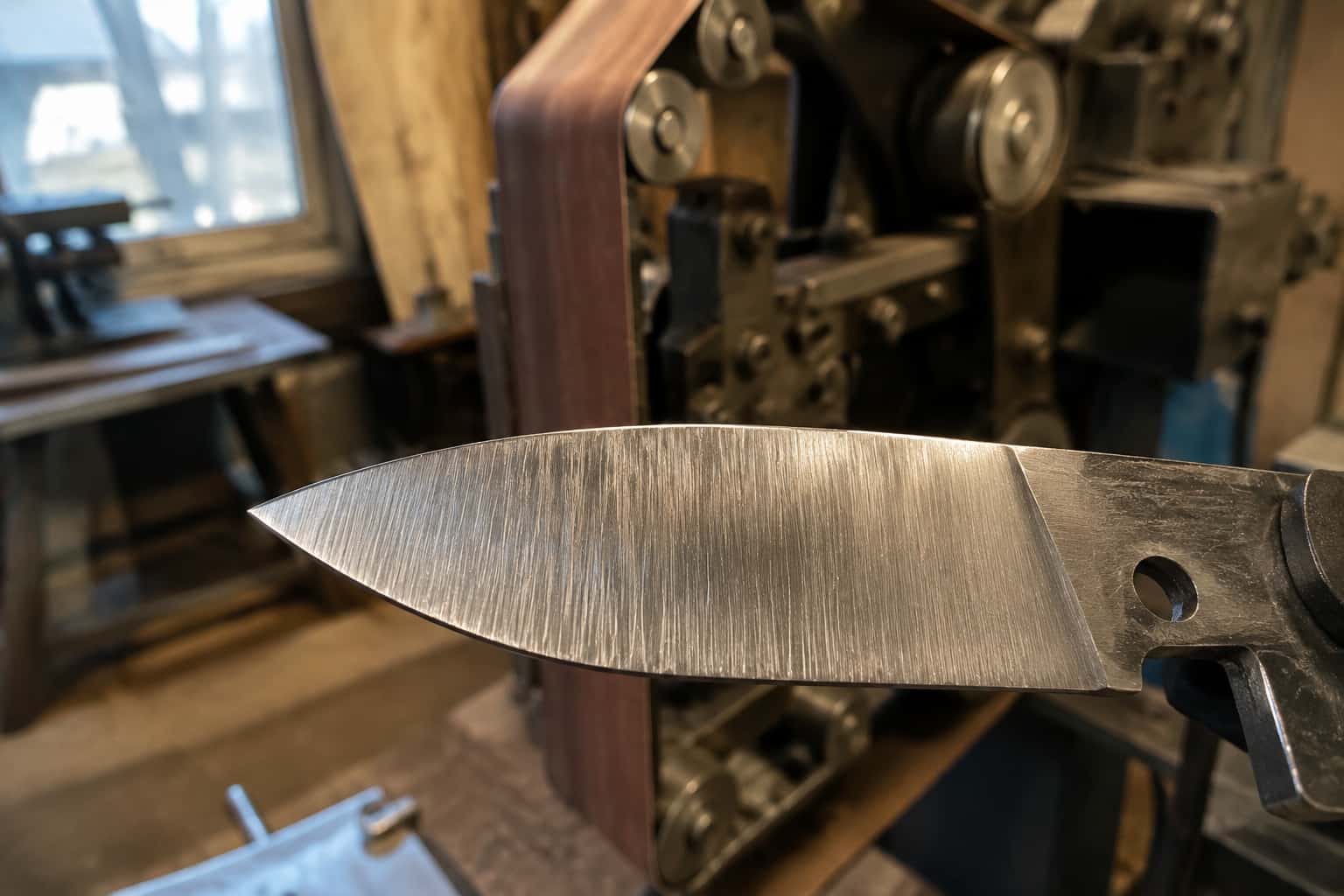
  • Close-up of a knife blank with parallel grind lines across its bevel, belt grinder behind.
    Blade Sharpening6 min read

    Mastering the 400-Grit Hand-Sanded Finish

    A 400-grit hand-sanded finish is the working knifemaker’s standard: clean, even and easy to maintain. Here is how I set it up on the 2×72, the hand-sanding technique, and how to chase out the stray scratch.

  • Nova aluminum 2x72 grinder with flat-platen tool arm and belt fitted, side view, on black with a purple glow
    2x72 Grinder Tips7 min read

    Build a DIY Belt Grinder Dust Water Trap

    Grinding steel throws sparks, grit and fine dust at your face and floor. A water trap bucket under the belt catches most of it for a few dollars. Here is how I build one and where it mounts.

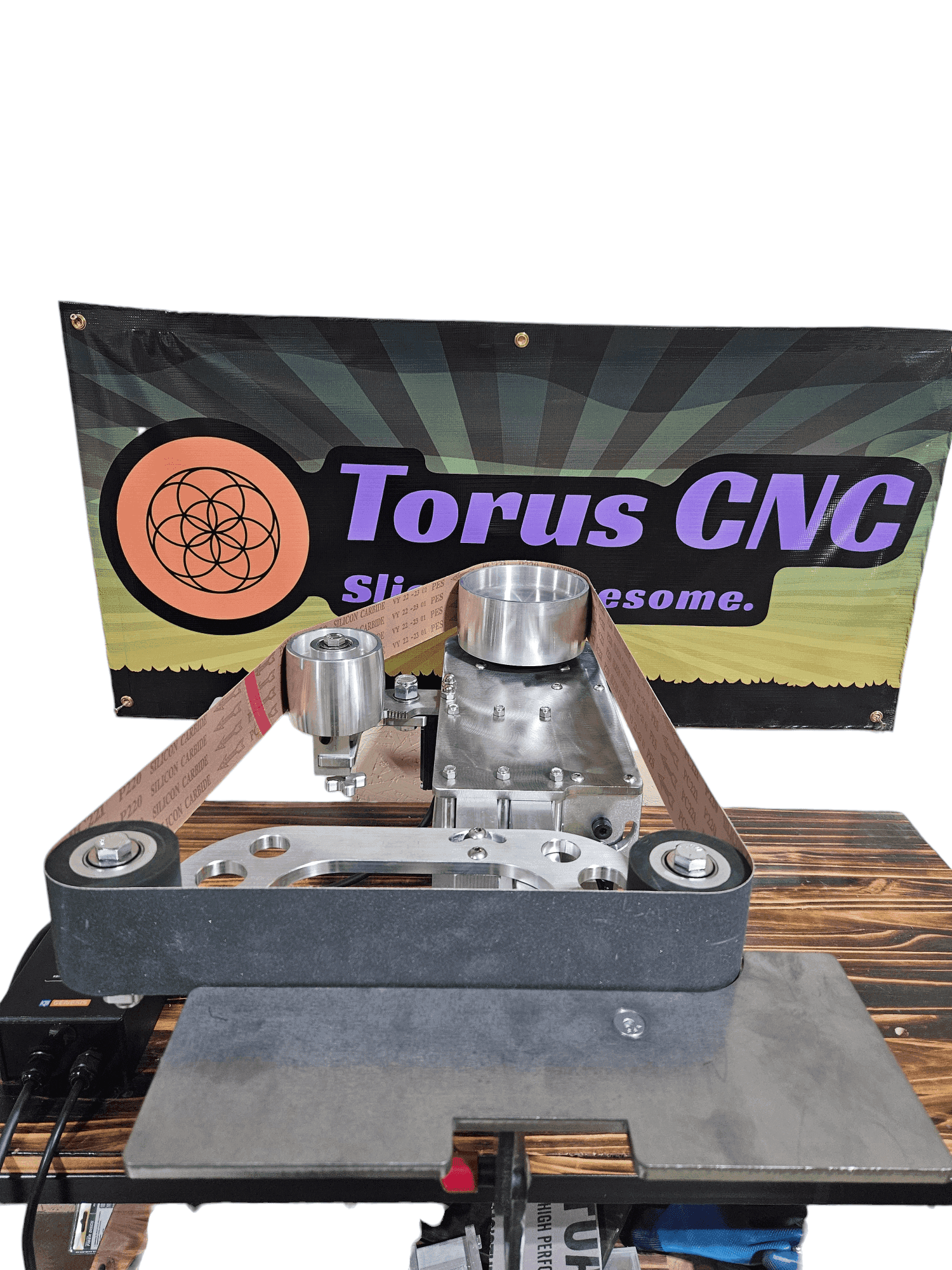
  • Front-on photo of a Torus CNC 2x72 belt grinder with a P220 silicon carbide belt installed, shop banner behind it
    2x72 Grinder Tips7 min read

    Mastering VFD Speed Control for Various Blade Steels

    Carbon steel, stainless, tool steel and damascus all grind differently, and a VFD lets you match belt speed to each. Here is how I set speed by steel on the 2×72, and why thin stainless wants slow.

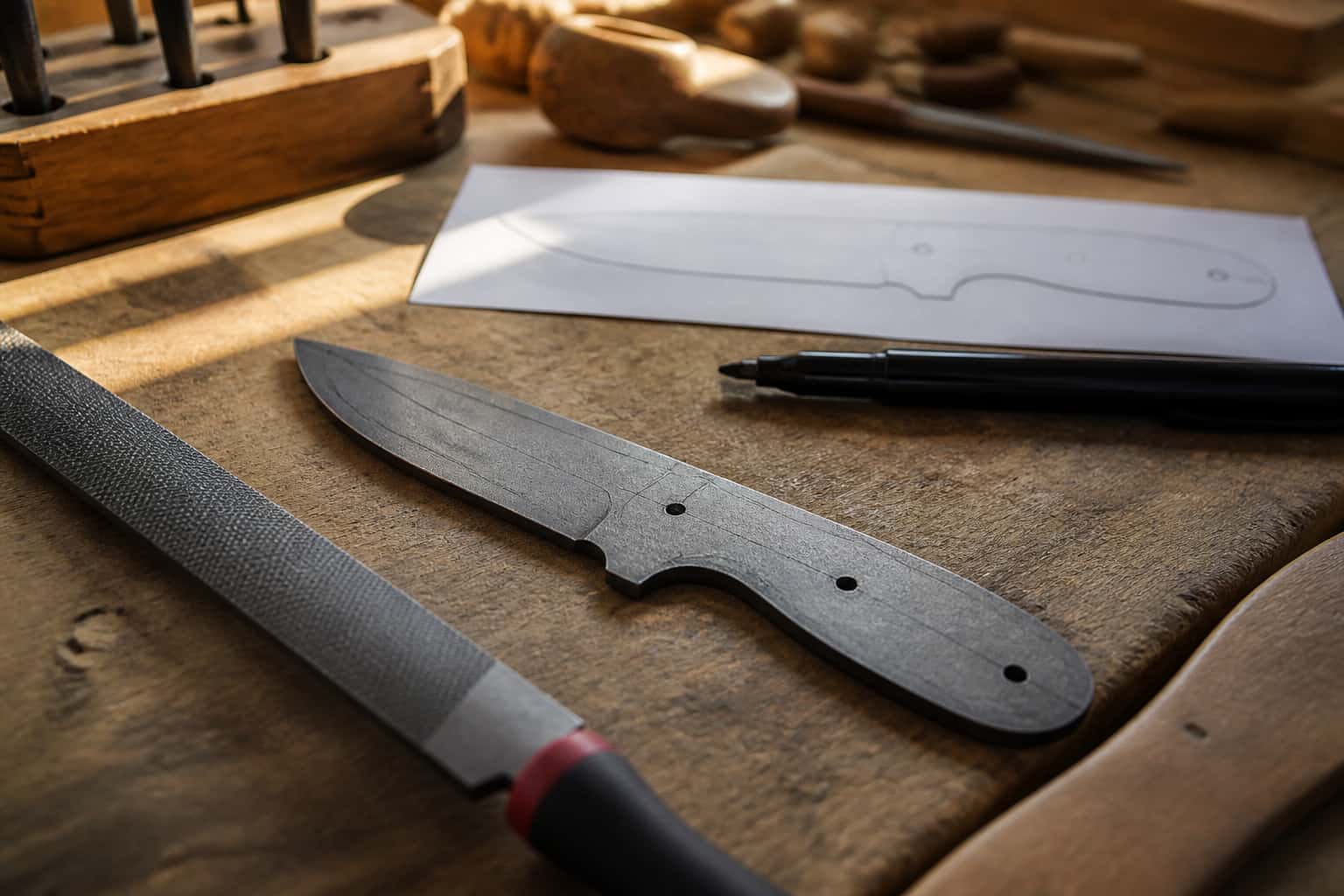
  • Beginner knife blank with scribed layout lines beside a file, marker, and paper template on a bench
    Blade Sharpening7 min read

    Crafting the Perfect Edge: One Blade, One Grinder Workflow

    Every blade I make follows the same path on one 2×72: profile, bevel, heat treat, finish, sharpen. Here is the one blade, one grinder workflow, the belt order, and the checks that keep each edge as good as the last.

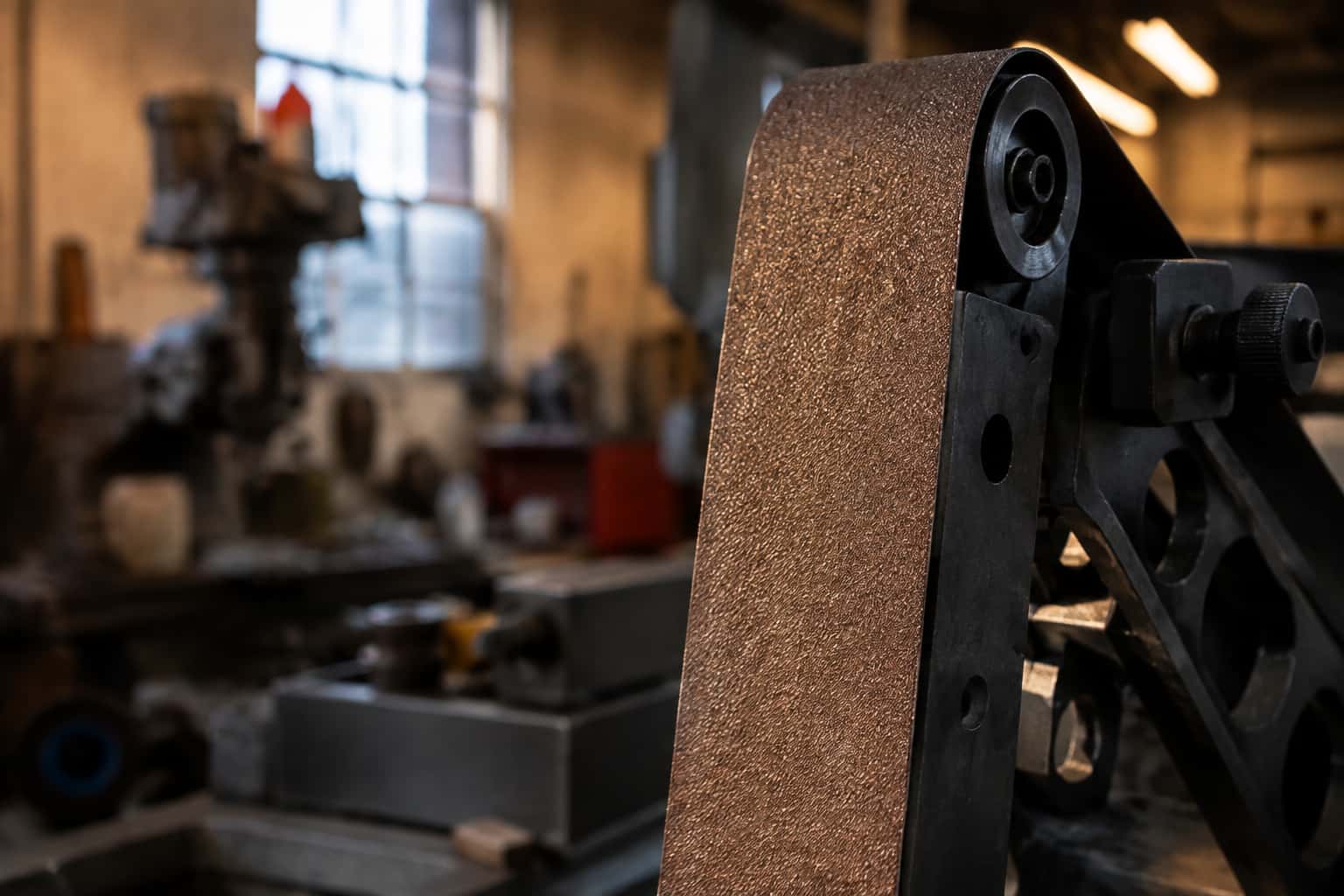
  • Close-up of coarse abrasive grains on a brown sanding belt wrapped around a black wheel.
    2x72 Grinder Tips6 min read

    Selecting the Perfect Grit for Knife Profiling on a 2×72

    Profiling is where the belt earns its money, and grit is the whole decision. Here is which grit I profile with on the 2×72, why fresh 36 to 60 ceramic beats a tired 80, and when to step up.

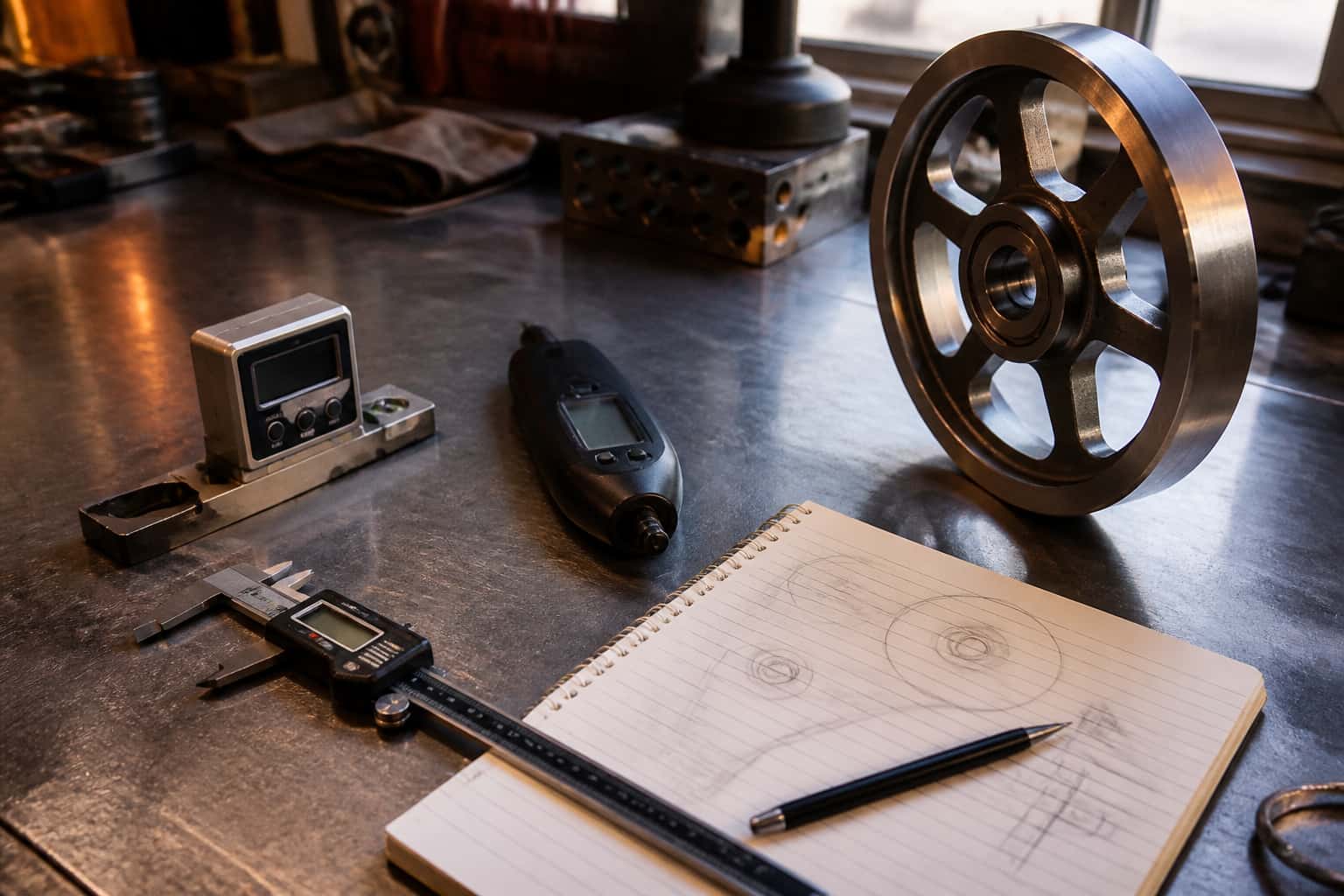
  • Digital calipers, angle gauge, tachometer, and a metal wheel beside a sketched notepad.
    Blade Sharpening6 min read

    Mastering Knife Edge Thinness: Avoiding Burn‑Through

    Thin cuts better, right up until the edge turns blue. Here is how I take a knife edge thin without burn-through: where to stop before heat treat, what changes at 220 grit, how I check thickness, how often I dip.

Built in Sterling

The machines behind these notes

I machine the parts, hand-assemble, track and test each grinder before it ships. Most orders leave in seven to ten business days from time of order.

  • Nebula 2x72 grinder, front three-quarter view: aluminum arm, black plate, Safety Rules label, on black with a purple glow

    Nebula 2×72 Steel Belt Grinder

    My heaviest 2x72: a 3/8-inch steel chassis with machined dual-axis tracking. Bolt it down and it stays put.

    Starts at$1,295View
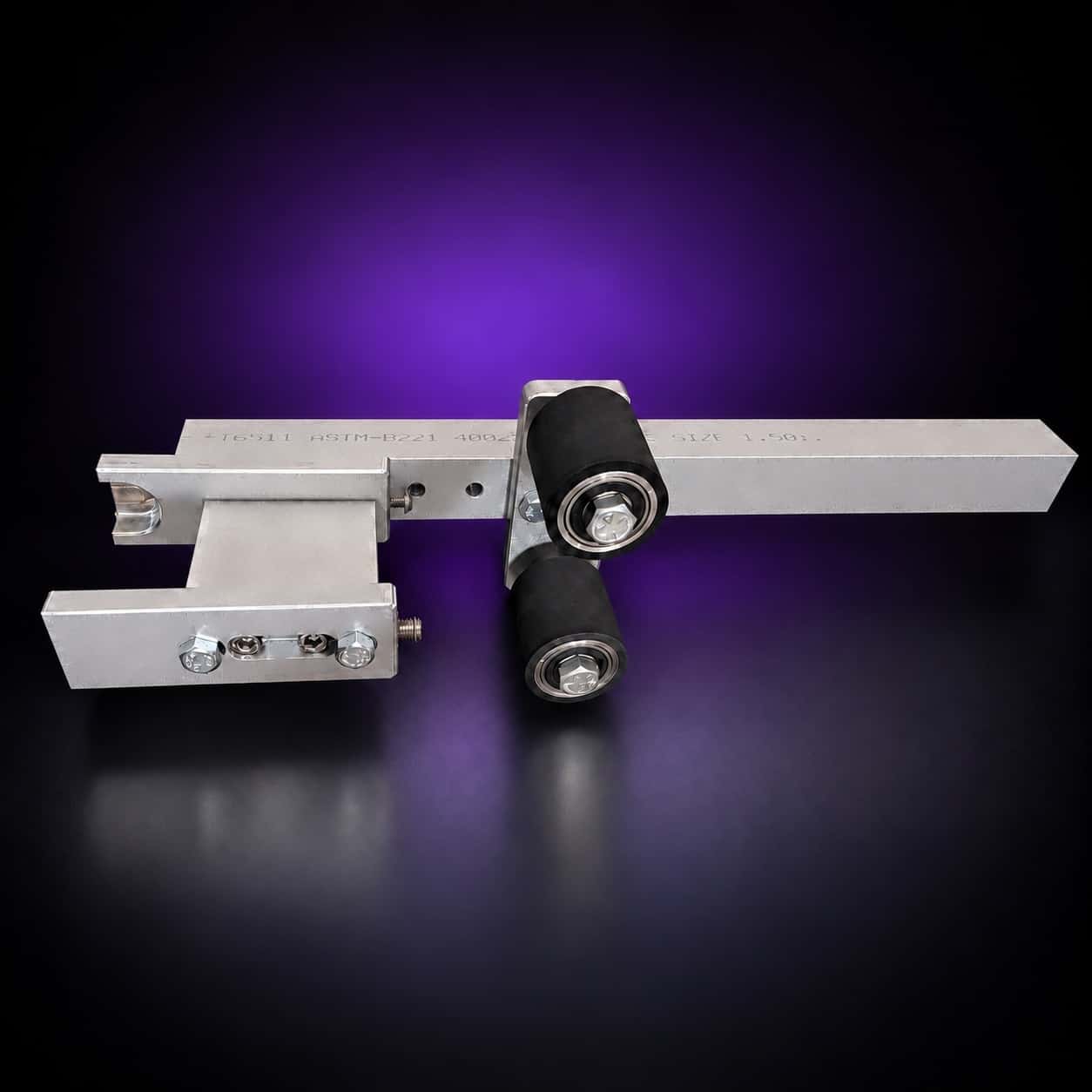
  • Small wheel attachment from above: holder fork, engraved aluminum arm and two rubber wheels, on black with a purple glow

    Small Wheel Attachment with 1.5″ Aluminum Tooling Arm

    Reaches the choils, finger grooves and inside curves a flat platen never will. Wheels from 1/2 to 1.5 inches.

    Starts at$289View
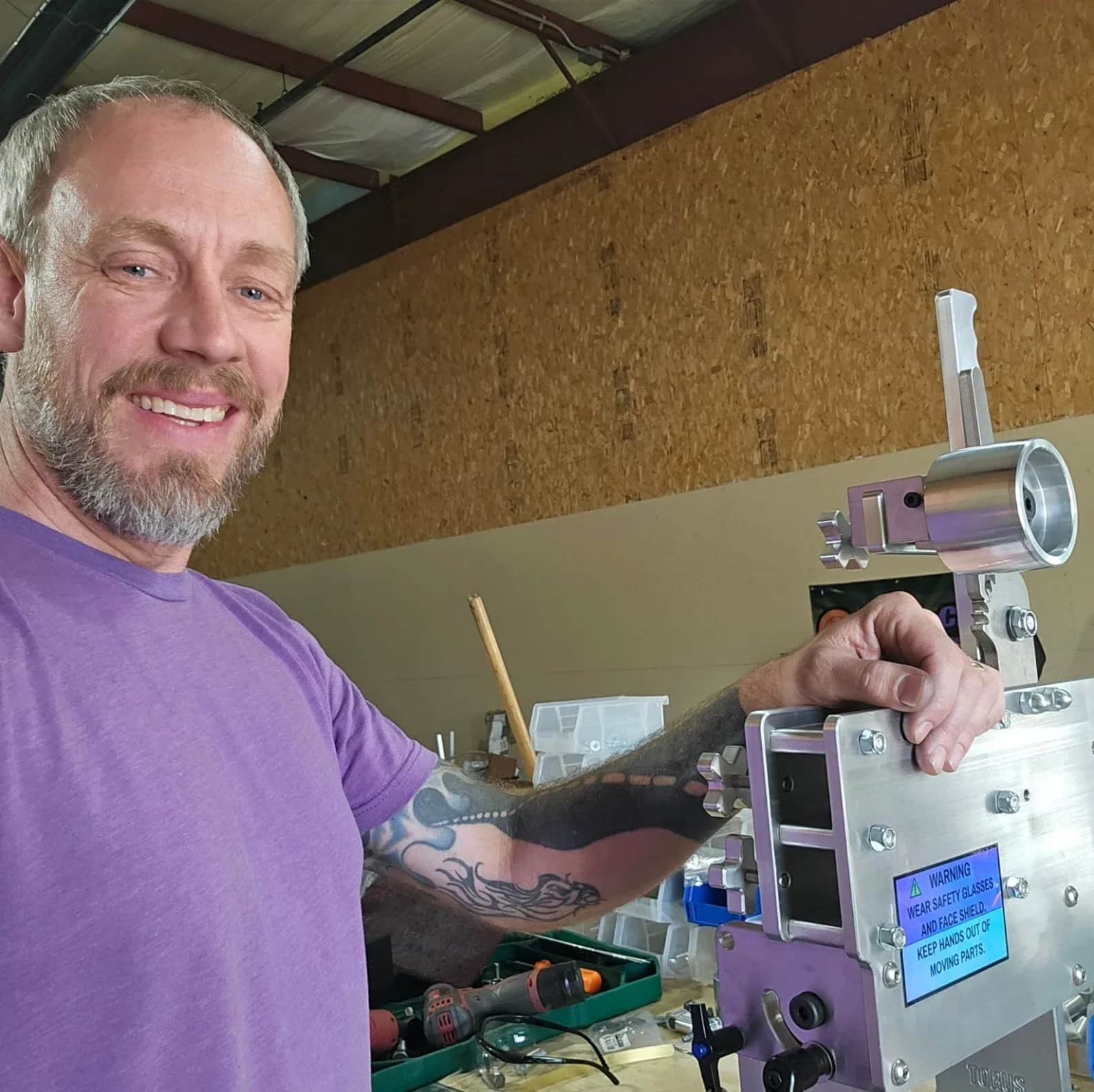
Rich Linville in the Torus CNC shop with a finished 2x72 belt grinder

Built to order

Tell me what you are building

I answer my own email. Tell me the work you do and which grinder you are considering.