Perfecting Belt Tension for Bevels
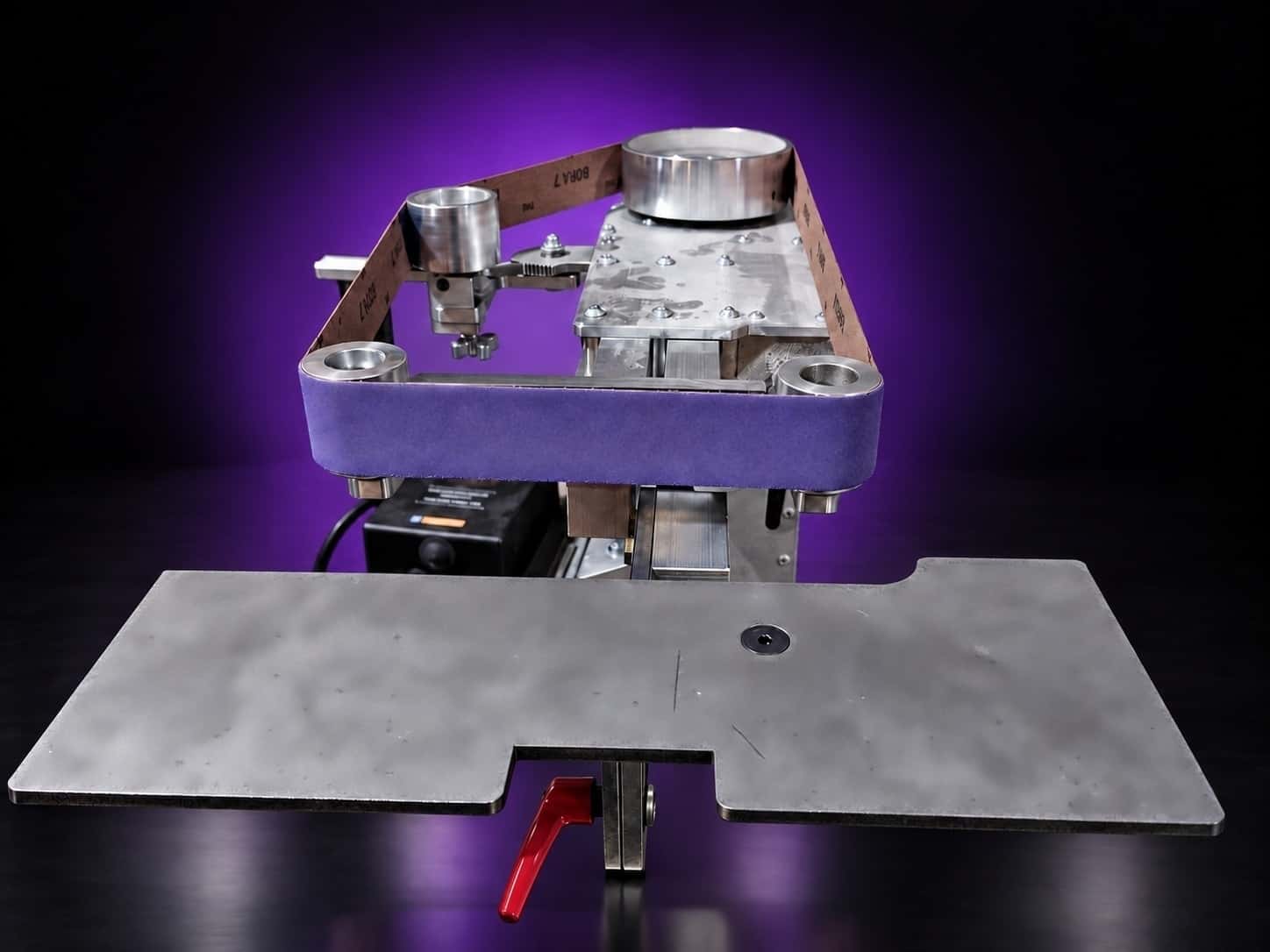
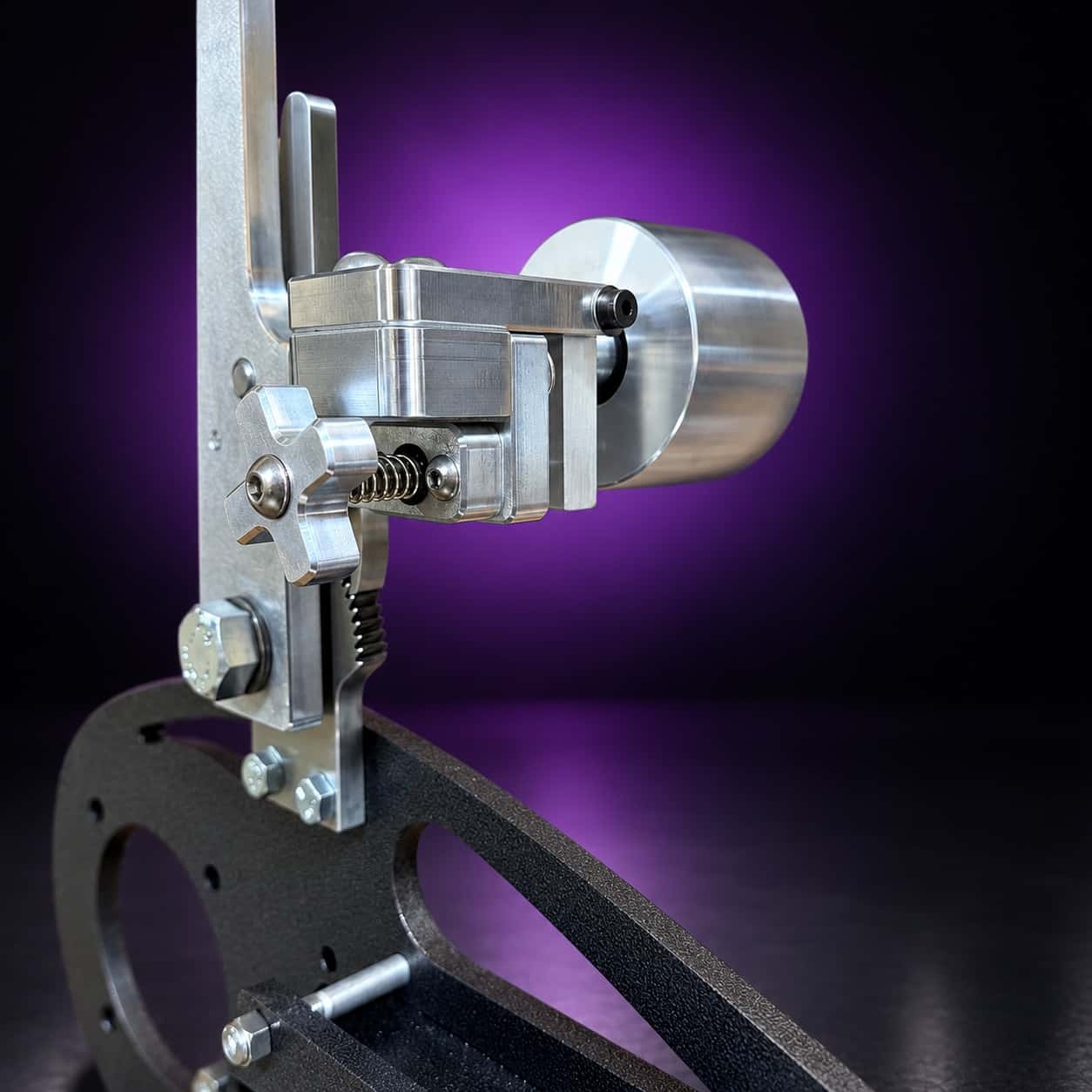
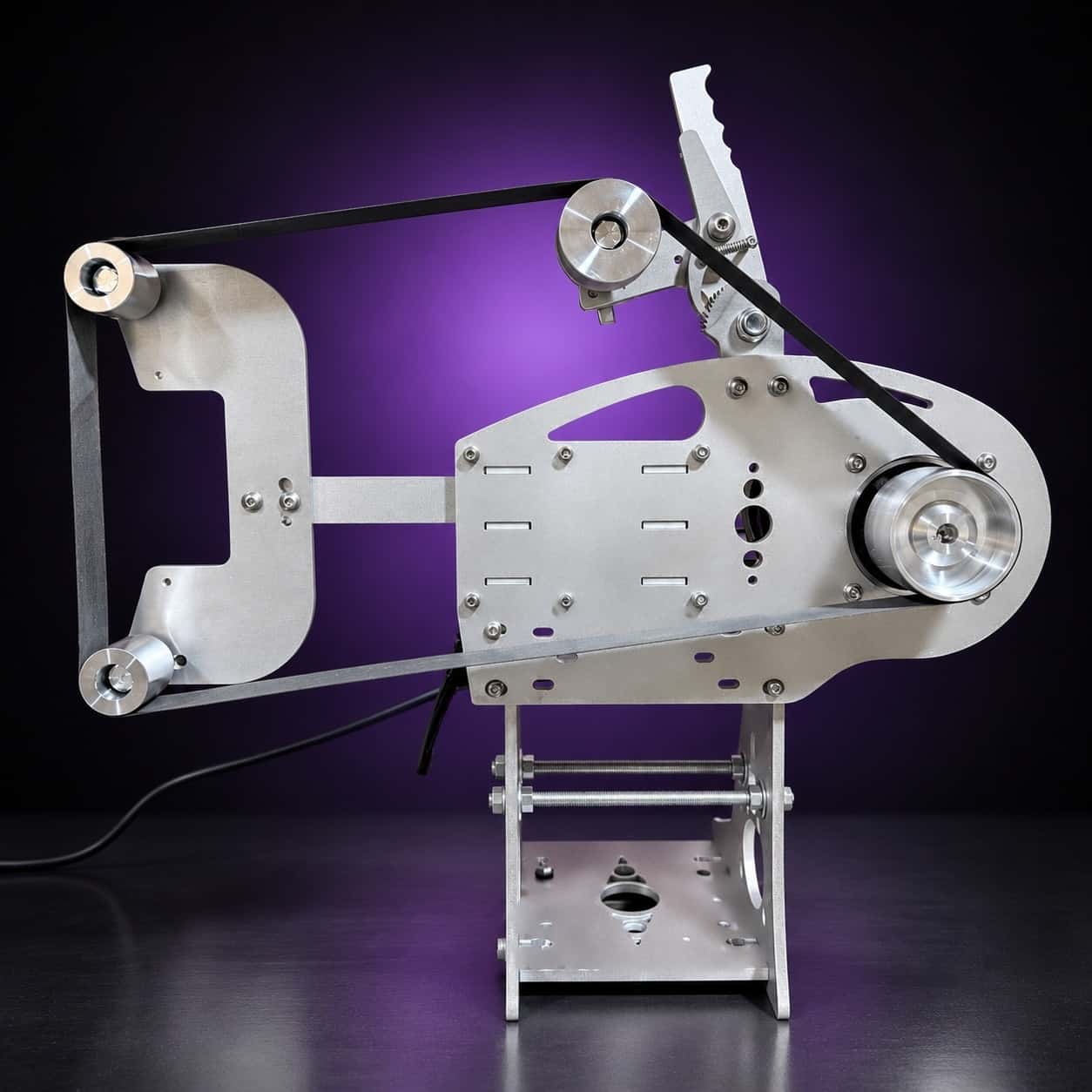
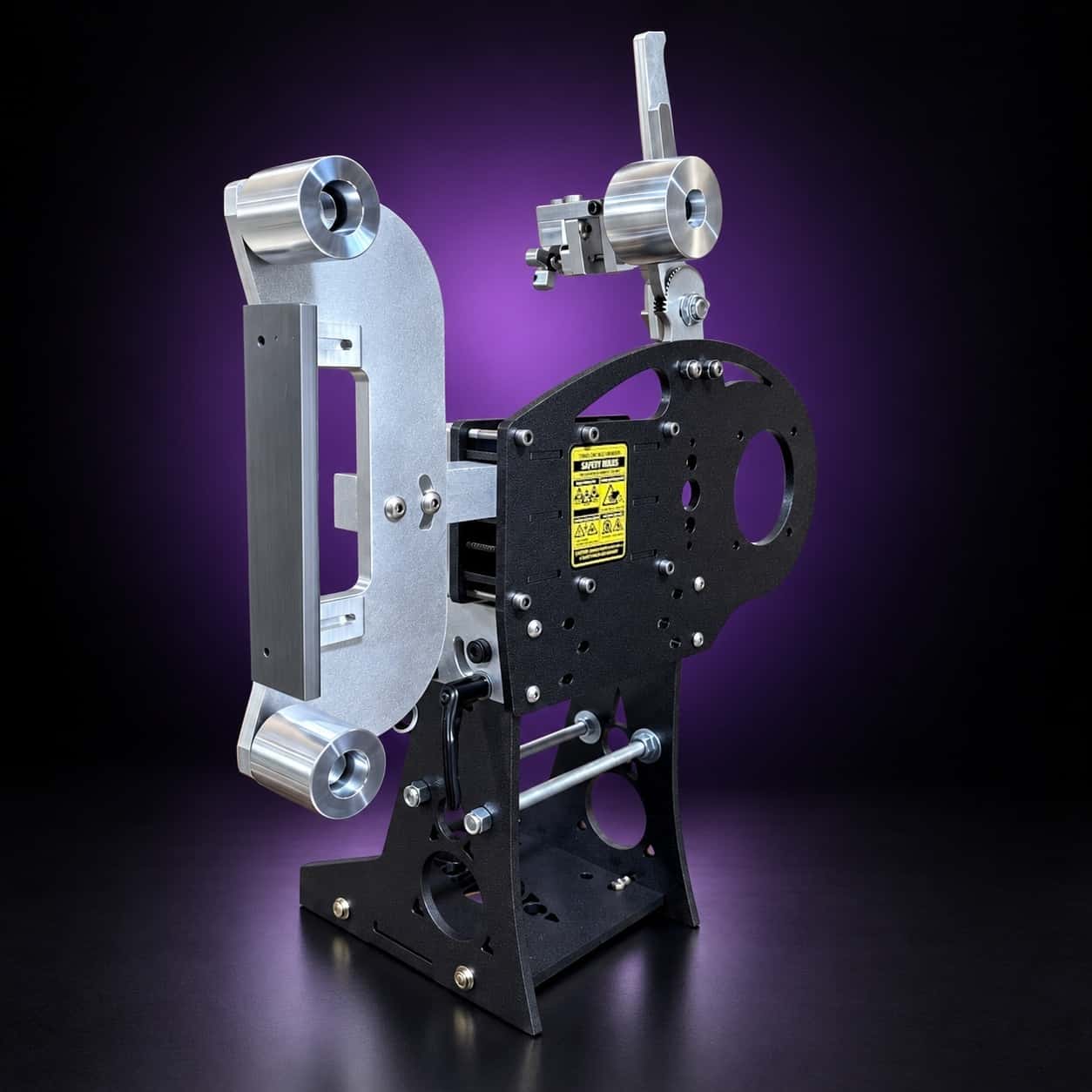
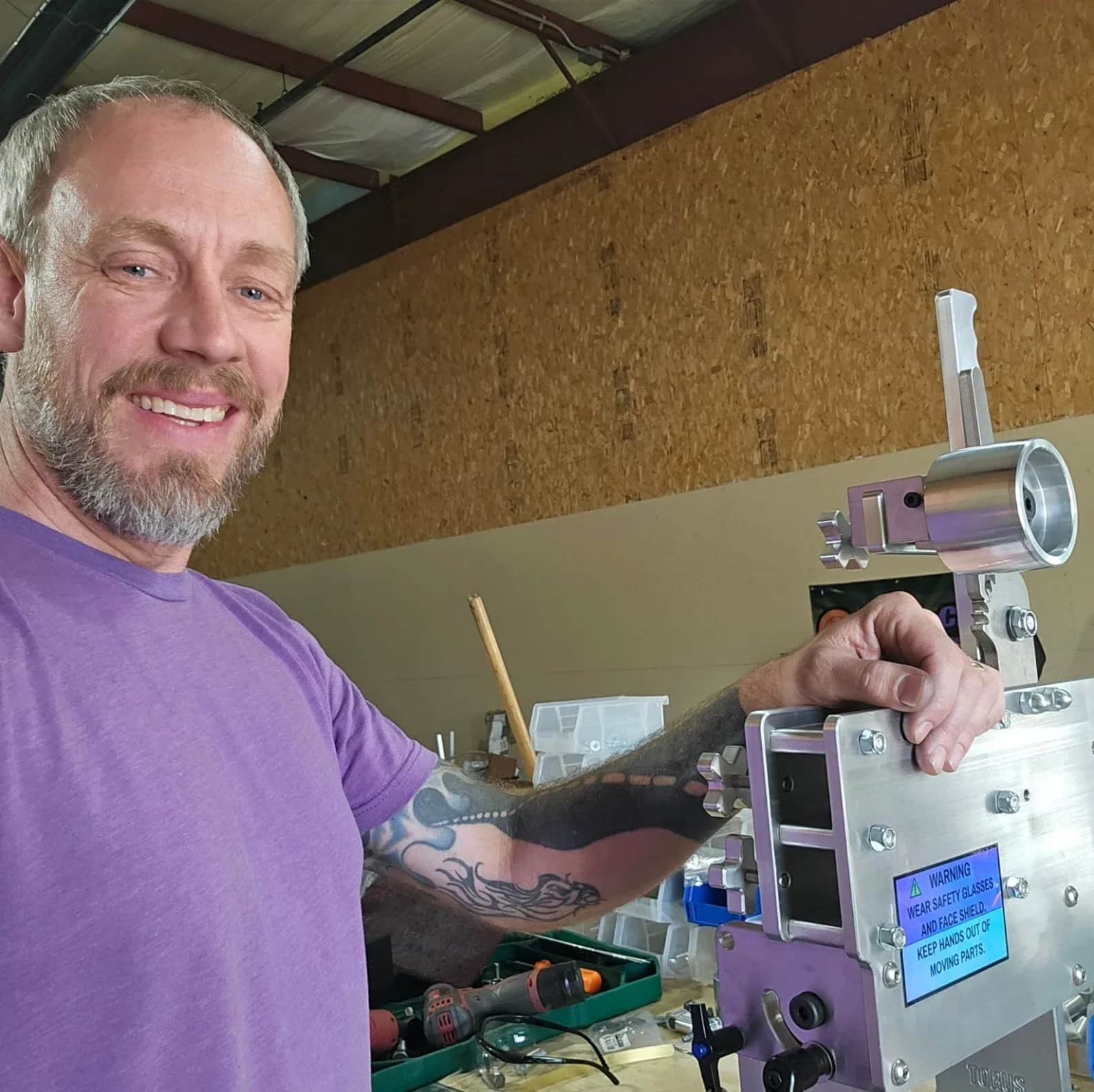
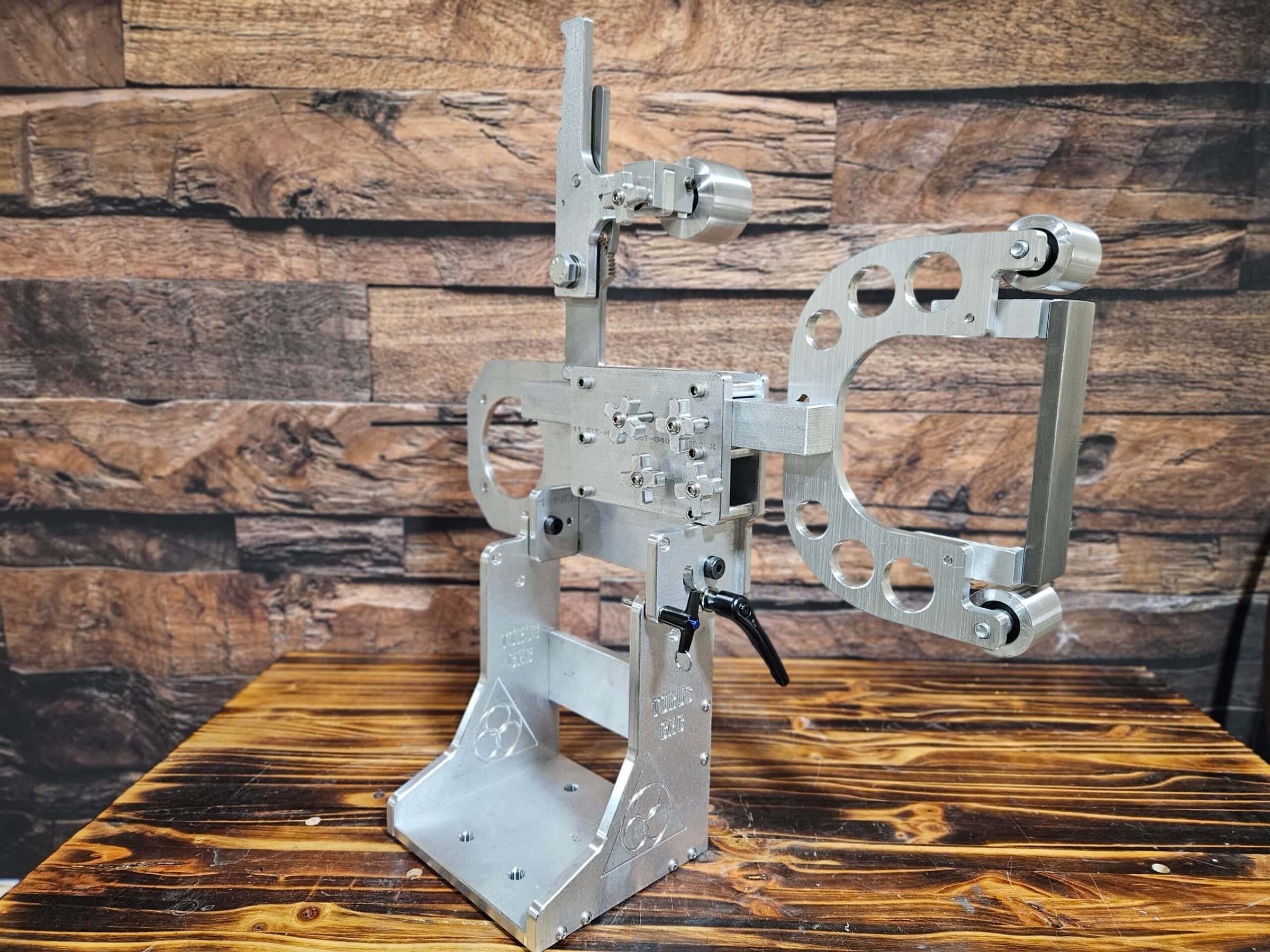
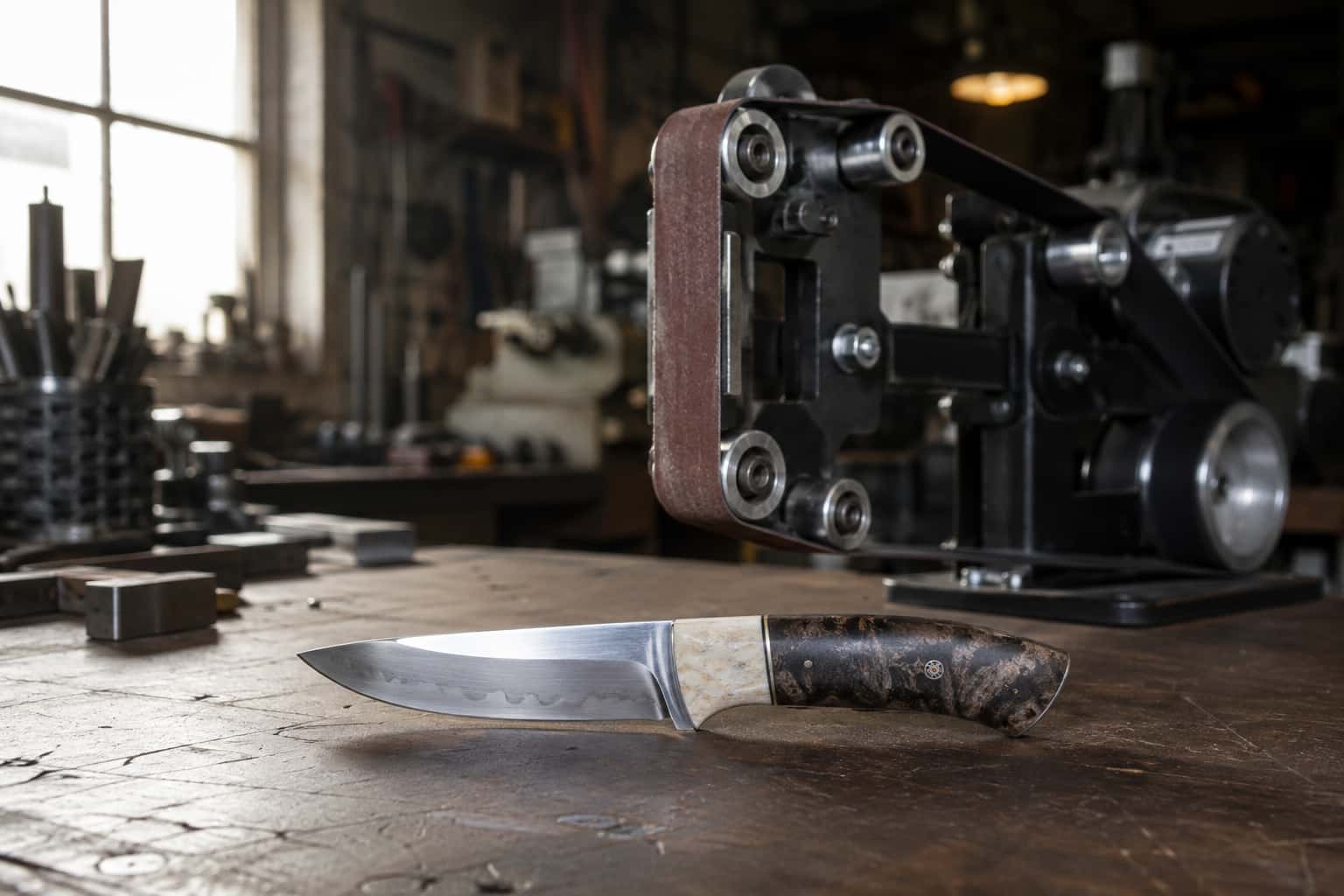
Belt tension is the setting nobody teaches. Too loose and the belt flutters and rounds your bevel; too tight and it eats wheels and bearings. Here is how I set tension on the 2×72, and why a ratchet holds it.
Blog category
Getting more from every belt, every bar of steel and every kilowatt: efficiency in the shop, plus why aluminum is the low-impact material for a grinder.
9 articles · written in Sterling, Illinois
9 articles

Belt tension is the setting nobody teaches. Too loose and the belt flutters and rounds your bevel; too tight and it eats wheels and bearings. Here is how I set tension on the 2×72, and why a ratchet holds it.
Steel dust and sparks do not belong in your lungs or on your floor. Here is how I built dust collection for my grinder station: hood placement, sizing the collector, a cyclone separator, fine filtration, spark control.

A twig handle has bark, knots and no flat faces, and it burns the second you lean on it. Here is how I shape irregular natural handles on the 2×72: sharp belts, slack belt and small wheel work, light pressure.

Grind too much before heat treat and the edge warps in the quench. Grind too little and you spend hours on hardened steel. Here are the pros and cons, and the order I use on the 2×72 for every blade.

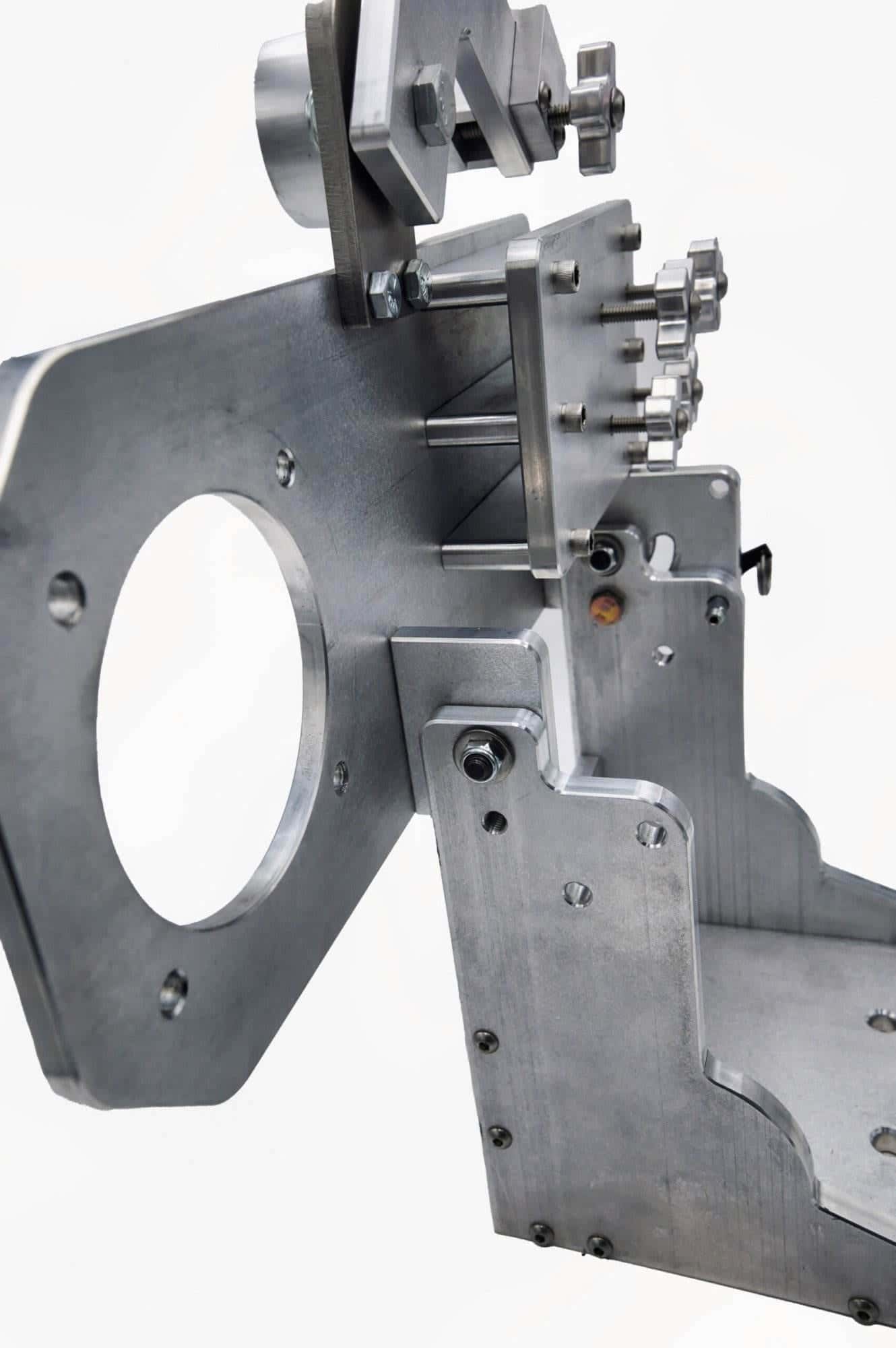
I build 2×72 grinders in both 6061 aluminum and 3/8-inch steel, so I have no side to pick. Here is how the two wear over years in a knife shop: rust, flex, weight, cost, and which belongs on your bench.
Belts, electricity and wasted steel are the real cost of running a 2×72. Here is how I stretch belt life, waste less bar stock, run the motor smarter with a VFD, and keep the grinder maintained so it costs less.

Knife shops are humid, dusty and full of quench water. Here is why 6061 aluminum shrugs off that environment, how it forms its own protective oxide, and what it means for how long your grinder stays tight and true.

A grinder you are not maintaining is a grinder you are using. Here is why I build the Nova and Classic from 6061 aluminum: corrosion resistance, less weight on the bench, and adjustments that stay put between sessions.

Aluminum recycles forever, resists corrosion, needs no paint, and ships lighter. Here is why the material I build the Nova from is also the lower-impact choice for a shop, and what I do with the chips.
Built in Sterling
I machine the parts, hand-assemble, track and test each grinder before it ships. Most orders leave in seven to ten business days from time of order.

Fiber-laser-cut 6061 aluminum on the 9x12-inch base. Easier to tilt and move, and corrosion resistant.

My heaviest 2x72: a 3/8-inch steel chassis with machined dual-axis tracking. Bolt it down and it stays put.

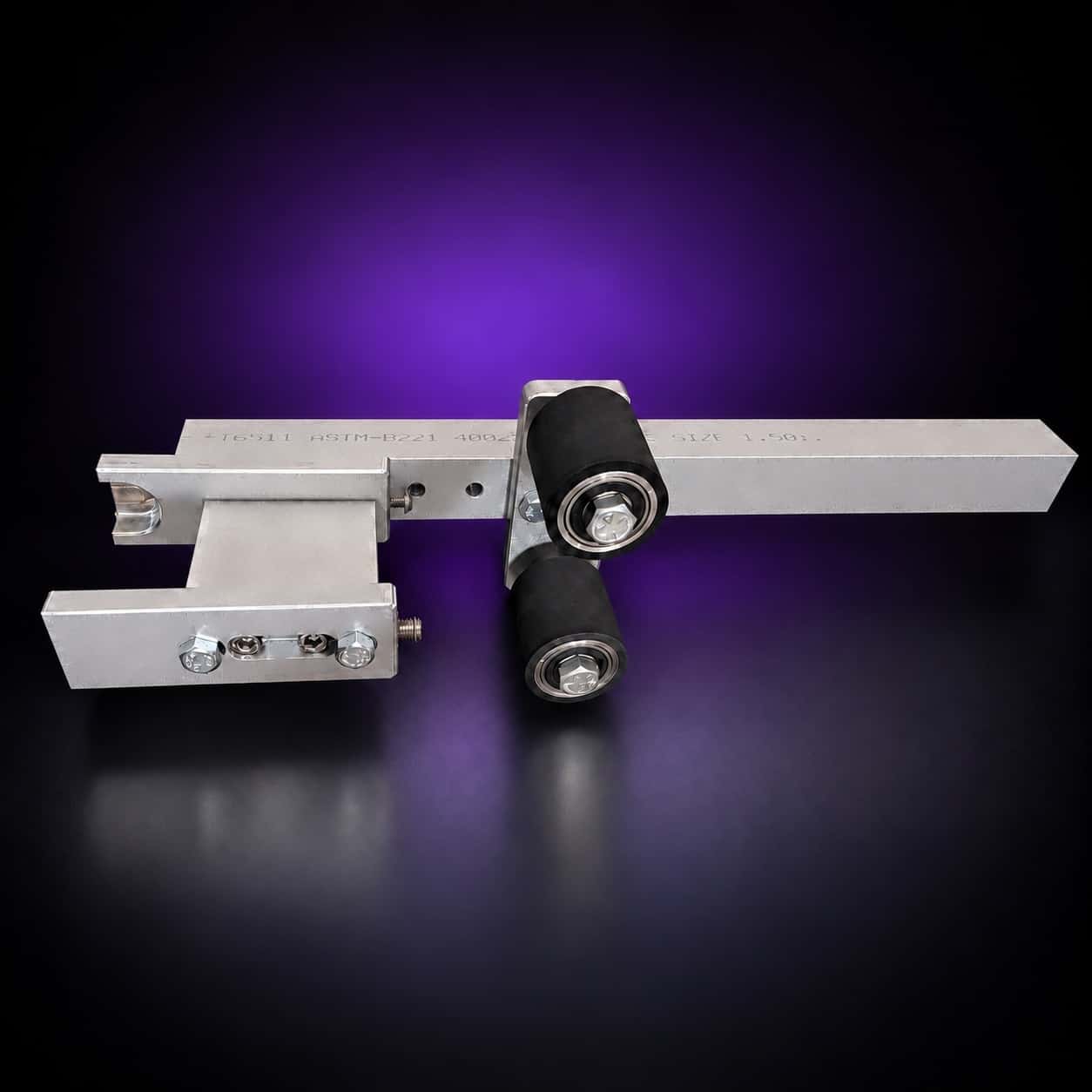
Reaches the choils, finger grooves and inside curves a flat platen never will. Wheels from 1/2 to 1.5 inches.

Built to order
I answer my own email. Tell me the work you do and which grinder you are considering.