| Toughness | 2/5Through-hardened W2 sits in 1095 territory — high carbon, moderate at best, and not a chopper steel. The honest asterisk: a clay-quenched W2 blade behaves far tougher than its number, because the soft pearlite spine bends where a through-hardened blade breaks. Rate the steel a 2; rate a well-made hamon blade higher. | 2/5Middle-of-the-road toughness for a simple carbon steel, and generally less tough than higher-manganese steels like 1084 at a comparable hardness. Its high carbon content trades some toughness for hardness potential and edge sharpness. | Effectively a tie through-hardened — both are high-carbon, moderate-at-best steels you should not build a chopper from. Differentially hardened, both transform: the soft spine does the surviving. W2's finer grain gives it a slight real-world nod at equal hardness. |
|---|
| Edge retention | 2/51095-class wear resistance — fine cementite, no meaningful alloy carbide, so it sharpens fast and dulls faster than alloyed steels. The vanadium's fine grain means the apex it takes is exceptionally keen, which is most of why razor and kitchen smiths tolerate the maintenance. | 2/5Good for a simple carbon steel thanks to its high carbon content and the hardness it can reach (58-62+ HRC), taking a very keen edge, though it lacks the wear-resistant carbides of alloy tool steels. | A tie in wear resistance — fine cementite and no meaningful alloy carbide in either. W2's vanadium-pinned grain takes a marginally keener apex, which razor makers notice and most knife users never will. |
|---|
| Corrosion resistance | 1/5None. W2 rusts as eagerly as 1095 — flash rust on a fresh grind, spots overnight in a humid shop. Oil it, dry it, and remember the etch that reveals a hamon is controlled corrosion: the same reactivity that shows the line will eat the blade if neglected. | 1/5No chromium and no corrosion resistance to speak of. Requires regular oiling and drying like any plain carbon steel. | Identical: none. Both flash rust on fresh grinds and both etch eagerly — which is exactly why both show hamons so well. Oil them, dry them, patina them. |
|---|
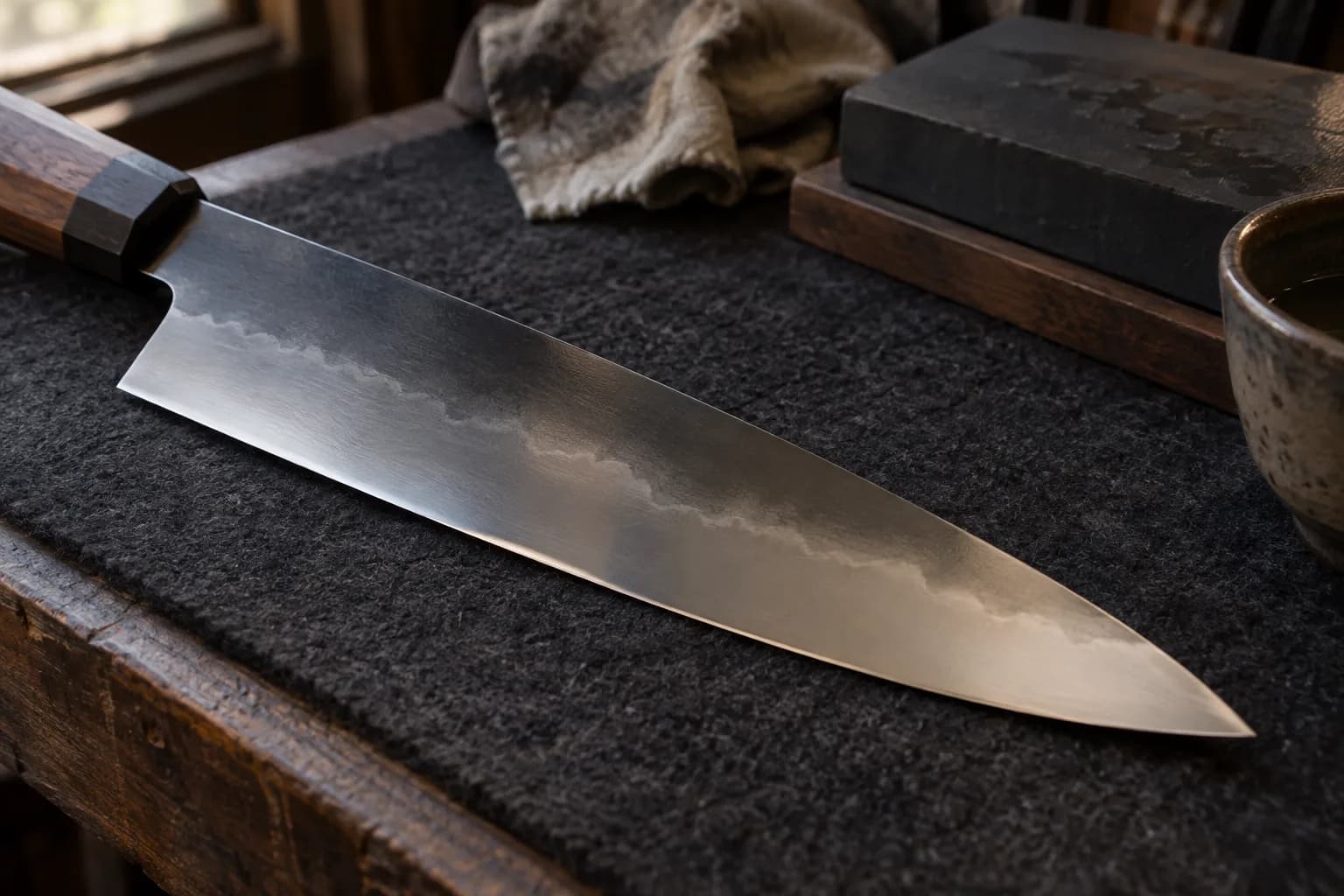
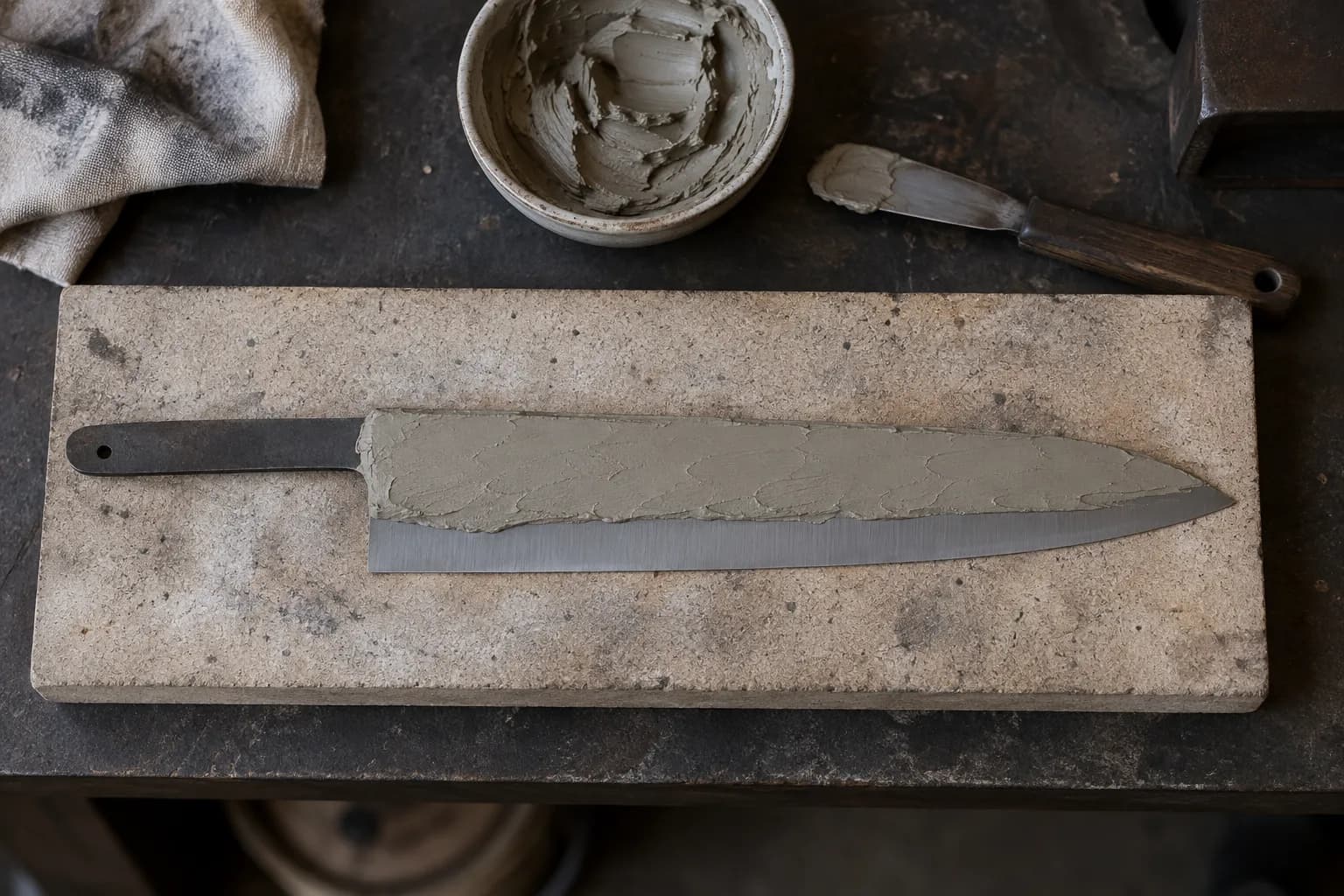
| Heat treat | Normalize 1600°F, cycle down (1475°F, then 1450°F). Austenitize 1425–1475°F — 1450°F typical — short soak. Quench in fast oil (Parks 50 class); water is traditional and dramatic but cracks blades. For a hamon: 1.5mm or less of satanite on the spine before the hardening heat. Temper 2×2h at 350–400°F (60–62 HRC) or 450°F for hard-use blades (58–59). The window is narrow — undershoot and it stays soft, overshoot and the hamon vanishes. | Austenitize between 1475-1550 F. Because 1095 has relatively low manganese and therefore low hardenability, it needs a genuinely fast quench to reach full hardness; water or brine are traditional choices, though many modern makers use a very fast oil (such as Parks 50) to reduce the cracking risk while still hitting the needed cooling rate. This low hardenability is exactly why 1095 has a reputation for being trickier to heat treat consistently than 1084, which has more manganese and hardens more reliably in oil. Temper at 400-700 F depending on desired final hardness, typically yielding around 58-62 HRC for knife use. | The real difference. W2 is shallower hardening — it needs a genuinely fast oil (Parks 50 class) and rewards you with an edge-hardens-spine-does-not quench that makes clay work almost automatic. 1095 sits close enough to hamon duty but its extra manganese blurs the transition. W2's austenitizing window (1425–1475°F) is also narrower and less forgiving of overshoot. |
|---|
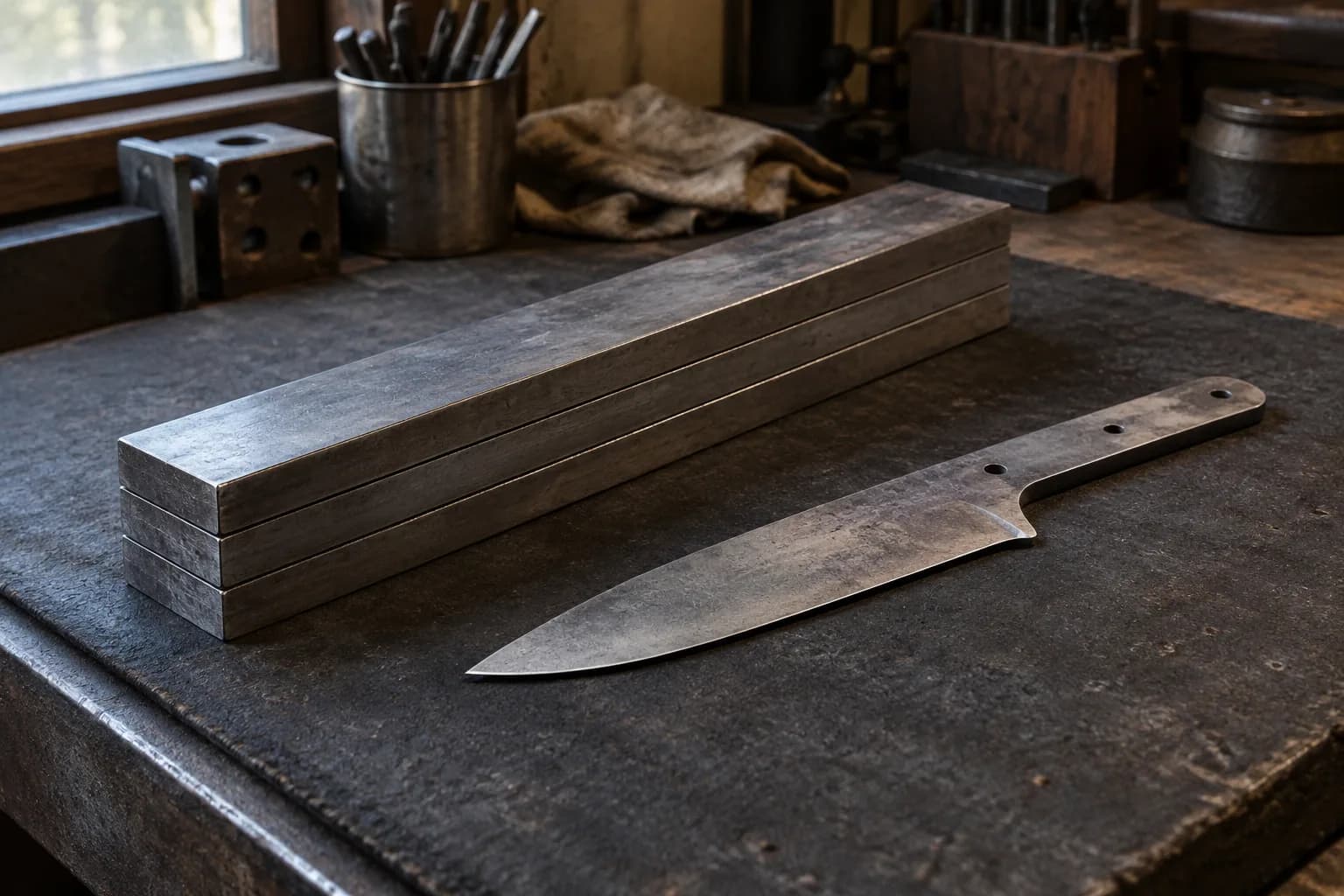
| Grinding | 4/5Annealed W2 files, drills and grinds cooperatively, and it forges beautifully — it moves under the hammer like 1095 with better grain manners. Docked a point only because knife-quality W2 comes and goes from suppliers in rounds and odd flats, so stock prep can involve more forging than a precision-ground steel. | 5/5Very easy to grind, like other simple carbon steels with no hard alloy carbides to fight through. | Both grind like cooperative carbon steels, annealed or hard. 1095 wins on logistics, not on the belt: precision flat stock in every size from every supplier, while knife-grade W2 comes and goes and often arrives as rounds or heavy flats that want forging first. |
|---|