

Abrasives
Grinding and Sharpening 8670: Belt Recommendations & Technique
8670 might be the most cooperative steel a 2×72 ever meets. It arrives thin, grinds clean, tolerates heat-treat improvisation, and sharpens on anything…

Knife steel
Band-saw steel turned knife steel: ~0.70% carbon with a nickel addition that buys elite impact toughness at working hardness, a cheap price per bar, and one of the most forgiving heat treats in the shop. Low wear resistance is the honest tradeoff — this is a chopper's steel, not a slicer's.
Also known as
At a glance
The four meters are relative to the rest of the database. Composition is the published nominal analysis, not a mill certificate for your bar.
Working properties
the same family as industrial band-saw blade steel; near-cousin of L6 without the moly.
Camp knives, choppers, machetes, batoning blades, throwers, first knives, and any hard-use design where a bent edge beats a broken blade. Also a good sacrificial-practice steel that still yields a real knife.
At the bench
Open the property you are worried about. Every note is written for the blade in your hand, not for a spec sheet.
The full reference
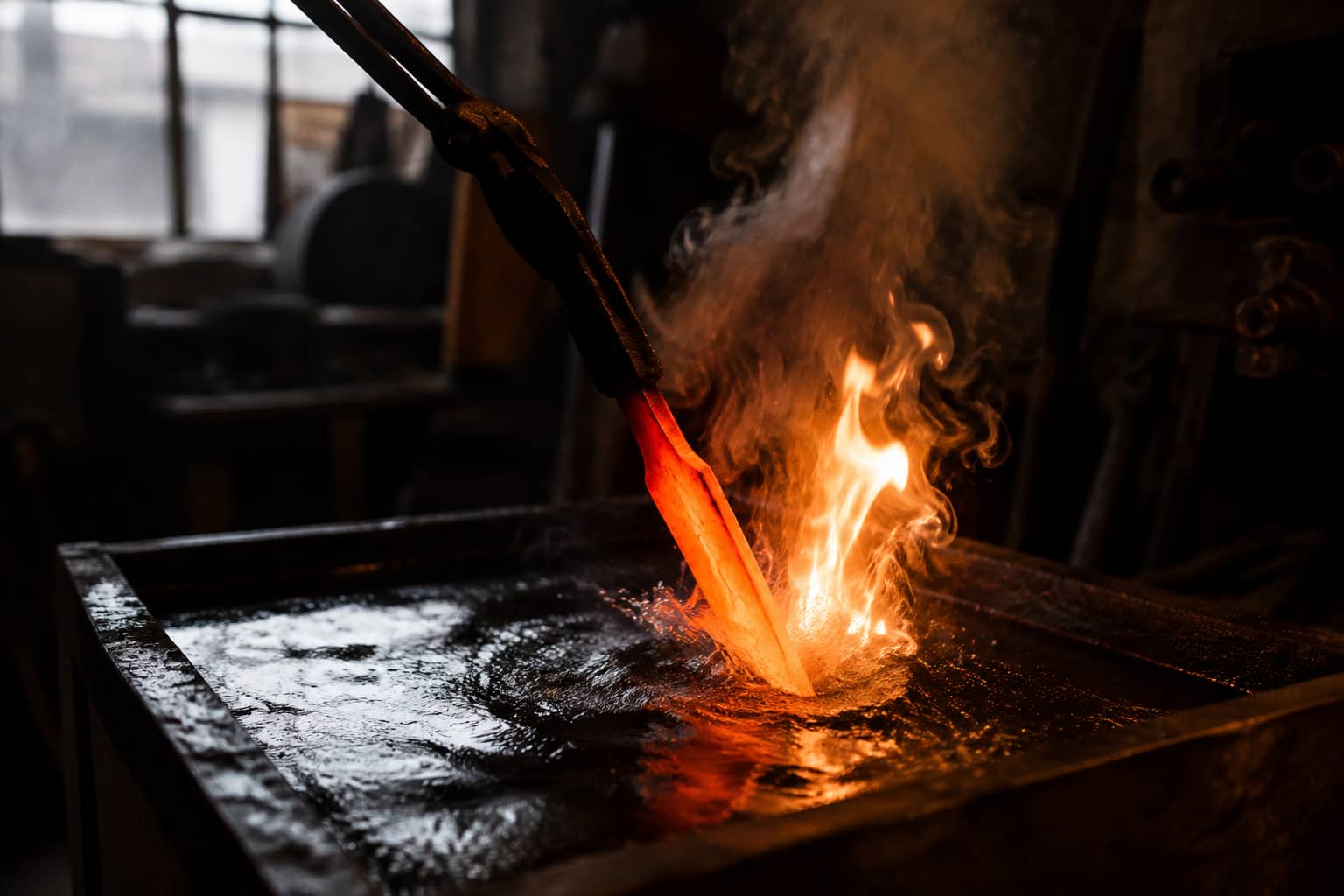
8670 came to knifemaking from industrial band-saw blades, and it never lost the day job’s virtues: it bends before it breaks, it costs less than almost anything else worth forging, and it forgives the kind of heat-treat sins that ruin fussier steels. Its nickel content puts its toughness in the same conversation as 5160 and 15N20, and it does that at a higher working hardness than 5160 usually runs. What it will not do is hold a slicing edge like an alloyed steel — 8670 is the tough, cheap, honest end of the spectrum, and it does not pretend otherwise.
For choppers, camp knives, machetes and first knives — genuinely excellent. Impact toughness testing puts it among the toughest common knife steels at working hardness, matched only by the 5160/15N20 class. For fine slicers it is the wrong tool: with no vanadium carbides its wear resistance is low, and an alloyed steel will out-cut it several times over.
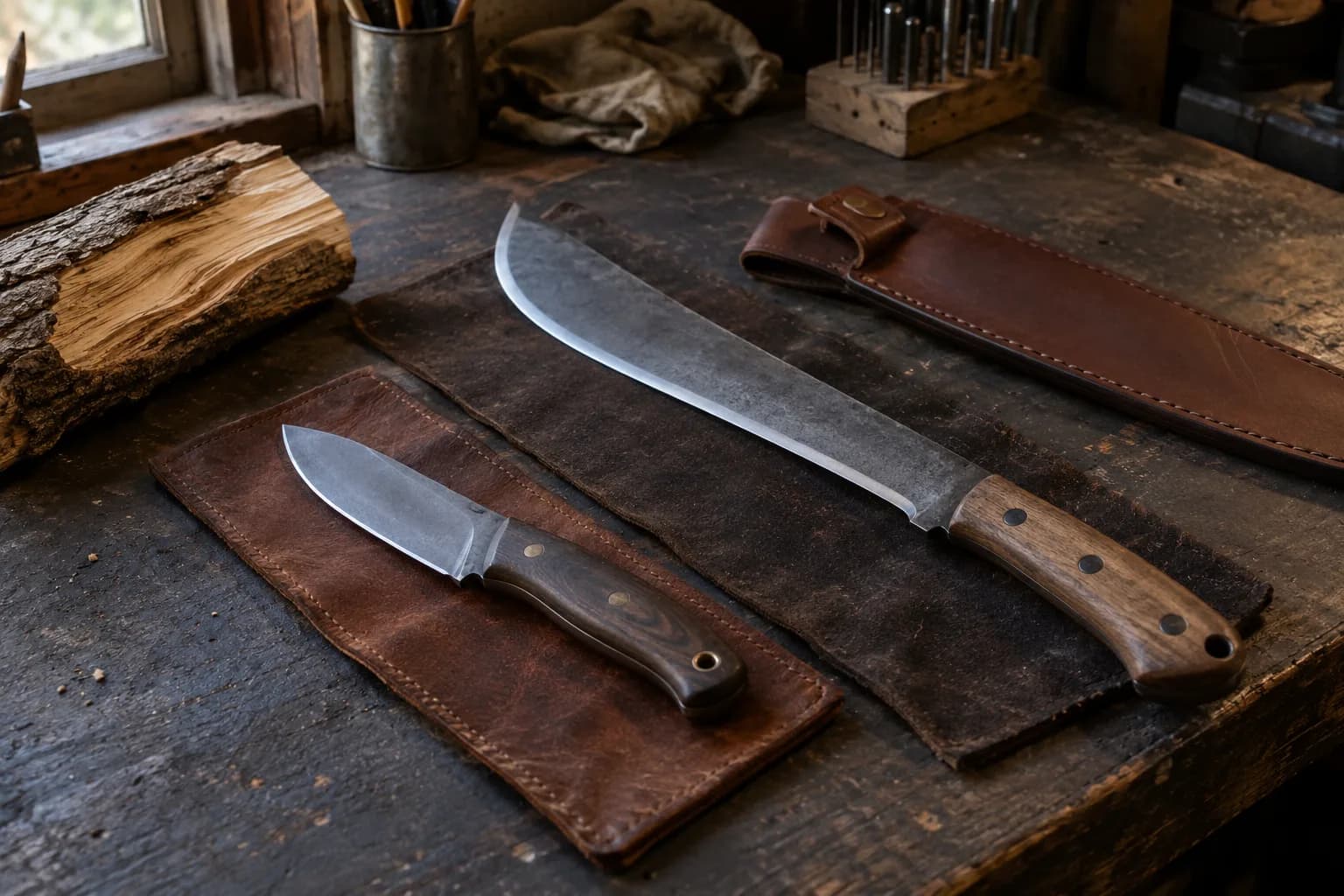
Knife Steel Nerds measured roughly 27 ft-lbs at 59.7 HRC — and around 50 ft-lbs on an earlier batch — which is elite territory; most stainless steels manage single digits. The ~0.85% nickel is doing the work, letting 8670 hold that toughness at a hardness where plainer steels have already gone brittle. Fine grain helps too; see grain structure and refinement.
Austenitize at 1500°F with a 10–15 minute soak — the tested sweet spot; 1475–1550°F all works, but 1450°F costs hardness and 1600°F costs toughness. Quench in Parks 50 or AAA — both produce full hardness. Temper twice at 300–450°F: the tradeoff is linear across that whole range with no embrittlement trough, which makes dialing a target hardness unusually predictable. Around 400°F lands near 58–60 HRC.
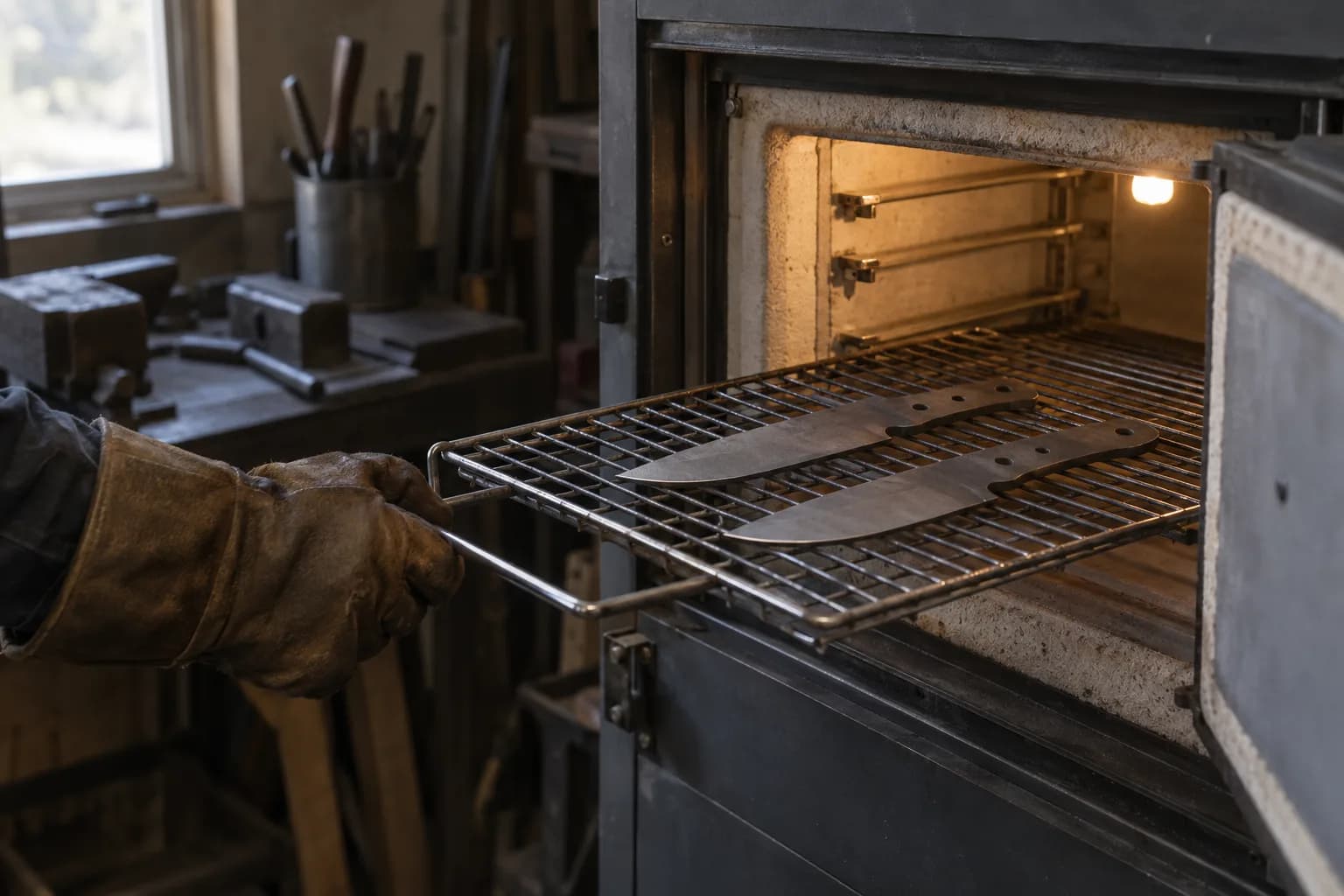
Yes — it is one of the friendliest steels for it. Its nickel and chromium give it enough hardenability that a slight miss on temperature still hardens fine, unlike shallow-hardening steels that punish every degree. Magnet-plus-a-shade works; a kiln just makes it repeatable. Walkthrough in our heat treating guide.
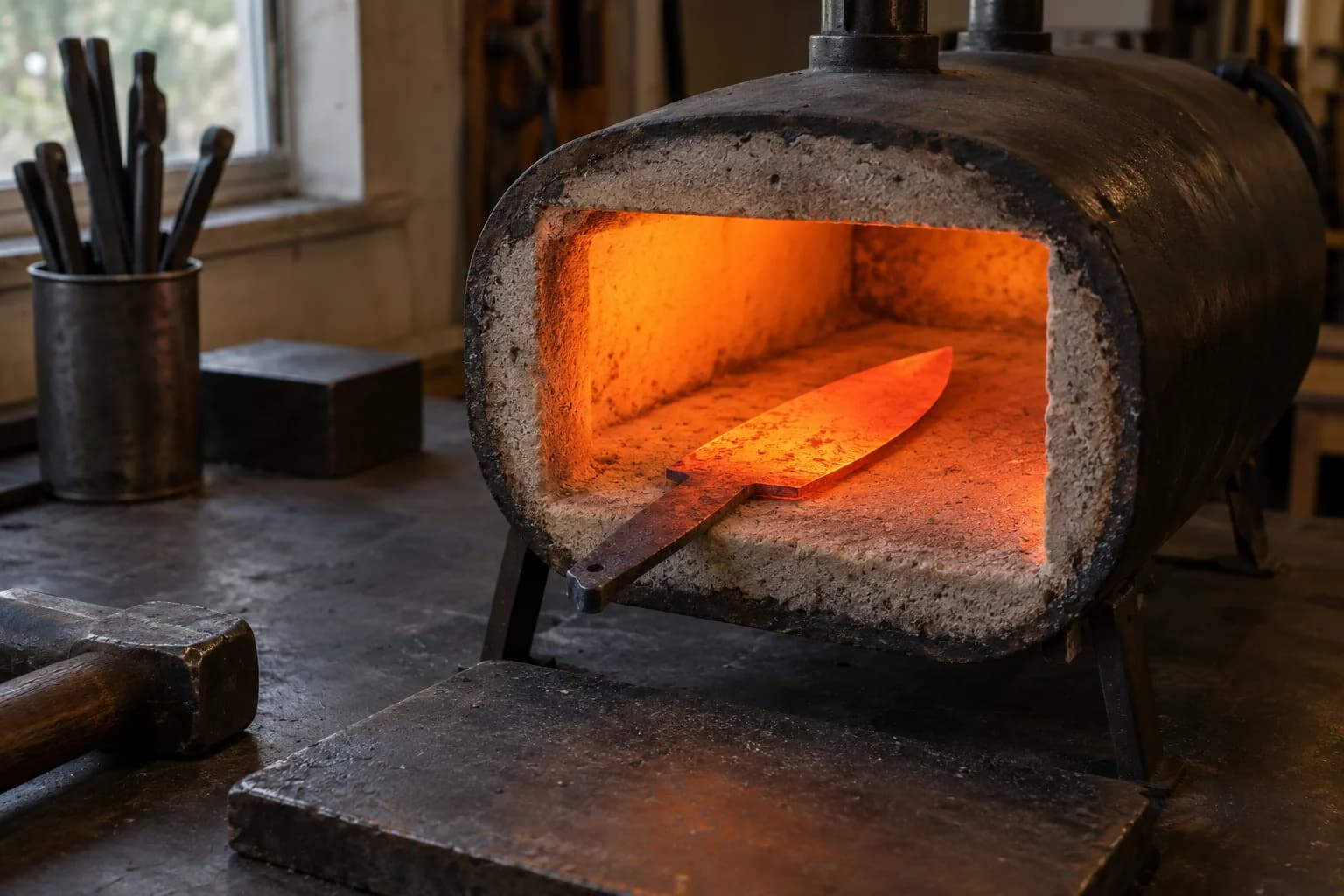
Either succeeds; they fail differently. 1084 is the classic teaching steel and the better damascus layer, while 8670 is tougher at the same hardness and cheaper per bar — and its forgiveness in the quench is comparable. If your first knife is a camp blade that will get batoned, 8670 is the better parent. See our 1084 page for the other side of the argument.
Yes. The nickel is for toughness, not stain resistance — treat it exactly like a carbon steel: oil after use, and let a working patina build.
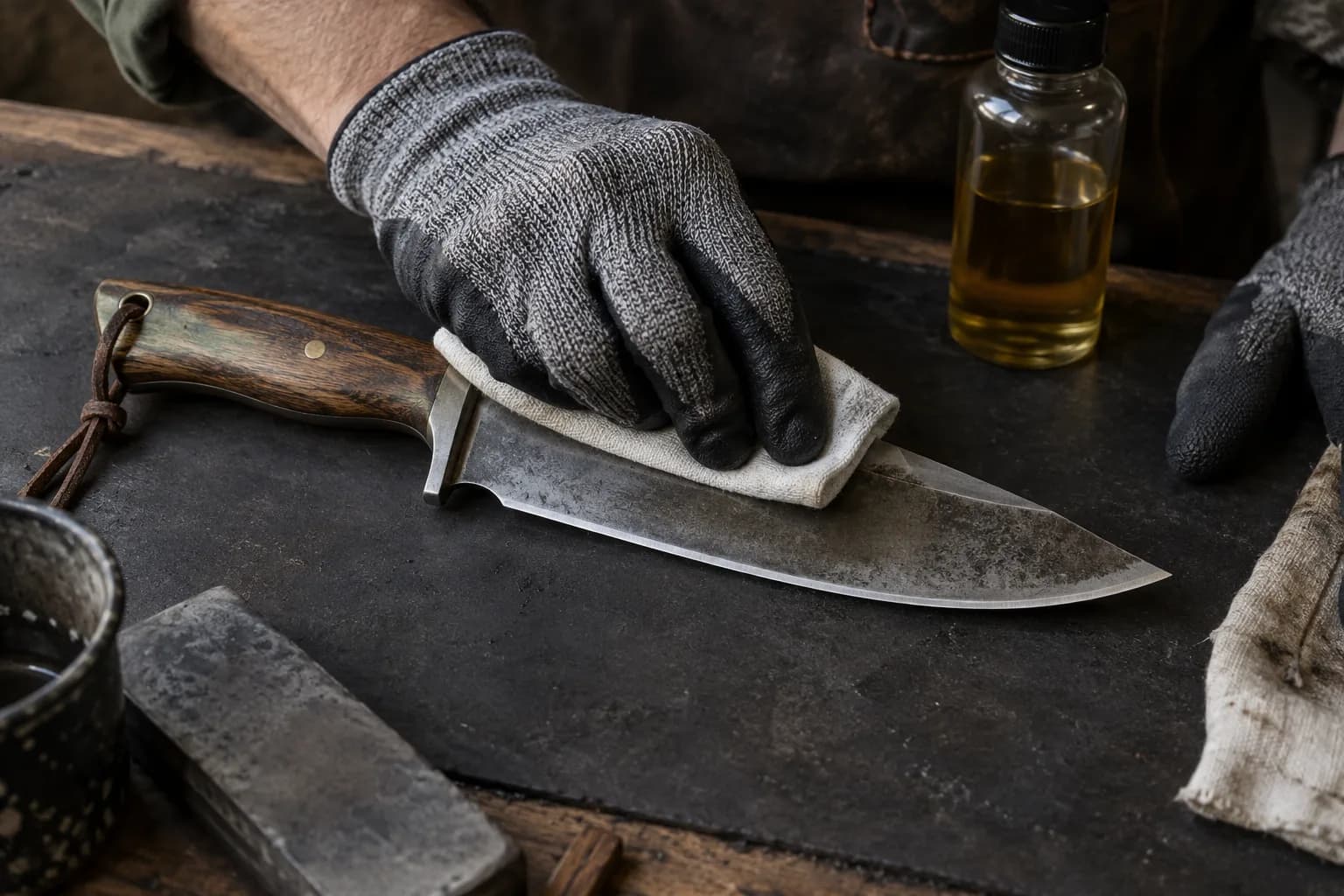
Head to head
Every matchup 8670 appears in, dimension by dimension.
Keep reading
8670 might be the most cooperative steel a 2×72 ever meets. It arrives thin, grinds clean, tolerates heat-treat improvisation, and sharpens on anything…

Every knife steel is iron plus a specific recipe of other elements, and each of those elements pulls the steel’s behavior in a particular direction…

Two steels with similar hardness numbers can feel completely different under a sharpening stone, one glides along smoothly, another feels like it’s…
Same bench
Whatever the steel, the grind is only as flat as the platen behind it. I machine the parts, hand-assemble and test Torus grinders in Sterling, Illinois.

Current dual-axis platform with a fiber-laser-cut 6061 chassis and single-knob tracking.

Current dual-axis platform with a steel chassis, more mass and less vibration.

Prior-design aluminum chassis, 90-degree tilt and 1.5-inch tooling arms.

One-man shop
Tell me what the blade is for and how you heat treat. I will tell you whether this is the steel I would use, and what I would use instead.