
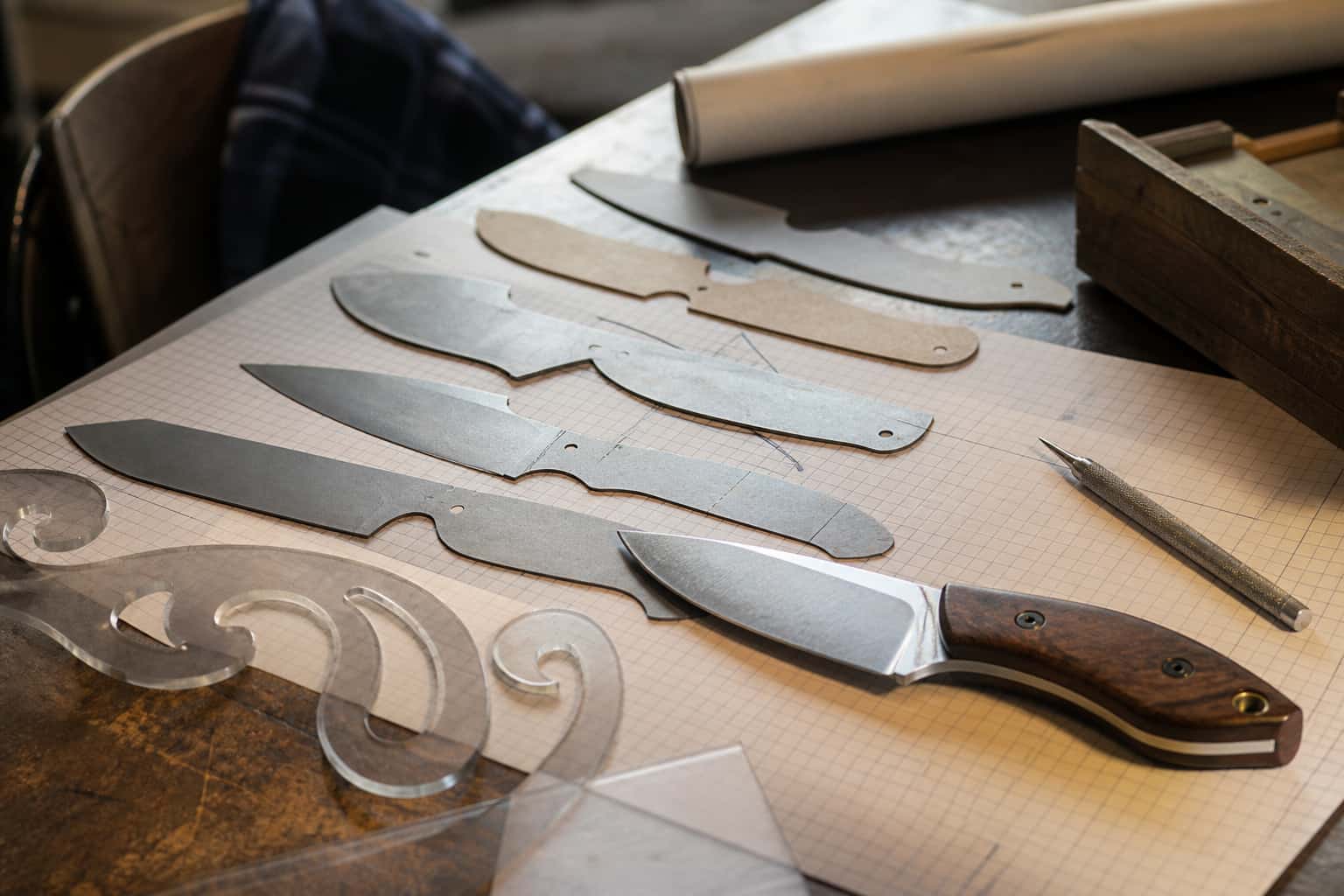
Blade Design
The Gyuto: Building the Japanese Chef’s Knife
The gyuto is Japan’s answer to the French chef’s knife and the single most commissioned kitchen pattern in the custom world: a 210-270mm-class (8-10 inch)…
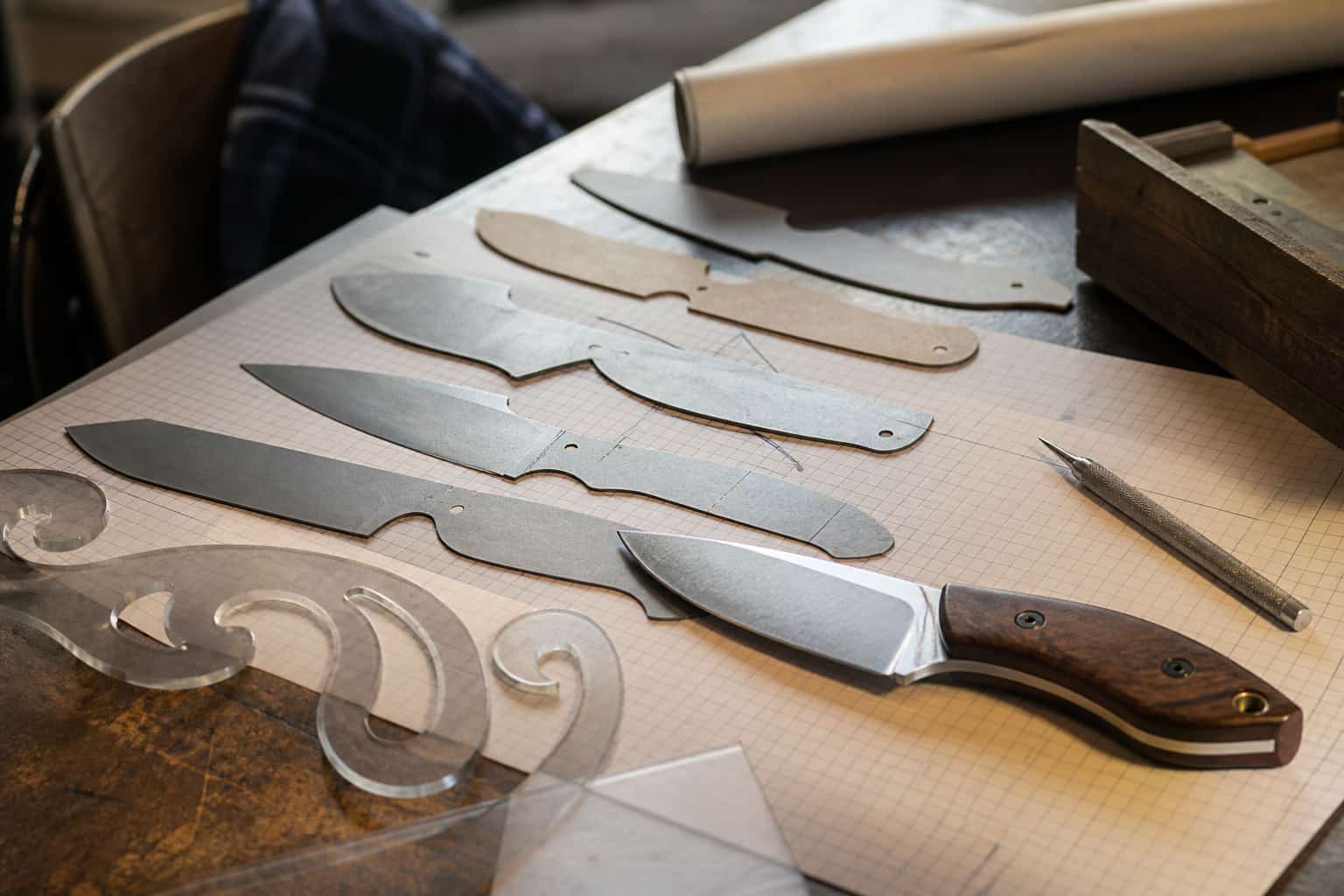
Blade Design
The petty and paring pattern from a maker's bench: sizing the in-hand knife, geometry at small scale, steel picks, and the perfect-gift economics.
2 min readWritten by Rich LinvilleFree to read
The petty is the kitchen’s underdog: a 75-150mm (3-6 inch) blade that does everything the board knives cannot — in-hand peeling, trimming, shallot work, the fiddly jobs that fill half of real cooking. It is also the fastest kitchen knife to build, the cheapest to ship, and the best-converting gift in a maker’s catalog. Small blade, outsized craft.
Three working sizes: the paring class (75-90mm) for pure in-hand work — peeling, coring, garnish; the mid petty (105-135mm) — the utility sweet spot that lives on the board AND in the hand; and the long petty (150mm) — a slim mini-gyuto for small boards and precise protein work. Profiles run gently curved with a fine straight-ish tip; height stays low (25-35mm) because in-hand work wants the edge close to the fingers, not a tall face.
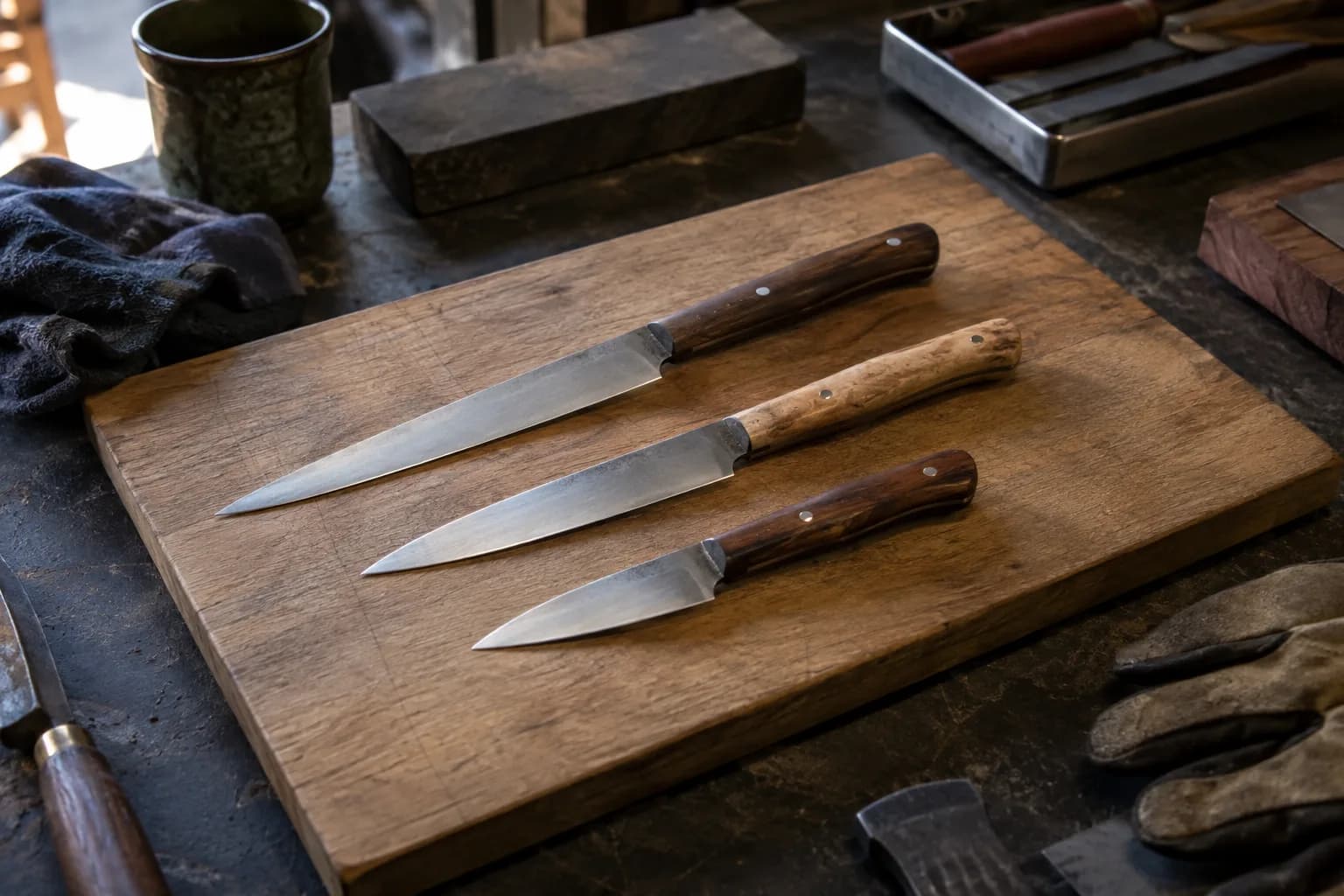
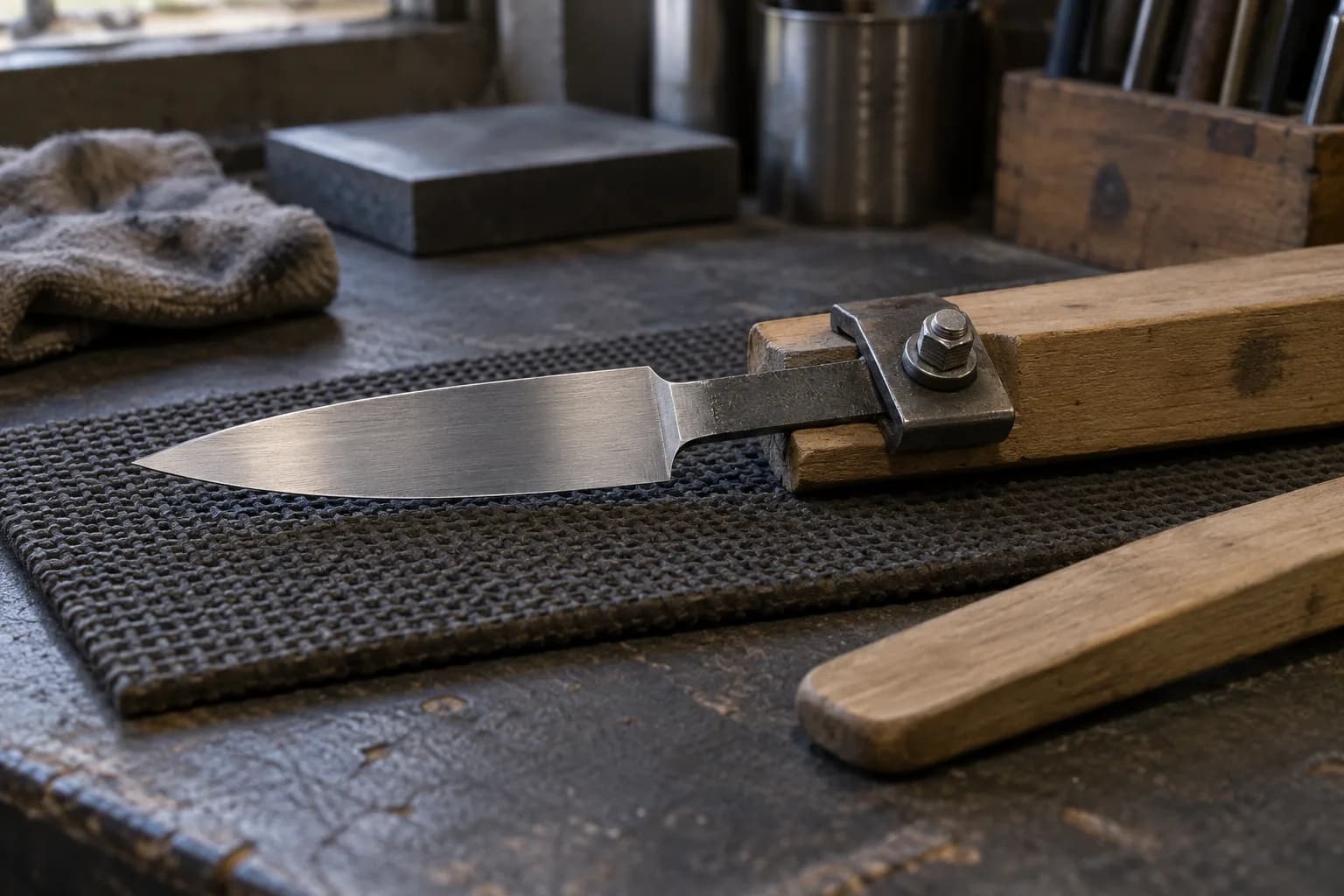
Small does not mean thick: the petty runs the family numbers — 1/16-3/32 stock, 0.008-0.015 behind the edge, 12-15 dps per the angle guide — and the fine tip is the working end: keep it thin, centered and acute, because trimming and tip work ARE the job. The build challenge inverts the gyuto’s: not flutter over length, but precision in miniature — plunge lines, tip grinds and spine work all happen at scales where a millimeter reads huge. Small-blade grinding is push-stick and fixture country: fingertips do not belong behind a 3-inch blade on a running belt.
Stainless dominates the use case — the petty gets grabbed wet fifty times a night: AEB-L, 14C28N, Nitro-V at 61-62. Carbon petties in 26C3 or W2 serve patina people beautifully. Handles stay slim — the pinch and the in-hand grip both want a wand, not a bat — and a simple wa or slim western scale build keeps the knife light enough to forget it is there, which is the petty’s whole personality.
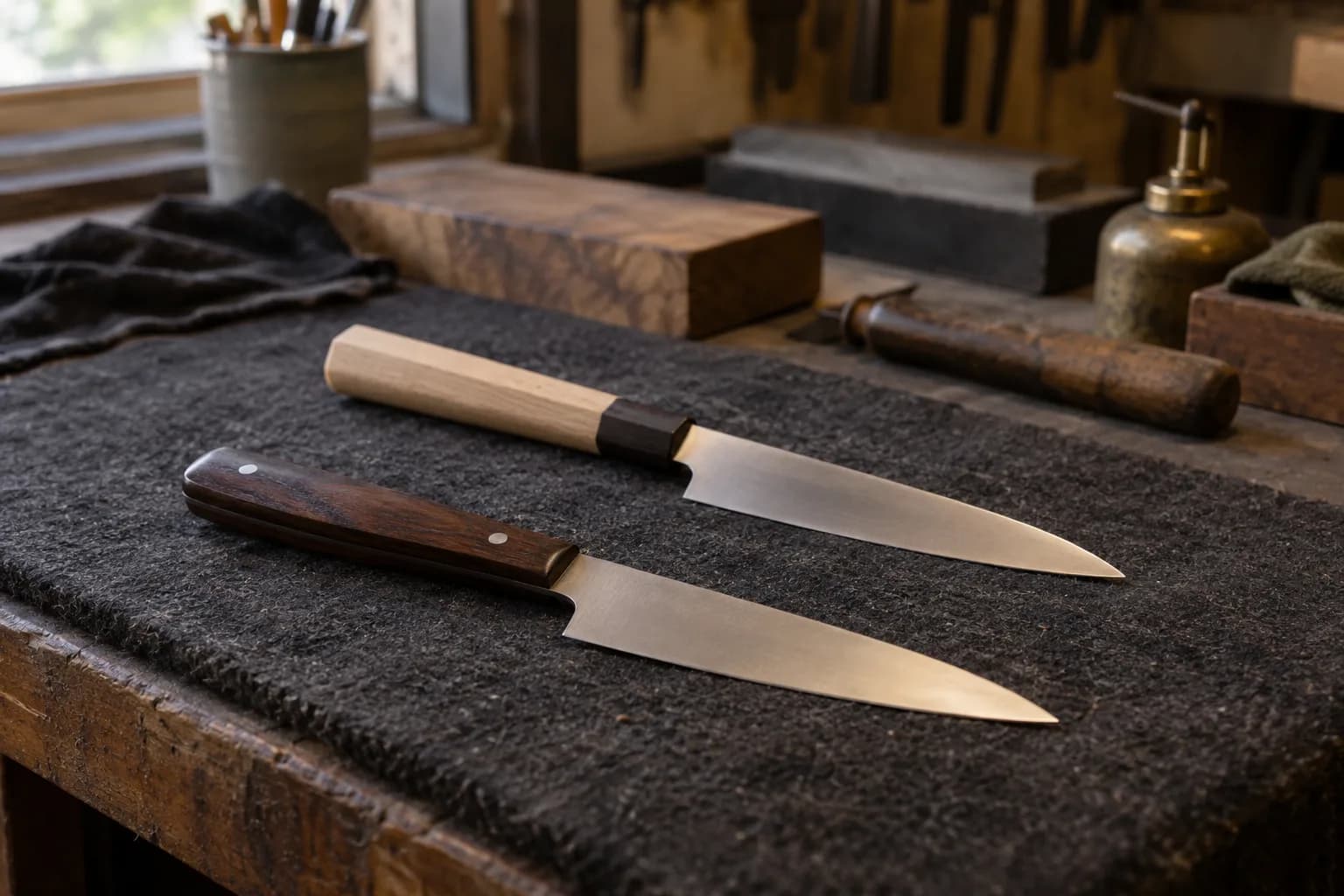
The petty is the maker’s answer to three business problems at once. Price point: it enters the catalog under the big knives, where gift budgets live. Batch efficiency: small blanks nest on bar stock, grind fast, and batch beautifully — the kitchen equivalent of the booth dagger. And conversion: a petty is how a household samples your work; the gyuto follows the next holiday, per the income math’s repeat-customer engine. Build them in threes, sheath or saya optional, strop-and-care-card always — and never underprice the small knife that does the big recruiting.
Keep reading
Three more from the same bench.
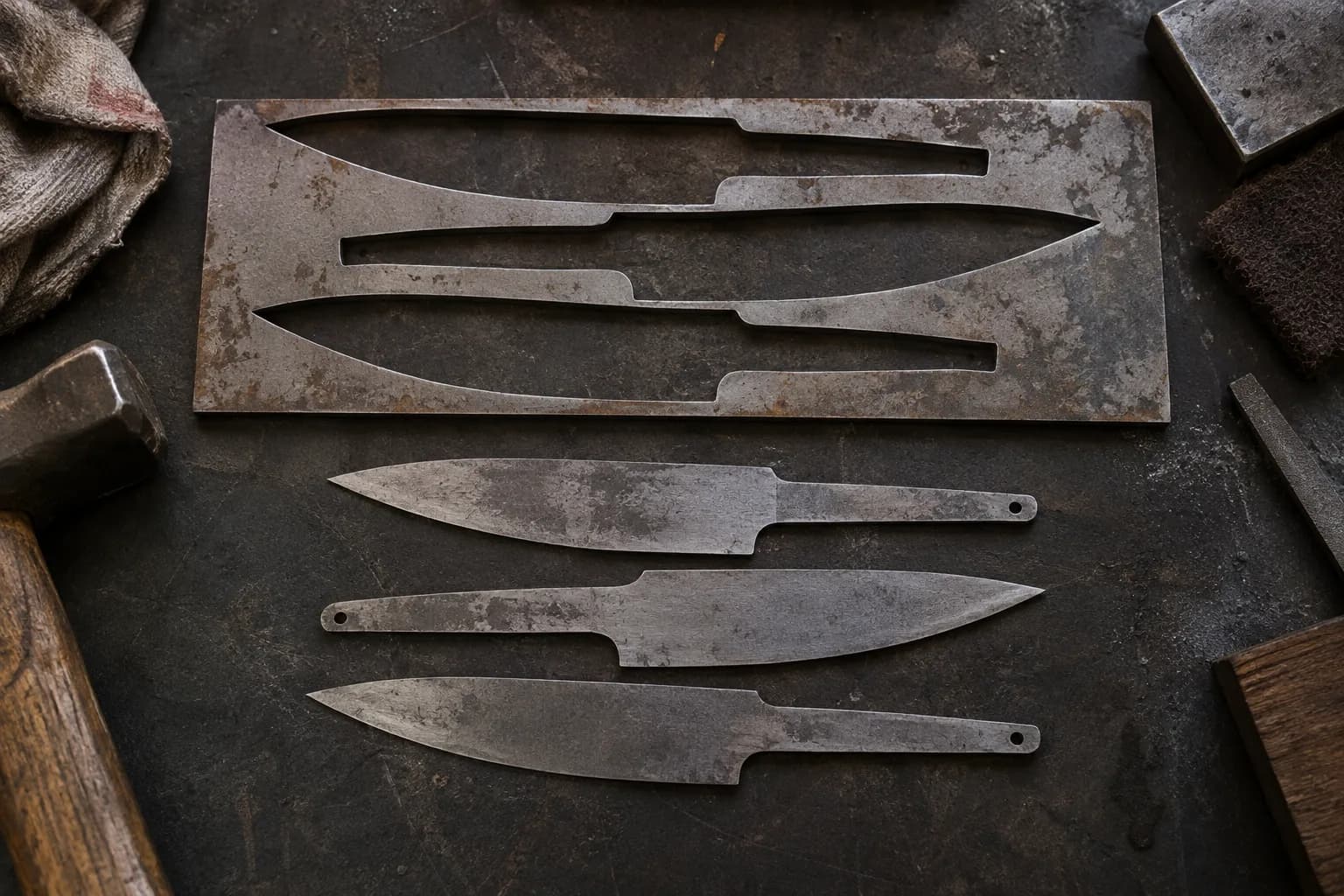
The gyuto is Japan’s answer to the French chef’s knife and the single most commissioned kitchen pattern in the custom world: a 210-270mm-class (8-10 inch)…
The santoku — “three virtues” — is Japan’s home-kitchen generalist: shorter, flatter and friendlier than a gyuto, with a sheep’s-foot spine dropping to a…
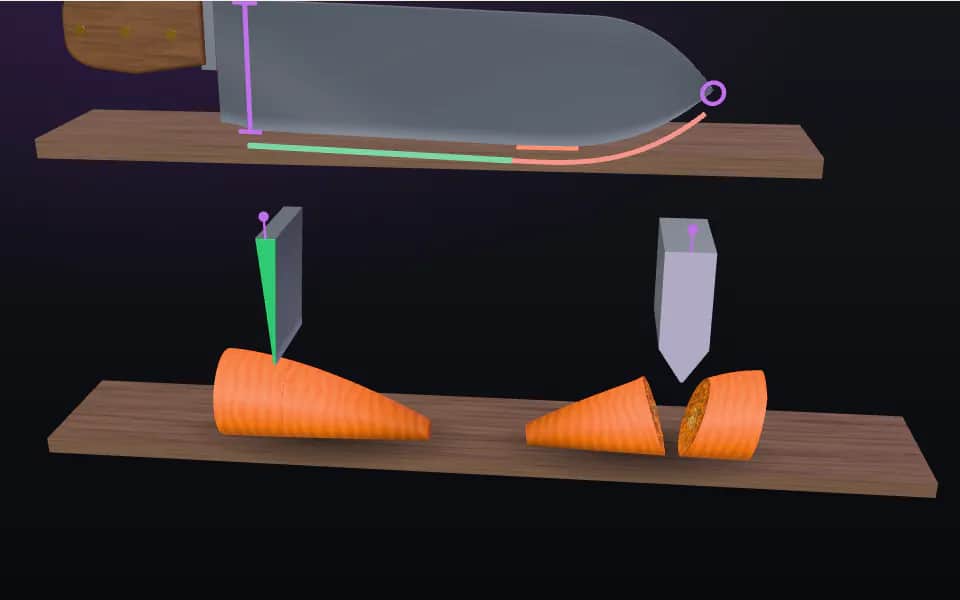
Kitchen knives are where blade geometry stops being theory and starts being dinner. A camp knife forgives a thick grind; a chef’s knife wedges apart a…
Same bench
I machine the parts, hand-assemble, track and test Torus grinders in Sterling, Illinois. Most orders ship in seven to ten business days from time of order.
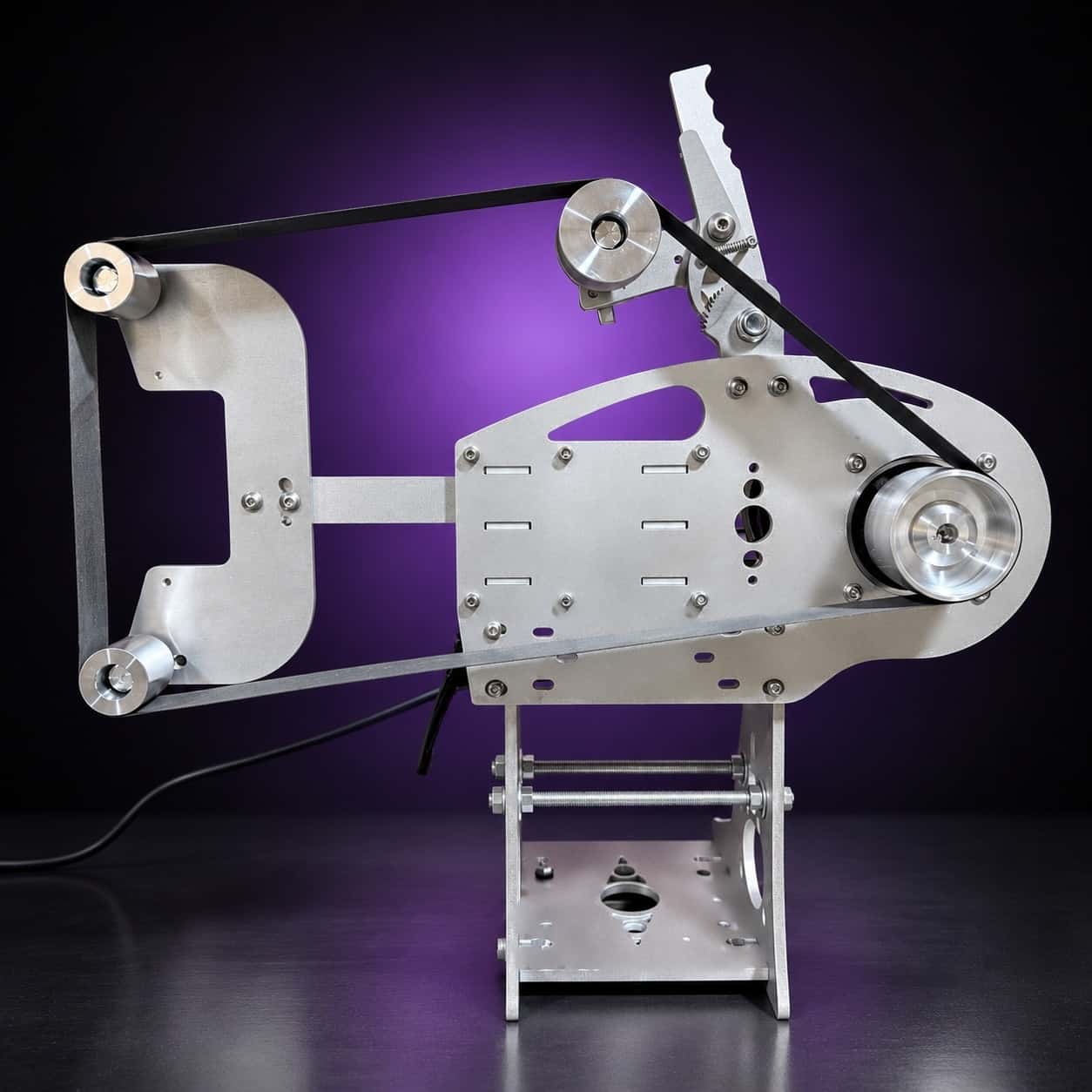
Current dual-axis platform with a fiber-laser-cut 6061 chassis and single-knob tracking.
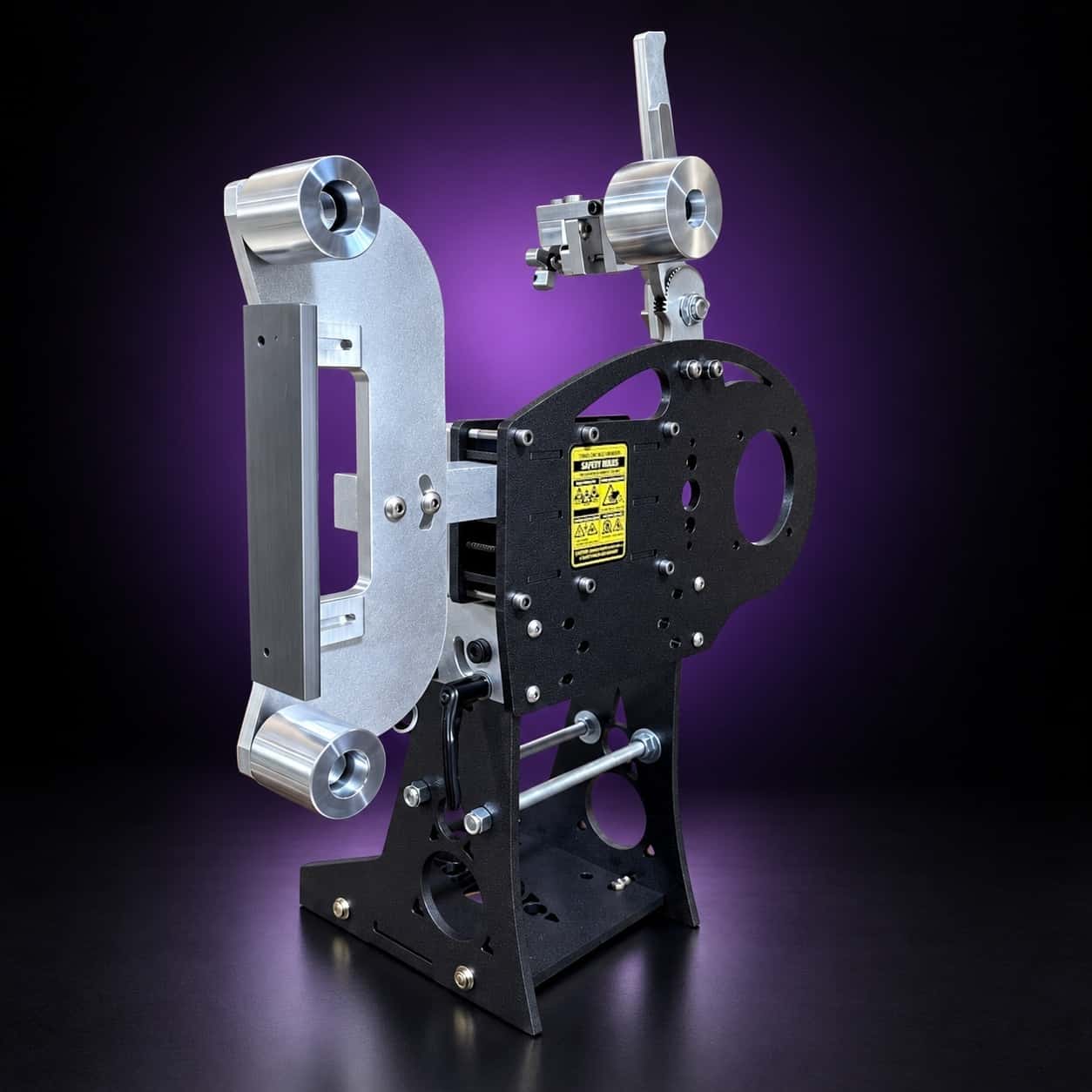
Current dual-axis platform with a steel chassis, more mass and less vibration.
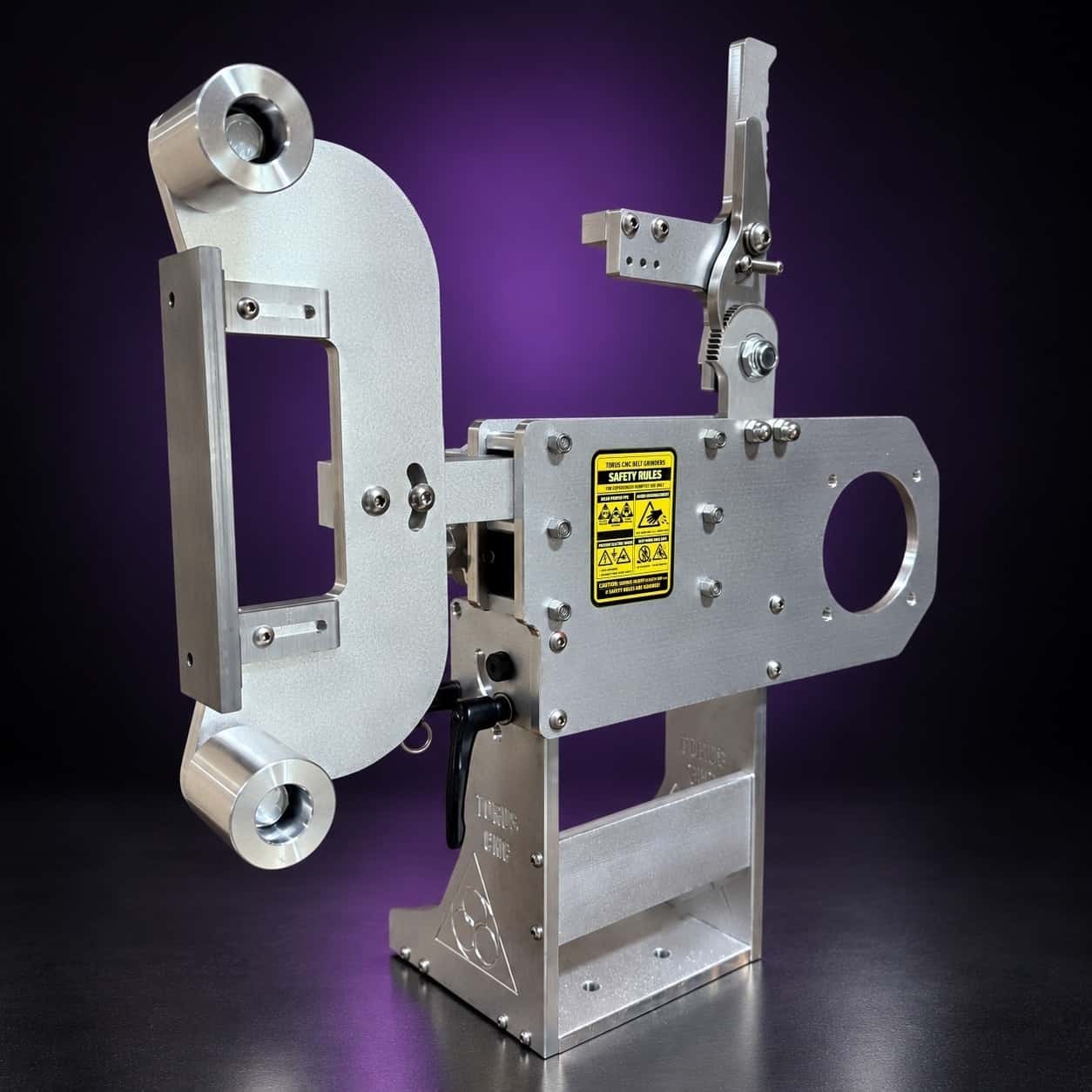
Prior-design aluminum chassis, 90-degree tilt and 1.5-inch tooling arms.
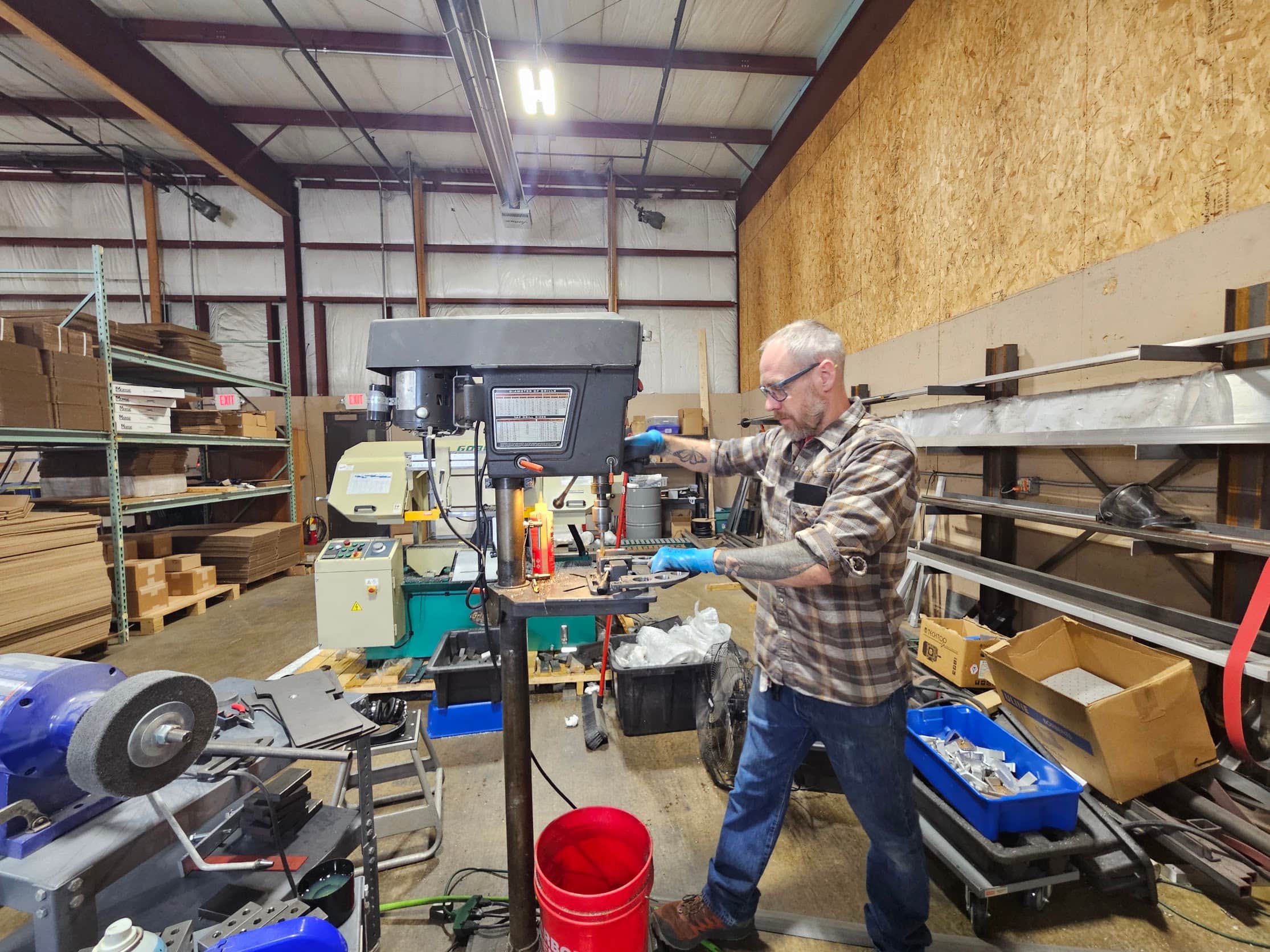
One-man shop
I answer my own email. Tell me the steel, the machine and what it is doing, and I will tell you what I would try next.