
Selling & Business
Making & Selling Blades at Renaissance Faires
Renaissance faires are one of the last places in America where a bladesmith can sell steel face-to-face to thousands of costumed customers who came…
Selling & Business
How to build forty daggers that match: batch workflow, profile and bevel jigs, finish-time budgets, and where booth margin actually comes from.
2 min readWritten by Rich LinvilleFree to read
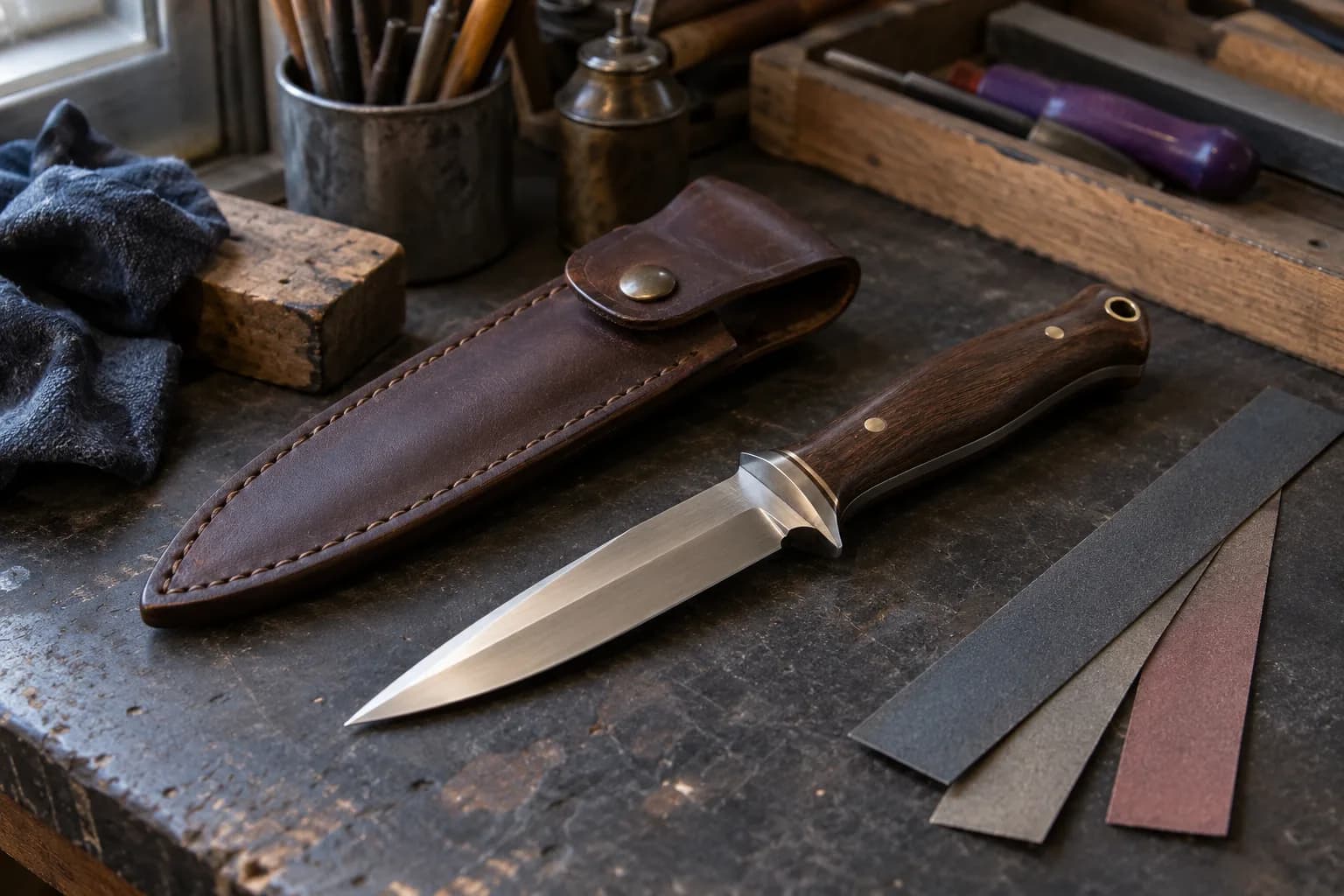
The faire booth business model is forty matching daggers, not forty individual daggers — and the difference between those two sentences is the difference between a profitable circuit and an expensive hobby. Batch production is its own craft. Here is the workflow.
One-at-a-time building repeats every setup forty times. Batch building runs every blade through one stage before any blade sees the next: profile all forty, then drill all forty, then grind bevels on all forty, then heat treat as one load, then finish as a queue. Every setup happens once, muscle memory compounds within the stage, and the belts stay matched to the task instead of changing every twenty minutes. The math is not subtle — makers moving from serial to batch production routinely find total hours per piece dropping by a third or more, and consistency improving at the same time, which is the same argument as consistency beats speed wearing production clothes.
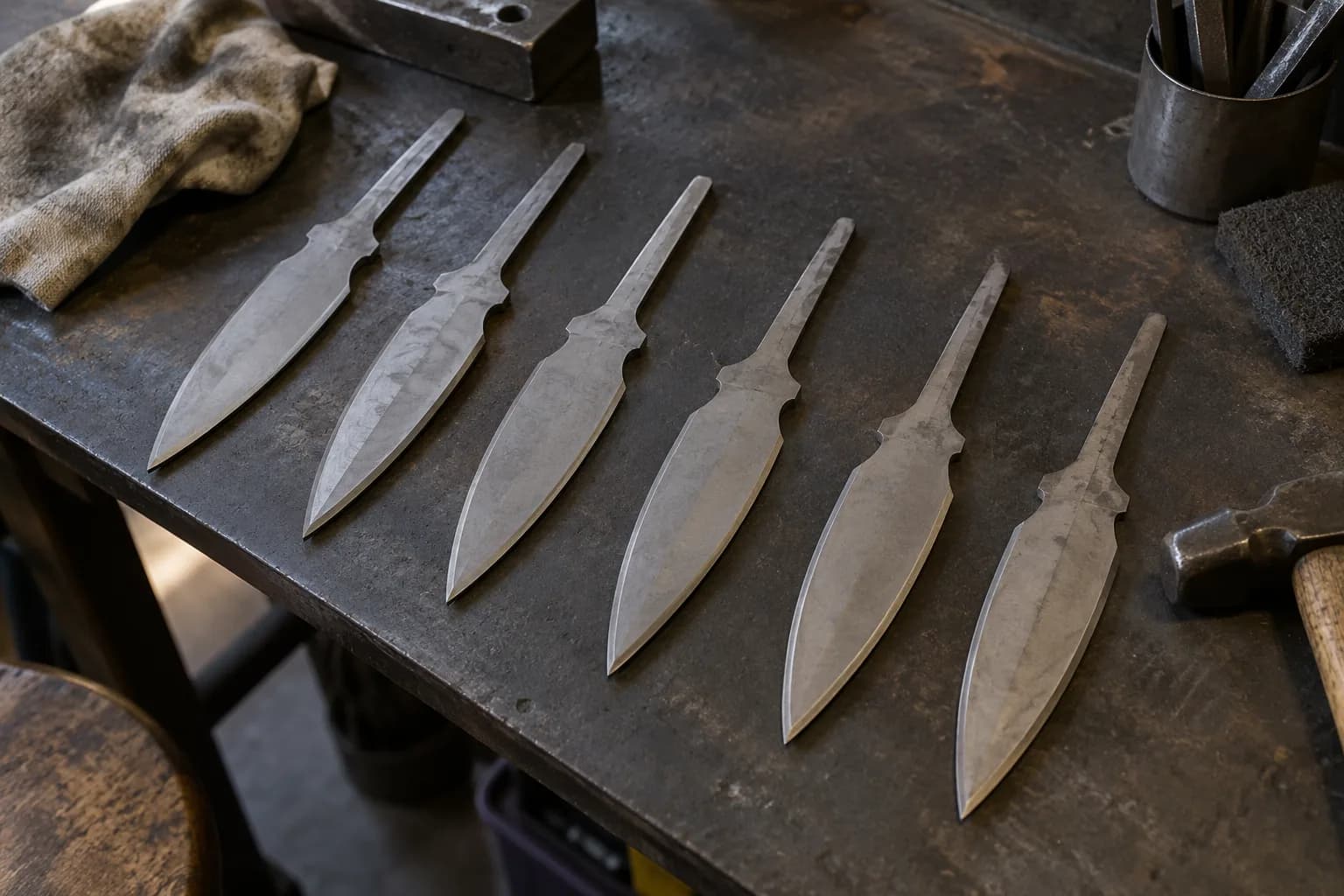
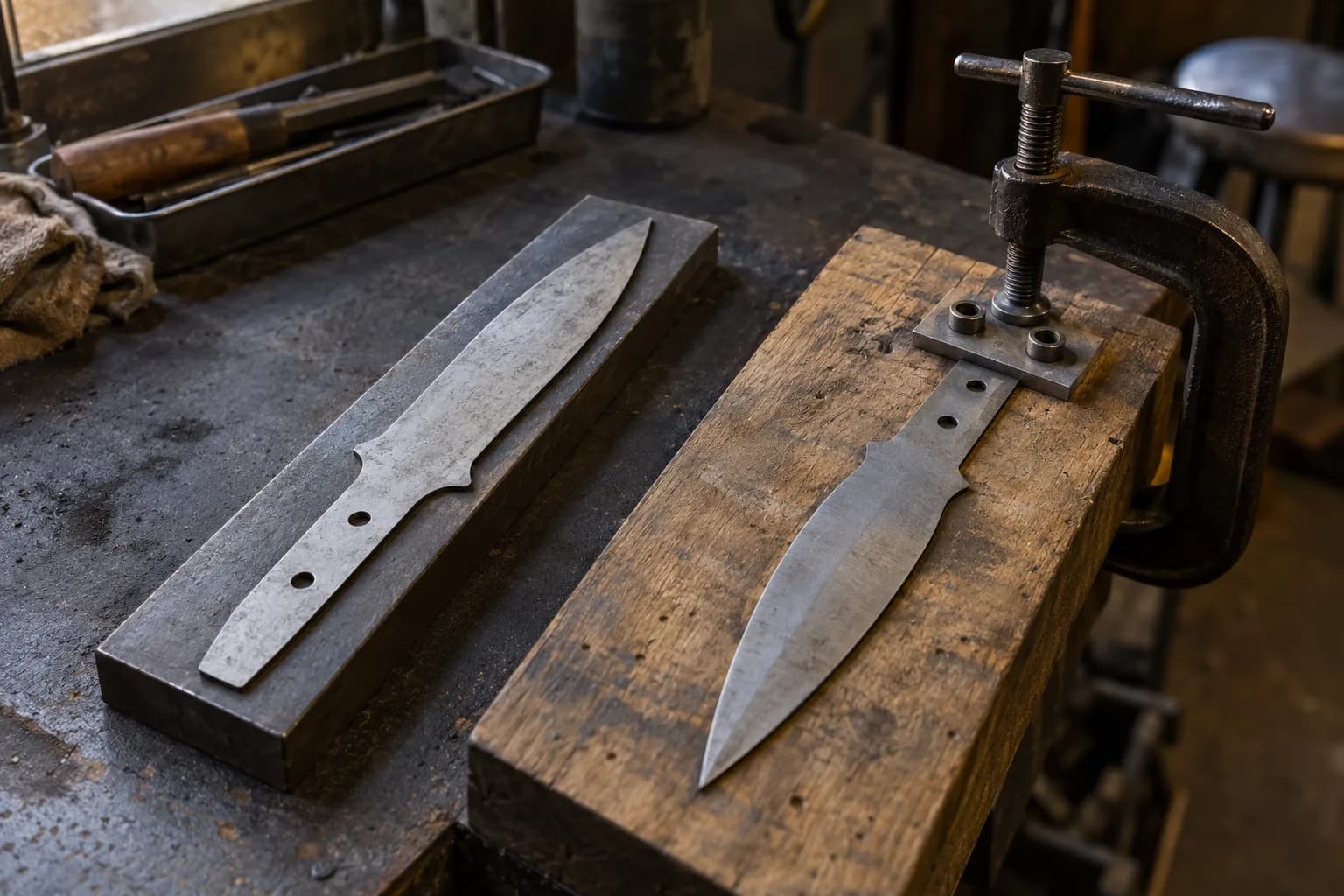
Repeatability lives in fixtures. The batch dagger shelf: a profile template in 1/8 steel or micarta (trace forty blanks in an afternoon — the template method at scale), a drilling fixture so every handle pins identically, a bevel-grinding jig or work-rest setup that locks your angle per the angle chart (for blunt display edges, the flat-and-ease spec from Display Geometry), and a sheath pattern set per model. Every jig is an hour invested that pays on all future batches of that model — and the models ARE the catalog: three dagger patterns run deep beat twelve patterns run shallow.
Finish work is where batch economics are won or lost, because it is the least compressible stage. Budget it honestly per piece — grinding to final grit, handle shaping and finishing, sheath build (fold-over pattern, batched the same staged way), edge treatment, final assembly — and then design the PRODUCT to the budget: a 400-grit satin finish and an eased display edge is a fine faire dagger; a hand-rubbed 1500-grit mirror is a commission, not a booth piece. Match belt speed to each finishing stage off the speed-by-task chart and the finish queue stops burning pieces at hour six of a grinding day.
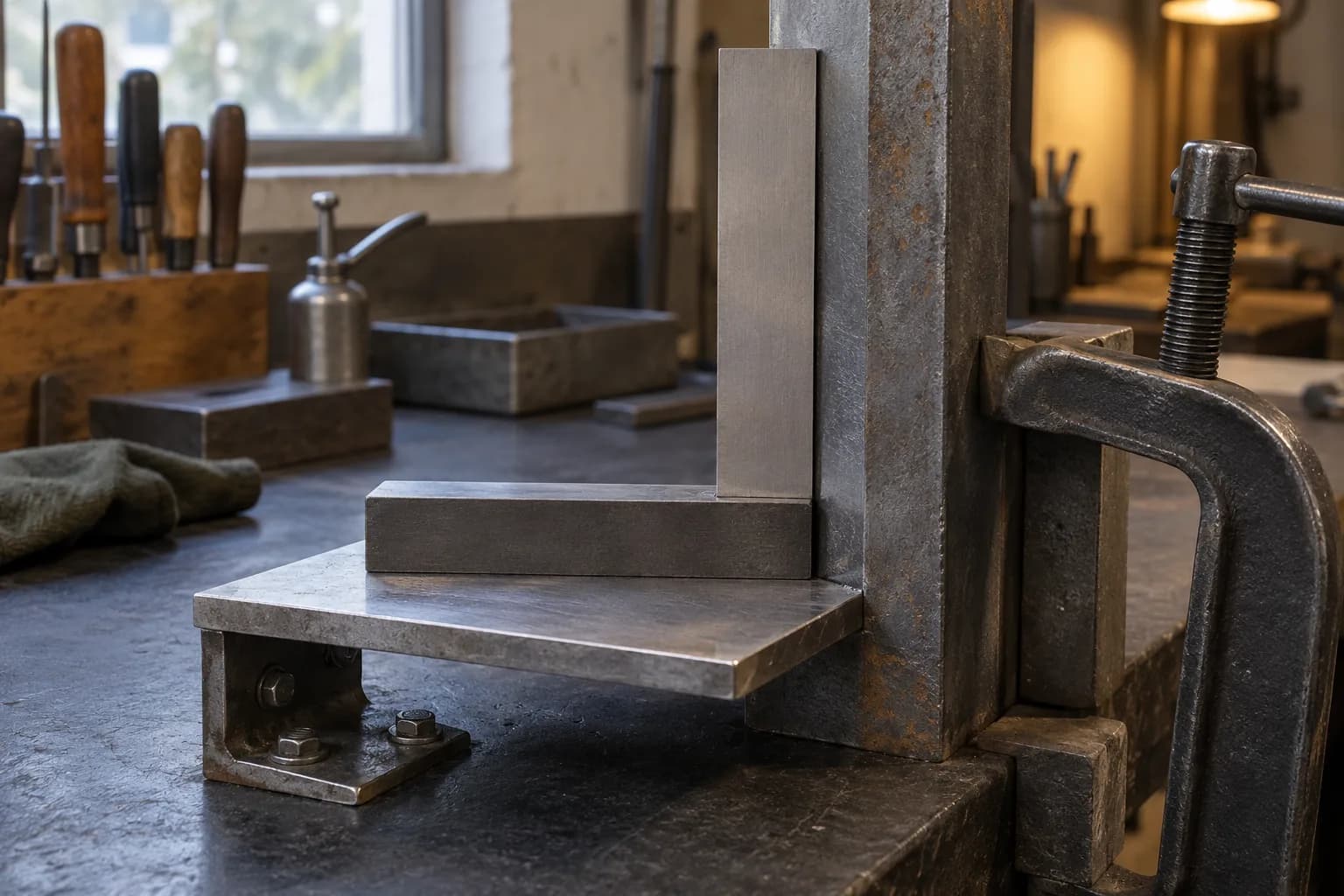
Batch work is where machine consistency stops being a luxury: a grinder that tracks true and holds its work-rest square is the difference between forty matching bevels and forty arguments — this is honestly the throughput case in What Actually Gates Scaling, lived at faire-season pace. Build the jig shelf, run stages not pieces, budget finish time first, and price off the real hours per cost-per-unit math. Forty matching daggers is a system. Build the system once; sell it all season.
Keep reading
Three more from the same bench.
Renaissance faires are one of the last places in America where a bladesmith can sell steel face-to-face to thousands of costumed customers who came…
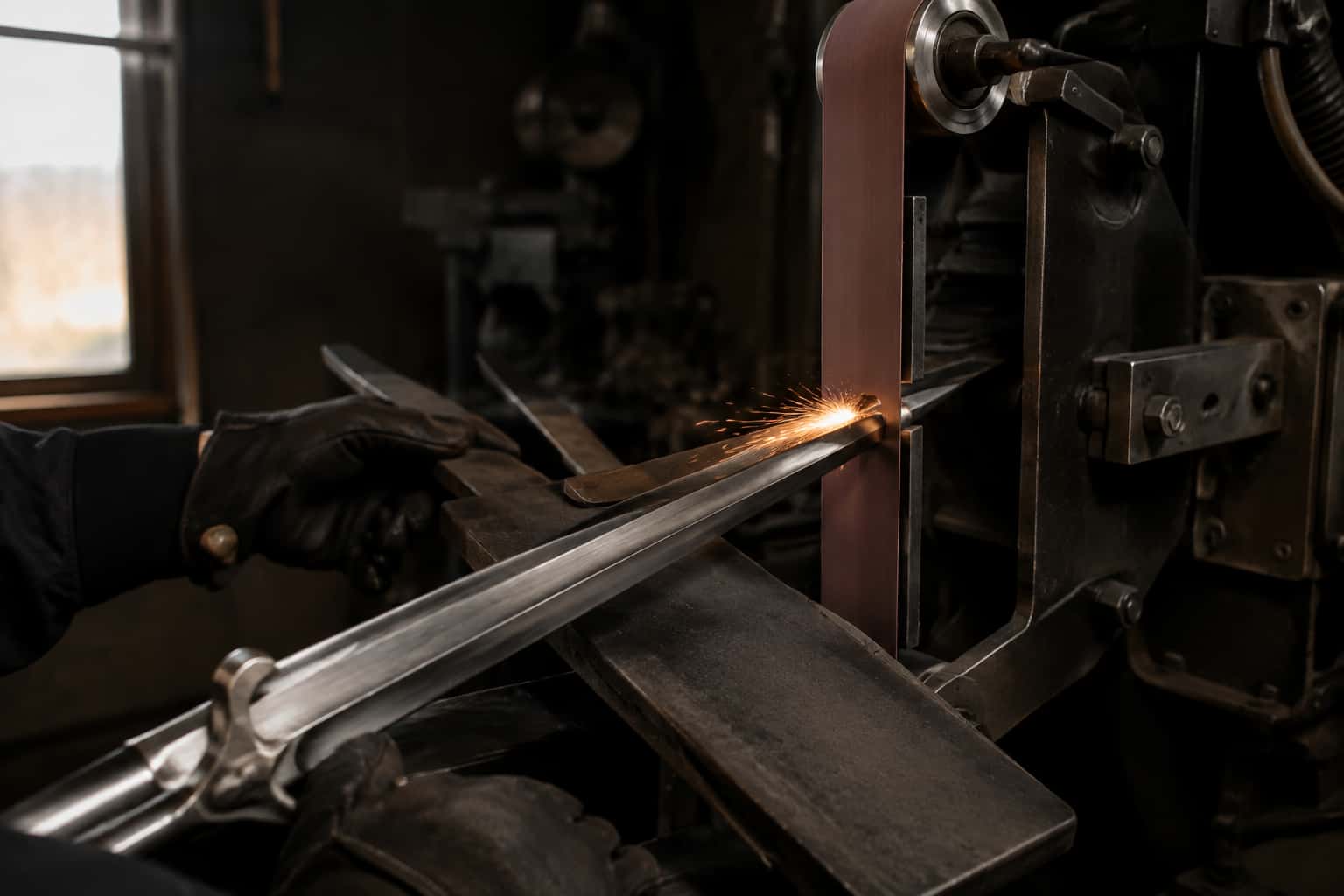
“Blunt” is not one spec — it is three different builds, and mixing them up is how display pieces end up in stage fights they were never engineered for…
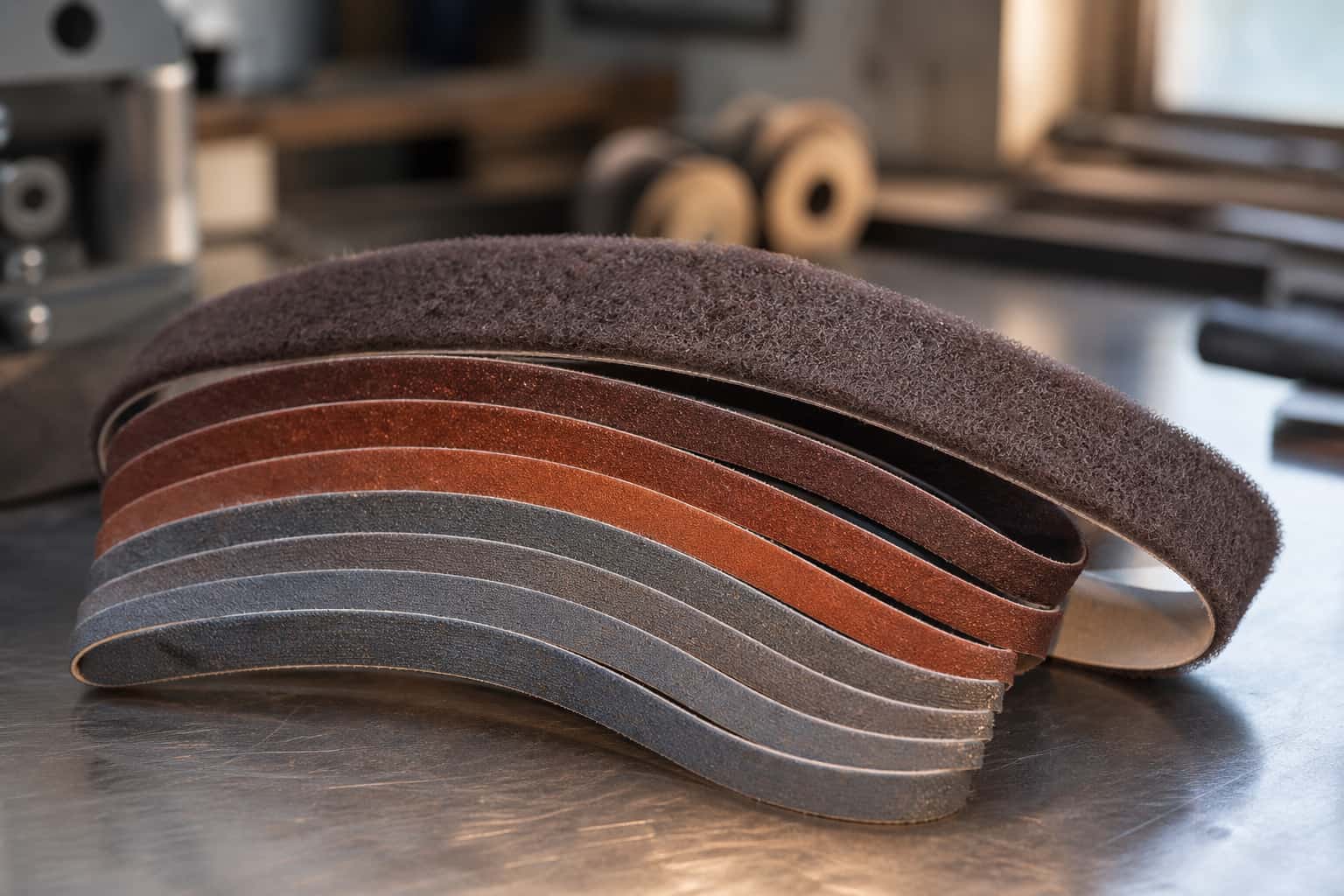
Undercharging is the single most common mistake makers make when they start selling knives, mostly because it’s easy to price for materials and forget to…
Same bench
I machine the parts, hand-assemble, track and test Torus grinders in Sterling, Illinois. Most orders ship in seven to ten business days from time of order.
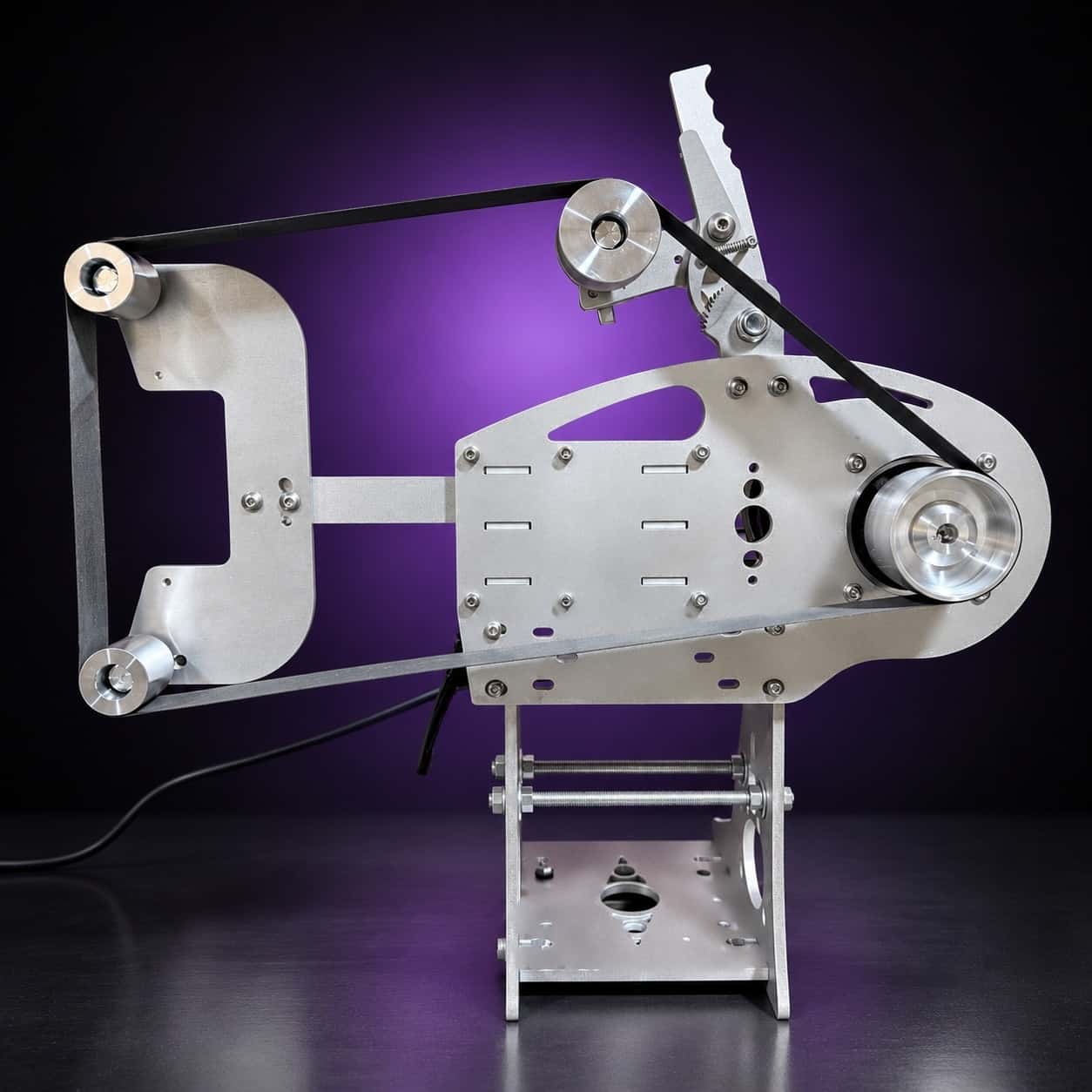
Current dual-axis platform with a fiber-laser-cut 6061 chassis and single-knob tracking.
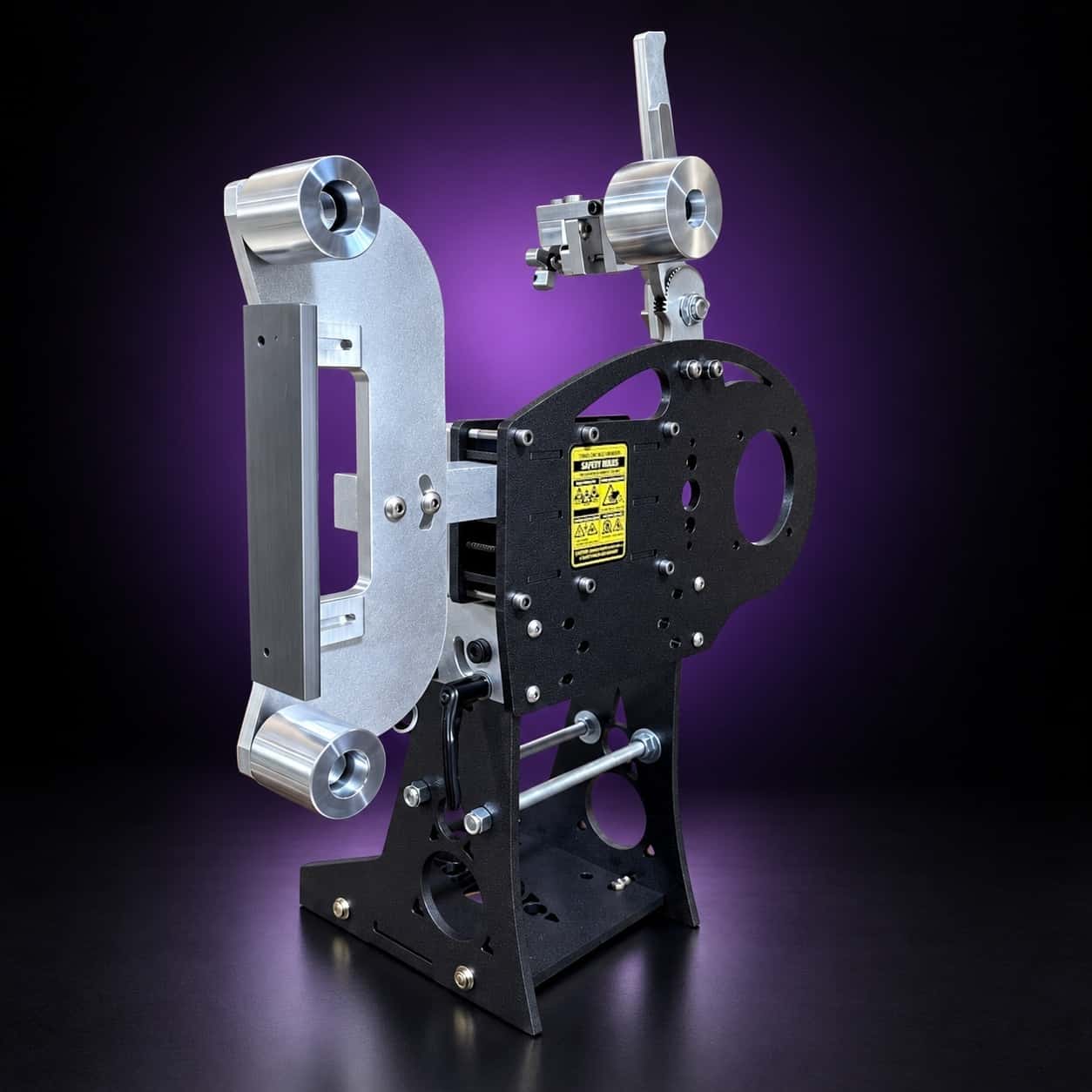
Current dual-axis platform with a steel chassis, more mass and less vibration.
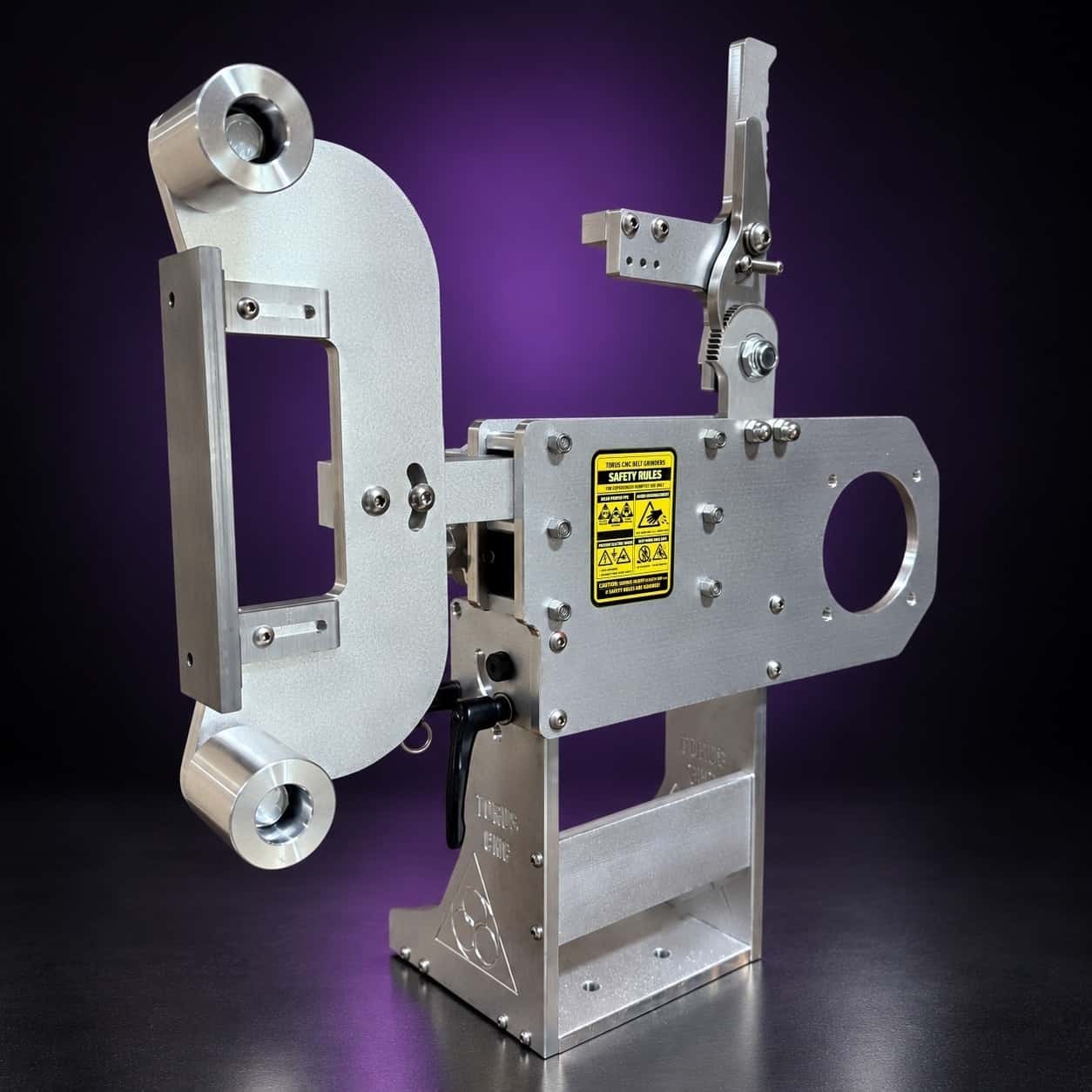
Prior-design aluminum chassis, 90-degree tilt and 1.5-inch tooling arms.
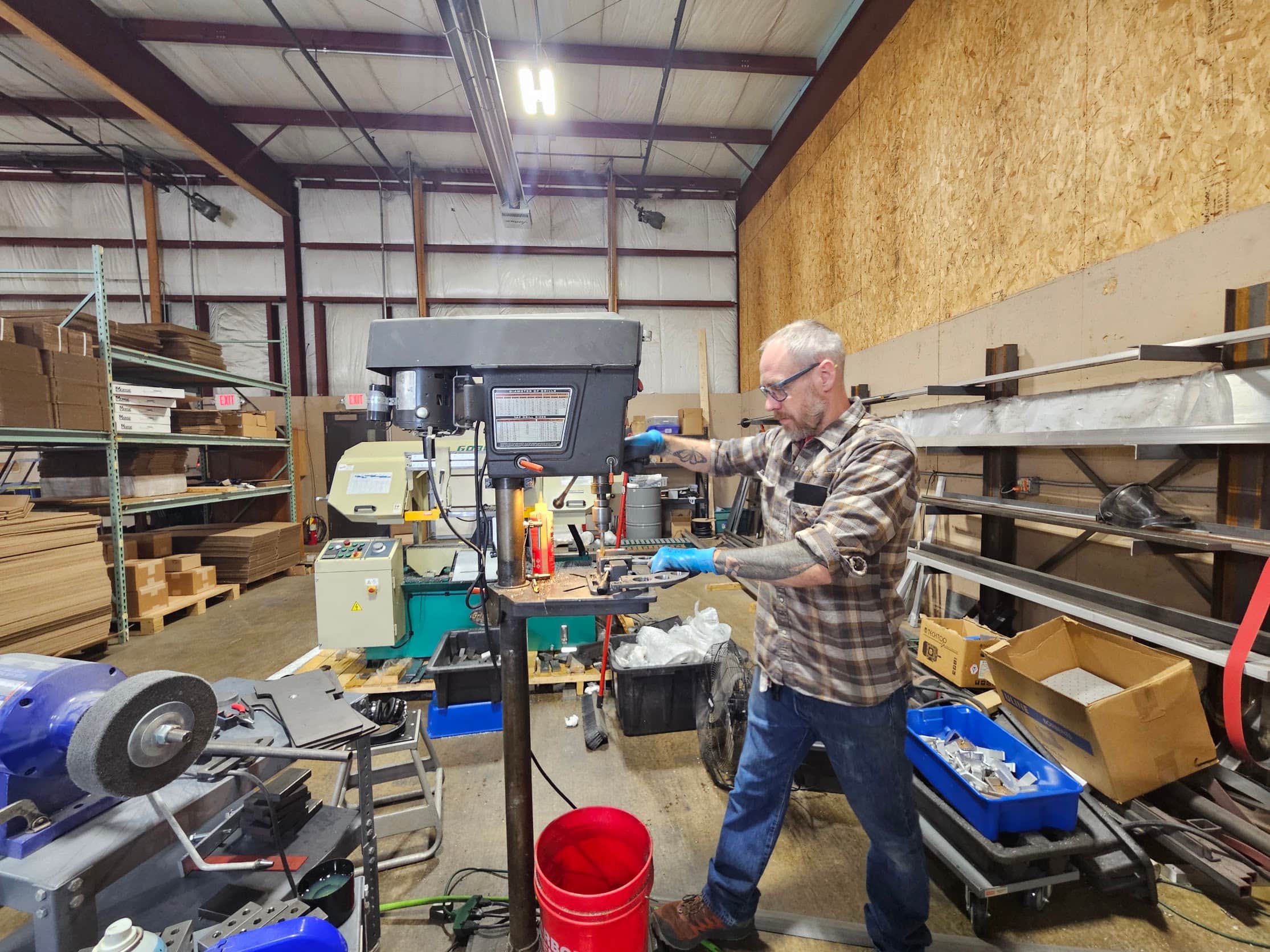
One-man shop
I answer my own email. Tell me the steel, the machine and what it is doing, and I will tell you what I would try next.