
Selling & Business
Starting a Knifemaking Business: The Whole Checklist
Starting a knifemaking business is mostly done in the wrong order: logo first, LLC never, pricing by vibes, and equipment bought by excitement. Here is…
Selling & Business
What it really takes to earn from knifemaking: hours per knife, effective hourly rate, volume vs a paycheck, staged transition markers, failure modes.
2 min readWritten by Rich LinvilleFree to read
This is not a quit-your-job article. Most people who turn knifemaking into income keep it as strong side income by choice, a smaller number build real part-time businesses, and a small, process-obsessed minority go full-time. All three outcomes are wins — IF the math was honest at every stage. Here is the math.
Number one: true hours per knife — every stage, tracked, per the pricing guide’s discipline. Call it H. Number two: net per knife — sale price minus materials, consumables, fees and overhead share. Call it N. Number three: your effective hourly rate, N ÷ H — the most clarifying number in the craft. A $250 knife with $60 in costs and 9 tracked hours pays about $21 an hour; the same knife at 6 hours after a throughput pass pays $31. Neither is fantasy money, and both beat the maker who never ran the numbers and is quietly working for eight.
Work it backward, brutally. Replacing even a modest $4,000 gross month at $190 net per knife means 21 knives a month — a knife every workday, forever, plus the selling, shipping and books. That arithmetic is why full-time knifemaking is a PROCESS business (batches, patterns, throughput) and why most makers rationally stop at the side-income tier where 4-6 knives a month at honest prices adds a four-figure supplement without eating the life the hobby was improving. The number to respect: income scales with N ÷ H and volume — not with enthusiasm.
Stage one, nights and weekends: sell consistently for six-plus months, track everything, get the legal floor in place. Marker to advance: demand exceeds your build rate at full honest prices — a real waitlist, not a busy weekend. Stage two, serious part-time: fixed production days, batch process running, two proven channels (channel guide), prices raised until demand and capacity balance. Marker: six months of income you could bank at a level that matters, while the effective hourly holds above what your time is worth elsewhere. Stage three, full-time: only when savings cover the runway, insurance is solved, and the stage-two numbers times available hours actually clear your bills with margin. The markers are deliberately boring; the failure mode is skipping to stage three on a good month.
Underpricing — the epidemic: attachment pricing that works out to single-digit hourly and cannot survive success. Wrong tool first — romance purchases while the finishing bottleneck starves output. No repeatable process — every knife a prototype, so volume never compounds. And silent burnout — hours substituting for process until the love of the thing dies. Every one is preventable with the three numbers on the wall.
Put a timer on the bench and a spreadsheet behind it. Raise prices until strangers hesitate but still buy. Remove the finishing constraint before adding volume. Advance stages on markers, not moods — and let staying small on purpose be a legitimate finish line: a craft that pays for itself and then some, run by someone who still loves Monday. That is a win the math fully endorses.
Keep reading
Three more from the same bench.
Starting a knifemaking business is mostly done in the wrong order: logo first, LLC never, pricing by vibes, and equipment bought by excitement. Here is…
Every scaling conversation in this craft eventually hits the same wall, so here it is up front: forging is never the bottleneck. A competent smith forges…
Undercharging is the single most common mistake makers make when they start selling knives, mostly because it’s easy to price for materials and forget to…
Same bench
I machine the parts, hand-assemble, track and test Torus grinders in Sterling, Illinois. Most orders ship in seven to ten business days from time of order.
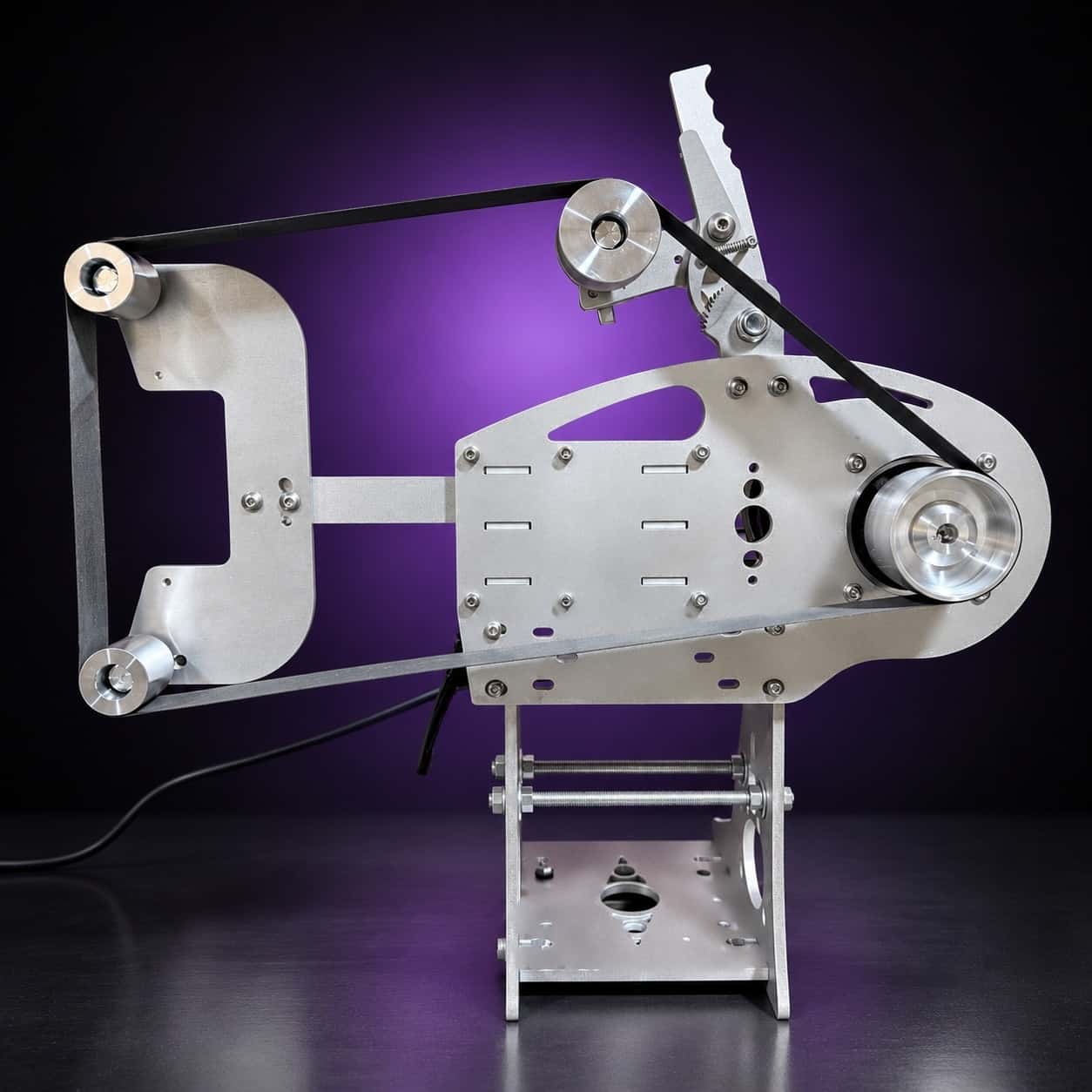
Current dual-axis platform with a fiber-laser-cut 6061 chassis and single-knob tracking.
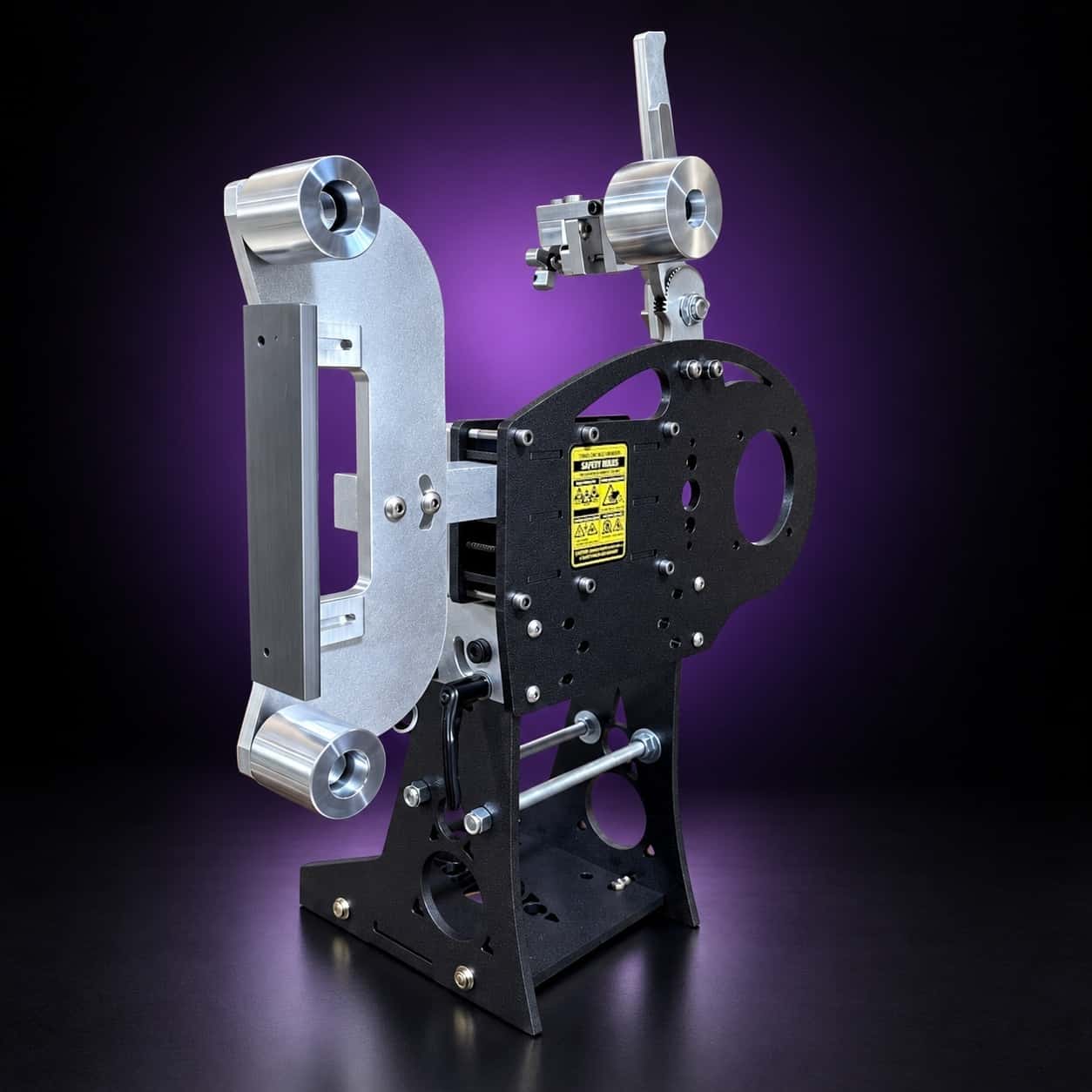
Current dual-axis platform with a steel chassis, more mass and less vibration.
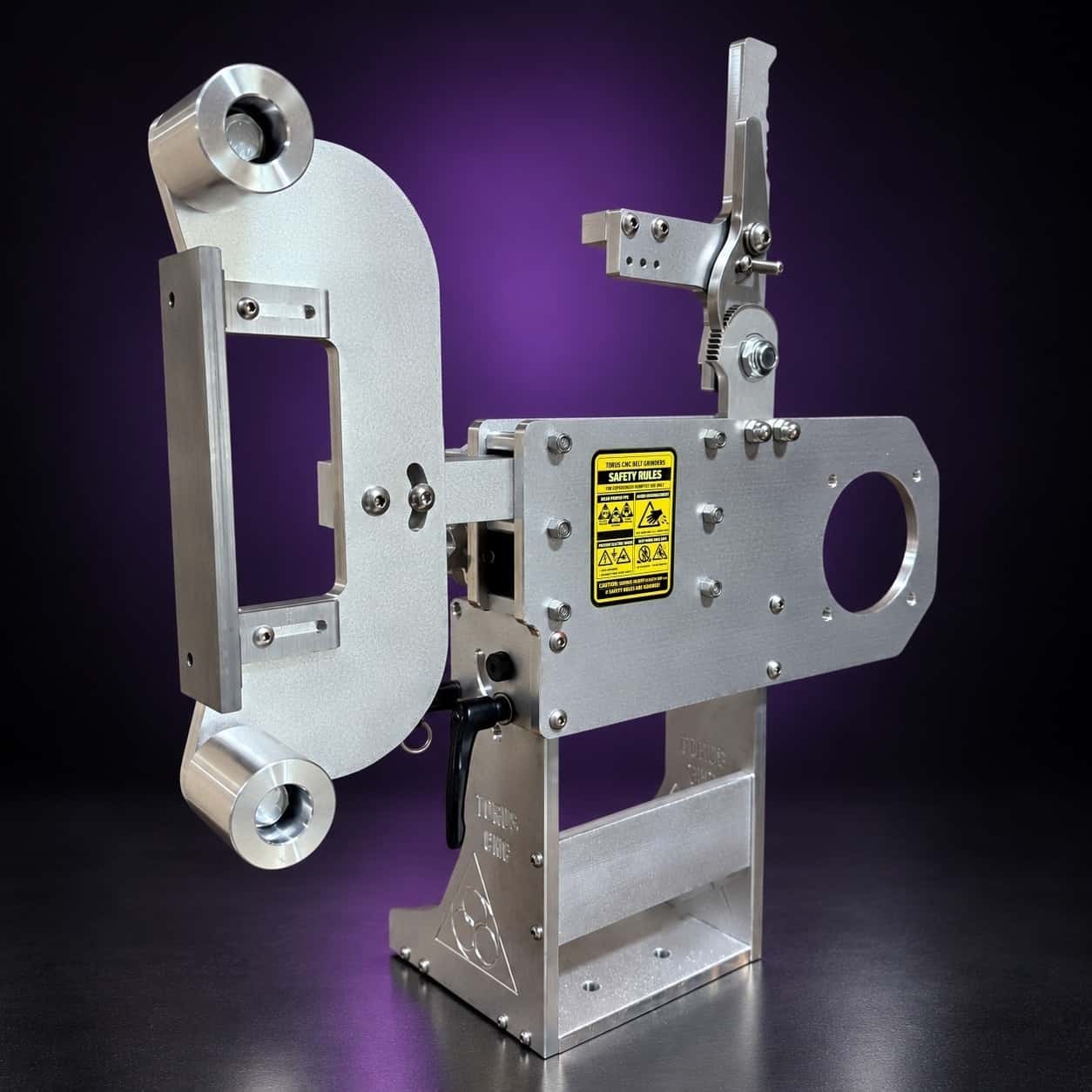
Prior-design aluminum chassis, 90-degree tilt and 1.5-inch tooling arms.
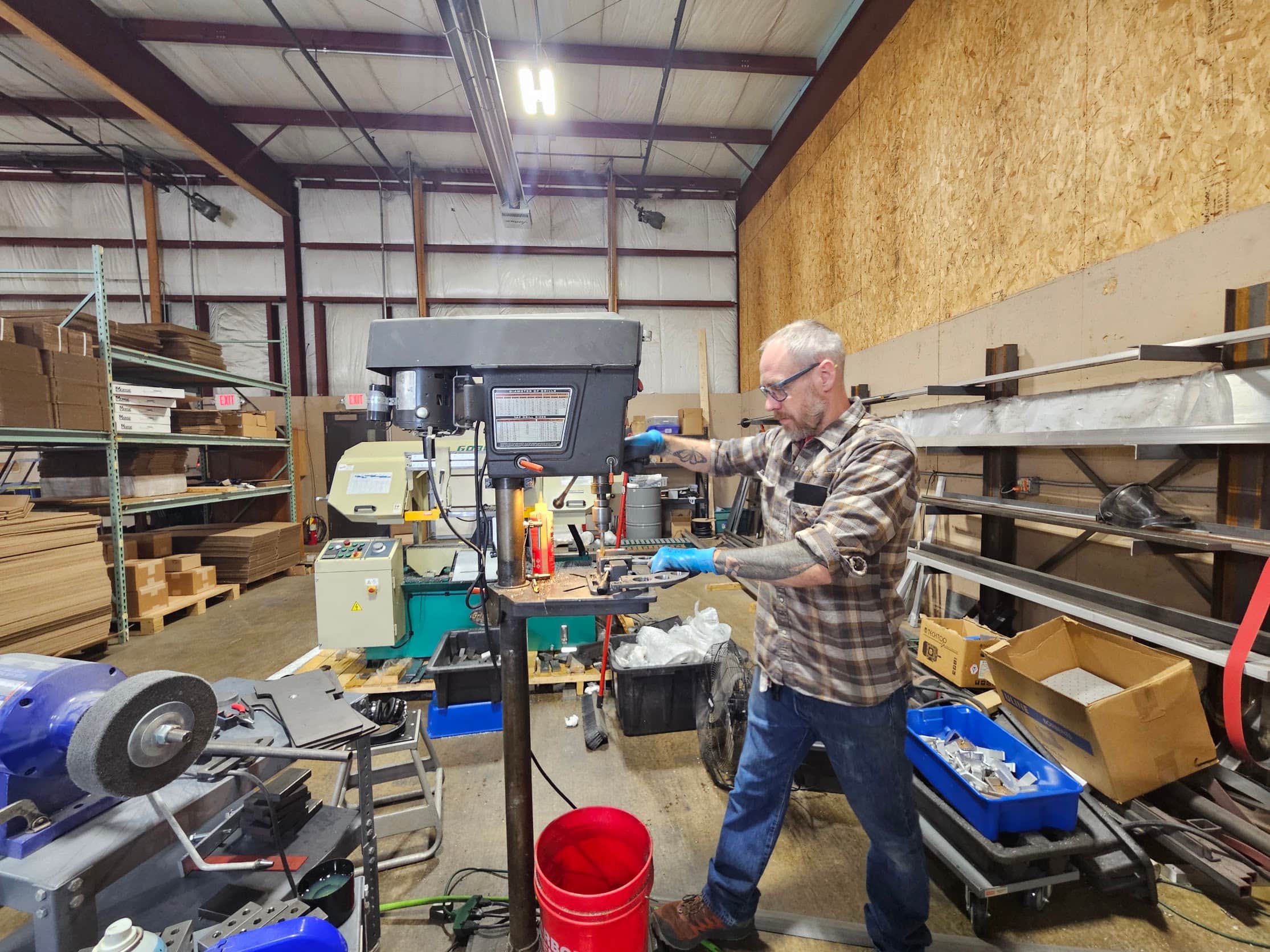
One-man shop
I answer my own email. Tell me the steel, the machine and what it is doing, and I will tell you what I would try next.